
Sarah Ardley — keeper, researcher, founder of Beardie Husbandry
Hi, I’m Sarah Ardley.
I’ve kept bearded dragons for over ten years, made most of the mistakes worth making, and built this site because the same dangerous advice keeps getting recycled.
No veterinary degree. Just a decade of real enclosures, real vet visits, and a habit of reading the actual studies rather than summaries of summaries.
How Spike Almost Broke Me
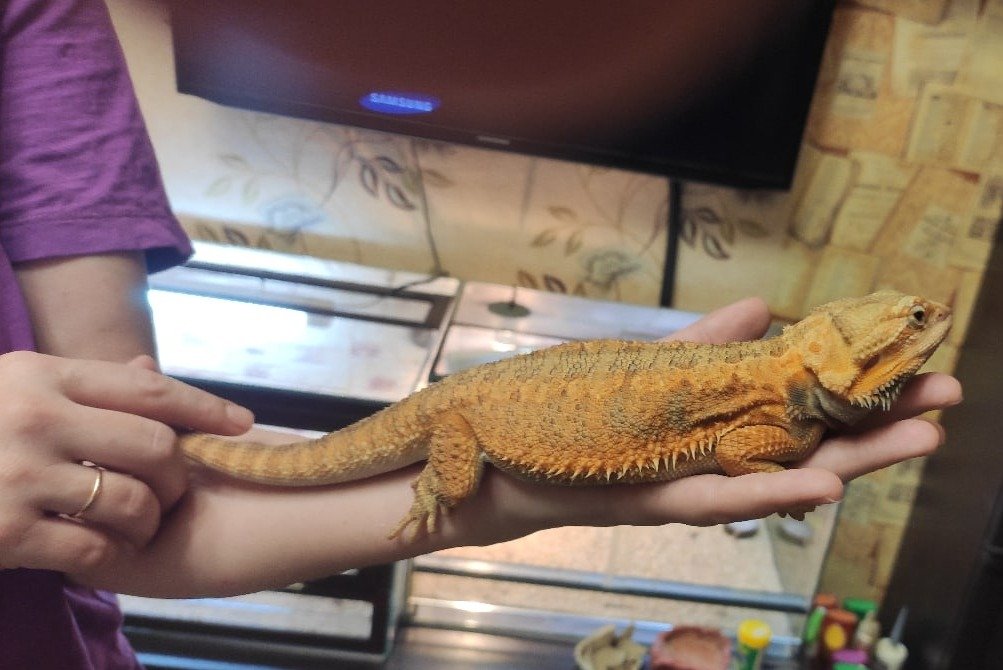
Ten years ago I brought home my first dragon and did what most new owners do — trusted the pet store. I bought the complete starter kit, the red night-heat bulb, and the calcium sand substrate. Three months later, Spike stopped eating and sat hunched under his basking spot all day.
Several vet visits and hundreds of hours across veterinary journals, lighting physics papers, and long-term breeder forums later, I understood what had happened. The red bulb was disrupting his circadian rhythm. The compact UVB coil was producing inadequate UV index at basking distance. The calcium sand had been partially ingested. Every single product in that starter kit had been wrong in a different way.
Spike recovered fully. He lived to eleven years old, reached 54 cm nose-to-tail, and spent his last four years in a 120-gallon custom build with an Arcadia T5 HO 12% and a proper Ferguson Zone 3 gradient. He taught me more than any journal article ever could.
Ten Years, Seven Dragons
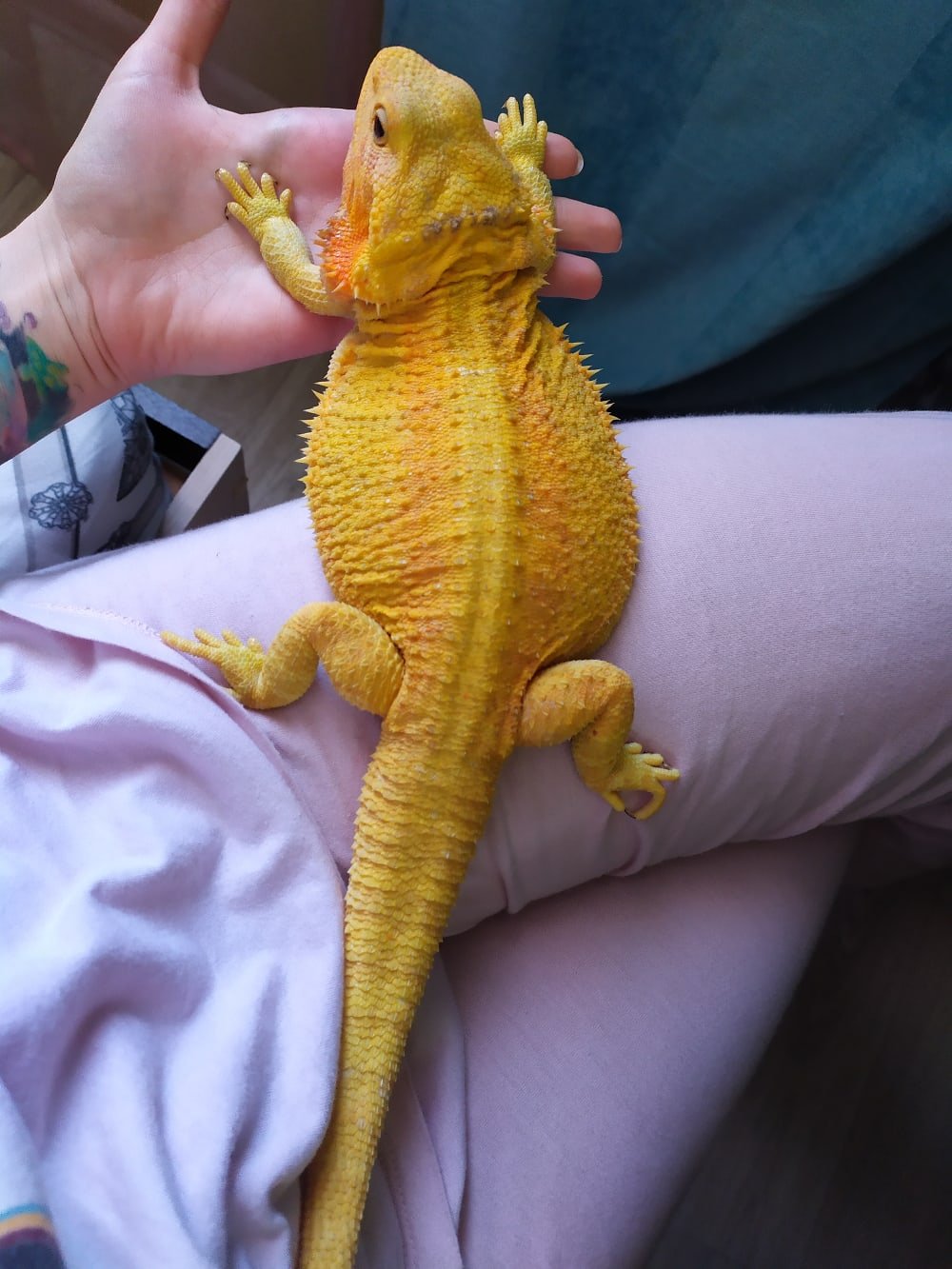
Since Spike I’ve kept seven bearded dragons across the full range of what this species throws at you. Mango, a rescue citrus morph, arrived severely metabolic and took fourteen months of rehabilitation before she was reliably eating and holding weight. Dune was a leatherback who showed me firsthand how reduced scaling changes thermoregulation behaviour in ways most care guides don’t mention.
Poppy, my current sandfire female, is three years old and living in a 200-gallon bioactive with a drainage layer and a rotating feeder insect colony. Over the years I’ve managed parasitic infections, follicular stasis, suspected CANV, post-impaction-surgery aftercare, and two dragons through full brumation cycles. That experience doesn’t make me a vet. It does mean I can tell the difference between a dragon that’s slightly off and one that needs an exotic vet that same day.
If you want to share experiences, ask questions, or just talk dragons with other keepers, I run the Beardie Husbandry Facebook community — come and join us.
How I Research
Every care standard on this site is validated against peer-reviewed sources — primarily Zoo Biology, Herpetological Review, and the Journal of Herpetological Medicine and Surgery. I use the Ferguson Zone UV methodology published by Gary Ferguson and validated by Frances Baines, and I cross-reference UV Index and PAR data against Arcadia, Exo Terra, and Zoo Med’s own published testing rather than marketing claims.
Where care recommendations have changed since the early 2010s, I explain why and update accordingly. Where the evidence is contested, I say so rather than picking the most convenient answer. I’d rather publish fewer articles I can stand behind than more articles I can’t.
What You Will Find Here
- Lighting Physics — UV Index, Ferguson Zones, PAR levels, and why tube placement matters more than brand.
- Habitat and Housing — enclosure sizing, thermal gradients, and bioactive builds that actually work long-term.
- Nutrition — feeder insect gut-loading, calcium-to-phosphorus ratios, and rotation schedules that prevent dietary boredom.
- Health and Behaviour — reading your dragon accurately, and knowing when to call the vet instead of waiting.
Warmly,
Sarah Ardley
Founder, Beardie Husbandry · Sarah on Facebook · Join the Community · Page last reviewed March 2026
Disclaimer: All information on this site is for educational purposes only and should never replace professional veterinary advice. If your dragon shows signs of illness, consult a qualified exotic veterinarian immediately.