Bearded Dragon Supplement Schedule: What to Dust and When
Getting a bearded dragon supplement schedule wrong tends to happen in one of two directions. Either the owner is dusting calcium with D3 at every single feeding because they want to be thorough, or they have one powder and no real plan. Both situations cause problems over time, and neither is obvious until the damage is already underway.
Once you understand what each product does and what changes the frequency you need, the whole thing takes about ten seconds per feeding to execute correctly.
The Three Supplements Every Keeper Needs
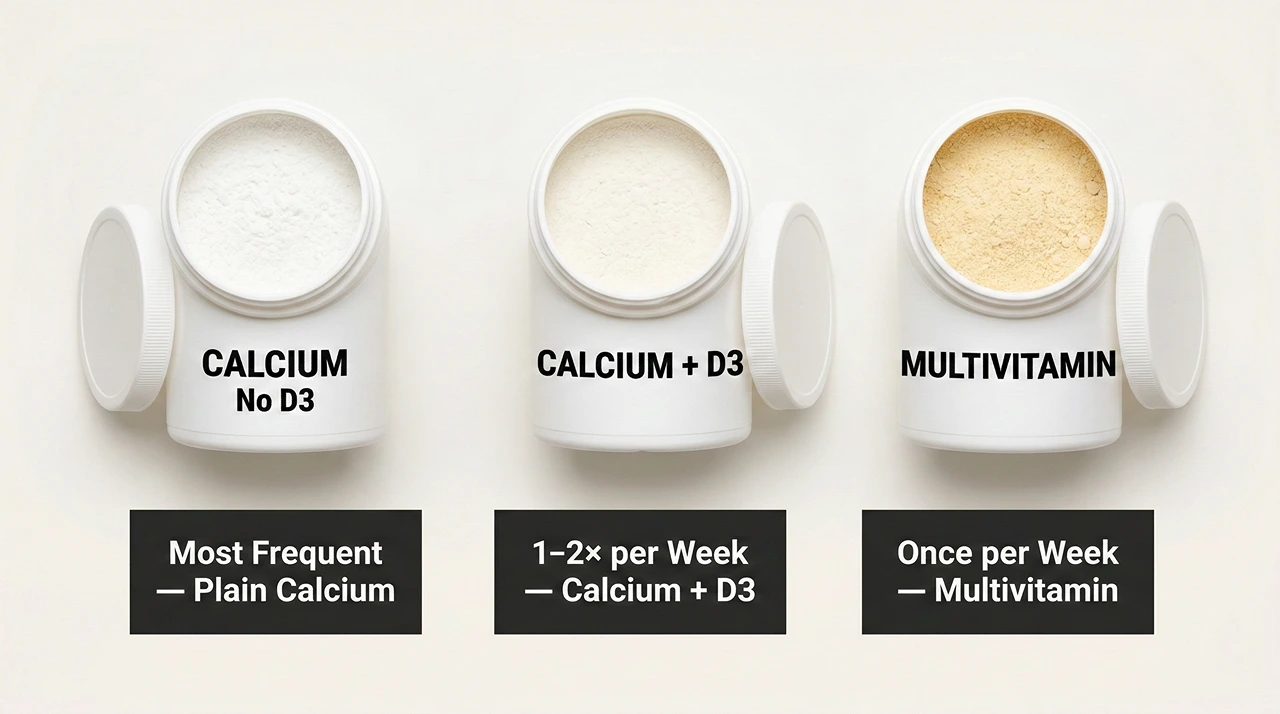
Plain calcium (no D3). Calcium carbonate powder with no added vitamins. This is the product you will use most often across every age stage. It corrects the calcium-to-phosphorus imbalance in feeder insects without stacking fat-soluble vitamins on top. When choosing a brand, look specifically for calcium carbonate on the ingredient list. Calcium gluconate sounds similar but delivers significantly less elemental calcium per gram and works poorly as a dusting powder. Rep-Cal plain calcium and Zoo Med Repti Calcium without D3 are both carbonate-based and widely available.
Calcium with D3. The same calcium carbonate but with vitamin D3 added. D3 is the hormone that allows calcium to pass through the gut wall into the bloodstream. Without adequate D3, all the calcium you dust simply passes through and does nothing useful. The critical detail is that D3 is fat-soluble, meaning the body stores it rather than excreting the excess.
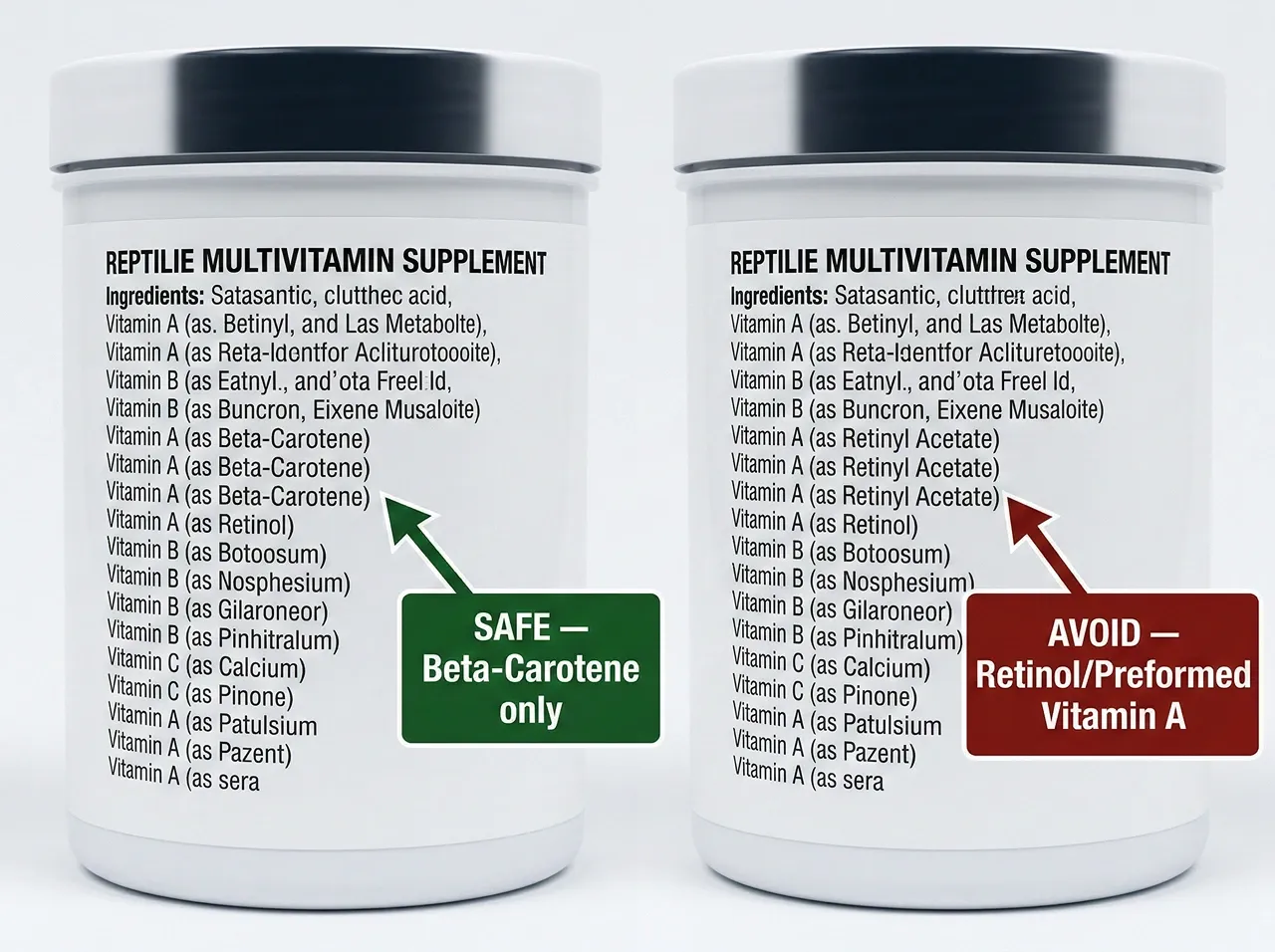
Multivitamin. A reptile-specific multivitamin fills the trace vitamin and mineral gaps a captive diet cannot reliably cover on its own. This product is used the least frequently of the three. The single most important thing to check before buying is the vitamin A source. Products containing preformed vitamin A (retinol) accumulate to toxic levels in reptiles. Only buy a multivitamin listing beta-carotene as the vitamin A source. The body converts this precursor form only as needed, with no toxicity risk at normal supplementation rates. RepCal Herptivite and Repashy Superfoods both use beta-carotene. If the label does not specify the vitamin A form at all, that product stays on the shelf.
Why Your UVB Bulb Changes Everything About D3
A dragon under a correctly functioning T5 HO UVB bulb synthesises its own D3 from UV exposure the same way it would in the wild. If that process is working, the requirement for dietary D3 drops considerably. A dragon already producing adequate D3 through UVB that also receives frequent calcium with D3 supplementation is accumulating from two sources simultaneously. That is how quiet D3 toxicity develops over months rather than days.
Several variables determine how much UVB your setup actually delivers to your dragon:
- Bulb type. A T5 HO 10.0 tube at the correct mounting distance delivers strong UVB. A T8 coil or compact bulb delivers significantly less. A mercury vapor bulb delivers very high UVB. If you run one, drop calcium with D3 from the schedule entirely and use plain calcium only.
- Bulb age. UVB output fades long before the bulb stops producing visible light. A T5 HO needs replacing every 12 months regardless of appearance. If you do not know the last replacement date, assume the bulb is depleted and replace it before adjusting the supplement schedule.
- Screen mesh. A mesh lid between the bulb and the dragon blocks up to 30 percent of UVB output. If your enclosure uses a mesh top with the UVB tube sitting on it, your dragon receives meaningfully less UV than the bulb’s rating suggests.
- Mounting distance. Too far from the basking surface and the UV index drops below the threshold needed for D3 synthesis. Check the manufacturer’s recommended distance range for your specific bulb and confirm the basking platform sits within it.
- Outdoor sun exposure. Unfiltered, unscreened outdoor time counts as real UVB. On any day your dragon has spent an hour or more outside in direct sun, skip the calcium with D3 dusting entirely.
The Schedule by Age
| Age / Stage | Plain Calcium | Calcium with D3 | Multivitamin |
|---|---|---|---|
| Baby (0 to 6 months) | 5x per week | 2x per week | 1x per week |
| Juvenile (6 to 18 months) | 4x per week | 2x per week | 1x per week |
| Adult (18 months+) | 3x per week | 1x per week | 1x per week |
| Gravid female | 5x per week | 2x per week | 1x per week |
These frequencies assume a correctly functioning T5 HO UVB setup with a current bulb and no mesh screen between the bulb and the dragon. Mercury vapor bulb users should remove calcium with D3 from the schedule entirely.
When a High-Calcium Feeder Changes Your Dusting Math
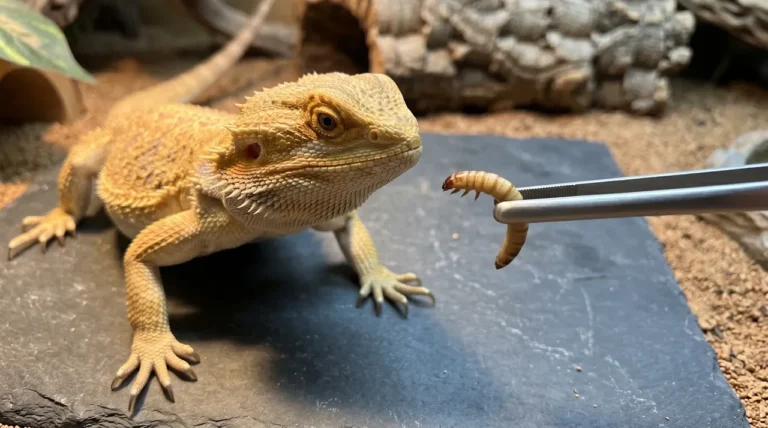
Black soldier fly larvae are the most obvious example here, and this is something almost no supplement guide mentions. BSFL run a naturally high calcium load and a much better Ca:P ratio than crickets or mealworms. Roughly 1.5:1 compared to the near-inverted ratios you get from most staple insects. If your dragon’s protein diet leans heavily on BSFL, superworms, or hornworms as regular feeders rather than occasional treats, the calcium deficit you are trying to correct through dusting is already smaller.
For dragons eating BSFL as a primary staple, drop plain calcium by one feeding per week from the age-appropriate schedule. Do not drop calcium with D3 below once per week unless you are running an MVB. The feeder’s natural calcium content changes how much you need to add. It does not change the D3 requirement, which is governed by UVB, not by diet.
How to Dust So the Powder Actually Stays On
The technique determines how much supplement the dragon actually receives. Too much powder and the feeder tastes wrong. Dragons learn fast to shake the coating off or begin refusing dusted feeders once they connect the smell with something unpleasant. The target is a light, even coating that makes the feeder look slightly pale but not powdery-white.
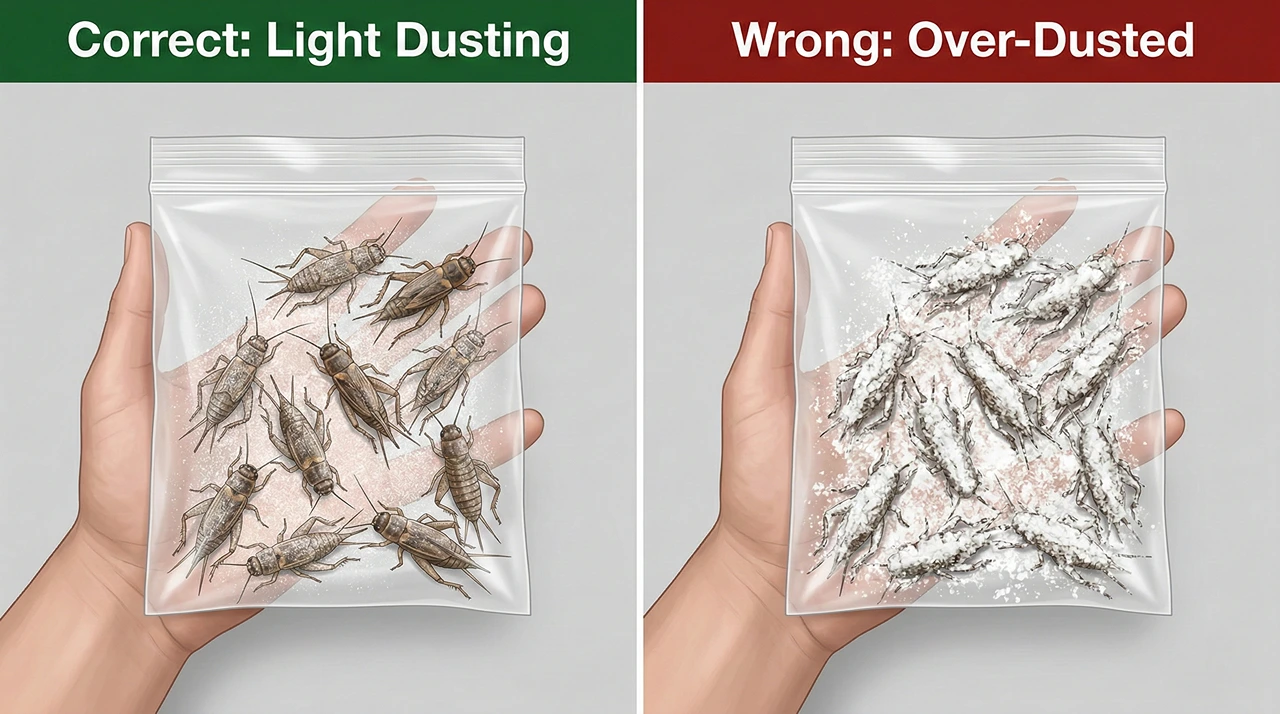
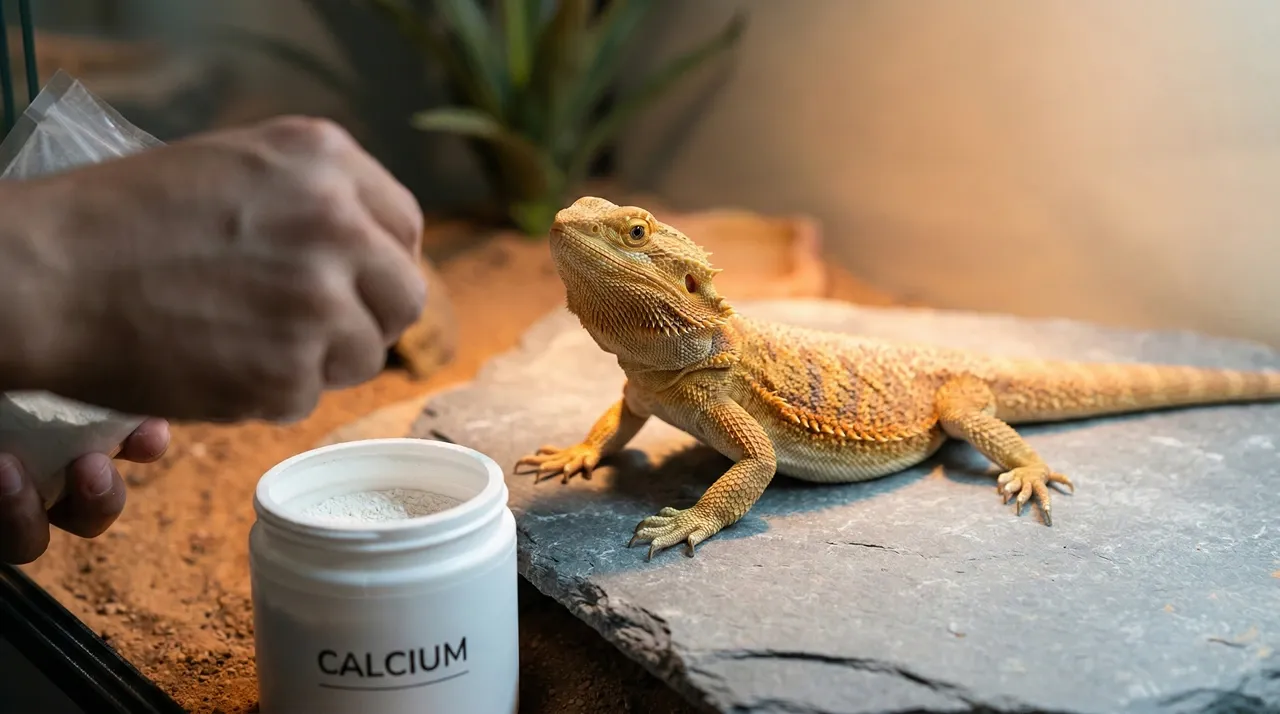
A zip-lock bag works better than a bowl or open container. Drop the feeders in, add a small pinch of powder, less than you think is needed, seal the bag and give it one or two gentle shakes. You want to see the crickets’ natural colour through a faint white haze, not a chalky crust. Dust immediately before tipping them into the enclosure. Powder falls off crickets quickly, and a feeder dusted 30 minutes before feeding has lost most of its coating by the time the dragon finds it.
If your dragon has started refusing dusted feeders, the coating is almost certainly too heavy. Drop back to the smallest visible dusting and run several feeding sessions before drawing conclusions. Do not mix calcium and multivitamin in the same dusting. Calcium dilutes the multivitamin concentration and you get an unpredictable dose of both. Keep them on separate days exactly as the schedule indicates.
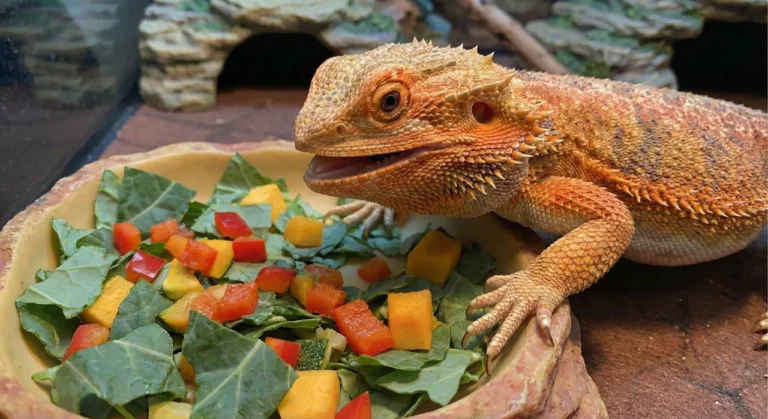
For salad greens, a light sprinkle directly over the bowl at two or three insect-feeding days per week is enough. Many staple leafy greens already carry reasonable calcium levels on their own, and the same rules around not over-dusting apply.
What Your Dragon’s Urates Are Telling You
Urate colour is the clearest free feedback signal you have on whether your supplementation and hydration are in balance. Most keepers check it occasionally. The ones who rarely have supplement problems check it at every bowel movement.
Healthy urates are white to off-white and have some give to them. Not rock-hard, not liquid. Consistently orange or yellow urates in a dragon that is not drinking well point to dehydration before they point to a supplement problem. Address hydration through regular bathing and dietary moisture first. Consistently chalky-white, dry urates in a dragon that is drinking and soaking normally are the signal to reduce calcium with D3 by one feeding per week and monitor for four weeks before drawing further conclusions.
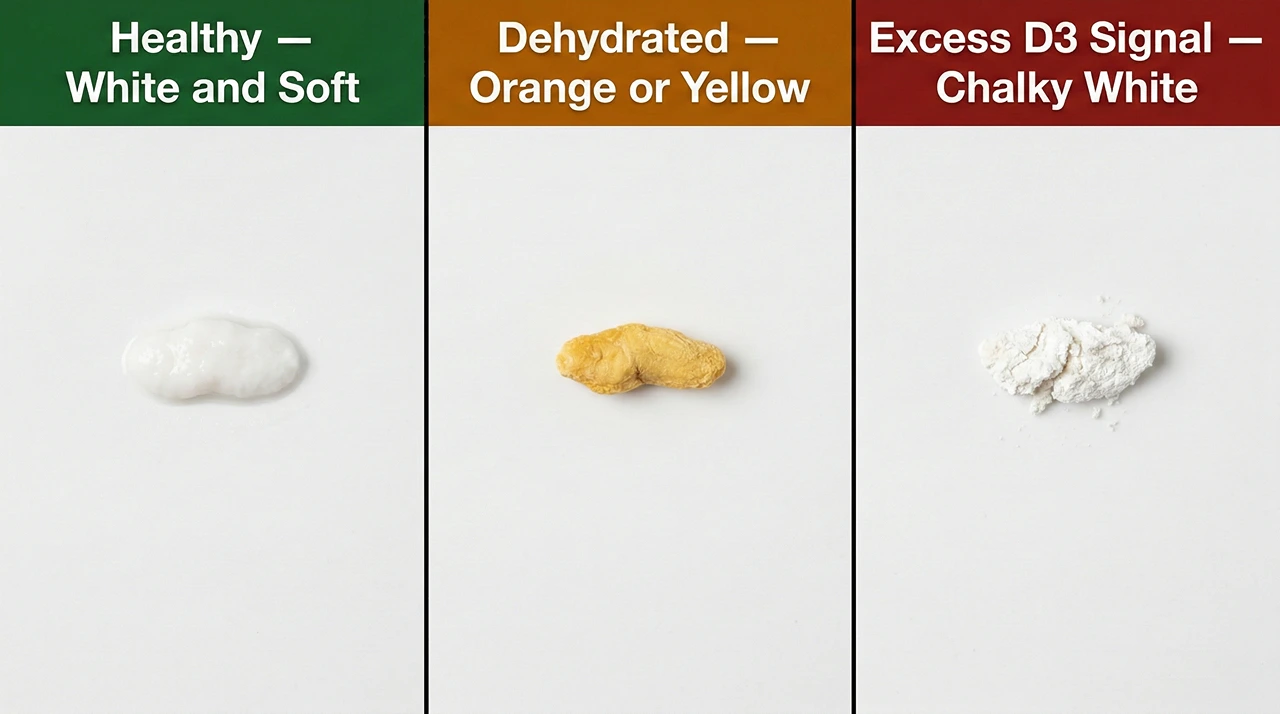
One abnormal urate is not a pattern. Three in a row is a pattern worth acting on. The schedule above is a starting framework. Your individual dragon’s urates are the real-time confirmation that it is calibrated correctly for your specific setup.
When You Are Not Sure About Your UVB History
Rescue dragons, recently rehomed animals, or any dragon where the previous UVB setup is genuinely unknown deserve a more cautious starting position. If you cannot confirm a working T5 HO with a current bulb was in place before the animal came to you, treat the D3 situation as if UVB was absent or unreliable. Run calcium with D3 at three times per week for the first six weeks while you establish a correct UVB setup, then drop back to the age-appropriate schedule once you have confirmed the bulb is working and correctly positioned.
Do not hold three times per week indefinitely as a precaution. Once your UVB setup is confirmed and the bulb is current, the accumulation risk returns and the frequency should come back down with it.
How to Store Supplements So They Stay Effective
Calcium carbonate absorbs moisture from the air and clumps over time. A clumped powder does not dust evenly. You get heavy patches on some feeders and bare spots on others. Store all supplement powders in a cool, dry location with the lid firmly closed after every use. The reptile room itself is a poor storage location if it runs at elevated humidity. The same goes for bathrooms or anywhere with steam exposure.
A hardened block at the base of the tub means the powder has been exposed to moisture repeatedly. Tap it apart before use, but a powder that has gone through multiple wet-dry cycles has likely lost potency and should be replaced. Most calcium carbonate powders remain effective for 18 to 24 months from the manufacture date if stored correctly. Multivitamins degrade faster. 12 months from opening is a reasonable limit. Check the date on the base of the tub before assuming a product sitting on your shelf is still doing its job.
When Something Looks Wrong
Signs of calcium deficiency. Soft or bowing limbs in juveniles, tremors or twitching at rest, difficulty walking or dragging the hindlimbs. These are the early markers of metabolic bone disease. If you are following the correct schedule and still seeing these signs, check the UVB setup first. Deficiency on a correct supplement schedule almost always traces back to a UVB failure rather than the supplementation itself.
Signs of D3 excess. Reduced appetite, general lethargy, or the consistently chalky urates described earlier in a dragon with normal hydration. Drop calcium with D3 to once per week, maintain total calcium frequency using plain calcium, and monitor for four weeks. If appetite and urate colour do not improve in that window, bloodwork through a reptile vet will confirm calcium levels directly.
Signs of vitamin A toxicity from the wrong multivitamin. Swelling around the eyes or eyelids, unusual skin changes, or lethargy appearing shortly after introducing a new multivitamin. Stop using the product and check the label. If it lists retinol or preformed vitamin A rather than beta-carotene, that is your answer. Contact a reptile vet if the swelling persists after discontinuing.
Frequently Asked Questions
What Is the Right Schedule for a Baby Bearded Dragon
Plain calcium five times a week, calcium with D3 twice a week, and multivitamin once a week. All applied to insect feeders immediately before serving. This supports rapid bone growth in the first six months without pushing D3 frequency into accumulation territory.
Do I Still Need Calcium with D3 If I Have a UVB Light
If your UVB setup is correct and the bulb is current, once or twice a week is sufficient for most dragons. A dragon already synthesising D3 through UVB does not need large amounts of dietary D3 on top, and the accumulation risk over months is real. Mercury vapor bulb users should not use calcium with D3 at all.
Can I Mix Calcium and Multivitamin in the Same Dusting
No. Calcium powder dilutes the multivitamin concentration and you end up with an unpredictable dose of both. Run them on separate days as the schedule indicates. That separation is deliberate and matters for consistent dosing of both products.
How Do I Know If My Multivitamin Is Safe to Use
Check the vitamin A source listed in the ingredients. Beta-carotene is safe at normal supplementation rates. Retinol or preformed vitamin A accumulates to toxic levels in reptiles. RepCal Herptivite and Repashy Superfoods use beta-carotene. If the label does not specify which form is used, do not buy that product.
Does the Schedule Change When My Dragon Brumates
A dragon in brumation is not eating regularly, so the schedule pauses for that period. When feeding resumes after brumation ends, restart at the age-appropriate frequency from the table above. Do not increase frequency to compensate for dustings missed during brumation.
Before Your Next Feeding
- ✅ Confirm which supplement you are using today against the schedule for your dragon’s age. Plain calcium, calcium with D3, or multivitamin. Not two at once.
- ✅ Check your multivitamin label now if you have not already. Beta-carotene only. If it lists retinol or preformed vitamin A, replace it before the next feeding.
- ✅ Check your UVB bulb age. If it is over 12 months old, replace it today. A failing bulb cannot be compensated for by increasing D3 frequency.
- ✅ Dust immediately before feeding, not in advance. Powder falls off crickets in under 30 minutes.
- ✅ Check your tubs for clumping. A hardened block means the powder has absorbed moisture repeatedly and should be replaced.
- ✅ If your female is gravid, move to baby-schedule frequencies now and hold there until two weeks after she has laid. The calcium demand of egg production depletes skeletal reserves faster than the adult maintenance schedule can replace them.
- ✅ Note urate colour at the next bowel movement. Consistently orange means hydration needs work. Consistently chalky-white in a well-hydrated dragon means reduce calcium with D3 by one feeding per week.
Download the full guide as a printable PDF. Six pages covering the schedule by age, dusting technique, urate colour chart, and a troubleshooting table.
Written by
Sarah ArdleySarah has kept bearded dragons for over ten years. She founded Beardie Husbandry after discovering that most mainstream care advice — including what she followed with her first dragon — was doing more harm than good. Every article on this site is grounded in veterinary research and real keeper experience.