Bearded Dragon Won’t Eat Greens? 7 Tricks for Stubborn Eaters
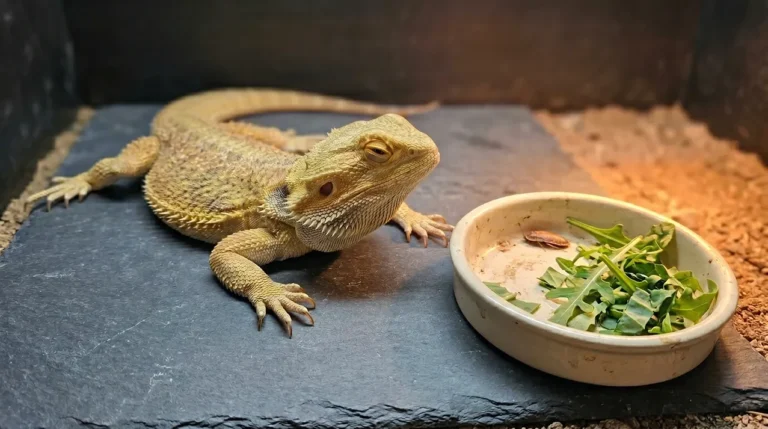
The salad sits there, untouched, wilting under the basking lamp while your dragon fixates on the feeder bin across the room. If your bearded dragon won’t eat greens, you are dealing with one of the most common frustrations in reptile keeping, and it is almost always a solvable one.
The bulk of an adult dragon’s diet should be plant matter once they reach full size. Persistent refusal is a real nutrition problem rather than a quirk to shrug off.
The good news is that most cases trace back to a handful of fixable variables. Jumping straight to tricks without addressing the root cause means the problem comes back in two weeks.
Why Baby Dragons Won’t Eat Greens
Before trying anything, confirm you actually have a problem. Baby dragons under six months are biologically wired for protein. Their growth rate demands it, and greens are not their priority at this stage. Offer salad daily for familiarity, but do not panic if none disappears.
Juveniles between six and twelve months are in a transition zone. A seven-month-old still gravitating toward bugs over salad is not a crisis.
By twelve to fourteen months, a healthy dragon should show at least some interest in plant matter. Adult dragons who refuse all vegetables month after month are the ones these seven tricks address.
By adulthood, a sensible insect feeding schedule has bugs appearing once or twice a week, with plant matter filling everything in between. If that ratio is inverted in your setup, start here.
1. Cut the Bug Ration Right Down
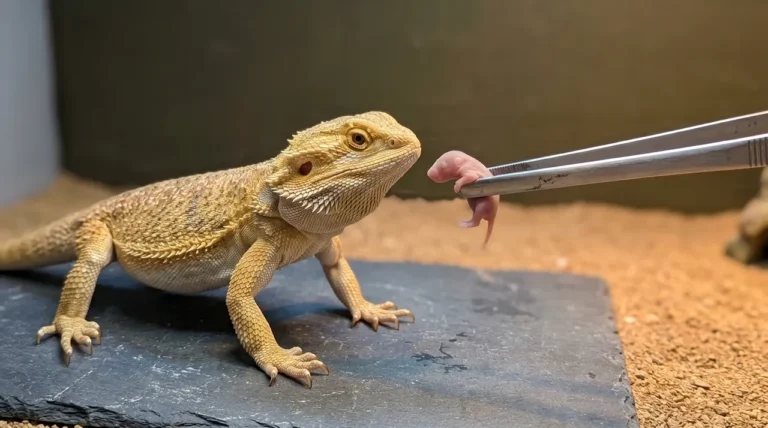
The single most common reason a bearded dragon won’t eat greens is that it is already full on insects. Bugs are calorie-dense, protein-rich, and far more appealing to a dragon than any salad. If you are offering twenty dubias every day, there is no biological incentive to touch the bowl.
Adult dragons need insects once to twice per week at most. If you are feeding bugs every day or every other day, cut back immediately. The dragon will express dramatic displeasure. Hold firm.
A healthy adult carries fat reserves that see it through several days without insects comfortably. Once genuine hunger arrives, the salad starts looking considerably more interesting.
This is not a trick. It is restoring the conditions that make the salad bowl relevant in the first place.
2. Change What You’re Putting in the Bowl
Offering the same three greens every day for two years will bore even an enthusiastic eater. Bearded dragons have real taste preferences and can develop genuine aversions to repetitive offerings. The full approved food list contains far more variety than most owners ever explore.
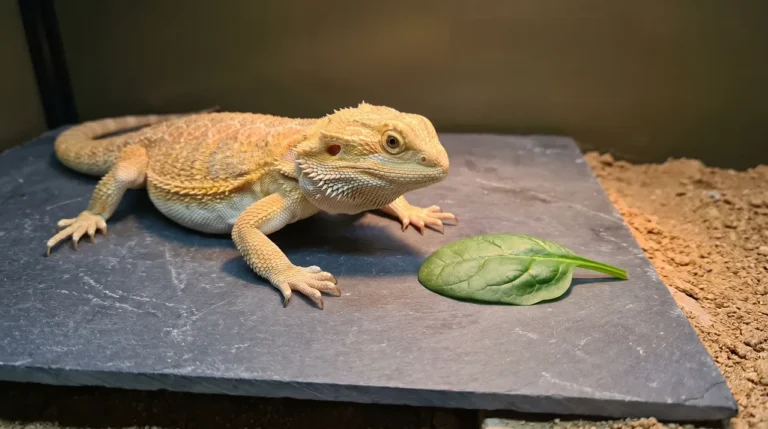
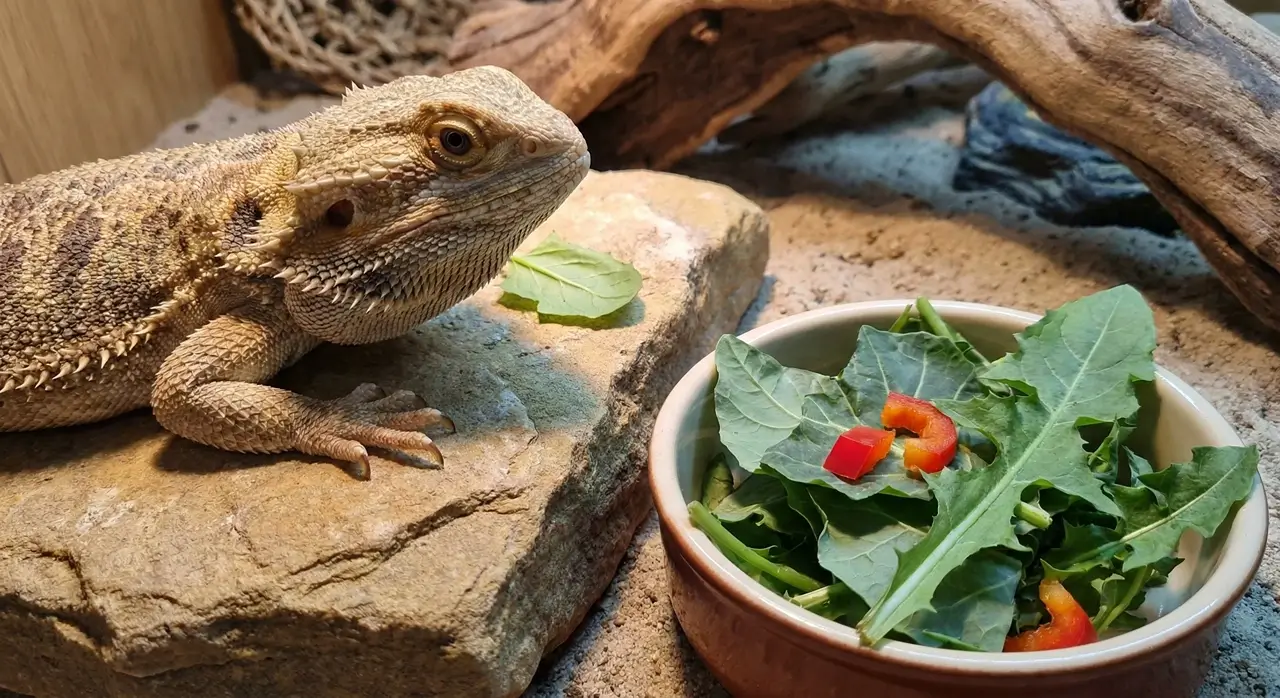
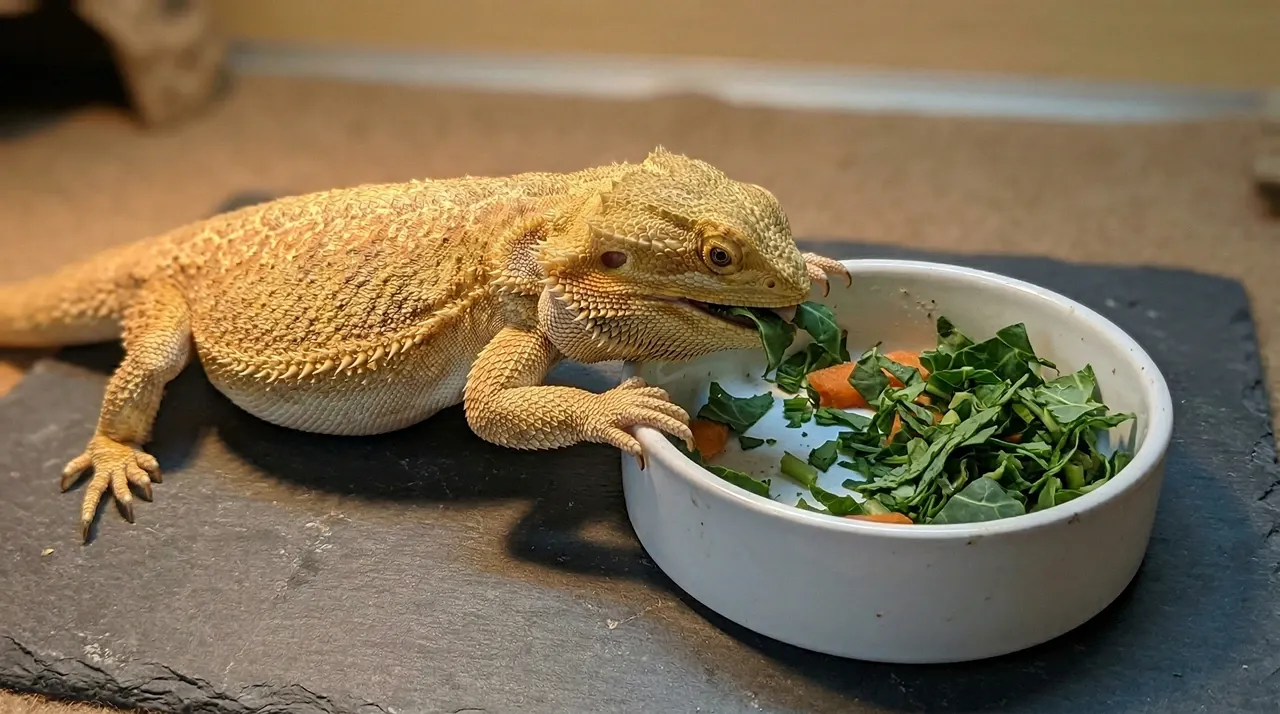
Rotate through collard greens, endive, escarole, turnip greens, dandelion greens, and mustard greens as your base options. Wild bearded dragons eat a surprisingly bitter diet, and many captive dragons respond better to those bitter options than to the mild supermarket staples they have been ignoring for months.
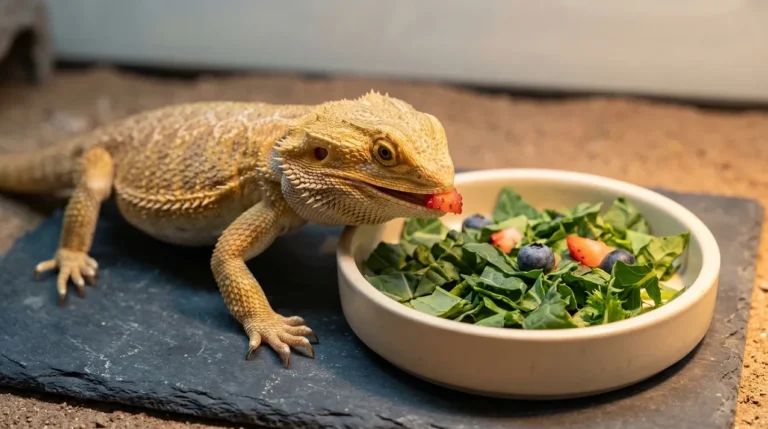
Color helps too. Red and orange bell pepper strips, shredded butternut squash, and grated carrot often attract attention that a bowl of uniform green does not. Bearded dragons use color to identify food, and a visually varied salad holds their attention far better than a monochrome pile.

3. Your Chop Size Might Be the Problem
Texture is underrated in this conversation. Collard greens torn into large, tough pieces can get stuck to the roof of a dragon’s mouth, which creates an aversion fast. Once that happens, the dragon will avoid that green even when it is prepared differently.
Chop everything finely. Aim for pieces no bigger than the space between your dragon’s eyes, which is the same sizing rule used for safe feeders. Fine chop makes greens easier to pick up, easier to swallow, and harder to sort around while hunting for the bugs underneath.
Freshness matters more than most keepers realise. Wilted, slightly slimy greens from the back of the fridge are unappetizing by any measure. Rinse greens just before serving so they carry a light surface moisture, and use them within one to two days of purchase.
4. You’re Probably Over-Dusting the Calcium
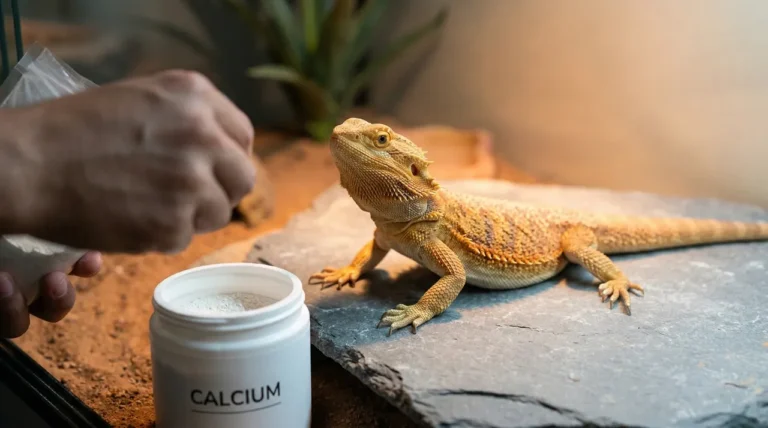
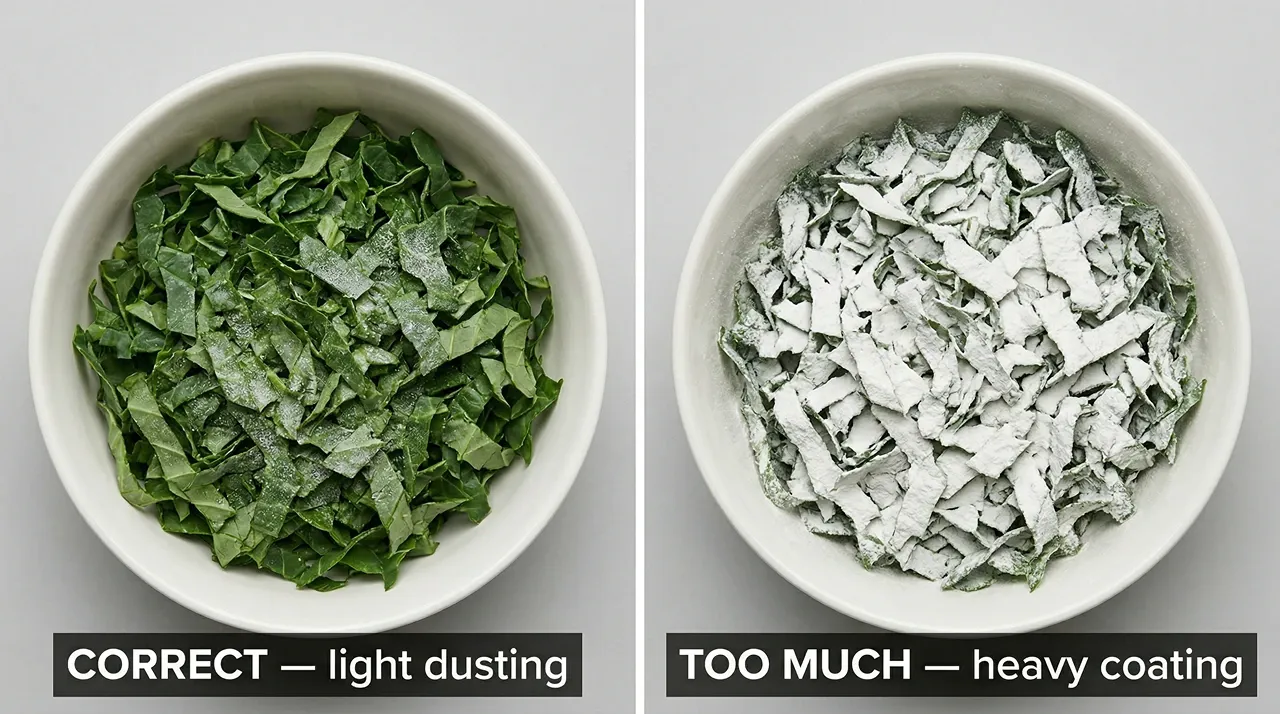
This catches a lot of keepers off guard. Heavy calcium dusting makes greens taste chalky and unpleasant. If you are coating every leaf in a thick white layer, your dragon may not be refusing greens. It may be refusing the calcium.
Calcium should go on as a light, barely visible dusting across part of the salad. The right supplement schedule for an adult with solid UVB exposure calls for calcium without D3 roughly three times per week, not a heavy coat at every single meal.
Over-dusting does two things at once: it ruins the flavour of the greens and risks throwing calcium balance off over time. Dragons under a quality T5 HO tube are synthesising their own D3 through UVB conversion, so D3 in every dusting is rarely necessary and often counterproductive.
5. Try Timing and Motion
A salad offered before your dragon has properly warmed up is often ignored simply because the appetite is not switched on yet. Cold-blooded animals need heat to activate digestion, and a basking zone reaching 100–110°F is what gets that process moving.
Wait until your dragon has been basking for sixty to ninety minutes before placing the salad bowl. That is when digestive enzyme activity is highest and appetite is at its peak.
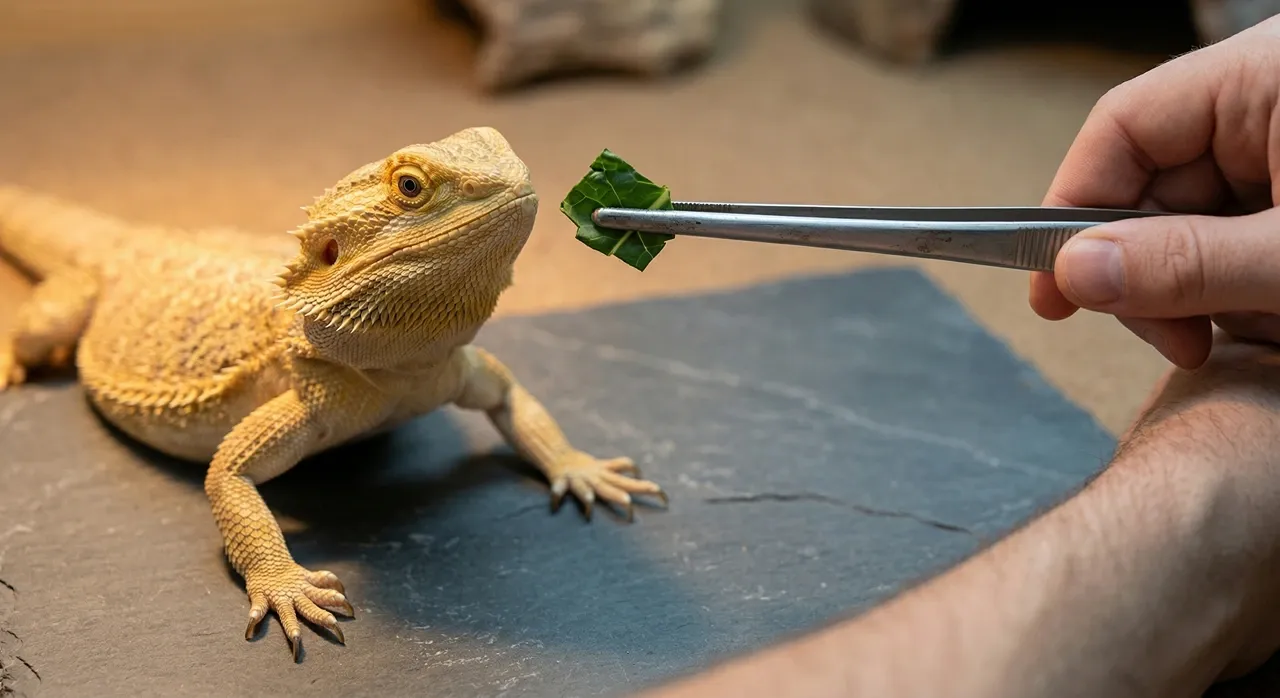
Motion helps too. Bearded dragons are visual hunters and their feeding response is triggered by movement.
Wiggling a piece of greens with feeding tongs for thirty seconds gets attention that a static salad bowl never will. Many dragons that completely ignore a still bowl will snap at moving vegetation on instinct.
6. A Flavor Booster Can Break the Standoff
Bee pollen granules are the most reliable topper available. The scent is powerful, and dragons that ignore their salad entirely often show immediate interest when bee pollen is present. A light sprinkle is enough. The goal is to flag the greens as edible, not bury them under flavouring.
Well-gut-loaded feeders placed directly in the salad bowl are another solid option. The dragon comes over hunting bugs and picks up greens in the process. Load the feeders on the same greens you are offering: collard greens, dandelion, and turnip, so even the insects are delivering plant nutrition.
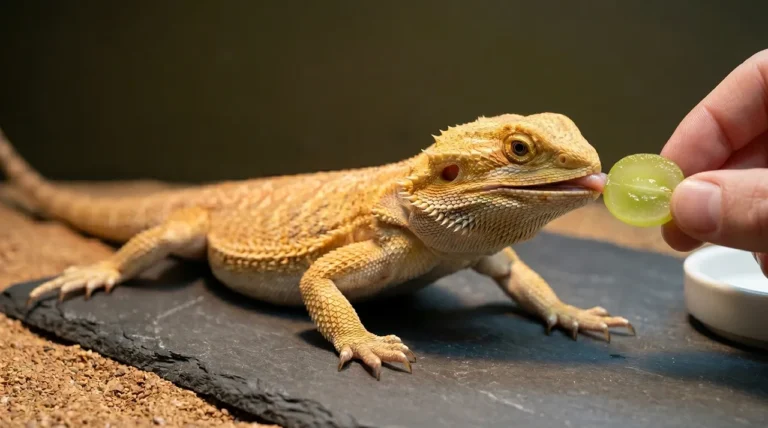
Avoid relying on fruit as a daily topper. A small piece of mango occasionally is fine, but using fruit every single day trains the dragon to hold out for the sweet option, which makes the underlying problem worse rather than better.
7. The Bug Holdout for Adults
This is the last resort, and it is only appropriate for adults at a healthy weight. Stop offering insects completely. Keep fresh greens in the bowl every day and maintain hydration through regular warm soaks to offset any reduction in water intake.
A healthy adult will typically cave within two to five days. Some stubborn individuals hold out longer. Experienced keepers have documented dragons refusing food for one to two weeks before finally accepting the salad, and those animals were fine.
Reptile metabolisms handle gaps in food availability that would alarm any mammal owner.
When Greens Refusal Needs a Vet
If you have worked through all seven approaches across several weeks without improvement, rule out health causes. A dragon consistently refusing everything, greens and insects alike, alongside failure to bask normally, warrants a vet visit rather than more troubleshooting.
Parasites are worth considering in persistent non-eaters, particularly in rescue dragons or animals with a history of poor husbandry. A fecal float test at a reptile-experienced vet rules this out quickly and cheaply.
According to VCA Animal Hospitals, intestinal parasites rank among the most common health issues in captive bearded dragons. They can suppress appetite even when the dragon is still accepting insects.
If your dragon eats bugs but won’t touch the salad for weeks despite correct husbandry, a fecal test makes sense before assuming pure stubbornness.
Frequently Asked Questions
How Long Before Greens Refusal Is Serious
For adults, two to four weeks of consistent refusal alongside normal insect intake is the point to start troubleshooting actively. If the dragon is also refusing bugs, losing weight, or showing lethargy, that timeline shortens to a few days before a vet check makes sense.
Do Dragons Need Greens Offered Every Single Day
Yes, for adults. Daily availability reinforces that greens are food, which matters more than any single successful feeding. Even if your dragon ignores the bowl, keeping it present maintains the habit and keeps greens in the environment.
What Greens Do Reluctant Dragons Accept First
Dandelion greens and endive tend to have the best uptake with reluctant dragons because their slightly bitter flavour profile is closer to what wild bearded dragons eat. Turnip greens and collard greens are close behind when chopped finely enough to avoid the texture problem.
Why Does My Dragon Ignore the Salad
Insects are calorie-dense, high-protein, and moving. Those three qualities override competing dietary instincts. A dragon that can get all its calories from bugs has no biological pressure to try the salad, which is why reducing bug frequency is almost always the correct first fix.
Is Fruit a Safe Salad Topper
Occasionally, yes. A small amount used sparingly can draw a reluctant dragon to the bowl initially.
The risk is that daily fruit use teaches the dragon to hold out for the sweet ingredient and ignore the greens underneath. Treat it as a short-term bridge strategy, not a regular habit.
Start Here This Week
The most productive order is: reduce bugs to the correct adult frequency first, then change the greens on offer, then fix the chop size and freshness, then check the supplement dusting.
If those four adjustments do not shift anything after two weeks, add bee pollen and try the timing approach. Most adult dragons come around within two to four weeks once the bug ration drops and the salad variety improves.
The holdout method is a genuine last resort for the most stubborn cases, not a starting point.
If your dragon has never shown any interest in plant matter and is also losing weight or visibly unwell, skip the tricks and book a vet visit. No husbandry adjustment fixes an underlying health problem.
Written by
Sarah ArdleySarah has kept bearded dragons for over ten years. She founded Beardie Husbandry after discovering that most mainstream care advice — including what she followed with her first dragon — was doing more harm than good. Every article on this site is grounded in veterinary research and real keeper experience.