Bearded Dragon Body Language Every New Owner Must Know
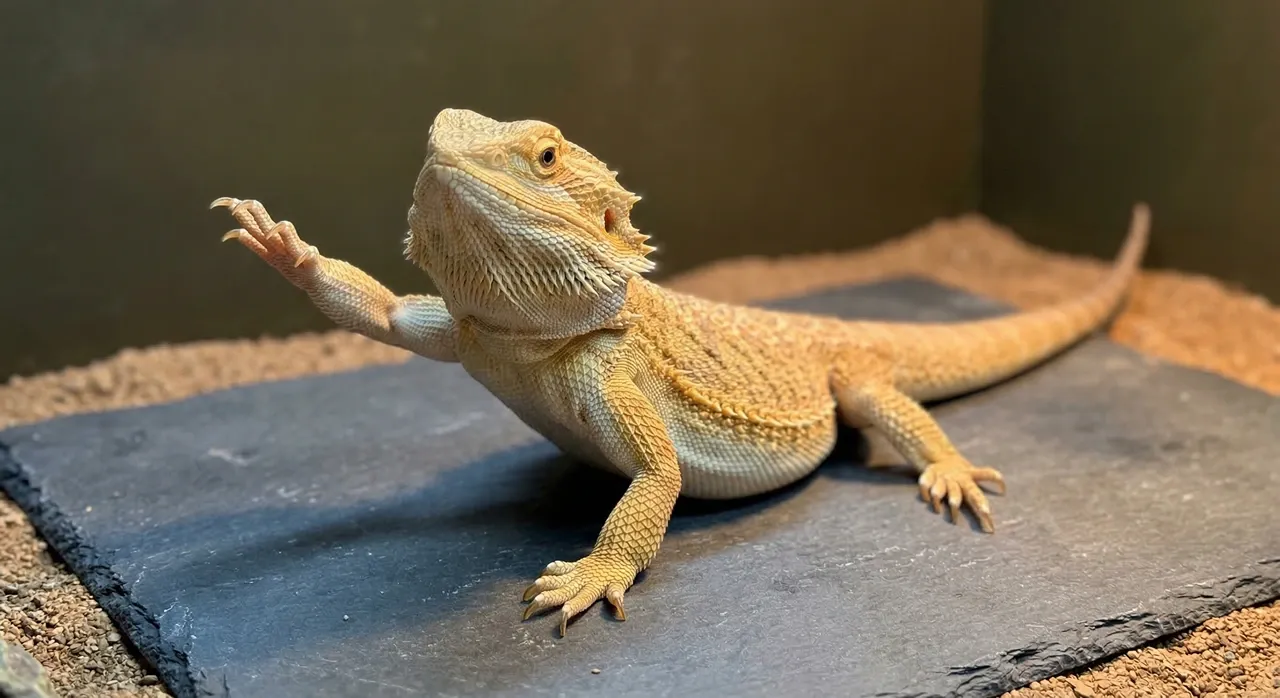
Most new owners notice it within the first week. You walk up to the tank and your beardie raises one front leg and slowly rotates it in a wide circle, like a tiny, unhurried wave. It looks almost deliberate, almost friendly.
What exactly is going on? Learning to read bearded dragon body language is one of the most practical skills you can develop, and the good news is that once you understand the logic behind these signals, most of them start making sense quickly.
The challenge is that the same behaviour can mean different things depending on context. A dark beard during a morning warm-up is not the same as a dark beard at 2pm in a 90°F enclosure.
An open mouth while basking is normal thermoregulation. An open mouth with laboured breathing is not. The goal here is to help you understand what is actually happening so you can make the right call every time.
What Arm Waving Actually Means
That slow, circular arm raise is a submissive gesture. In the wild, bearded dragons use it to communicate “I see you and I am not a threat” to a larger or more dominant animal nearby. When your dragon waves at you, they are acknowledging your presence and signalling that they are not challenging you.
It is not a greeting in the way a dog wags its tail. It is closer to a respectful acknowledgment from a smaller animal to a much larger one.
Juveniles wave far more often than adults, which makes sense. They spend more of their time being the smallest animal in any given situation. Baby beardies in a pet store wave constantly at each other and at anyone who approaches. As a dragon matures and grows more confident in its territory, the waving tends to drop off significantly.
When Waving Becomes a Stress Signal
A slow, wide circular wave is a normal submission signal and not a concern. What you want to watch for is rapid, frantic waving, especially if it is paired with a darkened beard or a flattened body.
That combination tells you the animal is overwhelmed, not just being polite. A dragon that waves every single time you approach, long after the settling-in period, may be living with a persistent stressor you have not identified yet.
If you cannot identify an obvious trigger, run through these three checks:
- Basking spot and cool-side temperatures, since both ends of the gradient matter
- Reflections in the glass from room lighting or windows opposite the tank
- Recent changes in the room, such as new furniture, new pets, or increased foot traffic past the enclosure
Head Bobbing Is Not Always Dominance
Speed is the key variable here. A fast, sharp head bob, where the head drops quickly and comes back up with force, is a dominance display. Males do this most often, toward other dragons, toward their own reflection, toward you, and sometimes apparently toward nothing you can identify.
A slow, almost lazy head bob is the opposite. It is a submission acknowledgment, the head-bobbing equivalent of the arm wave.
Males start head bobbing heavily during mating season, and what many owners mistake for aggression directed at them is simply seasonal hormonal behaviour. The beard may darken, the body posture stiffens, and the frequency increases significantly. It settles down once the hormonal peak passes, usually within a few weeks.
Why Your Dragon Bobs at You
When a beardie bobs at you specifically, it is establishing that you are in its territory. This is not the same kind of aggression as a bite. It is communication.
The correct response is not to stare it down or back away, but to go about your normal routine calmly. Dragons that bob frequently at their keepers tend to be males in their first few seasons who have not yet accepted you as part of the permanent landscape. It almost always reduces with time and consistent handling.
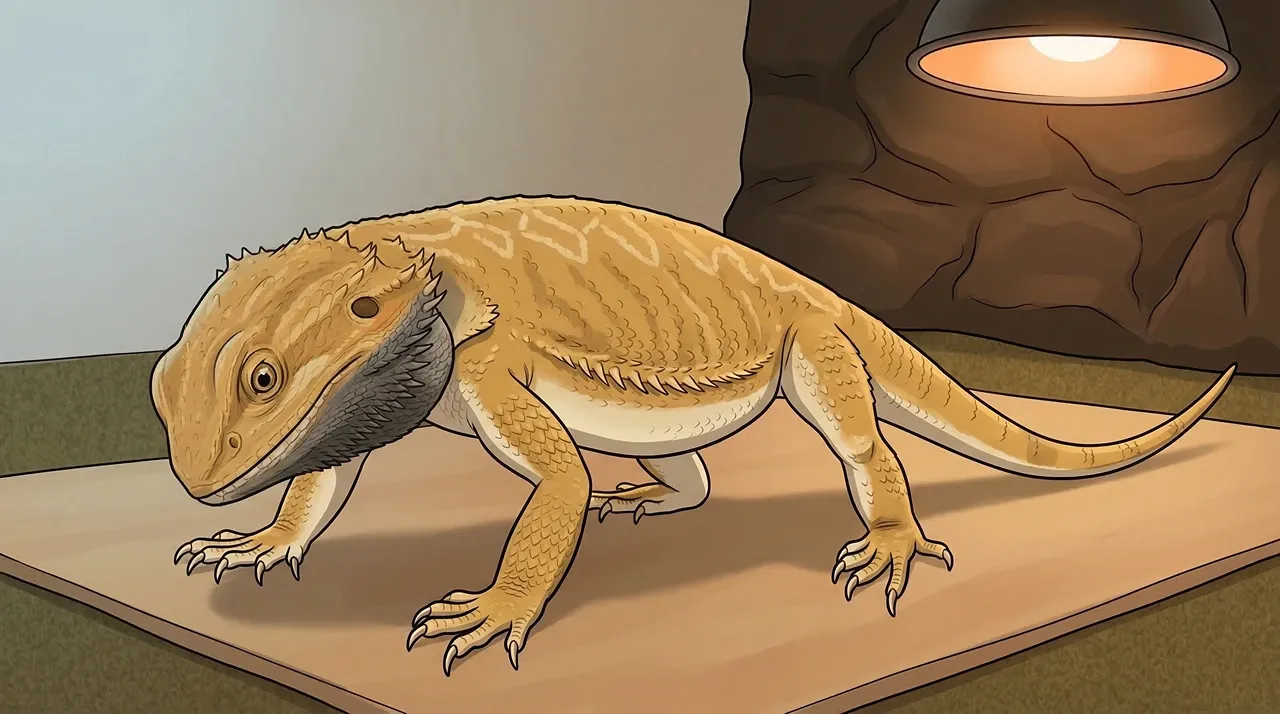
The Black Beard Has More Than One Cause
A persistently dark beard is the signal that gets the most attention from new owners, and for good reason. The mistake is assuming it always means the same thing.
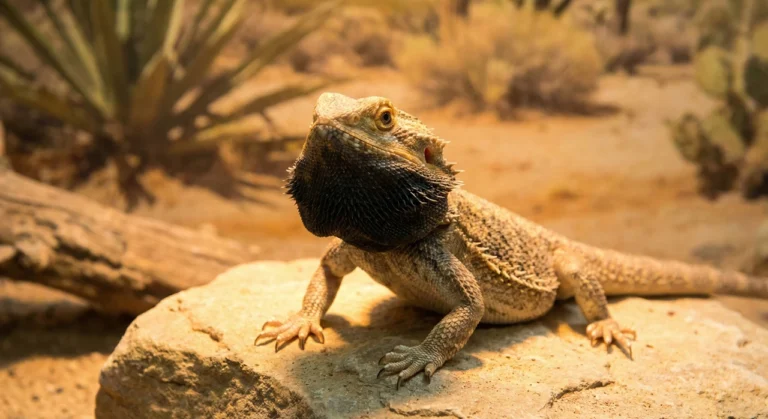
A dark beard first thing in the morning, before the enclosure has warmed up, is almost always a thermoregulation response. Bearded dragons darken their skin to absorb heat more efficiently when they are cold, and the beard is often the first area to change colour.
It should fade to normal within twenty to thirty minutes of basking. If it does, you have nothing to worry about.
A dark beard that appears mid-afternoon in a properly heated enclosure, especially if paired with a puffed body or a flat pancaked posture, points to stress or illness. A dark beard that stays dark all day, every day, regardless of temperature, is a signal worth taking seriously. A detailed breakdown of black beard causes, from breeding season to pain response, covers each scenario with the context you need to tell them apart.
Gaping at the Basking Spot Is Normal
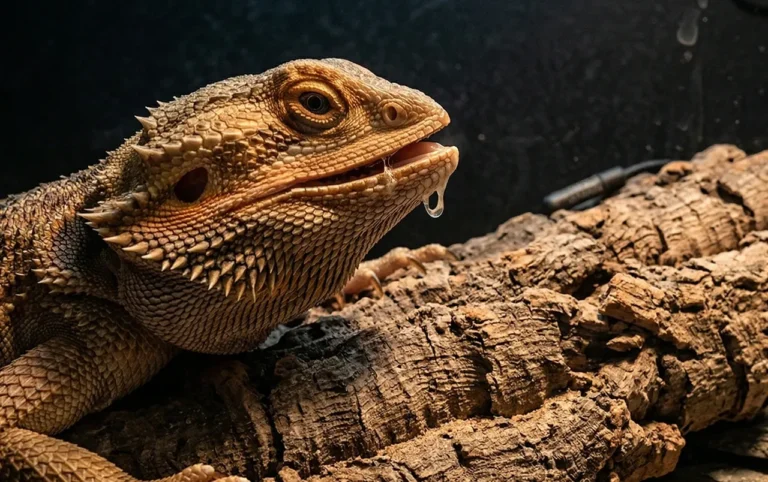
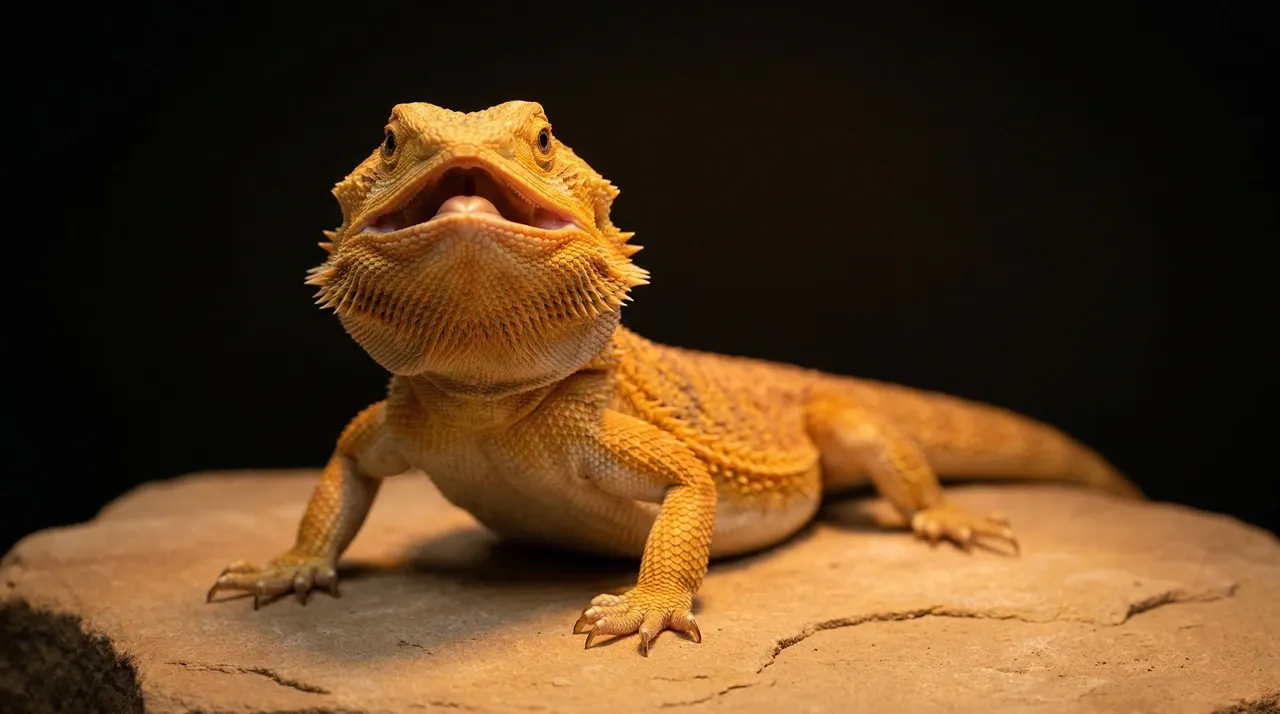
An open mouth while basking is not a sign of illness. Bearded dragons cannot sweat, so they thermoregulate by gaping. Holding the mouth open allows excess body heat to escape through evaporation from the mouth tissues.
You will see it most often when the basking surface temperature is on the higher end, around 105 to 110°F. It typically lasts a few minutes before the dragon moves to a cooler part of the enclosure on its own.
When an Open Mouth Means Trouble
Gaping that continues away from the basking spot, especially on the cool side of the enclosure, is different. A dragon sitting in the cooler zone with its mouth open, particularly if the breathing sounds audible, clicks, or wheezes, needs a closer look.
A respiratory infection often shows up through mouth breathing and mucus around the nostrils before any other signs appear. Catching it at this stage is significantly easier to treat than waiting for the condition to progress further.
Gaping paired with a darkened beard and a puffed body is a threat display rather than an illness signal. You might see this when the dragon feels cornered or is reacting to something alarming outside the enclosure.
Pancaking Means Two Different Things
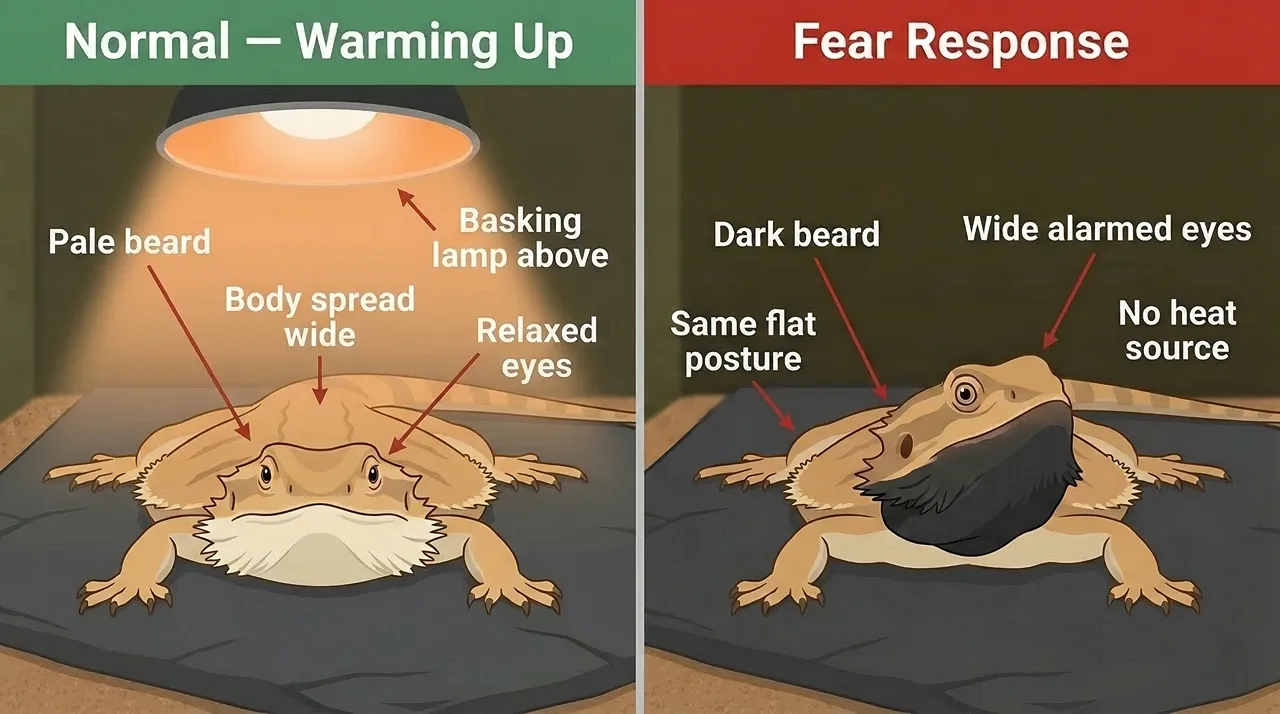
Body flattening, where the dragon presses itself wide and low against the surface and spreads its flanks outward to create maximum surface area, has two distinct causes.
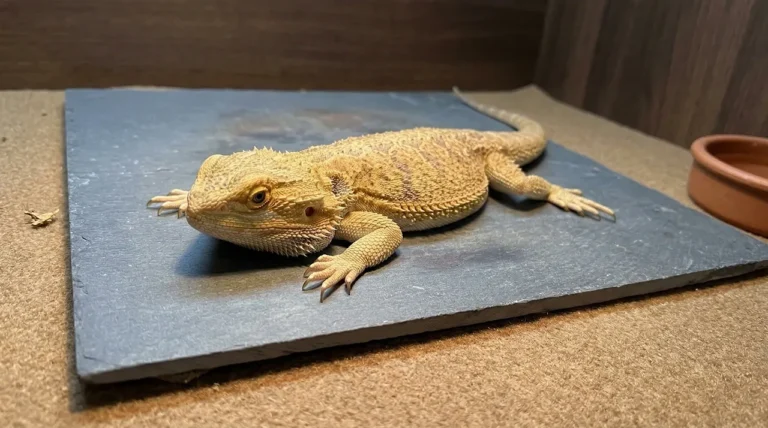
The first is thermoregulation. A cold beardie pancakes under its basking light to absorb as much heat as possible. This is completely normal, especially first thing in the morning before the enclosure is fully up to temperature. The posture resolves on its own once the dragon is warm.
The second cause is fear. A dragon that suddenly pancakes in response to a movement, a shadow overhead, or being taken outside is mimicking a prey animal hiding from a predator. The flattened body lowers the profile and hardens the lateral spines.
If you see this during handling, particularly if the beard also darkens and the eyes go wide, set the animal down somewhere secure and give it time to calm before trying again. Forcing continued handling after a fear pancake rarely ends well for either of you.
Tail and Limb Signals Most Owners Miss
The tail does not get the attention it deserves. A raised tail, curled slightly upward at the tip while the dragon is moving or hunting, signals alertness and focus. You see it most clearly during feeding when a beardie has locked onto a cricket and is preparing to strike.
The tail lifts, the body goes still, and then the lunge happens fast. It is an excitement signal, not a warning.
When Tail and Limb Positions Signal a Problem
A slow tail twitch, similar to a cat’s warning flick, is a different message entirely. Some dragons do this when mildly irritated or overstimulated during handling. It tends to precede a more overt display if the cause is not removed. Take it seriously when you see it.
A tail that hangs limply to one side or shows dark discolouration near the base is not a body language signal. It is a potential health issue that needs a vet check rather than a body language interpretation.
The “sexy leg” is what keepers call a rear limb extended outward and slightly back while the dragon is otherwise still. It is simply a stretch and not a cause for concern.
Eye Signals That Are Easy to Misread
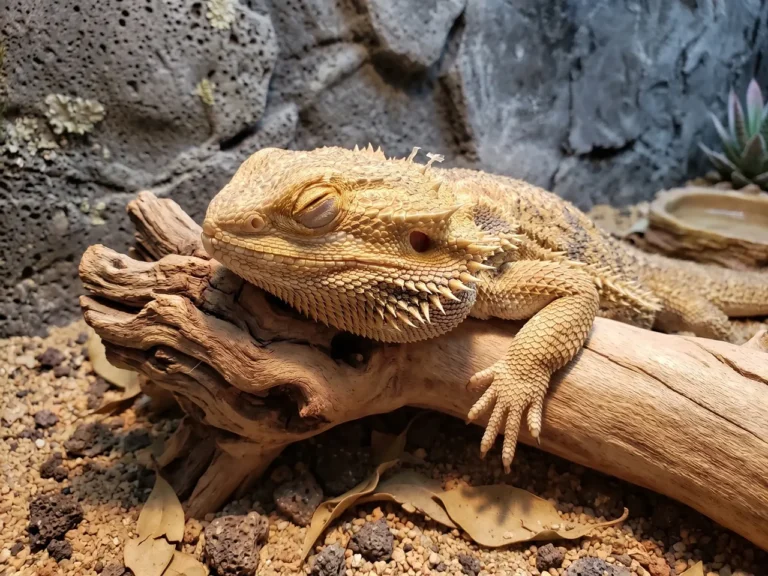
Closing one eye, especially repeatedly, is worth watching. A brief single-eye close during basking can be nothing, as some dragons squint against bright light. But it is also one of the first signs of a developing problem.
A dragon that keeps one eye shut while the other stays open, particularly if the closed eye looks swollen or has discharge, may have an early eye infection or irritant. Catch it early and it is usually straightforward to treat.
What Closed Eyes During Handling Actually Mean
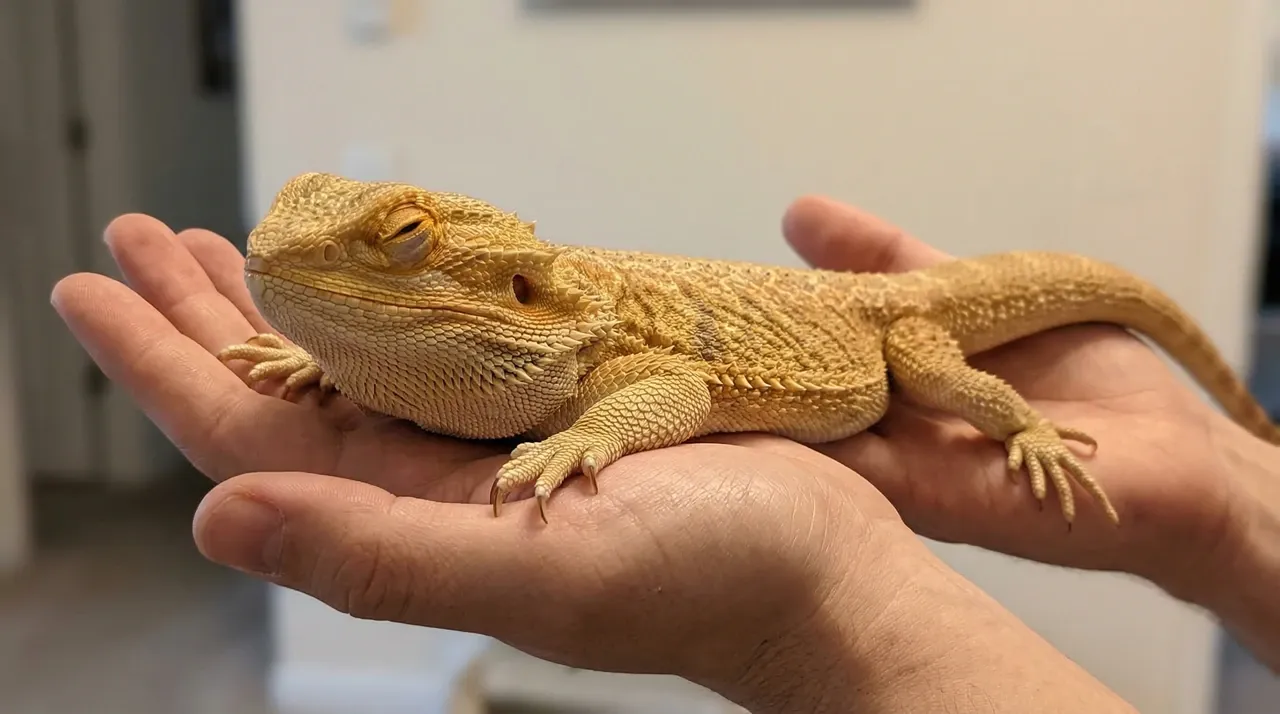
The closed-eye response during handling is one of the most commonly misread signals in bearded dragon body language. Many owners interpret it as contentment, similar to a cat closing its eyes when stroked. For some dragons, in genuinely comfortable handling situations, that interpretation is correct.
For others, particularly juveniles and newly acquired animals, it is closer to a defensive response. The animal is shutting out a stressful situation it cannot escape. The key is to read the whole picture, not just the eye state.
Is the beard pale? Is the body relaxed and pressing down into your hand? If yes, the closed eyes probably mean comfort. If the beard is even faintly dark and the body is tense, it means something different.
Bulging eyes during shedding are normal. Bearded dragons inflate their eye sockets to help loosen the shed around the eye area. It lasts a day or two and resolves without intervention in a correctly humidified enclosure.
Reading Your Bearded Dragon’s Signals Together
This is where most guides fall short. Individual signals have individual meanings, but a dragon rarely gives you just one at a time. The real skill in reading bearded dragon body language is learning combinations, because a single behaviour in isolation is often ambiguous while the same behaviour combined with two others tells you exactly what is happening.
| Signals Combined | What It Likely Means | What to Do |
|---|---|---|
| Dark beard, morning, basking | Cold, warming up | Normal. Wait 20–30 minutes |
| Dark beard + puffed body + open mouth | Threat display, feels cornered or alarmed | Remove the trigger. Do not attempt handling |
| Arm waving + dark beard + frantic movement | Highly stressed, multiple stressors present | Check enclosure conditions, reflections, temperatures |
| Pancaking + tail raised + eyes locked on object | Hunting focus, prey item spotted | Normal. Feed if appropriate |
| Pancaking + dark beard + wide eyes | Fear response | Remove stressor. Do not handle until calm |
| Slow head bob + arm wave (two dragons) | Dominance acknowledged by submissive dragon | Normal social exchange. Watch for escalation |
| Lethargy + dark colouring + no basking | Illness, pain, or severe temperature problem | Check temps first. If enclosure is correct, call a vet |
| Eyes closed during handling + pale beard + relaxed body | Content and comfortable | Normal. Good sign of a well-handled dragon |
| Eyes closed during handling + dark beard + stiff body | Defensive shutdown, overstimulated or stressed | End the session. Return to enclosure |
New owners who learn to read combinations rather than single signals catch problems much earlier, before a stressed dragon becomes a sick dragon and before a minor husbandry issue becomes a vet visit.
Bearded Dragon Body Language That Points to Illness
Most body language signals sit within the normal range for a healthy animal. A few patterns are different. They appear specifically because something is wrong, and they should not be rationalised away as a phase or a mood.
Bearded Dragon Signals That Warrant a Vet Visit
A dragon that trembles or shakes in the limbs, especially after handling or during feeding, should be checked for metabolic bone disease rather than explained as excitement or temperature fluctuation. Limb trembling is not a behavioural quirk.
Stargazing is where the dragon tilts its head back at an abnormal angle, sometimes to the point of falling over. It is a neurological signal most commonly associated with atadenovirus. The ARAV vet finder can help you locate a reptile-experienced vet if you do not already have one. A dragon showing this behaviour needs a vet, not reassurance that it will pass.
Persistent glass surfing, particularly when paired with an otherwise correct setup, is worth investigating beyond just enrichment advice. The causes of glass surfing range from simple boredom to significant husbandry gaps, and some causes are not obvious until you work through them systematically.
A dragon that is also lethargic and off food alongside the glass surfing has a different problem than one that is otherwise eating well and active.
What Calm Looks Like During Handling
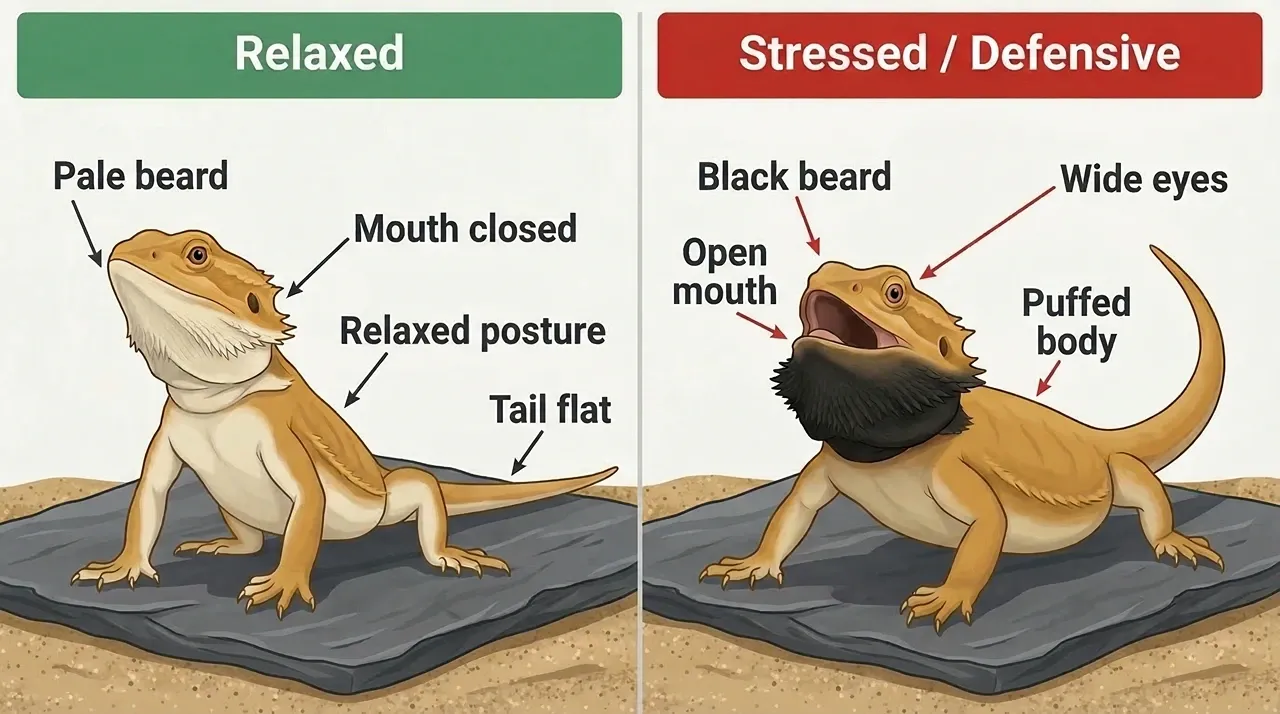
A settled dragon in your hands will have a pale beard, a relaxed body weight pressing down into your palm rather than tensed muscles trying to launch off, and eyes that are either open and curious or softly closed.
The limbs may grip slightly for balance but should not be scrabbling actively to get away. The tail stays relatively still. A dragon that has reached this level of comfort with handling usually gets there through consistent, calm, patient handling sessions over weeks rather than days.
The opposite picture is a stiff body, active scrabbling, a darkening beard, and a mouth beginning to open. That combination means the session should end before it escalates. A dragon that bites does so because earlier, subtler beardie body language signals were not acted on.
FAQs
Why does my bearded dragon wave at me every time I approach?
This is a submission signal, not a greeting. Your dragon recognises you as the larger, dominant presence in its environment and is communicating that it poses no threat. Frequent waving in a young or newly settled dragon is normal and typically reduces as the animal grows more confident in its space and more familiar with you.
Is a black beard always a sign of stress?
Not always. A dark beard during morning warm-up, before the enclosure is fully up to temperature, is a thermoregulation response and resolves within thirty minutes of basking. A dark beard that persists through the afternoon in a correctly heated enclosure, particularly alongside lethargy or appetite loss, is a stress or illness signal worth acting on promptly.
My dragon closes its eyes when I hold it. Is that good or bad?
Context determines the answer. Closed eyes with a pale beard and a relaxed body usually indicate a comfortable, settled dragon. Closed eyes with a darkened beard and a stiff, tense body is a defensive response. The animal is shutting out a stressful situation it cannot escape. Read the full picture, not the eye state alone.
Why does my bearded dragon bob its head at me?
Your dragon is establishing dominance over its territory, which includes you. Fast, sharp bobs directed at you are a territorial display. It is most common in males, particularly during the spring months when hormones are elevated. It rarely indicates genuine aggression and typically decreases with calm, consistent handling over time.
Can body language tell me when my dragon is sick?
Sometimes, yes. Trembling limbs, persistent dark colouring outside of morning warm-up, stargazing posture, and open-mouth breathing away from the basking spot are all signals worth taking seriously. Body language changes often appear before other symptoms, which is why owners who learn to read their dragon’s normal baseline catch health problems earlier.
What to Watch for This Week
- Spend five minutes each day observing your dragon before you interact with it. Note the beard colour, body posture, and activity level at three points: first thing in the morning, mid-basking, and mid-afternoon. This builds your baseline so deviations become obvious.
- Check whether any glass surfing or persistent arm waving correlates with a specific time of day or a specific trigger, such as a reflection, foot traffic past the tank, or another pet in the room.
- Next time you handle your dragon, watch the beard colour and body tension throughout. If either changes, end the session before the dragon escalates. Note how long the session lasted before the change appeared and work toward extending that window gradually.
- If your dragon has shown any illness-related signals, including trembling, persistent dark colouring, stargazing, or open-mouth breathing away from the basking spot, book a vet check rather than monitoring further at home.
- Run through the combined-signals table against what you have seen in the past week. If one row matches what your dragon has been showing regularly, that is your priority to address first.
Written by
Sarah ArdleySarah has kept bearded dragons for over ten years. She founded Beardie Husbandry after discovering that most mainstream care advice — including what she followed with her first dragon — was doing more harm than good. Every article on this site is grounded in veterinary research and real keeper experience.