Why is My Bearded Dragon’s Beard Black? (8 Causes And Fixes)
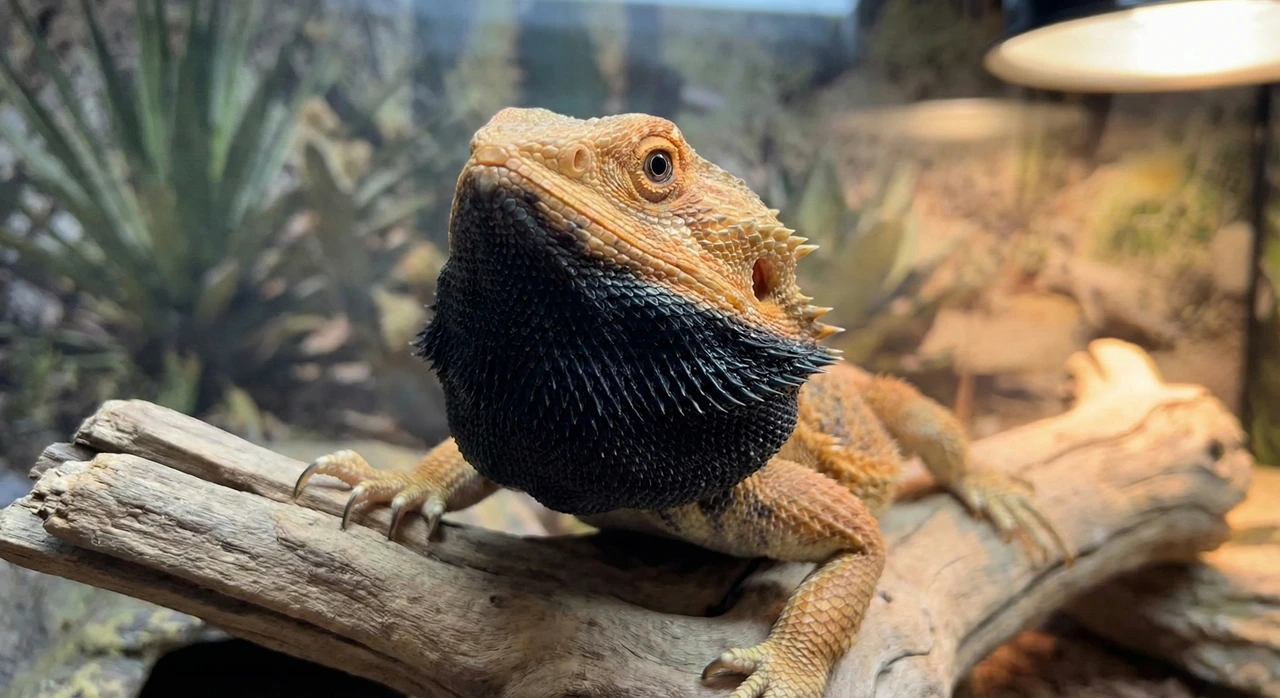
A black beard on a bearded dragon is one of those sights that stops new keepers dead in their tracks. If you’re asking why is my bearded dragon’s beard black, the answer is that the beard is a communication tool and your dragon is using it right now. Some of these causes are husbandry fixes you can make today. Others mean a vet call is overdue.
How the Beard Actually Changes Colour
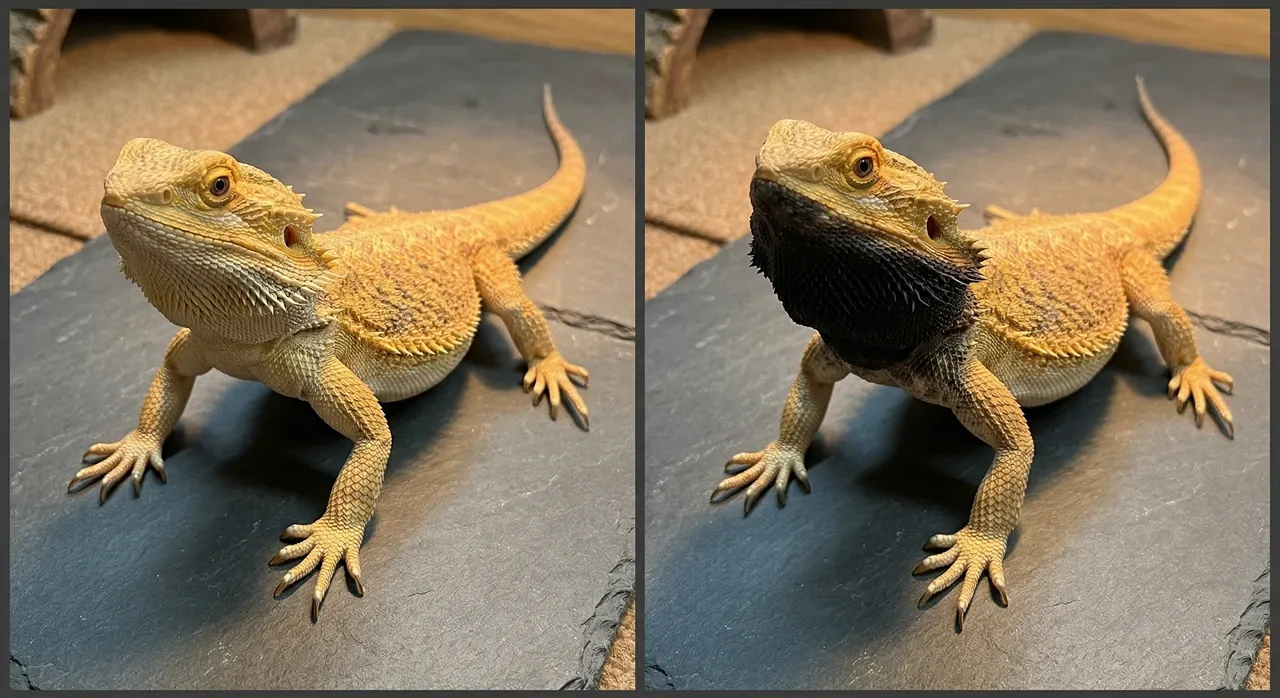
The skin beneath a bearded dragon’s chin contains specialised pigment cells called chromatophores. In a relaxed dragon, those cells stay contracted and the beard remains pale or sandy. When the dragon experiences stress, cold, aggression, or illness, the cells expand rapidly and flood the skin with dark pigment.
This happens fast. A dragon can shift from a pale buff chin to near-black in under ten seconds. How dark the beard gets reflects the intensity of the signal. A slightly greyed-out beard means mild irritation. A full, puffed, jet-black beard means the message is being sent at full volume.
8 Reasons Your Bearded Dragon’s Beard Is Black
1. The Morning Basking Warm-Up
This is the cause that sends the most new owners into a panic, and it is entirely normal. Many bearded dragons blacken their beard for the first 20 to 40 minutes after the lights come on. Once the body temperature has risen to a functional level, the colour returns to normal.
The darkened skin absorbs radiant heat more effectively than pale skin, so your dragon is simply optimising the morning warm-up. If the black beard appears at lamp-on time and clears within the hour, no action is needed. A dragon refusing the basking spot entirely is a different situation and warrants a closer look.
2. Environmental Stress and Unfamiliar Stimuli
Any change to the dragon’s environment or routine can trigger a black beard. Rearranging the enclosure, adding a new piece of decor, moving the tank to a different room, or a household pet approaching the glass are all common triggers. Bearded dragons register these changes as potential threats before they register them as harmless.
The most underestimated stressor is a tank positioned near a window. Birds passing outside, shifting light patterns, and movement on the street all create visual input that a captive dragon has no framework for interpreting as safe. Moving the enclosure away from direct window line-of-sight often resolves a mystery chronic black beard faster than any other change.
3. Dominance Display
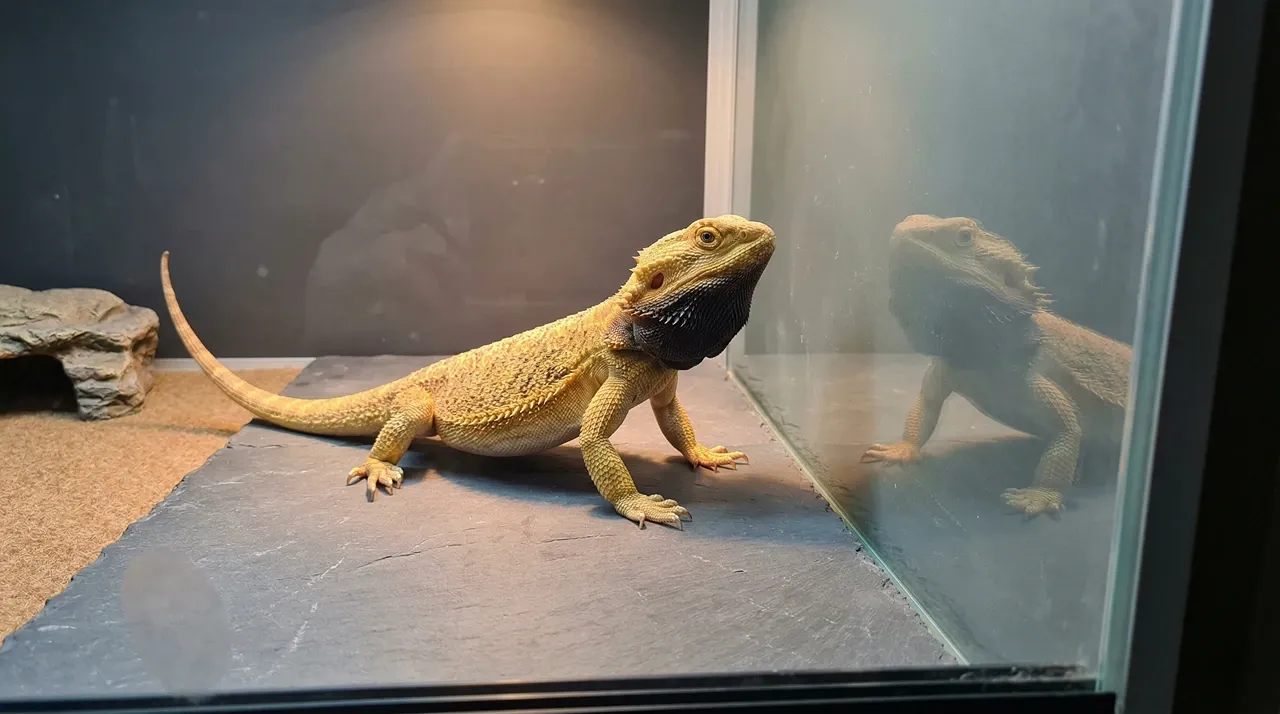
Male bearded dragons use beard blackening as a dominance signal, and the trigger does not have to be another real dragon. A reflection in the enclosure glass, a photo of a lizard on a nearby surface, or a reptile on a TV screen can provoke a full display. This is an automatic threat response, not an error in your dragon’s reasoning.
Two dragons in the same household, housed in separate enclosures but within visual range, can develop patterns of chronic stress from enclosure proximity that keep both of them black-bearding for hours every day. Opaque backing on three sides of the tank eliminates this for single-dragon setups. Visual barriers between enclosures fix it for multi-dragon households.
4. Mating Season Behaviour
Adult males, typically from around eighteen months old, develop a seasonal pattern of beard blackening through late winter and spring. The mating beard is darker and more persistent than a stress response. It usually arrives alongside rapid head bobbing, foot stomping, and heightened alertness to everything in the room.
This is hormonal and not something you can or should try to stop. Knowing the full scope of seasonal mating behaviour makes it much easier to separate a normal hormonal surge from a problem beard, since the two can look nearly identical if you haven’t seen breeding season before.
5. Handling Stress
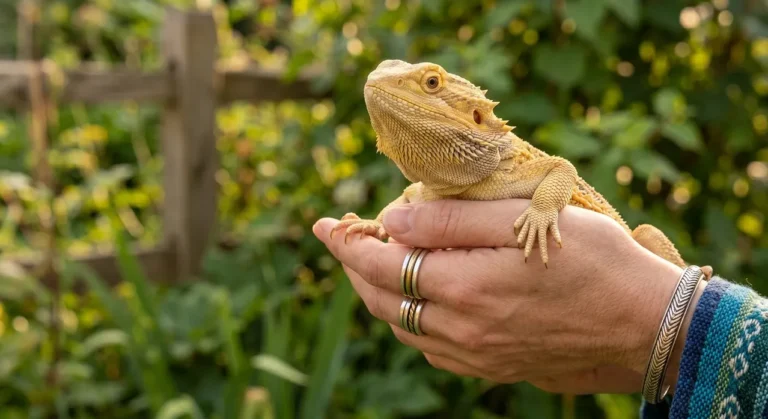
A black beard during or immediately after handling does not mean your dragon dislikes you. It usually means the session ran longer than was comfortable, the approach triggered an alarm response, or your dragon hasn’t yet built enough familiarity with handling to stay relaxed in your hands.
The most common approach mistake is reaching in from directly above. Overhead movement mimics a predatory bird and reliably triggers a defensive response even in otherwise calm dragons. Come in from the side at body level, and take beard puffing and body flattening as the signal to end the session rather than push through.
6. Cold Enclosure Temperature
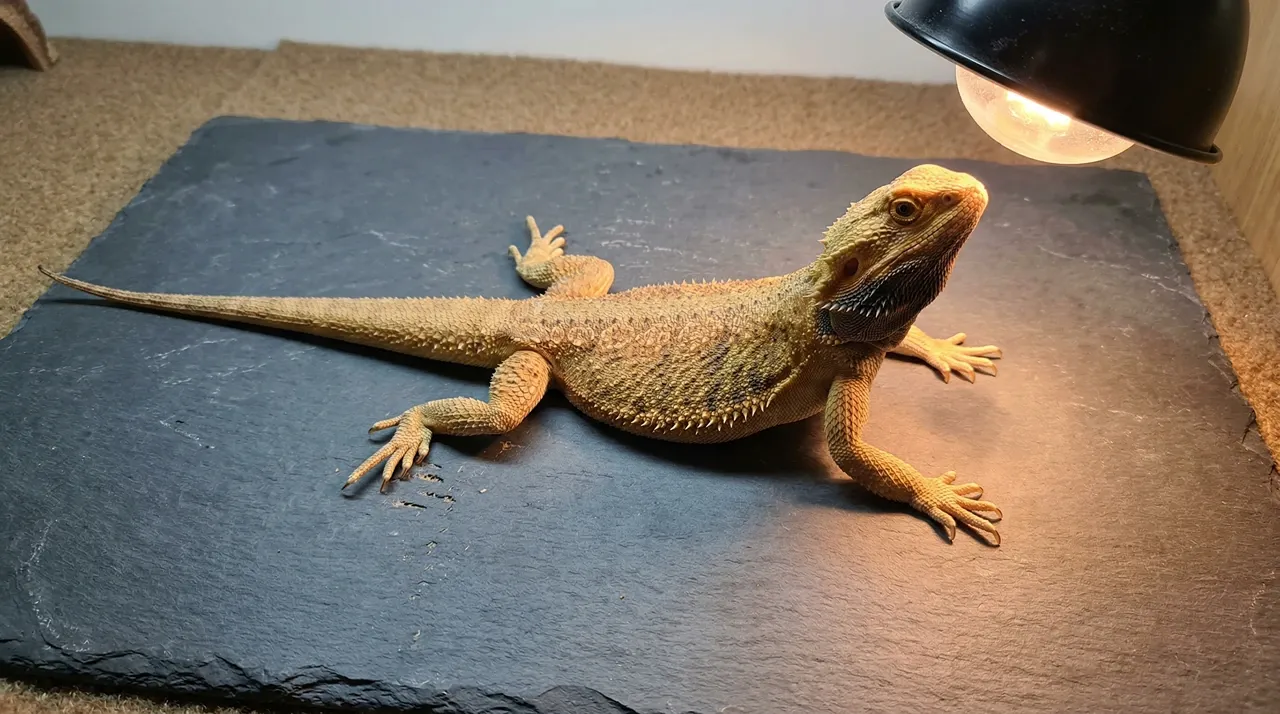
When a bearded dragon cannot reach its preferred body temperature, it darkens its skin to maximise heat absorption from whatever radiant source is available. This thermoregulatory black beard looks identical to a stress beard, and many keepers misread it as a behavioural problem when it is actually an environmental one.
The giveaway is posture. A cold dragon flattens itself as wide as possible and angles its body directly toward the heat source, rather than simply darkening the beard while standing normally. If you see that posture, the enclosure is the problem.
Verify the basking surface with a digital temperature gun pointed at the exact spot your dragon sits. Dial thermometers read 10 to 15 degrees below actual surface temperature frequently enough that keepers who rely on them often don’t know they’re running a cold setup.
7. Post-Brumation Adjustment
Coming out of brumation is a gradual process, and a temporary black beard is a normal part of the reactivation sequence. The dragon’s core temperature has been suppressed for weeks, and darkening the beard is one of the first heat-seeking behaviours to switch back on.
This typically clears within a few days as the basking routine re-establishes and appetite returns. If the beard stays dark for more than a week after brumation ends, particularly if the dragon is still lethargic or refusing food, that combination needs a vet check rather than continued monitoring.
8. Illness or Pain
When the beard stays dark for days alongside other physical changes, it stops being the message and becomes the flag. Bearded dragons instinctively try to appear more threatening when they feel physically compromised, so illness-related beard blackening is a defensive reflex rather than a direct symptom of any one condition.
Respiratory infections, internal parasites, intestinal impaction, and early metabolic disease are the most common underlying causes in captive dragons. One specific pattern worth knowing: reptiles cannot produce a true fever.
According to the Merck Veterinary Manual, infected reptiles compensate by moving to warmer areas to generate a behavioural fever response. A sick dragon that is black-bearding and pressing into the basking spot long past the warm-up period may be doing exactly this.
Look for this combination before deciding whether to wait or call a vet:
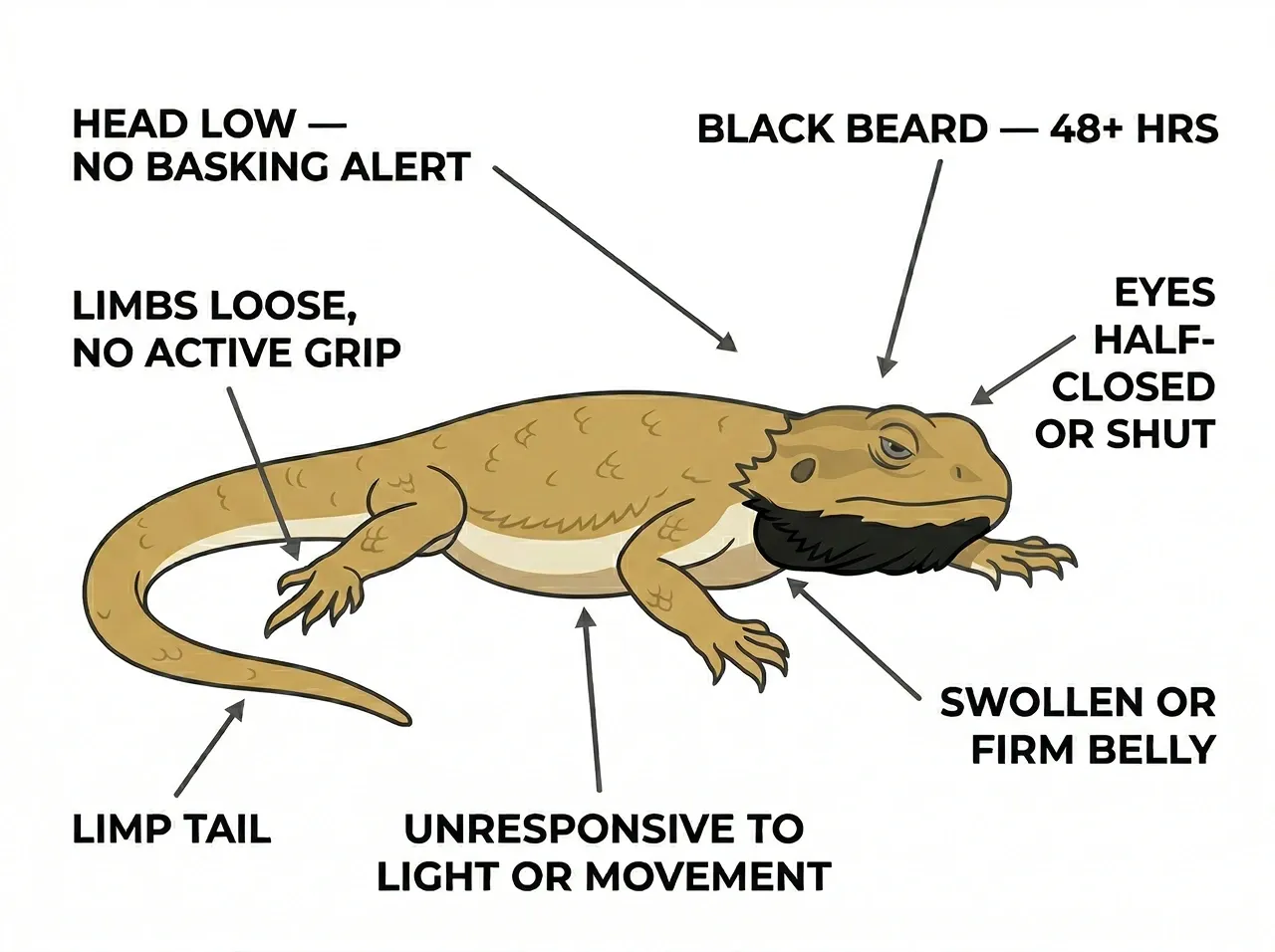
- Black beard present for more than 48 hours with no identifiable environmental cause
- Lethargy or inability to lift the body during normal activity windows
- Refusal to eat for more than three consecutive days
- Mucus around the mouth or nasal openings
- Loose, discoloured, or absent stools
- Swollen or visibly firm belly
- Eyes closed outside of normal sleep periods
Any dragon showing three or more of these signs alongside a black beard needs a reptile vet appointment, not another few days of home observation.
Black Beard Quick Reference
The table treats each cause in isolation. Real situations are often messier, with two or three causes stacking on top of each other. A dragon that has just moved to a new home during spring, for example, might show a combination of environmental stress and early mating behaviour in the same week.
| What You See | Most Likely Cause | Expected Duration | Action |
|---|---|---|---|
| Black beard at lamp-on, fully clears within an hour | Morning basking warm-up | Under 60 minutes | None needed |
| Black beard during or after handling | Handling stress | Minutes to 1 hour | Shorter sessions, approach from the side |
| Black beard when a pet or person approaches the glass | Environmental threat | Clears when trigger is removed | Keep other animals away from the tank |
| Black beard with head bobbing (adult male, spring) | Mating season display | Weeks, seasonal | Normal behaviour, no action needed |
| Black beard with flat, wide posture angled at the heat source | Cold enclosure | Until temperature is corrected | Verify basking surface with a temp gun |
| Black beard for the first few days after waking from brumation | Post-brumation reactivation | Days | Monitor appetite recovery |
| Black beard for 48+ hours with no obvious cause | Unknown, possible illness | Does not resolve on its own | Check husbandry first, book a vet if no improvement |
| Black beard plus lethargy, refused food, mucus, or swollen belly | Active illness | Does not resolve | Reptile vet promptly |
When a Persistent Black Beard Needs a Vet
A beard that resolves within the hour, clears after handling, or appears during breeding season is not the pattern that needs escalating. The cases below are the ones where watching and waiting makes things worse.
These do not need a vet call:
- Black beard at lamp-on that clears within the first hour
- Black beard immediately after handling that fades within an hour
- Adult male displaying during spring breeding season
- Brief blackening when another animal approaches the enclosure
- Black beard for the first few days after coming out of brumation
These do need a vet call:
- Black beard that has been continuous for more than 48 hours without an identifiable trigger
- Black beard plus any two symptoms from the illness list above
- A dragon that hasn’t eaten in five or more days with a persistently dark beard
- Any mucus around the mouth or nose alongside beard blackening
- A beard that stayed black after a diet or husbandry change and has not recovered
If you’re unsure whether the cause is environmental or medical, calling a reptile-experienced vet to describe what you’re seeing costs nothing and rules out the causes that genuinely cannot wait.
The difference between a stress beard and an illness beard usually comes down to what else is happening in the same 24 hours. A dragon that is black-bearding and showing any of the signs in the diagram below has moved past a husbandry question into a veterinary one.
Common Questions About a Black Beard
Do female bearded dragons get a black beard?
Yes, but rarely to the same depth of colour as males. Females typically darken to a dusky grey or brownish-black rather than a deep, solid black. The same causes apply regardless of sex.
A full jet-black beard in a female is unusual enough to warrant closer attention. If you’re seeing that level of colour change in a female without a clear trigger, work through the illness and husbandry checklist more carefully than you might with a male displaying the same colour.
Why does my bearded dragon’s beard go black when they poop?
More common than most care resources acknowledge. The physical effort of a bowel movement can trigger a brief stress response, and the beard darkens during or immediately after defecation. It clears within minutes and is not a health concern on its own.
If the beard stays dark between toilet visits and your dragon hasn’t passed stools in several days, that’s a different signal entirely. Infrequent or absent stools alongside persistent beard darkening is worth investigating properly rather than waiting out.
How long is too long for a black beard?
Past 48 hours of near-continuous blackening without an obvious environmental cause, something needs to change. Either the husbandry has a problem, or a vet call is overdue.
A brief black beard at lamp-on each morning is fine indefinitely. A beard that remains dark for most of the day, every day, means your dragon is under sustained stress, and that source needs identifying and removing before it affects appetite and immune function.
Can a black beard mean my dragon is starting brumation?
Not on its own. Brumation announces itself through reduced appetite, increased sleep, and reluctance to bask rather than through beard colour changes alone.
If beard darkening appears alongside those other behavioural shifts in autumn or winter, the combination is more suggestive. Younger dragons under twelve months going into what looks like brumation should be discussed with a vet rather than left to sleep it off unsupervised.
What to Do Right Now
Start by ruling out the benign causes before assuming the worst. Note the time of day and whether the black beard appeared at lamp-on. Look around the enclosure for anything new, anything reflective, or any animal that may have approached the glass recently.
Most cases of a bearded dragon’s beard turning black trace back to one of the first six causes on this list. If the environment is clear, pick up a temperature gun and verify the actual basking surface temperature. A reading below 100°F on the basking spot is worth correcting before investigating anything else.
If the enclosure checks out and the beard has been dark for more than 48 hours, run through the illness symptom list above. Three or more hits means booking a reptile vet rather than posting on forums. The causes that need veterinary treatment respond better the earlier they are caught. Waiting at home is not a neutral action when illness is a possibility.
Medical Disclaimer: The information in this article is intended for general educational purposes only and does not constitute veterinary advice. If your bearded dragon is showing signs of illness, injury, or sustained distress, consult a qualified reptile veterinarian promptly. A veterinary assessment is always the appropriate response to health concerns that persist or cannot be explained by husbandry factors alone.
Written by
Sarah ArdleySarah has kept bearded dragons for over ten years. She founded Beardie Husbandry after discovering that most mainstream care advice — including what she followed with her first dragon — was doing more harm than good. Every article on this site is grounded in veterinary research and real keeper experience.