Do Bearded Dragon Tails Grow Back After Injury or Drop?
A bearded dragon turns up one morning with a chunk missing from the end of its tail, or the tip has gone dark and shrivelled overnight.
The first thing almost every keeper asks is whether their tails grow back. They do not. Unlike a gecko, a beardie cannot drop and regrow its tail, so whatever is lost stays lost.
That sounds worse than it usually turns out to be. A clean injury heals into a shorter, blunt tail, and your dragon goes on living a completely normal life.
The real concern is not the missing piece. It is whether the remaining tail is healing over or quietly dying, because those two outcomes call for very different responses.
Bearded Dragon Tails Do Not Grow Back
This is the part keepers do not want to hear. Once any portion of the tail is gone, it is gone for good.
The wound closes, the skin heals over the stump, and the dragon carries on as normal. No new tail forms behind that healed edge.
Plenty of owners quietly hope their tails grow back over a few months. No beardie’s tail grows back, no matter how minor the original injury looked.
People confuse this with other lizards. A leopard gecko losing its tail and growing a stubby replacement is a completely different biological event.
That permanence is exactly why a darkening tip that signals spreading tail rot gets treated as urgent rather than something to wait out.
Why Beardies Cannot Regrow a Lost Tail
The ability to regrow a tail depends on a feature beardies were never built with. Geckos, skinks, and many other lizards have weak points called fracture planes inside their tail vertebrae.
Those planes let the tail snap off cleanly when grabbed, and a cartilage rod then grows in its place.
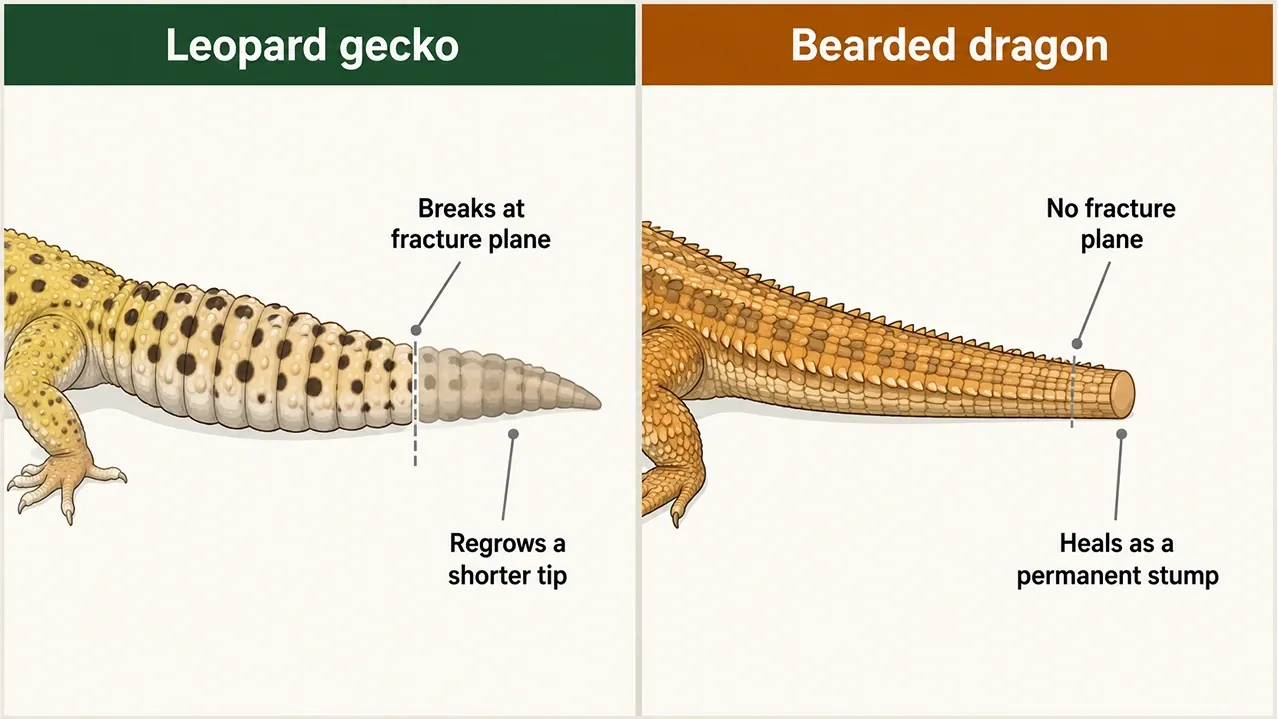
Bearded dragons belong to the agamid family, and agamids lack those fracture planes. A beardie cannot shed its tail on purpose to escape a predator, and the tissue carries no blueprint for rebuilding itself.
When the tail is damaged the body seals the wound instead. That is the reason their tails grow back for no beardie, ever, whatever the cause.
How Dragons Lose Part of Their Tail
Tail loss almost always traces back to one of a few predictable situations. Working out which one you are dealing with tells you how worried you actually need to be.
Bites from a Tankmate
Two dragons sharing one enclosure is the most common reason for a chewed or missing tail tip. Beardies are territorial and they bite, and tails and toes make easy targets.
This is one of several reasons that keeping dragons housed together so often ends in injury.
A Shed That Cuts Off Circulation
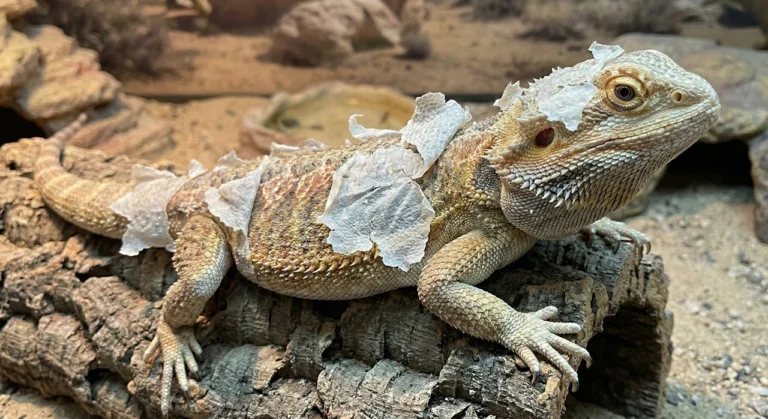
Retained shed is a quieter cause that catches a lot of new keepers out. When the humidity sits too low, old skin fails to release and forms tight rings around the tail tip.
Those rings act like a tourniquet and slowly strangle the blood supply. The trapped tip then darkens, dries out, and dies.
This kind of avascular necrosis shows up most in juveniles kept below the right humidity. A short warm soak can soften a stubborn ring before it does real harm.
Crushed in a Lid or Door
Sliding glass doors and screen tops trap tails and toes more often than people expect. A tail caught and pinched can lose its circulation even when the skin never breaks. Check that gap every time you close the enclosure.
Burns and Infection
Contact burns from an unguarded bulb or a hot rock can kill tail-tip tissue just as readily.
Infection is the cause that never stops on its own. It starts at the tip and works its way up, and the dead tissue keeps climbing toward the body until a vet steps in.
Healing Stump or Dying Tail
This is the distinction that actually matters, and it is where most owners get stuck. A tail that has lost a piece will do one of two things.
It either heals into a clean stump, or the remaining tissue begins to die and the damage marches upward.
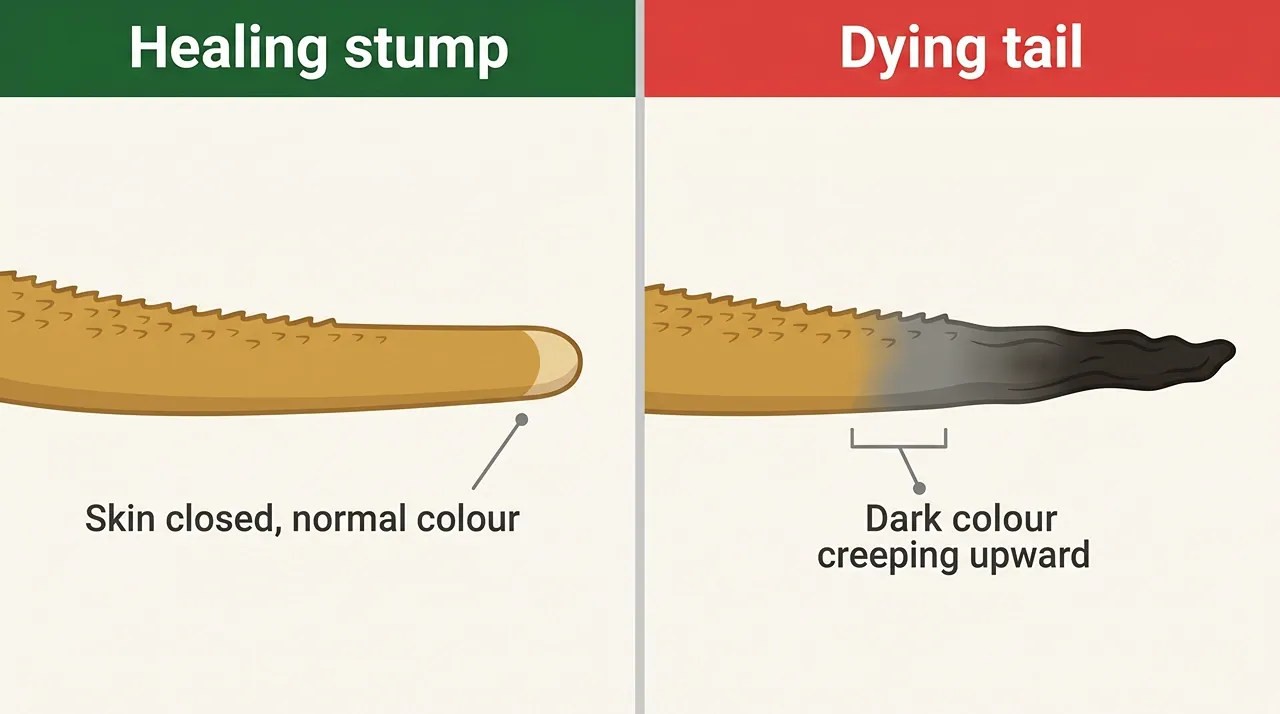
On day one a healthy scab and early rot can look almost identical. The colour of the tip and whether its edge is moving are what separate them.
| What you see | What it means | What to do |
|---|---|---|
| Blunt tip, skin fully closed, normal colour | Healed or healing stump | Monitor only, no action needed |
| Small dry scab at the cut edge that stays put | Normal healing | Keep it clean and dry, watch for change |
| Black or grey colour creeping up over days | Spreading necrosis | Reptile vet now |
| Swelling, weeping, or a foul smell | Active infection | Reptile vet within 24 hours |
| Tail soft, mushy, or cold to the touch | Dead tissue | Reptile vet now |
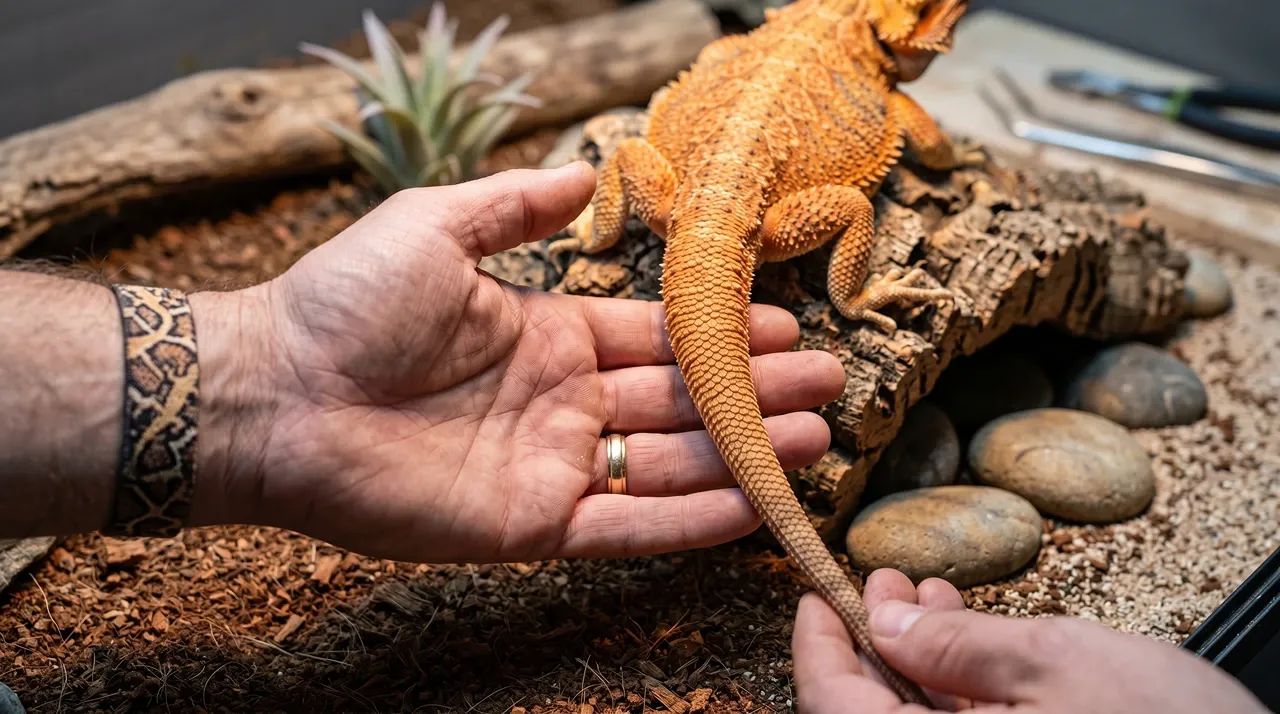
A sharp line where dark meets healthy tissue means part of the tail has already died. The higher up that line sits, the more is at stake.
That Grey Tip Is Not Regrowth
Here is a trap worth naming on its own. A keeper sees the cut end of the tail turn grey or pale and assumes new tissue is starting to form. It can look like the first sign of a regrown tip.
It is the opposite of that. Greying at the end of a damaged tail is dying tissue losing its blood supply, not fresh growth.
Because the myth that tails grow back simply is not true, any colour shift at the wound site points toward necrosis, never recovery.
Does a Missing Tail Tip Matter
Most keepers worry their dragon will struggle without a full tail. For a lost tip or a short section, the honest answer is that it barely registers.
Beardies use the tail for balance, a little fat storage, and some thermoregulation, but a healed stump leaves all of that mostly intact. A dragon missing the last inch or two climbs, basks, and feeds exactly as it did before.
Since their tails grow back for none of them, the stump you are looking at now is the final length. The shorter tail is a cosmetic difference, not a disability.
Larger losses, say half the tail, take a touch more adjustment for balance. Even those dragons adapt quickly and live full lives.
When to Call the Vet
Some tail problems are watch and wait. Others need a professional the same day. Treating a clean, dry, healed stub at home is reasonable. Anything that looks like it is spreading or infected is not.
Get a reptile-experienced vet involved straight away if any of these apply:
- The dark area is climbing further up the tail over 24–48 hours
- The tail is swollen, weeping, or smells foul
- A fresh injury keeps bleeding and will not stop with gentle pressure
- Your dragon stops eating, hides constantly, or reacts in pain when the tail is touched
- You cannot tell whether you are looking at shed, a bruise, or rot
Stopping minor tail bleeding before you reach the clinic is what a stocked first aid kit is for. A vet can tell healthy tissue from dead tissue and amputate cleanly above the damage when that is the safest call.
That sounds drastic. A planned amputation saves far more tail than a slow infection left to climb.
How to Prevent Tail Injuries
Most tail loss is preventable once you know where it comes from. House dragons alone so no tankmate can bite a tail, and keep humidity in the correct range so shed releases cleanly instead of ringing the tip.
Check the enclosure doors before closing them, and guard any heat source the tail could rest against. None of this is complicated, and it removes nearly every common route to a lost tail.
Frequently Asked Questions
Do tails grow back after an injury?
No. Once any part of the tail is lost it does not return, unlike geckos and some other lizards. The wound heals into a permanent shorter stump.
Will a tail tip grow back after shedding?
No, a tip lost to a tight shed ring will not return. Removing stuck shed and fixing humidity early prevents further loss, but the dead portion is gone for good.
Is a missing tail tip painful?
A fully healed stump is not painful and the dragon behaves normally. Pain points to active injury or infection instead, which needs a vet.
Can a vet regrow a lost tail?
No vet can regrow or reattach lost tail tissue. What a vet can do is amputate cleanly above dying tissue to stop an infection spreading toward the body.
How fast does a tail wound heal?
A clean, minor tail wound usually seals over within a couple of weeks with good husbandry. Anything still darkening or weeping after a few days needs veterinary care, not more waiting.
What to Do Right Now
Since tails grow back for no beardie, the job now is protecting what is left and catching trouble early.
- Look at the cut edge. If the skin is closed, dry, and a normal colour, treat it as a healing stump and leave it alone.
- Photograph how far any dark colour reaches today and compare it tomorrow. Movement up the tail means rot, not healing.
- Raise the humidity and gently work off any stuck shed rings around the tail before they tighten further.
- Keep the enclosure clean and the wound dry while it seals over.
- Call a reptile vet the same day if the tail swells, smells, keeps bleeding, or the dark area is climbing.
- If you keep more than one dragon, separate them now so the tail cannot be bitten again.
Medical disclaimer: This article is written for educational purposes and is not a substitute for veterinary advice. Tail injuries and necrosis can worsen quickly, so contact a reptile-experienced veterinarian for any concern about your dragon’s health.
Written by
Sarah ArdleySarah has kept bearded dragons for over ten years. She founded Beardie Husbandry after discovering that most mainstream care advice — including what she followed with her first dragon — was doing more harm than good. Every article on this site is grounded in veterinary research and real keeper experience.