Bearded Dragon Third Eye and What It Does
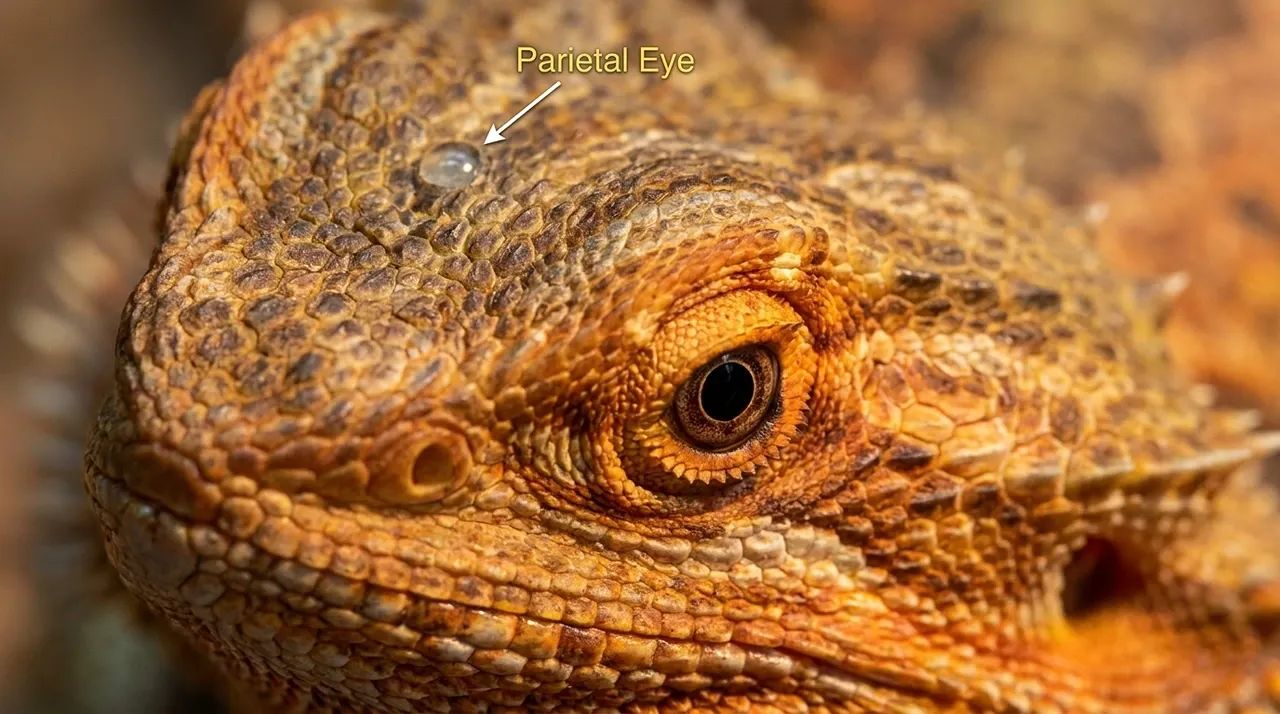
That small grey dot on top of your dragon’s head sits dead centre between the two regular eyes. Plenty of new keepers spot it for the first time and assume something is wrong.
It can look like a scar, a flake of stuck shed, or a wound that needs treating. In almost every case it needs nothing at all.
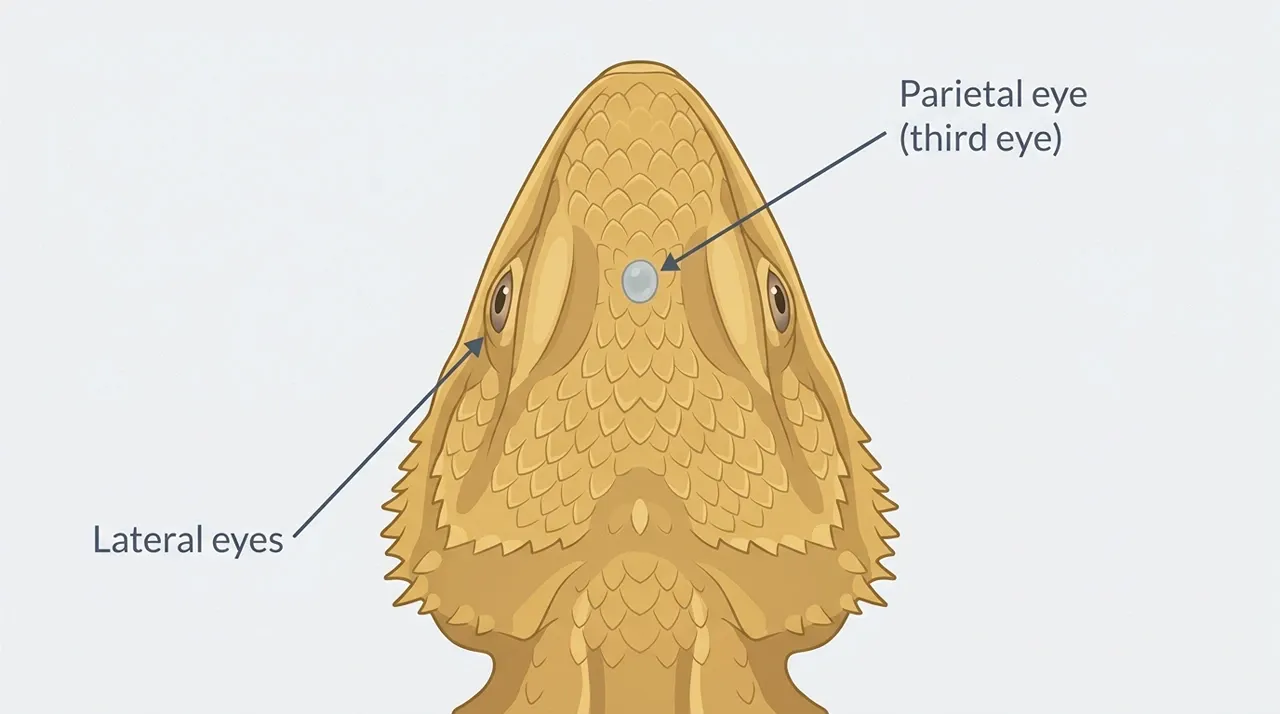
That spot is the bearded dragon third eye, also called the parietal eye. Every healthy dragon has one, and it was working long before yours arrived in its enclosure.
It is a real sensory organ, not a blemish. What it actually does should shape how you light the tank and how you reach in to pick your dragon up.
What the Parietal Eye Really Is
The bearded dragon third eye, known to biologists as the parietal eye, is a light-sensing organ wired to the pineal gland deep in the brain. You will also see it called a pineal eye or a solar eye, but they all point to the same spot.
It is far older than the bearded dragon itself. The structure traces back through hundreds of millions of years of reptile evolution, which is why so many lizards still carry one today.
How to Find It on Their Head
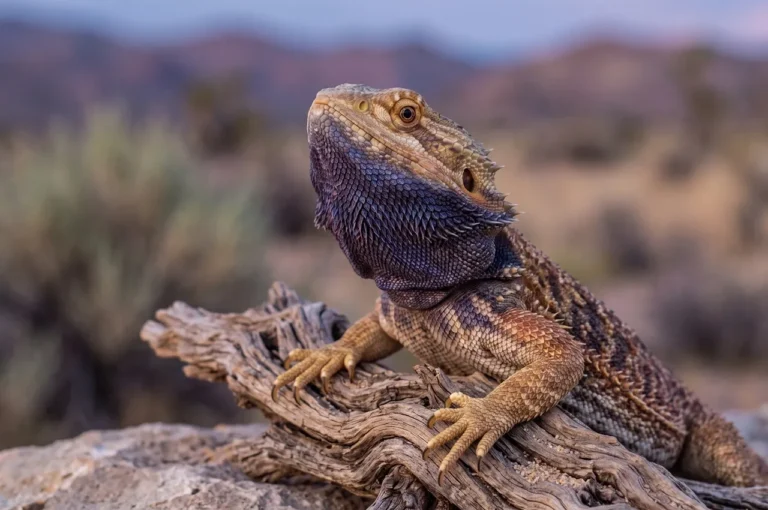
It shows up as a small pale scale, often grey, sometimes faintly translucent or bluish. Look at the flat crown of the skull, just behind a line drawn between the two eyes.
There is no eyelid over it. A single clear scale sits across the opening as a permanent cover, which is why it never blinks or tracks the way the lateral eyes do.
People sometimes mistake the spot for an eye infection, which it never is. Underneath the clear scale it has a basic lens and a retina, but no iris and no muscle to focus, so it reads light and shadow rather than shapes.
The Bearded Dragon Third Eye Is a Light Meter
Think of the bearded dragon third eye less as an eye and more as a light meter bolted to the top of the head. It registers how bright things are and whether a shadow just crossed overhead.
That signal travels to the pineal gland, which uses it to set hormone levels through the day and across the year. The link between the two has been mapped in lab studies on lizards.
How It Spots Birds From Above
In the wild a bearded dragon’s worst day starts with a hawk. The parietal eye is built for that moment, catching the sudden dimming as something large crosses the sky overhead.
A hand dropping straight down triggers the same alarm. A dragon that flattens its body or darkens its beard in response is showing normal defensive body language, not a personality fault.
Why It Controls Their Sleep Cycle
The pineal gland releases melatonin on a daily rhythm, and the parietal eye keeps that rhythm pinned to real daylight. Long days mean less melatonin and an active dragon. Short ones bring more, and a sleepier animal.
This is why a steady light cycle matters more than people expect. A reliable photoperiod, lights on for 12 to 14 hours in summer and tapering shorter in winter, sits at the core of a healthy lighting setup.
The same system drives the seasonal slowdown. As autumn light fades, the parietal eye registers the shorter days, melatonin climbs, and the gradual slide into brumation begins.
Lift Them From the Side, Not Above
Once you know the parietal eye is scanning for things dropping out of the sky, your dragon’s reaction to being picked up makes sense. An overhead grab is the most common reason a settled dragon suddenly turns skittish.
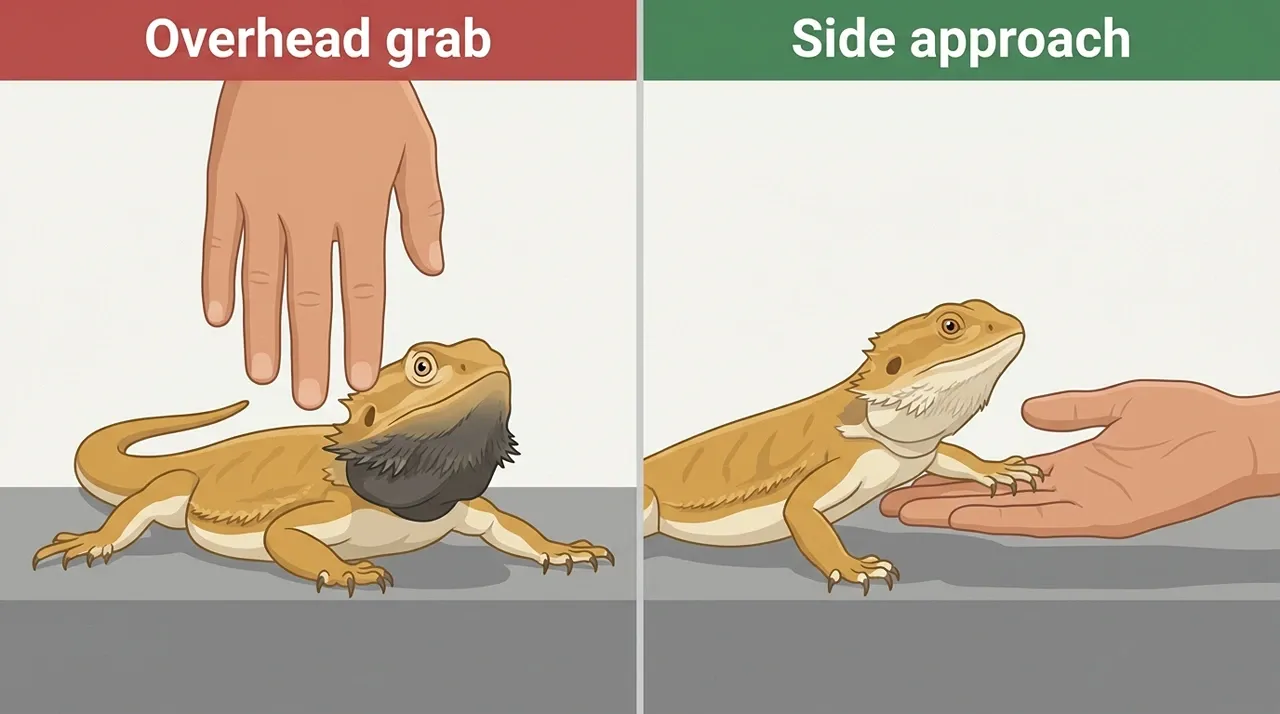
Come in low instead. Slide a flat hand under the chest from the side, let the front feet find your fingers, then lift.
Get the approach right from the start and you head off most of the stress that comes with learning to handle a nervous dragon.
When the Spot Starts Looking Off
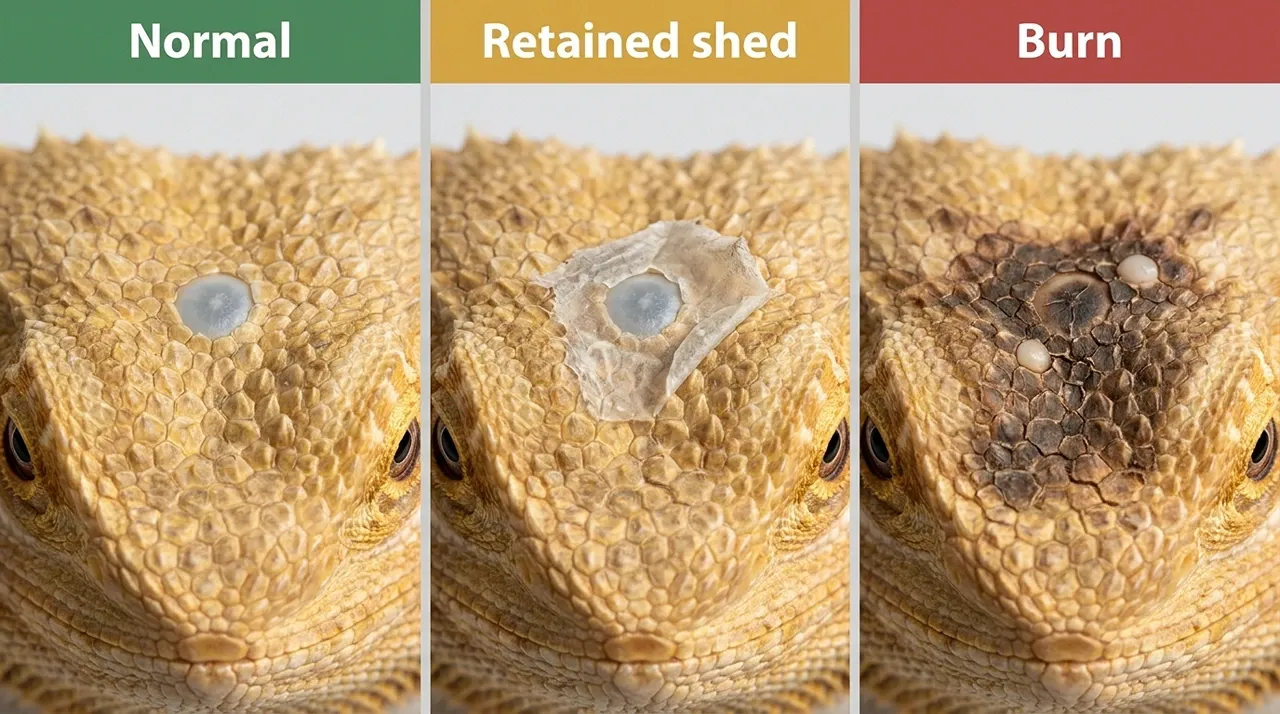
A healthy bearded dragon third eye is flat, dry, and roughly the same colour as the scales around it. It does not bulge, weep, or scab. Real trouble in this spot is uncommon, but a few problems are worth knowing on sight.
| What you see | What it usually means | What to do |
|---|---|---|
| Flat grey or pale scale, dry, flush with the head | Normal parietal eye | Nothing. This is the healthy default. |
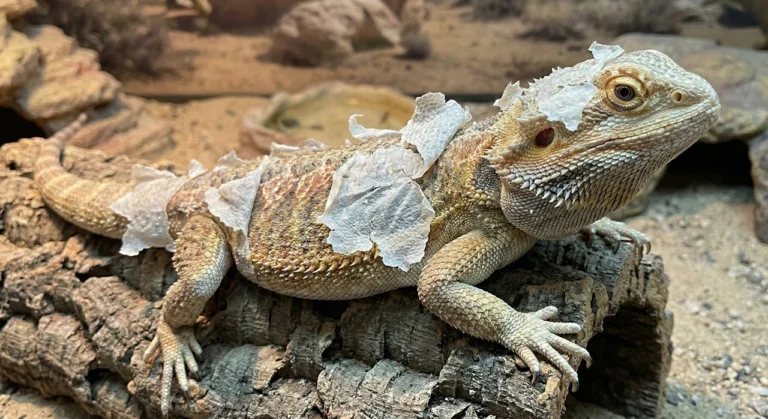
| Whitish, flaky cap over the spot during a shed | Retained shed | Raise humidity, offer a warm soak, let it release on its own |
| Blackened, crusty, or blistered skin on the crown | Burn from the basking bulb | Check basking distance and temperature, then see a vet |
| Swelling, redness, pus, or a bleeding scab | Injury or infection | Reptile vet promptly, do not treat at home |
Stuck Shed Over the Parietal Scale
During a head shed, a small cap of old skin can cling over the parietal eye and turn it cloudy or white. On its own this is harmless and clears with the rest of the shed.
Do not pick at it or rub it loose. Bump the enclosure humidity for a day or two and offer a shallow warm bath, which softens the skin so a normal shed can lift it away.
Burns From a Basking Bulb Too Close
The crown of the head is the highest point on a basking dragon, so it sits closest to the heat source. A bulb mounted too low, or a high-output lamp with no room to spread, can scorch the skin right around the parietal eye.
Burned skin looks blackened, dry, or blistered rather than softly flaky. Measure the surface temperature at the basking spot and check your mounting height before anything else.
Swelling, Pus, or a Bleeding Scab
Any swelling, discharge, or open wound around the spot points to injury or infection rather than normal anatomy. In dragons kept together, a bite to the head is the usual cause, which is one more reason housing them together carries real risk.
None of this should be handled with home remedies. A dragon showing swelling, pus, a black scab, or a sudden change in the shape of the spot needs a reptile-experienced vet, ideally within a day or two.
Do Other Reptiles Have One Too
Iguanas and monitor lizards both carry a working parietal eye, and the tuatara of New Zealand has the most developed one of any living reptile. It is an old feature, shared widely across sun-loving species.
It tends to fade in animals that do not need it. Most snakes and many nocturnal geckos have lost theirs, since an organ for reading daylight earns its keep mainly in baskers like the bearded dragon.
Third Eye Questions Answered
Can a dragon see from its third eye?
Not the way you would picture. The bearded dragon third eye detects light, shadow, and movement overhead, but it cannot form a sharp image like the two main eyes.
Is the third eye meant to stay open?
Yes, it stays permanently uncovered. A clear scale sits over it as a fixed window, so there is no lid to open or close and nothing to fix if it never blinks.
Why does my dragon flinch from above?
The parietal eye reads your hand as a shadow falling from the sky, the same signal a bird would trigger. Coming in from the side at their level sidesteps the instinct.
Can the third eye get infected?
It can, though it is uncommon. Burns from a close basking bulb and bites from a tankmate are the usual causes, and any swelling, pus, or scabbing means a vet visit.
Does the third eye affect brumation?
Indirectly, yes. By tracking the shorter days of autumn, it helps the pineal gland trigger the hormone changes that tip a dragon toward its winter slowdown.
The One Thing Worth Remembering
The dot on top of your dragon’s head is a feature, not a fault. A flat, dry, evenly coloured bearded dragon third eye is exactly what you want to see, and it asks nothing of you in cleaning or treatment.
Where it changes your routine is handling. Reach in from the side at your dragon’s level instead of dropping a hand over the head. Beyond that, a steady light cycle and a quick weekly look at the spot cover everything this small organ ever asks of you.
Written by
Sarah ArdleySarah has kept bearded dragons for over ten years. She founded Beardie Husbandry after discovering that most mainstream care advice — including what she followed with her first dragon — was doing more harm than good. Every article on this site is grounded in veterinary research and real keeper experience.