How Much Do Bearded Dragons Sleep? (Hours & Habits Explained)
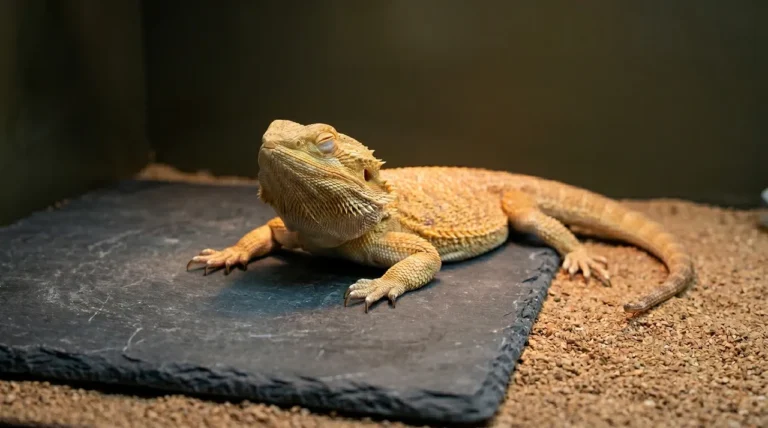
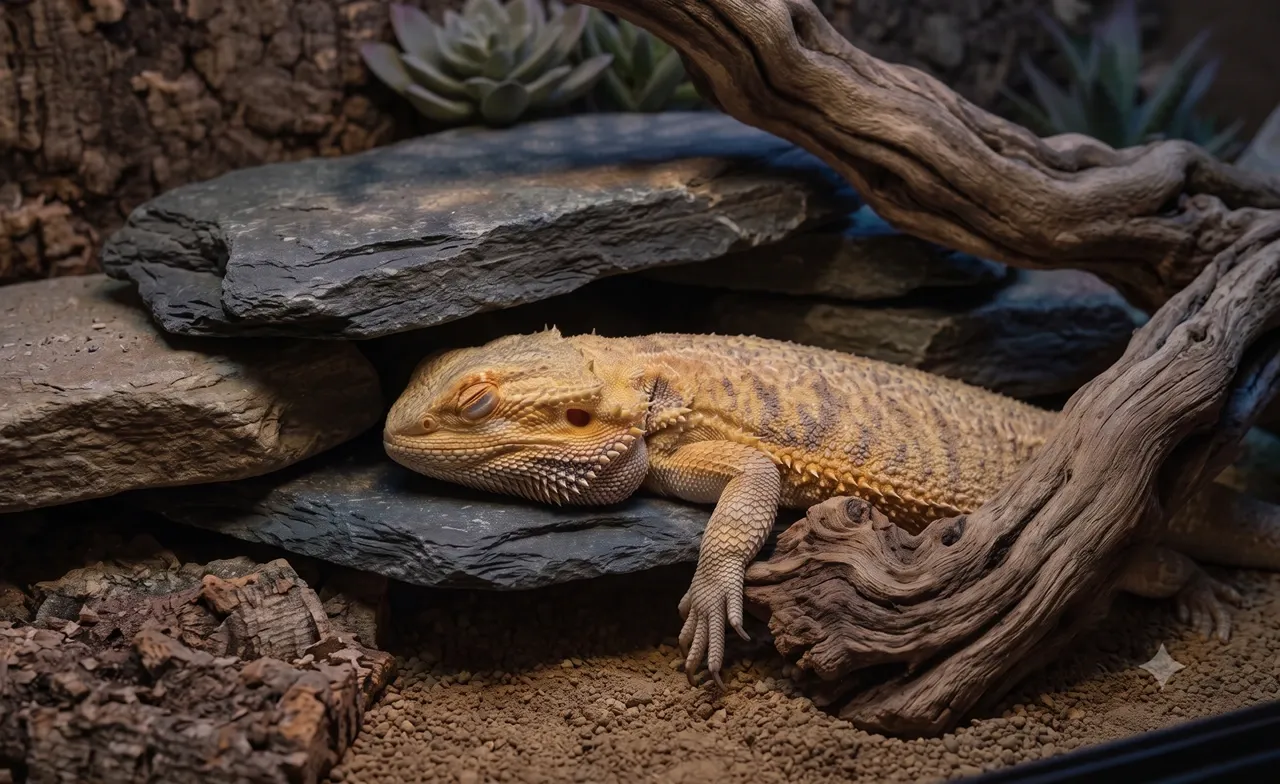
Walk past the tank an hour after lights-out and your beardie is already flat on the substrate, pale as sand and barely moving. How much do bearded dragons sleep is one of the first questions new owners ask, usually because their dragon sleeps far more than they expected.
A healthy adult sleeps 8–12 hours a night, and up to 14 in winter. That range is normal.
The hours shift with age and season, though. Babies need more, winter stretches everything, and an adult entering brumation can sleep for days at a time without anything being wrong. The trick is knowing which version of “sleeping a lot” you are looking at.
How Much Do Bearded Dragons Sleep Each Night
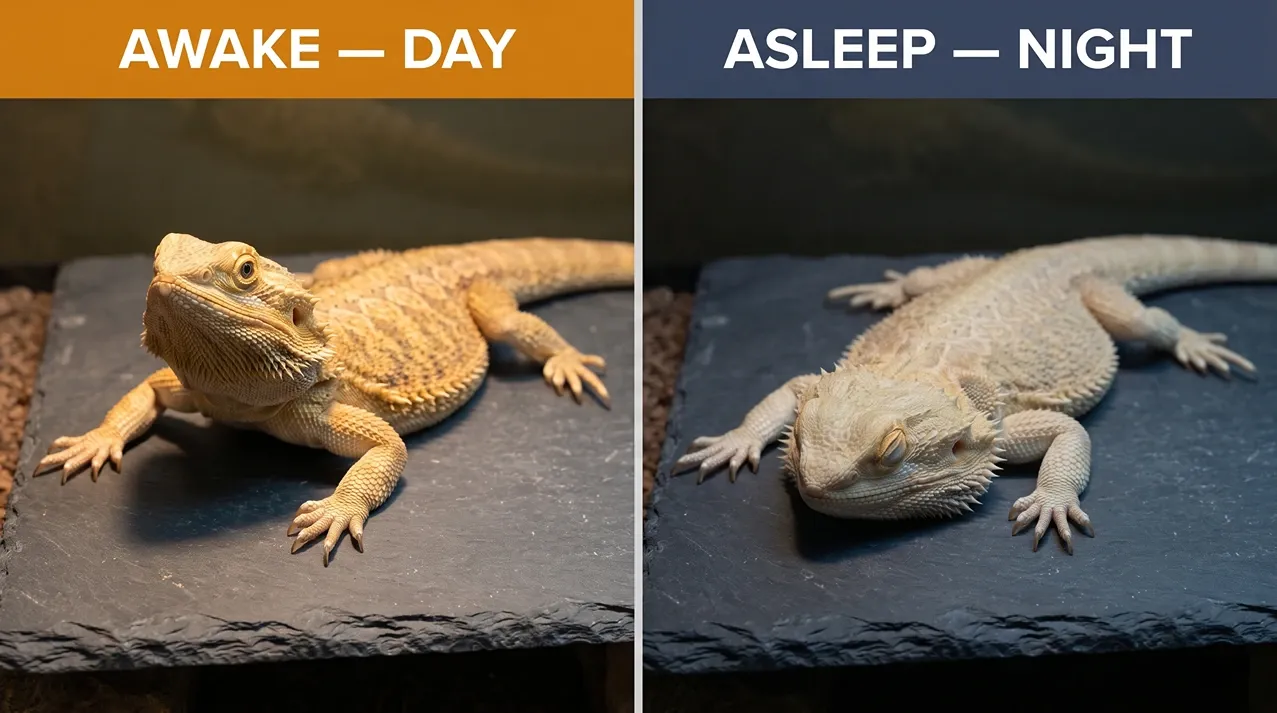
Almost all of those hours land overnight. Beardies are diurnal, so their rhythm matches yours. Lights on means awake, and lights off usually means asleep within the hour.
Age changes the numbers more than most owners realise.
| Age | Sleep per 24 hours | What normal looks like |
|---|---|---|
| Hatchling (0–3 months) | 12–14 hours | Long night sleep plus short naps after big feeds |
| Juvenile (3–12 months) | 10–13 hours | Night sleep with the odd brief daytime doze |
| Sub-adult (12–18 months) | 9–12 hours | Naps fade out, the overnight block settles |
| Adult (18 months+) | 8–12 hours | One solid overnight sleep, fully awake all day |
| Any age in winter | Up to 14+ hours | Earlier bedtimes, slow mornings, possible brumation |
Babies Sleep More Than Adults Do
A hatchling is converting crickets into bone at a speed no adult matches, and most of that growth happens during sleep. A baby that crashes for a 20-minute nap after a feed is doing exactly what every healthy baby dragon does.
What you should not see is a baby sleeping through entire basking sessions day after day. Persistent daytime sleep in a hatchling points to low temperatures, weak UVB, or parasites, and babies decline faster than adults when something is off.
Adults Rarely Nap During the Day
Past 18 months, daytime napping mostly disappears. An adult under correct lighting should spend its day basking and patrolling, pausing to watch you through the glass. A ten-minute doze on a warm hammock is fine, especially in dragons past seven years.
Regular daytime sleep in an adult is the husbandry equivalent of a check-engine light. It rarely means nothing.
Why Winter Sleep Stretches Past Twelve Hours
Bearded dragons keep an internal calendar that does not care about your thermostat. Even indoors under artificial lights, most dragons sense shorter days through the window and the slight drop in household temperature, and their sleep stretches in response.
From late autumn you may see your dragon head to bed an hour before lights-off and rise late. Total sleep creeping up to 13–14 hours between November and February is seasonal behaviour, not illness.
Some dragons go further and shut down almost completely for weeks. The difference between healthy winter sleep and a sick dragon comes down to weight and alertness. A brumating dragon holds its weight and looks alert in the moments it surfaces. A sick one wastes away.
What a Healthy Sleep Schedule Looks Like
Your dragon cannot set its own bedtime. The light cycle you run is the only clock it has, so consistency matters more than the exact hours you pick.
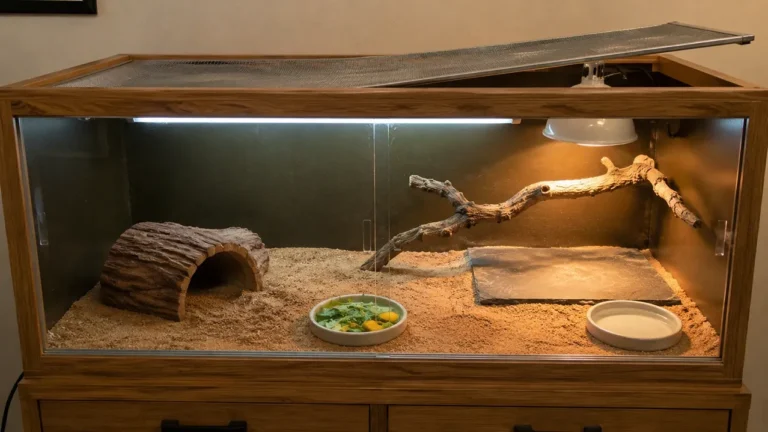
Run 12 hours of light and 12 of darkness as a year-round baseline. If you want to mimic seasons, stretch the light to 14 hours in summer and cut it to 10 in winter, shifting gradually over a couple of weeks rather than overnight.
Pro tip: Put your UVB and basking lights on a cheap plug-in timer. Hand-switching drifts by an hour here and there, and dragons notice. A timer removes the single most common cause of disrupted sleep.
Lights Off Means Completely Off
No red bulbs, no blue night-glow lamps, no moonlight LEDs. Bearded dragons see colour better than we do, and a red light that looks dim to you is a lit room to them.
Sleep researchers who kept dragons awake for nine hours found their deep-sleep brain waves collapsed, and the lizards spent the next full day catching up. Broken sleep is not a cosmetic problem for this species.
Most Rooms Stay Warm Enough Overnight
Darkness should come with a temperature drop. Anything above 65°F (18°C) overnight is fine for a healthy adult, and that nightly dip is part of what signals sleep in the first place.
If your room falls below that floor in winter, a ceramic heat emitter on a thermostat gives heat without light. Coloured bulbs sold as night heat solve the wrong problem.
Is Your Beardie Sleeping Too Much
This is the question behind the question for most owners. The hours matter less than the timing. A dragon sleeping 13 hours overnight in January is fine. One asleep under its basking lamp at 2pm in June is not.
An adult with its eyes shut at midday under full lights is telling you something about the setup or its health. Run through the table before assuming the worst.
| What you see | Most likely cause | What to do |
|---|---|---|
| Sleeping through basking hours, still eating normally | UVB tube past its 12-month lifespan, or basking spot too cool | Check bulb age and surface temperature today |
| Dozing off straight after meals | Basking surface below digestion temperature | Raise the surface above 100°F and re-check in a week |
| Autumn slow-down, alert when awake, weight steady | Brumation starting | Weigh weekly, keep water available, let it happen |
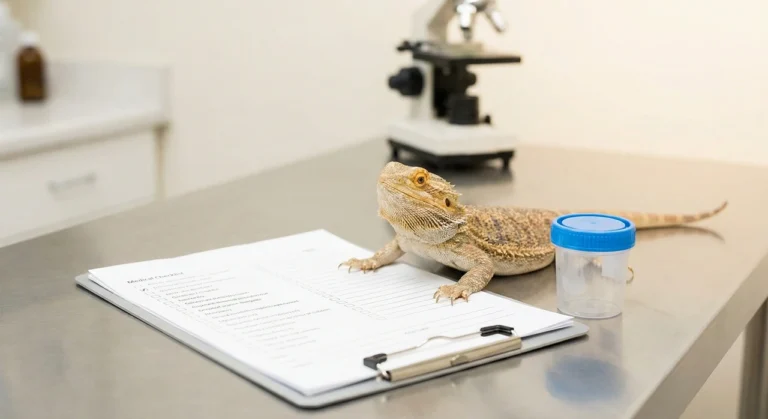
| Sleeping all day plus refusing food for over a week | Parasites, low temperatures, or illness | Book a reptile vet and bring a fresh stool sample |
| Limp, unresponsive, sunken eyes | An emergency, not sleep | Same-day vet visit |
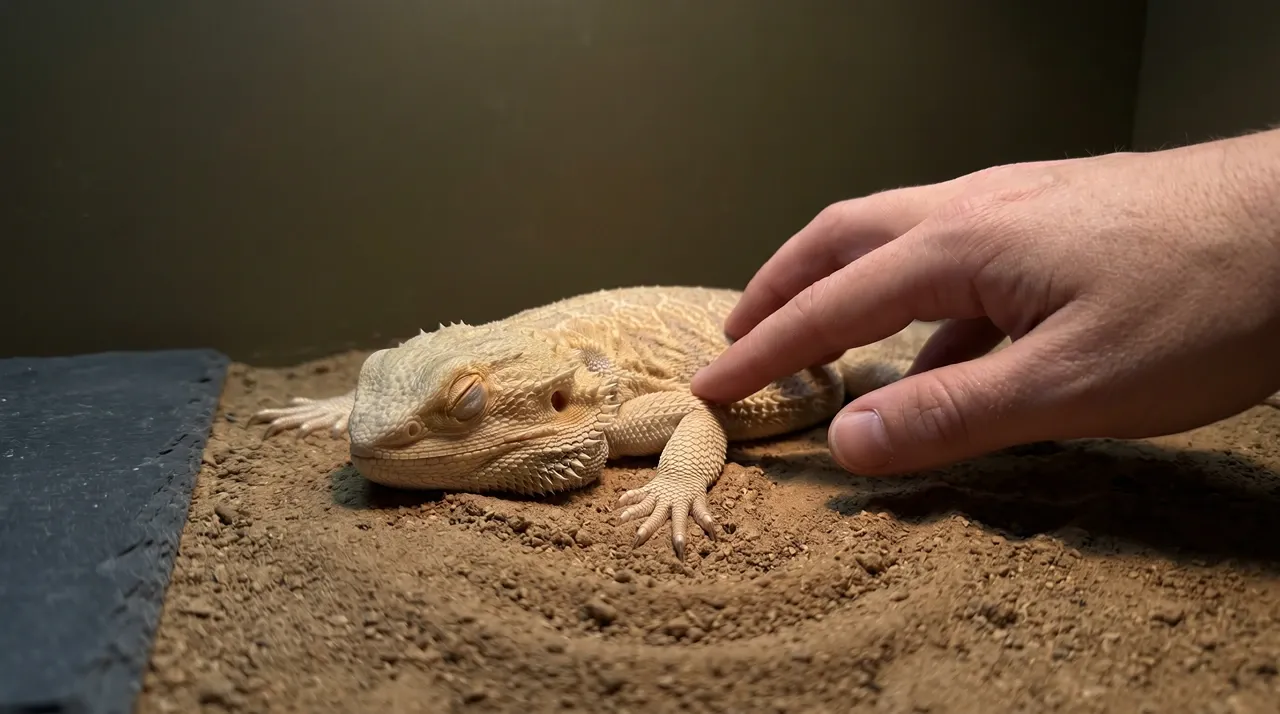
Telling deep sleep from real trouble takes one check. A sleeping dragon rouses when you gently touch its side, even if it is grumpy about it. One that is awake but not moving, or that you cannot rouse at all, is a different situation entirely.
Warning: A dragon you cannot wake, or one that feels limp rather than relaxed, needs a reptile vet the same day. Deep brumation slows breathing dramatically, but a brumating dragon still responds to a gentle touch.
A Nap Right After Eating Is a Warning
Healthy dragons bask hard after meals because digestion only works at temperature. If yours eats and then immediately settles down to sleep, the basking surface temperature is almost always the culprit.
Food sitting in a cool dragon ferments instead of digesting. That is how a too-cool tank turns into vomiting or impaction within days. Fix the heat the same day you notice the pattern.
The Weird Stuff Sleeping Dragons Do
Bearded dragons are strange sleepers, and most of the strangeness is harmless. These four behaviours generate more panicked forum posts than everything else combined, and not one of them needs fixing.
- They go pale. Most dragons lighten to a washed-out sandy shade within an hour of falling asleep. The colour shift runs on their body clock and happens even in total darkness.
- They barely breathe. Deep sleep slows their metabolism so far that chest movement becomes hard to spot. More than one owner has panicked over a perfectly healthy dragon.
- They sleep in ridiculous places. Standing against the glass, wedged into a corner, flat across the food bowl. Most odd sleeping positions are harmless, though a sudden switch to vertical glass-sleeping can signal a temperature problem.
- They bury themselves. Dragons on loose substrate sometimes dig in partway before sleeping, which usually means they want darkness or security, though check nothing in the room is shining into the tank overnight.
Their sleep architecture is odd too. Dragons cycle between slow-wave and REM-like sleep roughly every 80 seconds, against around 90 minutes in humans, so a single disturbed hour wipes out dozens of complete cycles. Whether they dream during those bursts is still an open question.
Frequently Asked Questions
Do bearded dragons sleep with their eyes closed?
Yes, always. A dragon lying still at night with open eyes has usually been disturbed by light or noise rather than sleeping. If it stays wide-eyed night after night in a dark room, get a vet involved.
Can I wake my bearded dragon up?
You can, and a gentle touch on the side will do it. Avoid making a habit of it, since broken sleep measurably reduces their deep-sleep quality. A weekly response check during brumation is the exception.
How much do bearded dragons sleep as babies?
Hatchlings sleep 12–14 hours a day, including short naps after meals. The total drops steadily toward the adult 8–12 hours by around 18 months.
Why does my bearded dragon fall asleep before the lights go out?
Its internal calendar is running ahead of your timer, which is common from autumn onward. Going to bed an hour early is seasonal behaviour, not illness, as long as appetite and weight hold.
Do bearded dragons dream?
Nobody knows for certain. They show REM-like sleep phases every 80 seconds, the same state in which humans dream, but the evidence stops short of proving dreams.
The One Change That Fixes Most Sleep Problems
Almost every sleep question that lands in reptile forums traces back to an inconsistent light schedule. Before you worry about illness or strange behaviour, put the lights on a timer and leave the schedule alone for three weeks.
A dragon on a fixed 12-hour cycle, in a dark and quiet room overnight, sorts out its own sleep better than any intervention you can make. How much bearded dragons sleep matters less than when they sleep, so watch the timing rather than the totals. That one habit catches problems earlier than anything else on this page.
Written by
Sarah ArdleySarah has kept bearded dragons for over ten years. She founded Beardie Husbandry after discovering that most mainstream care advice — including what she followed with her first dragon — was doing more harm than good. Every article on this site is grounded in veterinary research and real keeper experience.