Bearded Dragon Mating Season Behaviour Most Owners Get Wrong
Your normally relaxed beardie is suddenly head-bobbing at its own reflection, scratching frantically at the glass, and refusing every cricket you offer. Nothing in the setup has changed.
Bearded dragon mating season has arrived, and your dragon’s biology does not care that there is no mate in the enclosure. This catches a lot of owners off guard, particularly those keeping solitary dragons. The behaviour is intense, sometimes alarming, and in most cases completely normal. The challenge is knowing which signals you can ride out and which ones demand action.
Why Captive Dragons Still Have Mating Urges
Pogona vitticeps evolved in Australia, where the breeding period runs through the southern hemisphere spring and summer, broadly September through March. Captive dragons do not switch that programming off just because they live in a vivarium. Their reproductive biology still responds to environmental cues, particularly shifts in daylight length and ambient temperature, and most will cycle through seasonal hormonal changes with or without a mate present.
Some dragons pick up on natural daylight bleeding in from a nearby window. Others respond to subtle shifts in the keeper’s routine: lights coming on slightly later in winter, room temperature dropping a few degrees overnight. A dragon kept under a completely fixed artificial schedule will cycle less predictably, but many still do.
The behaviour that follows is not a malfunction to suppress. It is the species doing exactly what its biology demands. Your job is to manage it safely rather than fight it.
What Bearded Dragon Mating Season Does to Males
Males are usually the more dramatic of the two. A male entering breeding season can look genuinely alarming if you have never witnessed it before. The calm, food-focused animal you have kept for years seems to transform overnight into something restless, territorial, and occasionally aggressive.
Why Is He Head Bobbing at Everything
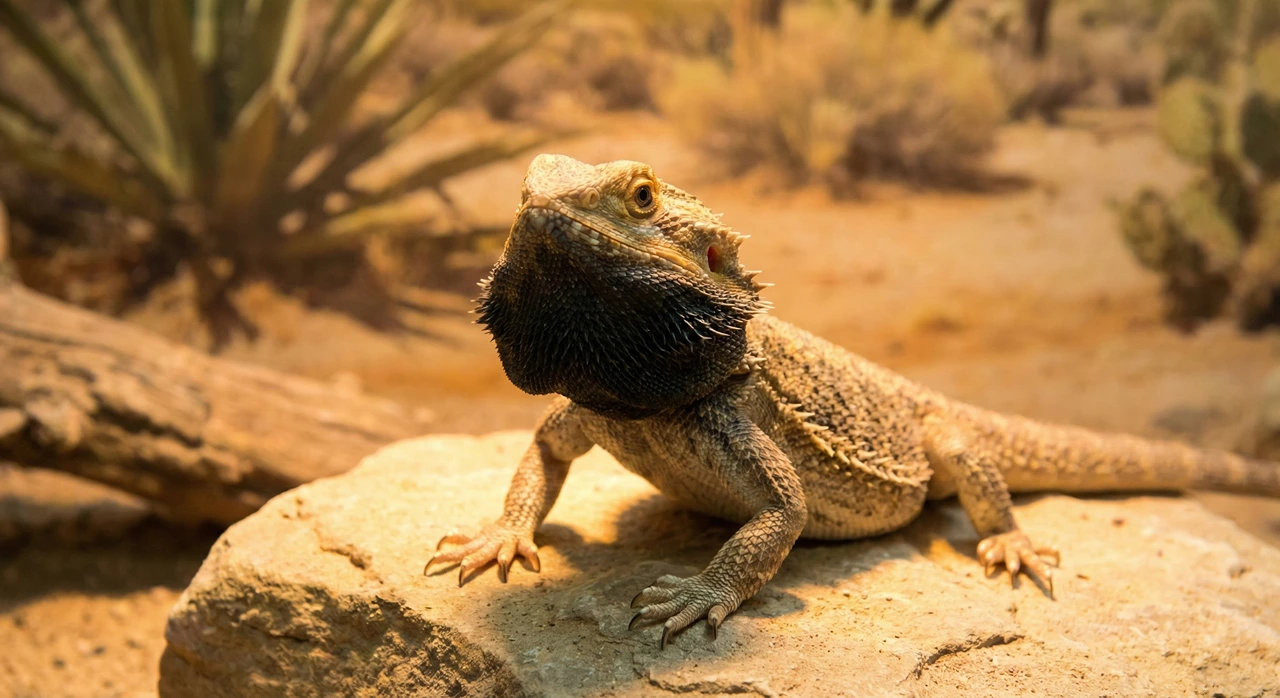
Fast, repetitive head bobs directed at his reflection, your hand, a shoe, or apparently nothing are a dominance display. He is advertising his fitness and readiness to breed in the same way he would to rival males and potential mates in the wild. It is not targeted aggression toward you.
A deep, persistent black beard that holds for hours at a time is part of the same display. This is different from the brief darkening that appears during routine handling stress. Combined with rapid head bobs during spring, an extended black beard is a breeding season signal rather than a sign of pain or illness.
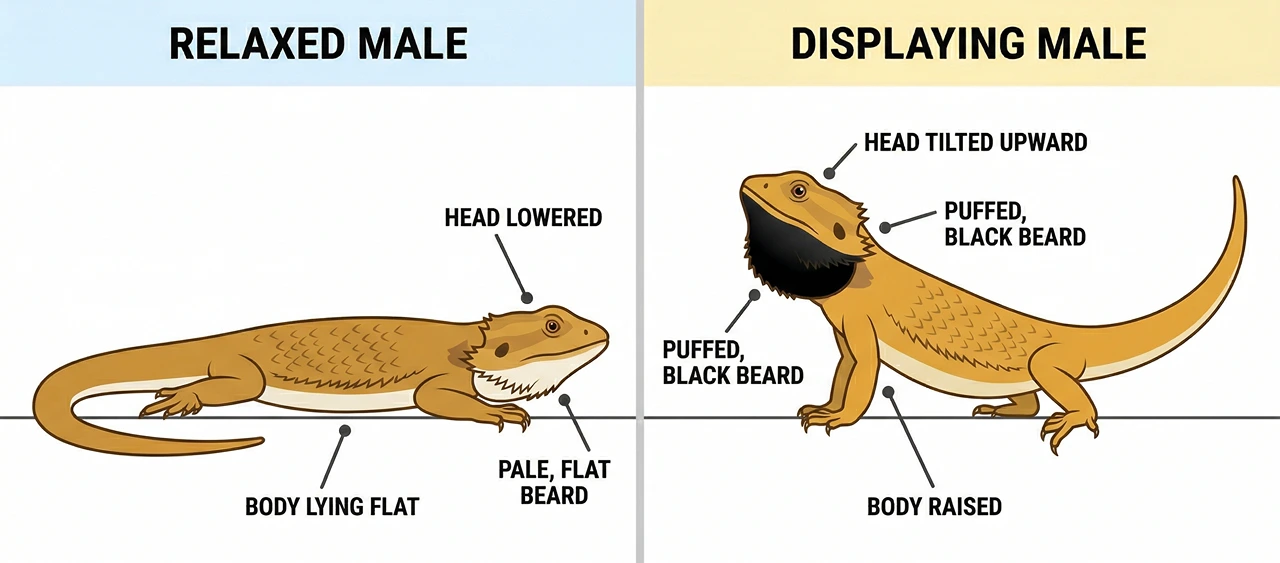
The same hormonal surge drives the restless pacing and glass surfing that owners find so baffling during spring. He wants to expand his territory. He cannot, so he paces, scratches, and climbs.
Mounting behaviour directed at objects like shoes, hides, or your forearm is common and entirely normal during bearded dragon mating season. Redirect him to floor time if he seems particularly frustrated. Many males calm noticeably with daily supervised time outside the enclosure where they can explore and burn off the excess energy.
Food refusal during peak mating season is normal in males. His brain is not on crickets right now. Provided he remains alert, holds his weight reasonably well, and is still drinking, two to four weeks of reduced appetite falls within the range of normal seasonal behaviour.
What to Do for a Frustrated Male
You cannot switch this off. What you can do is keep his enclosure stable, increase floor time and enrichment, and avoid forcing interaction when he is actively displaying.
A male showing a dark beard and rapid head bobs is faster to bite than usual. Read his body language signals before reaching into the enclosure. If his beard is deep black and he is bobbing directly at you, let him settle first.
How Female Bearded Dragons Experience Breeding Season
Female bearded dragon mating season behaviour is often quieter than the male version, but the physical demands are considerably harder to manage. A female’s body begins producing follicles and developing eggs whether or not a male is anywhere near her, and that process draws heavily on her nutritional reserves.
A Gravid Female Looks Different Before Laying
A gravid female carrying developing follicles will often change shape before she shows any digging behaviour. Her abdomen may look lumpy or marbled when viewed from above, and she may sit slightly higher on her legs as the developing eggs press against her abdominal cavity.
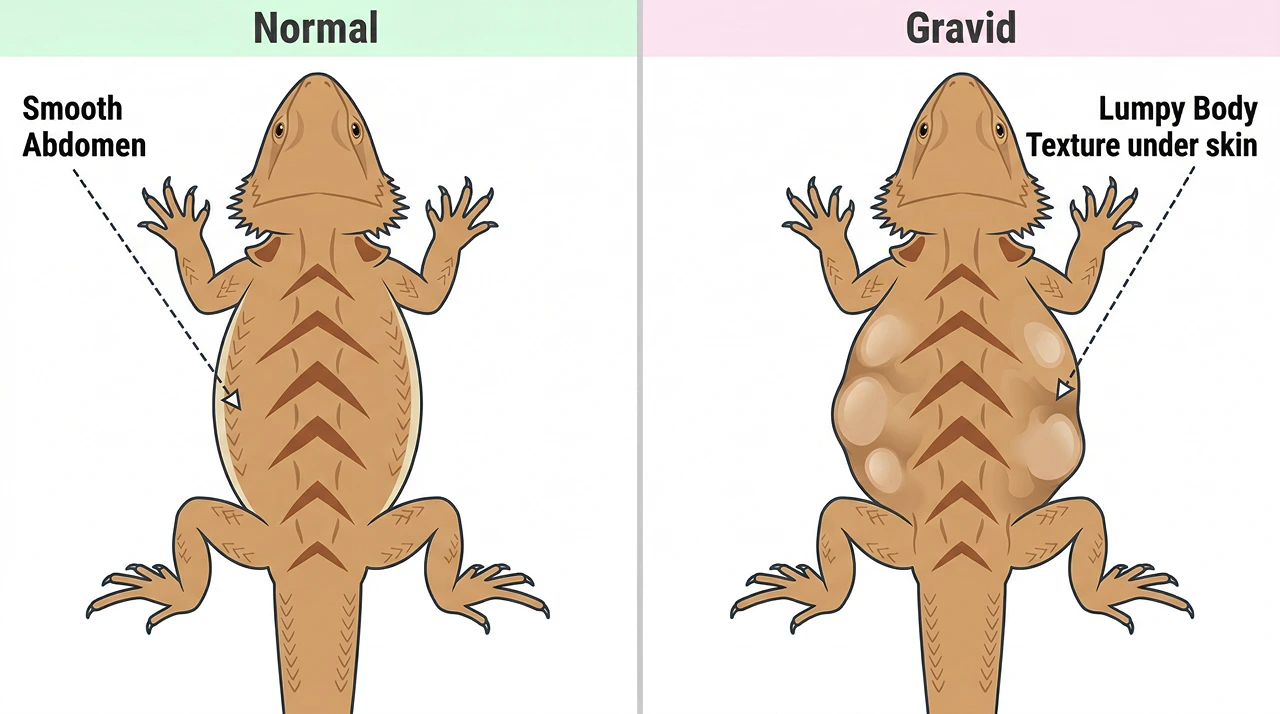
Appetite typically drops sharply at this stage because the eggs physically crowd out space in the stomach. This is expected, provided she remains active and hydrated. A female who is neither eating nor moving is a different concern and warrants much closer attention.
Restlessness usually arrives before the digging does. A female who was previously content will start scratching at corners, pawing at the substrate, and pacing in a way that resembles stress but is actually the nesting drive telling her she needs a lay site. Even without ever having been near a male, a healthy adult female can develop follicles and lay infertile eggs, sometimes two or three clutches in a single season.
Calcium Is the Real Risk Here
Egg production consumes calcium at a rate that routine supplementation often cannot keep pace with. A female going through multiple clutches can strip her reserves to dangerous levels.
The first sign is frequently not an obvious symptom but a subtle softening of the jaw and limb bones that many owners attribute to general fatigue. By the time visible deformity appears, the deficit has been building for weeks.
Dust every feeder insect at every meal once digging behaviour begins. Keep her on leafy greens daily.
Check your UVB tube. If it is more than six months old, replace it now, because a female producing eggs under a failing tube cannot metabolise the calcium she is consuming regardless of how well she is dusted. Her calcium and D3 schedule needs to stay consistent across the entire laying season, not just around the first clutch.
When Your Female Starts Digging
A female actively scratching at corners or digging at the substrate is telling you she is ready to lay. She needs a lay box immediately. Do not wait to see whether the behaviour resolves on its own.
The container needs to be deep enough for her to submerge herself fully, a minimum of 30 cm and ideally closer to 40 cm.
Fill it with a mix of topsoil and play sand, dampened just enough to hold a tunnel shape without collapsing. She needs walls that stay intact behind her. If the substrate is too dry and the tunnel collapses as she digs, she will keep excavating and exhausting herself rather than settling to lay.
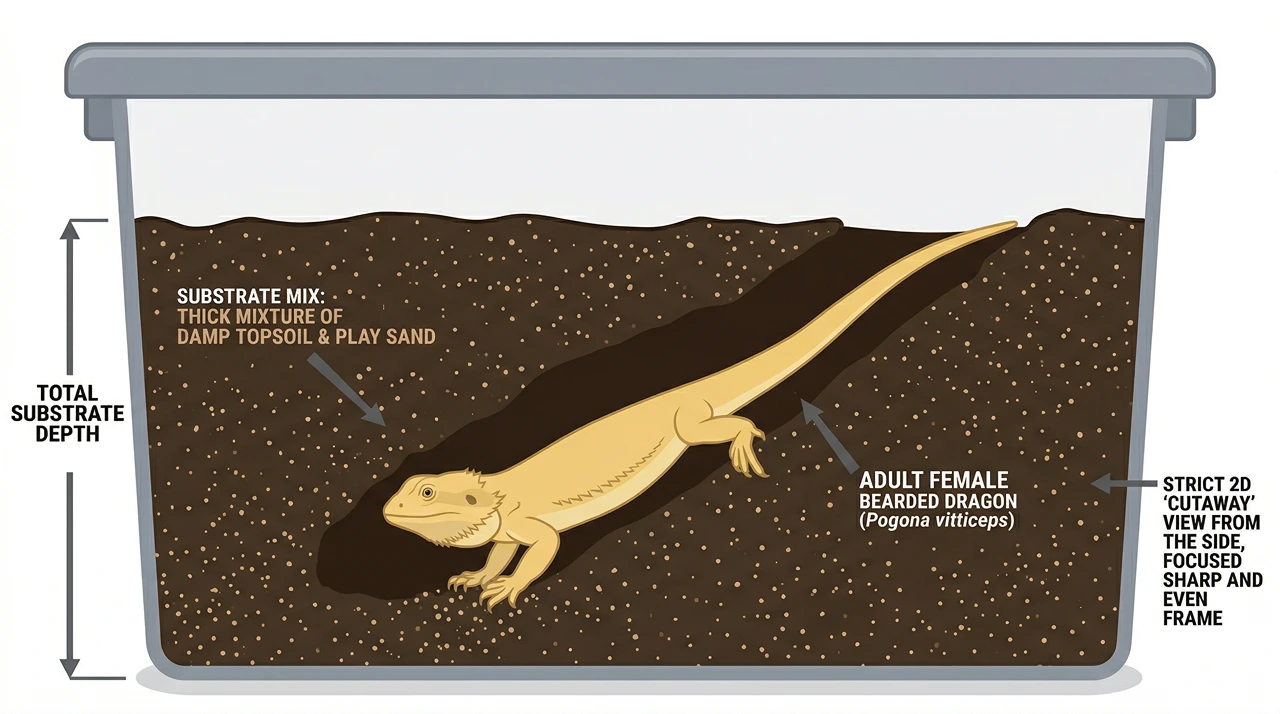
Without an adequate lay site, a gravid female may retain her eggs. Egg binding in a bearded dragon is a veterinary emergency. She cannot pass the eggs on her own once the process stalls, and prompt intervention from a reptile-experienced vet is the only safe path.
The digging behaviour linked to laying looks distinct from brumation digging or general boredom. She is purposeful and directional, working corners and edges, pausing to test the substrate, and returning to the same spot repeatedly. Once you recognise the pattern, you will not confuse it with anything else.
The Real Trigger Behind Mating Season
The primary driver is photoperiod. A longer light period signals spring and initiates the hormonal cascade behind bearded dragon mating season behaviour. A shorter period signals winter and suppresses it.
Dragons kept on a rigid 12-hour cycle year-round may cycle unpredictably because they never receive a clear winter signal to reset against. The result is often a low-grade, drawn-out hormonal state that never fully peaks and never fully resolves.
Many experienced keepers run a deliberate winter brumation period, reducing both temperature and light hours from mid-December to mid-February before restoring normal conditions. The resulting spring hormonal shift tends to be more defined, peaks more clearly, and resolves more cleanly than in dragons kept on a flat year-round schedule.
You do not need a full brumation protocol to see the benefit. Dropping the light period from 14 hours to 10–11 hours across December and January, then gradually restoring it through February, is often enough to give the hormonal system a seasonal reset without the full complexity of a formal cool-down.
How Long Does This Actually Last
In males, the most intense period typically runs four to eight weeks. The peak phase, which includes constant head bobbing, a persistent black beard, and significant food refusal, usually occupies the first two to four weeks.
Residual behaviour, occasional bobs and mild glass surfing, can continue for several more weeks before finally settling.
In females, the timeline is driven by clutch number rather than the calendar. Most lay two to three clutches spaced four to six weeks apart, meaning the full process from first signs of gravidity to the final eggs in the lay box can span three to four months.
Each clutch is its own recovery cycle with its own calcium and nutrition demands.
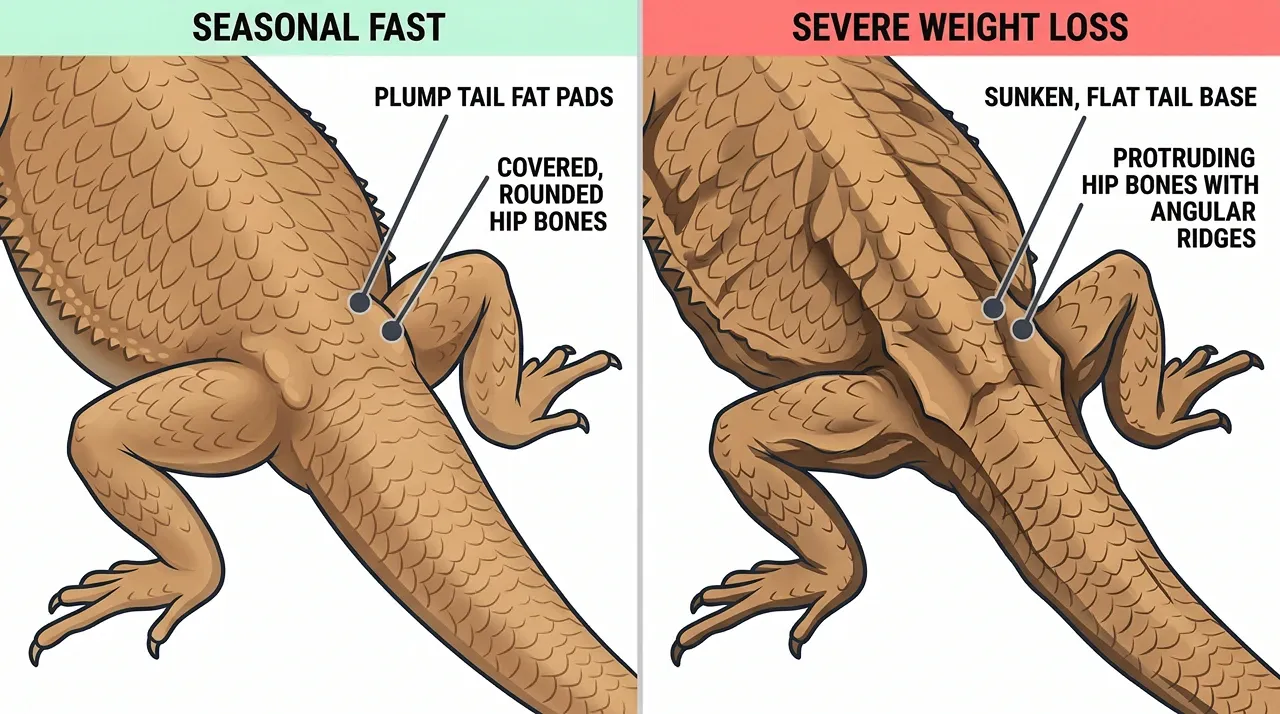
Most dragons return to baseline appetite and behaviour by midsummer. If a male is still showing intense bearded dragon mating season behaviour well into July, or a female is digging persistently without producing eggs, both are worth a vet visit to rule out hormonal dysregulation or follicular stasis.
When Is Mating Behaviour a Red Flag
| What You Are Seeing | Most Likely Cause | Action |
|---|---|---|
| Head bobbing, black beard, glass surfing in spring | Normal male mating season behaviour | Monitor. Increase floor time and enrichment |
| Female restless, scratching corners, not eating | Gravid female approaching lay | Set up lay box immediately |
| Male off food for 2–4 weeks, otherwise alert | Hormonal drive suppressing appetite | Maintain hydration, offer food daily, monitor weight |
| Female digging 48+ hours without laying | Possible egg binding | Vet visit same day. Do not wait. |
| Swollen abdomen, lethargy, straining with no output | Egg binding or internal laying | Vet visit immediately |
| Male visibly thin, too weak to hold basking position | Breeding season stress exceeding safe limits | Vet check if weight loss is rapid or severe |
| Black beard outside spring with no known stressor | Possible illness, pain, or thermal stress | Check enclosure temps. Vet if ongoing beyond a week |
| Intense breeding behaviour still present in late summer | Possible follicular stasis or hormonal dysregulation | Vet check to rule out retained follicles or cysts |
What Owners Ask Every Breeding Season
Can Solo Dragons Still Show Mating Behaviour
Yes. A solo male will still head bob, glass surf, and stop eating, and a solo female will still develop follicles and lay infertile eggs. The drives come from internal hormones and environmental cues, not from the presence of another dragon.
How Long Can a Male Go Without Eating
Three to four weeks of reduced appetite during peak bearded dragon mating season is within the normal range, provided he remains alert and is not losing weight rapidly. Keep offering food daily, and if the skin along his flanks tents when gently pinched rather than snapping back, increase soaks to three times per week. A male still refusing food after four weeks who is also becoming visibly thin needs a vet check.
Is It Safe to Handle During Mating Season
Yes, with more care than usual. Males in full breeding display are quicker to bite, particularly if approached from above while the beard is black, so approach from the side and read his posture before reaching in. Gravid females can be handled gently, but keep sessions brief and avoid any pressure on the abdomen.
How Many Clutches Will My Female Lay
Most females produce two to three clutches per season, spaced roughly four to six weeks apart. Some lay only one. Each clutch depletes calcium reserves meaningfully, so consistent supplementation across the entire season matters more than an intensive push around a single lay.
Can I Reduce How Intense Mating Season Gets
Not entirely, but environmental management helps. Running a gentle light reduction over winter, dropping from 14 hours to 10–11 hours across December and January then building back up through February, often produces a shorter, more defined season rather than a prolonged low-grade hormonal state. Keeping enclosure conditions stable and predictable throughout also reduces the background stress that amplifies the behaviour.
What to Do Right Now
If your dragon is showing early signs of mating season, work through this list before things escalate.
- Weigh your dragon today and write it down. A baseline weight gives you something concrete to compare against if appetite drops over the coming weeks.
- Check your light schedule. Running 14 hours year-round without any winter reduction? Plan a gradual drop to 10–11 hours next December and a build back through February to give the hormonal system a seasonal reset.
- Set up a lay box now if you have a female showing any restlessness. A 40 cm deep container of damp topsoil and play sand sitting in the enclosure costs nothing and prevents a genuine emergency later in the season.
- Replace your UVB tube if it is older than six months. A failing tube shows no visible sign of decline, and calcium metabolism stops working regardless of how well you dust.
- Start dusting every feeder at every meal for any female showing abdominal changes or corner-scratching. Do not wait until the digging starts to increase supplementation.
- Separate cohabiting dragons immediately if you are not actively breeding. Chronic cohabitation during mating season depletes females and risks injury.
- Increase soak frequency to twice weekly for both males and females during breeding season. Hormone-driven behaviour burns energy and can suppress normal drinking behaviour in both sexes.
Medical Disclaimer: This article is written for educational purposes based on keeper experience and does not substitute for professional veterinary advice. If your bearded dragon is showing signs of egg binding, significant weight loss, or prolonged lethargy, contact a reptile-experienced vet promptly.
Written by
Sarah ArdleySarah has kept bearded dragons for over ten years. She founded Beardie Husbandry after discovering that most mainstream care advice — including what she followed with her first dragon — was doing more harm than good. Every article on this site is grounded in veterinary research and real keeper experience.