Female Bearded Dragon Laying Eggs Without a Male? (What to Do)
Finding eggs in your enclosure when you have never owned a male is one of those disorienting moments. Your first thought is usually whether something is wrong with her, or whether she somehow mated without you knowing. Neither is likely.
Bearded dragon laying eggs without any male contact is entirely normal. The hormonal cycle that drives follicle development runs on seasonal cues, not mating. The eggs will not develop, and nothing has gone wrong.
What matters now is making sure she can lay safely. A female that cannot find suitable substrate will retain her eggs, and that becomes dangerous fast.
Why Your Female Laid Eggs With No Male
Female bearded dragons are vitellogenic, meaning they develop egg follicles on a hormonal cycle tied to day length, temperature, and food availability.
The same seasonal cues that drive mating season behaviour in females trigger follicular development whether a male is present or not. Longer days, warming temperatures, and improving nutrition all play a role.
The eggs develop to the point of ovulation and continue through the reproductive tract, but without sperm they remain unfertilised. Think of it the same way you think of a hen laying eggs. The cycle runs completely independently of fertilisation.
There is one exception worth knowing. If your female was ever housed near a male, even briefly, she may be carrying stored sperm.
Female bearded dragons can retain viable sperm for months after a single mating, meaning a clutch laid well after any male contact could technically be fertile. If her history is uncertain, check the eggs before discarding them.
Not Every Female Will Lay
This gets missed in nearly every article on the subject: not all females produce infertile clutches. Some go their entire lives without laying a single egg. Others lay one or two clutches per year from age two until they are ten.
Individual variation is wide, and there is no reliable way to predict which category your dragon falls into.
If your female is two or three years old and has never shown any signs of a bearded dragon laying eggs, that is not a health concern. It is simply who she is.
Signs Your Dragon Is Ready to Lay Eggs
The Behaviour Changes You’ll Notice First
The earliest behavioural signs appear weeks before she actually digs. She will pace the enclosure, scratch at the glass, and move restlessly between the warm and cool ends without settling.
This can look a lot like stress behaviour, but it is purposeful. She is searching for somewhere that feels right to dig.
Appetite drops sharply as she gets close to laying. A female that has been eating reliably will suddenly lose interest in feeders she would normally chase down.
Some stop eating entirely in the final two or three days before a clutch. This is normal and is not a feeding problem.
What Her Body Tells You
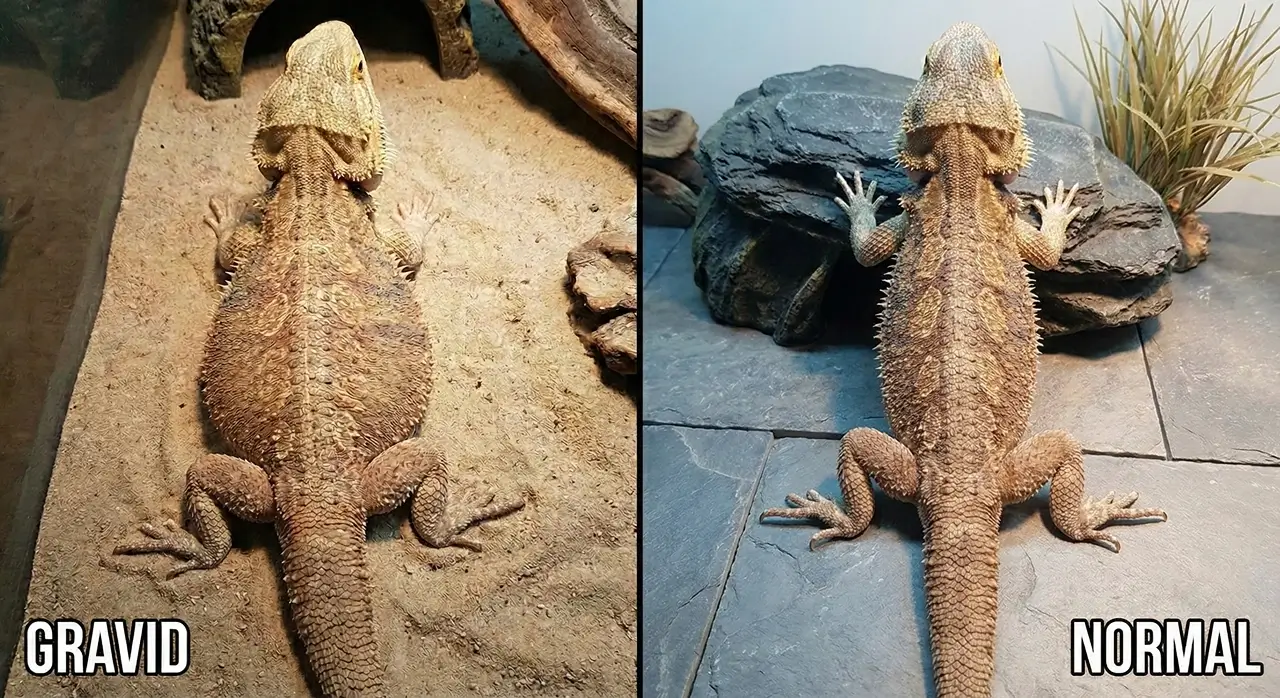
From about two weeks into follicular development, you can often feel the eggs by running your fingers gently along both sides of her lower abdomen. They feel like small, firm marbles arranged in rows beneath the skin.
Her belly will widen and drop, giving her a pear-shaped profile from above instead of her usual oval.
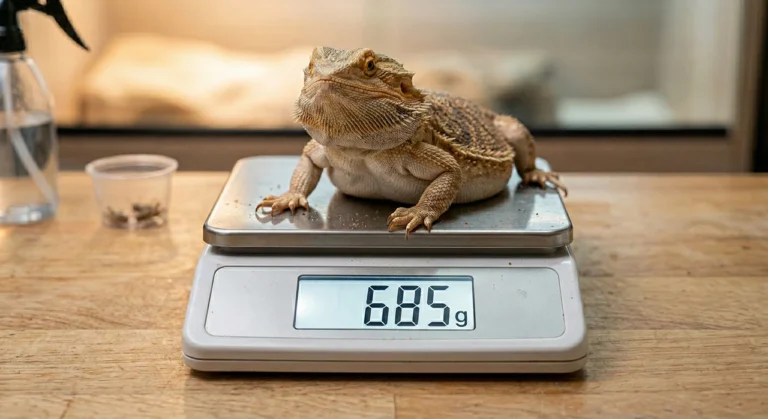
Weight gain is another reliable indicator. A noticeable jump in body weight over two to three weeks, without a meaningful increase in food intake, usually points to developing follicles. Bowel movements also become smaller and less frequent as the eggs take up abdominal space.
What Goes in a Lay Box
When you see sustained digging behaviour, set the lay box up immediately. Do not wait to see if the behaviour settles. A female that cannot find somewhere to dig will retain her eggs, and egg binding can become life-threatening within days.
Use a plastic storage container in the 18–25 litre range, deep enough that she can dig without hitting the bottom. Fill it with at least 20 cm (8 inches) of substrate. Organic topsoil without added fertilisers or perlite works well, as does a fifty-fifty mix of play sand and topsoil.
Test moisture by squeezing a handful. It should hold its shape without dripping water when you open your fist. Too dry and she will reject it; too wet and the burrow collapses on her mid-dig.
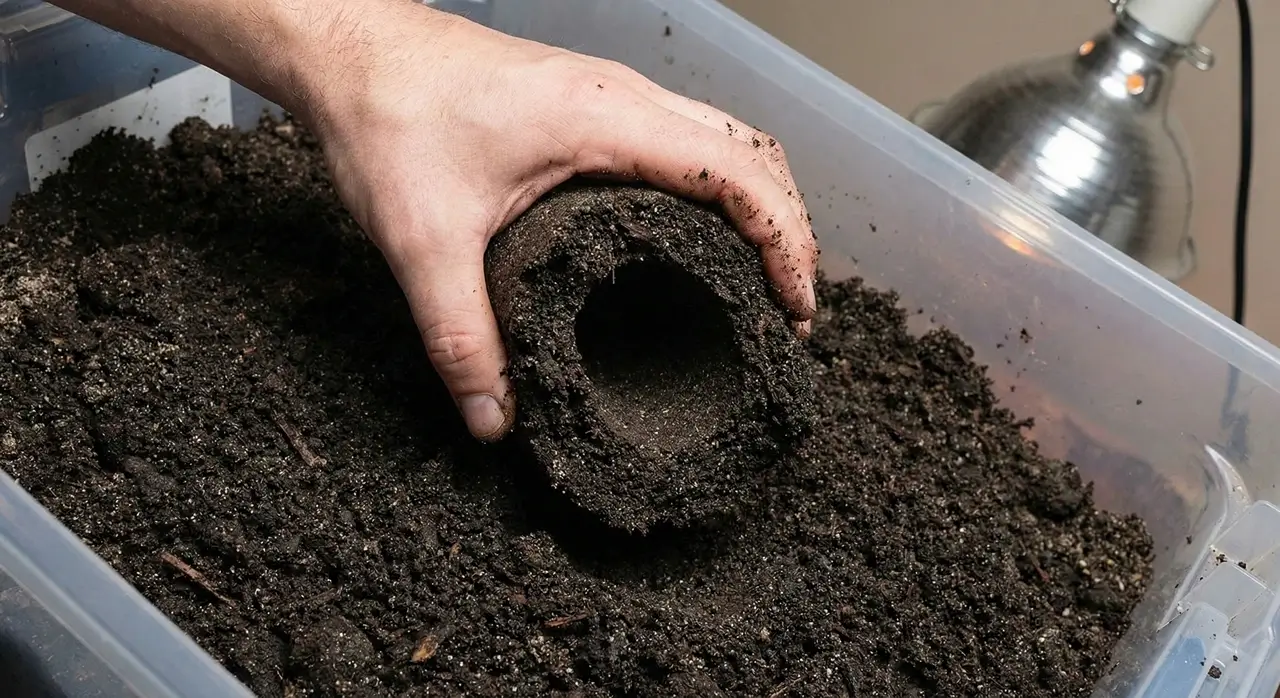
Partially cover the container with its lid to create a sense of privacy and place it somewhere warm, around 27–29°C. Most females will not commit to a spot where they feel exposed.
If you can, introduce her to the box in the afternoon or early evening. That is when the instinct to dig tends to peak.
Once the box is ready and she is inside, the hardest thing for most keepers is doing nothing. The temptation to check on her is strong, but any disturbance during active digging resets the process and costs time.
What Happens During Laying
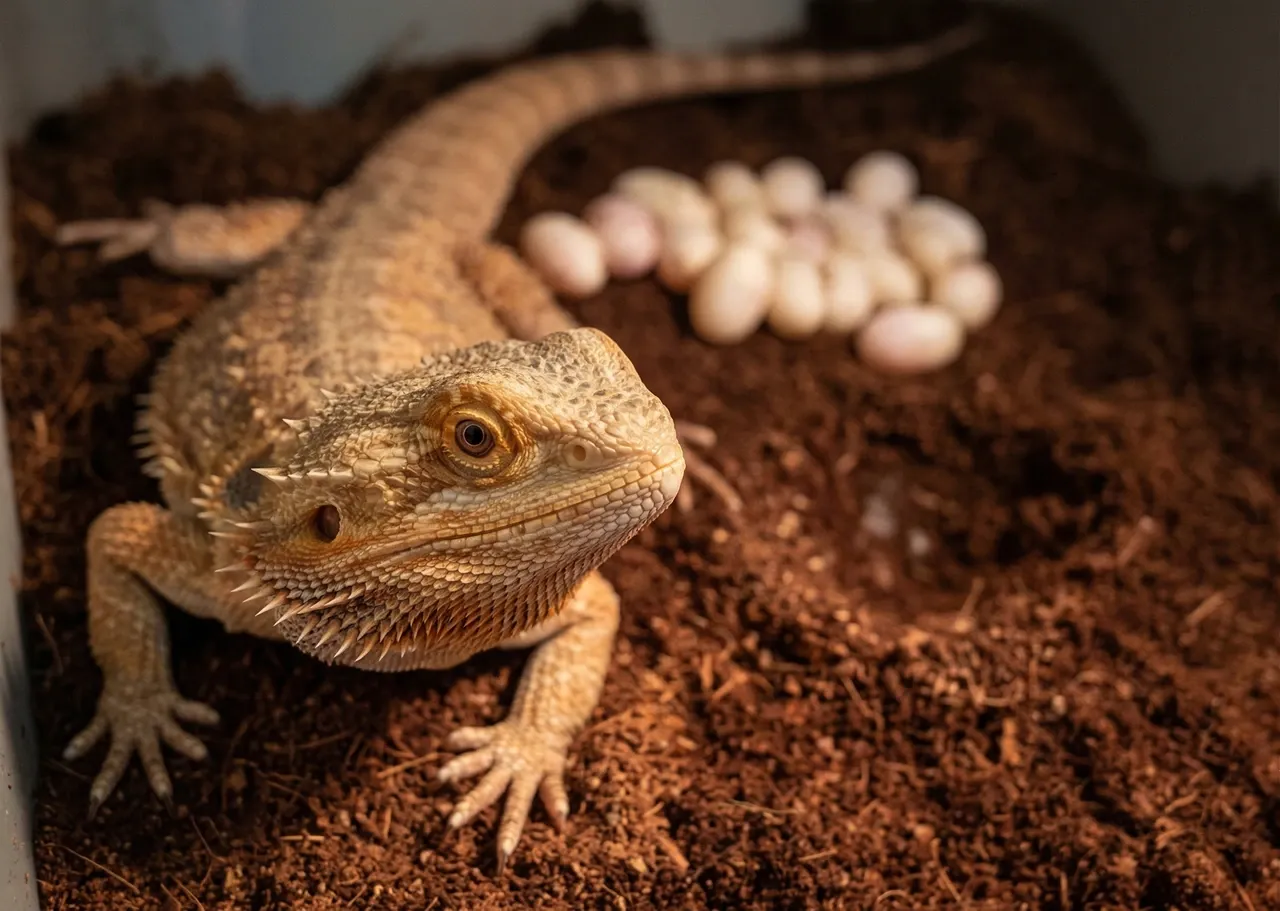
Once she commits to a spot, she will dig a downward-angled burrow, back herself into it, and begin depositing eggs. A single clutch of 15–35 eggs can take several hours to deposit.
Watching a bearded dragon laying eggs for the first time is striking. She will breathe hard, strain visibly, and appear entirely absorbed in what she is doing.
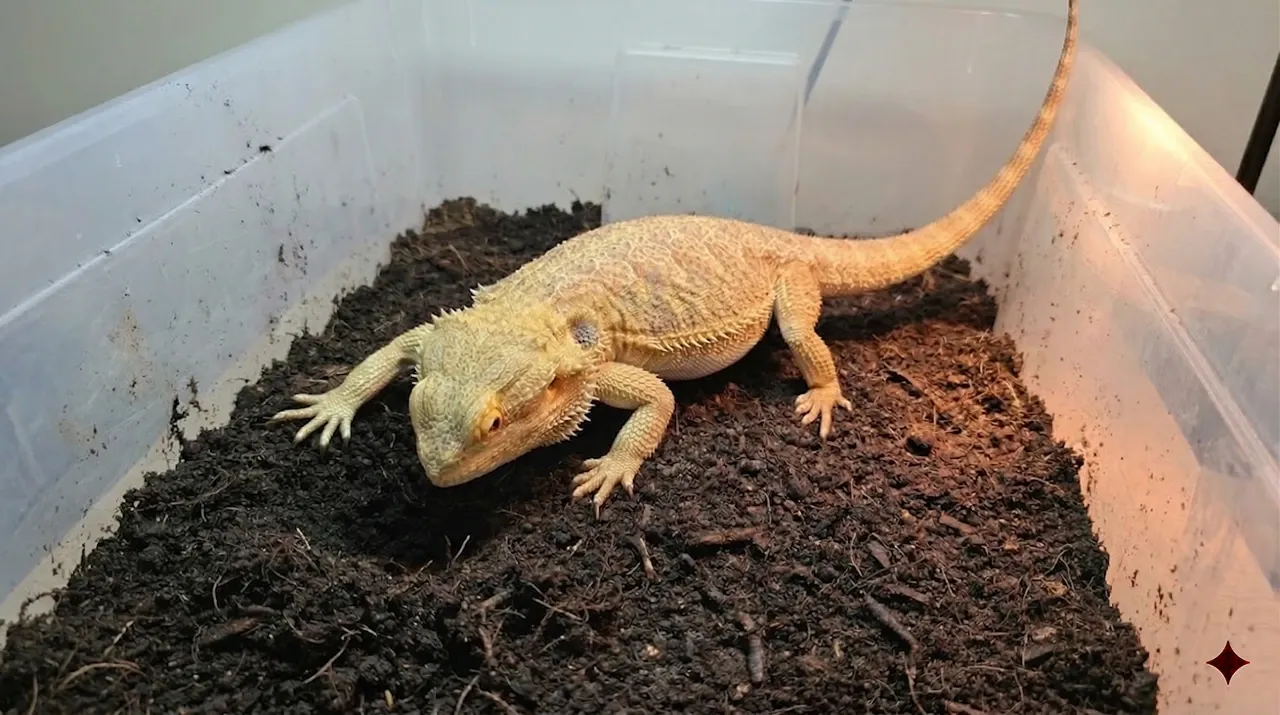
After the last egg is deposited, she will fill the burrow with substrate and pack it down with her snout. This instinct is strong and she will not stop until she considers the job finished. Leave her completely alone until she comes out of the burrow on her own.
Are the Eggs Fertile or Infertile
If your female has never had any contact with a male, the eggs are infertile. No further investigation is needed. Dispose of them.
If you are unsure of her history, check the eggs after laying. Fertile eggs are white, firm, and slightly leathery. When held against a torch (a process called candling), you should see a faint pink blush of developing vasculature within the first week or two.
Infertile eggs are typically smaller, yellowish, and begin collapsing inward within a few days as they dry out.
Freeze infertile eggs in a sealed bag before putting them in the bin. They decompose quickly and produce a strong odour if simply thrown out.
What Laying Costs Her
When a bearded dragon is laying eggs, her calcium demands spike. Producing a clutch of infertile eggs depletes her calcium reserves at exactly the same rate as a fertile clutch would.
Each egg requires calcium to form, and that calcium comes from her own stores, including bone, if her diet is not keeping pace.
Increase calcium dusting to daily from the point you notice gravid signs, and keep it there through the post-lay recovery period. Refer to your supplement schedule and treat this as a mandatory increase, not an optional one. Back-to-back clutches without adequate supplementation cause rapid depletion.
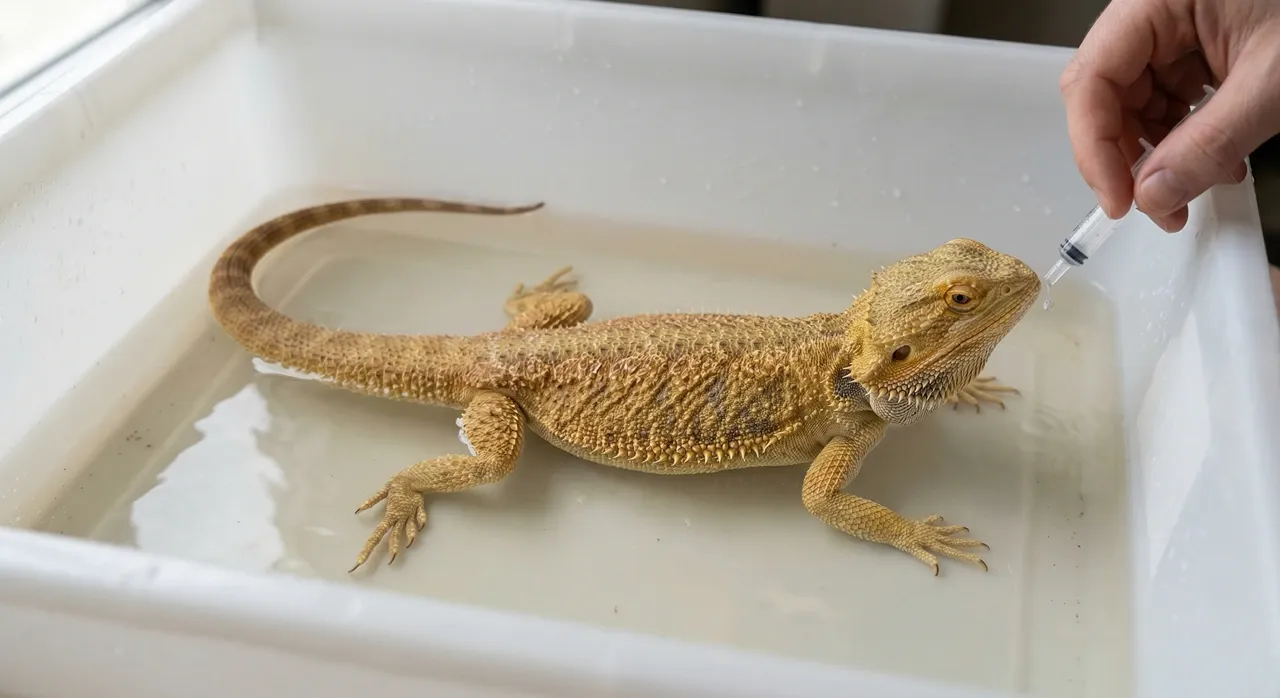
After she has laid, give her a 20-minute warm post-lay soak. She will be dehydrated and exhausted, and most females drink readily during this bath. Feed her well for the following two to three weeks, prioritising high-calcium greens and calcium-dusted feeder insects.
Some unmated females produce more than one clutch in a season. If she lays again within weeks of the first, treat each recovery period with the same nutritional care as the first.
When a Vet Visit Can’t Wait
A dragon that is digging, restless, and still alert is following normal pre-lay behaviour. That can continue for several days. The picture changes when digging stops, no eggs appear, and she becomes visibly lethargic or begins straining repeatedly at the vent.
According to VCA Animal Hospitals, common triggers for egg binding include low calcium, inadequate UVB exposure, dehydration, and the absence of a suitable nesting area.
These are all husbandry factors you can address before any emergency develops. That is why setting up the lay box at the first sign of digging matters as much as it does.
| What You’re Seeing | What It Means | What to Do |
|---|---|---|
| Digging, pacing, restless in enclosure | Normal pre-lay behaviour | Set up lay box immediately |
| Off food for 2–5 days | Normal late-stage gravid behaviour | Offer food, do not force it |
| Eggs laid, now resting quietly | Normal post-lay exhaustion | Soak, feed, increase calcium |
| Digging stopped, now lethargic | Possible egg retention | Vet within 24 hours |
| Repeated straining with no eggs passed | Likely egg binding | Vet immediately |
| Swollen abdomen, unresponsive | Egg binding emergency | Emergency vet now |
| Tissue visible at the vent | Cloacal involvement | Emergency vet now |
Frequently Asked Questions
Can She Lay Eggs With No Male Ever
Yes. Female bearded dragons develop and ovulate on a hormonal cycle that runs independently of mating. The resulting clutch will be infertile and cannot hatch, but she will go through the full bearded dragon laying eggs process exactly as a mated female would.
How Many Eggs Does She Lay
A single clutch typically contains 15–35 eggs. Unmated females most often produce one clutch per season, though some manage two or three. A mated female carrying stored sperm may produce four to six clutches from a single mating, spread across the season.
What if She Refuses the Lay Box
Place the box inside her enclosure rather than outside it. Some females will not leave familiar surroundings to lay. You can also adjust substrate moisture. If the mix is too dry to hold its shape when squeezed, she will reject it and keep searching for somewhere better.
How Soon After Digging Will She Lay
Most females lay within one to three days of sustained intense digging. Some dig test holes for up to a week before committing to a spot. If she has been actively digging for more than five days without laying and is starting to slow down, contact a reptile vet.
What Do I Do With the Eggs
Remove them once she has finished burying them and returned to her enclosure. Freeze them in a sealed bag before disposal. Infertile eggs begin to collapse and decompose within a few days and will smell strongly if left in an open bin.
What to Do Right Now
- Set up a lay box using a plastic container with at least 20 cm of moist topsoil or a sand-soil mix. Partially cover it and place it somewhere warm.
- Increase calcium dusting to daily from the moment you notice gravid signs. Keep it daily through the two to three weeks of post-lay recovery.
- Leave her completely undisturbed during the laying process. No handling until she comes out of the burrow on her own.
- Once she is done, offer a 20-minute warm soak and feed high-calcium greens and calcium-dusted insects.
- Freeze and dispose of the infertile eggs promptly. Do not leave them in the enclosure or in an open bin.
- Monitor her for 48 hours after laying. Energy and appetite should return within a day or two. If she remains lethargic, stops passing waste, or shows any signs of straining, call your vet.
Medical Disclaimer: This article is written for educational purposes only and is not a substitute for professional veterinary advice. If your bearded dragon shows signs of egg binding, prolonged lethargy, or distress during or after the egg-laying process, contact a reptile-experienced veterinarian promptly.
Written by
Sarah ArdleySarah has kept bearded dragons for over ten years. She founded Beardie Husbandry after discovering that most mainstream care advice — including what she followed with her first dragon — was doing more harm than good. Every article on this site is grounded in veterinary research and real keeper experience.