Safe Wood And Rocks for Bearded Dragons (Plus What to Avoid)
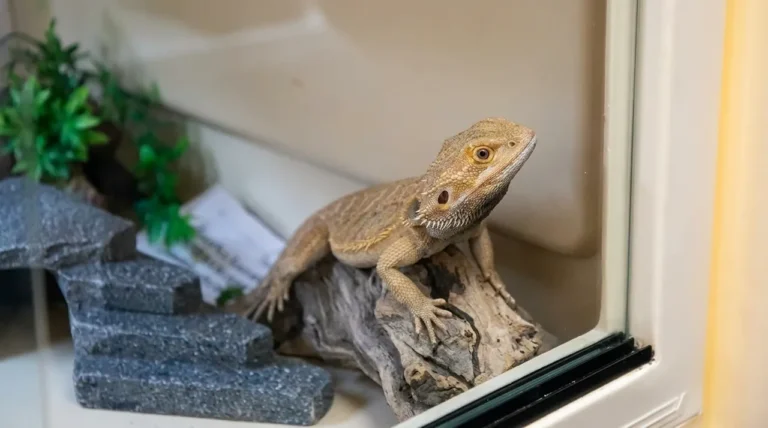
Picking decor for a beardie enclosure feels simple until you’re standing in a garden centre holding a piece of flagstone and wondering whether it will overheat under the basking lamp, or eyeing a fallen oak branch in the backyard and wondering whether it needs any preparation first. Finding safe wood and rocks for bearded dragons is genuinely manageable once you understand what makes the dangerous ones dangerous, because the rules are narrower than most guides suggest.
The problem materials are specific. Toxic wood almost always belongs to one family: conifers. Dangerous rocks are almost always the wrong size, the wrong colour for your light setup, or sourced without proper treatment. Everything else is largely a question of preparation, not chemistry.
Safe Wood for a Bearded Dragon Enclosure
Most hardwood trees produce enclosure-safe wood. The situation is not a long safe list against a short unsafe one. It is closer to the opposite: one problematic category and a large, accessible group of safe alternatives.
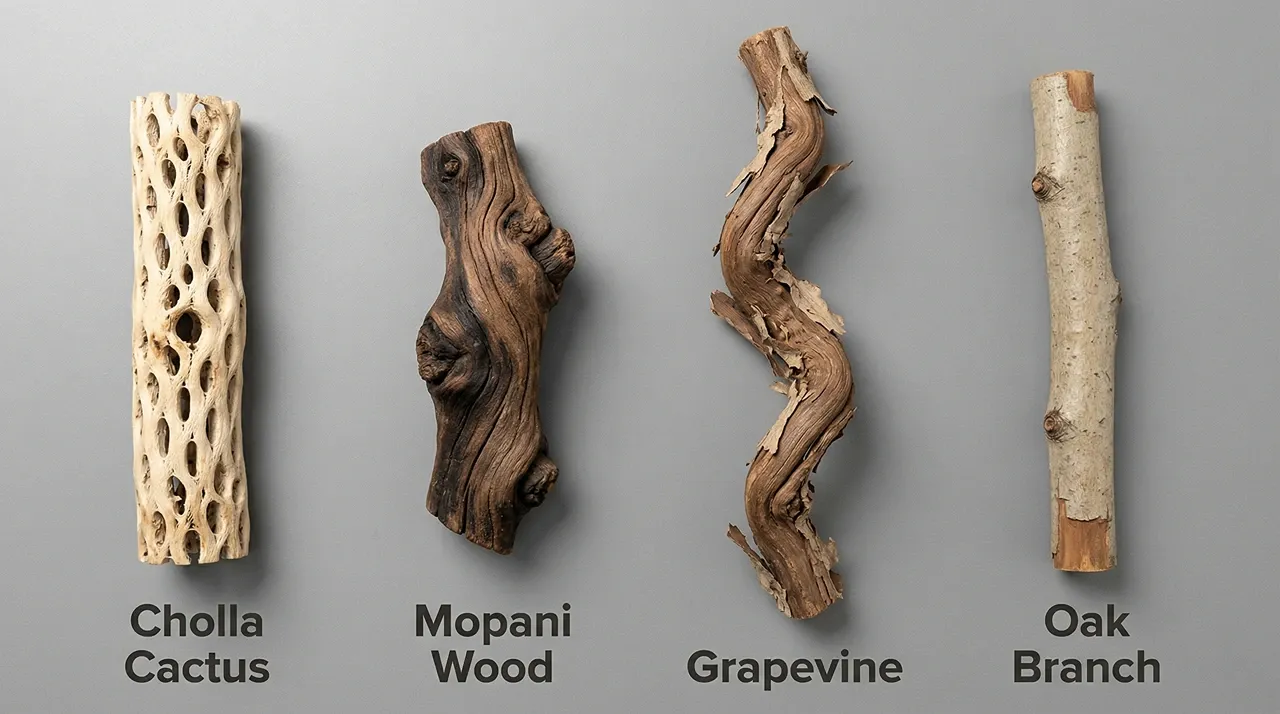
The following wood types are confirmed safe for bearded dragons based on their chemistry, their widespread use across the hobby, and their durability under repeated heating:
- Oak: dense, long-lasting, widely available; works well for basking platforms, climbing branches, and hides
- Cholla cactus: the dried skeletal structure of the cholla plant; lightweight, full of natural grip points, holds up well under enclosure heat
- Mopani: an extremely dense hardwood that holds surface warmth well after the basking lights come on; sold commercially and widely used by experienced keepers for basking ledges
- Grapevine: twisted, textured, naturally dried; sold widely and ready to use with minimal preparation
- Birch: lighter than oak, safe, suited to smaller setups or baby enclosures
- Apple and cherry: both safe fruit woods; positively identifying the species before collecting raw branches is non-negotiable
- Maple and ash: safe hardwoods, as long as you can identify them with confidence before collecting
The Wood You Must Never Use
Conifers are the category that causes real harm. Pine, cedar, Douglas fir, redwood, and juniper all contain phenolic compounds, aromatic oils that off-gas as the enclosure heats up. A dragon does not need to chew or lick the wood to be affected.
At basking temperatures of 100°F to 110°F, phenolic vapours enter the air the dragon is breathing. Chronic exposure causes respiratory irritation and, over time, can damage liver tissue. The scent that makes cedar smell pleasant to you is the same compound that makes it dangerous inside a warm enclosure.
Eucalyptus carries the same problem. Its aromatic oils are potent and persistent, and they do not become safe when the wood dries out. Any wood visibly oozing or sticky with sap should also be avoided, even from normally safe species. High sap load means high volatile compound load regardless of which tree it came from.
Pressure-treated lumber is not suitable for any surface a dragon contacts directly. The preservatives designed to resist rot and insects are built to remain in the wood permanently, and those chemicals leach into the enclosure environment when the wood is repeatedly heated.
Safe Rocks for Bearded Dragons
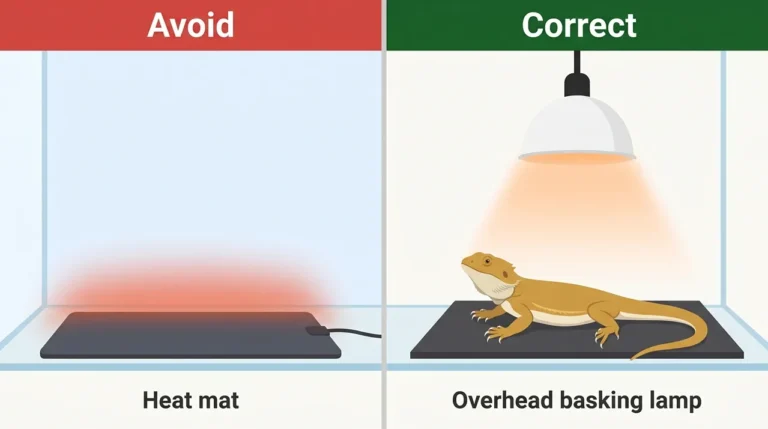
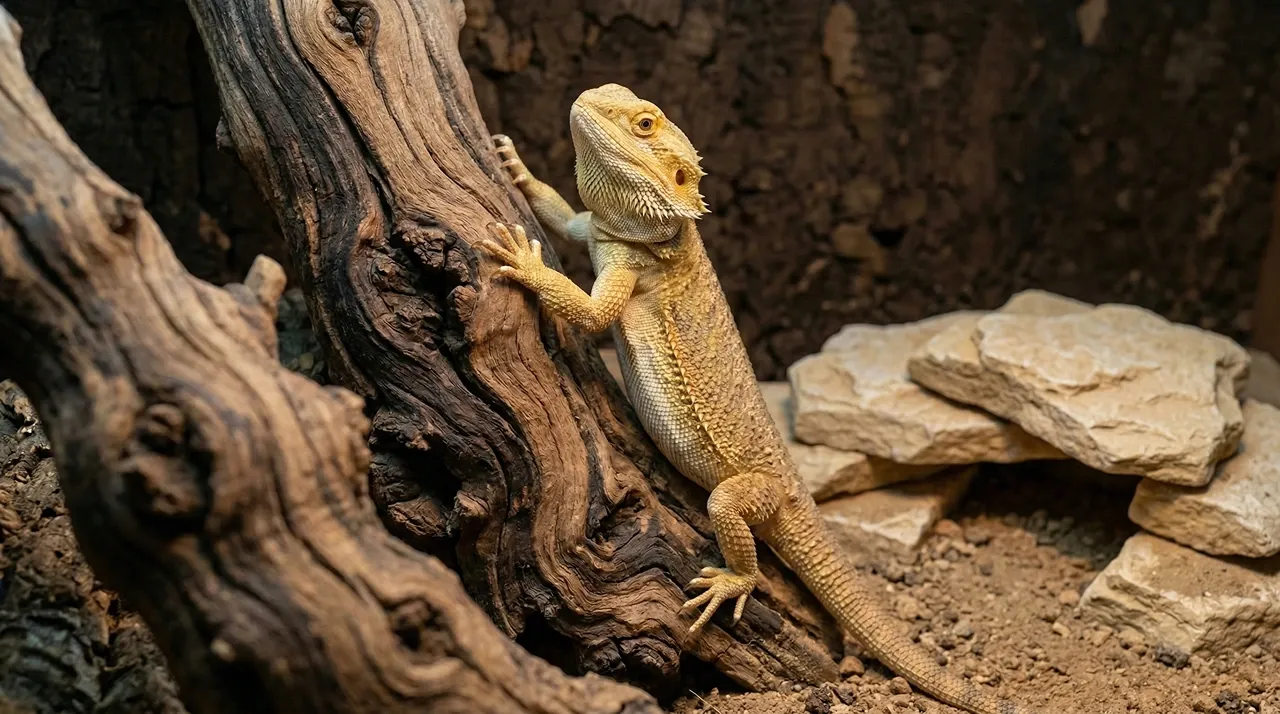
Rocks serve two practical functions in a beardie enclosure. They absorb heat from the basking lamp and release it gradually, extending thermoregulatory benefit well beyond what air temperature alone provides. They also wear down claw tips naturally over time, reducing how often manual trimming is needed.
The best safe rocks for bearded dragons are chemically inert, dense enough to hold heat without spiking dangerously, and flat enough to give your dragon a useful resting surface under the basking lamp.
Rock Types That Work Well
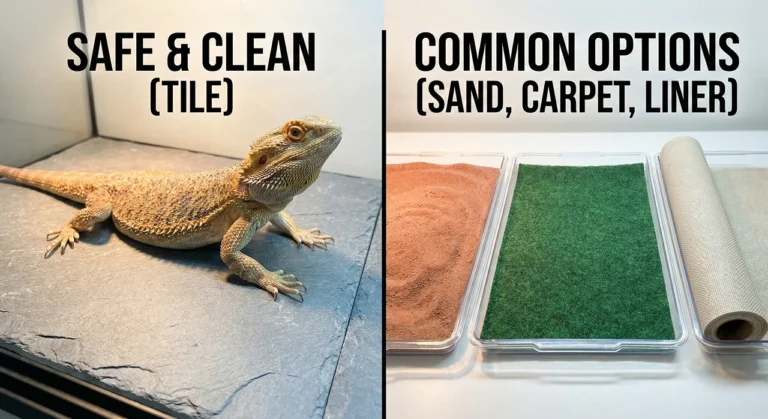
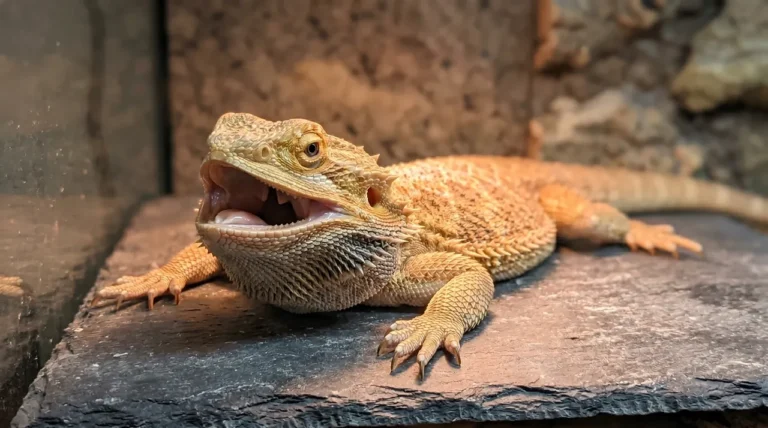
- Slate: the standout choice for any beardie enclosure; flat, stable, excellent heat absorption without overheating, easy to clean, and naturally abrasive enough to file claw tips gradually
- Flagstone: similar properties to slate; widely available at garden centres and landscaping suppliers, often at a fraction of the cost of reptile-branded products
- Granite: very dense, heats evenly, durable; a solid choice for basking platforms where consistent surface temperatures matter most
- Sandstone: safe, though more porous than slate; waste soaks into the surface over time and the rock stains, making thorough cleaning harder as it ages
- River rock: rounded with no sharp edges, safe to use; the curved surface makes a poor flat basking platform, so river rock works better as enclosure décor than as a primary heat surface
- Limestone: safe but highly porous; cleanable, though it holds bacteria more readily than denser alternatives
The Dark Rock Overheating Problem
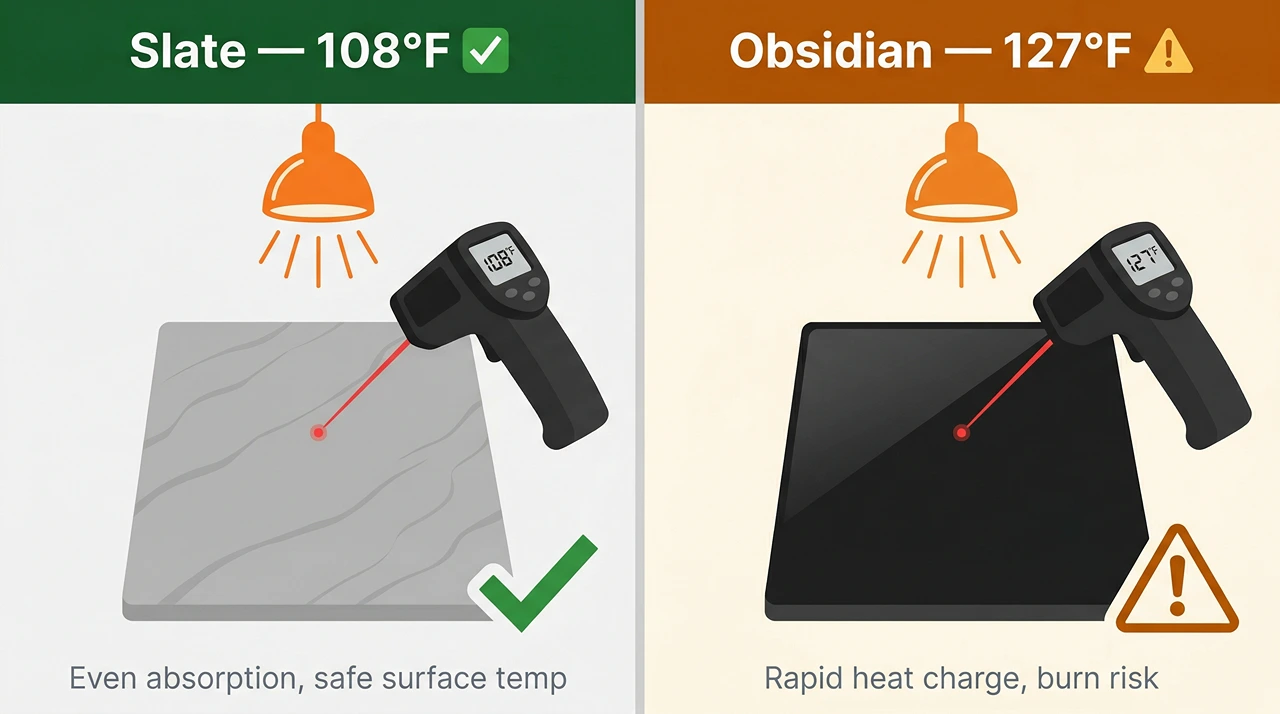
This is the detail most guides on safe wood and rocks for bearded dragons leave out entirely. Dark-coloured rocks absorb heat far more aggressively than pale ones. Obsidian, a volcanic glass sometimes sold as an enclosure accent, can reach surface temperatures under a basking bulb high enough to cause thermal burns.
Lighter-coloured slate absorbs heat steadily and releases it evenly. Obsidian charges fast and stays dangerously hot. Before placing any dark rock under the basking lamp, check the actual surface temperature with an infrared thermometer. Measuring the basking surface temperature takes around ten seconds and removes the guesswork entirely. The target is 105°F to 110°F. If a rock consistently reads above 115°F, your dragon will either avoid it or sit on it and be unable to self-regulate properly.
Rocks That Create Genuine Risk
Small gravel, decorative pebbles, and any crumbling rock present a real hazard. Bearded dragons lick surfaces and occasionally swallow substrate material, particularly juveniles and young adults. Any fragment small enough to be swallowed becomes a potential gut blockage, and impaction from swallowed fragments is one of the more common serious husbandry problems in captive beardies.
Electric heat rocks deserve a specific warning. They use an internal heating coil that creates concentrated hot spots with no ability to regulate from above. A dragon lying on one cannot detect the danger the way it would from an overhead heat source, and burns to the ventral surface are a predictable result. Avoid them entirely.
Collecting Wood and Rocks from Outside
Collecting your own materials is a legitimate and cost-effective approach. Many experienced keepers do it. The decisions that matter happen before you bring anything home.
For wood, confirm the species before collecting anything. Stay away from agricultural land borders, roadsides, and suburban gardens where pesticide or herbicide use is likely. Choose recently fallen wood over material that has been lying on the ground for months. Decaying wood carries mould and fungal tissue that can survive into the enclosure even after surface cleaning.
For rocks, check carefully for crumbling, flaking, or loose mineral layers. These will continue shedding fragments inside the enclosure through repeated heating and cooling cycles, and there is no way to stop the process once the rock is in place.
The Stacking Hazard Keepers Often Miss
Building rock formations and elevated platforms looks fantastic. The risk is structural, not chemical.
A dragon can dig under a particulate substrate and shift the base of a rock stack. If you are using a loose substrate, place the base rocks directly on the enclosure floor first, before adding substrate around them. The rocks should sit on solid glass or wood, not on sand or soil that can shift.
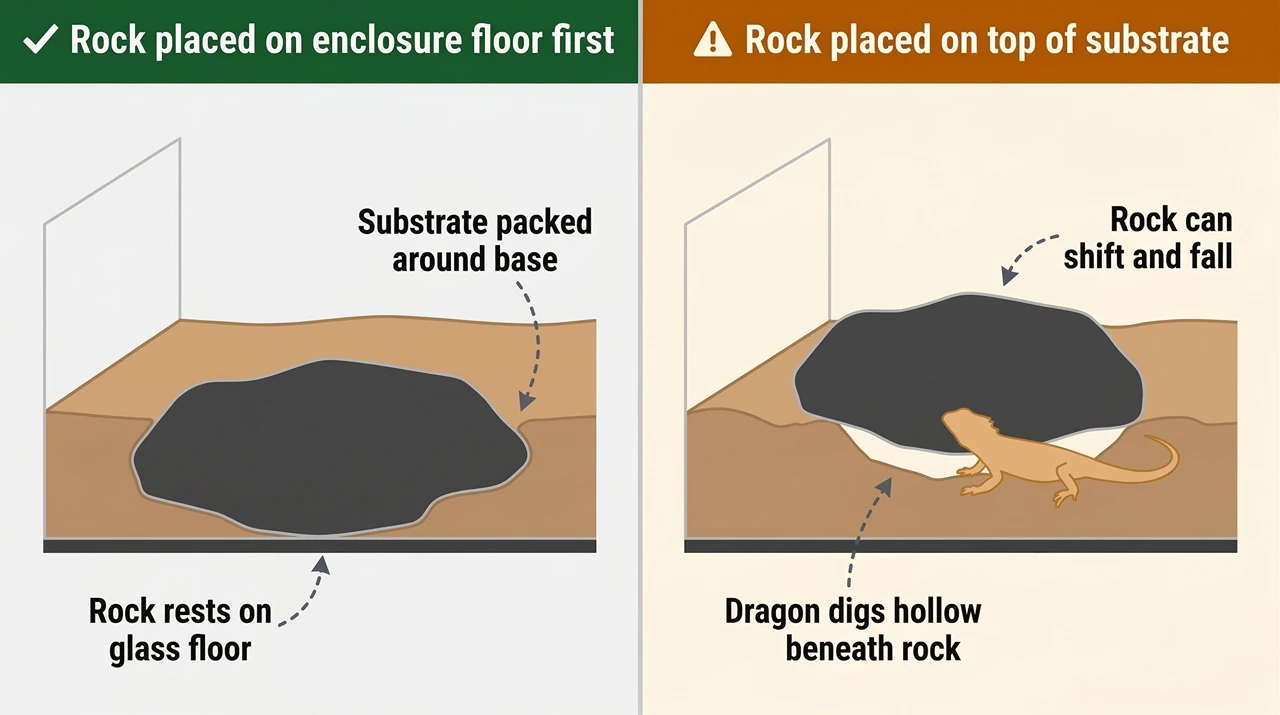
For any stacked formation used as a hide or elevated basking surface, bond the pieces together with a reptile-safe silicone or aquarium-grade epoxy before the enclosure is set up. This removes the crush risk without affecting the appearance of the structure.
The same stability principle applies to large branches. A heavy basking branch wedged in place can shift when a full-grown adult climbs past the balance point. Fix the base to the enclosure floor or wall with silicone if there is any possibility of movement.
Safe vs Unsafe Materials
| Material | Safe? | Notes |
|---|---|---|
| Oak, birch, maple, ash | ✅ Yes | Sanitise before use if wild-collected |
| Cholla cactus wood | ✅ Yes | Lightweight; excellent grip texture for climbing |
| Mopani wood | ✅ Yes | Dense and heat-retaining; good basking ledge material |
| Grapevine | ✅ Yes | Check for active sap before placing in enclosure |
| Pine, cedar, redwood, fir, juniper | ❌ No | Phenolic oils off-gas at enclosure temperatures; respiratory and liver risk |
| Eucalyptus | ❌ No | Aromatic oils remain unsafe regardless of drying |
| Pressure-treated lumber | ❌ No | Preservatives leach when heated; unsafe on all contact surfaces |
| Slate and flagstone | ✅ Yes | Best overall choice; even heat absorption, easy to clean |
| Granite | ✅ Yes | Dense, durable, heats evenly |
| Sandstone and limestone | ✅ Yes (with care) | Porous; stains and harbours bacteria over time |
| River rock | ✅ Yes | Décor use only; curved surface is poor for basking |
| Obsidian | ⚠️ Caution | Overheats rapidly under basking lamps; always verify surface temp before use |
| Small gravel or pebbles | ❌ No | Ingestion and impaction risk |
| Electric heat rocks | ❌ No | Unregulated hot spots; burn risk to ventral surface |
| Crumbling or flaking rock | ❌ No | Shed fragments create ongoing impaction risk |
Picking the right material is only half the job. The size of your basking surface relative to your dragon determines whether thermoregulation actually works the way it should. A slate slab that cannot support your dragon’s full body length leaves the tail hanging in cooler air, and a dragon that cannot press its entire underside against the surface is not getting the digestive benefit that platform is there to provide.
Frequently Asked Questions
Can I use pine if it is sealed with varnish?
Some keepers argue that a complete seal with reptile-safe varnish neutralises the phenol risk. The problem is that the seal must remain intact permanently. Any chip, crack, or worn patch reintroduces the hazard. For structural enclosure panels that take no direct contact wear, sealed pine may be acceptable. For climbing branches and basking perches that are scratched and abraded regularly, the sealant degrades over time and hardwood is the more reliable long-term choice.
Is beach driftwood safe to use?
Salt-saturated wood is not ideal for an arid enclosure. Salt draws moisture and can push humidity up once the enclosure heats up consistently. Commercially sold driftwood for reptile use has already been dried and treated. If you collect your own, rinse thoroughly, dry for several weeks, and monitor enclosure humidity closely after adding it.
Do rocks need to be replaced over time?
Slate and granite last indefinitely if cleaned properly. Sandstone and limestone degrade faster under repeated cleaning and heat cycling. Check rocks periodically for surface flaking or new cracks. A rock that is starting to shed surface layers should come out before loose fragments end up in the enclosure.
Does pet shop reptile wood still need sanitising?
Commercially sold reptile wood is generally safe from a toxicity standpoint, but it can still carry mites, fungal spores, or bacteria from the supply chain or the shop environment. Baking it before first use is never wasted effort. The process takes less than an hour and removes that uncertainty entirely.
Before You Set Up the Enclosure
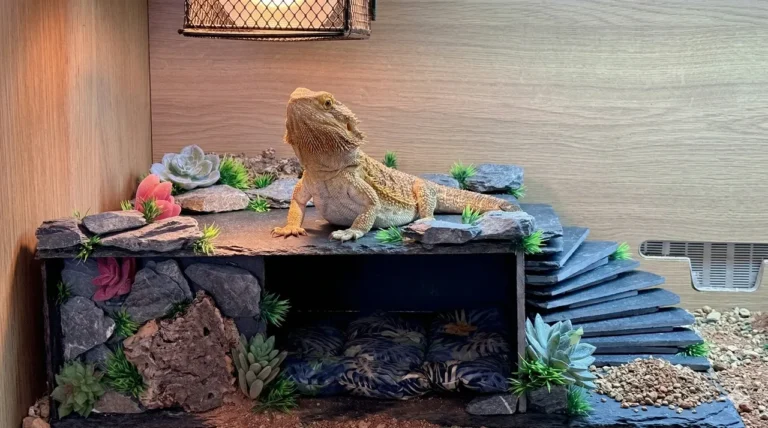
Start with the basking platform. A flat slab of slate or a dense hardwood piece, large enough for your dragon to fully stretch out and press its entire underside against the surface, is the foundation everything else builds around. Measure the surface temperature under the basking lamp before your dragon uses it for the first time, not after.
Add branches and climbing elements next, aiming for a gradient of height rather than floor-level interest only. A dragon choosing between cooler lower positions and warmer elevated spots is making active thermoregulatory decisions, and that level of environmental complexity pays off in long-term health and behaviour in ways a flat enclosure cannot match.
Substrate goes in last, around the base of any rock or wood that is already resting directly on the enclosure floor. Choosing the right substrate also determines whether heavy rocks can safely sit on top of it or need to be anchored to the floor first. Do not add substrate before placing your heavy decor items.
Once everything is in place, run the basking lamp for a full hour and check surface temperatures across all safe wood and rock platforms before your dragon goes in. That single check prevents a problem that would take weeks to heal if it went unnoticed.
Written by
Sarah ArdleySarah has kept bearded dragons for over ten years. She founded Beardie Husbandry after discovering that most mainstream care advice — including what she followed with her first dragon — was doing more harm than good. Every article on this site is grounded in veterinary research and real keeper experience.