Bearded Dragon Not Drinking? How to Keep Them Hydrated
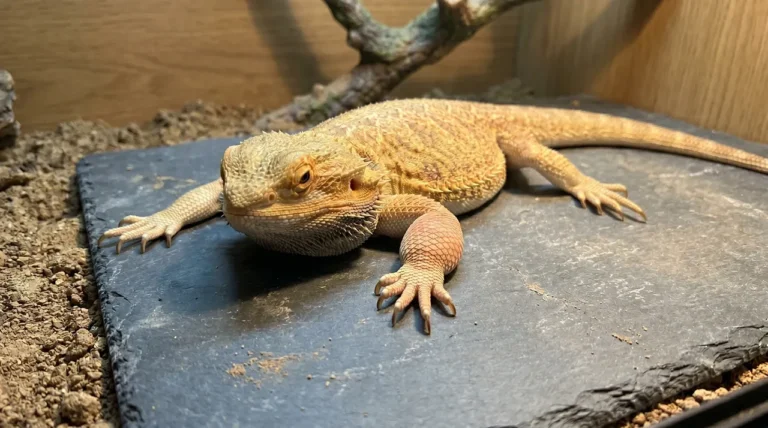
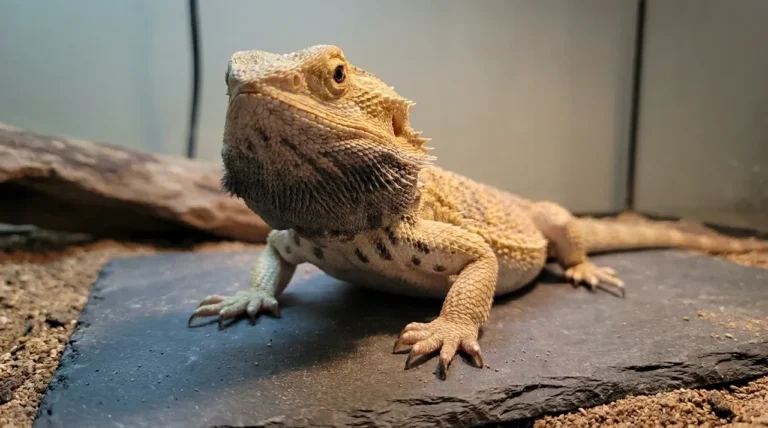
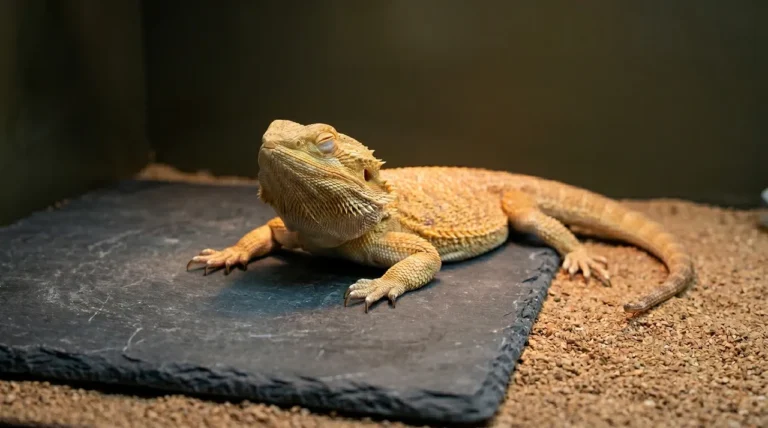
A bearded dragon not drinking from its water bowl is one of the most common things new keepers panic about. It is not a sign of illness and, for most healthy dragons, it is entirely expected behaviour rooted in how the species survives in the wild.
In Australia’s semi-arid scrublands, Pogona vitticeps almost never encounters standing water. The instinct to ignore a static dish is hardwired into the biology. Hydration still matters enormously. Chronic fluid deficit causes constipation, failed sheds, and long-term organ stress.
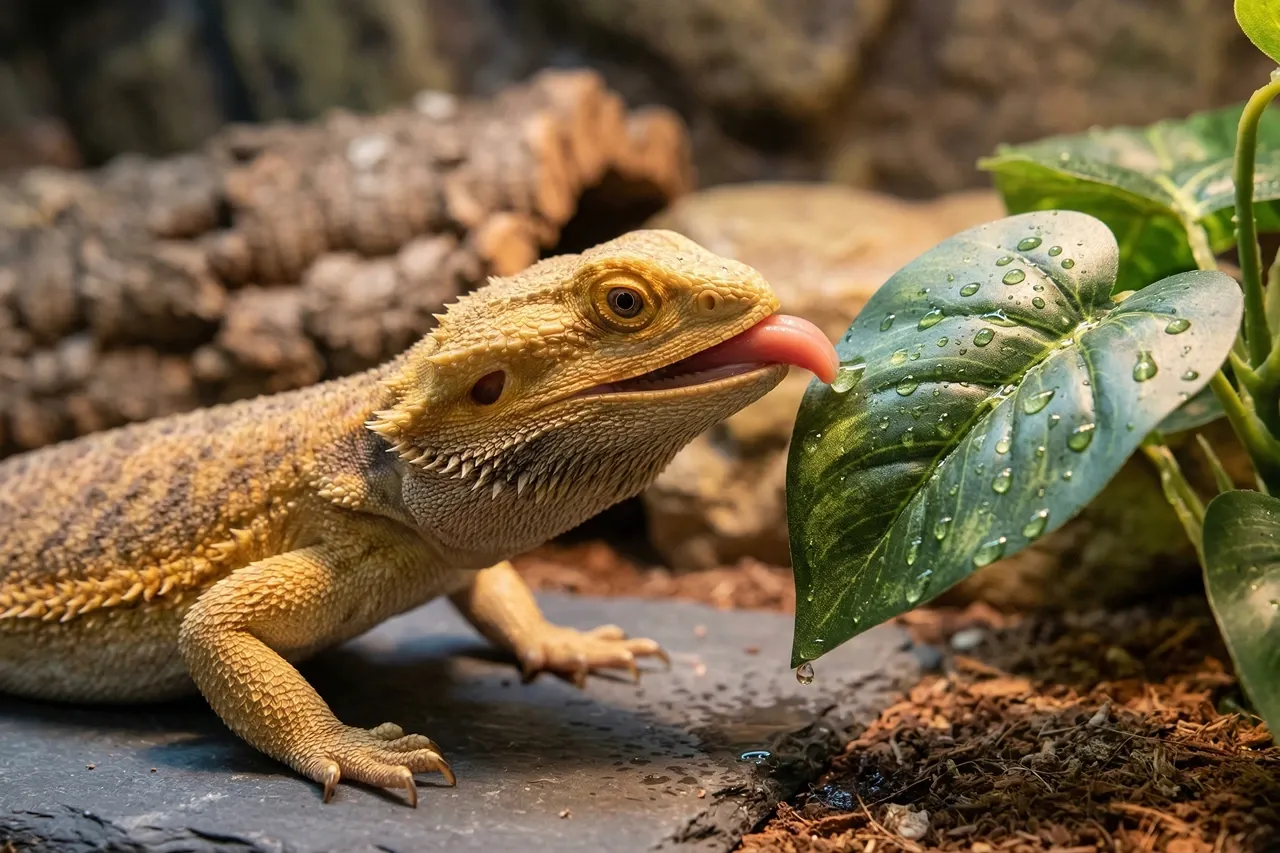
The issue is usually delivery method. A bearded dragon not drinking from a bowl may drink readily from a warm soak, a dropper on the nose, or by licking misted droplets from the enclosure glass. Changing the method changes the outcome.
Why a Bearded Dragon Not Drinking Is Normal
Wild dragons source water from morning dew on plant surfaces, moisture inside prey, and rain events that prompt active licking from running water on rocks and leaves. Still, pooled water is almost never part of their natural environment. The visual trigger for drinking in this species is movement, not a flat reflective surface.
A drip running down glass, a ripple on a bath surface, or water beading on a misted snout all register as drinkable in ways a bowl does not. This is not learned behaviour. It is a deep-wired survival adaptation to an environment where standing water is almost entirely absent.
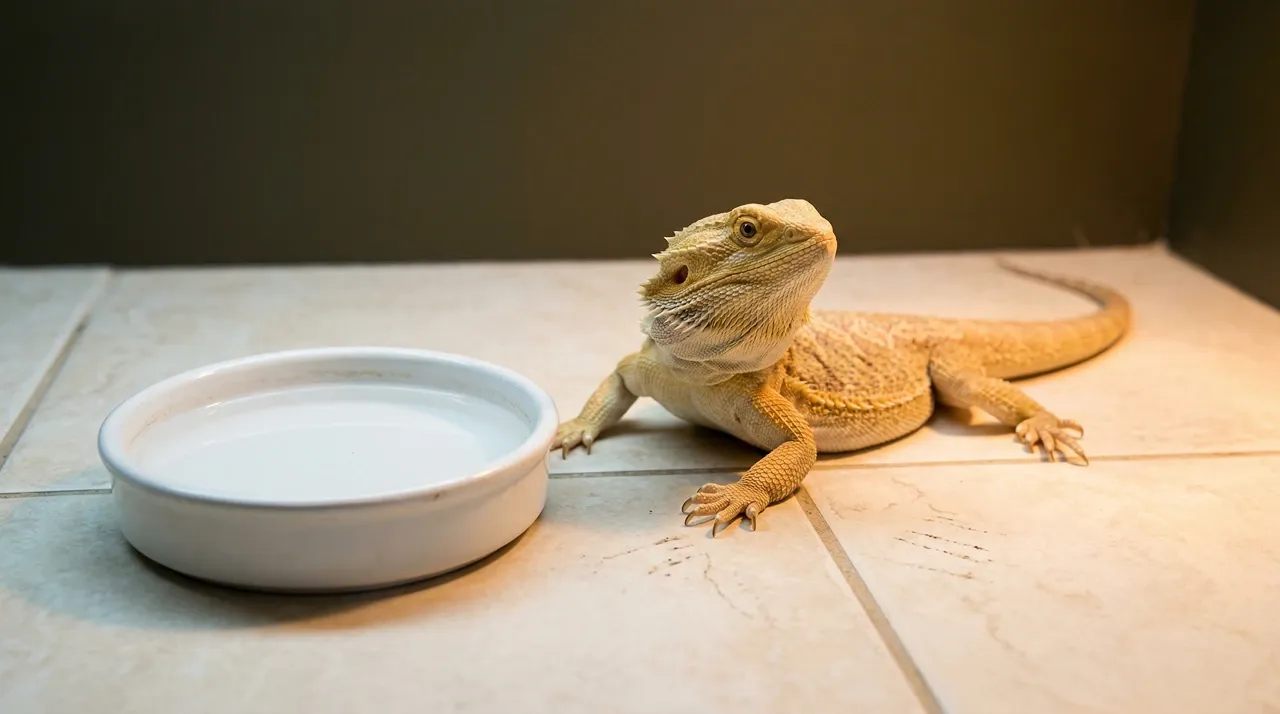
This is why many healthy dragons never touch their dish but drink readily during a warm soak or from a dropper. The bowl is worth keeping for the occasional drinker, but it will not solve hydration for a dragon wired to ignore still water.
How Little Water They Actually Need
The daily fluid maintenance requirement is 10–30 ml per kilogram of body weight, and that figure includes moisture from food. A healthy 400g adult needs just 4–12 ml of total fluid per day, with the lower end being less than a teaspoon.
Collard greens run around 91% water by weight. Hornworms sit at roughly 85%. A dragon eating a moisture-rich diet of leafy greens and gut-loaded insects is covering a meaningful portion of that daily requirement before it ever approaches the water dish.
For a bearded dragon not drinking from a bowl at all, a well-structured diet can realistically cover the entire daily fluid requirement without a single sip from the dish. The bowl matters as a backup and an opportunity, not the primary source.
Is Your Dragon Actually Dehydrated
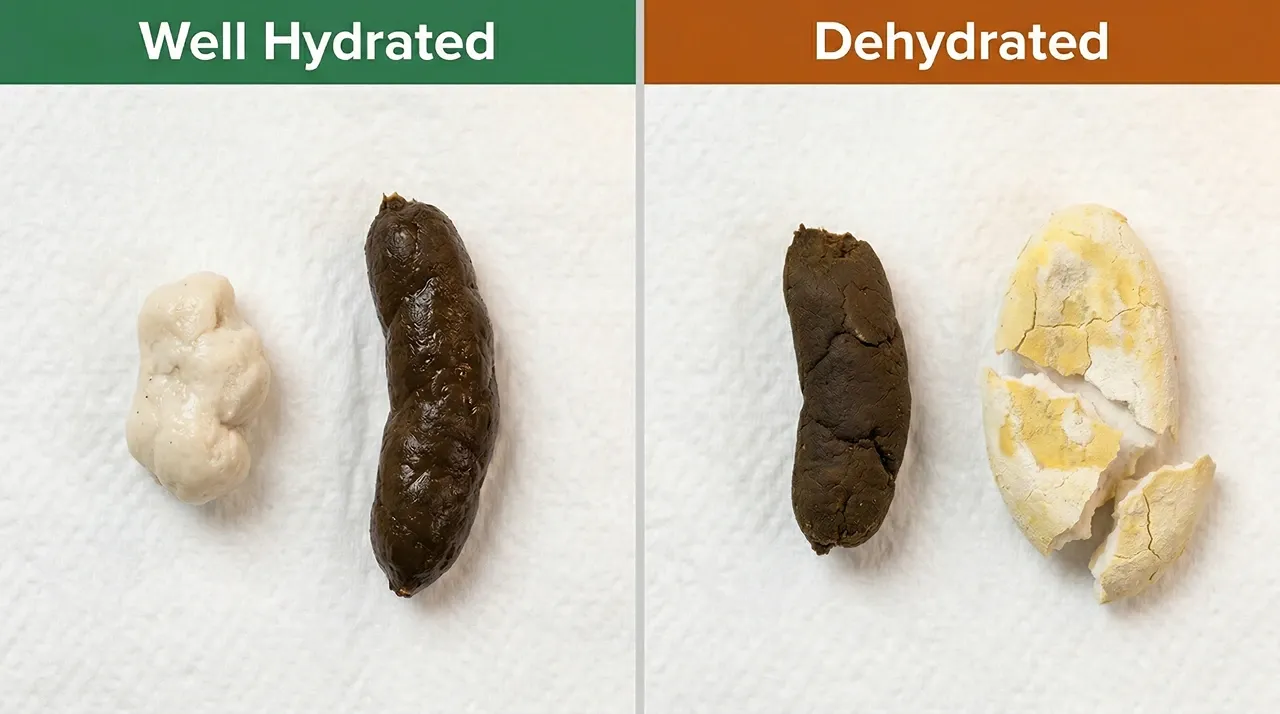
The harder question is not whether a bearded dragon not drinking from a bowl is normal, but whether the animal is actually getting enough fluid. The most reliable daily check is the urate, the white portion attached to the stool. Soft, white, and slightly moist urate is what a well-hydrated dragon produces consistently.
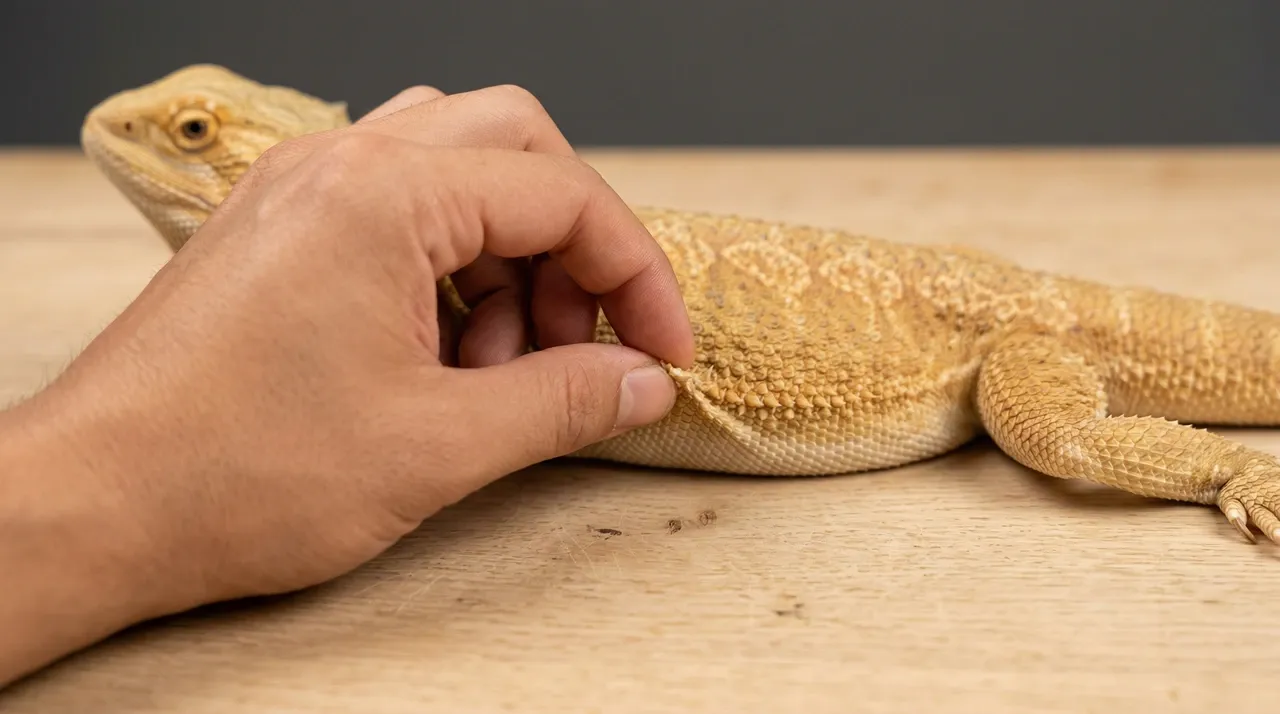
The skin tent test gives a fast physical read. Gently pinch a small fold of skin on the side of the torso and release. Well-hydrated skin snaps back immediately. Slow recoil, skin that holds a fold, and sunken eyes and sticky saliva all signal the dragon needs fluid now rather than later.
Five Ways to Get Fluid In
Drip Water on the Nose
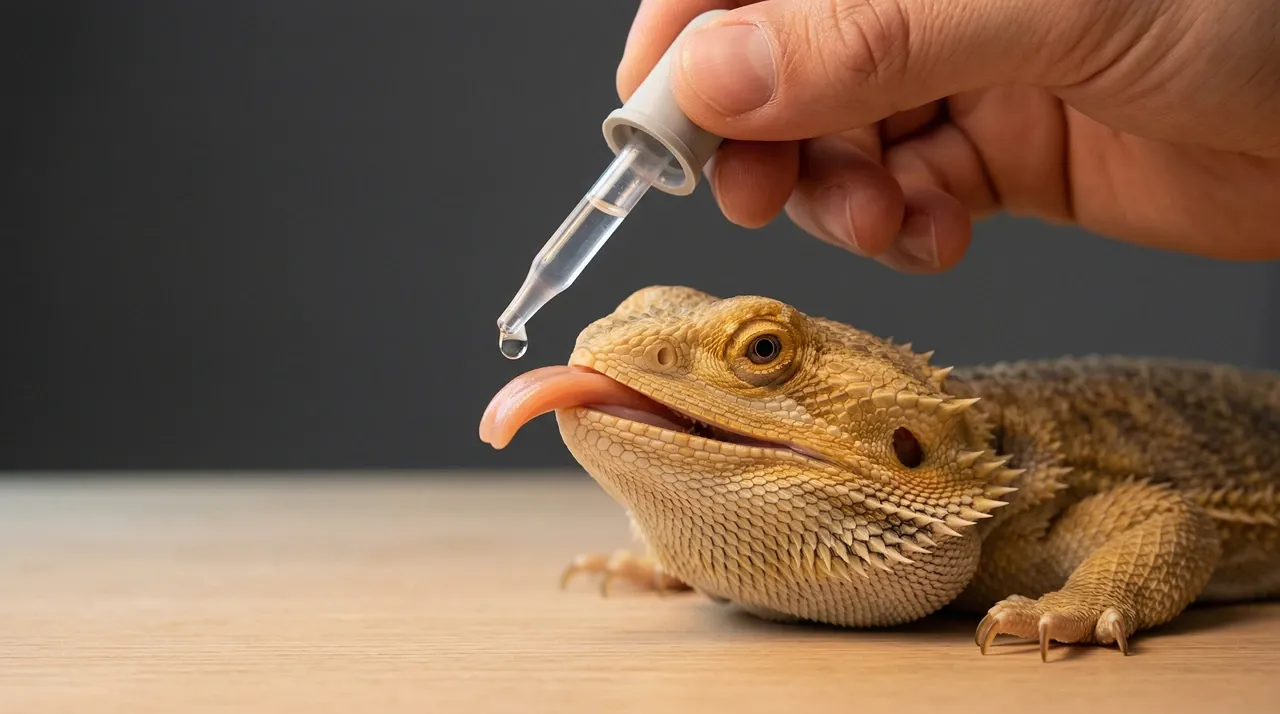
Fill a dropper with fresh water at room temperature. Rest a single drop on the tip of the snout, right at the nose. The licking reflex kicks in immediately for most dragons. Follow with another drop, wait for them to lick it off, then repeat slowly.
A thirsty dragon will keep licking; one that turns away has had enough. Stop there.
A Warm Soak
Lukewarm water at 37–38°C (98–100°F), set at shoulder depth in a clean container, is the most reliable hydration method for a resistant dragon. Most will drink openly during a soak, especially when already thirsty. The full bathing technique, including water depth, temperature specifics, and handling a stressed dragon, is worth reading before the first attempt.
Bearded dragons do not absorb water through the vent or skin during a bath. This is a persistent and widely repeated myth. The hydration happens because they drink from the surface. A dragon sitting in water without lowering its head to drink is getting minimal fluid benefit from the soak, regardless of how long it sits there.
Wet the Greens Before Every Feed
Washing the salad and leaving it slightly damp before offering adds passive moisture with zero resistance from the dragon. Done consistently, this covers a meaningful portion of daily fluid needs for adults eating a solid volume of leafy greens each day.
Hornworms and Silkworms Hydrate Fast
Hornworms run around 85% water by weight and are among the most effective targeted hydration tools available. Silkworms sit similarly high. Neither should replace staple feeders long-term, but rotating them in when a dragon looks dry delivers a real fluid boost without any resistance from the animal.
A Syringe for Severe Cases
A severely dehydrated dragon may need more direct help. A diluted electrolyte solution, roughly one part plain Pedialyte to four parts warm water, can be offered via dropper on the nose using the same technique above.
If the dragon is too lethargic to lick or respond to the dropper, home methods will not be fast enough. This is a same-day vet visit. A reptile vet can administer subcutaneous fluids and establish whether underlying illness is driving the dehydration.
Misting and the Humidity Problem
Misting is recommended in many basic care guides, but bearded dragon enclosures need to stay between 30–40% relative humidity. Spraying the walls or the dragon directly on a daily basis pushes that figure well above the safe range, creating the damp conditions where respiratory infections take hold quickly.
A few drops on the nose or a light mist on salad leaves before feeding is fine. Treating the enclosure like a tropical vivarium is not. If enclosure humidity is already sitting at 40%, nose drips and warm soaks are the better options rather than adding more moisture to the air.
When Drinking a Lot Is the Problem
A bearded dragon not drinking daily is entirely normal. A dragon returning to the water bowl repeatedly throughout the day is not. Excess thirst, called polydipsia, can point to kidney disease, diabetes insipidus, or a systemic infection.
Any dragon that suddenly starts drinking visibly and frequently, where it never did before, warrants a vet assessment rather than reassurance or a routine soak. This is one of the few hydration signals that should accelerate a call to the vet, not a home routine change.
Silkbacks and Leatherbacks Dehydrate Faster
Dragons with reduced or absent scalation lose water through the skin at a much faster rate than standard Pogona vitticeps. Research has shown that silkbacks lose water almost twice as fast as a fully scaled dragon, due to the lack of a barrier against evaporative moisture loss.
Standard hydration routines will not be sufficient for these morphs. If you keep a silkback or leatherback, plan for more frequent soaks, regular nose drips, and closer daily monitoring of urate texture than you would apply to a normally scaled dragon.
Hydration Before and After Brumation
A dragon entering the pre-brumation window while dehydrated is taking a real risk. Dormancy slows all metabolic processes, and a fluid deficit that seemed manageable at the surface can compound quietly over weeks of reduced activity with no intake.
Offer warm soaks every two to three days in the two weeks before a dragon settles. Check that urate is white and slightly moist before allowing it to go fully down. A dragon going into dormancy with chalky or yellow urate needs more hydration time, not a pushed schedule.
On waking, rehydration comes first. A 15-minute warm soak within the first 24 hours of emergence encourages active drinking and restarts the digestive system after weeks of dormancy.
Every dragon has a preference, and the right approach depends as much on the situation as the individual animal.
Method by Situation
| Situation | Best Method | Notes |
|---|---|---|
| Ignores bowl, otherwise looks healthy | Wet greens + nose drips | Routine maintenance; monitor urate at every clean-out |
| Newly acquired or recently moved | Warm soak every 2–3 days | Less confrontational than a dropper; allow settling time before adding more handling |
| Skin tent test shows slow recoil | Warm soak + nose drips together | Do both on the same day; recheck urate in 24 hours; vet if no improvement |
| Refusing food and water both | Nose drips; vet if no change in 48h | May indicate illness beyond simple dehydration |
| Pre-brumation (2 weeks before settling) | Warm soaks every 2–3 days | Confirm white, moist urate before allowing full dormancy |
| Post-brumation (first 24 hours awake) | Warm soak immediately | Stimulates active drinking and restarts digestion |
| Silkback or leatherback morph | Daily nose drips + frequent soaks | Loses water ~2× faster than a wild-type dragon; standard schedules are not enough |
| Lethargic, sunken eyes, unresponsive | Emergency vet today | Home rehydration cannot address severe dehydration quickly enough at this stage |
Frequently Asked Questions
Does My Dragon Need a Water Bowl
Yes, even if the dragon rarely uses it. Some individuals will take the occasional drink, particularly during shedding or warmer months. Keep it shallow, place it on the cool end, and change the water daily. A bowl under the basking lamp raises humidity and evaporates too fast to be useful.
Do They Absorb Water Through the Vent
No. This is a persistent and widely repeated myth. Hydration during a bath happens because the dragon drinks from the water surface. The cloaca does not function as a hydration intake organ. A dragon sitting in water without lowering its head to drink is getting no meaningful fluid benefit from the soak.
How Often Should I Soak for Hydration
Two to three times per week is the right baseline for a healthy adult. During a shed, in hot weather, or when urate looks dry or chalky, daily short soaks of 10–15 minutes are appropriate. Long sessions stress many dragons without adding meaningful hydration beyond what a shorter soak achieves.
Is Tap Water Safe for Bearded Dragons
Tap water that is safe for you to drink is safe for your bearded dragon. No conditioner is needed, per WSU’s bearded dragon guide and other veterinary school resources, unless your local supply has known quality issues. Bottled or filtered water is a reasonable alternative if you have any doubts about local quality.
My Dragon Ignores the Bowl but Looks Healthy
A bearded dragon not drinking from a bowl indefinitely is not a problem, provided it is getting fluid through food, baths, and nose drips. The concern is not bowl avoidance but a dragon also refusing food and resisting all fluid intake. Use urate texture and the skin tent test to monitor rather than counting bowl visits.
What to Do Starting Today
- Check the urate at the next clean-out. White and moist means the current routine is working. Chalky, yellow, or crumbly means start nose drips and a warm soak today, not next week.
- Wet the salad before every single feed from now on. Wash it and leave it slightly damp. Consistent passive hydration with every meal costs nothing.
- Schedule soaks two to three times this week. Water at 37–38°C (98–100°F), shoulder depth, 10–15 minutes. Let the dragon drink from the surface without interference.
- Check the enclosure humidity. If it reads above 40%, stop misting the enclosure walls and switch to nose drips for any manual hydration between soaks.
- If the dragon is also refusing food, showing sunken eyes, or not responding normally to handling, contact a reptile vet the same day. Those signs together are not a hydration routine problem. They are a vet visit.
Medical Disclaimer: This article is written for general husbandry education only and is not a substitute for professional veterinary advice. If your bearded dragon is showing signs of severe dehydration, unexplained weight loss, or has refused food and water for more than 48 hours, contact a reptile-experienced veterinarian promptly. Early assessment prevents manageable conditions from becoming emergencies.
Written by
Sarah ArdleySarah has kept bearded dragons for over ten years. She founded Beardie Husbandry after discovering that most mainstream care advice — including what she followed with her first dragon — was doing more harm than good. Every article on this site is grounded in veterinary research and real keeper experience.