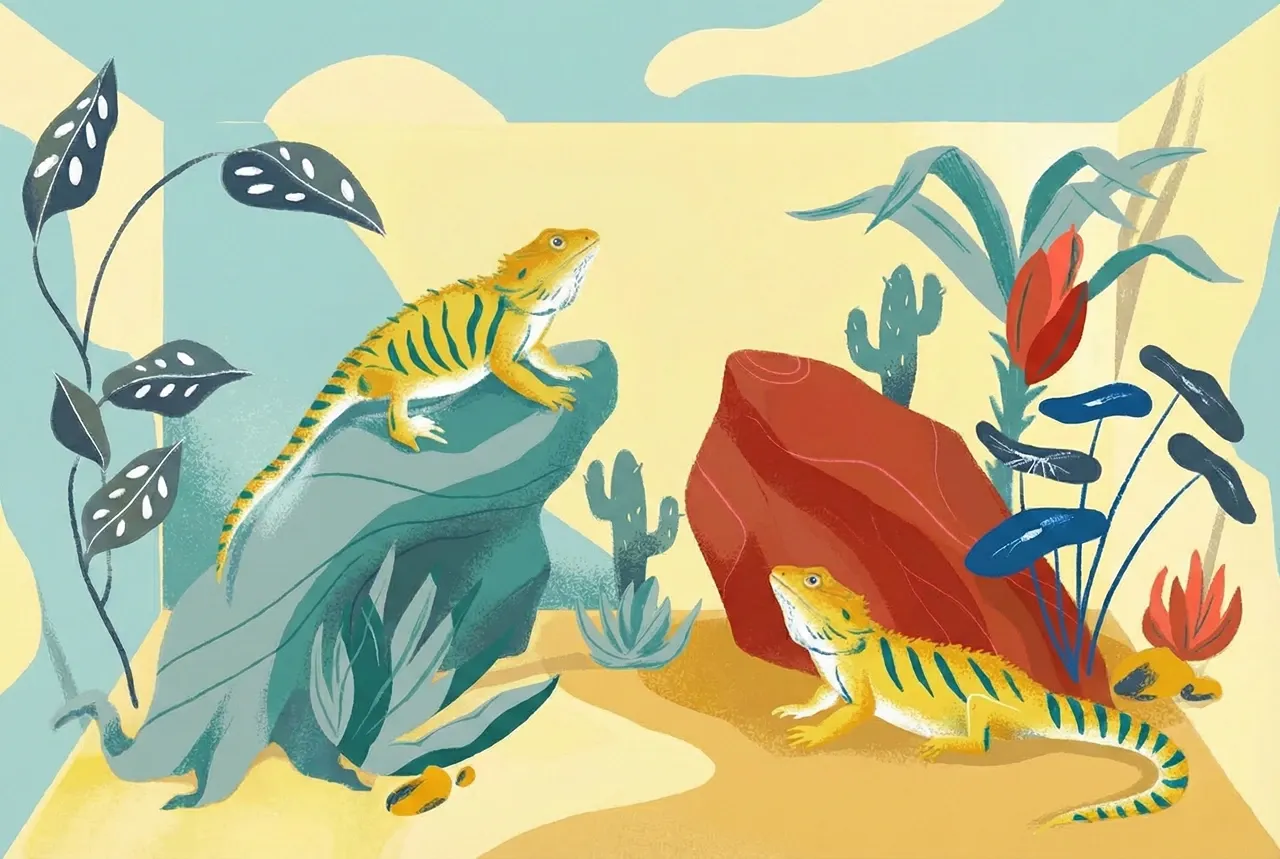
Can You Put Two Bearded Dragons in the Same Tank?
Bearded dragons sold in pairs, siblings that “get along great,” pet store tanks full of babies bouncing around together. It looks fine, until it isn’t. The honest answer is that putting two bearded dragons in the same tank is a mistake, and the reasoning goes deeper than most articles bother to explain.
This isn’t about temperament. Even calm, hand-tame dragons will compete the moment they share an enclosure, because competition is wired into the species at a biological level. The damage it causes isn’t always a visible fight. More often, it’s slow, invisible, and well underway before most keepers notice anything wrong.
Why Bearded Dragons Are Built for Solitude
In the wild, Pogona vitticeps does not live in social groups. Each adult defends its own patch of semi-arid scrubland, using head bobs, beard displays, and arm waves to claim basking sites and communicate dominance across distance. They come together only to mate, then separate again. There is no pair bonding, no shared territory, no cooperative behaviour of any kind.
Captive bearded dragons do not shed this wiring because they live in a tank. A dragon that has never seen another beardie in its life will still react to one with immediate territorial signalling. The enclosure shrinks what would be a vast wild territory into a few square feet, making the perceived threat of a rival constant rather than occasional.
That constant low-level stress is what does the real damage over time.
The Four Pairings and What Actually Happens With Each
Two Males
This is the clearest case. Two male bearded dragons in the same tank will almost always escalate to outright combat. Beard flaring and head bobbing give way to biting, tail whipping, and sustained physical fighting that ends with serious injury or death for one or both animals. The only variable is timing. Some pairs erupt within hours; others hold a fragile truce for weeks before a feeding or basking dispute tips things into violence.
There are no conditions under which housing two males together is appropriate. Not if they were raised together. Not if the tank is large. Not if they are from the same clutch.
One Male, One Female
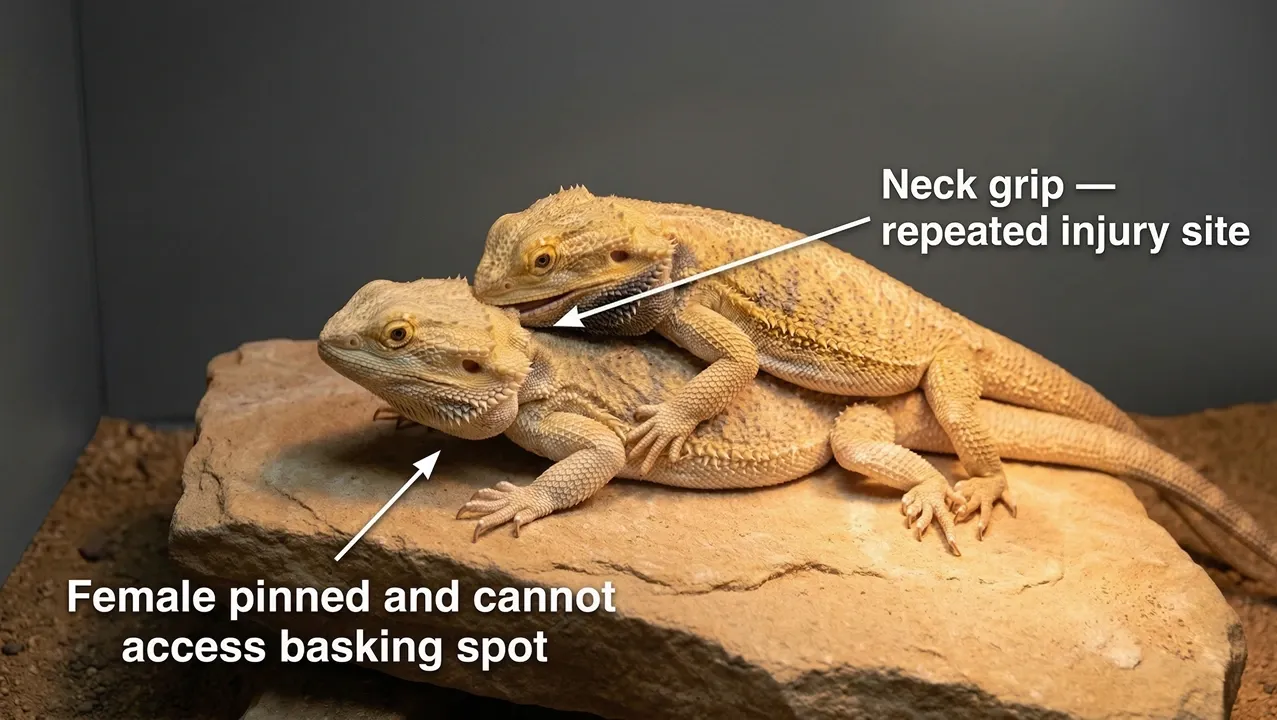
The outcome here is different but equally harmful. Males pursue females relentlessly. The male will bite the female’s neck or crest to mount her, causing physical wounds to the same area repeatedly. Even outside active mating attempts, the male’s constant presence stresses the female, suppresses her appetite, and drives her into excessive egg production.
A single mating can leave a female producing multiple clutches of infertile eggs, each one drawing down calcium and energy reserves. Egg binding becomes a genuine risk when a female’s reproductive system is running hot from repeated mating pressure. If you are not actively breeding and prepared to manage the consequences, a male-female pairing causes far more harm than it might appear to from the outside.
Two Females
This is where keepers get the most varied advice, and it is the most nuanced situation. Two females are the least volatile pairing, and some pairs have lived together for years without overt aggression. But “without overt aggression” is doing a lot of work in that sentence.
In almost every case, one female will establish dominance. She gets the basking spot first, eats more freely, and sits higher in the enclosure. The subordinate female manages access around the dominant one rather than being freely able to use the full space. Both animals experience some level of chronic stress, even if neither shows visible wounds. The submissive dragon is the one who slowly loses weight, develops recurring illness, or stops eating greens while the keeper assumes both are thriving.
Two Babies Together
Baby bearded dragons are routinely housed together in pet stores, which convinces many keepers that it must be acceptable. Pet stores keep hatchlings together for days or weeks at most, a temporary situation designed around throughput, not welfare. The tipped tails, missing toe tips, and size disparities you see on juvenile dragons from pet stores are the direct result of cohabitation injuries and resource competition at that age.
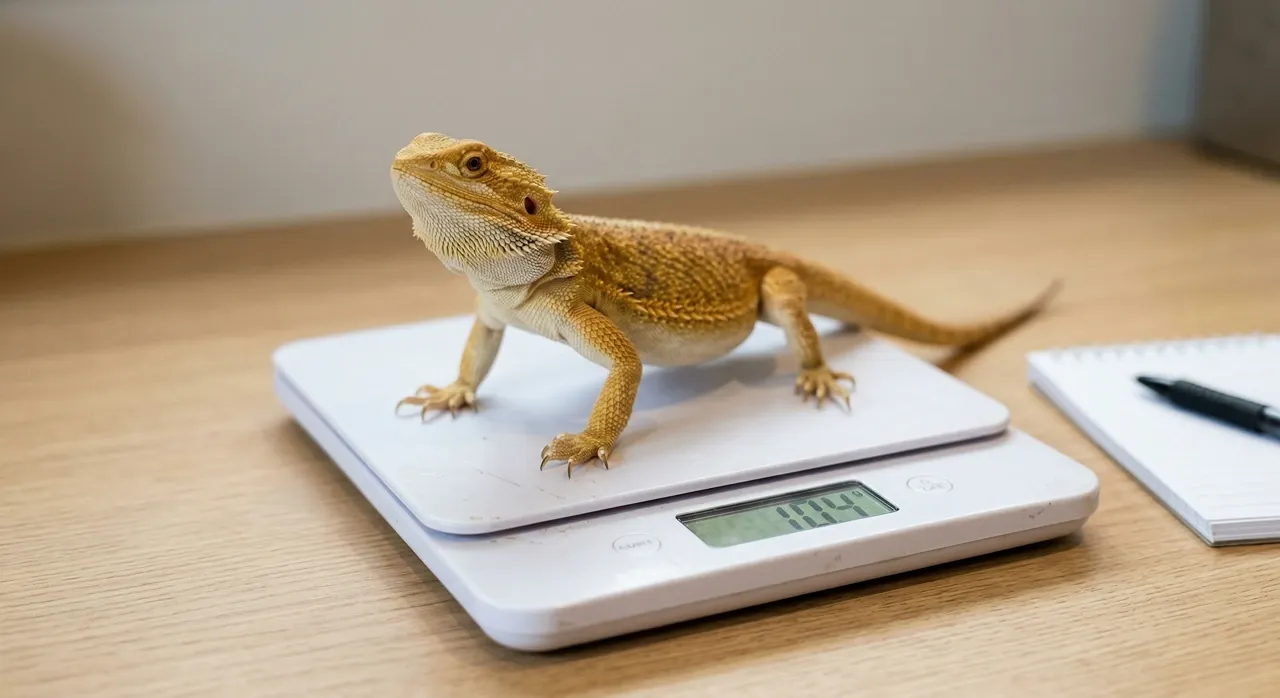
Hatchlings do show less overt territorial behaviour than adults, but dominance still establishes quickly. One sibling will claim the basking area and eat the majority of the feeder insects. Growth rates between the two will diverge within weeks, making any claim that they are “doing fine together” hard to defend against the data in the scale readings.

The Problem That Looks Like Nothing
Physical fights are the obvious risk, but chronic stress from cohabitation is the one that fools careful keepers. A dragon under persistent social stress does not necessarily display overt aggression or cower visibly in a corner. It simply experiences a suppressed immune system, reduced appetite, and disrupted thermoregulation from being unable to bask freely and fully.
The dominant dragon in a pair often looks healthy precisely because it is claiming all the resources. The subordinate dragon looks “a bit off”: slightly underweight, a little sluggish, eating inconsistently. These are the same signs associated with brumation, low-grade illness, or even dehydration, which means cohabitation stress gets misdiagnosed constantly.
Specific Warning Signs Your Dragons Are Not Actually Fine Together
These behaviours confirm that cohabitation is actively harming at least one animal. Separate them immediately if you observe any of the following:
- One dragon consistently sitting on top of the other near the basking area. This is dominance behaviour, not companionship
- The subordinate dragon arm-waving repeatedly at the dominant one, particularly around feeding time or near the basking spot
- Beard darkening in one or both animals during routine daily activity, not just during handling
- One dragon eating noticeably more than the other, even when feeders are spread across the enclosure
- Weight loss in one dragon over two or more weeks, without any other identifiable cause
- Tail tips, toe tips, or ear scales with bite damage. These heal but confirm active competition
- One dragon retreating to the cool side and staying there even during normal activity hours
- Glass surfing that began after a second dragon was introduced. The animal is trying to escape the situation
The reasons behind glass surfing in a previously settled dragon almost always involve an environmental stressor. A new tankmate is one of the most common triggers.
Disease and Parasite Transmission Between Cohabiting Dragons
This angle gets less attention than aggression but it carries real weight. Two dragons sharing an enclosure share everything: substrate, water, feeders, and fecal contamination. A dragon that carries a moderate parasite load within normal ranges can drive another animal into a clinical infestation when both are under the immune stress of cohabitation.
Atadenovirus (adenovirus, sometimes called “stargazing disease”) spreads through direct contact and fecal-oral transmission. A dragon that is an asymptomatic carrier can infect a healthy enclosure mate with no visible warning. Since most keepers do not test incoming animals before housing them together, the infection risk from cohabitation is real and not theoretical.
A minimum 90-day quarantine in separate rooms is the standard recommendation before any two reptiles share even indirect contact. Housing them together immediately after purchase, as most pet owners do, skips this entirely.
The Pet Store Display Tank Is Not a Model to Copy
Pet stores keep hatchlings together because the turnover is fast. A dragon spending a week in a display tank alongside three siblings before being sold is not a welfare-optimised situation. It is a commercial one. The toes that come out slightly short, the tails with healed nip marks, the size differences between animals from the same clutch: these are routine in store-bought animals precisely because group housing causes them.
Stores also rarely keep animals long enough to see the longer-term consequences. By the time the subordinate dragon’s immune system starts breaking down from chronic stress, that animal has already been in someone’s home for months. The store never sees the outcome.
Can You Ever House Two Bearded Dragons Together
The honest answer is: in very specific circumstances, two females that were raised together from hatching, are near-identical in size, and have a very large enclosure (minimum 8 feet long for two adults) can sometimes coexist with manageable stress levels. This is the exception rather than the rule, and it still requires a fully equipped backup enclosure ready to go at any time.
If you are asking whether you can try putting two bearded dragons in the same tank to see if it works, the answer is no. “Trying” means one animal may be silently suffering while you gather data. Set up two separate enclosures from the beginning.
Pairing Risk at a Glance
| Pairing | Aggression Risk | Stress Risk | Disease Risk | Verdict |
|---|---|---|---|---|
| Male + Male | Extreme, often fatal | Extreme | High | Never |
| Male + Female | High, risk of breeding injury | High for female | High | Never (outside supervised breeding) |
| Female + Female | Low to moderate | Moderate; dominance always establishes | High | Not recommended; separate enclosures preferred |
| Two babies (same clutch) | Low initially, increasing with age | Moderate; growth disparity begins early | High | Temporary only; separate by 4 to 6 months |
| Two adults (any sex) | High | High | High | Never |
If You Already Have Two Dragons Sharing a Tank
The right move is to separate them, and the sooner the better. You do not need to wait for a visible fight before acting. If the behaviours listed above are present, the harm is already underway.
When setting up a second enclosure, do not move the subordinate dragon into a bare tub and assume that is sufficient. That animal has been under physiological stress and needs a full, properly lit setup with correct basking temperatures and UVB. A dragon that stops basking after separation may be carrying the immune consequences of chronic stress and needs time to recover under good husbandry conditions.
Get a fecal parasite test done on both animals once they are separated. Shared enclosures drive parasite exchange and potentially amplify existing loads in the subordinate animal. Your reptile vet can run a basic fecal float to establish a baseline and recommend treatment if necessary.
What Two Enclosures Actually Looks Like in Practice
Two adult bearded dragons need two complete setups. Each one requires a basking lamp, a quality T5 HO UVB tube running at least half the enclosure length, an enclosure with a minimum footprint of 4 feet by 2 feet (though 6 feet is the more appropriate target for an adult), and a thermostat or dimmer to dial in basking temperatures accurately.
The enclosure sizing question is one most new keepers underestimate, and the arguments behind why larger is not optional are covered in detail in the tank size guide. If cost is a concern, it is more sensible to keep one dragon in a properly sized, well-equipped enclosure than two dragons in inadequate setups sharing stress and competing resources.
What to Do Right Now
If you are planning to add a second dragon to an existing tank, don’t. Set up a separate enclosure first, quarantine the new animal for at minimum 90 days in a separate room, and get a fecal check done on both before they ever share airspace.
If you are already housing two dragons together, weigh both animals this week using a kitchen scale, noting the date and weights. Do the same next week. Weight divergence over a two-week period is your signal to act. Review the supplement schedule for each animal separately once they are housed apart, since a suppressed dragon may have developed nutritional deficits during cohabitation.
A dragon that has lived alone in a properly set up enclosure from the start will almost always be healthier, calmer, and longer-lived than one kept with two bearded dragons in the same tank. The species did not evolve for company. Give them the space they need to thrive on their own terms.
Written by
Sarah ArdleySarah has kept bearded dragons for over ten years. She founded Beardie Husbandry after discovering that most mainstream care advice — including what she followed with her first dragon — was doing more harm than good. Every article on this site is grounded in veterinary research and real keeper experience.