How Much Is a Bearded Dragon? Setup, Food, and Hidden Costs
People ask how much is a bearded dragon and usually mean the sticker price at the reptile expo or the pet store. That number is the least important figure in the whole budget.
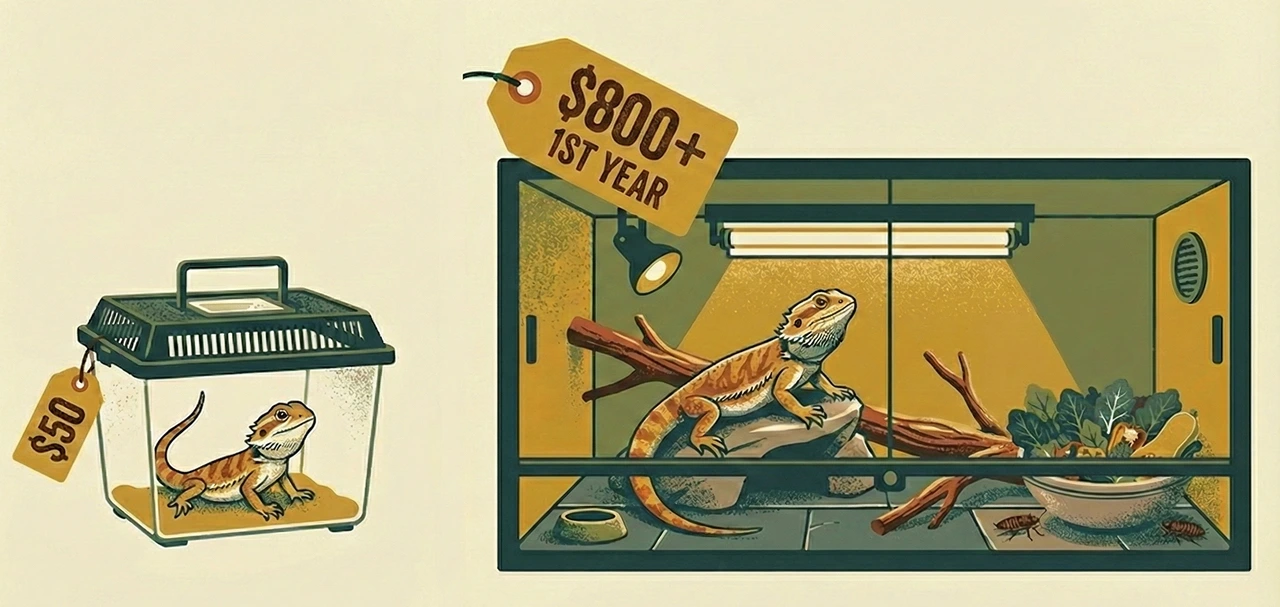
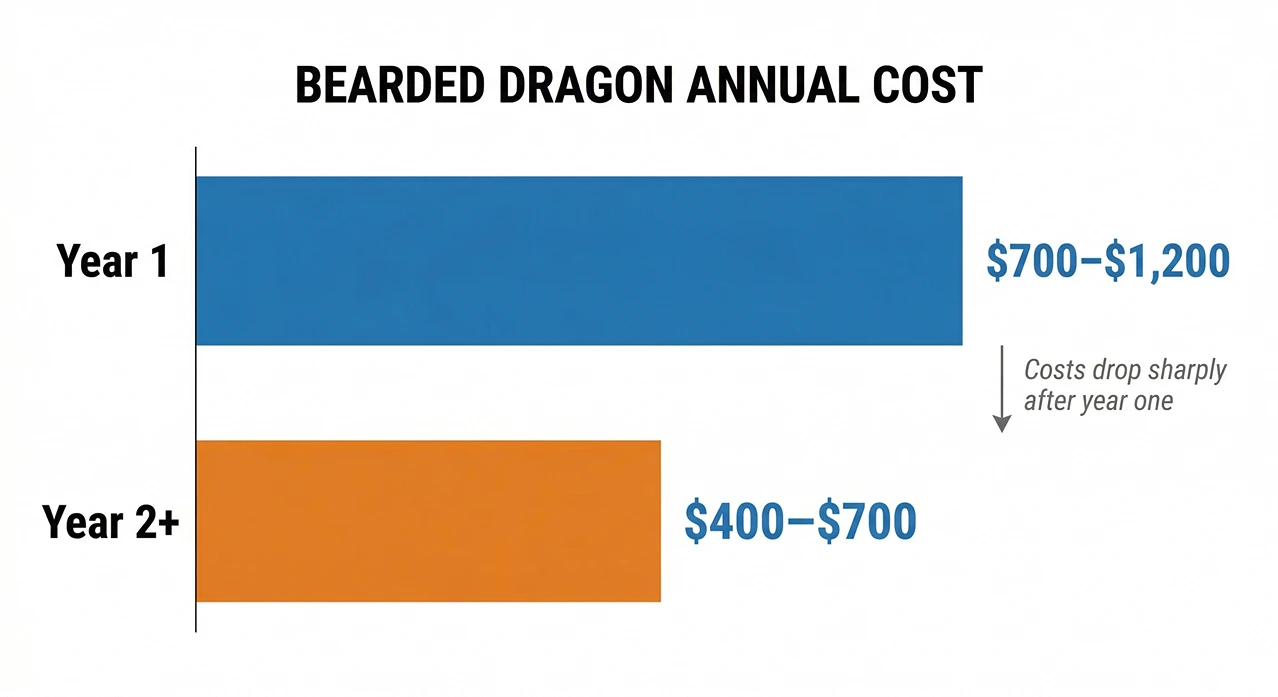
A healthy juvenile from a reputable breeder costs $40–$80. The equipment to keep it alive properly runs $400–$775 before you add the animal. Year one, including food, supplements, and one vet visit, typically lands between $700 and $1,200 depending on the equipment choices you make at the start.
The health profile of a bearded dragon from a pet store vs a breeder can differ in ways that affect first-year vet costs considerably. That decision shapes the budget as much as anything else on this page.
Monthly costs settle into a manageable $40–$88 once the setup is done. Adults eat far less live protein than juveniles do, the hardware is already in place, and running costs drop further if you breed your own feeders.
What Does a Bearded Dragon Cost to Buy
Standard wild-type juveniles from a reputable breeder typically run $40–$80. The same animal from a chain pet store usually costs $50–$100, and it often arrives with stress, early parasites, or both. Rescues charge $30–$75 as an adoption fee, and the animal sometimes comes with a working enclosure included.
Morph pricing is where costs climb sharply. Leatherbacks and hypomelanistics run $150–$300. The rarest colour forms, including silkbacks and zero morphs, routinely sell for $400–$900, and established bloodlines from specialist breeders go higher still.
For a first-time keeper, a standard morph from a breeder is the sensible starting point. You still get a healthy, interesting animal without paying a premium that benefits no one’s husbandry.
First-Year Setup Costs Broken Down
The setup is where most keepers either budget correctly or get caught short. None of the items below are optional. Skipping or downgrading any of them creates health problems that cost more to fix than the item you saved on.
The Enclosure
A 4x2x2 enclosure handles a juvenile through to a full adult, and it is the right starting point. Many new keepers buy a smaller tank for a hatchling to reduce the upfront spend, then upgrade later. That strategy costs more overall because you end up paying for two enclosures instead of one.
Glass tanks in the 120-gallon range run $150–$300. Purpose-built PVC or melamine reptile enclosures, which hold heat and humidity more efficiently than glass, run $200–$450. Why the enclosure dimensions matter more than the gallon rating is worth understanding before you buy anything.
Buy the correct size once. The “start small and upgrade” approach is the most common reason first-year costs run higher than anyone planned.
Heating and UVB Lighting
UVB lighting is not a place to economise. A T5 HO tube fixture with bulb runs $60–$110, and the bulb needs replacing every 6–12 months even when it still lights up, because UVB output drops long before the visible light disappears. A dragon living under a depleted bulb develops metabolic bone disease the same way it would under no UVB at all.
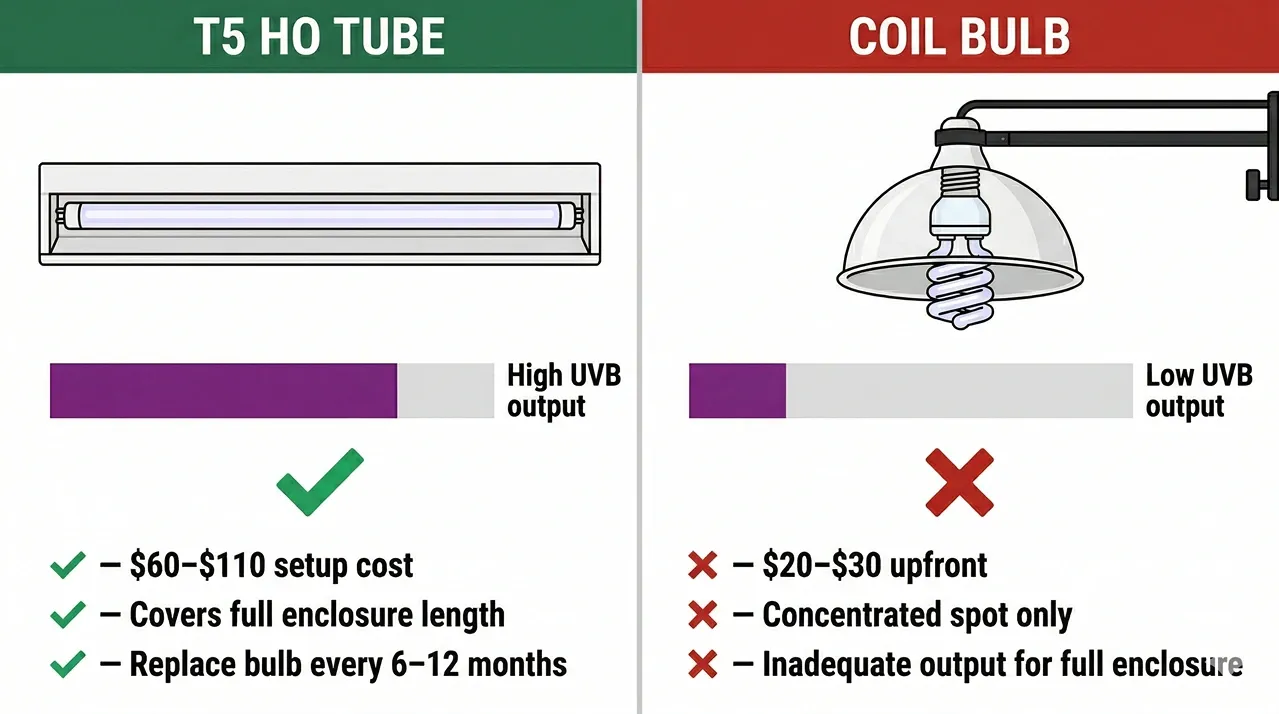
Why cheap coil UVB bulbs fall short on actual output, even when they look bright, is worth understanding before you spend anything on lighting. The cost difference between a coil and a T5 HO is about $30 upfront. The cost difference in vet bills is several hundred dollars.
For heating, a 75–100W halogen flood bulb in a ceramic dome fixture costs $20–$35 to set up and is the most reliable basking source available. A ceramic heat emitter for overnight use, if your room drops below 65°F, runs $10–$20 additionally.
Thermometers, Substrate, and Decor
You need two temperature measurement tools: a digital thermometer with a probe for ambient readings, and an infrared temperature gun for checking the actual basking surface. Together they cost $20–$40. Both are required, and running a setup without them is guesswork.
Ceramic tile, slate, or textured porcelain runs $20–$40 for a full enclosure floor and lasts indefinitely. The full case for tile, and against loose particle substrates, goes deeper than impaction risk alone, particularly for younger animals.
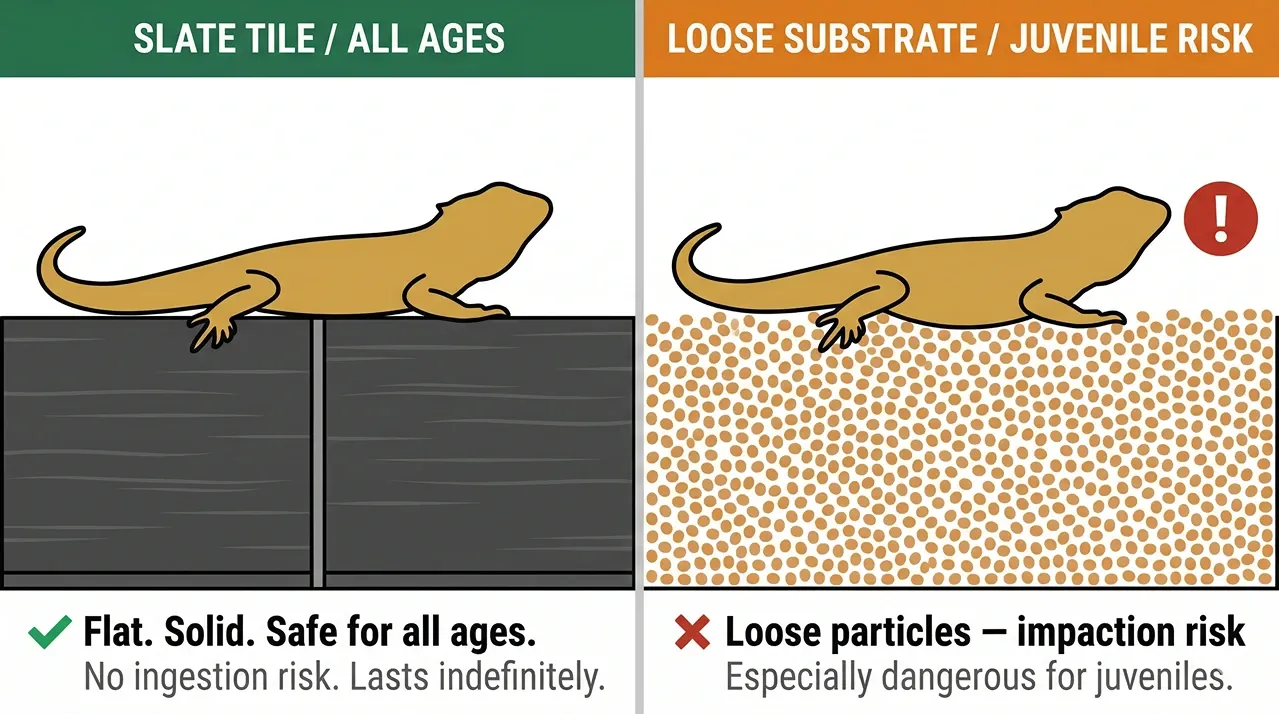
Decor, hides, and a basking platform add $30–$80 to the initial setup. A flat slate basking surface and one textured hide are all a new setup actually requires. The rest is optional enrichment.
| Item | Budget Range | Notes |
|---|---|---|
| Enclosure (4x2x2) | $150–$450 | Buy adult size from the start |
| T5 HO UVB fixture + bulb | $60–$110 | Replace bulb every 6–12 months |
| Basking lamp and dome | $20–$35 | 75–100W halogen flood bulb |
| Ceramic heat emitter | $10–$20 | Only needed if room drops below 65°F |
| Thermometer and temp gun | $20–$40 | Both are required, not interchangeable |
| Substrate | $20–$40 | Tile or slate recommended |
| Decor and hides | $30–$80 | Keep it simple to start |
| Setup total | $310–$775 | Before the dragon |
Monthly Costs After Setup
Monthly costs fall into four categories, and how much you spend in each one shifts depending on your dragon’s age.
Baby vs Adult Feeding Costs
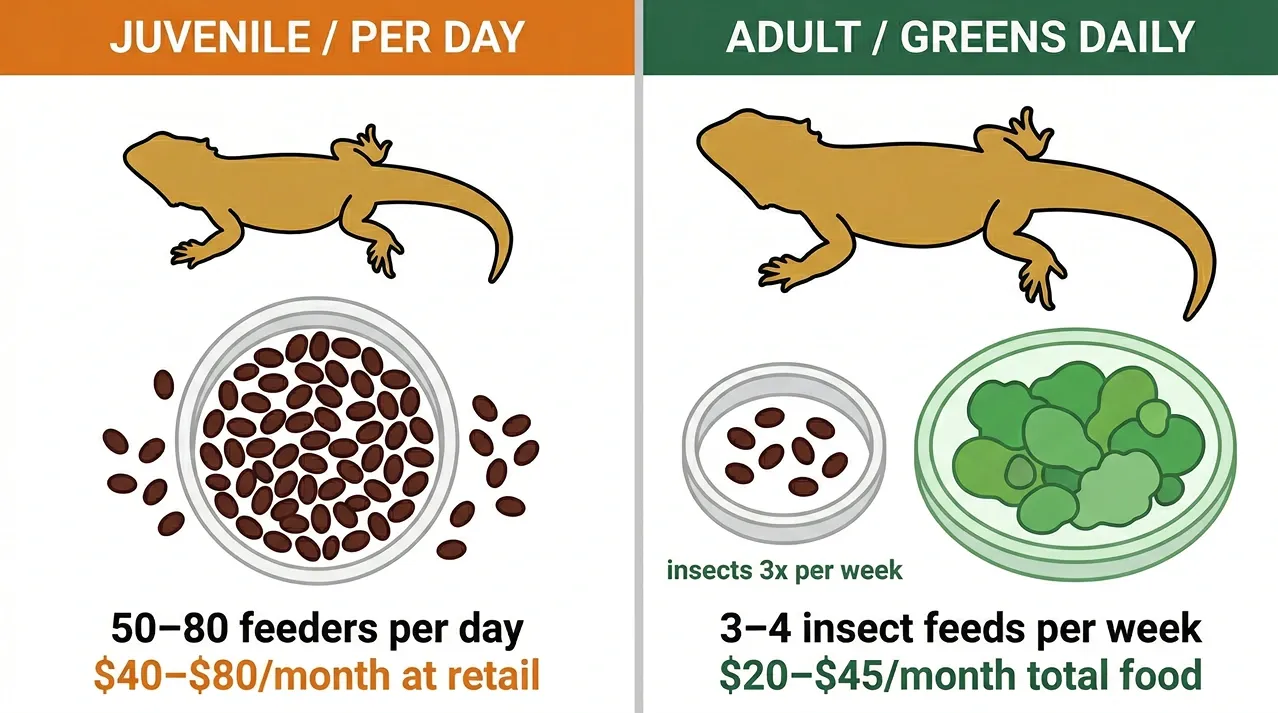
Baby bearded dragons eat a serious volume of live insects, and those insects eat a serious portion of your budget. A hatchling through young juvenile needs 50–80 feeders per day across three to five feeds. Buying crickets or dubia roaches at retail to cover that demand runs $40–$80 per month at peak.
Adults flip the ratio entirely. An adult beardie eats 80% leafy greens and around 20% protein, with live insects dropping to three or four feeds per week. Monthly food costs for a healthy adult land around $20–$40 if you buy insects in bulk and source greens cheaply.
Insect demand drops sharply past the 12-month mark, which is why the juvenile feeding frequency looks nothing like an adult’s. If you are budgeting for a hatchling, plan for the higher insect costs in the first year and know they will not stay that high.
Supplements Add Up Faster Than You Think
The supplement rotation covers three tubs and each one gets used at a different frequency depending on age. A tub of each costs $8–$15 and lasts several months, so the monthly outlay works out to $5–$10 once the routine is established.
Skipping or guessing at supplements is the second most common route to MBD after poor UVB. Calcium without D3 is dusted at every feed for juveniles, while adults follow a different calcium and D3 rotation depending on their age and UVB exposure.
Electricity Nobody Budgets For
Running a 100W basking lamp for 12 hours daily, a T5 HO UVB tube, and occasionally a ceramic heat emitter overnight adds $12–$25 to your monthly electricity bill depending on local rates. It is a real line item that rarely appears in beginner cost guides.
Putting everything on digital timers costs $15–$25 and pays for itself within a few months. Timers also protect your dragon from accidental overexposure on the days you forget to switch the lights off manually.
| Expense | Baby (Monthly) | Adult (Monthly) |
|---|---|---|
| Live insects | $40–$80 | $10–$25 |
| Greens and vegetables | $5–$10 | $10–$20 |
| Supplements | $5–$10 | $5–$10 |
| Electricity | $12–$25 | $12–$25 |
| Substrate and cleaning | $5–$10 | $3–$8 |
| Monthly total | $67–$135 | $40–$88 |
The Hidden Costs Most Budgets Miss
These are the expenses that rarely appear in cost breakdowns but hit actual keepers with regularity.
Emergency Vet Bills
Exotic vet visits are priced differently from dog and cat appointments. An initial check-up with a reptile-qualified vet runs $75–$175. A problem visit, covering parasites, a respiratory infection, or suspected impaction, commonly reaches $150–$350 once diagnostics are included.
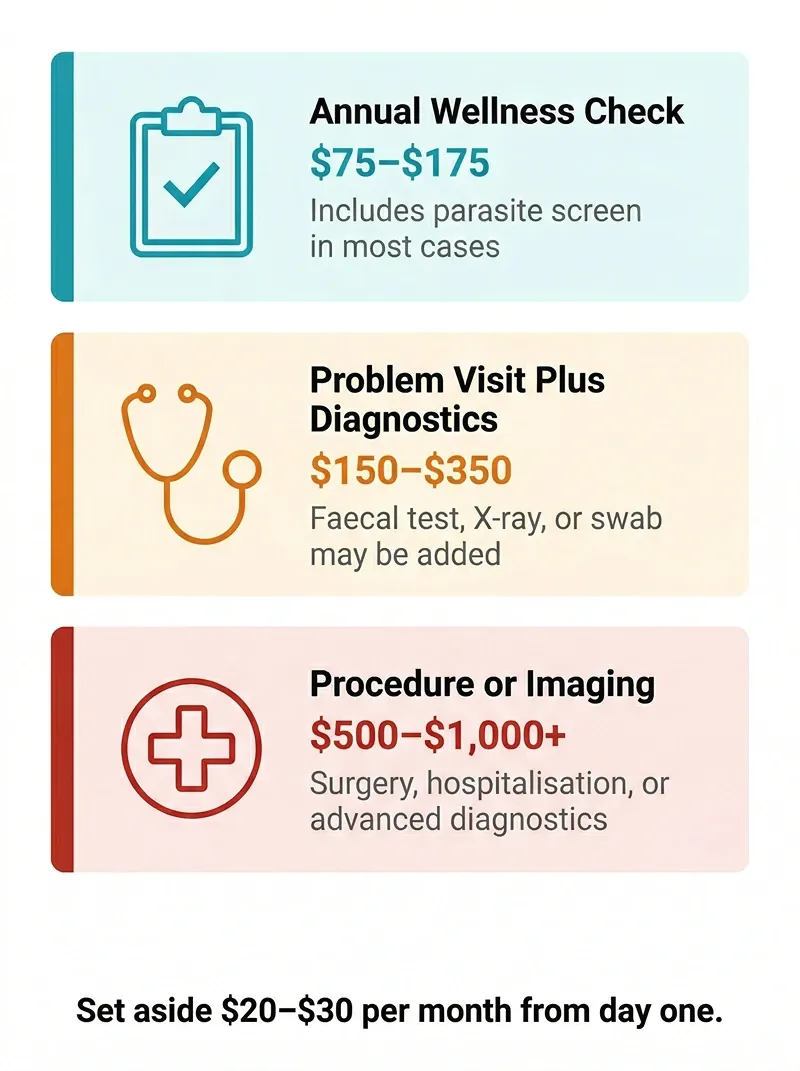
Serious issues requiring imaging or a procedure can cost $500–$1,000 or more. This is the actual cost of owning an exotic animal, and it is worth setting aside $20–$30 per month in a health fund from the start rather than absorbing it as a shock.
Finding a qualified reptile vet before anything goes wrong is one of the most practical things a new keeper can do. Searching for one at 11pm with a sick dragon is considerably harder than doing it calmly in week one.
UVB Bulb Replacement
T5 HO UVB bulbs need replacing every 6–12 months. A replacement bulb costs $25–$45. Most keepers replace theirs at the six-month mark to stay safely within output range, which works out to $50–$90 per year. It is an easy line item to overlook in an annual budget but it is not optional.
Pet Sitting
Bearded dragons cannot be left unattended for more than two or three days without somebody checking on them. If you travel, an experienced reptile sitter charges $15–$30 per visit, or you need someone who understands the equipment well enough to handle a problem. It is a logistical and financial consideration that rarely comes up in cost articles but affects nearly every keeper eventually.
How to Lower Costs Without Cutting Corners
There is a right way to reduce running costs and a wrong way. The wrong way is buying cheaper versions of items that directly affect your dragon’s health. The right way is cutting costs in areas where quality does not matter.
Setting up a dubia roach colony is the single biggest lever you have on monthly food costs. The startup cost runs $30–$60 for starter stock and a basic bin setup. Within three to four months, the colony produces enough feeders to replace most of your insect purchases, and the ongoing cost drops close to nothing since adults thrive on vegetable scraps.
Collard greens in particular grow fast and take minimal windowsill space, contributing a meaningful portion of the weekly salad at no ongoing cost once established.
On equipment, buying a secondhand enclosure or dome fixture from a reptile group is entirely reasonable. Never buy a secondhand UVB bulb. You have no reliable way to know its remaining output, and a new bulb costs too little to risk it.
Year Two Costs Are Much Lower
After the first year, costs drop noticeably. The enclosure and major hardware are already in place. Insect volume is no longer at juvenile levels. Annual costs in year two and beyond typically run $400–$700 for a healthy animal, including one wellness check and bulb replacement.
The main ongoing variable is veterinary care. A healthy adult kept in a correctly set up enclosure, with adequate UVB and a balanced diet, can go years between vet visits beyond annual check-ups. The majority of vet costs in captive bearded dragons trace back to preventable husbandry problems.
Frequently Asked Questions
How much does a bearded dragon cost per month?
An adult bearded dragon costs $40–$88 per month to keep, covering food, supplements, electricity, and substrate maintenance. Juveniles run higher at $67–$135 per month, primarily because of insect volume. This excludes vet visits and bulb replacement, which occur less frequently.
Is a bearded dragon an expensive pet?
More expensive than most new keepers expect, and less expensive than many fear once the setup is done. Year one typically runs $700–$1,200 all in. Year two and beyond drops to $400–$700 for a healthy, well-kept animal. Most of the cost front-loads into the initial setup.
How much does the setup cost for a bearded dragon?
A properly equipped setup runs $310–$775 before the animal. The enclosure and UVB fixture are the two biggest line items. Trying to reduce setup costs by buying smaller or cheaper versions of either typically costs more within the first 12 months.
How much do vet bills cost for a bearded dragon?
A standard exotic vet check-up runs $75–$175. A problem visit with diagnostics costs $150–$350. Serious issues requiring imaging or procedures can exceed $500. Setting aside $20–$30 per month in a health fund from the start is a practical way to stay prepared without a lump-sum shock.
Can you get a bearded dragon for free?
Occasionally. Keepers rehoming animals sometimes give them away, sometimes with the enclosure included. Reptile rescues charge $30–$75 in adoption fees. The animal cost is the smallest part of the overall budget, so saving money here while spending correctly on equipment is a sensible approach.
Before You Bring Your Dragon Home
Get the enclosure set up and temperature-tested for at least 48 hours before the animal arrives. Basking spots fluctuate until the ambient temperature stabilises, and a new dragon placed into an unverified setup is a stressed animal with no reliable way to thermoregulate.
Have your supplements bought and your feeding routine planned on day one. Know which exotic vet you will use before anything goes wrong, not after.
The bearded dragon cost itself is a one-time decision. Every other figure in this breakdown is ongoing, and the ones that hurt most are the ones nobody planned for. Budget correctly at the start, and running one of these animals is very manageable for the long term.
Written by
Sarah ArdleySarah has kept bearded dragons for over ten years. She founded Beardie Husbandry after discovering that most mainstream care advice — including what she followed with her first dragon — was doing more harm than good. Every article on this site is grounded in veterinary research and real keeper experience.