The Complete Guide to Bearded Dragon Morphs (Why to Avoid Silkbacks)
Bearded dragon morphs have multiplied dramatically over the past two decades, and the vocabulary surrounding them is deeply confusing for anyone new to the hobby. Hypo, trans, leatherback, zero, witblits. Breeders throw these terms around at reptile expos and in online listings as if everyone already knows what they mean.
There is also a persistent problem with colour names being sold as morph names, leading keepers to overpay for a different shade of orange with a marketing label on it. Knowing the difference before you buy saves money and sets you up to give proper care from day one.
Morph, Colour, and Pattern Are Not the Same
Bearded dragon morphs are genetically defined, reproducible traits that affect body structure, scale type, or pigmentation in a consistent and predictable way. The word has a real standard in the breeding community. “Leatherback,” “hypo,” and “translucent” mean specific, documentable things that any knowledgeable breeder will use consistently.
Colour and pattern are different. Colour names like “sandfire,” “citrus,” “red monster,” and “blood red” are marketing terms that individual breeders assign to their own stock. There is no agreed standard for what separates a “citrus” from a “lemon,” and one breeder’s “fire” is another’s “orange.”
Pattern names work similarly. “Tiger,” “giraffe spots,” and “freckles” describe visual markings, but none of these are bearded dragon morphs in any genetic sense. A tiger-patterned dragon might be a completely standard morph. That is just how that individual looks.
When you are looking at dragons for sale, ask the seller to separate the morph from the colour description. If someone tells you a dragon is a “citrus hypo leatherback,” that is one morph combination and one colour name bundled together.
Reputable dragon breeders will make this distinction clearly without prompting. Those who cannot may be using colour names to inflate perceived value.
How Bearded Dragon Genetics Actually Work
You do not need a biology degree to understand why certain bearded dragon morphs behave the way they do in breeding. Three concepts cover almost everything a keeper needs to know before buying or raising any morph.
Dominant and Co-Dominant Traits
A dominant trait shows up even when only one parent carries it. Dunner is a clear example. Breed a dunner to a standard dragon and dunner offspring appear in that first clutch. No special pairing is required for the trait to express.
Co-dominant traits work similarly but carry one key twist. One copy of the gene produces the visual trait in a milder form. Two copies produce an exaggerated “super” version.
Leatherback is the prime example. A single-copy leatherback has reduced back spines. Breed two leatherbacks together and a portion of the offspring inherit two copies, producing silkbacks with no scales at all. This mechanism matters more than any other genetic concept a buyer needs to understand.
Recessive Traits and What Het Means
Recessive traits only appear visually when a dragon inherits the gene from both parents. One copy does nothing visible. The dragon looks standard but carries the trait. These carriers are called “hets,” short for heterozygous.
For buyers, this matters enormously. A dragon listed as “het hypo” carries one copy of the hypo gene but does not look like a hypo dragon. That hidden gene can only be verified through documented lineage. There is no visual way to confirm it.
If a breeder is selling hets and cannot produce paperwork showing the bloodline, treat the dragon as a standard morph for pricing purposes.
Every Confirmed Bearded Dragon Morph
There is a fixed set of genetically reproducible bearded dragon morphs. Any name not on this list is a colour name, a pattern description, or a line name invented by a breeder.
Standard
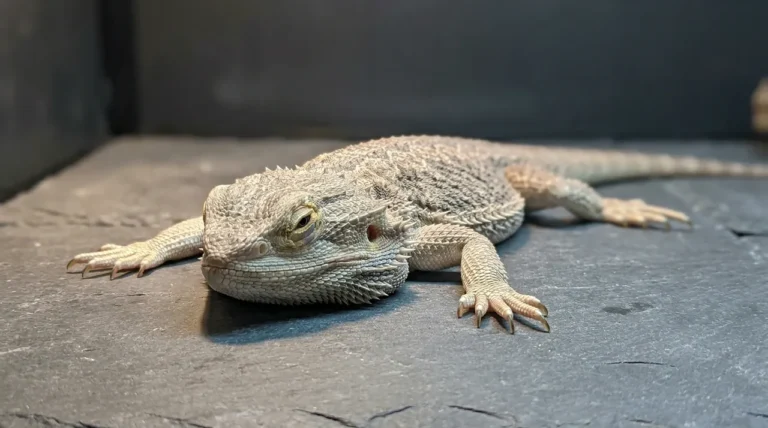
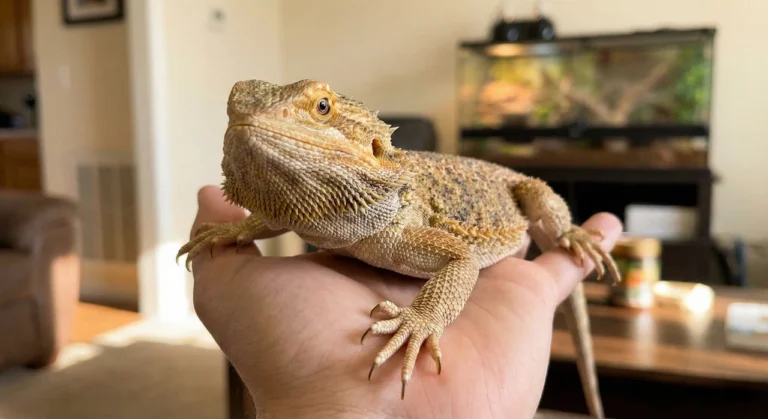
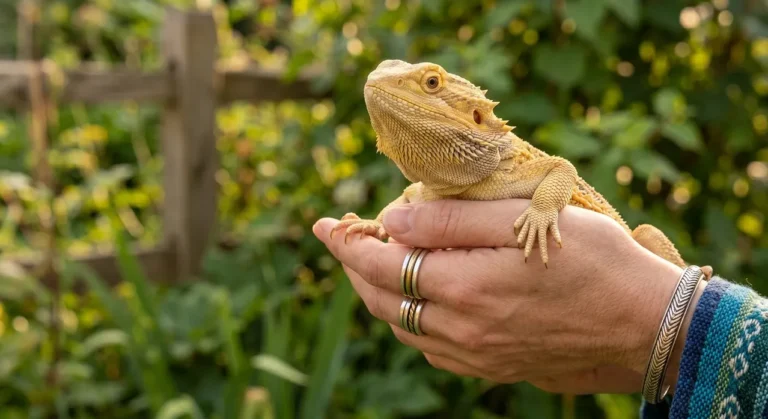
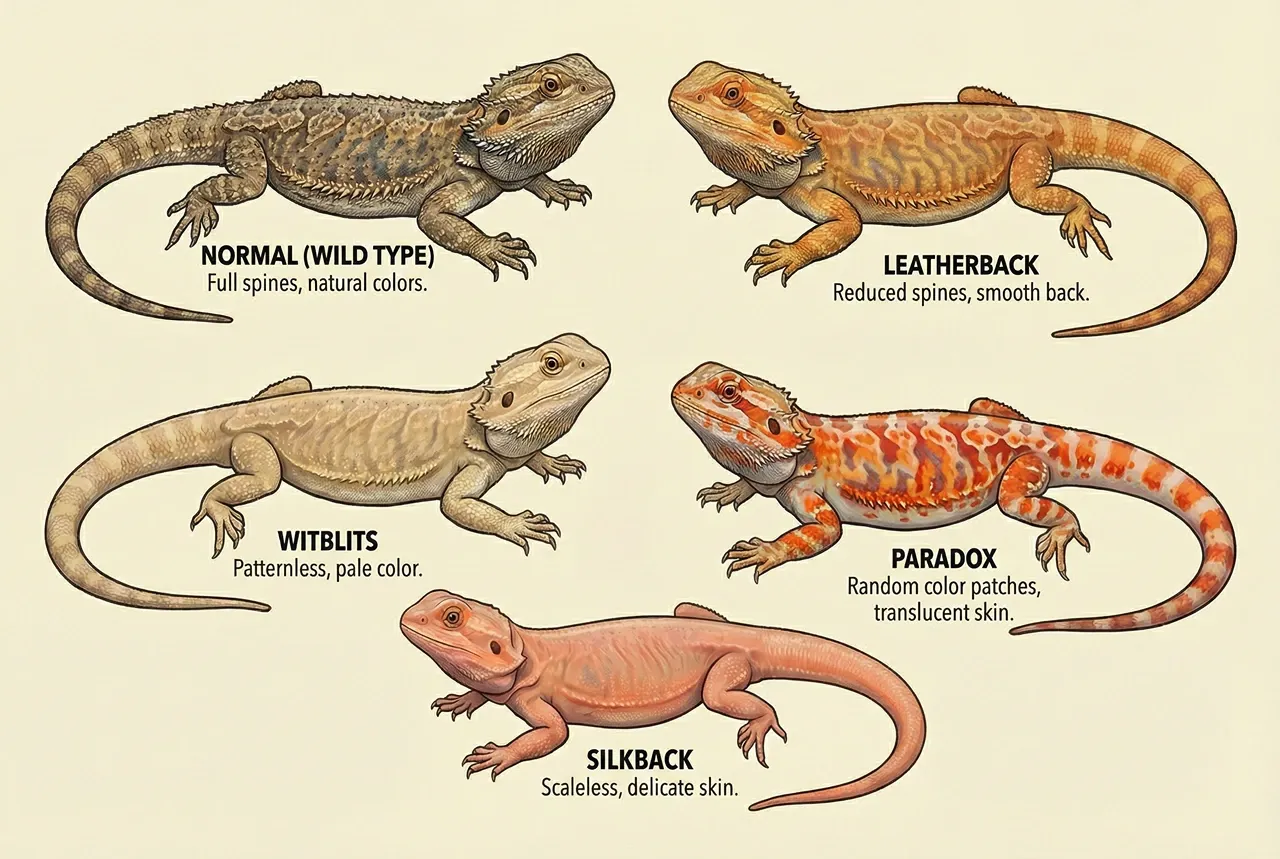
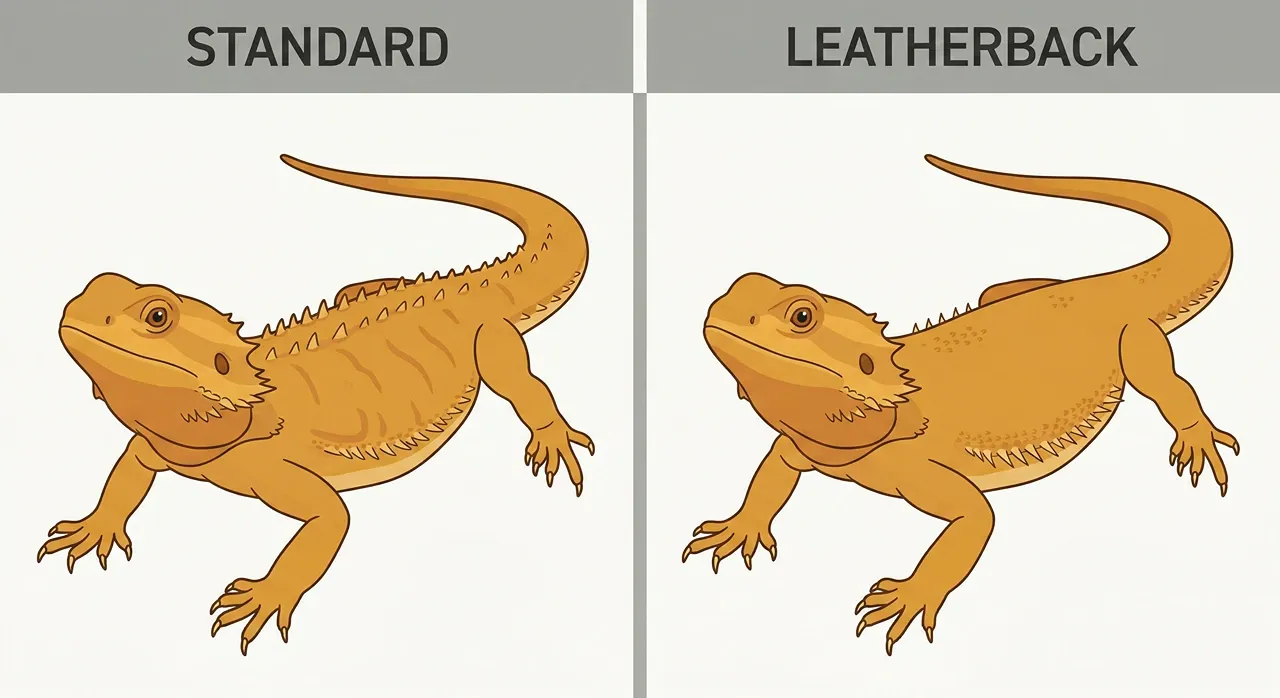
Also called “classic” or “wild-type,” the standard morph is the closest to wild Pogona vitticeps. Sandy to brownish-tan, covered in spiky scales from head to tail, with black nails and a triangular head. It is what fills most pet store enclosures.
Standard dragons are hardy, well-adjusted to captive life, and usually the easiest starting point for a first keeper. Their predictability makes the husbandry uncomplicated compared to some of the more sensitive morphs discussed below.
Leatherback
Leatherback dragons have a smooth back caused by reduced or absent dorsal spines, leaving only the sides and head with the typical spikes. The texture feels noticeably softer than a standard morph, and the absence of dorsal spines makes colours appear more vivid and saturated.
This is a co-dominant trait, so a single-copy leatherback is already visually distinct. No special care adjustments are needed.
Hypomelanistic
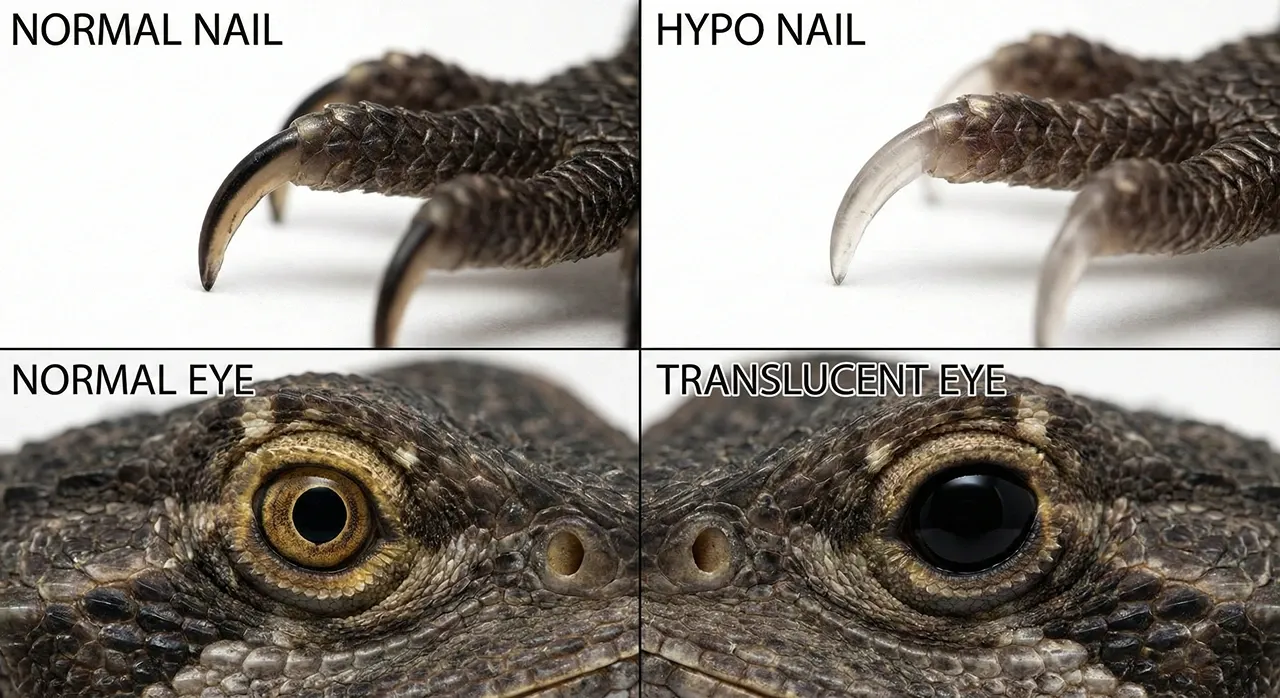
Hypomelanistic, or “hypo,” means reduced melanin, which produces lighter, brighter overall colouration. The most reliable identification marker is the nails: standard dragons have a visible black stripe running through each nail, while hypo dragons have clear, transparent nails.
Hypo is a recessive trait, meaning both parents must carry the gene for a hypo baby to result. A hypo paired with a vivid base colour like red or orange produces some of the most striking dragons in the hobby. No husbandry adjustments are required.
Translucent
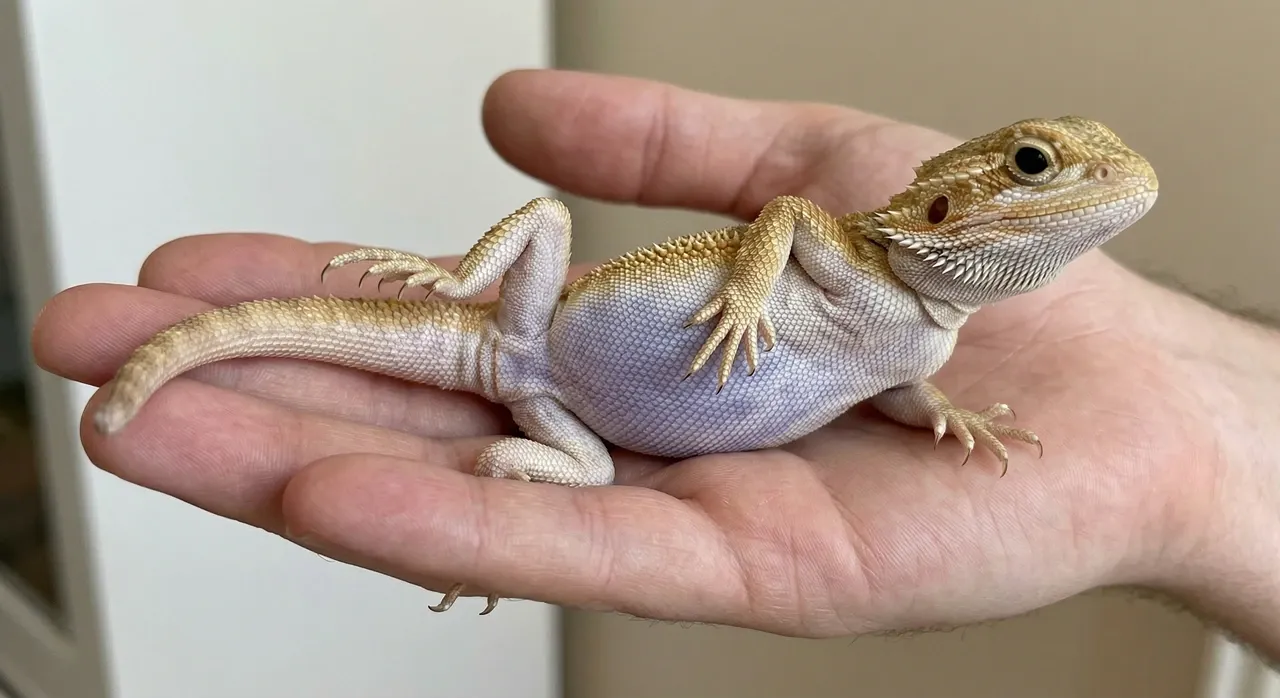
Translucent dragons, called “trans,” have scales that lack the reflective layer found in standard morphs, giving them a slightly glassy or waxy appearance. The most distinctive features are solid black eyes and, in juveniles, a distinctly blue or purple-tinted belly that softens considerably as the dragon reaches adulthood.
One care consideration: the reduced scale pigmentation in trans dragons can make them more sensitive to intense UV output. A properly calibrated UVB lighting setup matters for every morph, but with trans dragons it is worth checking your bulb distances and replacing on schedule.
Trans is a recessive trait. Juvenile translucents look strikingly different from adults. Do not expect the dragon at eighteen months to have the same dramatic black eyes and blue belly it had at eight weeks. Some fading as the dragon matures is completely normal.
Dunner
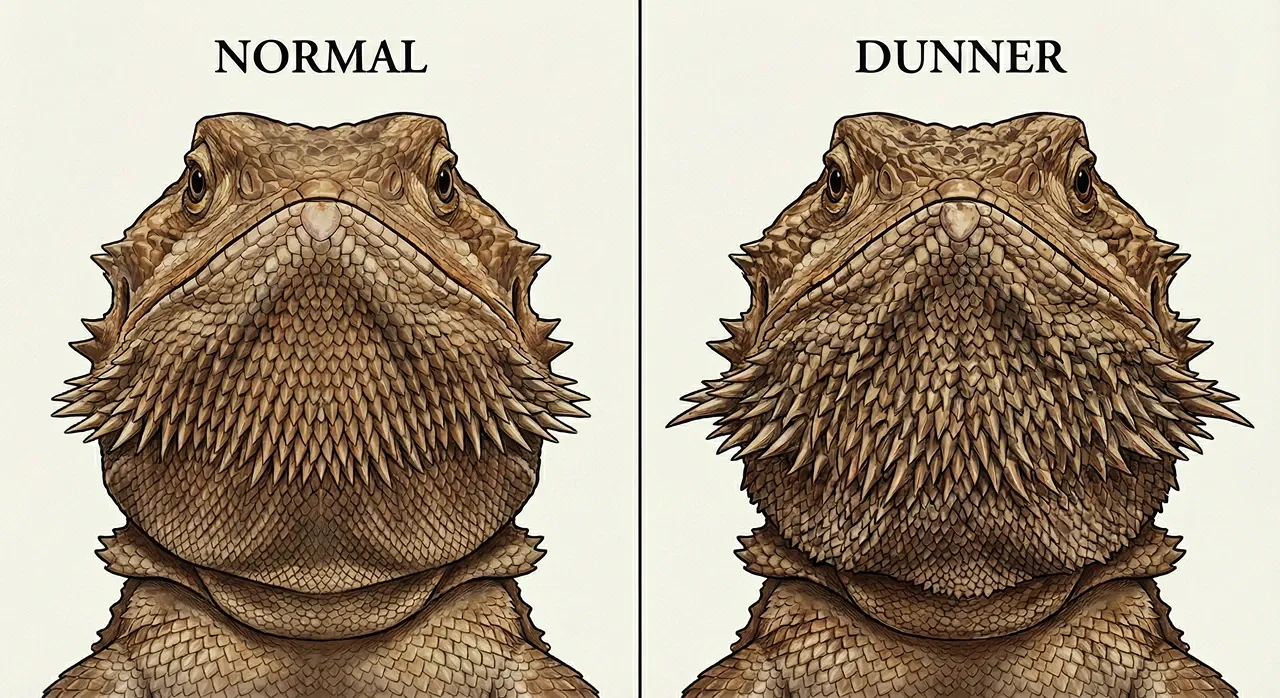
Dunner is both a scaling and a visual morph, making it one of the most distinctive types in the hobby. The scales sit in multiple directions rather than the uniform horizontal orientation seen in standard dragons, giving the skin a more chaotic, textured look.
The markings shift from horizontal bars to a spotted pattern, and dunner dragons typically carry more scales per square inch than any other morph. This is a co-dominant trait, so breed a dunner to a standard and dunner offspring appear in the first clutch.
Witblits
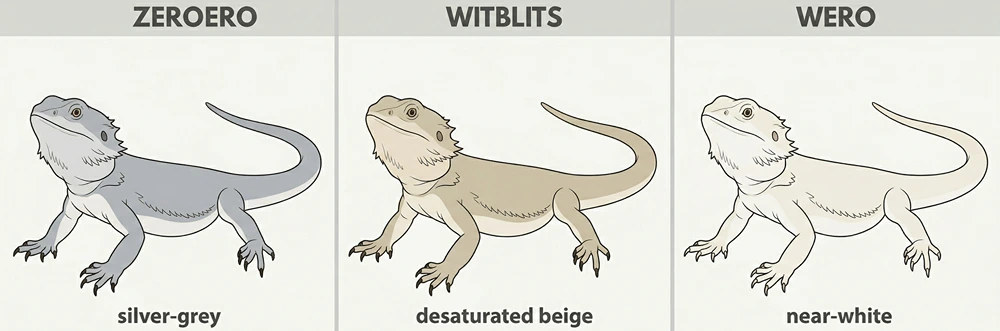
Witblits is a recessive morph that produces a patternless, desaturated dragon with a muted, washed-out appearance. The name comes from Afrikaans and refers to the pale, almost bleached look. Witblits dragons are sometimes confused with zeros because both lack strong pattern, but they are produced by different genetics entirely.
Witblits tends to retain slightly more colour variation than a zero dragon. No feeding or husbandry changes are needed. A varied, balanced diet applies exactly as it does for any other morph.
Zero
Zero dragons are patternless and carry little to no colour saturation, producing a silver-grey to near-white appearance.
Pairing a zero with the hypo gene produces a “hypo zero,” which often comes out almost paper-white and consistently commands some of the highest prices in current breeding. Both traits are recessive and must come from both parents to appear in offspring.
Wero and Paradox
Wero is produced by combining zero and witblits genetics, resulting in a white, fully patternless dragon. It is one of the newest established morphs and commands strong prices in the hobby right now. Care requirements are identical to any standard dragon.
Paradox is not a reproducible morph. It describes a dragon with random, unexpected splashes of contrasting colour appearing where the genetic background would predict none. These markings cannot be deliberately bred for in any consistent way.
A paradox dragon is a spontaneous anomaly. Paying a steep premium for one is an aesthetic choice, not a genetic investment. Unlike most confirmed bearded dragon morphs, there is nothing in the genetics to reliably reproduce.
German Giant
German Giant refers to a line of larger-than-average dragons that originated from imports in the early days of captive breeding. The honest consensus in the hobby now is that there are virtually no true German Giants left in circulation.
The original line has been diluted beyond recognition, and “German Giant” has become more of a marketing term than a verifiable genetic lineage. If a seller cannot produce documented bloodline records, the name means nothing practical.
Why You Should Not Buy a Silkback
Unlike any other bearded dragon morph, silkbacks are produced when two leatherback dragons are bred together. A percentage of the offspring inherit two copies of the co-dominant leatherback gene and are born without any scales at all.
What remains is exposed dermis. It is skin that was never designed to function as the outermost protective layer of a reptile.
Without scales, shedding becomes a serious and recurring welfare problem. Shed skin adheres tightly to exposed dermis instead of lifting away naturally. Retained shed around the toes and tail tip causes constriction that cuts off circulation, leading to tissue death and eventual amputation if not caught and treated promptly.
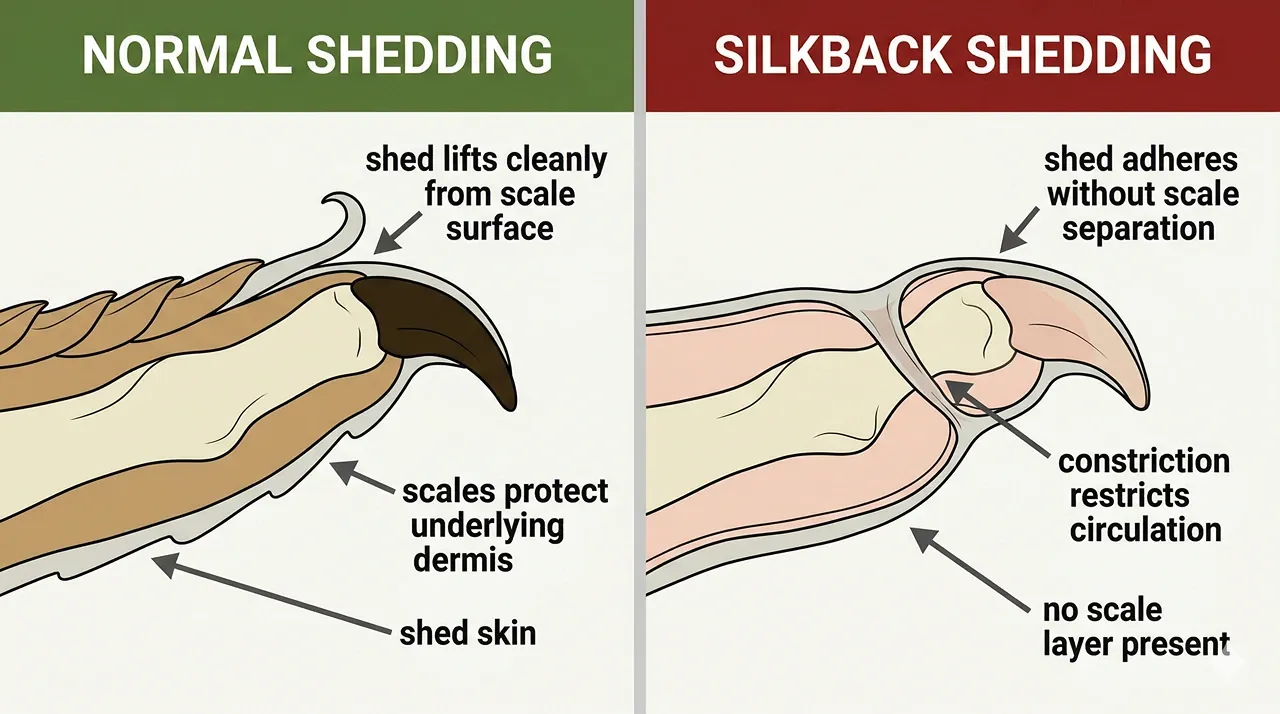
A silkback that misses even one or two soaks during a shed cycle is at genuine risk. The stuck shed complications that cause occasional concern in standard dragons become a constant management priority in silkbacks.
Daily bathing is not optional. It is a husbandry requirement. Without it, the exposed skin dries, cracks, and becomes vulnerable to bacterial and fungal infection. A daily soak routine that takes a few minutes with a healthy standard dragon becomes a non-negotiable daily obligation you cannot skip.
Substrate choices narrow considerably for silkbacks. Anything abrasive (coarse tile, loose particulate, rough-textured mats) damages unprotected skin. Only smooth surfaces are safe: polished tile, paper towel, or soft fleece. Many of the most commonly recommended substrate options for standard dragons are unsuitable without careful vetting.
Live feeders present an additional hazard. Crickets will bite unprotected skin during feeding, and injuries that would be inconsequential on a scaled dragon can cause real damage on exposed dermis. Supervised feeding or pre-killed prey is standard practice for silkback owners, not an optional extra.
The critical point about silkback production is that it is entirely avoidable. The only way to produce silkbacks is to breed two leatherbacks together. Any breeder working with leatherbacks knows this pairing generates silkback offspring. Producing them is a deliberate choice, not a side effect.
Ethical breeders who keep leatherbacks simply do not pair two of them together. Refusing to buy silkbacks removes the financial incentive to produce them. The breeding stops when the demand does.
Which Morphs Actually Need Different Care
The vast majority of bearded dragon morphs require no husbandry adjustments beyond what a standard dragon needs. The same temperature gradient, supplement routine, and feeding schedule apply regardless of whether your dragon is hypo, leatherback, dunner, zero, witblits, or wero.
Translucent dragons are the one morph worth monitoring more carefully. The reduced scale reflectivity means UV penetration may differ slightly from a standard dragon, and some keepers report sensitivity to very intense UV output at close range.
Inadequate UV in any beardie raises the risk of metabolic bone disease. The goal is not reduced UV but correctly calibrated UV. Check bulb age, basking distance, and mesh obstruction routinely when keeping trans dragons.
Silkbacks, as covered above, require daily baths, smooth substrate, supervised feeding, and careful thermoregulation management. These are not minor tweaks. They represent a fundamentally different daily commitment compared to keeping any other morph.
True albino bearded dragons, rare and not a confirmed reproducible morph, have no melanin and can suffer eye and skin damage from standard UV intensities. Most keepers will never encounter one. If you are offered a true albino, research the specific lighting adjustments required before buying.
Morph Quick-Reference
| Morph | Genetic type | Key identifier | Care differences |
|---|---|---|---|
| Standard | Wild-type | Spiky all over; tan/brown | None |
| Leatherback | Co-dominant | Smooth back, spiky sides and head | None |
| Hypomelanistic | Recessive | Clear nails; bright overall colour | None |
| Translucent | Recessive | Black eyes; blue belly (juvenile) | Monitor UV exposure carefully |
| Dunner | Co-dominant | Multi-directional scales; spotted pattern | None |
| Witblits | Recessive | Patternless; pale, washed-out colouration | None |
| Zero | Recessive | Patternless; silver-grey to near-white | None |
| Wero | Recessive (Zero + Witblits) | White; fully patternless | None |
| Paradox | Spontaneous anomaly | Random colour splashes; unreproducible | None |
| German Giant | Line breeding (disputed) | Larger build; unverifiable without records | Larger enclosure if genuine |
| Silkback | Co-dominant super form | No scales; exposed skin | Extensive. Daily care required |
What to Check Before Buying Any Morph
The morph tells you less than you might expect about how healthy or well-socialised a dragon will be. These are the questions worth asking before you commit, regardless of how good the dragon looks in a listing photo.
- Does the breeder separate morph from colour? Anyone who cannot explain the difference is either inexperienced or hoping you do not notice. Both are reasons to look elsewhere.
- Can they document any het claims? Without lineage records, “het hypo” or “double het” is unverifiable. Treat unverified hets as standard morphs for pricing purposes.
- What morphs are the parents? For co-dominant traits like leatherback, knowing both parents are leatherbacks should immediately prompt the question of why silkbacks were deliberately produced from that pairing.
- How old is the dragon, and are you buying on juvenile appearance? Trans dragons change substantially from juvenile to adult. The dramatic black eyes and blue belly that attract buyers are not permanent features. Hypo colour development continues through the first two years of life. The dragon at eight weeks does not reliably predict the dragon at two years.
- Does the price match the morph’s actual rarity? Rare morphs like wero, paradox, and hypo zero command genuine premiums. If a “paradox” or “wero” is priced the same as a standard leatherback, the identification is likely incorrect or undocumented.
Combo morphs (carrying two or more confirmed traits simultaneously) can be visually remarkable and worth a premium when properly documented. A hypo trans leatherback from a reputable source is more complex to produce than a single-trait morph, and the price reflects that effort. Verify each trait is provably present.
Common Questions About Dragon Morphs
What Is the Most Common Bearded Dragon Morph
Standard, also called classic or wild-type, is by far the most common. It is the default morph found in most pet stores and reptile wholesalers, and it represents the closest thing to the look of wild Pogona vitticeps.
Is Hypo the Same as Albino
No. Hypomelanistic dragons have reduced melanin, lighter and brighter than standard with clear nails, but melanin is still present. True albinos have no melanin at all and show pink or red eyes. Albinism is extremely rare in captive bearded dragons and is a distinct condition from hypomelanism.
Can You Identify a Morph Just by Looking
For most established morphs, yes. A leatherback’s smooth back, a trans dragon’s black eyes, a hypo’s clear nails. These are reliable visual markers. But hets look completely standard, German Giant is unverifiable without lineage, and paradox cannot be predicted.
Visual identification works for most bearded dragon morphs but is not a substitute for documented parentage.
Do Morphs Affect Temperament
No. Morph has no documented effect on personality. Whether a dragon is calm, shy, or quick to black-beard comes down to individual personality, early handling history, and enclosure conditions. Morph genetics play no part in any of these.
Why Are Silkbacks So Expensive to Keep
The ongoing care costs accumulate quickly: daily baths, smooth substrate, supervised feeding, and higher-frequency vet visits for skin infections and shed-related injuries.
Many silkback owners find that the first year of ongoing care outweighs the initial purchase price. The novelty appeal drives the sale; the recurring costs become clear after the fact.
What Is a Designer Morph
A designer morph is an informal term for a dragon carrying multiple confirmed morph traits simultaneously, such as a hypo trans leatherback or a zero hypo. These require deliberate pairings over multiple generations and are legitimately more expensive than single-trait morphs when all traits are documented.
The term is sometimes used loosely for dragons with flashy colour names rather than verified genetic combinations.
Before You Bring a Morph Home
Decide which bearded dragon morph you want before you arrive at an expo or start scrolling listings with a payment method nearby. Once you are holding a dragon, objectivity goes out the window.
If appearance is driving your decision, be clear on which traits are morph-based, which are colour-based, and which are just how that specific individual looks right now as a juvenile.
Make sure your setup is fully in place before any bearded dragon morph arrives. For standard, hypo, leatherback, or dunner dragons, the same core setup applies across the board.
Silkback-specific requirements (smooth substrate, soak container, supervised feeding area) need to be ready before the dragon is home, not improvised in the first week. A look at your full enclosure checklist now saves a difficult first week later.
Buy from a source that can answer basic genetics questions without hesitation.
If a breeder cannot explain what het means, cannot tell you both parents’ morphs, or uses colour names and morph names interchangeably without noticing, look elsewhere. The quality of the breeder’s knowledge is a reliable indicator of the quality of the animal’s early care.
Written by
Sarah ArdleySarah has kept bearded dragons for over ten years. She founded Beardie Husbandry after discovering that most mainstream care advice — including what she followed with her first dragon — was doing more harm than good. Every article on this site is grounded in veterinary research and real keeper experience.