Safe Live Plants for Bearded Dragons (That Will Actually Survive the Heat)
The list of safe live plants for bearded dragons is longer than most people realise. The list that actually survives 105°F basking conditions without wilting in a fortnight, leaching nursery chemicals, or getting eaten to a stump on day one is considerably shorter.
Most keepers hit the same two problems: they pick a species that cannot handle real desert heat, or they skip quarantine and move a pesticide-treated nursery plant straight into the enclosure. Neither mistake is immediately obvious. Both can take weeks to cause visible harm.
A well-chosen plant in the right position can live for years in a beardie setup. Some become permanent fixtures in a properly built bioactive enclosure that runs itself between cleans. The deciding factors are species, placement, and what happened to that plant before you bought it.
The Pesticide Problem That Comes Before Plant Selection
Every plant sold at a garden centre, home improvement store, or general nursery has almost certainly been treated with systemic pesticides, fungicides, or fertilisers. These are not surface residues that wash off. They are absorbed into plant tissue and remain there for weeks to months after application.
A bearded dragon grazing on freshly purchased aloe vera, which is technically non-toxic, can still become unwell because of what was sprayed on it before it reached the shelf. The species being safe does not change the chemical load already inside it.
The quarantine process is not complicated. Place new nursery plants outdoors for four to six weeks in bright natural light, watering regularly. This allows systemic chemicals to break down and flush through the root system. Before the plant enters the enclosure, replace the nursery soil entirely with a clean, additive-free potting mix.
The ASPCA maintains a searchable toxic and non-toxic plant database worth bookmarking when you are uncertain about a species, though it is catalogued for mammals rather than reptiles. Reptile-specific toxicity data is thinner. That is another reason to stick to well-tested, commonly used species rather than experimenting with unusual picks.
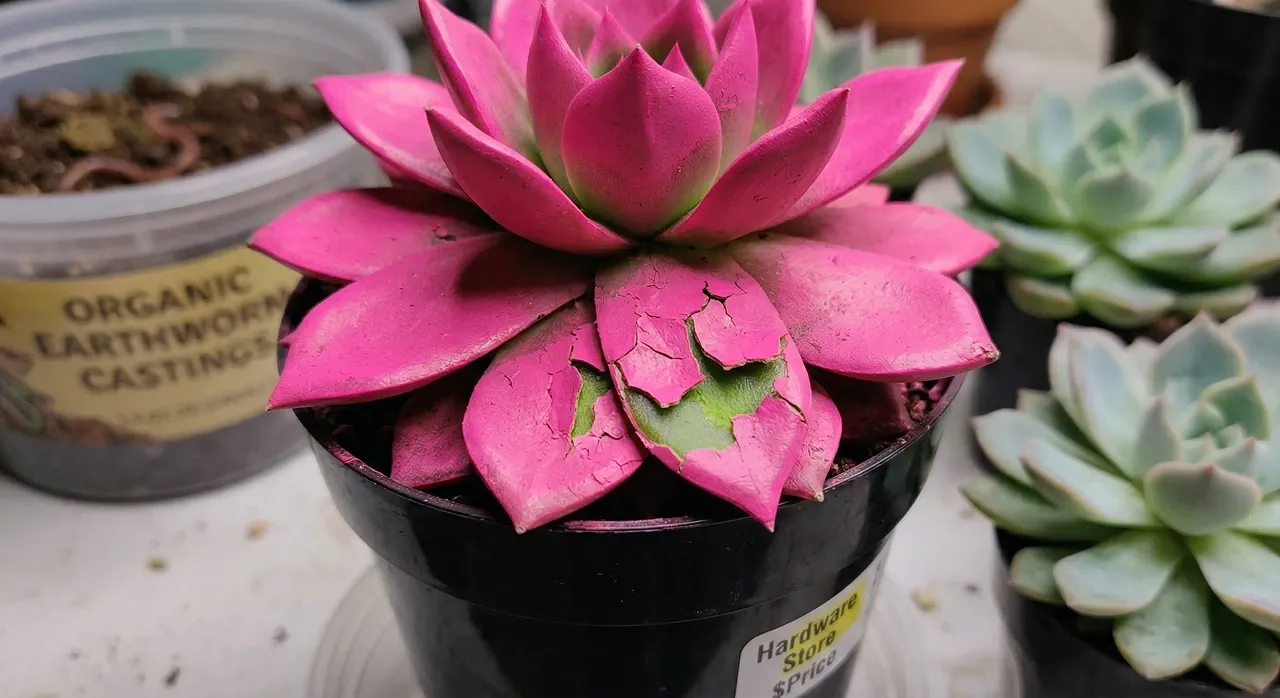
Painted and dyed succulents present the same problem in a more obvious form. Bright pink, blue, or purple Echeveria sold in hardware stores get their colour from spray paint, not selective breeding, and the coating flakes directly into substrate as it cracks off the leaves.
Safe Live Plants That Actually Survive the Heat
The enclosure runs hot, bright, and dry. Ambient temperatures on the warm side regularly sit above 90°F, the basking surface reaches 100–110°F, and UVB runs ten to twelve hours a day. Most tropical houseplants fail quickly under these conditions. The species below are chosen because they tolerate this environment, not only because they happen to be non-toxic.
Succulents for the Cool End and Mid-Tank
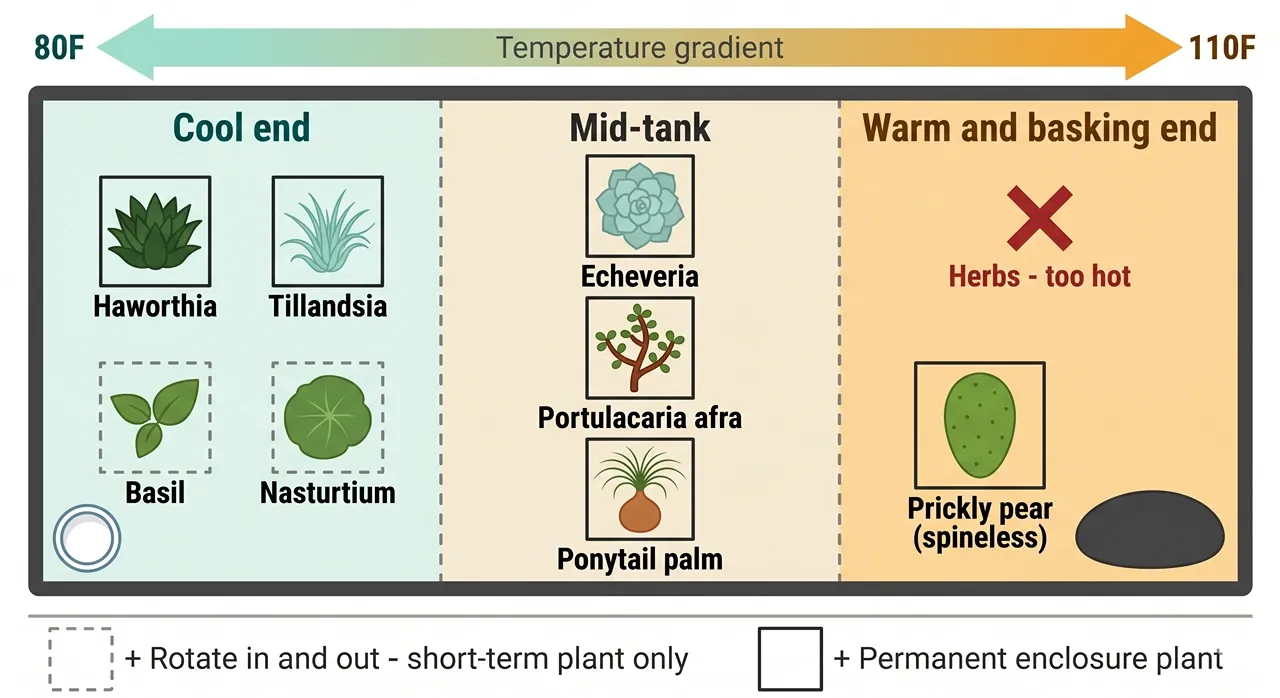
Haworthia is one of the most reliably safe and durable choices. The thick-leaved rosettes stay compact, grow slowly, and tolerate intense UVB without bleaching. The plant is non-toxic and edible, though most dragons ignore it entirely. Position Haworthia on the cool end or mid-tank — surface temperatures consistently above 100°F will stress it even though it is a desert-adapted species.
Echeveria works on a similar principle. The symmetrical rosette shape stays clean in a setup, the plant is entirely non-toxic, and it handles low ambient humidity without complaint. Position it away from the direct basking spot. The ambient heat from a properly calibrated basking zone and heat gradient is tolerable; direct placement under a halogen basking bulb at 110°F surface temperature is not.
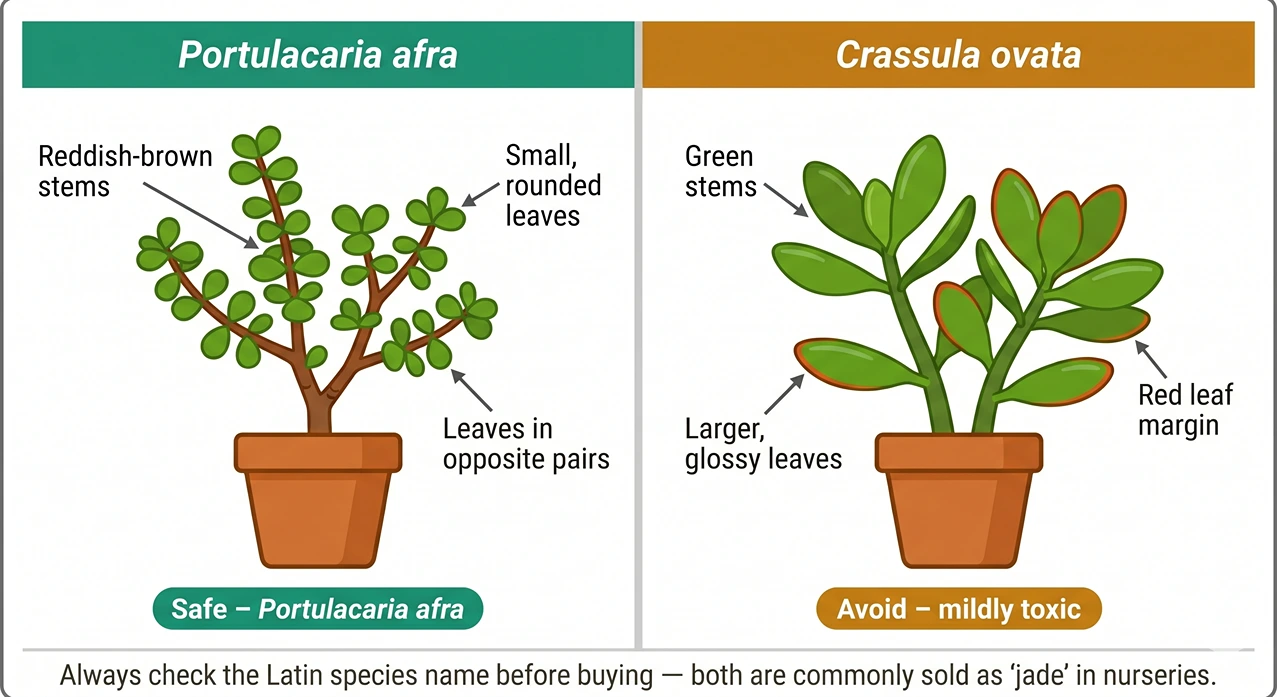
Portulacaria afra, commonly sold as Dwarf Jade, is one of the more useful enclosure plants available. Small fleshy leaves on red-brown stems, slow growth, and it handles repeated grazing without collapsing. Dragons can eat it safely and occasionally will. It tolerates 90–95°F ambient temperatures comfortably and does best in a fast-draining succulent mix.
One point worth being specific about: Portulacaria afra is safe. The standard jade plant, Crassula ovata, is mildly toxic and is consistently confused with it at nurseries. Both are sometimes labelled simply “jade plant.” Always verify the Latin species name before buying. If the tag gives no species name, do not buy it.
Aloe vera survives beardie conditions well and is non-toxic in small quantities, but large amounts act as a mild laxative. A dragon that occasionally nibbles an aloe leaf is not at risk. One that eats an entire plant will likely experience loose stools for a day or two. Treat it as incidental grazing rather than a deliberate food source. In terms of the bearded dragon food list and nutritional balance, aloe contributes very little — it is more useful as enclosure structure than supplementary feeding.
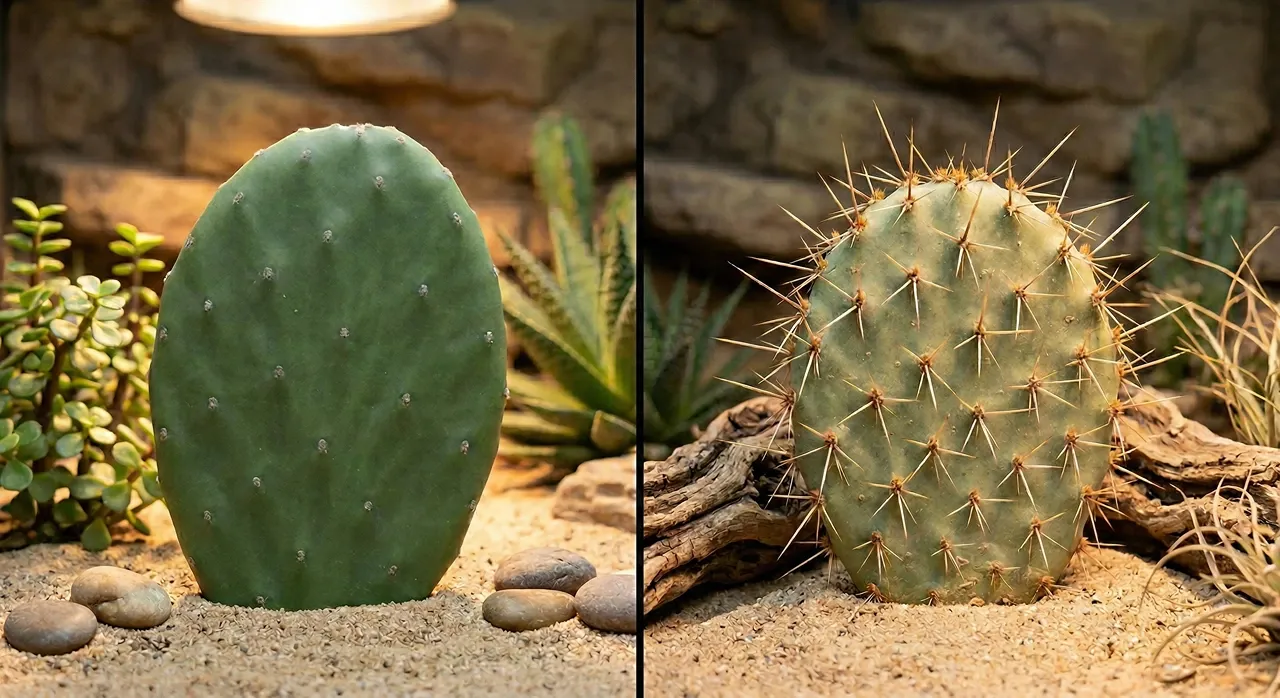
Prickly pear cactus (Opuntia, spineless variety) is the most heat-tolerant option on this list. It grows in full desert sun and handles proximity to the basking zone that would kill most other species. The pads are edible and nutritious, with a good calcium content and high moisture. Buy a confirmed spineless variety, but also run your fingers slowly across the areoles before putting it in the enclosure. Some labelled-spineless prickly pear still carries glochids: tiny barbed bristles that are nearly invisible and extremely difficult to remove from skin or from inside a dragon’s mouth. Any resistance when you run your finger across the surface means return it.
Herbs Worth Growing as Rotating Snack Plants
Herbs do not last long in a hot, dry enclosure, but that is not a problem if you treat them as rotating snack plants rather than permanent fixtures. A potted herb goes in, gets grazed over several days, comes out for recovery, and rotates back in once it has regrown.
Basil is fully edible for bearded dragons and grows quickly in bright light. Above 90°F for extended periods it deteriorates, but on the cool end it can last a week to two before needing a rest. Basil is phosphorus-heavy, so occasional grazing is the right approach rather than making it the primary plant in rotation.
Nasturtium is one of the better options available. The entire plant is edible — flowers, leaves, and stems — and it grows fast enough that a pot cycling in from outdoors keeps supply going indefinitely. It handles heat better than most herbs, though the cool end still extends its useful enclosure life noticeably compared to the warm side.
Hibiscus (Hibiscus rosa-sinensis) works both as an in-enclosure plant and as a supervised out-of-enclosure foraging option. The flowers and leaves are edible and most dragons eat them enthusiastically. A hibiscus plant inside the enclosure will get stripped quickly, so plan for rotation rather than expecting it to function as permanent decor.
Air Plants, Palms, and Slower-Growing Species
Tillandsia air plants require no soil, attach easily to wood or cork bark, and need only occasional misting every two to three weeks. They are non-toxic and most dragons ignore them entirely, which makes them reliable low-maintenance permanent decor. They cope well in ambient temperatures up to about 90°F. On the cool end with good airflow, they last indefinitely.
Ponytail palm (Beaucarnea recurvata) is desert-adapted and handles the temperature and low humidity of a beardie enclosure better than most larger plants. It grows slowly, stays compact for years, and is non-toxic. The bulbous base stores water — how it survives extended dry periods in the wild. In a larger enclosure it works well as a visual anchor and provides some surface area for climbing.
The table below summarises each species by edibility, best position, and expected enclosure lifespan.
| Plant | Safe to eat? | Best position | Enclosure lifespan |
|---|---|---|---|
| Haworthia | Yes | Cool end / mid-tank | Years with minimal care |
| Echeveria | Yes | Mid-tank | Years if not near basking end |
| Portulacaria afra | Yes | Mid to warm side | Years; handles regular grazing |
| Aloe vera | Small amounts only | Warm side | Years |
| Prickly pear (spineless) | Yes | Any zone | Indefinite |
| Tillandsia | Yes (rarely eaten) | Cool end | Indefinite |
| Ponytail palm | Yes | Cool to mid-tank | Years |
| Basil | Yes (occasional only) | Cool end | 1–2 weeks per rotation |
| Nasturtium | Yes (whole plant) | Cool end | 1–2 weeks per rotation |
| Hibiscus | Yes (flowers and leaves) | Cool to mid-tank | Days before needing rotation |
The Toxic Look-Alikes Most Plant Lists Miss
The plants below appear in nurseries regularly and are occasionally recommended in reptile forums without the relevant warnings. Knowing them by Latin name and on sight prevents a mistake that can take days to show up as a problem.
Crassula ovata is mildly toxic and is consistently confused with Portulacaria afra at the point of sale. Both have small fleshy leaves on a woody stem. The difference: Portulacaria afra has reddish stems and smaller, rounder leaves; Crassula ovata has green stems and larger, brighter-green leaves. If the nursery tag says only “jade” with no Latin name, skip it.
Euphorbia species are a serious hazard. Many euphorbias look nearly identical to cacti and succulents and are sold widely in nursery cactus sections. Pencil cactus (Euphorbia tirucalli) and firesticks are two of the most common examples. All euphorbias produce a milky white latex sap that is toxic, caustic to skin and mucous membranes, and dangerous if ingested. The rule is simple: any cut stem that bleeds milky white sap is a euphorbia. It does not enter the enclosure.
Sago palm (Cycas revoluta) looks vaguely like a small ornamental palm and turns up in mixed garden displays and home decor sections. It is highly toxic to all vertebrates, capable of causing liver failure. Recognising it by sight matters because it appears in the same retail spaces where beardie keepers shop for decor plants.
Pothos (Epipremnum aureum) contains calcium oxalate crystals that cause mouth irritation and GI distress if eaten. It is commonly recommended in bioactive setups for its hardiness, and it does handle lower-light positions well. The only safe approach is placing it where a dragon physically cannot reach and graze. If yours is a committed grazer, leave pothos out of the setup entirely.
Where to Position Plants in the Enclosure
Temperature gradient matters for plant survival just as it does for thermoregulation. The basking surface, where infrared heat concentrates at 100–115°F, is hostile to almost every species on this list. Direct placement under a halogen basking bulb subjects a plant to heat intensity that exceeds what even drought-tolerant succulents comfortably handle over an extended period.
The practical positioning rule: Haworthia, Echeveria, and Portulacaria afra belong on the cool end or mid-tank. Prickly pear cactus is the only species here that can sit closer to the warm zone without damage. Tillandsia and ponytail palm go wherever the layout needs visual structure, but out of direct heat focus. Herbs do best at the cool end, where they deteriorate slowest.
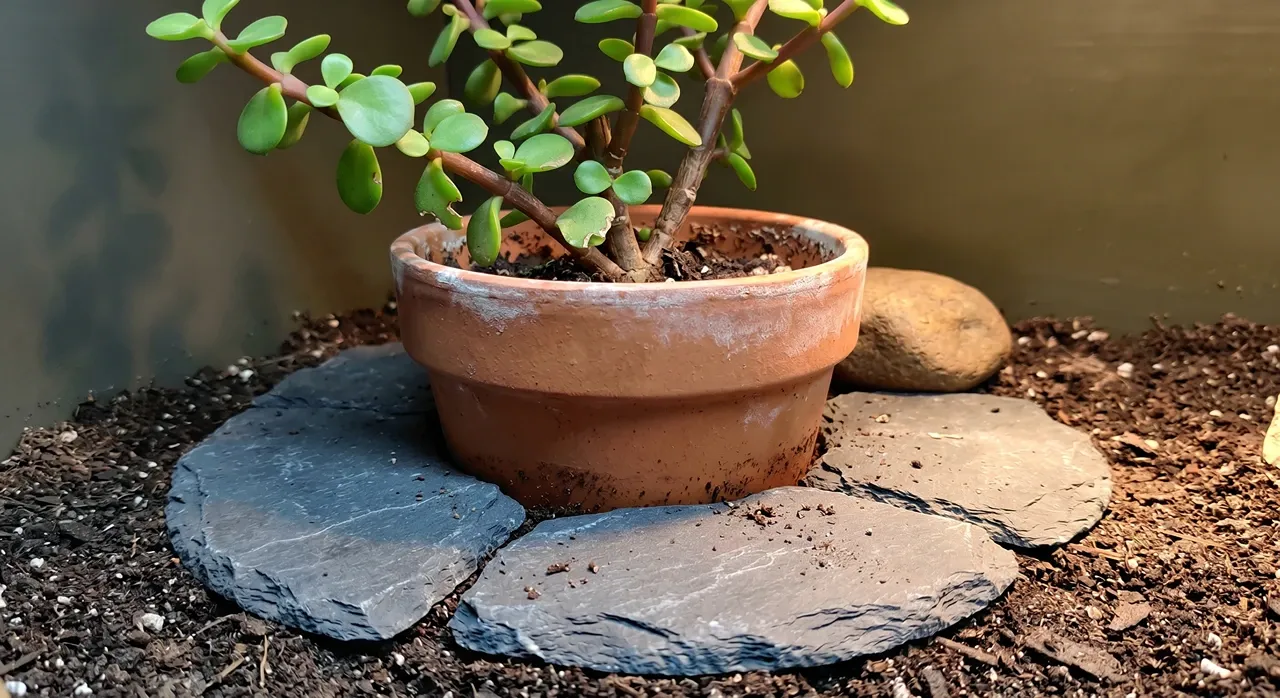
Pot stability deserves attention before a plant goes in. Bearded dragons dig, and they move through their enclosure with more force than their size suggests. A lightweight plastic pot tipped by a curious dragon, or potting soil spilled across the enclosure floor, both create problems. Use terracotta pots — they are heavier and breathable — partially buried in the substrate to lower their centre of gravity, or wedged securely between rocks and decor so they cannot tip. The loose material around plant pots is an ingestion risk if a dragon disturbs it during a dig, so how you manage that transition in the substrate matters.
Also keep feeding and basking lanes clear. A cluttered enclosure layout that forces a dragon to navigate around pots to reach its basking spot creates thermoregulation stress. Knowing the actual temperature gradient across the full enclosure helps place moisture-sensitive plants correctly — you need the cool-end thermometer reading, not only the basking surface temperature, to know which zone a particular species can tolerate.
How Plants Affect Humidity in a Beardie Setup
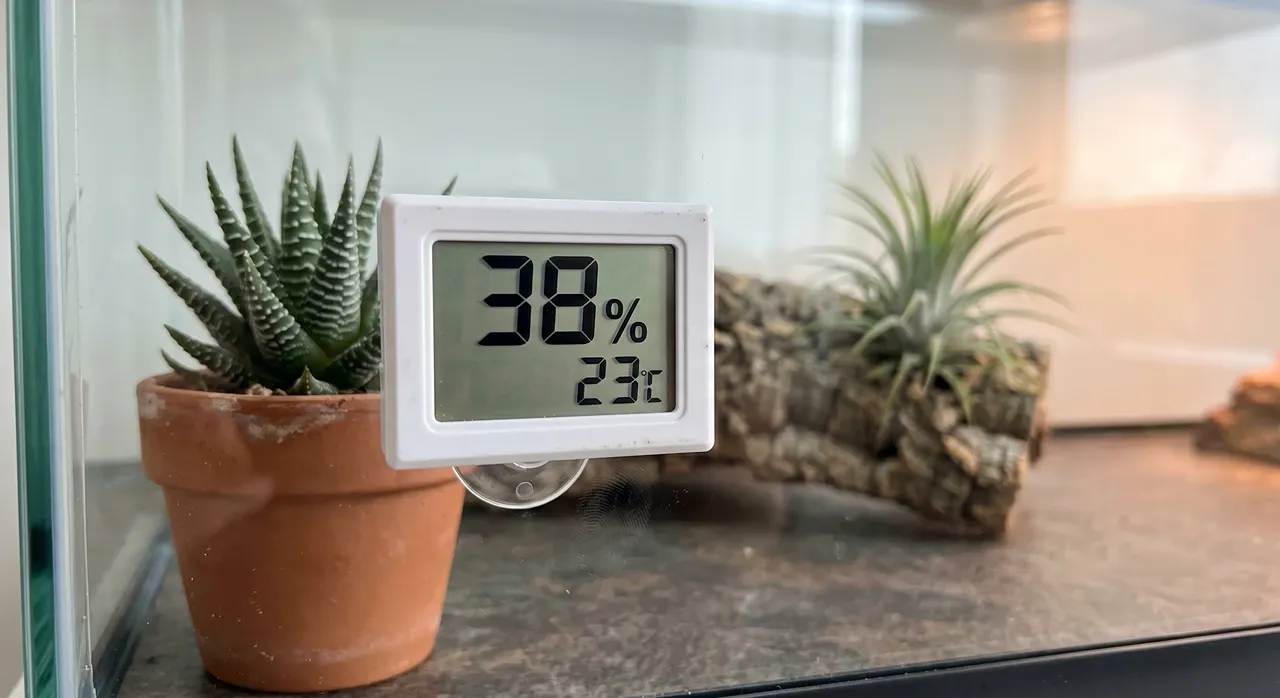
Live plants transpire moisture. In a sealed or semi-sealed enclosure, this raises ambient humidity in ways that often do not show up immediately as an obvious problem. Bearded dragons need ambient humidity in the 30–40% range. Consistent readings above 50%, especially on the warm end, increase the risk of respiratory infection, which can develop slowly and is easy to misattribute to other causes.
Plants on the cool end in breathable terracotta pots contribute far less humidity than the same plants in sealed containers near the warm side. Watering in the evening, after the basking light goes off, gives moisture time to evaporate overnight before the enclosure heats up again the following morning. This one timing adjustment makes a measurable difference in daily humidity peaks.
If readings consistently sit above 45%, reduce plant density, improve top ventilation, or move plants outside the enclosure for supervised grazing sessions instead. Dragons that are reluctant to drink through conventional water sources do absorb some moisture from fresh vegetation, so the enrichment benefit is real. Enclosure humidity management takes priority, though, and rotating plants in and out solves both problems at once.
Questions About Live Plants in Beardie Enclosures
Can bearded dragons eat plants growing in their enclosure?
Yes, provided the species is confirmed non-toxic and the plant has been quarantined for pesticide residue before going in. Edible species including nasturtium, hibiscus, Portulacaria afra, and prickly pear pads can be grazed directly without issue. Non-toxic but non-edible species like Tillandsia cause no harm if nibbled occasionally. The quarantine step matters more than the species list.
How long do live plants last in a bearded dragon setup?
It depends on species and placement. Haworthia, Portulacaria afra, ponytail palm, and Tillandsia can survive for years with minimal maintenance. Herbs like basil and nasturtium last one to two weeks before needing recovery time outdoors. Hibiscus gets grazed down quickly and works best as a rotating foraging plant rather than a permanent fixture. Cool-end positioning extends lifespan across all species.
Is aloe vera safe for bearded dragons?
Aloe vera is non-toxic to bearded dragons in small amounts, but large quantities act as a mild laxative. A dragon that nibbles an aloe leaf occasionally is not at risk. One that eats an entire plant will likely have loose stools for a day or two. Treat it as incidental grazing and do not use it deliberately as a food source.
What plants are toxic to bearded dragons?
Sago palm is highly toxic and can cause liver failure. All Euphorbia species, including pencil cactus and firesticks, contain toxic latex sap. Crassula ovata, the standard jade plant, is mildly toxic and often confused with the safe Portulacaria afra. Pothos causes mouth irritation due to calcium oxalate crystals. Any nursery plant without confirmed pesticide-free origin carries additional risk regardless of species.
Do live plants raise humidity too much for bearded dragons?
They can, particularly in enclosed vivariums with limited top ventilation. One or two drought-tolerant succulents in a well-ventilated enclosure make very little difference to ambient humidity. Multiple plants positioned at the warm end can push readings above 45% consistently, which increases respiratory health risk over time. Monitor with a digital hygrometer and reduce plant density if readings climb above 45%.
A Practical Starting Point for Live Plants
Start with one plant rather than replanting the full enclosure at once. A Haworthia or Tillandsia on the cool end tells you quickly how your ventilation handles added moisture, how your dragon responds to new enclosure features, and whether your lighting setup suits that species. Add more once you have seen how one plant behaves over two to three weeks.
If you want to offer live plants without committing to permanent enclosure specimens, grow herbs and nasturtium in pots outdoors and bring them in for short supervised grazing sessions. The plants recover fully under natural conditions. The dragon gets enrichment and fresh plant moisture without the ambient humidity implications of plants left in permanently.
The quarantine step and the toxic look-alike check each take around ten minutes of attention. Skip either and you are gambling on something that can take weeks to show up as a health problem. Get both right and live plants become a worthwhile addition to any beardie setup. The dragon benefits from the foraging opportunity, and the keeper gets an enclosure worth looking at.
55+ species • Latin names • edibility and keeper guidance
Written by
Sarah ArdleySarah has kept bearded dragons for over ten years. She founded Beardie Husbandry after discovering that most mainstream care advice — including what she followed with her first dragon — was doing more harm than good. Every article on this site is grounded in veterinary research and real keeper experience.