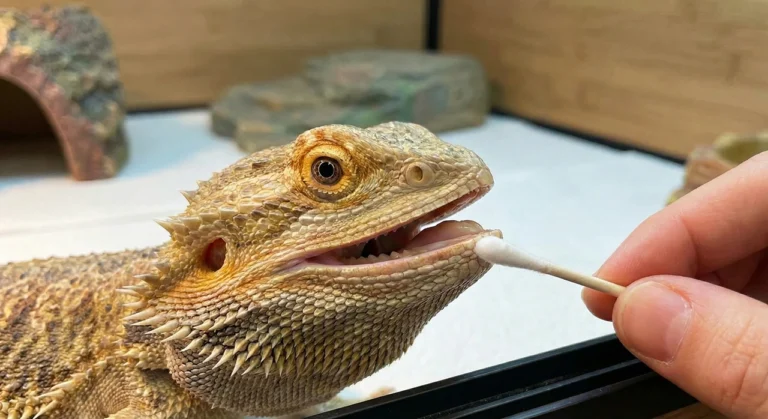

Bearded Dragon Toys & Enrichment: Safe Out-of-Tank Play
A bored dragon scratches at the glass at the same corner every afternoon, paces in tight circles before basking, or sits staring at the same spot for hours. Most owners looking for bearded dragon toys are trying to fix exactly that. The good news is dragons respond well to enrichment. The harder news is that half the advice online promotes activities that stress them out rather than engage them.
This guide separates real enrichment from anthropomorphic play. Some things dragons genuinely enjoy. Some things tire them out in a bad way. And a few popular “toys” should never come near your dragon at all.
What Actually Counts as Enrichment
Enrichment is anything that lets a captive dragon perform a behaviour it would perform in the wild. Hunting, climbing, digging, basking in different spots, exploring new terrain, and problem-solving all count. Sitting on a shoulder watching TV does not count, even if the dragon tolerates it.
The distinction matters because bored dragons often get mistaken for content ones. A dragon that holds still for hours is not relaxed. A dragon that paces the glass or digs obsessively at one corner is asking for something its current environment does not provide. That repetitive glass surfing behaviour is the single clearest signal that enrichment is lacking.
Good enrichment produces engagement followed by rest. The dragon works for something, gets it, and then settles. Bad enrichment produces frantic activity with no payoff, or stress behaviours dressed up as curiosity.
In-Tank Enrichment That Works
The enclosure itself is the easiest place to add enrichment, because the dragon gets to engage with it on its own terms without the stress of a novel environment.
Climbing and Basking Variety
Dragons are semi-arboreal. Multiple branches at different heights, reaching the basking zone, create natural movement throughout the day. One branch under the heat lamp is not enrichment. Two branches at different angles with a secondary basking ledge is.
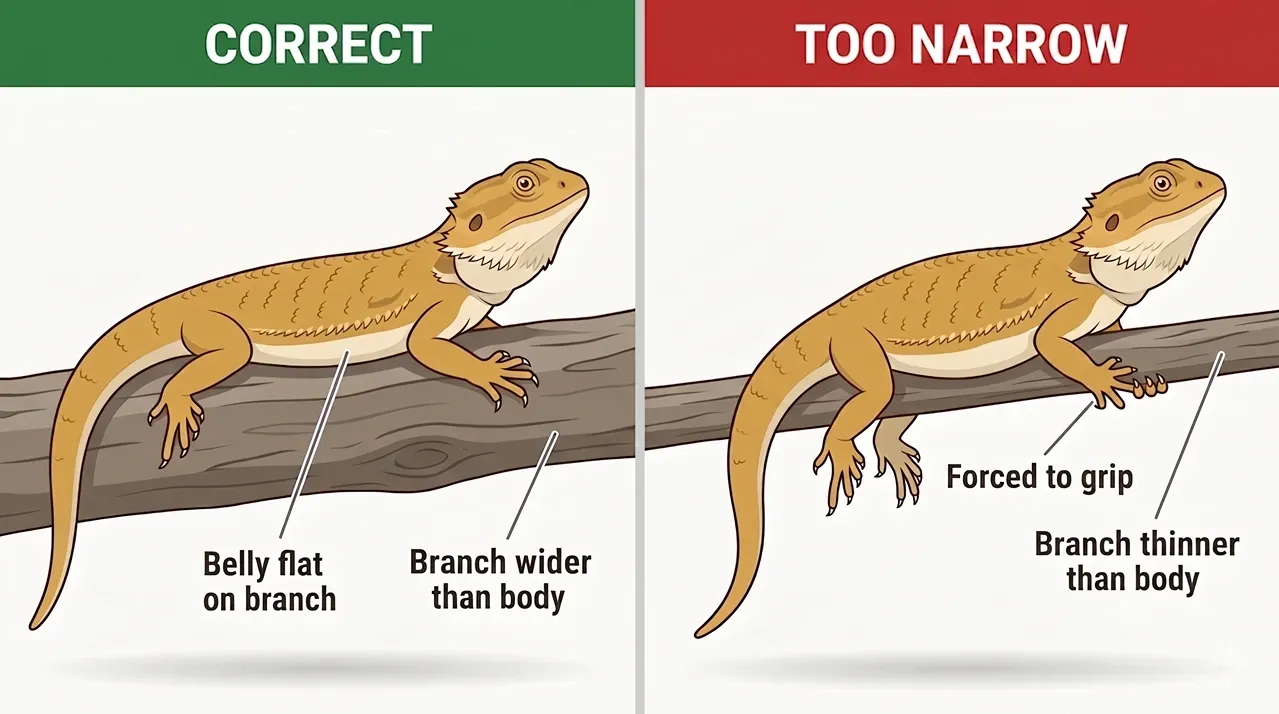
The branch the dragon rests on matters as much as the branches it climbs. A basking branch has to be wide enough for the ventral surface to lie flat against it, because flat contact is how dragons actually pull heat into the body. A narrow round branch becomes a climbing route, not a basking spot.
Rotate the layout every four to six weeks. Changing a single element forces the dragon to re-map the space, which is mental exercise. Do not rearrange weekly, because constant change prevents the dragon from settling into a territory pattern.
Foraging and Puzzle Feeding
Hand-fed or bowl-fed dragons lose the hunting drive that makes feeding time exciting. Scatter feeding, where you release a few dubia roaches into the enclosure and let the dragon track them, is the single best behavioural enrichment tool available.
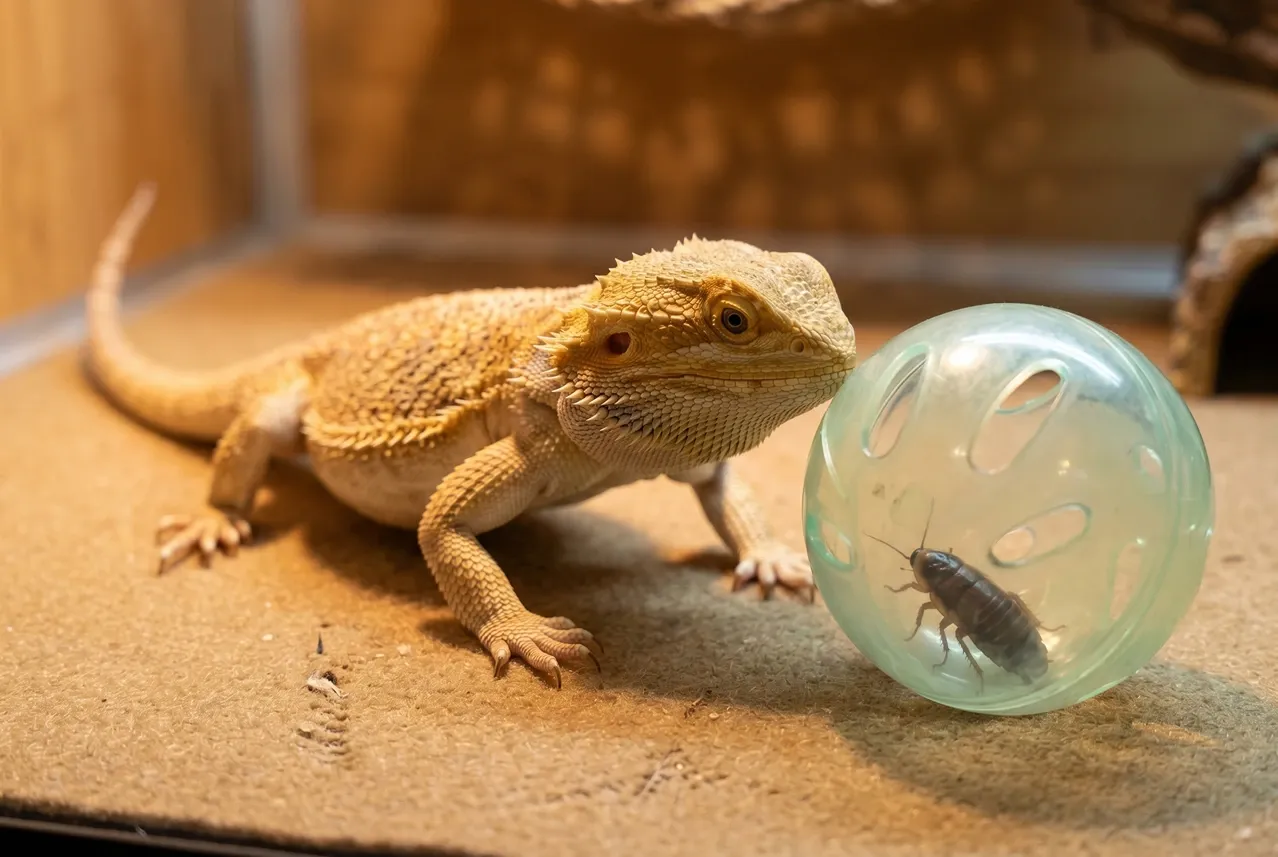
A slotted cat ball with a roach inside works the same way. The dragon pushes the ball around, the roach eventually falls out, and the chase is on. Keep the ball larger than the dragon’s head and remove it after the session so no feeder escapes into substrate.
Puzzle feeders designed for small dogs work well for adult dragons. Avoid anything with small removable parts or soft foam that a dragon might bite through and swallow.
Digging Substrate
A dig box filled with clean play sand, coco fibre, or a sand-soil mix gives gravid females a place to lay and gives every dragon a natural outlet for digging. Place it in a cooler corner away from food. For full terrain enrichment, a properly built bioactive enclosure replaces the need for a separate dig box entirely.
Out-of-Tank Play Without the Mistakes
Out-of-tank time is where most owners get into trouble. Done right, it provides exercise, novel stimuli, and real bonding. Done wrong, it chills the dragon, stresses it, or gets it lost in your couch for three days.
Get the Temperature Right First
A bearded dragon away from its basking lamp starts cooling immediately. Below about 75°F their metabolism slows, they become lethargic, and well-meaning owners mistake lethargy for calmness. A dragon lying still on your chest for 30 minutes is often cold, not bonded.
Room temperature for out-of-tank play should be at least 75°F, ideally 78–82°F. Sessions longer than 20 minutes need a heat source nearby, such as a ceramic bulb aimed at a designated play zone. Watch for darkening along the back and sides. That is the first sign they are dropping temperature.
Safe Play Areas
A dragon-proofed room means no cables, no gaps behind furniture, no other pets, no house plants within reach, and no open doors. Dragons are faster than people expect when motivated, and they squeeze into spaces you would not believe possible. Block off one room, put down a towel or play mat, and keep the session contained.
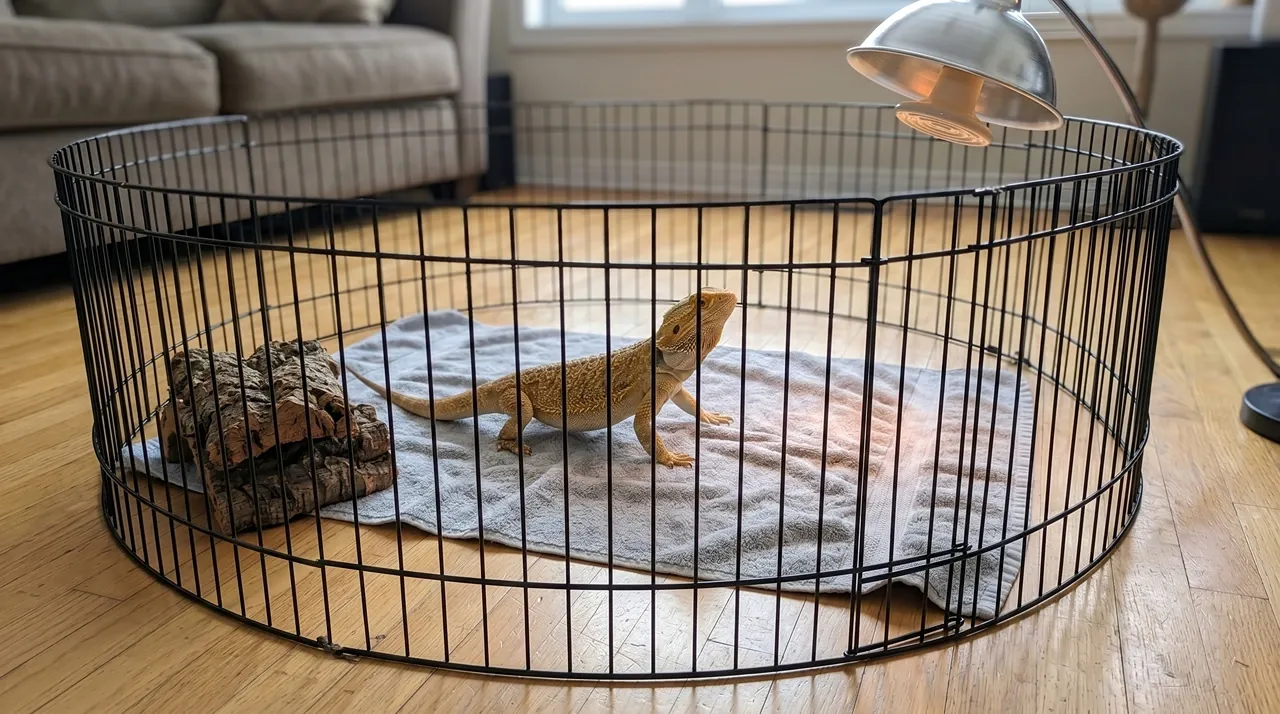
Playpens sold for puppies work well. An exercise pen about four feet across gives a dragon a walking circuit without letting them disappear under the sofa. Put a heat lamp over one corner for longer sessions.
Obstacle Courses
A simple obstacle course keeps a dragon engaged for ten to fifteen minutes of active movement. Stack a few books as a climbing block. Arrange tubes, small ramps, and a shallow basket as stations. Encourage movement with tweezer-fed treats rather than pushing the dragon along.
Vary the course each session. Dragons learn routes quickly and lose interest in repetition.
Bearded Dragon Toys Worth Buying
Commercial bearded dragon toys are a small category. Most “enrichment toys” on pet store shelves are overpriced pieces of plastic. A handful are genuinely useful.
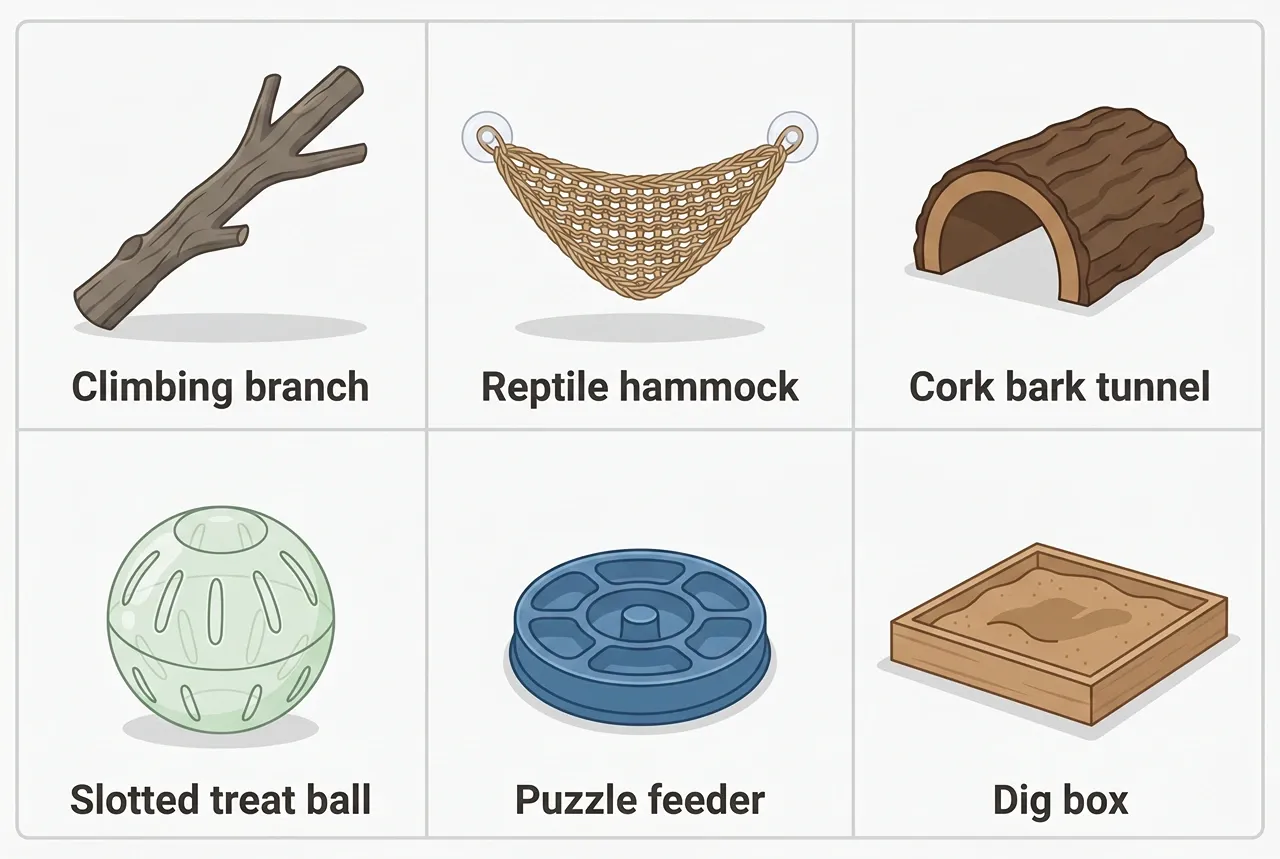
- Slotted treat balls. Plastic cat-sized balls with openings big enough for a roach to crawl out. Used supervised, under fifteen minutes per session.
- Reptile hammocks. A seagrass or mesh hammock secured to tank walls gives a climbing destination and a secondary basking ledge. Check weekly for frayed fibres.
- Cork bark tunnels and half-logs. Natural climbing and hiding surfaces that double as humidity retreats during shed.
- Puzzle feeders. Small-dog puzzle feeders work if the compartments fit whole feeder insects. Soft rubber puzzle feeders get chewed apart.
- Cat tunnels. Crinkle tunnels give a safe exploration target during out-of-tank time. Keep an eye out for snagged claws.
Toys and Activities to Skip
Several popular “enrichment” ideas come up repeatedly in owner groups and blog posts. Most of them either stress the dragon or create real safety risks.
| Toy or Activity | Why to Skip It |
|---|---|
| Laser pointers | Dragons chase with no catch payoff, creating frustration and stress. Same welfare issue recognised in cats. |
| Mirrors (extended use) | Most dragons see a rival and black-beard, head-bob, or flatten. Under 30 seconds only, and stop if beard darkens. |
| Soft plush toys | Fibres and stuffing are ingestion hazards if the dragon bites down. Not worth the photo opportunity. |
| Ball pits | Plastic balls are choking-size for smaller dragons and create panic response when movement is unpredictable. |
| Harnesses on concrete | Ventral scales abrade fast. Walking a dragon on rough surfaces damages skin within minutes. |
| Marbles or small balls | Impaction and choking risk. Anything the dragon can fit in its mouth is a hazard. |
| Scented bath toys | Rubber ducks with fragrance residue leach chemicals during bathing. Use plain silicone or nothing. |
What About TV and Screens
Dragons do track movement on screens. That does not mean they enjoy it. Rapid cuts, flashing lights, and prolonged screen exposure can overstimulate a prey-drive species. Short exposure is fine. Propping the dragon in front of two hours of action film is not enrichment.
What About Outdoor Time
Natural sunlight is genuinely beneficial for a few supervised minutes at a time. Outdoor sessions need full supervision, a secure mesh playpen, and ambient temperatures above 75°F. Birds of prey take small reptiles routinely in some regions, and no dragon should ever be left unattended outside.
Avoid lawns treated with pesticides or fertiliser within the past two weeks. Dragons lick surfaces they walk on. Chemical exposure through the tongue and ventral scales is a documented poisoning pathway.
Reading Stress vs Curiosity
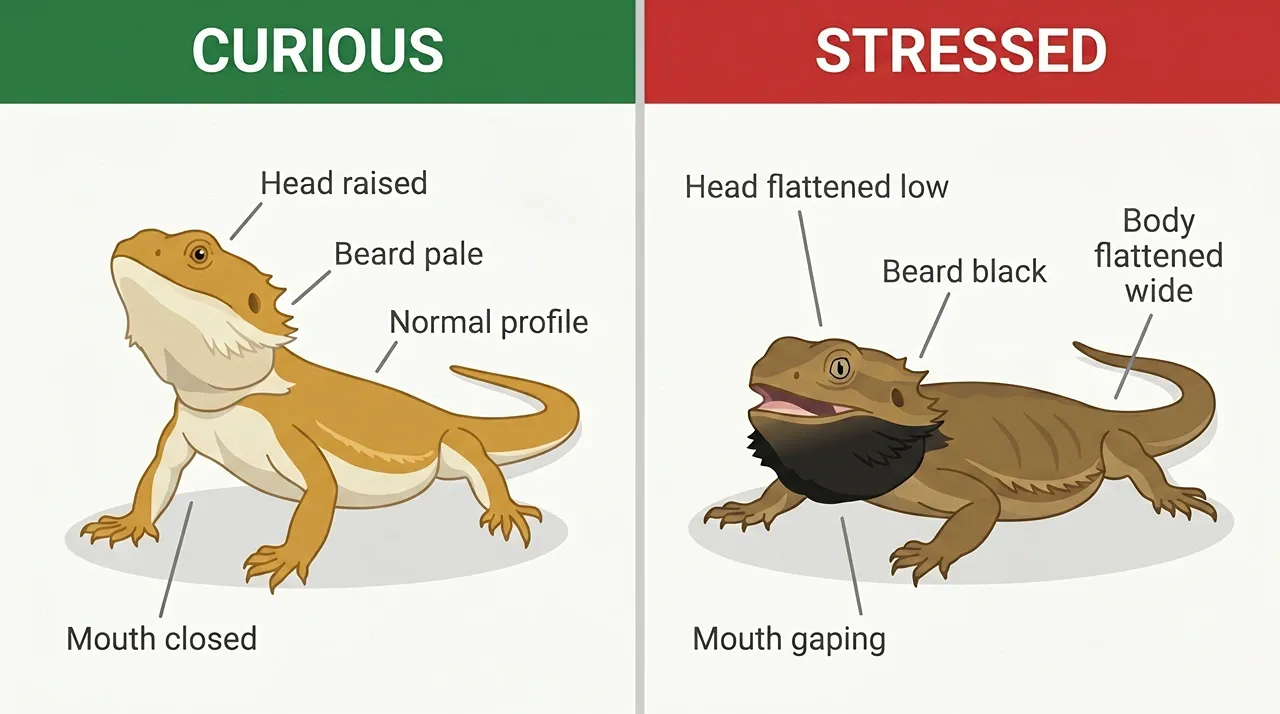
The single most useful skill for enrichment is knowing when your dragon is engaged versus when it is stressed. The behaviours look similar at a glance.
| Behaviour | Curious and Engaged | Stressed |
|---|---|---|
| Head position | Raised, tracking the object | Flattened low to surface |
| Beard colour | Natural buff or tan | Black or dark grey |
| Body shape | Normal rounded profile | Flattened wide, ribs visible |
| Movement | Deliberate, pauses to investigate | Fast scramble or frozen |
| Mouth | Closed or slightly open | Gaping repeatedly out of basking zone |
| Response to approach | Walks toward or stays relaxed | Bolts, hisses, or wedges into a corner |
If two or more stress signals show up, end the session. A full breakdown of signals worth memorising is covered in the guide to bearded dragon body language, which every new keeper should read before their first real play session.
The hardest signal to read is the one that looks like calmness. A dragon that has gone completely still with its beard darkening slightly is not relaxing. It is freezing in place because it has run out of options. Ending the session at that point prevents a bad association forming around the activity.
Enrichment by Age
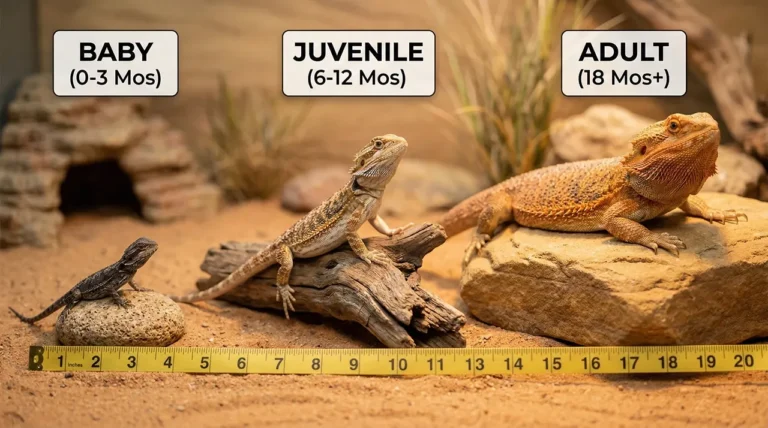
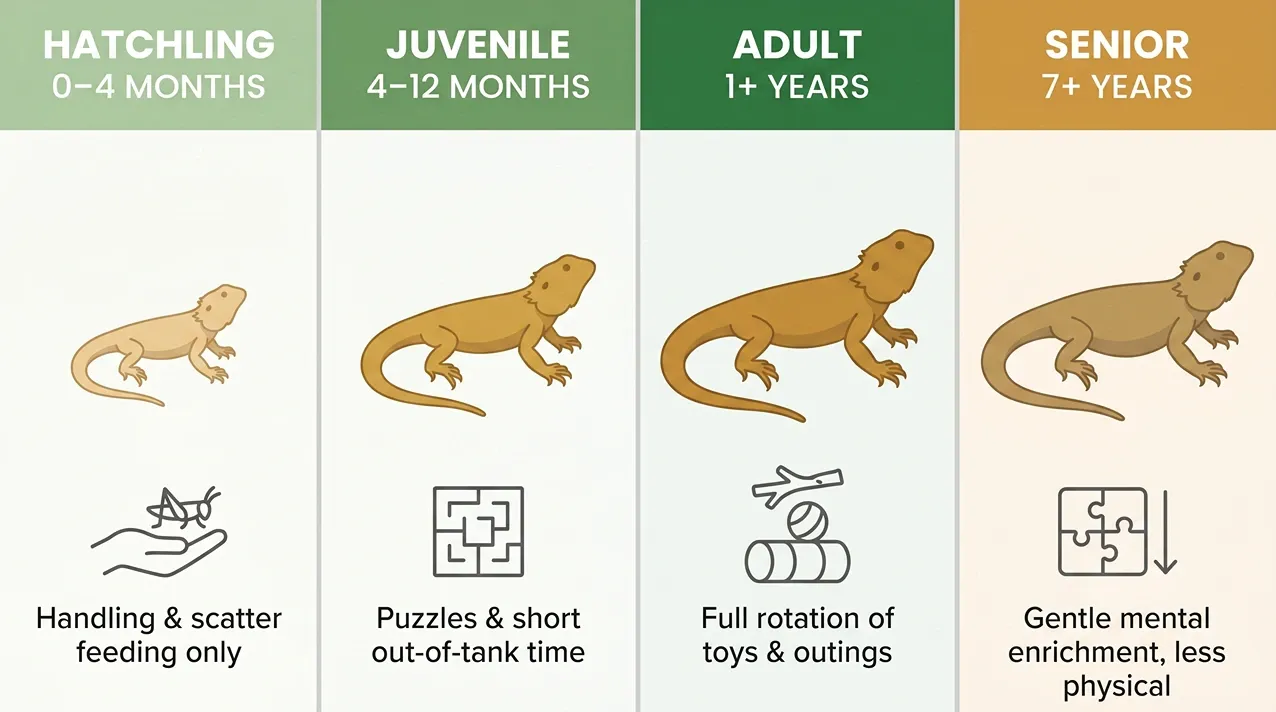
A three-month-old juvenile and a six-year-old adult need very different enrichment. Applying adult-level stimulation to a hatchling backfires almost every time.
Hatchlings and Young Juveniles
Skip the toys. At this age the priority is building handling trust and letting the dragon settle into its enclosure. Short daily handling sessions of five to ten minutes are enough. Scatter-feed live insects in the enclosure for hunting enrichment. That is the whole enrichment programme.
Older Juveniles Four to Twelve Months
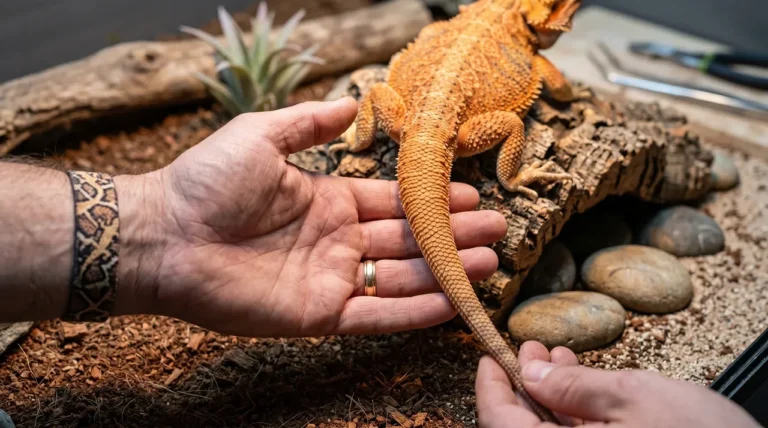
Start introducing obstacle courses, supervised out-of-tank exploration in a small pen, and puzzle feeders. Keep sessions under fifteen minutes. Handling should be reliable by now, which is the foundation for everything else. The proper handling technique determines how much real enrichment you can offer later.
Adults One Year Plus
Full enrichment programme. Rotate toys, rearrange enclosure monthly, offer supervised outdoor time in warm weather, introduce new climbing structures. Adults benefit most from variety and can handle longer sessions of 20 to 30 minutes.
Seniors Seven Years and Older
Scale back physical demands and prioritise mental enrichment. Puzzle feeders and gentle scatter feeding over an obstacle course. Keep sessions under 15 minutes and watch closely for fatigue.
How Often to Offer Enrichment
Daily is not necessary. Over-stimulation is a real problem and leads to stress behaviours identical to under-stimulation.
- In-tank enrichment. Rotate elements every 4 to 6 weeks. Scatter feed two or three times per week instead of bowl feeding.
- Out-of-tank play. Three to four times per week for adults, maximum 20 minutes per session. Less for juveniles.
- New toy introductions. One new item at a time, observed for stress response before committing to it.
- Outdoor sessions. Weekly during warm months, never during cold snaps or wind.
A dragon that gets structured enrichment four or five times a week and a well-designed enclosure for the other days is doing better than 95% of captive bearded dragons.
Why Enrichment Matters for Health
Enrichment is not just behavioural fluff. Dragons that get regular exercise and mental stimulation have lower rates of obesity and fatty liver disease, better muscle tone, and less stereotypic behaviour.
The American Veterinary Medical Association classifies environmental enrichment as part of the five domains of animal welfare alongside nutrition, environment, health, and behaviour. It is not optional husbandry.
Dragons kept in sterile enclosures with no enrichment frequently develop exactly the problems keepers then search online for: refusal to eat, constant glass surfing, aggression, and lethargy. Half the time the answer is not a vet visit. It is a branch, a dig box, and ten minutes of scatter feeding three times a week.
Bonding Activities That Actually Work
The dragons that tolerate handling best are the ones that associate their keeper with food, warmth, and predictable gentle touch. Enrichment is one of the best vehicles for that association.
Hand-feeding treats during out-of-tank sessions builds positive association fast. Tweezers let you offer higher-value foods like hornworms or small pieces of fruit without a bite risk. Quiet handling while you read, with the dragon on a heated lap pad at 85°F, builds tolerance over weeks. And short supervised explorations of a contained space let the dragon experience novel environments with you as the constant.
Outdoor excursions deserve a specific mention because they overlap with broader travel skills. The routines used for safe outdoor exploration and transport apply equally to backyard enrichment sessions.
Frequently Asked Questions
Do bearded dragons actually get bored
Yes. Captive dragons without enrichment develop stereotypic behaviours like glass surfing, obsessive pacing, and food refusal. Wild dragons travel significant distances daily and hunt actively, so a static enclosure falls short of their behavioural needs.
Are laser pointers safe for bearded dragons
No. Dragons chase the dot but never catch it, which creates frustration identical to the welfare issue documented in cats. They also trigger prey drive without a real prey reward, which stresses them over time.
How long can a bearded dragon be out of its tank
Healthy adults tolerate 20 to 30 minutes at room temperatures above 75°F. Longer sessions need a heat source nearby, or the dragon starts cooling. Juveniles should stay out no longer than 10 to 15 minutes.
Can bearded dragons play with other pets
No. Cats, dogs, and ferrets all carry bacteria harmful to reptiles, and any predator species can injure or kill a dragon in a single bite. Supervised coexistence in the same room is the limit, and even that requires total attention.
Do bearded dragons like being petted
Some tolerate gentle strokes along the back and top of the head once they trust their keeper. Many never enjoy it and simply accept it. Any flattening, darkening, or puffing during petting means stop.
Your Enrichment Starter Plan
- Add one new in-tank climbing element this week, such as a secondary branch or a cork bark slab at a different angle.
- Switch one bowl-fed insect meal to a scatter feed. Release four or five dubia roaches into the enclosure and let your dragon hunt them.
- Set up a dig box in a cooler corner using clean play sand or coco fibre.
- Plan one out-of-tank session this week. Pick a single room, dragon-proof it, and keep the session to 15 minutes at 78°F or warmer.
- Buy one slotted cat treat ball and one reptile hammock. Total cost under 20 dollars.
- Rotate the enclosure layout in four weeks. Move two decor items, leave the rest.
- Track stress signals during every session for the first month. Adjust what works and drop what does not.
The dragons that thrive in captivity are the ones whose keepers treat enrichment as routine husbandry, not as a weekend treat.
Written by
Sarah ArdleySarah has kept bearded dragons for over ten years. She founded Beardie Husbandry after discovering that most mainstream care advice — including what she followed with her first dragon — was doing more harm than good. Every article on this site is grounded in veterinary research and real keeper experience.