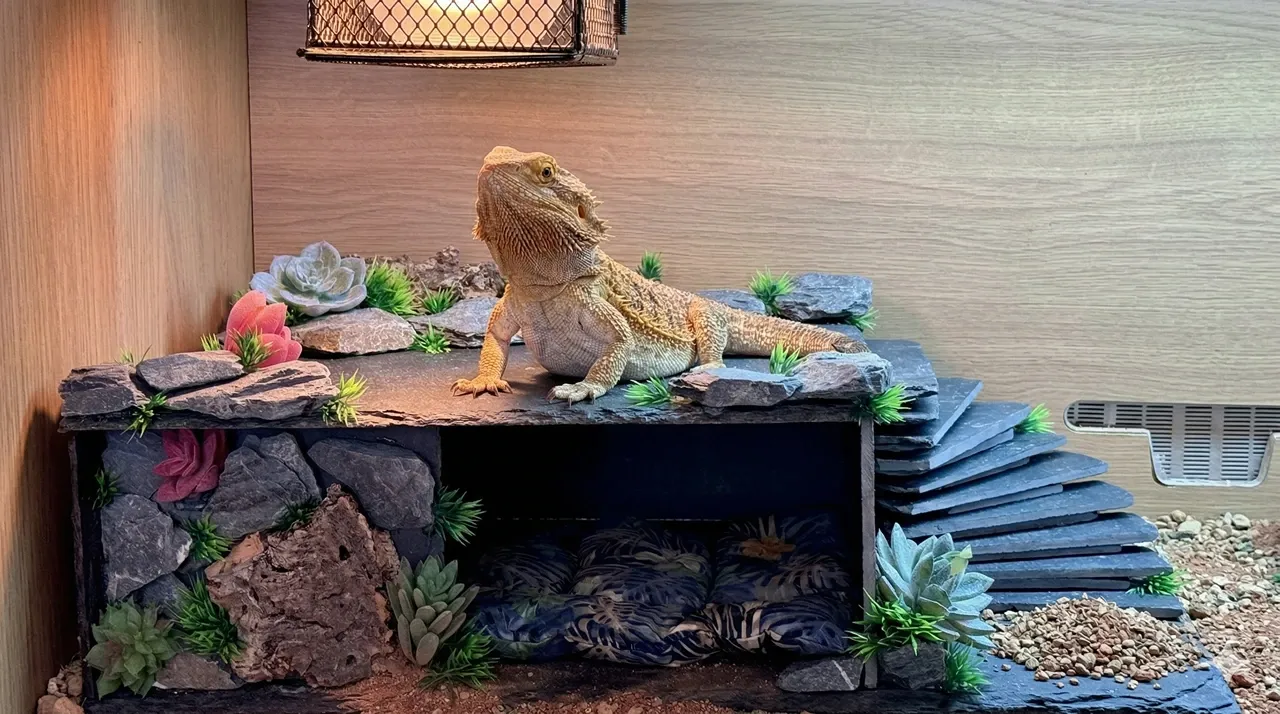
What Temperature Should a Bearded Dragon Basking Spot Be
Bearded dragon basking spot temperature is the most consequential number in any enclosure setup, and it is also the one most commonly verified with the wrong tool in the wrong place. The dragon eats, moves around, looks alert. But sluggish digestion and suppressed immune function build quietly over weeks, and most keepers only notice when something more obvious forces the issue. The target surface temperature for adults is 105–110°F, with 108°F being the research-backed optimum for wild thermoregulation behaviour.
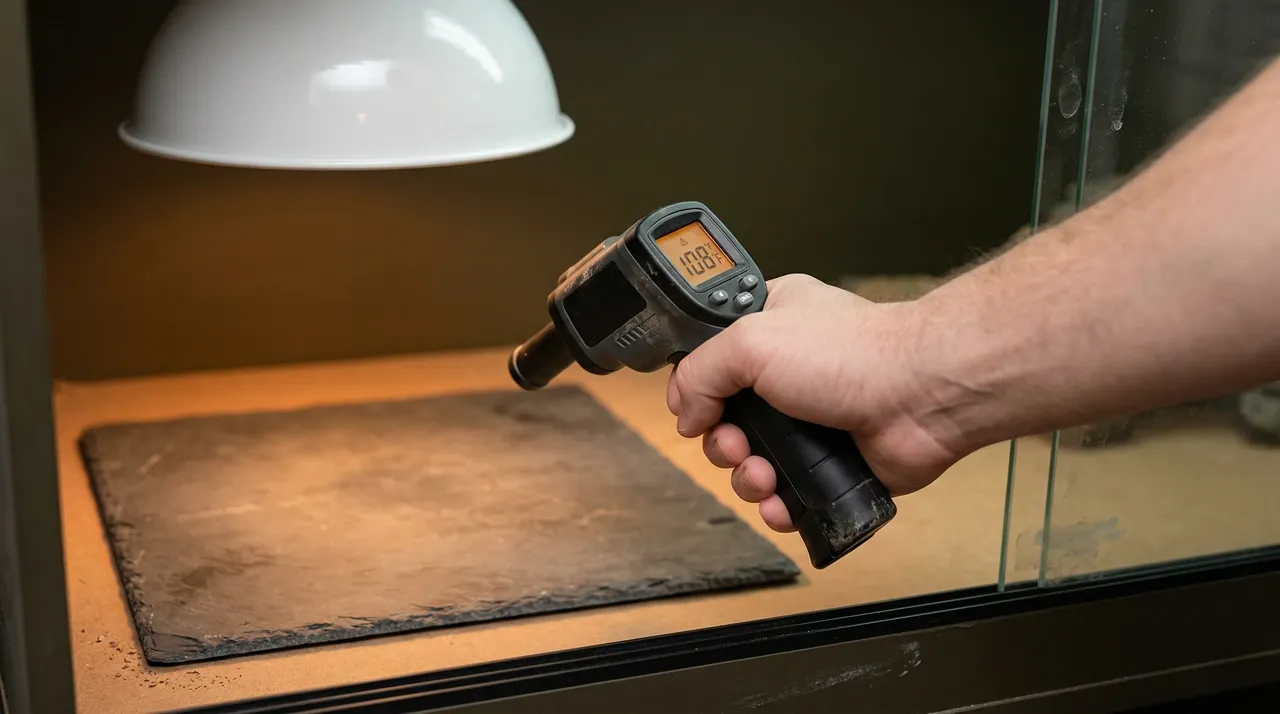
That number is a surface reading, taken with an infrared gun aimed at the tile or rock your dragon actually sits on. Air temperature near the warm end of the enclosure is a different measurement entirely, often differing by 10–15°F. Confusing the two is where most setups quietly fail.
What the Basking Spot Temperature Should Actually Be
The numbers vary by age because younger dragons have more demanding digestive requirements. Hatchlings and juveniles process insects multiple times a day, which demands sustained high surface temperatures to keep gut activity running at the rate their growth requires.
Adults eat less frequently and benefit from a slightly cooler range. The difference is not large enough to require separate lighting setups, provided the gradient is wide enough for your dragon to find the temperature it needs by moving along the floor.
| Age | Basking Surface Temp (°F) | Basking Surface Temp (°C) | Cool Side Surface (°F) |
|---|---|---|---|
| Baby (0–3 months) | 108–115°F | 42–46°C | 80–85°F |
| Juvenile (3–18 months) | 105–113°F | 40–45°C | 80–85°F |
| Adult (18 months+) | 105–110°F | 40–43°C | 80–85°F |
The enzymatic processes driving digestion and immune function in reptiles only operate reliably within a specific temperature window. This is why recognised reptile veterinary care guidelines treat thermoregulation as a primary clinical priority rather than an environmental preference.
A dragon held at 90°F surface heat is not comfortable with a cooler setup. Muscle enzyme activity slows, gut motility drops, and the immune system loses responsiveness. The effects are cumulative and easy to miss until something more obvious signals a problem.
Why Your Wall Thermometer Gets This Wrong
A probe thermometer or stick-on gauge measures the air temperature around its sensor, not the surface your dragon presses its belly against. Those two readings can differ by 10–15°F in either direction, and a standard dial gauge gives you no indication of which situation you have.
You could have 95°F ambient air near the basking zone while the rock surface under the lamp reads 112°F. Or 100°F ambient air with a cold tile sitting at only 87°F because the lamp is mounted too far away. Both scenarios look fine on a dial gauge. Neither actually is.
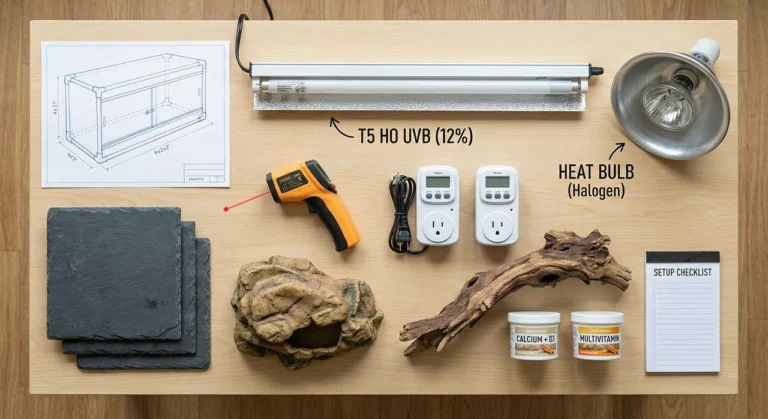
The only accurate way to verify a bearded dragon basking spot temperature is with an infrared temperature gun aimed directly at the surface. Check several spots across the basking area, not just the focal point directly under the bulb, where readings tend to spike above what your dragon will voluntarily use.
Pro tip: Check the basking surface temperature about 30 minutes after lights on in the morning, and again mid-afternoon. Heat builds through the day, and a tile sitting at 107°F at 9am can reach 116°F by 3pm in a warm room. Seasonal ambient temperature changes affect this reading too.
What You Put Under the Lamp Matters
Slate tile is the most reliable basking surface for consistent temperature readings. It absorbs heat gradually, distributes it evenly across a wide area, and holds a steady reading without creating dangerous focal hotspots directly under the bulb.
Keepers who use slate as their primary basking surface get more predictable temperature control than with any other material. Colour matters too: darker slate absorbs and radiates heat more effectively than pale varieties, making it easier to hit the correct surface temperature at a lower wattage.
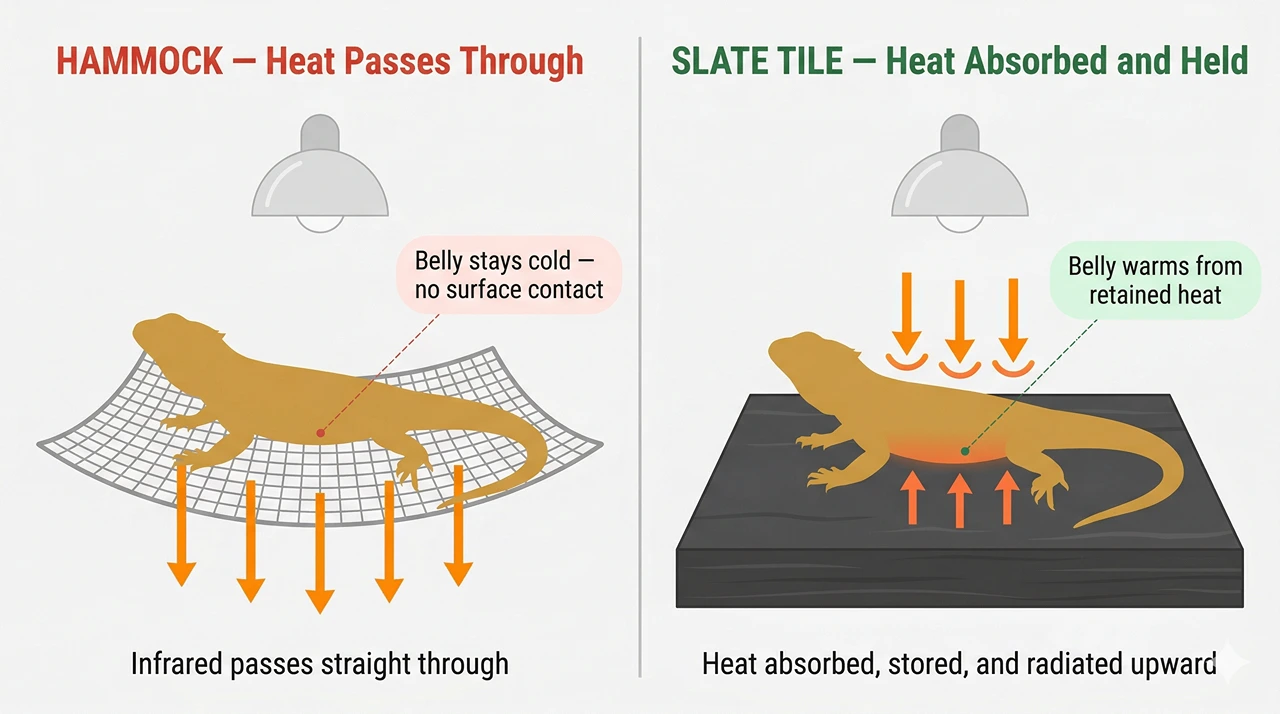
Size matters just as much as material. Your dragon must be able to fit its entire body on the warm surface, not just its torso. When beardies bask properly they flatten their ribs and spread wide to maximise skin contact with the heat source. If the tail hangs off into cool air, the digestive benefit of the warm surface drops sharply.
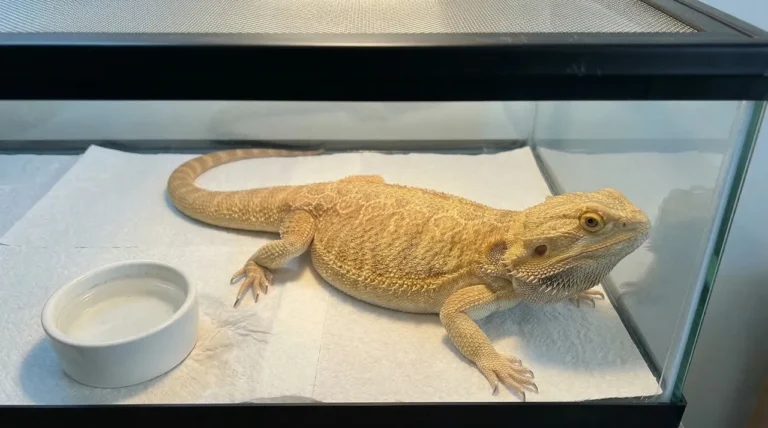
Hammocks lose heat quickly and create an air gap between the surface and your dragon’s belly. Under the same lamp at the same mounting height, a hammock can run 15–20°F cooler than a slate tile. Keepers using a hammock as their main basking spot often compensate by running the lamp hotter than the enclosure needs.
Warning: Never use a heat rock or under-tank heating pad as a basking surface. Your dragon cannot detect heat building from below and will not move off until a burn has already occurred. All basking heat must come from overhead.
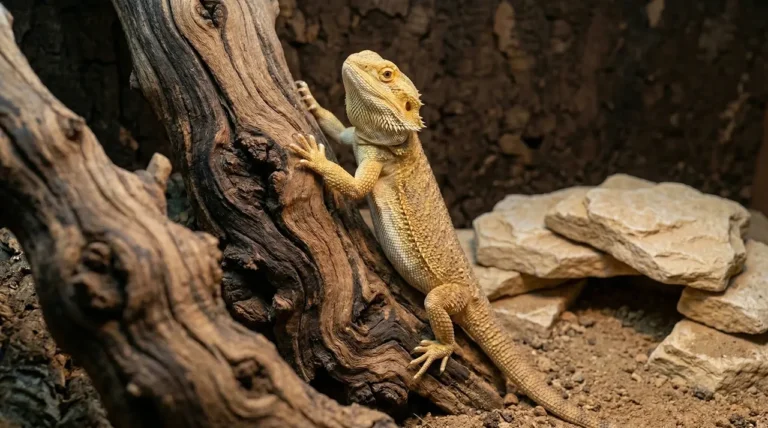
Wood and cork bark hold heat unevenly. The area directly under the lamp can run dangerously hot while the edges sit at comfortable temperatures, making reliable thermoregulation harder. Dense sandstone or natural flat rock behaves more like slate and is a reasonable alternative if slate is not available.
Your Cool End Temperature Matters Too
A correct basking spot means little if the cool end runs above 88–90°F. Your dragon cannot complete the thermoregulation cycle it depends on if it has nowhere actually cooler to retreat to, and digestion, immune activity, and energy regulation all require that cycle to function properly.
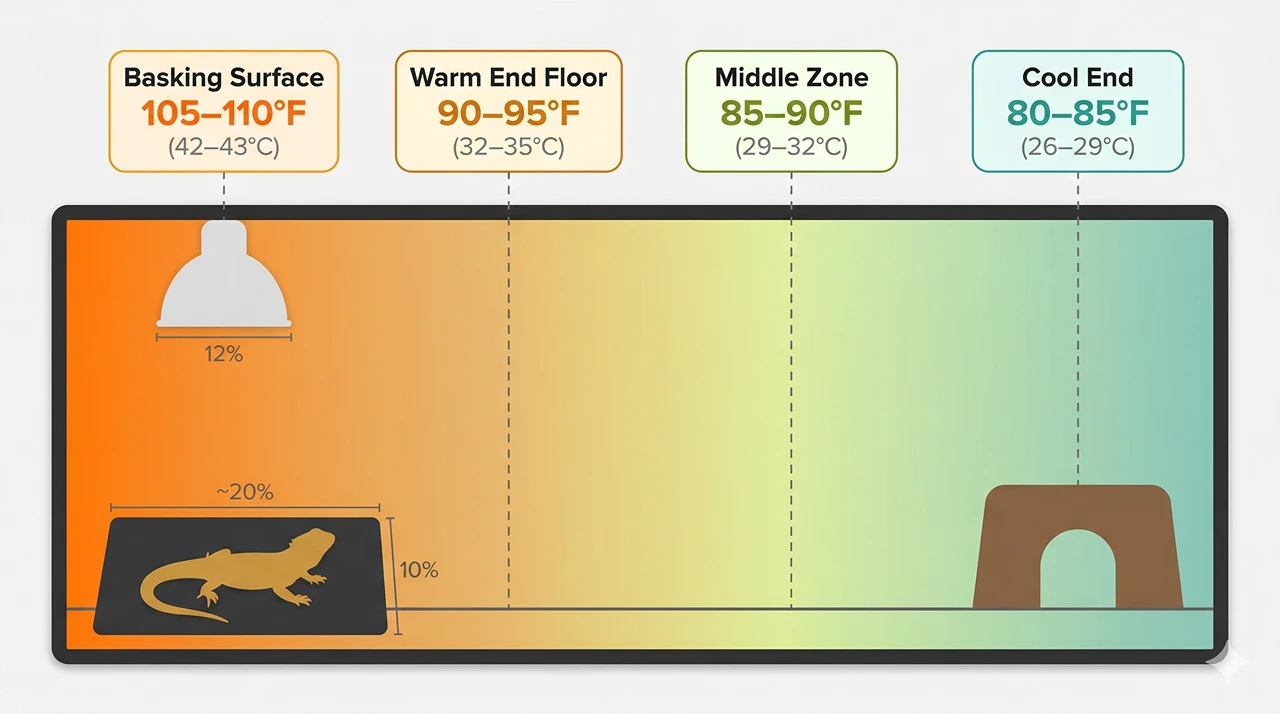
The gradient needs to be a real gradient. Your dragon should encounter meaningfully different temperatures at every point between the warm and cool ends, not two similar zones with an abrupt cutoff between them. An enclosure where temperatures drop from 108°F to 85°F within six inches of tile is not a gradient.
| Zone | Surface Temp (°F) | Ambient Air Temp (°F) |
|---|---|---|
| Basking spot (focal surface) | 105–110°F | 90–95°F |
| Warm end floor | 90–95°F | 85–90°F |
| Middle zone | 85–90°F | 80–85°F |
| Cool end floor | 80–85°F | 75–80°F |
A cool end sitting above 88°F compresses the gradient and forces your dragon to spend more time seeking relief and less time actively basking. Over weeks, reduced basking time at the correct bearded dragon basking spot temperature produces the same outcome as simply running the spot cold.
What Nighttime Temperatures Should Look Like
Bearded dragons do not need consistent overnight heat under normal conditions. A natural temperature drop mirrors their wild environment and supports their circadian rhythm and metabolic health during sleep.
Supplemental nighttime heating only becomes necessary when ambient room temperature falls below 60°F. Many sources suggest 70–75°F as the threshold, but in practice, healthy adults that handle nighttime temperature drops to 60°F or slightly below do so without issue, provided daytime basking temperatures are correct.
What Your Dragon’s Posture Is Telling You
Your dragon communicates the accuracy of its bearded dragon basking spot temperature more precisely than any gauge on the glass. Basking behaviour is one of the most reliable diagnostic tools available, and it costs nothing to read if you know what to look for.
- Flattened body, darkened beard, limbs spread wide: Actively absorbing heat. This is correct behaviour and should begin within 10–20 minutes of lights on each morning.
- Mouth open while on the basking spot: Has reached preferred core temperature and is offloading excess heat. Your dragon should move toward the cool end within a few minutes.
- Prolonged gaping without moving off: The basking surface may be too hot, or the cool end is not providing adequate relief. Check both with a temp gun before adjusting anything.
- Brief visit to the spot then retreating: The focal surface directly under the bulb may be spiking too high. Measure at that exact point specifically, not just the surrounding area.
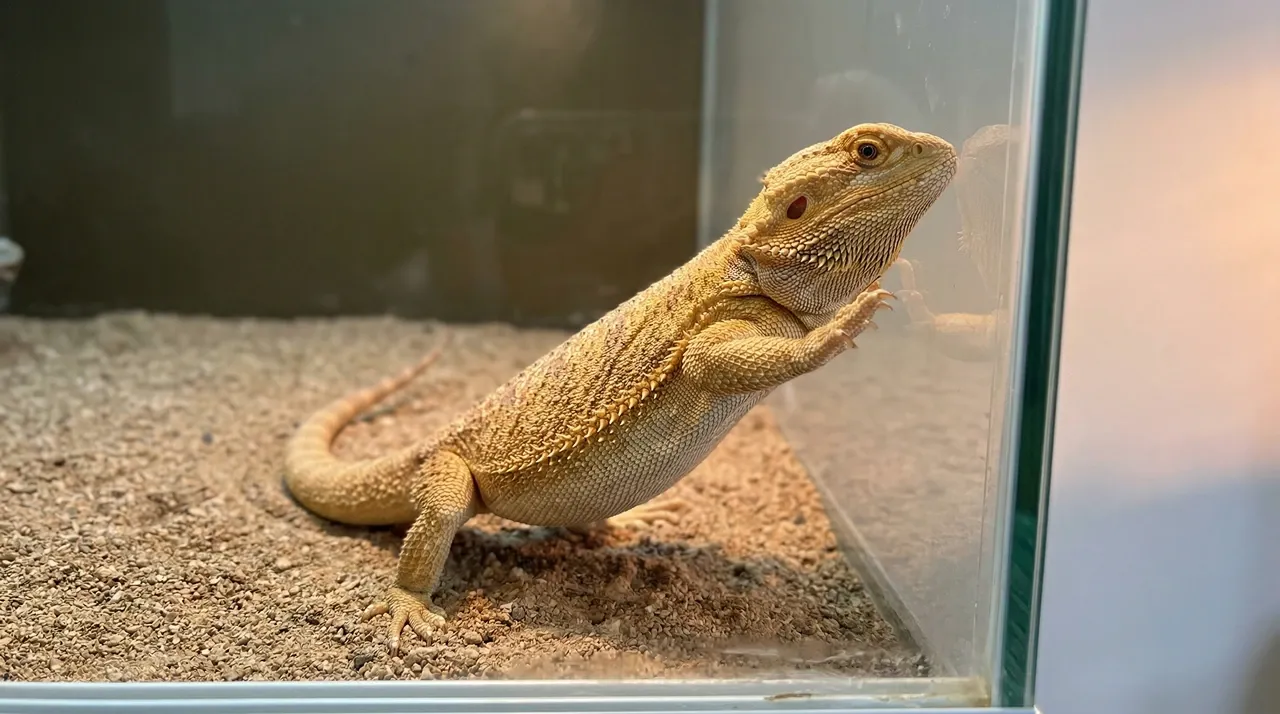
- Pressing against the warm side glass: Seeking more heat than the spot provides. The basking surface temperature is almost certainly running cold.
- Lying flat on the warm end floor but not under the lamp: The focal surface is likely too hot. Your dragon is trying to warm up from ambient floor heat rather than approaching the lamp directly.
A dragon that avoids the basking spot entirely, or shows no interest in warming up after lights on, may have a temperature problem rather than a behavioural one. Check the surface reading first.
There are many reasons a dragon stops using the basking spot, but an incorrect surface temperature is always the first variable to rule out before considering illness, stress, or seasonal slowdown.
When Your Basking Temperature Starts Drifting
Basking bulbs lose heat output as they age, even when still producing visible light. An incandescent or halogen running for six months or more may be generating noticeably less heat than when it was new. Bearded dragon basking spot temperature drift from bulb aging is the most common cause of a setup that worked perfectly at installation but has slowly stopped performing.
The change is gradual enough that most keepers do not notice it until the surface temperature has already dropped 8–10°F below where it should be. Replace basking bulbs every six months regardless of whether they still light up. It is cheaper than a vet visit and more reliable than recalibrating the whole setup around a slow thermal decline you did not catch.
Seasonal room temperature changes are the other common culprit. An enclosure running correctly in July may be running 8–12°F cold by January if the room temperature drops. Recheck surface temperatures at the start of autumn and again in early spring, particularly in rooms without consistent central heating.
The type of basking lamp also affects how much heat reaches the surface at a given mounting height. Halogen flood bulbs produce a broader, softer heat spread than narrow-beam spot bulbs, and the surface temperature differences between them are notable even at the same wattage. Choosing the right basking bulb type for your enclosure dimensions removes much of the trial and error when dialling in the correct surface temperature.
Pro tip: If your basking surface temperature has dropped and nothing in your setup has changed, check the ambient room temperature before replacing the bulb or raising the lamp. A room that was 72°F in summer and is now 62°F in winter can shift your surface reading by 6–10°F on its own.
Most Keepers Place the Probe Wrong
If a dimming thermostat controls your basking bulb, probe position determines what temperature the thermostat is actually responding to. A probe sitting on the cool side reads a comfortable temperature while the basking zone runs cold. A probe placed directly on the basking tile throttles the lamp before the surface has properly warmed.
The correct position is at dragon level on the warm end floor, offset from the focal point by a few inches. Getting thermostat probe placement right is as important as having the thermostat at all, and it is one of the most common causes of basking temperature drift that looks like a bulb problem but is not.
Bearded Dragon Basking Temperature FAQs
What temperature should a bearded dragon basking spot be?
The correct bearded dragon basking spot temperature for adults is 105–110°F at the surface, with 108°F being the research-backed optimum. Juveniles and hatchlings need it slightly higher, at 105–115°F depending on age. Always measure with an infrared temperature gun aimed at the basking surface itself, not the air nearby.
Is 100°F hot enough for an adult bearded dragon basking spot?
100°F is below the recommended adult range and will not sustain reliable digestion over time, particularly for dragons eating a high-protein diet. Enzyme activity and gut motility are likely compromised below 105°F. The recommended adult surface range is 105–110°F.
Can a bearded dragon basking spot be too hot?
Yes. A sustained surface temperature above 115°F risks burns and heat stress, particularly if the cool end is also running warm and your dragon cannot escape the heat. If your dragon is gaping constantly without moving to the cool side, the surface temperature is almost certainly too high.
Why does my bearded dragon avoid the basking spot?
The most common cause is a focal surface that spikes too high directly under the bulb, even if the surrounding area reads correctly. Measure with a temp gun at the exact point where your dragon would sit, not just around the edges. A cool end running above 88°F is the second most likely cause.
How often should I replace a basking bulb?
Every six months, regardless of whether the bulb still lights up. Basking bulbs lose heat output before they lose visible light, which means a six-month-old bulb can be producing far less heat with no obvious external sign. Replacing on schedule prevents the slow thermal drift that most keepers only notice after a problem has already developed.
Run This Check Before You Adjust Anything
- Point an infrared temperature gun at the basking surface and confirm the bearded dragon basking spot temperature reads 105–110°F for adults, or 105–115°F for juveniles and hatchlings. This is the measurement that matters, not the air temperature on your wall gauge.
- Confirm your dragon can fit its entire body on the basking surface. If its tail or limbs hang off the edge into cool air, the surface is too small regardless of the temperature reading.
- Measure the cool end floor surface. If it reads above 88°F, the gradient is compressed. Address this before touching the basking lamp setup.
- Verify your measurement tool. A probe thermometer or stick-on dial gauge is not accurate enough for confirming basking surface temperature. An infrared gun is the only reliable option.
- Check what your dragon is sitting on. If it is a hammock, replace it with a slate tile sized larger than your dragon, and remeasure before changing any other variable.
- Note when you last replaced the basking bulb. If it has been more than six months, replace the bulb first before adjusting lamp height, wattage, or thermostat settings.
- If a thermostat controls the basking lamp, confirm the probe sits at dragon level on the warm end floor, offset a few inches from the focal point. Reposition it if it is on the cool side or directly on the tile surface.
Written by
Sarah ArdleySarah has kept bearded dragons for over ten years. She founded Beardie Husbandry after discovering that most mainstream care advice — including what she followed with her first dragon — was doing more harm than good. Every article on this site is grounded in veterinary research and real keeper experience.