Bearded Dragon Diet Guide: What to Feed (And What to Avoid)
Getting a bearded dragon diet right is one of those things that looks simple until you realise how many keepers quietly get it wrong for years. The most common mistake is not feeding something toxic. It is keeping an adult dragon on a high-insect diet because the dragon still hunts eagerly and the keeper has never questioned whether the ratio still makes sense.
A dragon fed correctly as a baby can still develop fatty liver disease and obesity as an adult if the protein load never drops.
The ratio matters. The quality of individual foods matters. And a handful of foods that look completely harmless can cause serious damage over time, often before any visible symptoms appear.
The Bearded Dragon Diet Ratio by Age
Baby dragons need protein above everything else. A hatchling can double in length in a matter of weeks, and that growth demands a diet of roughly 70–80% insects and 20–30% plant matter.
At this stage, pushing greens aggressively matters less than keeping up with the protein and calcium demand that rapid bone mineralisation creates.
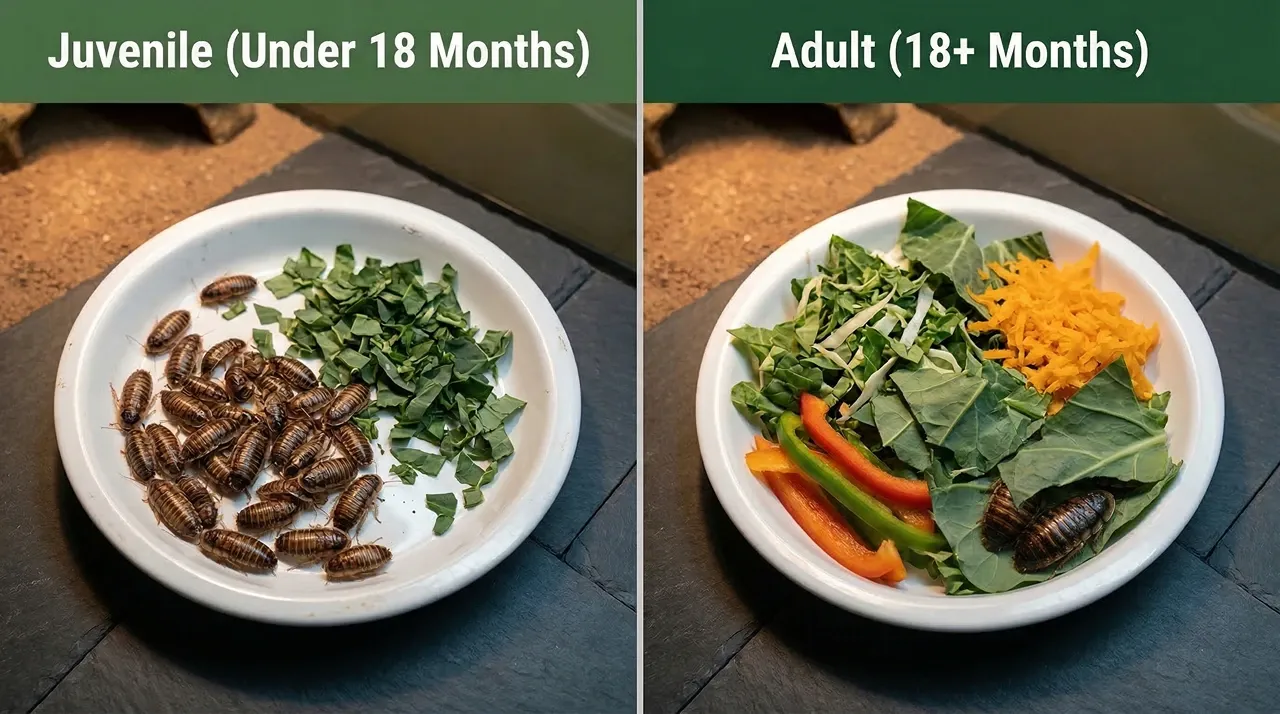
The shift from insect-heavy to plant-heavy happens gradually across the juvenile stage, roughly 3 to 18 months, and most keepers either move too slowly or miss the transition entirely.
By 18 months, the diet should be almost completely flipped: 70–80% plant matter and 20–30% insects. An adult dragon’s metabolism is slower, its growth has stopped, and excess protein gets stored as fat rather than converted into muscle or bone.
Keeping an adult on a heavy insect diet is one of the most reliable paths to fatty liver disease, which develops quietly and often goes unnoticed until the damage is significant. Scaling back insects and scaling up greens as the dragon matures is the single most important diet adjustment any keeper can make.
| Age | Insects | Plant Matter | Insect Frequency |
|---|---|---|---|
| 0–3 months | 70–80% | 20–30% | 3 sessions daily |
| 3–12 months | 50–70% | 30–50% | 2 sessions daily |
| 12–18 months | 30–50% | 50–70% | Once daily |
| 18+ months | 20–30% | 70–80% | 3–4 times per week |
Most dragons resist the shift to fewer insects during the juvenile phase, which makes the transition harder than it sounds. Spacing insects down to once daily first, then gradually to every other day, works better than cutting back abruptly.
Tracking the ratio against a structured feeding schedule by age makes it easier to see whether the balance is actually moving in the right direction.
Which Insects Are Worth Feeding Every Day
Not all feeder insects are equal, and the one you choose as your primary staple shapes the nutritional foundation of everything else you do.
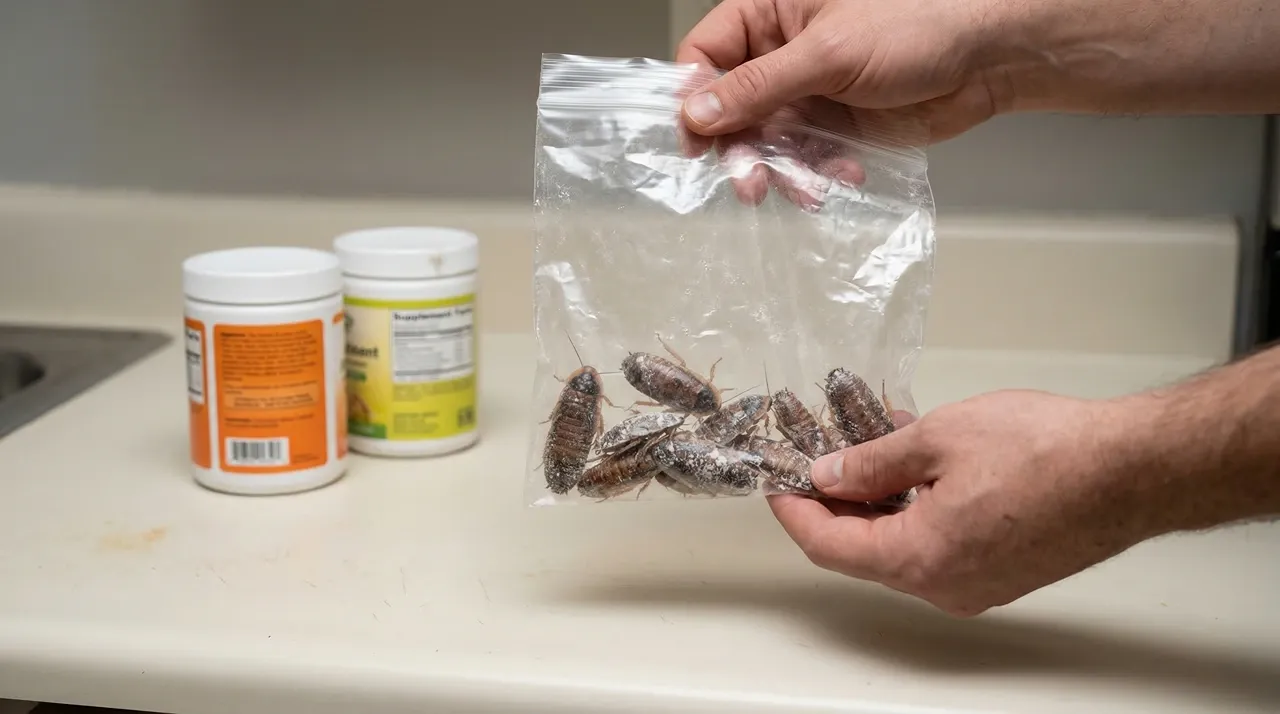
Dubia roaches are the strongest option available to most keepers. They carry more protein per gram than crickets, have a better calcium-to-phosphorus ratio, cannot climb smooth surfaces or jump, and will not escape through a vent gap and disappear into your walls for three weeks.
Dubias are also slower than crickets, which matters for younger dragons still developing their hunting confidence. A hatchling that misses most of its crickets because they move too fast is not getting the nutrition you think it is getting.
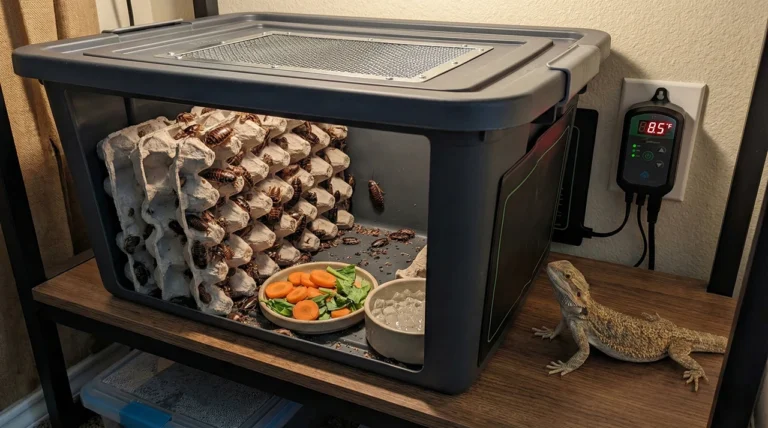
If you plan to use dubias long-term, running a small roach colony cuts the cost significantly compared to buying by the cup from a pet shop.
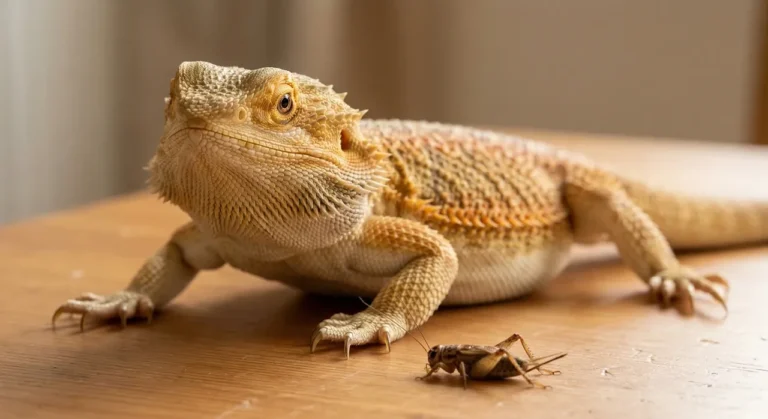
Crickets are workable as a primary staple where dubias are unavailable, and they gut-load reliably. The main drawbacks are that they die faster in poor conditions, smell worse when kept in numbers, and can bite a sleeping dragon if left uneaten overnight.
Keeping your cricket stock alive between feedings matters more than most keepers account for, because a cricket that dies before the feed carries no nutritional value.
Black soldier fly larvae, sold as NutriGrubs or CalciWorms depending on the brand, deserve more attention than they typically get. They are one of the only feeder insects with a naturally correct calcium-to-phosphorus ratio, which means they often do not need calcium dusting at all.
That makes them particularly useful for babies and juveniles, where hitting calcium targets consistently is the hardest part of early diet management. They are soft-bodied, easy to digest, and most dragons take to them immediately.
Insects That Are Treats, Not Staples
Waxworms and butterworms are high in fat and low in nutritional value relative to that fat load. A dragon that gets waxworms regularly will start refusing healthier feeders the same way a child refuses vegetables after too many sweets.
Use them occasionally as a training reward or to tempt a dragon that has gone off food temporarily, not as a routine addition to the bowl.
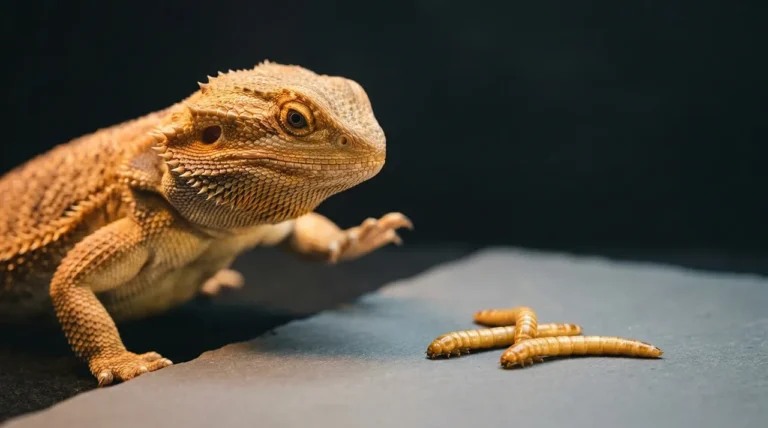
Mealworms are worth thinking about carefully. Their chitin-to-protein ratio is poor, the fat content is high, and their hard exoskeleton carries a real impaction risk for juveniles and babies whose digestive systems cannot handle the load.
For adults, small quantities occasionally are manageable. For anything under 12 months, they are best left out entirely.
| Feeder Insect | Protein | Fat | Ca:P Ratio | Use As |
|---|---|---|---|---|
| Dubia Roach | High | Low | 1:3 | Primary staple |
| BSFL (NutriGrubs) | High | Medium | 1.5:1 | Excellent staple |
| Cricket | Medium | Low | 1:9 | Good staple |
| Superworm | Medium | High | 1:13 | Adult treat only |
| Mealworm | Medium | High | 1:7 | Adult treat only |
| Waxworm | Low | Very high | 1:7 | Rare treat |
The ratios above explain why feeder choice matters before a single supplement tub is opened. But the source of those feeders matters just as much as the species.
The Right Insect Size for Your Dragon
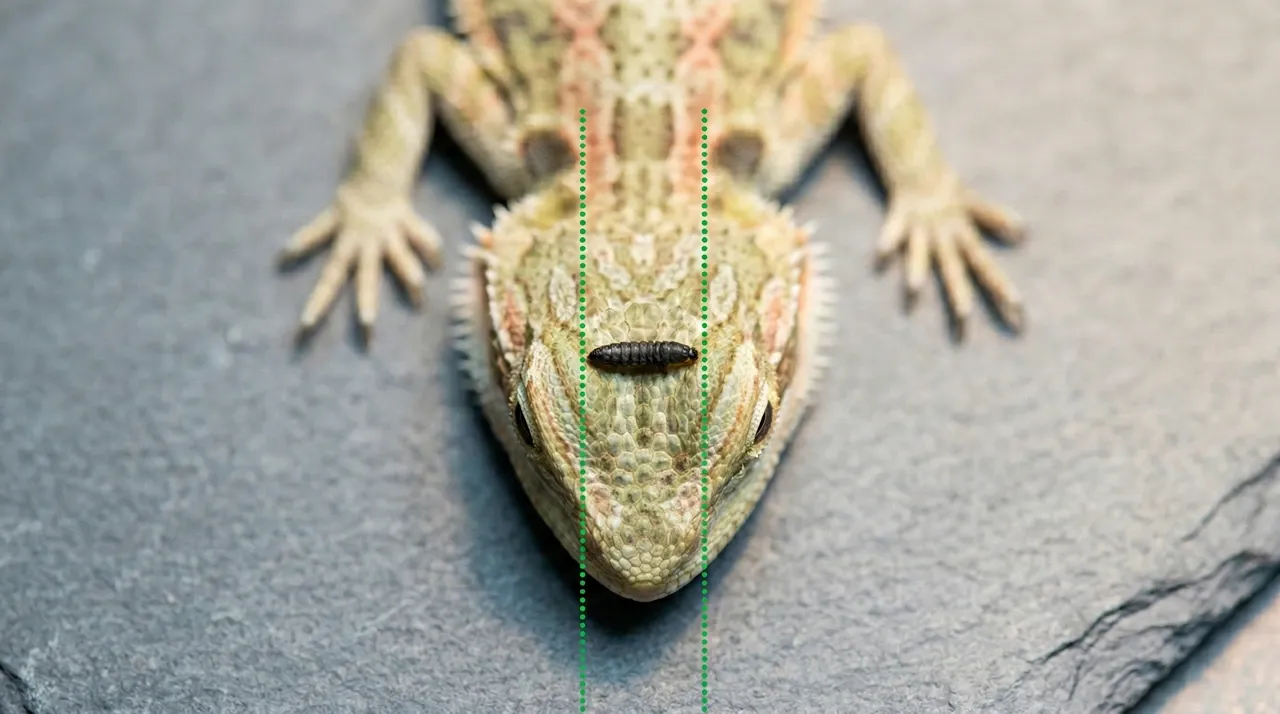
The standard rule is that feeder insects should be no larger than the gap between the dragon’s eyes. This is not an arbitrary guideline.
An insect that is too large creates a pressure point in the digestive tract that a small dragon cannot move through efficiently, particularly if the basking temperature has dropped or the dragon is slightly dehydrated. Both conditions slow digestion, and a stuck insect becomes a serious problem faster than most keepers expect.
Baby dragons under two months old should be on small crickets or micro dubias only. Scale the feeder size up gradually as the dragon grows.
A healthy adult handles a full-sized adult dubia roach without any issue. The mistake is eyeballing the insect against the dragon’s full body length rather than its head width, which consistently results in feeders that are larger than they should be.
Greens That Belong in the Daily Bowl
This is where most bearded dragon diet guides fail the reader by listing everything that is not toxic and calling it safe. Survival and thriving are different things.
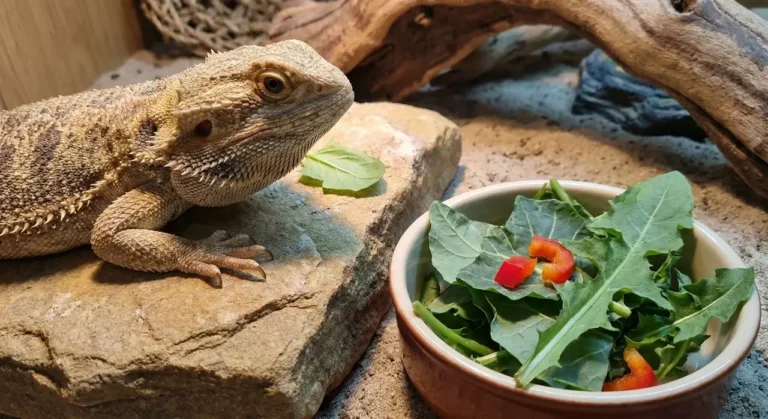
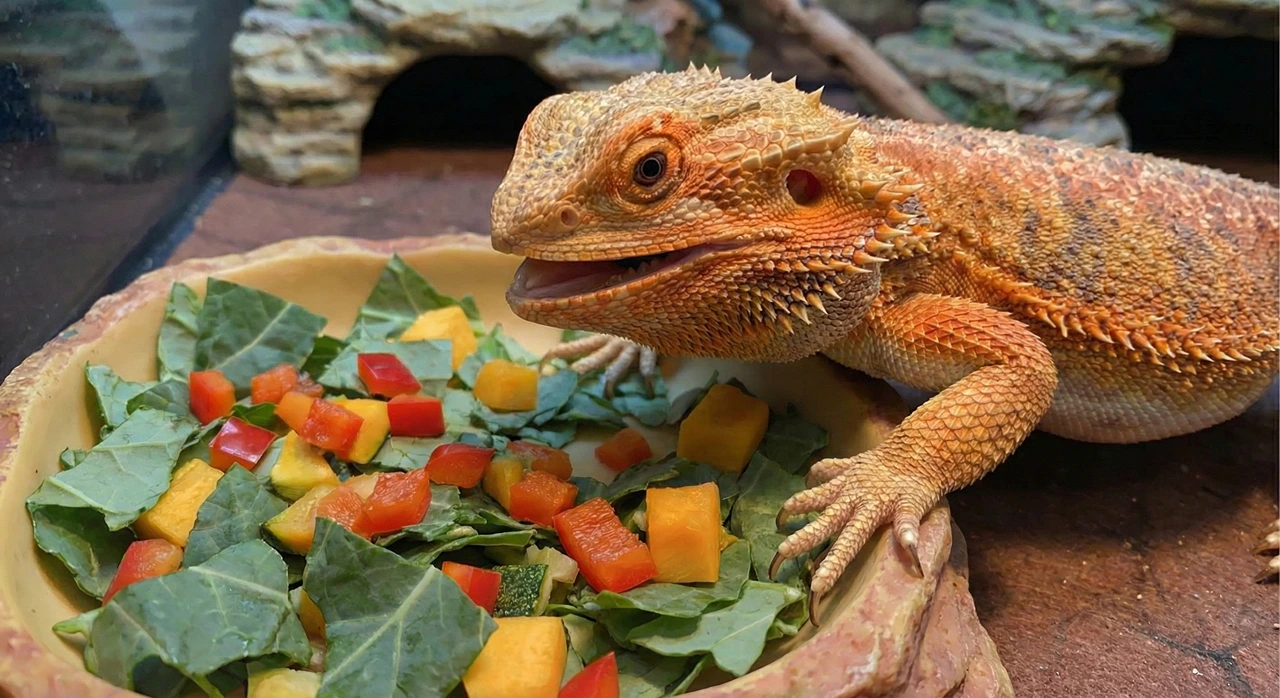
The greens that should form the backbone of the plant portion are collard greens, turnip greens, dandelion greens, mustard greens, and endive. These are nutritionally dense, carry manageable oxalate and goitrogen levels when rotated properly, and most dragons eat them reliably once they are used to the texture.
Variety across the week matters more than variety within each individual bowl. Rotating through two or three of these staples keeps the nutritional profile balanced and also prevents the dragon from locking onto one favourite and refusing anything else.
If yours is already refusing greens consistently, the approaches that work for stubborn eaters are worth working through before assuming the problem is the vegetables themselves.

Use These a Few Times a Week
Kale, bok choy, and cabbage are fine in rotation but should not hold daily staple status. All three contain goitrogens, compounds that interfere with iodine uptake and can suppress thyroid function when fed in excess over a long period.
The risk is not from a single bowl of kale. Feeding it every day for months with nothing else in rotation is where the problem starts.
Broccoli falls into the same category. The nutritional density is real, but the goitrogen content keeps it in the rotation slot rather than the daily staple slot. Mustard greens also carry some goitrogens, but at lower levels than kale, and the nutritional value is strong enough that most keepers include them in the daily mix without issues.
Greens to Drop From the Bowl
Iceberg lettuce, butterhead lettuce, and any pale watery lettuce variety are not worth using. They are mostly water with negligible nutritional value, and feeding them takes up stomach space that could hold something that actually nourishes the animal.
Beet greens and Swiss chard carry high oxalate levels. Oxalates bind to calcium in the gut and block absorption, which matters most for any dragon already borderline on calcium intake.
Spinach deserves specific mention. Its oxalate concentration is high enough that regular inclusion creates the same calcium-blocking problem as beet greens, just less visibly. There are enough better options available that spinach rarely earns a place in a well-built rotation.
Where Vegetables and Fruit Actually Fit
Vegetables add texture, variety, and hydration to the salad bowl, and some add real nutritional value on top. Butternut squash, acorn squash, and bell peppers are solid daily additions.
Shredded carrot works well in small amounts. Cut everything small enough that the dragon does not need to tear pieces, which wastes food and discourages eating. These are all fine raw and retain more nutrients that way than cooked.
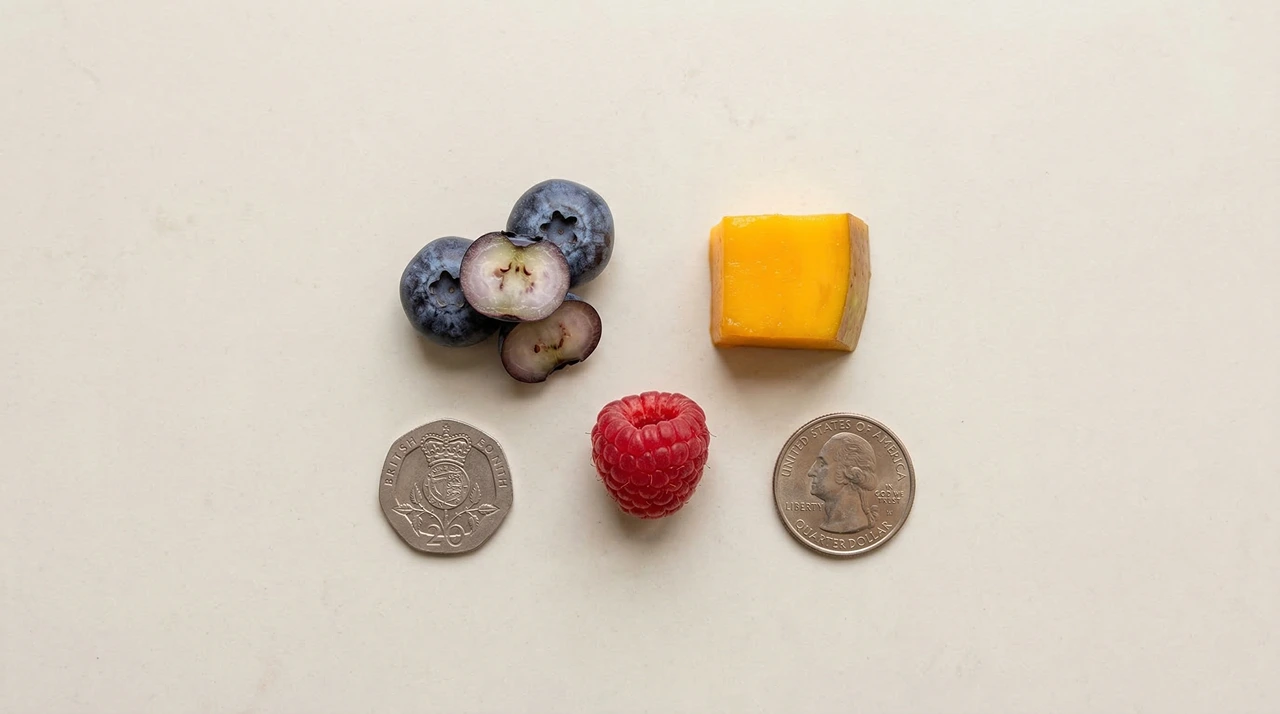
Fruit should make up no more than 5–10% of the total diet, and for most adults the lower end of that range is the right target. Papaya, blueberries, raspberries, and mango are all safe choices in small quantities.
The concern with fruit is not toxicity at these amounts but the sugar load, which contributes to weight gain in adults and attracts bacteria to any uneaten pieces left sitting in the enclosure.
The Calcium Problem That Causes Bone Disease
Most keepers understand that calcium dusting is part of the routine. Fewer understand that dusting alone is not the full answer.
The problem is that the natural calcium-to-phosphorus ratio of most feeder insects runs in the wrong direction. Crickets carry roughly twice as much phosphorus as calcium. When phosphorus consistently outpaces calcium over weeks and months, the body begins pulling calcium from the bones to maintain blood levels.
This is the starting point for metabolic bone disease, and it develops without obvious signs until the deficit is significant. Reptile vets at VCA Animal Hospitals identify it as one of the most common diet-related conditions in captive dragons.
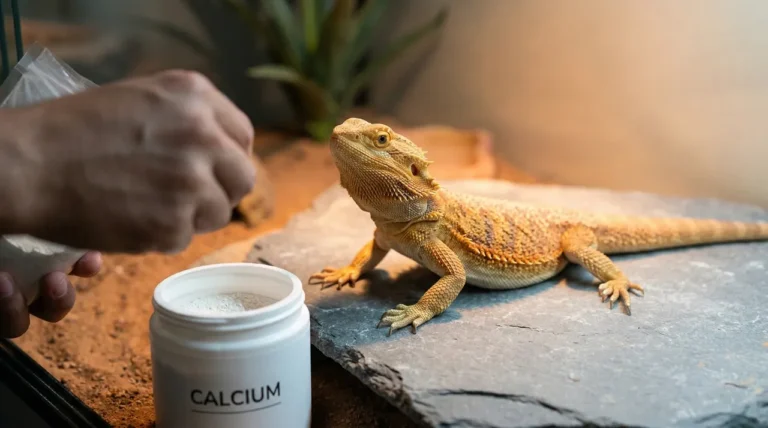
Dusting insects with plain calcium powder helps correct the imbalance. Gut-loading those insects with calcium-rich foods 24 to 48 hours before feeding helps further. Using dubias instead of crickets as the primary feeder gives a more balanced baseline before the dusting even starts.
Foods That Actually Cause Serious Harm
Some items on the avoid list are worth understanding specifically because the consequences are not mild and the foods in question are not exotic.
Fireflies and any bioluminescent insect contain compounds called bufadienolides, which are cardiotoxic to bearded dragons. Even one firefly can kill an adult dragon. If your garden has fireflies in summer, they do not come inside.
Avocado contains persin, a fungicidal toxin that causes fluid accumulation and cardiac distress in reptiles. Onions, garlic, and chives are toxic in any form, raw or cooked. Rhubarb is high in oxalic acid at levels that cause kidney damage.
These are not theoretical risks at small doses. They are dangerous at any quantity worth considering feeding.
When Your Dragon Stops Eating in Autumn
As daylight hours shorten in autumn, many dragons slow down, sleep more, and lose interest in food. This pattern is called seasonal brumation, the reptile equivalent of hibernation, driven by reduced light rather than temperature alone.
In the wild it makes complete biological sense: less sun means less food availability, so the body conserves energy. In captivity it catches new keepers off guard every year.
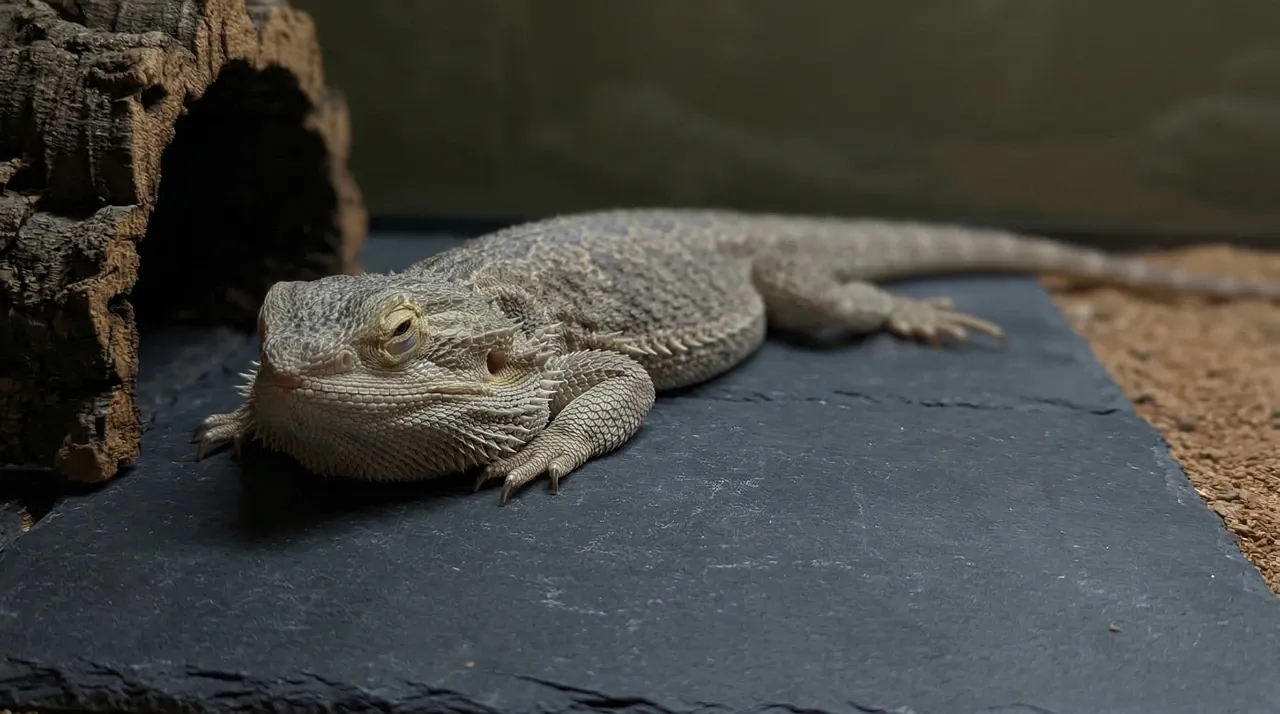
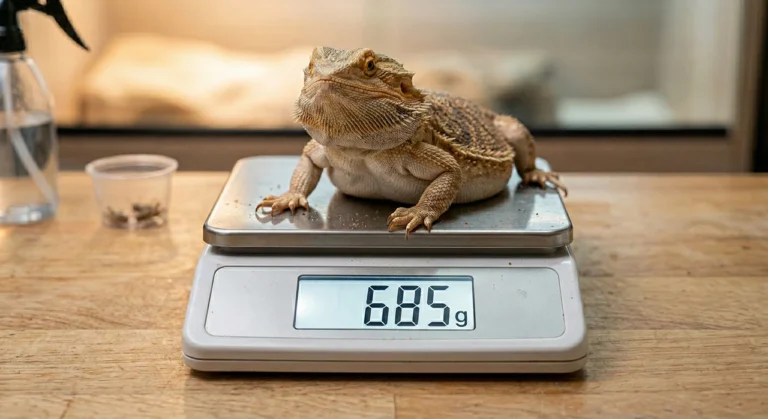
A brumating dragon may refuse all food for weeks or even months. That is normal. The check that matters is weight, not appetite.
A dragon holding stable weight through a brumation period is fine. A dragon losing weight steadily during what looks like brumation is not brumating — it is unwell, and a reptile vet visit is the right next step rather than waiting it out.
Spring brings a different appetite disruption. Males in particular go through a hormonal surge from roughly February to April that redirects their attention away from food entirely. A restless, head-bobbing, barely-eating dragon in early spring is almost certainly responding to seasonal hormone changes, not illness.
Females showing the same restlessness may be developing eggs whether or not a male is present, which is a separate situation worth understanding before it escalates to egg binding.
How Supplements Work With a Bearded Dragon Diet
Calcium, vitamin D3, and a multivitamin each serve different purposes and should not be combined casually into a single daily shake-and-dust routine.
Plain calcium without D3 is the right choice when UVB lighting is strong and reliable. Calcium with D3 is used more sparingly because D3 is fat-soluble, accumulates in tissue, and causes its own problems when oversupplied.
A multivitamin containing vitamin A as retinol needs the most careful frequency management. Twice a month is the typical upper limit for adults.
Keepers running a well-varied diet alongside a good UVB source often find they need less supplementation than they assumed, once gut-loading and feeder choice are doing their share of the nutritional work. The full breakdown of what to dust and when runs through the supplement schedule in more detail.
What to Feed and What to Skip
Use this as a fast check before adding anything new to the bowl. The A-Z food list covers every item in detail, but this covers the foods that come up most often.
| Food | Status | Notes |
|---|---|---|
| Collard greens | ✅ Daily staple | High calcium, excellent fibre |
| Mustard greens | ✅ Daily staple | Low goitrogens, most dragons eat readily |
| Turnip greens | ✅ Daily staple | High in vitamins A and C |
| Dandelion greens | ✅ Daily staple | Pesticide-free only |
| Endive / escarole | ✅ Daily staple | Good calcium-to-phosphorus ratio |
| Butternut squash | ✅ Daily | Grate raw. Excellent vitamin A source |
| Bell peppers | 🟡 Few times a week | Red and yellow highest in vitamin C |
| Kale | 🟡 2–3x per week | Goitrogens — rotate, do not use as sole daily green |
| Bok choy | 🟡 2–3x per week | Same goitrogen caution as kale |
| Carrots | 🟡 2x per week | High vitamin A. Feed raw and shredded |
| Blueberries | 🟡 Treat 1x per week | Cut in half. High antioxidants |
| Strawberries | 🟡 Treat 1x per week | High sugar. Small pieces only |
| Banana | 🟡 Treat 1x per month | Very high phosphorus binds calcium |
| Iceberg lettuce | ❌ Avoid | No nutritional value, causes loose stools |
| Spinach | ❌ Avoid | High oxalates block calcium absorption |
| Beet greens / Swiss chard | ❌ Avoid | High oxalates |
| Citrus (lemon, orange) | ❌ Avoid | Acid disrupts digestion |
| Avocado | ❌ Toxic | Contains persin. Never feed |
| Onion / garlic / chives | ❌ Toxic | Toxic in any form, raw or cooked |
| Rhubarb | ❌ Toxic | Oxalic acid causes kidney damage |
| Fireflies | ❌ Lethal | Even one can kill an adult dragon |
Frequently Asked Questions
What should an adult bearded dragon eat every day
Fresh greens should be available daily, with insects offered three to four times a week. Collard greens, turnip greens, dandelion greens, and endive are solid daily staples. Dubia roaches or gut-loaded crickets work well for the insect portion, sized to no larger than the gap between the dragon’s eyes.
Is kale safe for bearded dragons
Kale is safe in rotation but should not be the sole daily green. It contains goitrogens that can suppress thyroid function when fed daily over a long period. Two or three times a week alongside other staple greens is the right frequency.
Can bearded dragons eat spinach
Spinach is not acutely toxic but is best kept off the regular menu. Its oxalate content binds to calcium in the gut and blocks absorption, which compounds any existing calcium deficiency. Better options are available that do not carry this trade-off.
What is the most toxic food for bearded dragons
Fireflies are the most acutely dangerous item a keeper is likely to encounter. Even one firefly contains cardiotoxic bufadienolides that can kill an adult dragon. Avocado and rhubarb are also seriously harmful, along with onions, garlic, and any wild-caught insect of unknown origin.
How do I know if my dragon is eating the right diet
A dragon on a good diet produces firm, well-formed waste, maintains steady weight without visible fat pads behind the arms, stays active during daylight hours, and sheds cleanly. Soft or bowed limbs, muscle tremors, or significant weight gain are signs the diet needs reviewing alongside a visit to a reptile vet.
The Changes Worth Making Today
- Check the insect-to-plant ratio for your dragon’s current age and adjust if it has not shifted since the dragon was a baby.
- Switch your primary feeder insect to dubia roaches if dubias are available to you. The calcium-to-phosphorus ratio is better than crickets before any dusting happens.
- Size every feeder insect against the gap between your dragon’s eyes, not against its body length.
- Pull iceberg lettuce, spinach, and beet greens from the rotation and replace them with collard greens, turnip greens, or dandelion greens.
- Move kale to a rotation green used two or three times a week rather than a daily staple.
- Start gut-loading your feeders the night before feeding, not on the morning of.
- If fruit is appearing in the bowl daily, move it to two or three times a week maximum for adults.
- Confirm your calcium dusting frequency is appropriate for your dragon’s age and UVB setup, and that your UVB bulb is within its effective lifespan.
Written by
Sarah ArdleySarah has kept bearded dragons for over ten years. She founded Beardie Husbandry after discovering that most mainstream care advice — including what she followed with her first dragon — was doing more harm than good. Every article on this site is grounded in veterinary research and real keeper experience.