What Goes in a Bearded Dragon First Aid Kit
Most owners think about a bearded dragon first aid kit after the first incident. A nail trim that goes too deep, a burn discovered Monday morning, a toe that looks wrong during shed.
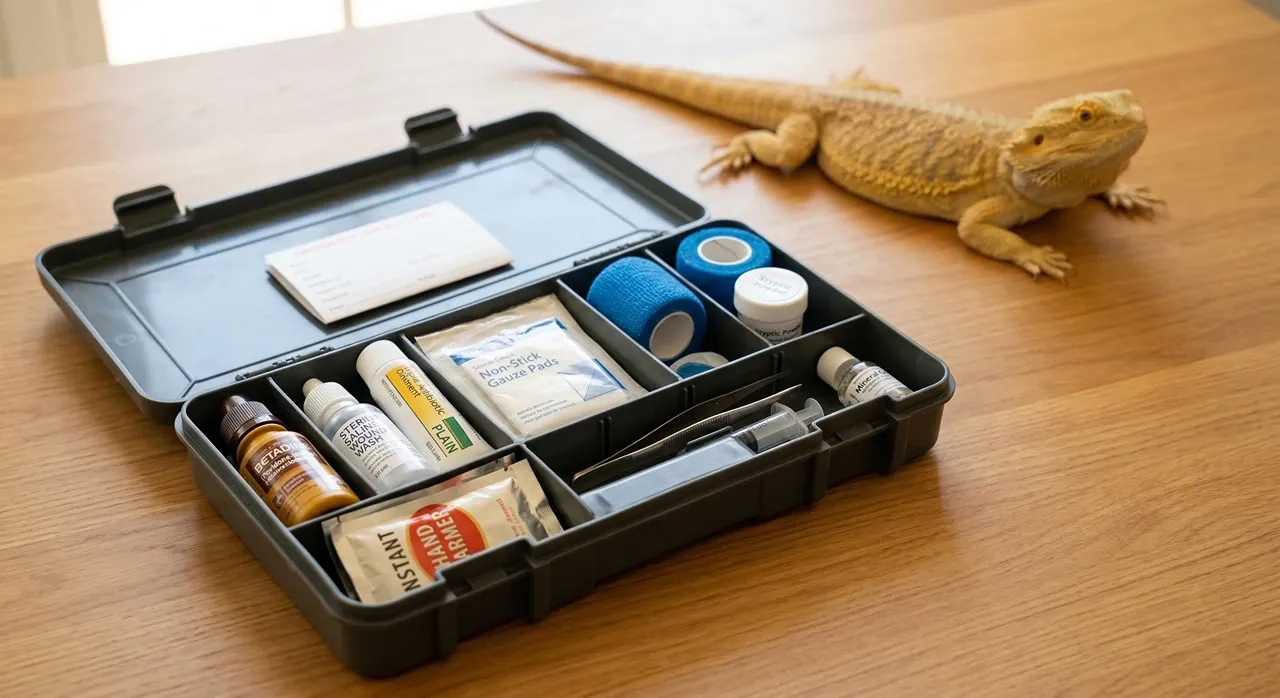
The kit does not need to be elaborate. A shoebox-sized container with about a dozen items covers the realistic range of minor emergencies that happen at home. What matters is having it assembled before you need it, because the one time you reach for it will not be a convenient moment.
What This Kit Is Actually For
A first aid kit handles minor wounds, surface burns, stuck shed, nail bleeds, and overnight emergencies like power outages or emergency transport. It does not replace a vet for anything beyond those categories.
Blistering skin, tissue that looks dead or blackened, a prolapsed organ, or a dragon that has stopped responding normally are all vet situations where the kit is not the right tool.
The distinction matters because owners sometimes work through home supplies while a situation gets worse. Betadine and gauze are not a treatment plan for a partial thickness burn or a tail that is actively rotting. Know what the kit handles, and know when to put it down and call instead.
The Core Wound Care Items
Betadine and Sterile Saline
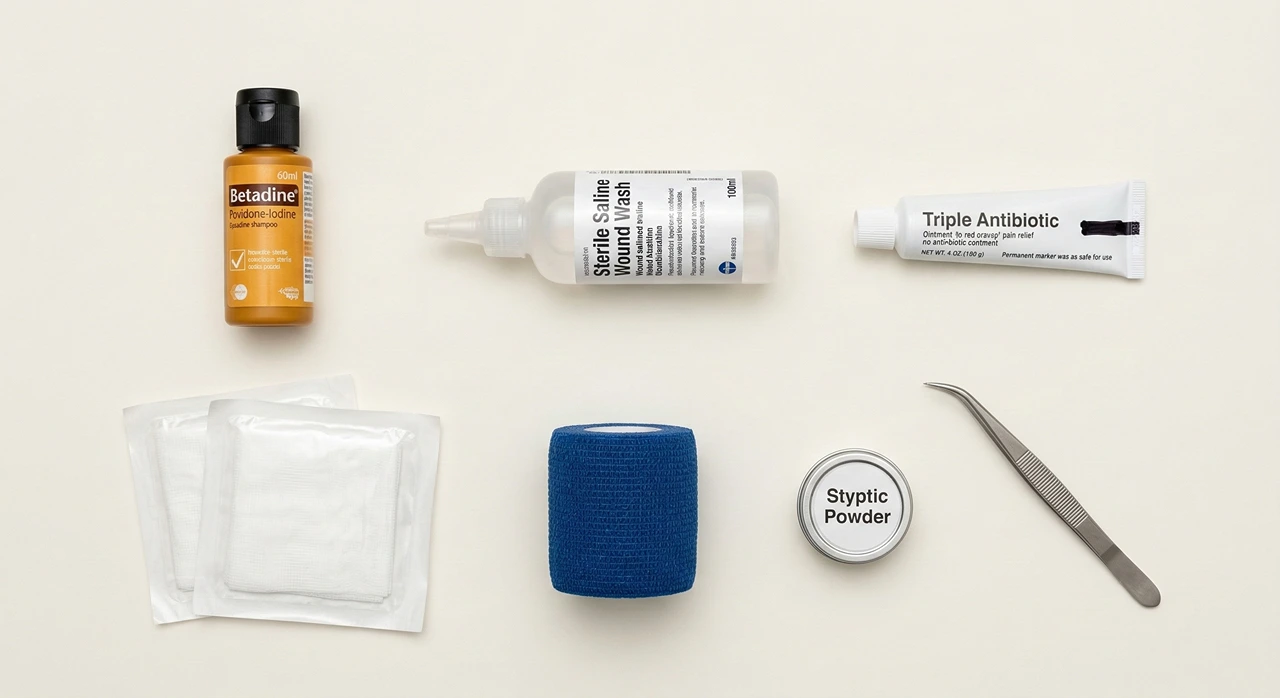
Povidone-iodine (Betadine) is the disinfectant of choice for minor reptile wounds. Dilute it to a light tea colour before applying. The ratio is one part Betadine to ten parts water. Full-strength Betadine is too concentrated for open tissue and slows healing at the wound margins. A small 60ml bottle lasts a long time at that dilution and costs almost nothing.
Sterile saline serves two purposes: flushing fresh wounds before disinfecting, and rinsing eyes when something gets into them. Standard wound wash saline in a squeeze bottle works well. Contact lens solution is not a suitable substitute. The preservatives in most contact lens products are not appropriate for open tissue or eye irrigation in reptiles.
Triple Antibiotic Ointment
Plain triple antibiotic ointment is an acceptable short-term barrier on clean, minor surface wounds. The word plain is doing a lot of work in that sentence. Any formula labelled “pain relief,” “plus pain reliever,” or “maximum strength” contains either pramoxine or lidocaine. Both are toxic to reptiles. Check the active ingredients on the label, not just the front of the box.
Keep one tube in the kit and mark it with a permanent marker so there is no confusion at midnight. Plain formula lists neomycin, polymyxin B, and bacitracin. Any additional active ingredient is a reason to not use it.
Gauze, Bandage Wrap, Styptic Powder
Non-stick sterile gauze pads for covering wounds. Self-adhesive bandage wrap that sticks to itself but not to scales. Vet wrap or cohesive bandage is the right product here. Standard adhesive bandages pull at scale edges on removal and cause more damage than they prevent. Styptic powder stops minor nail bleeds almost immediately, which matters because a a trim that catches the quick bleeds more than most first-time owners expect.
Curved-tip tweezers round out this section. Feeder insects occasionally bite, and small debris in a wound is easier to remove cleanly with fine tweezers than with fingers.
Temperature and Hydration Items
Instant hand warmers belong in every kit. A power outage in winter is the most common scenario, but they are also useful during a cold-weather vet run when the car takes time to heat up. Always wrap them in two layers of fleece before any contact with the dragon. Direct skin contact burns, even briefly.
Keep two or three packets in the kit and rotate them out before the expiry date printed on the packet.
A 1cc and a 5cc oral syringe for administering water or diluted electrolytes when a dragon is not drinking. Unflavoured Pedialyte diluted 50/50 with water is a practical short-term support for a dragon showing early dehydration signs like sunken eyes or tacky mouth tissue. This is a bridging measure while you monitor the situation, not a replacement for a vet visit if the dehydration is significant.
Electrolyte powder stores better than premixed solutions and takes up almost no space. It outlasts opened liquid bottles by months if kept sealed and dry.
Items for Stuck Shed
Stuck shed on the toes is the most common shed problem and the one most likely to cause real damage if left. During a normal shed cycle, a 15–20 minute soak in warm water at 85–90°F resolves most of it without any additional intervention. The kit needs a small bottle of mineral oil for the cases where soaking alone does not shift retained shed from individual toes or the tail tip.
Apply mineral oil externally only, directly to the stuck piece, using a cotton swab. A small amount softens retained shed without the mechanical damage of trying to pull it off dry. Mineral oil comes up in impaction discussions as an oral remedy in certain contexts. That is a vet-directed use, not a general home treatment. Keep those two applications separate.
Two Items Most Owners Overlook
Activated Charcoal Suspension
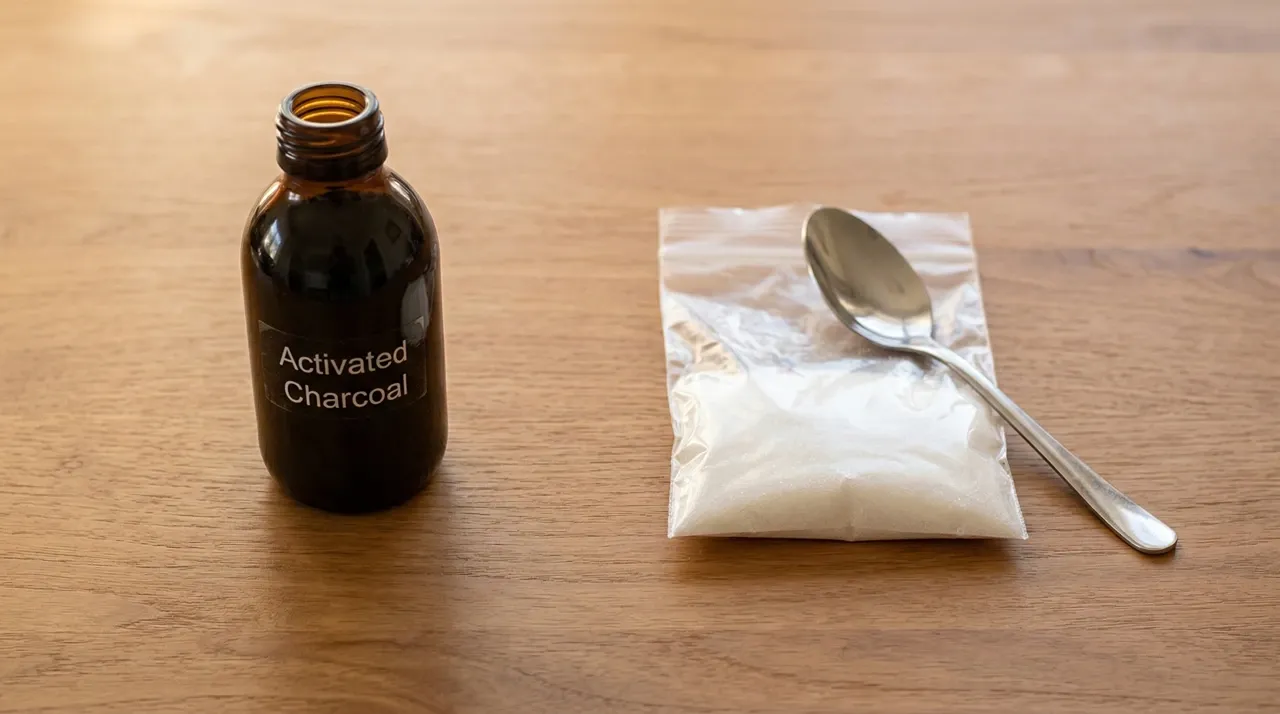
A small bottle of activated charcoal suspension is the appropriate home response to a suspected toxic ingestion: a firefly, a toxic plant, an unknown insect the dragon reached before you did. It buys time by binding toxins in the gut before systemic absorption. It is not a cure and does not make a vet visit unnecessary. Give it on the way to an emergency vet, not instead of going.
Plain White Sugar
A cloacal prolapse is a same-day vet emergency, but what you do in the gap between discovery and arrival matters. Plain white sugar dissolved in warm water (one teaspoon per three ounces) creates an osmotic solution that draws fluid out of prolapsed tissue and prevents it from swelling further during transport.
It does not fix the prolapse. It keeps the tissue in better condition until the vet can act. A small sealed bag of plain sugar takes up no space and may make a real difference to the outcome.
What to Leave Out of the Kit
Several items appear on reptile first aid lists and should not be near a bearded dragon wound. Hydrogen peroxide damages healthy tissue at wound margins and slows healing. Saline and diluted Betadine do the same job without the tissue cost.
Tea tree oil is toxic to reptiles applied to broken skin at any concentration, regardless of how it gets described as a natural alternative. Human burn creams are formulated for mammalian skin and contain active ingredients that are either untested or harmful in reptiles.
Petroleum jelly seals the wound surface, traps bacteria, and interferes with normal tissue repair. Pain-relief formula Neosporin looks identical to the safe version on the shelf. The active ingredients label is the only way to tell them apart, covered in full in the wound care section above.
The One Sheet Every Kit Needs
Print a card and tape it inside the lid of the kit container. It needs three things: your regular reptile vet’s number with any after-hours line, the address and number of the nearest emergency exotic vet, and the ASPCA Animal Poison Control number (888-426-4435). Note there is a per-incident consultation fee for poison control.
When something is wrong at midnight, you will not search for this information calmly. The card is there so you open the box and the number is already in front of you.
Update the card whenever your vet changes, whenever you move, and at minimum once a year. An outdated emergency vet address is as useful as no address at all.
One more habit worth building: photograph any wound before you clean it. A date-stamped image taken at discovery gives a vet a clear baseline. It also removes ambiguity about whether the wound has changed by the time you call two days later.
How to Store It
A waterproof hard-sided container, a tackle box or a lidded storage box, keeps everything organised and protects liquid bottles from breaking. Label the outside so anyone in your household can find it. Store it at room temperature away from direct sunlight. Heat degrades Betadine and triple antibiotic ointment faster than most people expect, and a bathroom cabinet above a radiator is not a suitable location.
Check expiry dates every six months. Betadine and saline both expire and lose effectiveness before the bottle runs out. Styptic powder and gauze last longer but should still be checked for contamination. Replace anything expired, anything opened and left partially used for an unknown period, or anything you cannot clearly remember buying.
Frequently Asked Questions
What size container do I need
A standard tackle box or a 2–3 litre hard-sided container holds everything on this list comfortably. The goal is one location for every item, not a large kit. Smaller is better provided nothing gets crushed or buried.
Can I Use Human First Aid Products
Some yes, some no. Plain triple antibiotic ointment, sterile gauze, saline, and diluted Betadine all work. Human burn creams, pain-relief Neosporin, hydrogen peroxide, and tea tree products should never be used on a reptile wound.
Is Betadine Safe on an Open Wound
Full-strength Betadine is too concentrated for open tissue. Dilute it to a light tea colour before applying: one part Betadine to ten parts water. That dilution still disinfects effectively without damaging tissue at the wound margins.
Do I Need a Reptile-Specific Kit
No pre-packaged kit is necessary. Most items on this list come from a pharmacy or online for well under £25 total. What matters is knowing which items are safe and which common products cause harm in reptiles.
What If the Emergency Happens at 2am
Assess whether this is a kit situation or a vet situation first. Minor surface wounds, nail bleeds, stuck shed, and power outage warming are kit situations. Blistering, necrotic tissue, prolapse, or a dragon that is unresponsive or declining are vet situations regardless of the hour. The emergency vet number should already be on the card inside the kit lid.
Your Bearded Dragon First Aid Kit Checklist
- ✅ Povidone-iodine (Betadine), small bottle. Dilute one part to ten parts water before applying to any wound.
- ✅ Sterile saline wound wash. For flushing wounds and rinsing eyes. Not contact lens solution.
- ✅ Plain triple antibiotic ointment. No pain relief formula. Check the active ingredients label, not just the front of the box.
- ✅ Non-stick sterile gauze pads. Multiple sizes. Non-adhesive only.
- ✅ Self-adhesive bandage wrap. Vet wrap — sticks to itself, not to scales.
- ✅ Styptic powder. For nail bleeds during trimming. Works in seconds.
- ✅ Curved-tip tweezers. For removing debris from wounds cleanly.
- ✅ Cotton swabs. For applying mineral oil to stuck shed on toes.
- ✅ Instant hand warmers, 2–3 packets. Always double-wrapped in fleece. Never direct contact with skin.
- ✅ Oral syringes, 1cc and 5cc. For administering water and diluted electrolytes.
- ✅ Electrolyte powder, unflavoured. Dilute 50/50 with water before use.
- ✅ Mineral oil, small bottle. External use on stuck shed only. Not for oral use at home.
- ✅ Activated charcoal suspension. Suspected poisoning only. Give it on the way to the vet, not instead of going.
- ✅ Plain white sugar, small sealed bag. Prolapse transport only — 1 tsp per 3oz warm water to reduce tissue swelling.
- ✅ Emergency contact card inside the lid. Reptile vet, emergency exotic vet, ASPCA Poison Control 888-426-4435.
Disclaimer: This article is for general husbandry guidance only and does not constitute veterinary advice. A first aid kit is appropriate for minor injuries and short-term home management of minor emergencies only. Any wound involving blistering, necrotic tissue, prolapse, or a dragon showing lethargy, appetite loss, or declining condition warrants same-day contact with a qualified reptile veterinarian.
Written by
Sarah ArdleySarah has kept bearded dragons for over ten years. She founded Beardie Husbandry after discovering that most mainstream care advice — including what she followed with her first dragon — was doing more harm than good. Every article on this site is grounded in veterinary research and real keeper experience.