Bearded Dragon Mealworms: Safe Treat or Risky Staple?
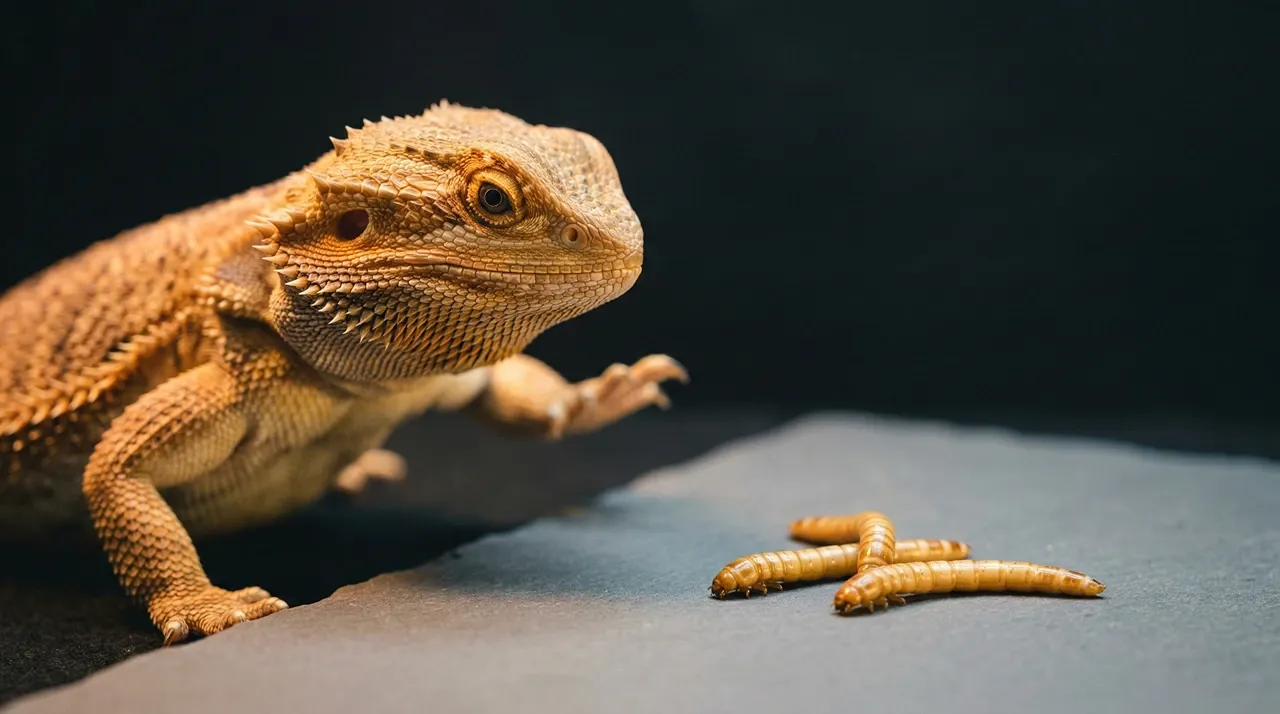
Bearded dragon mealworms are sold in every pet shop next to the crickets, which is most of the reason so many owners try them. They are cheap, easy to store, and dragons pursue them with an enthusiasm they rarely show for other feeders. That enthusiasm is part of the problem. Mealworms are not dangerous the way a toxic plant is dangerous, but they carry a combination of nutritional drawbacks that make them a poor regular feeder and a genuinely bad choice for any dragon under twelve months old.
The “fine in moderation” advice that appears on most care sites is not wrong, but moderation without a number means nothing.
What Is Actually in a Bearded Dragon Mealworm
Mealworms are the larval stage of the darkling beetle. What makes them attractive to dragons — and to the pet trade — is their fat content. They are dense, calorie-rich, and trigger a strong feeding response. A mealworm runs roughly 12 to 14 percent fat by dry weight, which is high for a feeder insect. A dragon eating bearded dragon mealworms regularly takes in significantly more fat than it needs, particularly given how little movement a captive dragon gets compared to a wild one.
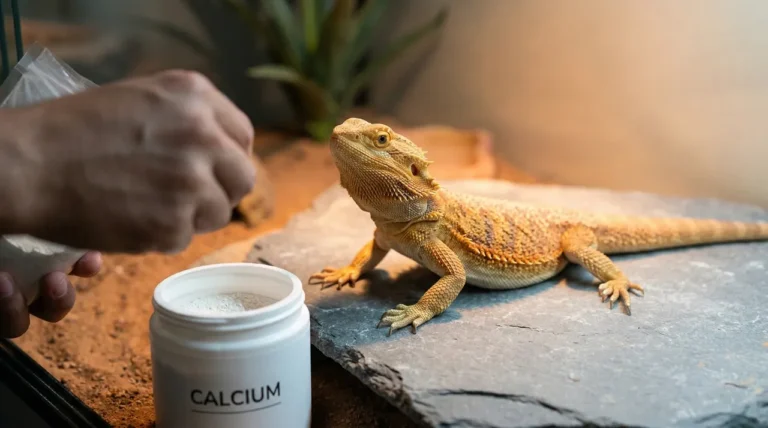
The calcium-to-phosphorus ratio is the second issue. Mealworms sit at approximately 1:7 calcium to phosphorus — inverted in entirely the wrong direction. Bearded dragons need calcium-heavy feeders or they draw calcium from their own bones over time, which is how metabolic bone disease develops. Dusting mealworms with calcium helps, but it does not correct a 1:7 ratio to anything close to adequate.
The protein content is also lower than most owners realise. Dubia roaches, crickets, and black soldier fly larvae all deliver more usable protein per gram — partly because of the chitin issue covered below.
What Chitin Does in the Gut
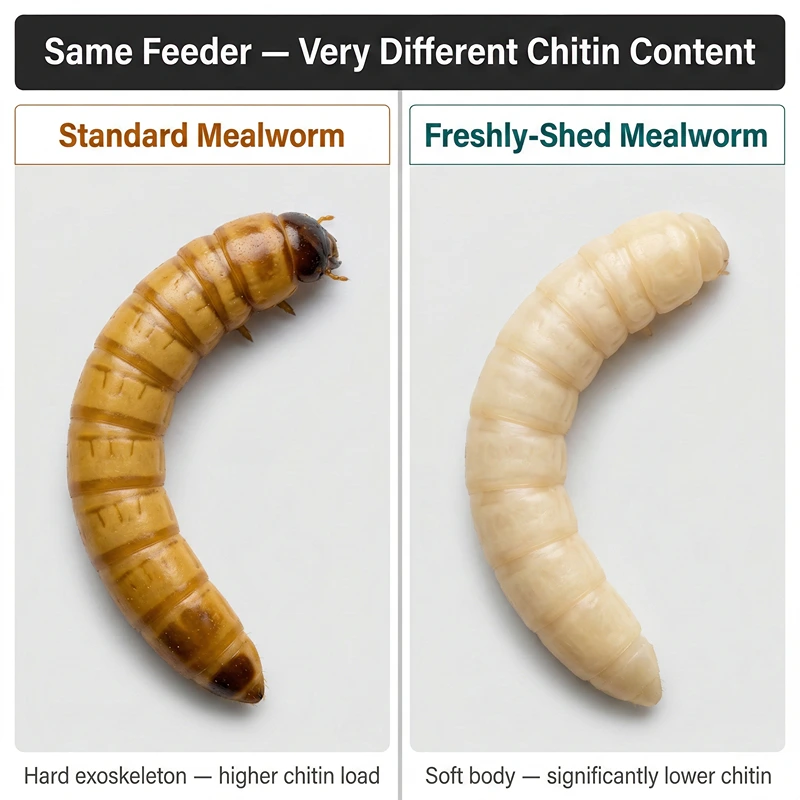
Chitin is the structural material that forms an insect’s exoskeleton. Bearded dragons produce no enzyme capable of breaking it down. In a cricket or a dubia roach, the exoskeleton is relatively thin. In a mealworm, the shell makes up a much larger proportion of total body mass, which is why the problem is more pronounced here than with most other feeders.
A dragon eating bearded dragon mealworms cannot fully digest that shell. The chitin passes through the gut largely intact. Fed once in a while, this is not significant. Fed regularly, indigestible bulk accumulates and slows gut motility. Slowed gut motility is the precursor to constipation and, in more serious cases, impaction. The risk compounds in dragons that are not well hydrated, not basking at correct temperatures, or not getting much movement — which describes a large number of captive bearded dragons.
Chitin also binds to some of the mealworm’s protein, reducing how much the dragon actually absorbs. The nutritional numbers look reasonable on paper. What gets used is less.
Why Juveniles Are a Different Case Entirely
A juvenile bearded dragon under twelve months is growing fast and eating large volumes of insects relative to its body size. Its digestive system is smaller, gut transit time is faster, and the ratio of indigestible chitin to total food volume is higher with every feeding. A young dragon eating bearded dragon mealworms regularly is not getting slightly suboptimal nutrition. It is running a real impaction risk with each feeding.
Juveniles also develop food preferences quickly. A young dragon that finds mealworms early will often start refusing other feeders within a few weeks. Do not introduce bearded dragon mealworms to any dragon under twelve months. There is no nutritional gap they fill that cannot be covered by something safer.
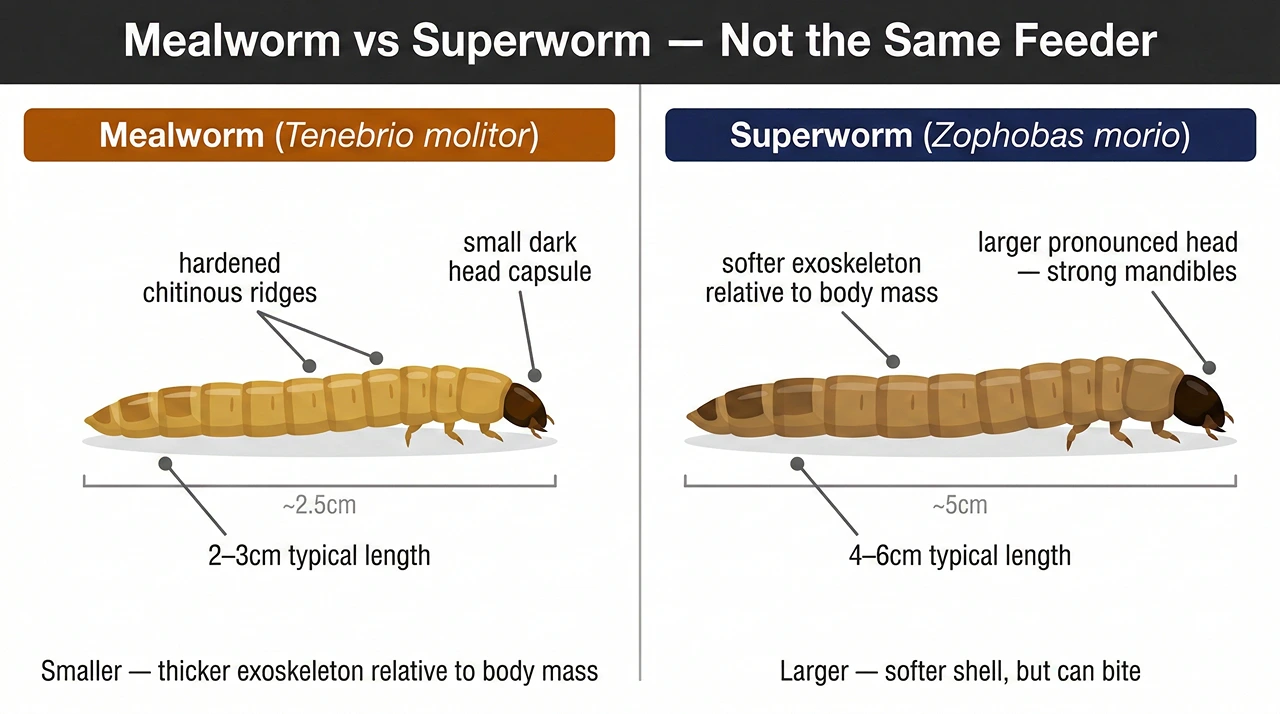
Mealworms vs Superworms — Not the Same Thing
Superworms are a different species entirely — the larva of the Zophobas morio beetle — and the two are commonly confused in care guides and pet shop labelling. Superworms are significantly larger, with a softer exoskeleton relative to their size, which reduces the chitin-per-gram problem. Their fat content is lower than bearded dragon mealworms and their protein content is higher. They are still not a staple feeder — the calcium ratio remains poor — but the impaction concern is less pronounced.
Superworms carry their own separate caution: they can bite. The mandibles are strong enough to cause a wound in the mouth or gut lining of a smaller dragon. Remove any uneaten superworms from the enclosure promptly, and do not offer them to juveniles.
The Feeding Preference Problem
Some dragons develop a strong preference for bearded dragon mealworms that progresses into outright refusal of other food. This is one of the more common feeding problems on reptile forums and it almost always starts the same way: mealworms get introduced, the dragon responds with visible enthusiasm, the owner reads enthusiasm as endorsement, and mealworms become a regular part of the rotation.
After several weeks, some dragons stop accepting crickets, roaches, or other live feeders entirely. They sit in front of a bowl of dubia roaches and ignore them.
The reason is the fat content. Mealworms deliver calorie density that other feeders do not match, and dragons learn quickly which prey item gives them the most energy per catch. In the wild that instinct helps them survive. In captivity it produces a dragon that has self-selected into a high-fat, low-calcium diet and will not eat anything else.
If you are already in this situation, the only reliable exit is to remove bearded dragon mealworms completely and offer better feeders at the normal feeding time. Gradual reduction rarely works. Most healthy adults break within five to ten days. If your dragon shows any weight loss, lethargy, or goes past ten days without eating, get a vet involved rather than continuing to wait. A hunger strike that long can have causes beyond food preference.
How Bearded Dragon Mealworms Compare to Better Feeders
| Feeder | Protein (dry wt %) | Fat (dry wt %) | Ca:P Ratio | Safe for Juveniles |
|---|---|---|---|---|
| Mealworms | ~49% | ~33% | 1:7 | No |
| Dubia Roaches | ~54% | ~7% | 1:3 | Yes |
| Crickets | ~65% | ~13% | 1:9 | Yes |
| Black Soldier Fly Larvae | ~42% | ~29% | 1.5:1 | Yes |
| Silkworms | ~63% | ~10% | 1:2 | Yes |
| Superworms | ~53% | ~23% | 1:4 | No |
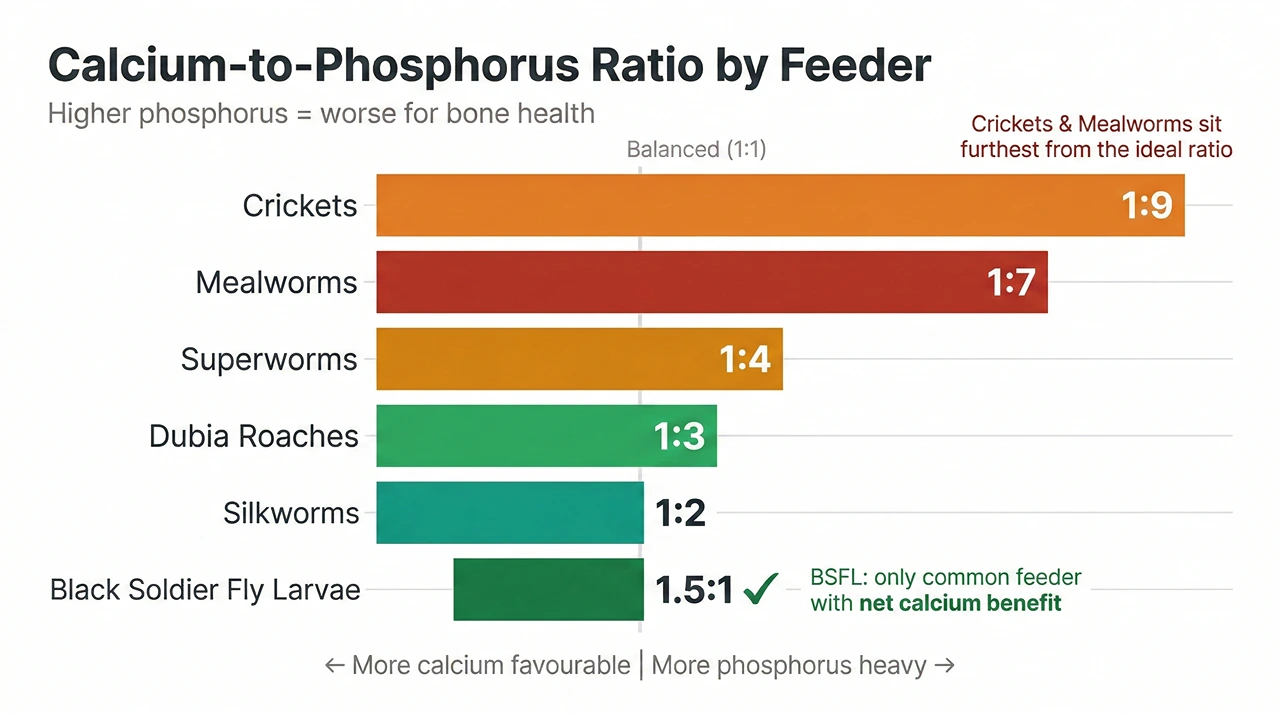
Black soldier fly larvae are the only common feeder with a calcium-to-phosphorus ratio that favours the dragon. For any keeper looking to reduce dependence on calcium dusting, they are worth building into the regular rotation. Dubia roaches are the most practical all-round staple — better protein than bearded dragon mealworms, better fat ratio, and a shelf life that makes them easier to keep than crickets.
When Mealworms Are Actually Useful
For a chronically underweight or recovering dragon refusing other feeders, the fat density that makes bearded dragon mealworms a poor everyday feeder makes them genuinely useful for short-term weight gain.
The second use case is handling and taming. Dragons that are reluctant to hand-feed often respond to bearded dragon mealworms when they ignore everything else. Two or three used as a high-value reward during handling sessions is a reasonable use without the risks of regular dietary inclusion. Keep them cold in the fridge between sessions — it slows their metabolism and keeps them alive for weeks.
Frequently Asked Questions
Can bearded dragons eat mealworms at all?
Adult bearded dragons can eat bearded dragon mealworms occasionally without immediate harm. The problems are cumulative — poor calcium ratio, high fat, and indigestible chitin that builds up with regular feeding. For any dragon under twelve months, avoid them entirely.
How many mealworms can a bearded dragon have?
For an adult, no more than five to ten bearded dragon mealworms once a week is the upper limit most experienced keepers would suggest, and only if the rest of the diet is solid. For juveniles under twelve months, that number is zero.
Why does my bearded dragon love mealworms so much?
The high fat content triggers a strong feeding response. Fat-dense prey signals high caloric value — a useful instinct for a wild animal that does not know where its next meal is coming from. In captivity it works against good nutrition because the highest-value food is also the nutritionally poorest one.
Can mealworms cause impaction in bearded dragons?
Yes, particularly in juveniles and in adults fed bearded dragon mealworms regularly without adequate hydration or correct basking temperatures. The chitin accumulates and slows gut motility over time. Acute impaction from a single feeding is unlikely, but it is a real risk across weeks of regular use.
What is the best alternative to bearded dragon mealworms?
Dubia roaches are the most practical replacement — better protein, better fat ratio, longer shelf life, and safe for all ages. Black soldier fly larvae are the best option if calcium intake is a concern. Silkworms are an excellent high-protein, low-fat choice that most dragons accept readily.
What to Do With the Tub of Mealworms You Already Have
- ✅ Dragon under twelve months — do not use them. There is no safe introduction age below one year. Return them, compost them, or use them as fishing bait.
- ✅ Adult dragon, mealworms have been occasional — finish the tub and switch. Dubia roaches or black soldier fly larvae cover everything bearded dragon mealworms were doing, with better numbers in every column.
- ✅ Dragon has developed a mealworm preference — remove them completely now. Gradual reduction does not work. Offer better feeders at the normal time and wait. Contact a vet if refusal extends past ten days or the dragon loses visible weight.
- ✅ Keeping a small supply for taming or weight recovery — store them in the fridge. Use them as a high-value reward in small numbers, not a dietary staple.
- ✅ Check your calcium supplementation regardless. Any dragon that has been eating bearded dragon mealworms as a significant part of its diet should have its dusting schedule reviewed. The 1:7 ratio means consistent supplementation is not optional.
Disclaimer: This article is for general husbandry guidance only and does not constitute veterinary advice. If your bearded dragon is showing signs of impaction, significant weight loss, or prolonged food refusal, contact a qualified reptile veterinarian.
Written by
Sarah ArdleySarah has kept bearded dragons for over ten years. She founded Beardie Husbandry after discovering that most mainstream care advice — including what she followed with her first dragon — was doing more harm than good. Every article on this site is grounded in veterinary research and real keeper experience.