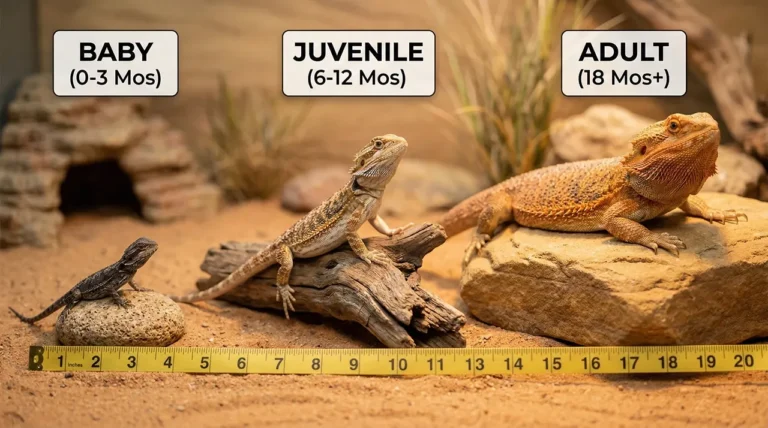
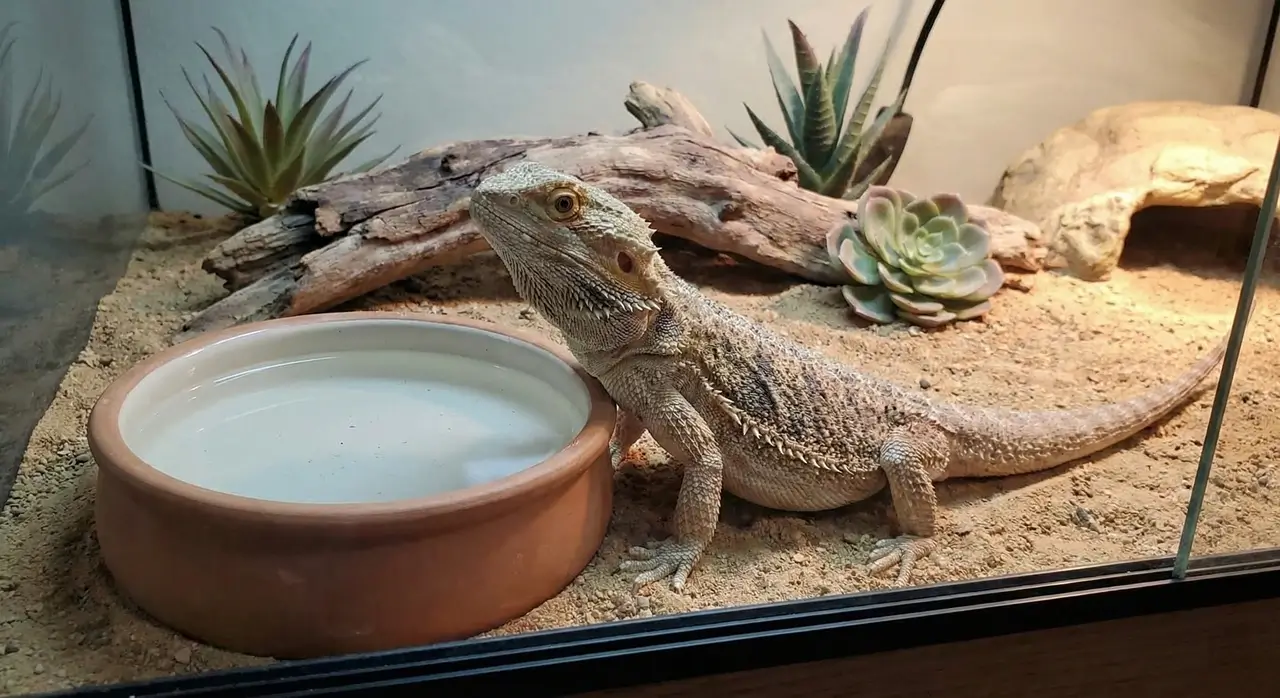
Bearded Dragon Not Drinking? How to Keep Them Hydrated
You set down a fresh, clean bowl of water, and your bearded dragon just stares at it. Or worse, they drag their belly right through it, tracking substrate everywhere, and ignore it completely.
When I first started keeping dragons, I assumed the water bowl was enough too. Keeping a dragon hydrated is actually pretty simple once you understand what they recognize as “water.” Because they are desert dwellers, a lot of new owners assume they barely need fluids at all. While they certainly don’t lap up water like a dog, managing their hydration is a vital part of daily care that keeps their digestion moving and prevents severe impaction.
Why Your Dragon Ignores the Water Bowl
Bearded dragons are highly stimulated by movement. In the wild Australian outback, they don’t encounter deep puddles. They get their moisture from morning dew rolling off leaves, native vegetation, and the occasional trickle of rain.
A stagnant, perfectly still bowl of water is essentially invisible to them. This is why you might catch your dragon eagerly licking the glass after you mist the tank, but completely ignoring the dish on the floor.
4 Easy Ways to Check Your Dragon’s Hydration
You want to catch dehydration early. Luckily, there are a few very quick physical checks you can do during your normal handling routine to make sure they have plenty of fluids.
1. The Skin Pinch Test
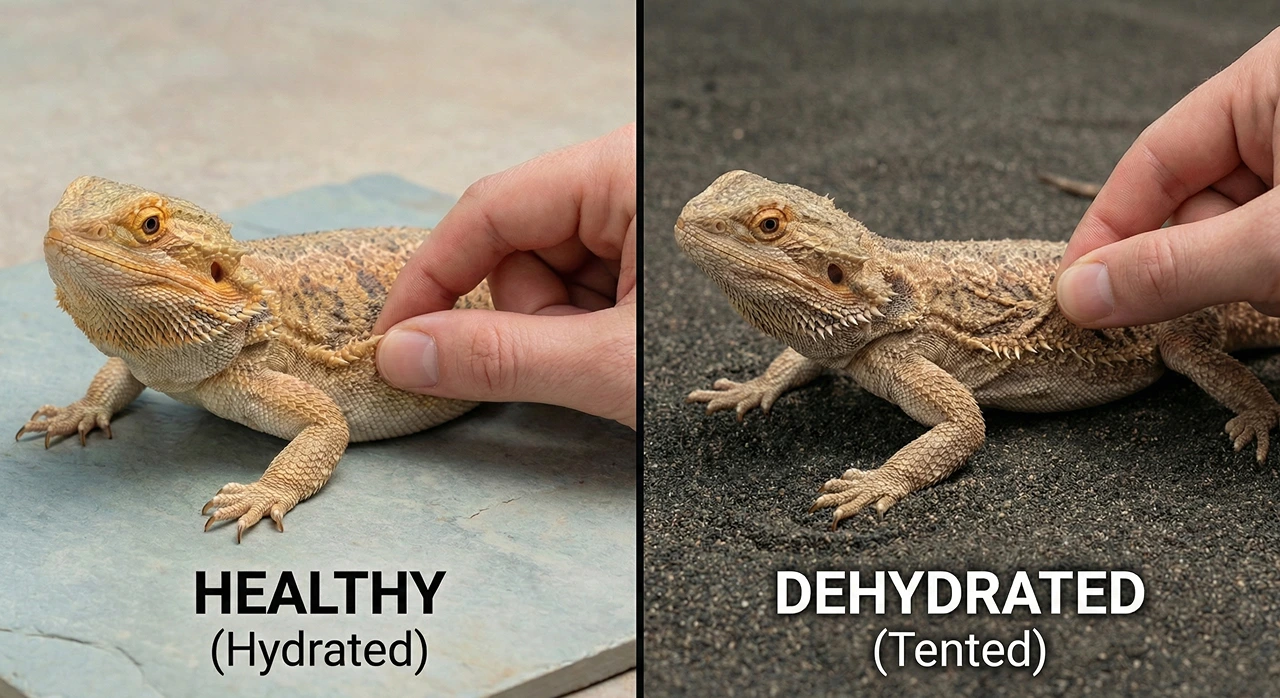
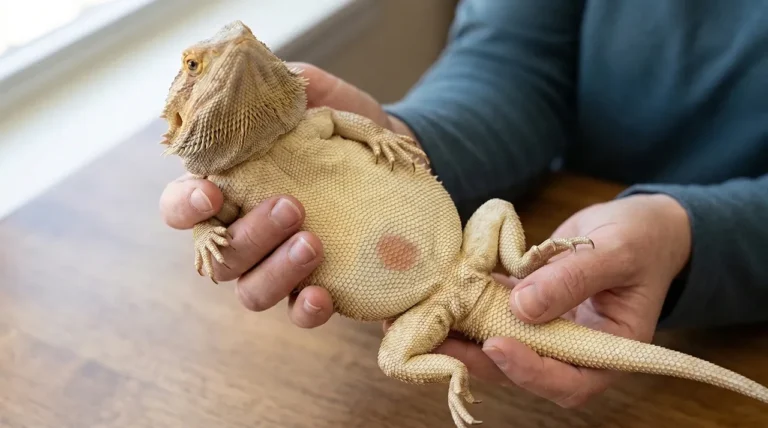
Gently pinch a small fold of loose skin on your dragon’s side with your thumb and index finger. When you let go, that skin should immediately snap back into place like a rubber band. If the skin stays peaked—looking like a tiny mountain—or slowly oozes back flat, your dragon lacks the internal moisture needed for skin elasticity. They need a drink.
2. The Chalky Urate Check
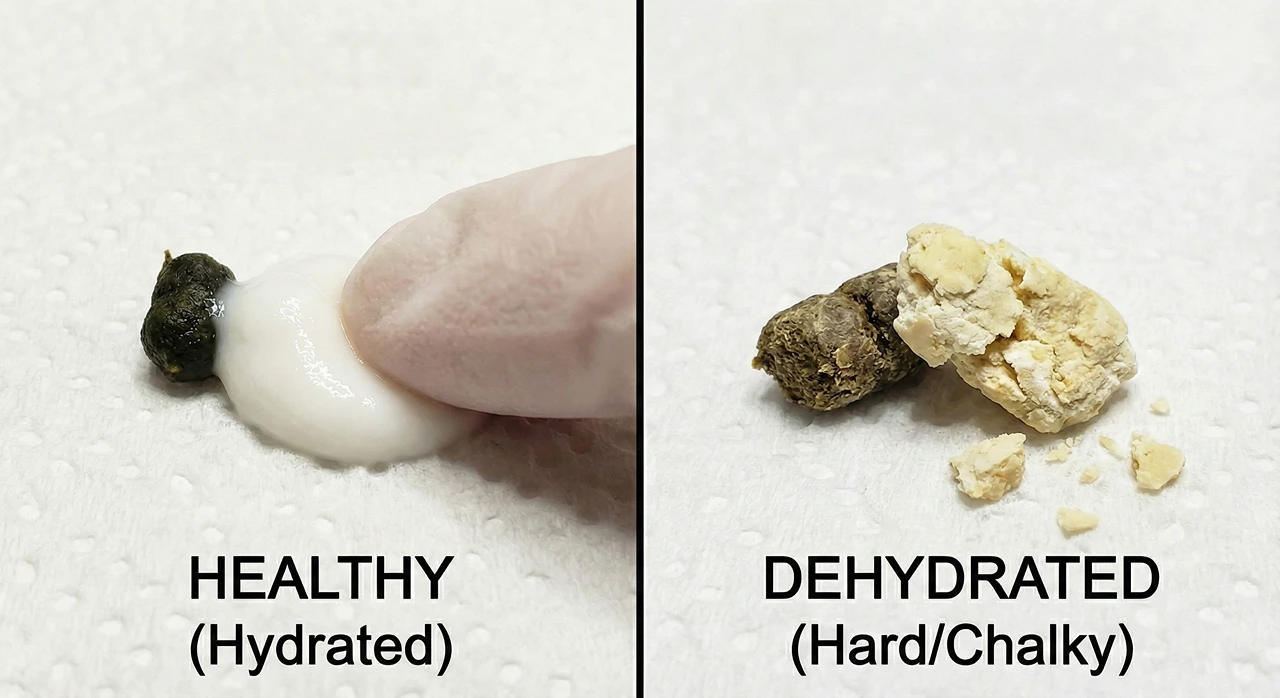
If you’ve read my bearded dragon poop guide, you know the white part of their waste is called the urate. This is how they pass liquid waste.
A healthy, hydrated urate is soft and looks a bit like a dollop of white toothpaste. If the urate is yellowed, hard, or crumbles like a piece of dry blackboard chalk when you pick it up, your dragon is running dry.
3. Checking for Tacky Saliva
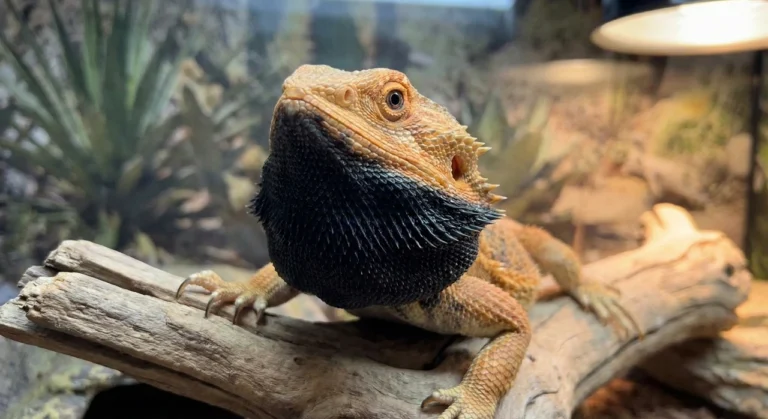
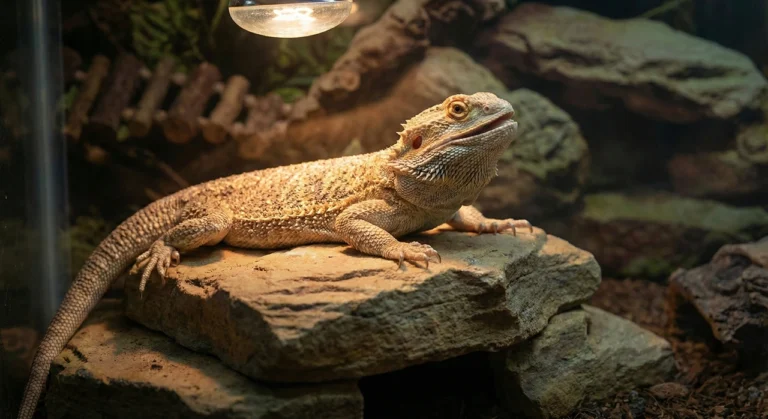
When your dragon opens its mouth to gape while basking, look inside. The saliva should be thin and watery. If you see thick, sticky, stringy threads stretching between their top and bottom jaws, they need a hydration boost.
4. Stubborn, Stuck Shed
If your dragon is constantly struggling with shedding, particularly leaving tight rings of old skin around their toes or the tip of their tail, they might not have enough moisture to easily separate the old skin from the new. If ignored, this can cut off circulation and cause tail rot.
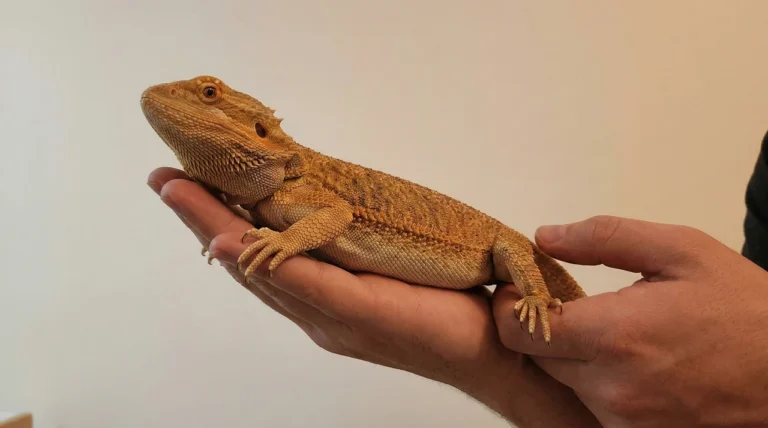
Look at your dragon’s sides when they are resting flat. While some side wrinkles are completely normal, the scales shouldn’t look severely folded or feel like crinkled paper. A well-hydrated dragon feels somewhat plump and resembles smooth, textured leather.
The Hydration Triage Guide
| What You See | What It Means | What to Do |
|---|---|---|
| Chalky, hard urates | Mild dehydration | Mist their daily salad heavily before serving. |
| Skin stays peaked when pinched | Moderate dehydration | Offer water via dropper and add hornworms to their diet. |
| Sunken eyes, lethargic, won’t eat | Severe dehydration | Stop home treatments. Call an exotic vet immediately. |
Stress-Free Tricks to Get Them to Drink
If your dragon is showing signs of being a little dry, you just need to change how you deliver the water. Here are the methods I use in my own enclosures.
The Dropper Method
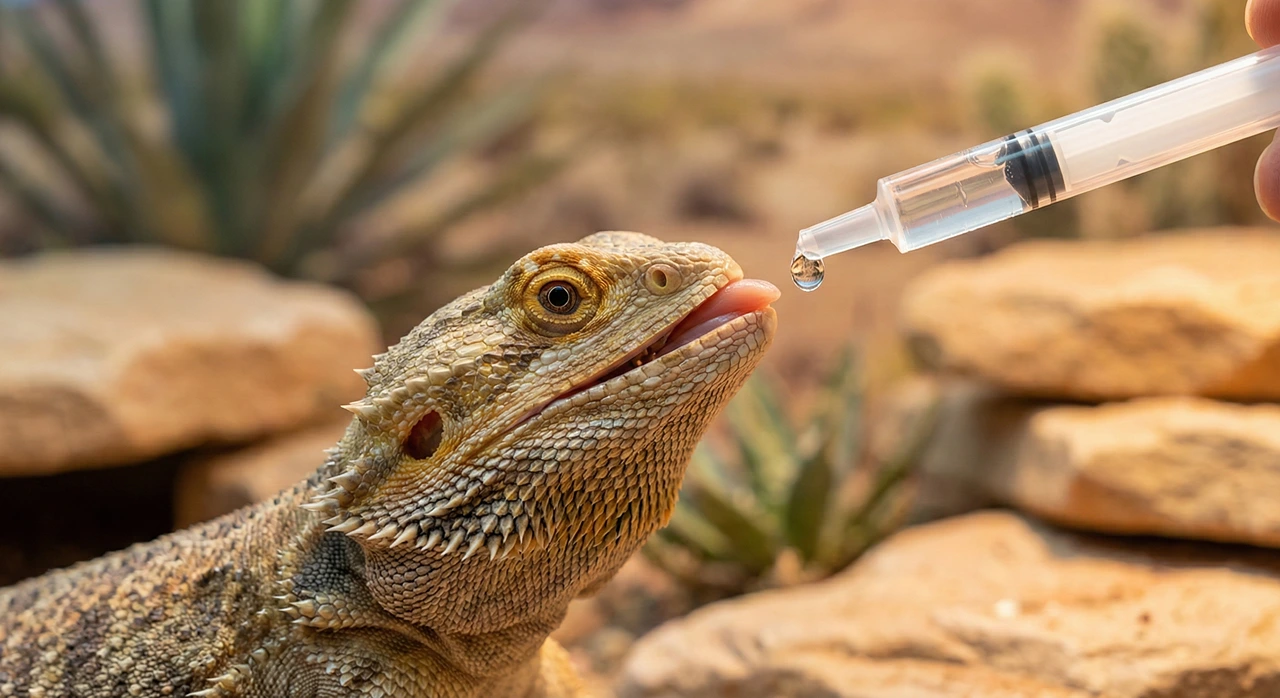
Buy a cheap plastic medicine dropper or a needle-less oral syringe from the pharmacy. Fill it with room-temperature water. Bring the tip to the very front of their snout and slowly squeeze out a single drop so it hangs on their lips. The dragon will feel the moisture, lick their lips, and then realize it’s water.
Some dragons take to the dropper immediately, others act like it’s highly suspicious for weeks. Be patient. Sometimes you have to let that single drop sit on their nose for ten seconds before their brain registers it. Never squirt water rapidly into their mouth, or they can choke.
“Washing” the Daily Salad
Adult bearded dragons get the vast majority of their daily water from their leafy greens. Before you put the bowl into the enclosure, run the collard or mustard greens under the tap. Don’t shake them dry. When your dragon eats their salad, they naturally consume the water, too. It’s completely passive and highly effective.
Hydrating Feeder Insects
Hornworms are thick, bright green caterpillars that are composed of roughly 85% water. Feeding a couple of hornworms a week alongside your staple dubia roaches is a great way to keep fluids up. You can check our food list for other hydrating veggies like cucumber, but keep those as rare treats so you don’t upset their stomach.
The Shallow Soak
Many dragons naturally lower their heads to take a long drink while they are in the water. If you want to offer a soak, fill a plastic tub with lukewarm water—around 85°F to 90°F. The water should never go higher than their elbows. Let them soak for 10-15 minutes. You can read more about safe soaking practices in our bathing guide.
Can a Bearded Dragon Drink Too Much?
Yes. If you panic and suddenly feed your dragon ten hornworms and a bowl of watery cucumbers in one afternoon, they will get diarrhea. Over-hydration flushes out their system too fast and creates messy, foul-smelling stools. Stick to the steady, daily routines below rather than trying to “fix” them all at once.
A Simple Daily Hydration Routine
- Morning: Prepare the fresh salad and wet it down thoroughly before placing it in the tank.
- Mid-Day (Twice a week): Offer water via a plastic dropper or syringe onto their snout.
- Weekly: Include one high-moisture feeder insect, like a hornworm, into their bug rotation.
Frequently Asked Questions (FAQ)
1. Do bearded dragons absorb water through their skin?
No. I still hear this one come up constantly in pet stores and forums, but it just doesn’t hold up biologically. Bearded dragons have thick, waterproof scales designed to keep moisture inside their bodies to survive in the desert. They do not soak up water like a sponge through their skin or their cloaca. They have to physically drink it.
2. Can I use regular tap water?
Usually, yes. If your tap water is safe for you to drink, it is generally safe for your dragon. If your local water is heavily chlorinated, you can use bottled spring water or add a single drop of a reptile-safe water conditioner.
3. Do baby bearded dragons need more water than adults?
Yes. Babies dehydrate much faster because of their small body mass and the intense heat of their basking spot. Since babies eat mostly insects and very few greens, they miss out on the hydration adult dragons get from salads. You should offer babies water via a dropper daily.
4. Should I spray or mist my bearded dragon inside the tank?
I prefer not to mist heavily inside the enclosure. While a light spritz directly on the dragon’s nose is fine to encourage drinking, soaking the whole tank raises the humidity. High humidity combined with heat creates a breeding ground for bacteria and increases the risk of a respiratory infection.
Hydration Summary Checklist
- Look for bouncy, elastic skin and white, toothpaste-like urates.
- Drip water directly onto their snout using a plastic syringe.
- Serve salads wet, straight from the sink.
- Offer occasional high-moisture bugs like hornworms.
- Provide shallow, supervised baths to encourage drinking.
Medical Disclaimer: I am an experienced keeper, but I am not a veterinarian. This guide is meant to help you perfect your daily husbandry. If your dragon has severely sunken eyes, is highly lethargic, or refuses to eat or drink for an extended period, please find a qualified exotic vet for a checkup.
Written by
Sarah ArdleySarah has kept bearded dragons for over ten years. She founded Beardie Husbandry after discovering that most mainstream care advice — including what she followed with her first dragon — was doing more harm than good. Every article on this site is grounded in veterinary research and real keeper experience.