Bearded Dragon Shedding Signs, Stuck Shed and What to Do
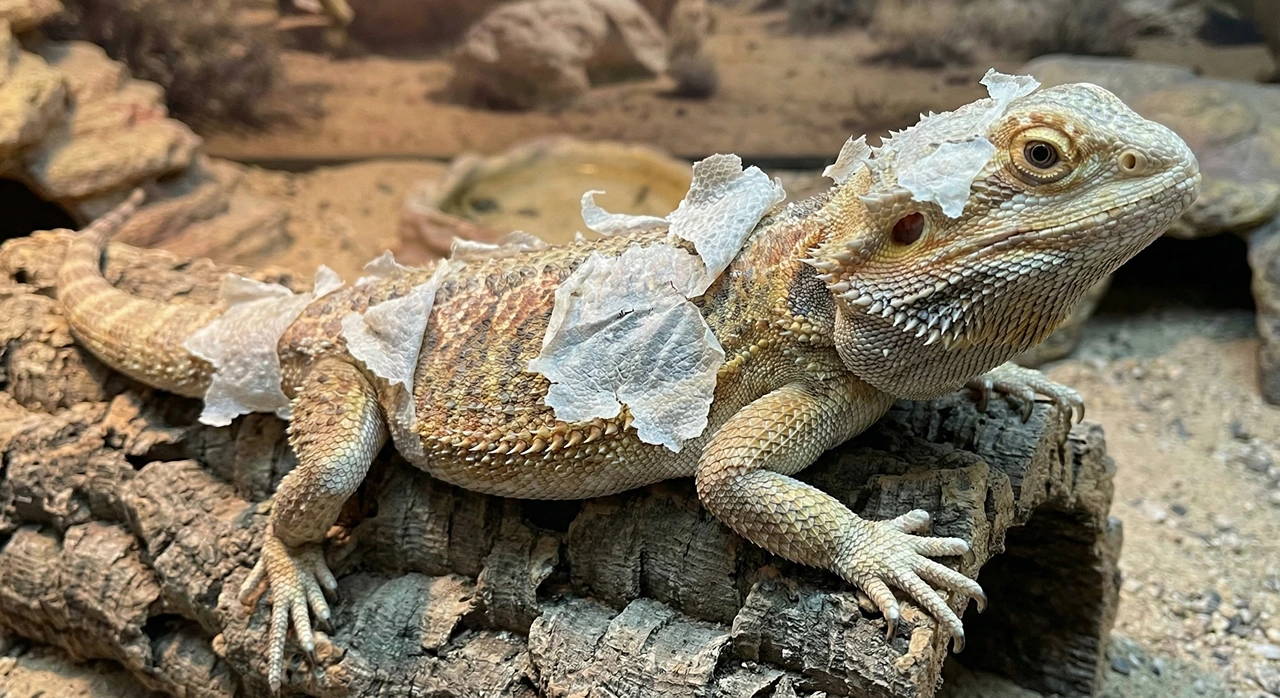
Most owners notice the colour change first. The skin looks dull, almost ashy, and then the food refusal starts. Bearded dragon shedding can look genuinely alarming the first time around, particularly when the eyes begin to bulge or loose flaps of skin make your dragon look like it’s unravelling at the seams. It is not an emergency. It is biology doing exactly what it should.
The skin of a bearded dragon is keratin-based, inelastic, and non-porous. It cannot stretch as the animal grows, and it ages and accumulates damage just like any organic material. A new layer forms underneath, the old one loses its attachment to the tissue below, and eventually it peels or falls away in patches. Every dragon does this for its entire life.
Where problems actually come from is almost always keeper error, either ignoring stuck shed until it restricts circulation, or intervening too early and pulling skin that has not separated naturally. Both cause real harm. Understanding the difference between normal bearded dragon shedding and something that needs attention is the whole point.
Why Baby Bearded Dragons Shed So Frequently
The answer is growth rate. Baby dragons grow nearly an inch per week in the first few months of life, a pace that is extraordinary for any vertebrate. That rigid, non-elastic skin has to be replaced constantly just to keep pace with the body underneath.
Keratin-based skin cannot expand. The moment the new skin layer beneath is fully formed, the biological process of separating old from new begins. The old skin desiccates, its connection to underlying tissue breaks down, and it eventually peels away, sometimes in a dramatic single piece for young dragons, more often in smaller patches as they age.
Adult dragons that have stopped growing still shed several times a year because old skin accumulates UV damage, physical abrasion from substrate and decor, and simply ages out. A healthy adult in a good setup will shed in distinct patches, not in the full-body way a juvenile does.
How Often Your Dragon Should Be Shedding
| Age | Typical Frequency | Shed Pattern |
|---|---|---|
| 0–3 months | Weekly or faster | Full body, often rapid (1–2 days) |
| 3–6 months | Every 1–2 weeks | Full body, 2–4 days |
| 6–12 months | Every 4–8 weeks | Full body or large patches |
| 12–18 months | Every 6–10 weeks | Patches, often irregular order |
| 18 months and older | A few times per year | Localised patches, slow |
These are averages, not rules. A healthy juvenile at five months shedding every ten days is fine. A healthy adult shedding once every four months is also fine. What matters is consistency within your individual dragon’s own pattern.
One situation that catches owners off guard is the heavy shed that follows coming out of brumation. Dragons that have been dormant for weeks often shed significantly within the first few weeks of emerging, sometimes in larger and more ragged pieces than usual. The skin aged during the dormant period. This is expected and not a cause for concern.
What Normal Bearded Dragon Shedding Looks Like
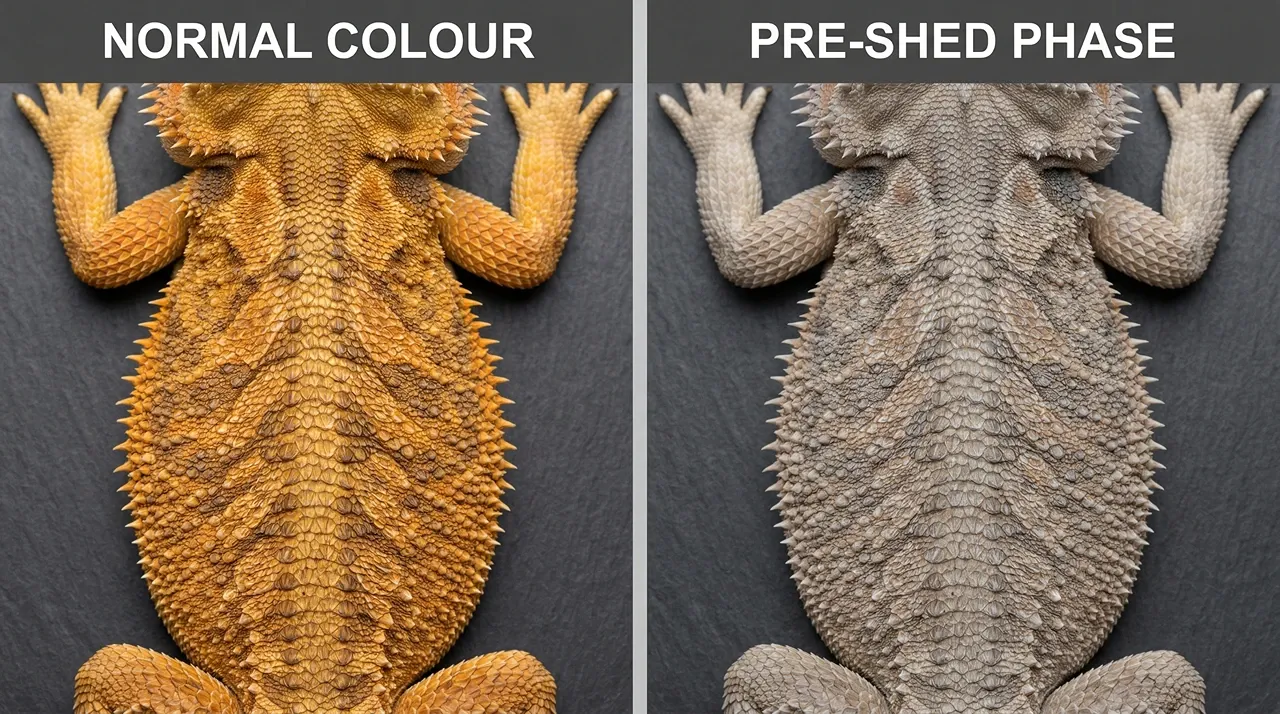
Bearded dragon shedding does not happen overnight. There is a distinct pre-shed phase lasting several days to a week, an active shedding phase where the old skin detaches, and a post-shed window where your job is to check the result rather than assist the process.
Pre-Shed Phase Looks Worse Than It Is
The first thing you will notice is colour change. Skin that is usually vivid takes on a dull, washed-out, almost grey appearance. In paler morphs this is especially striking. The surface also starts to feel faintly rough or papery rather than smooth under your fingertip.
Appetite often drops, sometimes to zero. A dragon that was eating well last week and is now turning down food and looking ashy is almost certainly entering a shed. This is normal and does not require intervention unless it continues significantly beyond the shed completing.
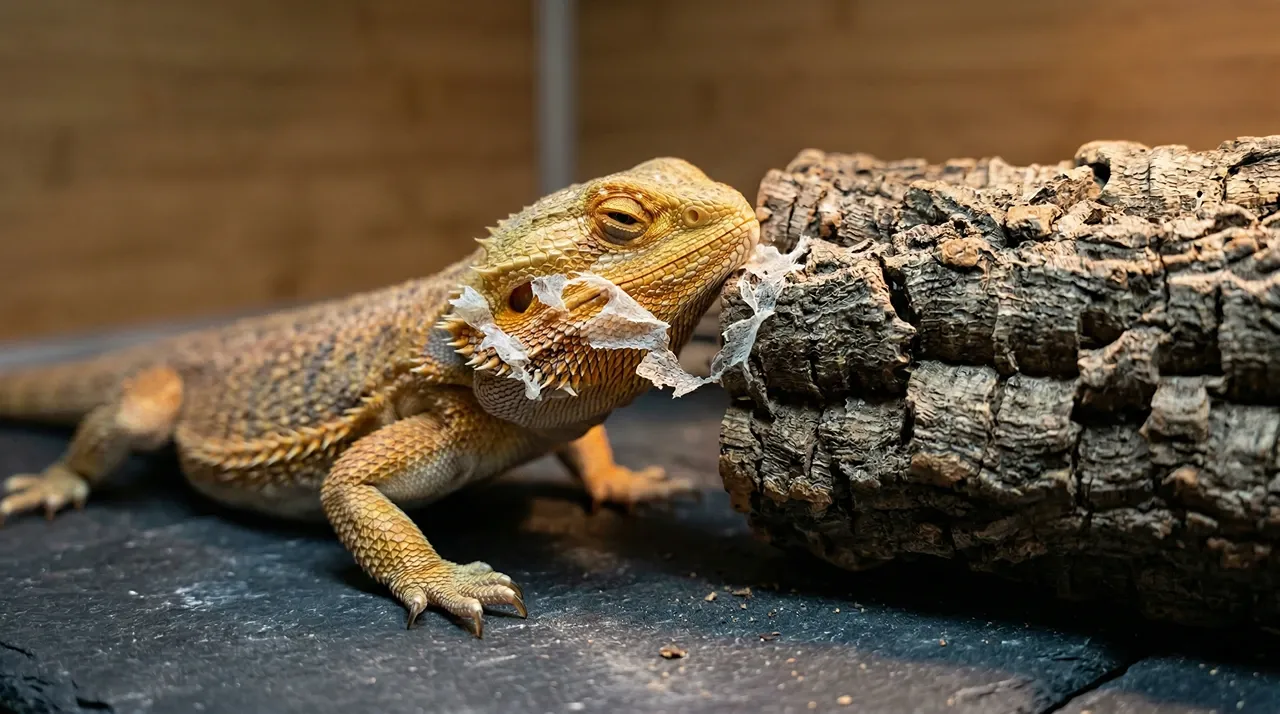
Rubbing behaviour increases. Your dragon will scrape its face deliberately along the edge of a rock, log, or decor item to begin breaking the skin loose around the beard and snout. This is the shed starting, not a sign of irritation or illness.
Eye Bulging Is Normal and Deliberate
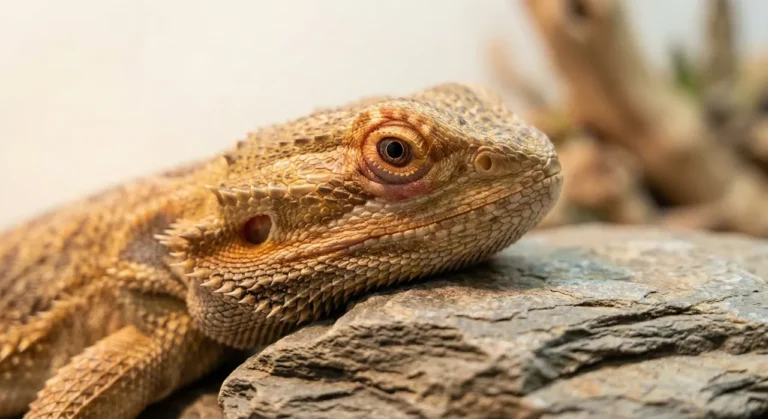
This is the one that reliably panics new owners. During a head shed, bearded dragons will push their eyes outward dramatically using blood pressure, to the point where the eyeballs look like they might leave the socket. They will not.
The bulging is entirely intentional. They are using that internal pressure to separate the thin layer of skin covering the eye, called the spectacle, from the new skin forming beneath it. Without this mechanical assist, the eye shed would be far more difficult. You will typically see it in the two or three days before the facial shed begins in earnest.
If the eye looks swollen, weeping, or has crust around it after the shed is complete, that is not normal shedding behaviour. Understanding genuine eye infection signs versus the normal bulging of pre-shed will save you an unnecessary panic call to the vet, and ensure you make the necessary one when it actually matters.
Behaviour Changes to Expect
Dragons are frequently irritable, lethargic, and resistant to handling during a shed. Their skin is itchy in a way they cannot fully relieve, handling adds pressure to sensitive tissue, and they would simply prefer to be left alone. Shedding discomfort has a specific, temporary cause. It is not illness.
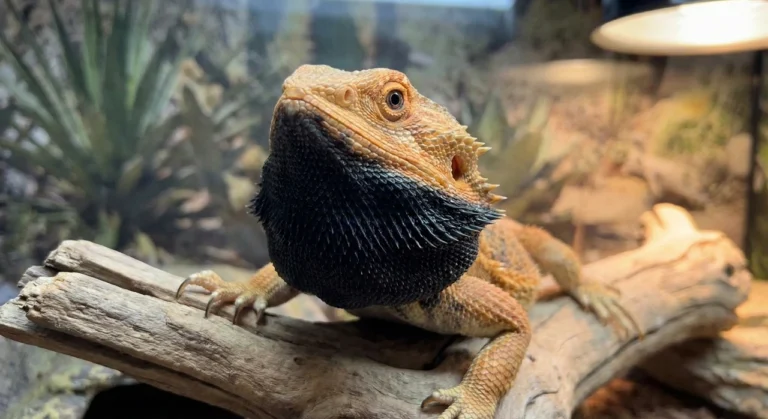
Knowing your dragon’s body language during shedding is useful. A dragon pressing flat to the floor and waving a single arm is asking you to back off. A darkened beard when you reach into the enclosure is the same message, slightly more firmly delivered. Limit handling to the minimum needed for welfare checks and let the shed run its course.
What to Do During a Normal Shed
In most cases, the answer is very little. A healthy dragon in a correctly set-up enclosure will complete the vast majority of a shed without any assistance from you.
The two things that genuinely support a clean shed are maintaining appropriate rough surfaces and keeping the dragon hydrated. Your enclosure should have cork bark, slate tiles, or a textured log your dragon can rub against. A smooth-walled setup with no abrasive surfaces makes shedding harder and increases retained shed risk on every cycle.
One warm bath during an active shed is reasonable and can help loosen skin that is already starting to come away. Use water at 90–100°F. The correct soak technique, particularly water depth and how you handle a dragon that is already stressed, matters more than most owners realise when the animal is already irritable.
After soaking, let your dragon walk across a slightly damp textured towel. The gentle friction helps dislodge loose skin without any force from you. Do not rub. Do not try to peel patches that are still holding.
What Stuck Shed Looks Like
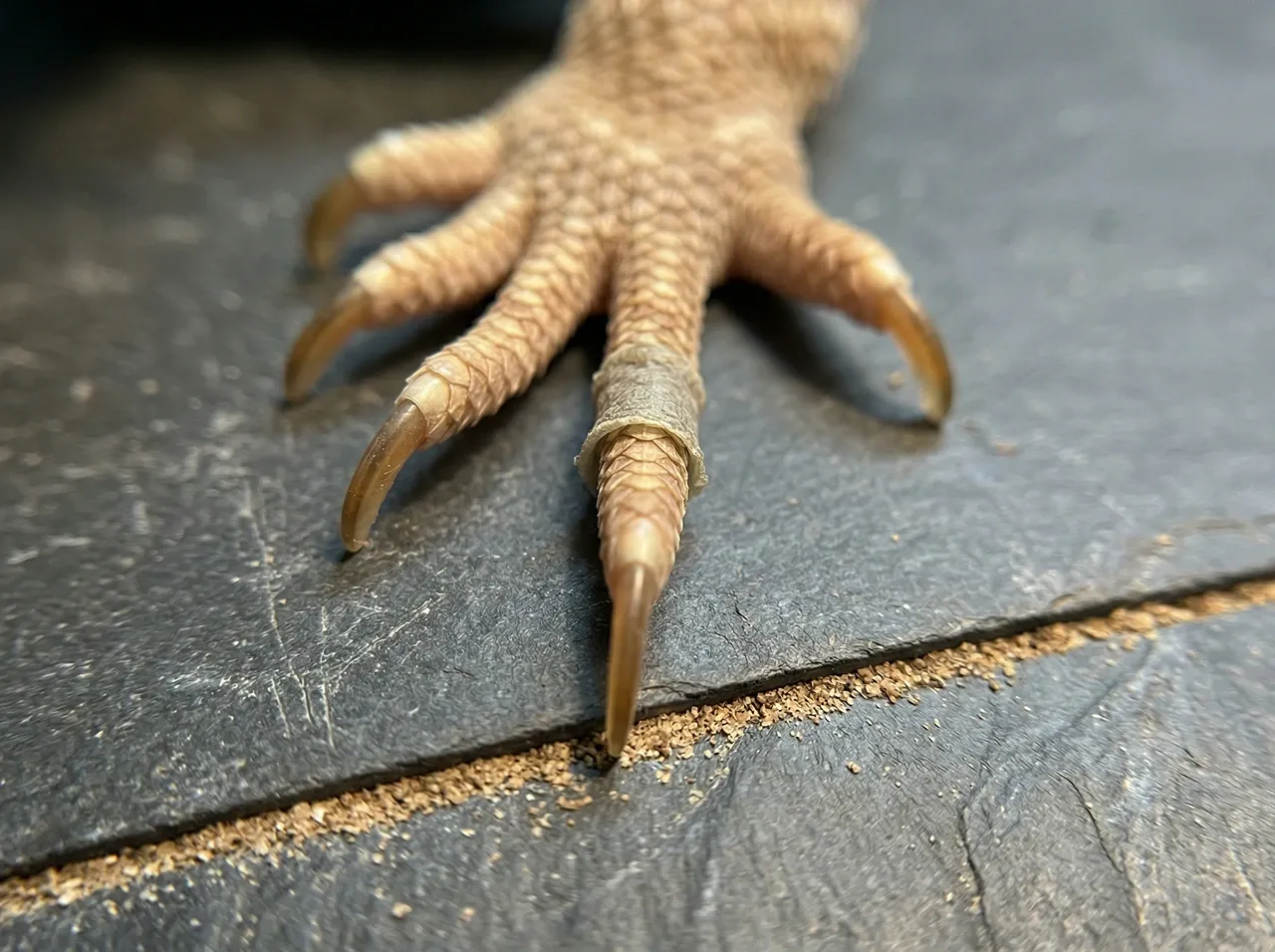
Stuck shed, or retained ecdysis, is old skin that fails to detach completely once the rest of the shed is done. It dries down against the new skin beneath it, and as it desiccates it tightens, especially over cylindrical structures like toes and the tail tip where there is very little room for that compression to go.
Early stuck shed does not always look dramatic. It can appear as a slightly chalky or opaque patch, a little duller and flatter than the surrounding area. As it dries further it becomes papery and begins to constrict. The visual sign to look for is a ring of lighter or more translucent skin at the base of a toe or around the tail tip, slightly raised or with a lifted edge.
The Spots Every Keeper Should Check After a Shed
Make this a habit. It takes two minutes and catches problems before they have time to develop into anything serious.
- Toes and individual digits: Each toe should look clean and uniformly coloured. A toe that looks swollen above a ring of tighter, dried skin has stuck shed that is starting to restrict blood flow.
- Tail tip: The narrowest point concentrates constriction fastest. Repeated stuck shed at the tail tip, left untreated across several shed cycles, is one of the documented pathways into tail rot.
- Around the eyes: A retained spectacle looks like a cloudy, slightly thickened film over one or both eyes. The dragon may squint or keep that eye partially closed.
- Under the beard and chin: Frequently missed during a visual check. Dried patches under the chin can cause mild irritation if left, and are often the start of a stuck shed pattern that repeats.
- Between the toes: Run a fingertip gently through the webbing. You are feeling for resistance or a ring of papery skin that does not move with the surrounding tissue.
How to Remove Stuck Shed Safely
Warm water and time are the primary tools. Fill a shallow container with water at 95°F and let the affected area soak for fifteen to twenty minutes. Properly rehydrated stuck shed will begin to lift at the edges on its own, without you doing anything more than holding the dragon in the water.
After soaking, use the pad of a damp finger and apply very gentle circular pressure over the stuck area. You are not peeling or pulling. You are encouraging skin that has already fully released to roll away from the underlying surface. There should be almost no resistance. If there is resistance, soak longer rather than pressing harder.
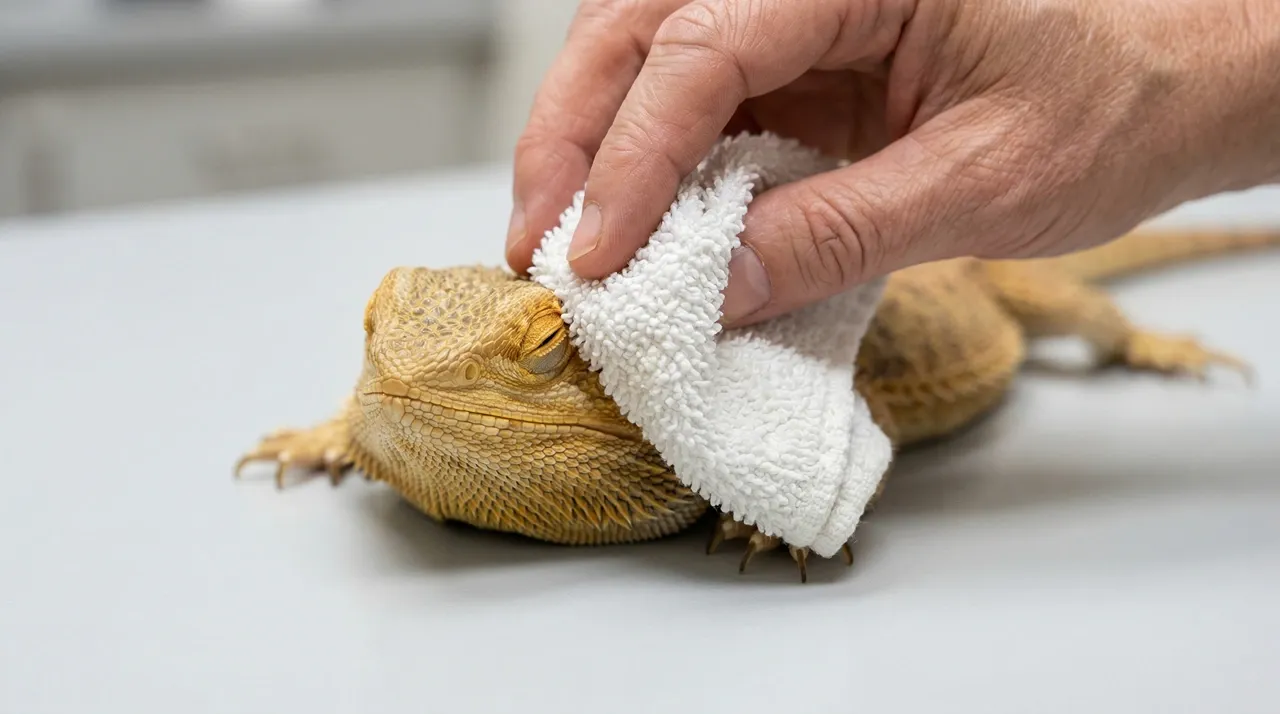
A soft toothbrush used with almost no pressure in small circular motions, on a fully soaked patch on the body, can help shift stubborn areas. Never use it around the eyes or directly on the tail tip. On those areas, patience and repeated soaks over consecutive days is the correct approach.
For retained spectacles over the eyes, hold a warm damp compress gently against the closed eye for several minutes. This rehydrates without risking water entering the eye directly. If the spectacle does not release after two or three attempts on consecutive days, a reptile vet needs to remove it. Do not attempt to physically lift or peel an eye cap at home.
When Stuck Shed Needs a Vet
| What You See | What It Means | Action |
|---|---|---|
| Small dry patch on the body, no swelling | Normal stuck shed | Warm soak, gentle circular pressure |
| Toe swollen above a ring of tight skin | Circulation beginning to restrict | Soak immediately. Vet within 24 hours if no improvement |
| Tail tip darkening or turning black or grey | Circulation cut off, possible tissue death beginning | Vet same day. Do not wait or attempt home removal |
| Cloudy film over one or both eyes after shed | Retained spectacle | Warm compress. Vet if not released within 2–3 days |
| Redness or swelling alongside stuck shed | Infection beginning | Vet within 24 hours |
| Dragon not bearing weight on a toe or foot | Significant pain, likely infection or tissue loss | Vet same day |
| Foul or putrid smell from a stuck shed area | Infection or necrosis present | Vet same day |
The two situations that cannot wait are a darkening tail tip and any digit your dragon is protecting or not putting weight on. Tissue begins to die quickly once circulation is cut off, and a vet can address constricting shed with appropriate instruments in a controlled way. Forcing it at home at that stage risks tearing tissue and worsening the infection.
A smell most owners do not think to check for is one of the most useful indicators. Fresh shed skin has a faint organic scent. A strongly unpleasant or putrid smell around a stuck shed area, particularly on the tail or toes, almost always means infection or tissue death is already underway.
Why Your Dragon Keeps Getting Stuck Shed
The occasional stuck toe after a shed is not unusual. Stuck shed after every single cycle, in the same spots or across the body generally, is a husbandry problem.
Chronic dehydration is the most common root cause. A dragon that is consistently under-hydrated produces drier, more brittle skin, and the separation between old and new skin is less clean. Watching for the early signs of dehydration, specifically slightly sunken eyes, concentrated dark urates, and skin that tents slowly when gently pinched, often reveals the problem before stuck shed becomes a repeating pattern.
Nutrition is the second most common cause, specifically calcium and vitamin D3 status. Both are directly involved in skin cell formation. A dragon on an inadequate supplementation routine will often show poor shed quality before it shows obvious skeletal symptoms, because skin turns over constantly. If sheds are consistently patchy, incomplete, or leave large amounts of stuck skin behind, the supplement schedule is worth reviewing before anything else.
UVB inadequacy compounds both. Poor UVB means poor vitamin D3 synthesis, which affects calcium metabolism, which affects the quality of skin cells being formed. An ageing bulb past its useful lifespan will underperform on UV output long before it appears dim to the naked eye.
The connection between metabolic bone disease and skin quality is underappreciated by most keepers. Recurring poor sheds are sometimes the first visible symptom, appearing well before any skeletal changes.
A dragon with no rough surfaces cannot properly initiate a shed. Substrate choice plays a larger role than most owners recognise. Loose sand provides almost no useful abrasion, while slate or ceramic tile gives your dragon something productive to work against. If the enclosure is smooth-walled with minimal decor, this is likely contributing to the problem.
Frequently Asked Questions
How Long Does a Full Shed Actually Take
Babies can complete a full-body shed in one to three days. Juveniles typically take four to seven days. Adults shedding in patches may take one to two weeks for all areas to clear, and different body sections will often finish at different times. A beard shedding two weeks after the back is completely normal.
Should I Remove Shed Skin From the Enclosure
Yes, once it has fully detached. Your dragon may eat some of it, as old skin contains calcium and this is normal behaviour, but leaving large accumulations creates a hygiene issue and can make it harder to spot new shed beginning. Remove loose shed daily during an active cycle.
Is a Black Beard During Shedding Normal
Yes, bearding up and showing stress marks on the belly during a shed is common. Shedding is uncomfortable, and stress colouration is a normal response. If the black beard persists for more than a day or two after the shed is complete, something else is contributing and is worth investigating.
Does Shedding Really Cause Loss of Appetite
It is one of the most reliable pre-shed indicators. Most dragons eat significantly less or refuse food entirely during a shed. A baby that was eating twenty crickets per session dropping to five or refusing altogether is almost certainly heading into a shed. Appetite returns to normal within a day or two of the shed completing in the vast majority of cases.
Why Is My Dragon Eating Its Own Shed Skin
Because old skin is high in calcium, and bearded dragons are instinctively opportunistic about calcium sources. Eating shed skin is normal behaviour and not something you need to encourage or prevent, though you should remove shed from the enclosure once your dragon loses interest in it.
What to Do Right Now If Your Dragon Is Shedding
If the shed is active and your dragon looks uncomfortable but the skin is moving, step back and let it happen. Make sure there are rough surfaces in the enclosure, keep the temperature gradient correct, and offer one warm soak if skin is visibly starting to detach on the body.
If you suspect stuck shed after the visible shed is complete, do your post-shed check systematically:
- Run a fingertip along each toe and between the digits. Feel for any ring of papery resistance.
- Look at the tail tip under good light. It should be the same colour as the rest of the tail with no constriction or cloudiness.
- Check both eyes for clarity. A cloudy film over one eye after a head shed needs a warm compress and monitoring.
- Check under the beard and chin for patches of old skin that have dried tight against the tissue.
- Check the vent area. Retained shed here is uncommon but can be missed easily.
If bearded dragon shedding keeps producing stuck skin despite your intervention, a full husbandry review is more useful than managing the symptoms one shed at a time. The BVA reptile guidance covers the baseline environmental standards a reptile vet will check against. Cross-referencing your setup against those benchmarks often reveals the cause faster than treating the shed itself.
Written by
Sarah ArdleySarah has kept bearded dragons for over ten years. She founded Beardie Husbandry after discovering that most mainstream care advice — including what she followed with her first dragon — was doing more harm than good. Every article on this site is grounded in veterinary research and real keeper experience.