Bearded Dragon Size by Age – Complete Growth Chart From Baby to Adult
Bearded dragons grow fast in their first year — faster than most new keepers expect. If you’re staring at your beardie wondering whether they’re the right size for their age, you’re not alone. It’s one of the most common questions in the hobby, and there’s a clear roadmap for what healthy growth looks like at every stage. A dragon sitting at the lower end of the chart but eating well and staying active is almost certainly fine — the ranges exist to give you context, not to stress you out. Growth rates vary between individuals, and knowing the benchmarks gives you something real to work with — and helps you catch genuine issues early.
⚡ Quick Answer
Most bearded dragons reach their full adult size between 18 and 24 inches by around 18 months of age. Weight typically lands between 380–510g, though genetics play a huge role — two parents on the smaller end rarely produce a 24-inch dragon regardless of how good the husbandry is.
How Fast Do Bearded Dragons Actually Grow
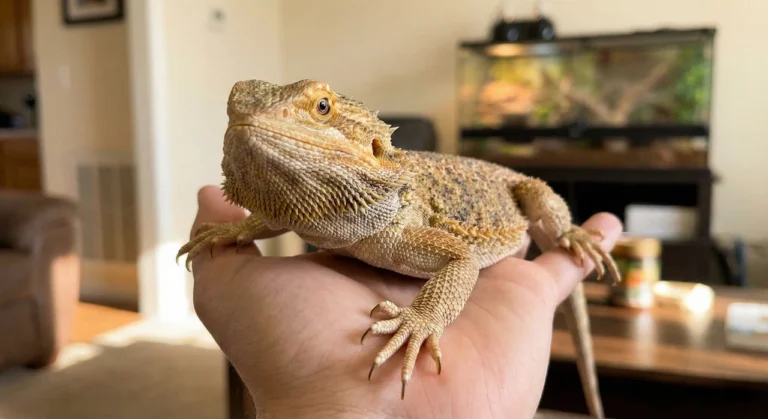
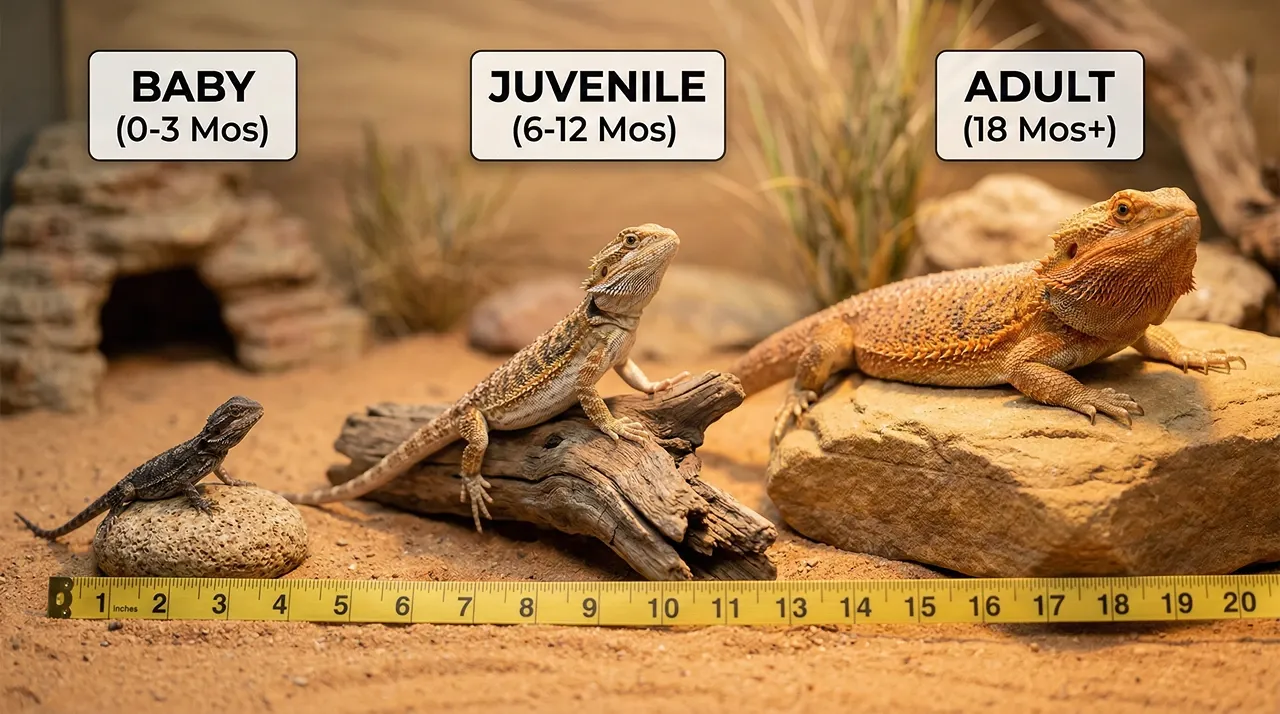
In the first six months of life, bearded dragons are in an almost constant state of growth. You’ll notice your enclosure looking smaller week by week. A hatchling that fits in the palm of your hand can be a foot long before you’ve had them six months. After that first year, growth slows and most dragons are at or near their full adult size by 18 months.
The three factors that most strongly drive growth rate are lighting, diet, and temperature. A dragon hitting their basking spot regularly, eating a protein-rich diet with proper supplementation, and getting adequate UVB will almost always track closely to the chart below. When growth stalls, one of those three is the first place I look.
Bearded Dragon Growth Chart by Age
These ranges cover healthy growth across the most common morphs. Standard, leatherback, and most designer morphs follow roughly the same path. Silkbacks tend to run slightly smaller. The weight ranges below assume a consistent, appropriate feeding schedule — a dragon that’s been off food for two weeks will read low on weight, and that’s a feeding issue, not a sizing issue.
| Age | Length (inches) | Weight (grams) |
|---|---|---|
| 0–1 month | 3–4 inches | 4–6g |
| 2 months | 5–9 inches | 8–40g |
| 3 months | 8–11 inches | 22–110g |
| 4 months | 9–12 inches | 41–115g |
| 5 months | 11–16 inches | 102–157g |
| 6 months | 11–18 inches | 180–220g |
| 8 months | 13–20 inches | 252–327g |
| 12 months | 16–22 inches | 300–465g |
| 18 months | 18–24 inches | 380–510g |
| 24 months+ | 18–24 inches | 380–510g |
Length is measured snout-to-tail tip on an uninjured dragon. Weight fluctuates more than length depending on feeding schedules, brumation, and breeding season — a few grams either way is not a cause for concern.
What to Expect in the First Three Months
Hatchlings are surprisingly fragile-looking. They’re tiny, fast, and eating almost constantly — or they should be. At this stage, feeder insects should be no wider than the space between your dragon’s eyes, and a healthy baby bearded dragon feeding schedule means at least two feeding sessions a day, allowing them to eat as much as they want within each session.
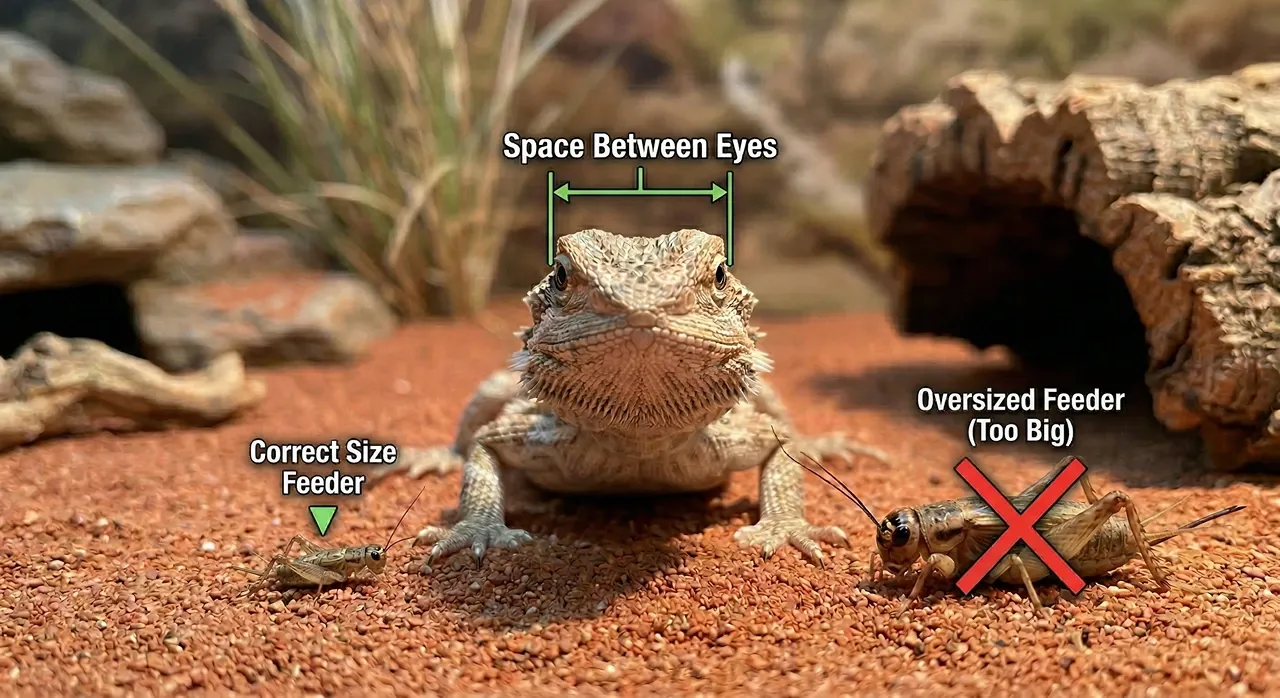
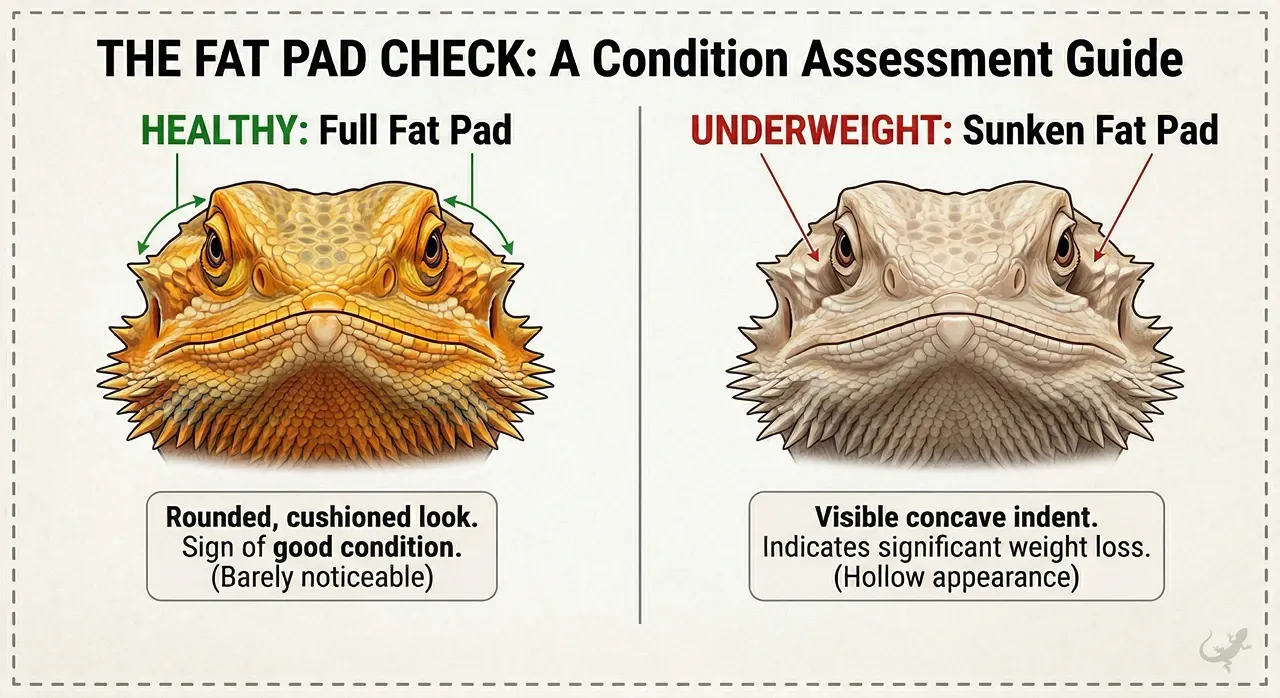
Growth during this window is the most dramatic you’ll see. A dragon eating well and hitting their basking spot can nearly double in length in the first two months. Their skin at this age feels almost papery thin, and their ribs are usually visible if they haven’t eaten recently — that’s normal. What’s not normal is visible hip bones or a sunken fat pad above the eyes.
One growth proxy I find genuinely useful: shedding frequency. A baby growing well sheds every 2–3 weeks. If your hatchling goes 5–6 weeks without a shed during the first few months, growth has likely stalled — worth reviewing husbandry before it compounds.
Why Your Baby Beardie Might Not Be Eating
New babies often go off food for several days after coming home. Relocation stress is real — new smell, new light schedule, new everything. Give them 3–5 days to settle and resist the urge to handle them constantly during this window. Picking them up every hour to check on them extends that stress period and delays the point where they start eating properly.
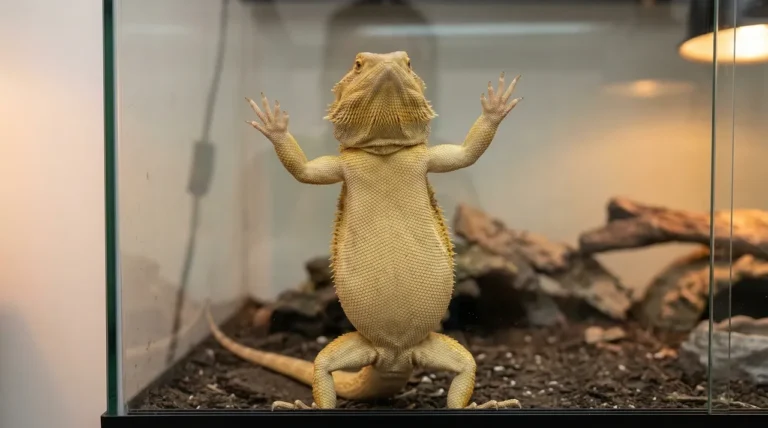
If they’re still refusing food after a week, check your basking spot temperature first. If the hot spot isn’t hitting 105–115°F for a baby, digestion shuts down and appetite follows. Glass surfing — running frantically along the front of the enclosure — is a sign something in the setup isn’t right, and a dragon burning energy glass surfing all day isn’t focused on eating and growing.
How Your Juvenile Dragon Should Be Growing
This is the phase where the diet starts shifting. You’re still feeding insects twice a day, but fresh leafy greens should be offered daily from around three months onward — even if they ignore them at first. The salad bowl habit is something you build now, because a dragon that never learned to eat greens as a juvenile is a genuinely difficult adult to feed.
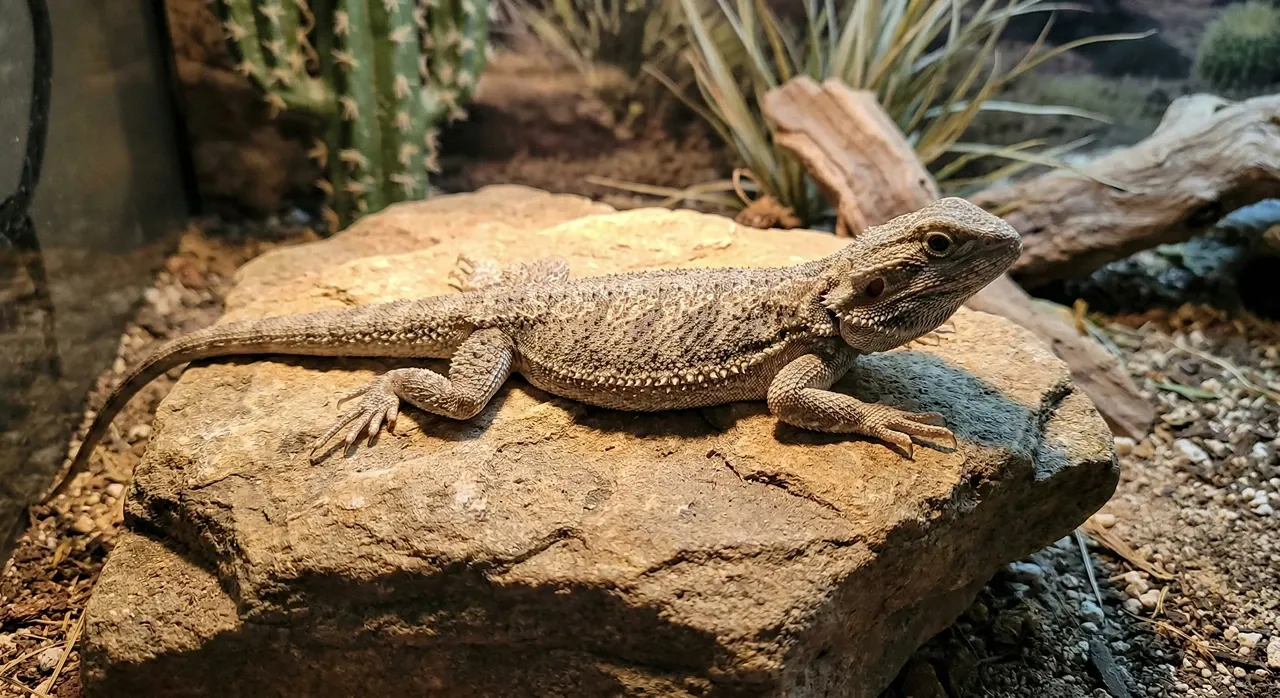
By six months, most dragons are solidly into the 11–18 inch range and starting to show their adult personality. Some get calmer, some get sassier. You’ll start to notice them flattening their bodies when basking — that’s normal thermoregulation, maximizing surface area to absorb heat. It looks alarming the first time you see it.
The Six Month Growth Plateau
A lot of keepers notice what feels like a stall around five to seven months. Growth doesn’t stop — it just slows compared to the explosive early months. As long as your dragon is active, eating, and not losing weight, a slower week or two is nothing to stress over. Dragons also commonly enter a brumation-like slow period in their first autumn. A 40–60g weight dip over that window is normal and expected — track it weekly to make sure it’s a dip and not an ongoing slide.
What Changes Between 12 and 18 Months
By twelve months, most dragons are somewhere between 16 and 22 inches and starting to look like proper adults. The diet ratio shifts at this stage — you’re moving toward 70–80% vegetables and 20–30% insects, rather than the inverse you had during the baby phase. Protein demand drops as growth slows, and a sub-adult still eating a heavily insect-based diet starts packing on fat rather than length.
Weight gains during this phase are slower and more variable. Females especially can show notable weight fluctuations if they’re developing follicles, even before their first breeding season.
When Males and Females Start to Differ in Size
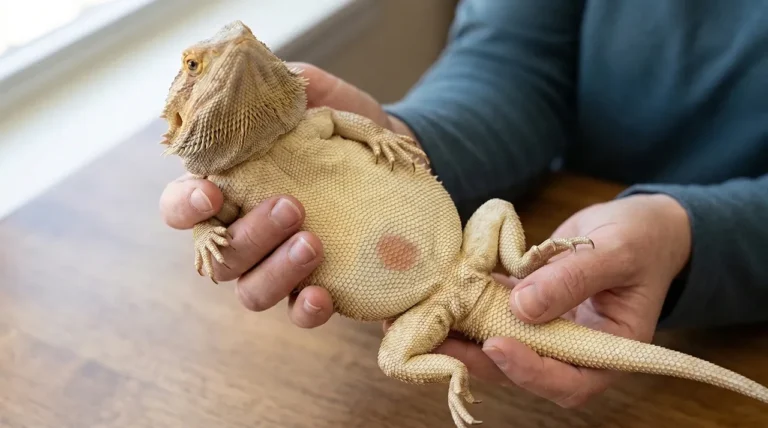
Males typically run larger — broader heads, thicker tail bases, and slightly more body mass. But it’s subtle at this age and not a reliable way to sex your dragon. The hemipene bulges and femoral pores are your actual tools for that. The size difference becomes more obvious after 18 months.
When Your Dragon Stops Growing
Full adult size for most bearded dragons (Pogona vitticeps, the central bearded dragon) sits between 18 and 24 inches snout-to-tail. Females often land in the 16–19 inch range; males fill out to 20–24 inches. Weight at full adult size in healthy, well-fed dragons typically runs 380–510g, though I’ve seen healthy adults outside that range in both directions.
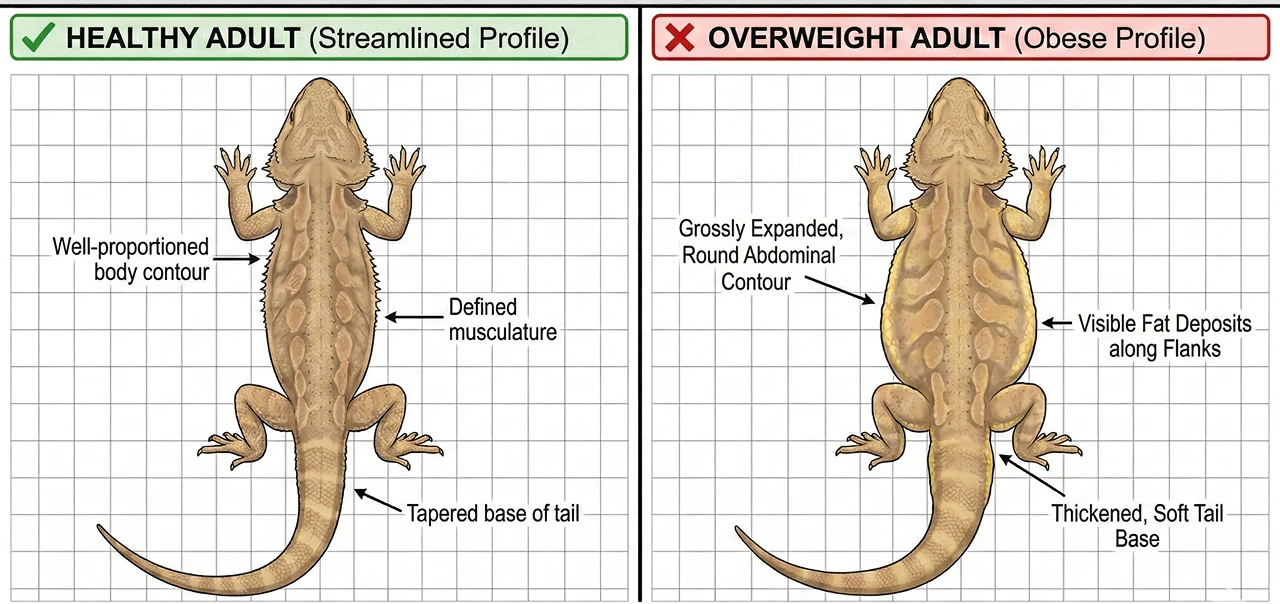
Growth at this point is finished. Any real weight gain past this stage is usually fat accumulation. An overweight beardie develops visible fat deposits along the sides of the belly and a noticeably round profile when viewed from above — worth keeping an eye on as your dragon settles into adulthood.
Is 24 Inches Actually Big for a Beardie
It’s the upper end of the standard range. You’ll occasionally see dragons pushing 26 inches — usually large males with good genetics and solid husbandry from day one. Anything claimed to be 28 inches or more should be measured carefully; tail length is often where the number gets inflated.
🦎 Pro Tip
Weigh your beardie on a kitchen scale every 2–4 weeks and log it — even a notes app works. A dragon losing 5–10g a week during an active period (not brumation) is worth investigating. One that’s been stable for months and suddenly drops 20g in a week is a vet call. Trends tell you far more than any single weigh-in.
What Actually Affects How Big Your Beardie Gets
UVB Quality Makes a Bigger Difference Than Most People Realize
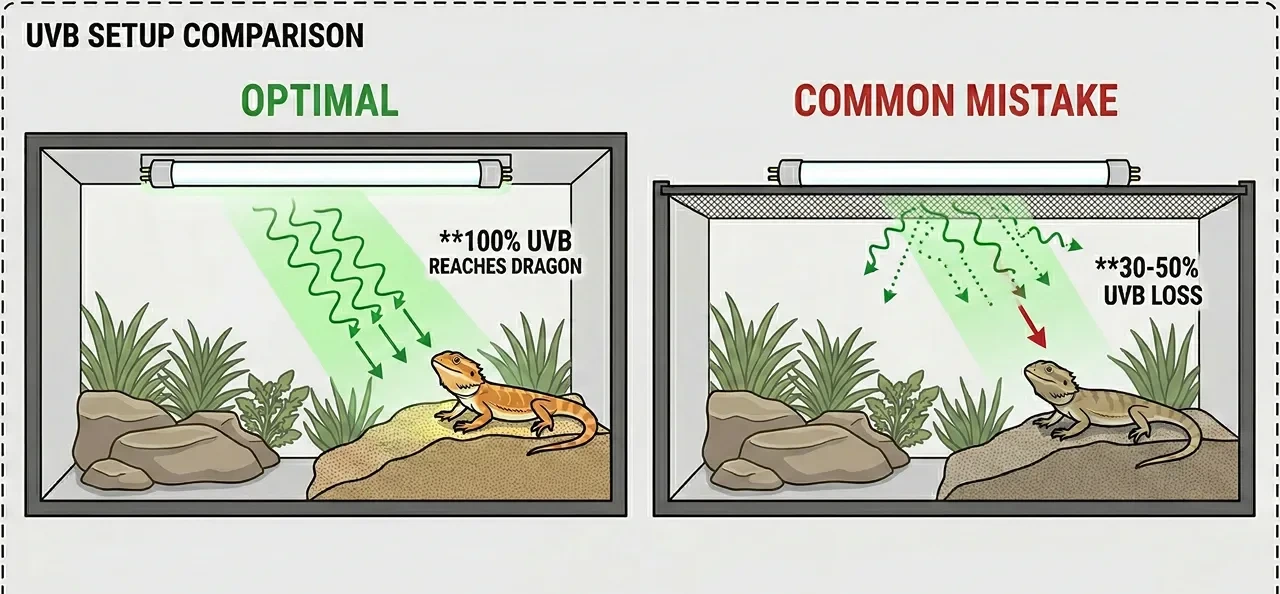
Without proper UVB, bearded dragons can’t synthesize D3, which means calcium metabolism breaks down. The first sign isn’t dramatic — it’s slow, stunted growth that’s easy to write off as “just a small dragon.” A proper T5 HO UVB setup at the right distance is the foundation for healthy skeletal development and normal growth.
Here’s the silent failure point most beginners miss: a quality bulb sitting on top of a mesh lid loses 30–50% of its UVB output before it reaches your dragon. The UVB surface should be 10–12 inches from the basking spot with no mesh in between, or 6–8 inches if you’re shooting through standard aluminum mesh. Replace T5 HO bulbs every 12 months and T8 bulbs every 6 months — UVB output degrades long before the bulb stops producing visible light.
Why Most Keepers Get Supplementation Wrong
Growth depends on calcium as much as it depends on protein. A dragon eating 80 insects a day with zero calcium dusting is heading for problems that won’t show up until they’re already serious. There are two types of calcium supplement to know — calcium without D3 (used most often) and calcium with D3 (used sparingly, because overdosing D3 causes its own problems). The schedule below is what I follow:
📸 IMAGE PLACEHOLDER
Proper Calcium Dusting Visual — Side-by-side comparison: Insects lightly dusted with a translucent coat vs. insects caked in thick white powder.
| Age | Calcium (no D3) | Calcium (with D3) | Multivitamin |
|---|---|---|---|
| Baby (0–6 months) | Every feeding | Once a week | Once a week |
| Juvenile (6–12 months) | 5x per week | Once a week | Once a week |
| Adult (12 months+) | 3x per week | Every 2 weeks | Every 2 weeks |
If your dragon is getting solid UVB from a quality T5 HO bulb at the correct distance, you can scale back calcium-with-D3 — you don’t need supplements compensating for a lighting gap that doesn’t exist.
Feeding Frequency and Feeder Quality
Babies need at least two feeding sessions a day, allowing them to eat as much as they want within each session. Juveniles get one session a day. Adults eat every other day or so, with daily greens. Skipping feeds regularly during the growth phase — especially in the first six months — can permanently limit adult size. The protein source matters too: dragons raised on a dubia roach colony as their primary feeder often track at the higher end of the growth range, thanks to a much better protein-to-fat ratio compared to crickets.
Enclosure Size Can Limit Growth
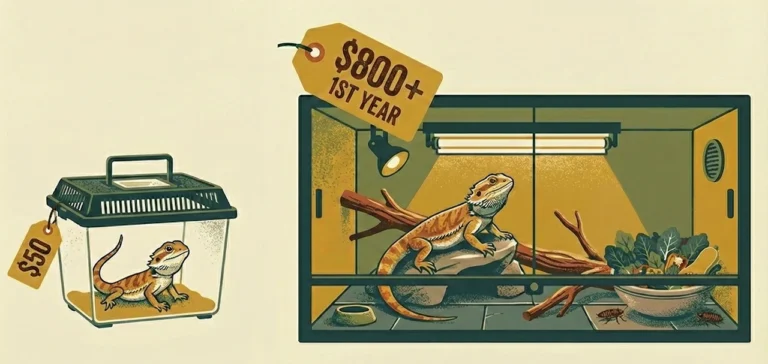
A cramped enclosure genuinely can stunt growth. Keeping a juvenile in an undersized tank limits their activity, their thermoregulation, and their overall metabolic output. Getting the enclosure size right from the start is one of the easier things you can do for healthy development — going straight to a 4x2x2 for any dragon past three months is the right move.
Genetics and Morph Variation
Some dragons are just genetically smaller, and no amount of good husbandry changes that ceiling. Certain morphs — particularly heavily bred designer lines — run smaller than wild-type dragons. If you bought from a breeder, ask about the parents’ adult size. That’s your most reliable indicator of what to expect.
Growth Stall Troubleshooter
Before assuming illness, run through this table. The majority of growth stalls come back to one of these.
| What You’re Seeing | Most Likely Cause | First Thing to Check |
|---|---|---|
| No weight gain for 3+ weeks (baby/juvenile) | Low basking temp or poor UVB | Verify hot spot hits 105–115°F; check UVB distance and mesh |
| Eating but not growing in length | Calcium deficiency or cramped enclosure | Review supplement schedule; measure tank dimensions |
| Sudden weight drop, still eating | Parasites | Fecal float test at a reptile vet — quick and inexpensive; common in rescues and pet store dragons |
| Refused food for 1–2 weeks (baby/juvenile) | Relocation stress or temp issue | Leave them alone for 3–5 days; recheck basking temps |
| Slow growth in autumn/winter | Brumation onset | Normal — track weight weekly to confirm no ongoing loss |
| Soft or rubbery jaw and limbs | Metabolic bone disease | Vet visit — not a wait-and-see situation |
| 30–40% smaller than clutchmates | Runt genetics or underlying health issue | Vet check to rule out illness |
🦎 Pro Tip — The Fat Pad Check
Look at your dragon’s head from the front — just above and behind each eye, there should be a small, slightly rounded cushion of fat. In a healthy dragon it’s barely noticeable. In an underweight dragon it becomes a visible concave indent. Once you’ve seen and felt a healthy fat pad, you’ll check it automatically every time you pick your dragon up. It’s the fastest at-home condition assessment there is.
How to Measure Your Bearded Dragon Accurately
The standard method is a soft measuring tape, snout-to-tail tip on a flat, non-slip surface. Do it when they’re relaxed after a basking session — they’re far less cooperative first thing in the morning when they’re still cold.
One thing the chart above can’t account for: tail nips. Baby dragons housed together frequently bite each other’s tails, and it’s easy to lose 0.5–1 inch of tail tip without the keeper noticing. If your dragon is missing any tail length, snout-to-tail measurements will make them look shorter than they actually are. The more accurate measurement in this case is Snout-to-Vent Length (SVL) — measured from the tip of the nose to the vent, the small slit between the back legs. SVL is what reptile vets use for this exact reason, and it gives you a clean size comparison that a shortened tail can’t throw off.
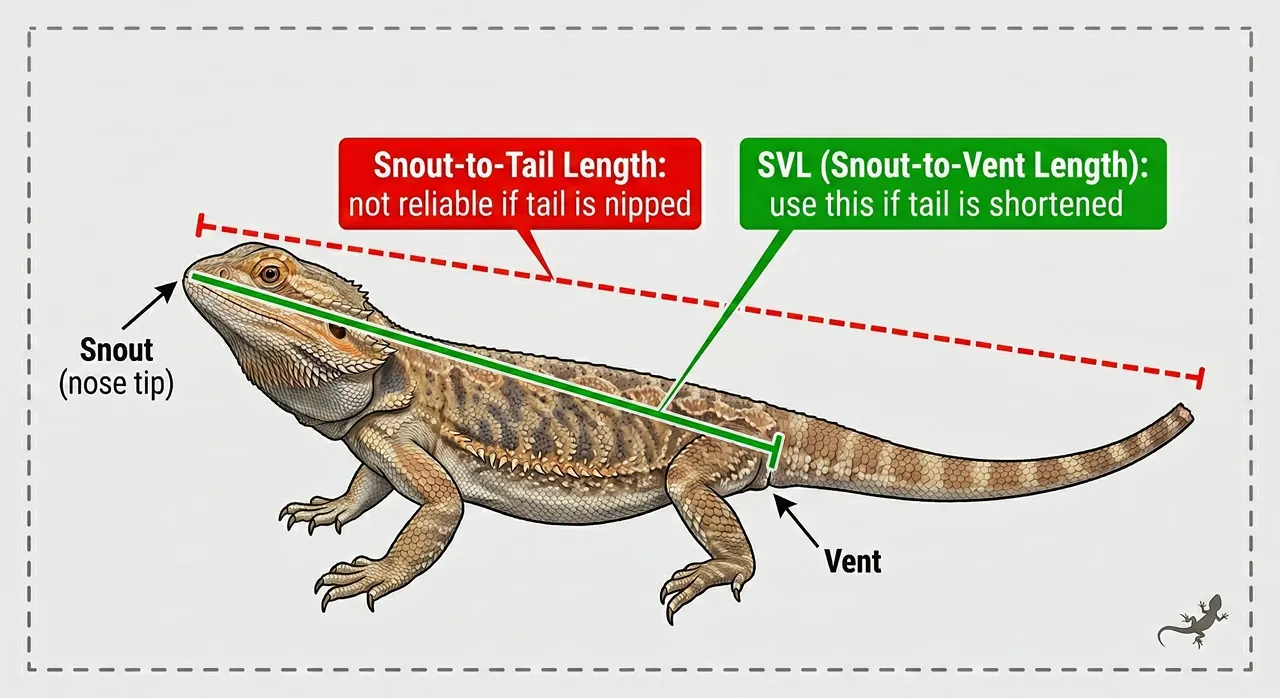
For weight, a kitchen scale with a tare function is all you need. Pop a small tupperware on the scale, tare it to zero, and let your dragon sit in it. Most tolerate this just fine once it becomes part of the routine.
Frequently Asked Questions
My bearded dragon is small for its age — is something wrong?
Not necessarily. Check basking temp, UVB quality, and feeding frequency first. A dragon at the lower end of the chart but eating well, staying active, and passing the fat pad check is almost certainly fine. Genetics are a real factor — some dragons are just naturally smaller.
My beardie hasn’t grown in a month — should I be worried?
During the baby and juvenile phase, yes — that’s worth investigating. Start with temps and UVB before assuming illness. During autumn/winter or any brumation-like slow period, a temporary growth pause is completely normal.
How much should a 4-month-old bearded dragon weigh?
Between 41–115g is the healthy range at four months. That’s a wide window because individual variation is real at this age. A dragon that was 60g at three months and 85g at four months is doing well, even if both numbers look low on paper.
Can a stunted bearded dragon ever catch up in size?
Partially. Fix the husbandry early enough — ideally before six months — and you’ll see a solid recovery in body condition and weight. Length is harder to recover. Bone development compromised during the growth window doesn’t fully reverse, which is why catching problems in the first three months matters so much.
My beardie lost weight over winter — is that normal?
Yes, if it’s brumation. A 40–60g weight dip in an otherwise healthy adult is expected. What you’re watching for is ongoing weekly loss — a dragon losing weight week over week outside of brumation is a vet visit.
Your Growth Tracking Checklist
You don’t need a spreadsheet. Here’s what actually works in practice:
- ✅ Every 2 weeks: Weigh on a kitchen scale and note it in your phone. Takes 90 seconds.
- ✅ Every month: Measure snout-to-vent length (SVL) and compare to the chart above.
- ✅ Every basking session: Quick fat pad check when you pick them up. Five seconds once you know what you’re looking for.
- ✅ Every shed: Note the date. Babies should shed every 2–3 weeks. A gap past 5–6 weeks in a young dragon means it’s time to recheck your setup.
- ✅ Every 6–12 months: Replace the UVB bulb — T5 HO every 12 months, T8 every 6 months. The single most skipped maintenance task in the hobby.
- ✅ Babies need at least two full feeding sessions daily — skipping this phase can permanently limit adult size.
- ✅ Basking temps for babies must hit 105–115°F — anything lower shuts down digestion and appetite.
- ✅ Mesh lids cut UVB output by 30–50% — account for this in your bulb-to-basking distance.
- ✅ Use SVL if your dragon has a nipped or shortened tail — snout-to-tail will make them look smaller than they are.
- ✅ Soft jaw or limbs = vet visit, not a wait-and-see situation.
- ✅ Full adult size is typically reached by 18 months — growth after that is weight, not length.
A dragon that’s eating, shedding on schedule, holding a healthy fat pad, and trending upward on the scale every two weeks is growing exactly the way it should. The chart gives you context — this checklist gives you confidence.
Medical Disclaimer: The information in this article is intended for general husbandry guidance only and does not constitute veterinary advice. If your bearded dragon is showing signs of illness, significant weight loss, or abnormal growth, please consult a qualified reptile veterinarian.
Written by
Sarah ArdleySarah has kept bearded dragons for over ten years. She founded Beardie Husbandry after discovering that most mainstream care advice — including what she followed with her first dragon — was doing more harm than good. Every article on this site is grounded in veterinary research and real keeper experience.