Bearded Dragon Tail Rot vs. Dark Tail: Is It an Emergency?
A dark tail tip on your bearded dragon sends most new owners straight into emergency mode. The assumption is almost always bearded dragon tail rot, and while that fear is understandable, a genuinely blackened, necrotic tail looks very different from a simple colour change. Getting that distinction wrong in either direction is costly. Panic over harmless pigmentation wastes time and money, but dismissing real tail rot as nothing costs the tail and sometimes the animal.
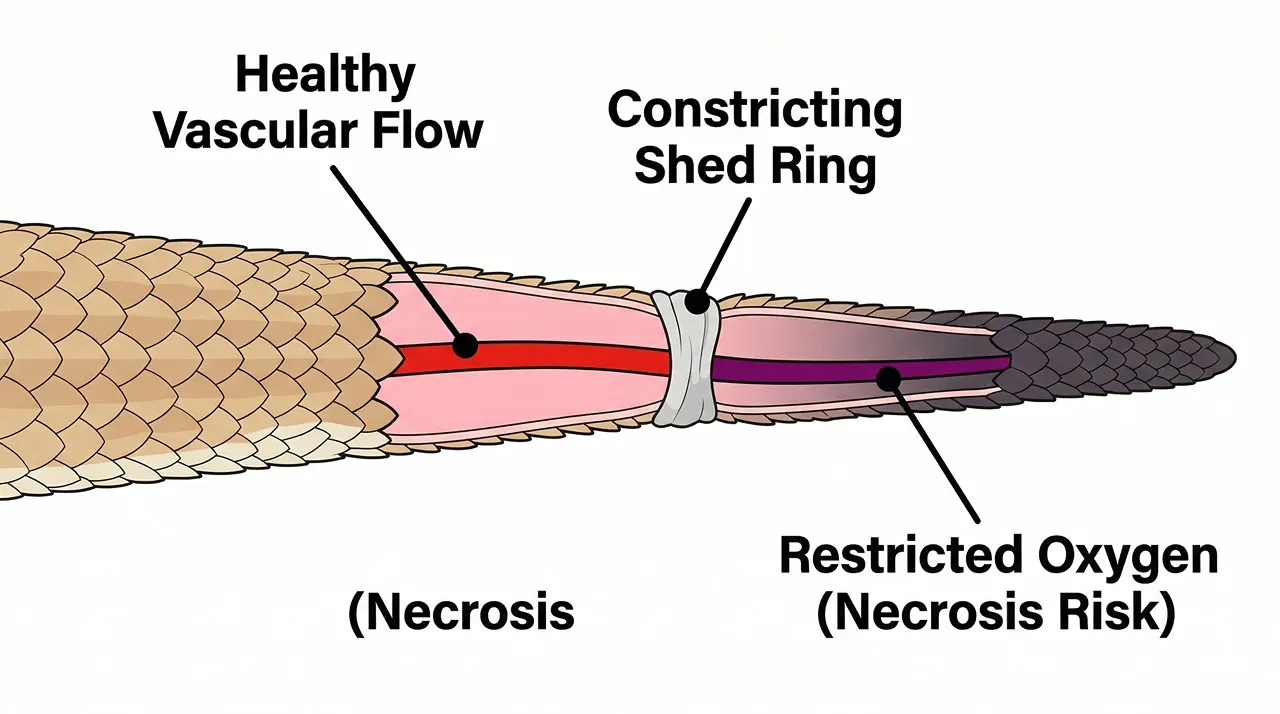
Bearded dragon tail rot is avascular necrosis followed by bacterial infection. Blood supply to a section of tail becomes restricted, tissue stops receiving oxygen, and it begins dying from the inside out. Because reptiles have a slower metabolism than mammals, the process can look deceptively stable for one to two weeks and then advance several centimetres in a matter of days. That slow-then-fast pattern is why experienced keepers act at the first real sign rather than watching and waiting.
Why Tail Rot Starts at the Tip
The tail tip is the furthest vascular point from the heart, which means blood pressure is at its absolute lowest there. Even a slight reduction in circulation from a constricting ring of stuck shed, a bite wound, or a tail pinched under enclosure furniture can act like a slow tourniquet on tissue that has almost no margin for error. According to VCA Animal Hospitals, successive layers of retained skin can form constricting rings around the tail tip that restrict blood supply and lead to necrosis, often progressing to full infection before the owner realises anything is wrong.
Once tissue death sets in, the dead material becomes a breeding ground for gram-negative bacteria. The infection does not stay localised. It migrates up the tail toward the body, and in unmanaged cases it eventually threatens internal organs. Early detection and a fast response genuinely change the outcome here.
How to Examine Your Dragon for Tail Rot Right Now
Before calling a vet or catastrophising, run this five-point physical check. You need good lighting, a calm dragon sitting still, and about three minutes.
Check Whether the Whole Circumference Is Dark
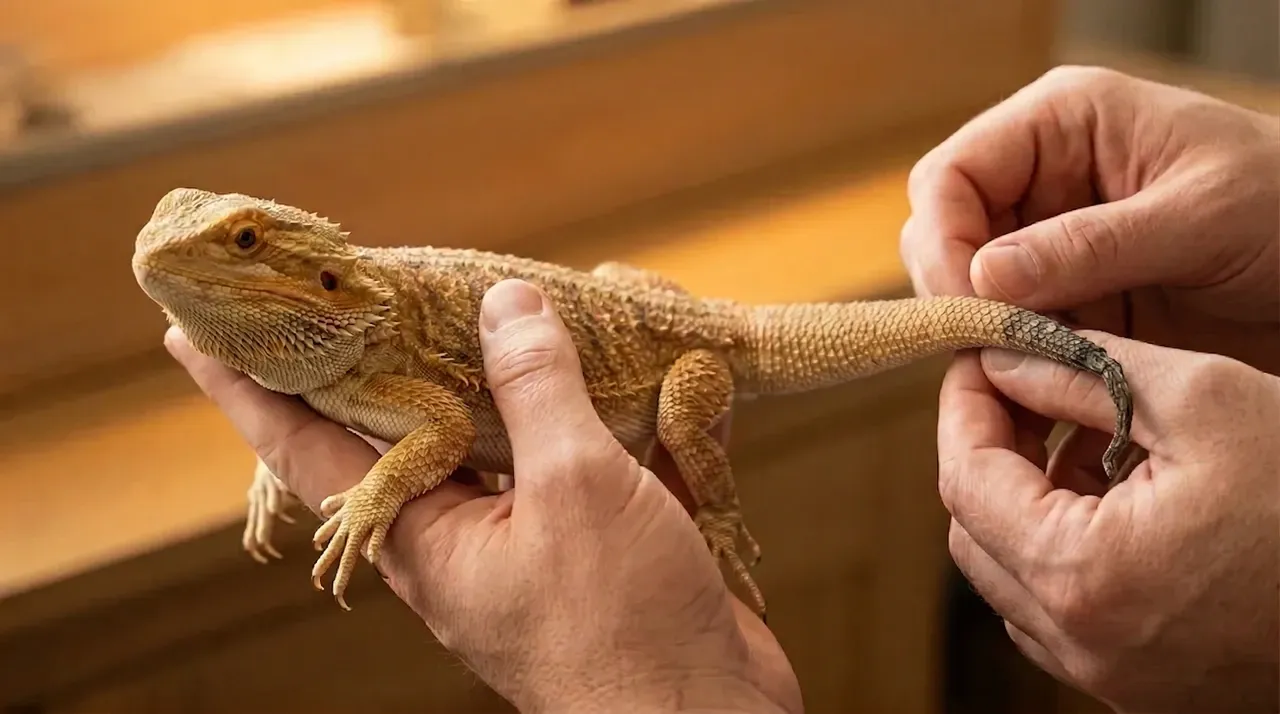
Rotate the tail slowly and look at all sides. Natural dark pigmentation in bearded dragons is typically limited to the dorsal surface, patchy in distribution, and has been there since the animal was young. Bearded dragon tail rot turns the whole circumference of the affected section uniformly dark because the tissue death is happening all the way through, not just in the upper skin layer. That 360-degree uniform darkening is one of the most reliable early tells.
Test for Flexibility
Apply gentle lateral pressure to the darkened section. A healthy tail, regardless of colour, remains supple and bends without resistance. Necrotic tissue desiccates and hardens as it dies, leaving the affected section feeling rigid and board-like compared to the healthy tail above it. If the section bends easily, active rot is far less likely. If it resists any flex, treat that as a meaningful finding worth acting on.
Feel the Scale Texture
Run a fingertip lightly over the darkened scales. Healthy pigmented skin feels smooth and relatively firm. Tail rot scales feel different: dull, dry, and faintly rough, sometimes with a sunken appearance where the tissue beneath has already begun to shrink. If the tip looks visually smaller in diameter than it did a week ago, or if it appears pinched relative to the section above it, that is a red flag regardless of colour alone.
See Whether the Colour Changes After a Proper Bask
Put the dragon under its basking light with a surface temperature between 105°F and 110°F (40°C to 43°C) and check back in 30 to 45 minutes. Bearded dragons darken their skin, including the tail, to absorb heat when they are cold. If the darkening was a thermoregulatory response, the tail will often lighten noticeably once the animal has warmed through. If nothing changes after a full proper basking session, the colour is not heat-related and the examination should continue.
Look for a Constriction Ring at the Colour Boundary
Run a fingertip along the exact point where the colour change begins. A tight band of old retained shed at that boundary is one of the most common triggers for bearded dragon tail rot, particularly in juveniles. The ring can be subtle, slightly duller and stiffer than the surrounding skin, but it acts as a tourniquet on everything below it. Finding one there changes the urgency level immediately. A stuck shed ring on the tail can fully cut off circulation within 48 to 72 hours if it is not released.
Tail Rot vs Dark Pigmentation vs Normal Shedding
These three conditions overlap visually in ways that catch new and experienced keepers alike. Understanding what distinguishes them prevents both unnecessary emergency visits and the more dangerous mistake of dismissing genuine bearded dragon tail rot.
Natural dark pigmentation is consistent and static. It has been present since the dragon was young, sits primarily on the dorsal surface, does not advance up the tail over days, and the skin beneath it is soft, smooth, and pliable. Many dragons with hypo or translucent genetics carry prominent dark tail tips their entire lives without any health implication at all.
Normal pre-shed darkening looks dull and slightly greyish across larger sections of tail, the scales appear to be loosening slightly, and the skin feels papery rather than rigid. Once the shed releases, the tail underneath is healthy and normal. This is not tail rot even when it looks alarming at its peak. Accurate temperature and humidity readings in the enclosure can tell you quickly whether conditions are contributing to difficult sheds on a recurring basis.
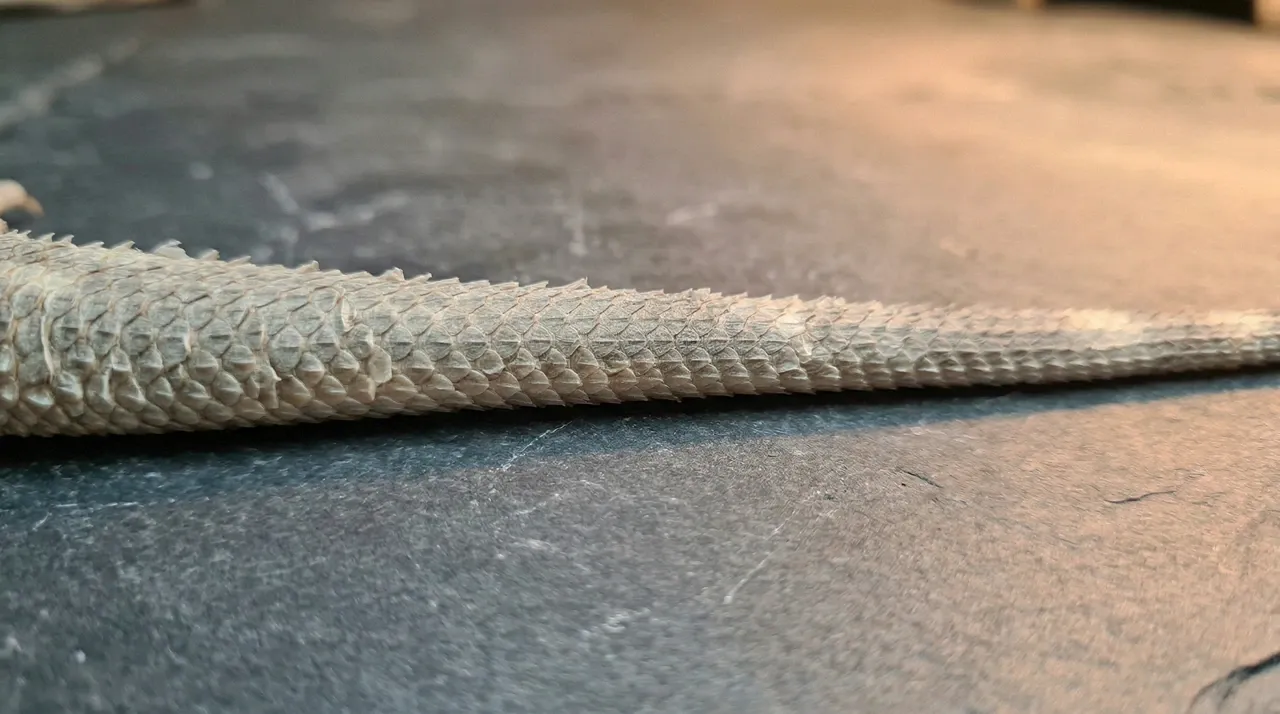
Active tail rot looks categorically different from both. The colour is deep and uniform around the entire circumference, the tip appears constricted or visually smaller in diameter, the scales are matte and dry, the section resists any flex, and the colour does not respond to basking or shedding cycles. The progression runs from dull grey through blue-purple and into a deep matte black as the necrosis advances.
| What You See | Most Likely Cause | Urgency | First Step |
|---|---|---|---|
| Dark top surface only, soft, flexible, unchanged for months | Natural pigmentation | None | Photograph as baseline, monitor monthly |
| Dark tail that lightens fully after 30 to 45 minutes basking | Thermoregulatory darkening | None — review enclosure temps | Verify basking surface hits 105°F to 110°F |
| Dull greyish tail, loose scales, no ring, no rigidity | Normal pre-shed | None | Warm soak, leave the shed to release naturally |
| Tight band of old skin at colour boundary, section beyond darkening | Stuck shed ring constricting circulation | High — act within 24 hours | 20-minute warm soak immediately; vet same day if ring does not release |
| Whole circumference dark, tip feels stiff, scales look constricted | Bearded dragon tail rot — early stage | Urgent — vet within 48 hours | Hospital tank, dilute Betadine soaks, call vet today |
| Black hardened tip, mummified appearance, visible necrosis boundary | Tail rot — advanced stage | Emergency — same-day vet | Emergency exotic vet; surgical amputation very likely |
| Dark tail plus lethargy, persistently black beard, refusing food | Systemic infection spreading | Emergency — go now | Emergency exotic vet; do not wait overnight |
What Causes Bearded Dragon Tail Rot in Captivity
Stuck shed rings are the leading cause in captive-kept bearded dragons, particularly in juveniles going through rapid growth phases where shedding frequency is high. Bite wounds from a cagemate are a close second, which is one of the most concrete practical reasons to avoid keeping two bearded dragons together. Tail trauma from rough decor, falls, or being pinched against enclosure walls creates the vascular damage that starts the whole process.
Chronic nutritional deficiency is the background factor that many owners miss. A dragon low in calcium and D3 has compromised tissue integrity, heals poorly from minor injuries, and is significantly more prone to the difficult sheds that produce constriction rings.
An ageing UVB bulb running past its effective output date compounds this regardless of what is being dusted onto food. The Association of Reptile and Amphibian Veterinarians notes that metabolic and nutritional disorders are among the most common underlying conditions in captive reptile presentations. What looks like a purely mechanical tail injury often has a long-running husbandry problem sitting quietly beneath it.
How Dangerous Is Bearded Dragon Tail Rot Without Treatment
Left unmanaged, bearded dragon tail rot does not self-resolve. The necrotic section may eventually separate and fall away, which some owners misread as the problem solving itself. It is not. Bacterial infection remains in the healthy tissue above the break point, and the rot continues advancing upward from there. The Merck Veterinary Manual notes that necrosis and associated bacterial infection in reptile extremities can spread to surrounding body tissues and, if unchecked, reach internal organs causing systemic disease. At that stage the prognosis changes dramatically.
The behaviour changes that accompany advancing tail rot carry real diagnostic weight alongside the physical signs. A dragon in genuine discomfort will show a persistently dark beard throughout the day even in a warm enclosure, will be slow to react to food it would normally chase immediately, and may resist handling near the affected area. Reading those pain-related body language signals alongside the physical examination gives a much clearer picture of severity and urgency.
What to Do While You Wait for the Vet
Move the dragon to a hospital tank immediately. A bare enclosure lined with paper towels eliminates the bacterial load of loose substrate and prevents foreign material entering compromised tissue. Keepers who already have a reptile first aid kit assembled can set this up in under ten minutes. Remove all decorations, hides, and loose substrate from the temporary enclosure and keep only a water bowl and a heat source.
Prepare a dilute Betadine solution by mixing povidone-iodine with warm water until the colour matches weak tea, roughly one part Betadine to ten parts water. Soak only the tail section for ten to fifteen minutes once or twice daily, then pat dry gently. A thin layer of plain Neosporin can be applied to the tip after each soak. Use the original formulation only, not the pain relief version, since lidocaine is toxic to reptiles. This is supportive care only. It manages bacterial load while you wait for a professional assessment but cannot reverse established necrosis.
Maintain full enclosure temperatures throughout. A cold dragon has reduced immune function, which is exactly the wrong condition to be in while fighting an infection. Dragons with active tail rot are also at elevated risk of becoming dehydrated, so keep the water bowl accessible and offer a brief warm soak separately from the Betadine treatment each day.
What the Vet Will Do for Tail Rot
The vet will assess the extent of necrosis through physical examination and palpation, then determine whether the infection appears localised or advancing. Genuinely early-stage bearded dragon tail rot caught before significant tissue death may be manageable with topical and oral antibiotics plus a close monitoring schedule. That outcome requires a very early presentation. Most cases that reach a vet have already progressed past the point where antibiotics alone are sufficient.
Surgical amputation above the necrosis boundary is the standard treatment for established tail rot. The affected section plus a margin of healthy tissue is removed to ensure no infected material remains. The procedure is performed under general anaesthesia and is well-tolerated by otherwise healthy dragons. A straightforward amputation typically costs between $100 and $300 USD, with aftercare, pain medication, and follow-up visits adding to that figure. Delaying that decision risks a systemic infection that may not be reversible at any cost.
What Recovery Looks Like After Tail Rot Amputation
Bearded dragons adapt to a shorter tail faster than most owners expect. Within one to two weeks of healing, the majority are eating, basking, and moving with no visible change in normal behaviour. The surgical site closes into a permanent blunt tip over several weeks, and the dragon shows no apparent awareness of the loss in day-to-day activity. Balance and mobility are minimally affected by the change in length.
The aftercare window is where mistakes happen. Keep the dragon on paper towels until the wound has fully sealed. Complete the full course of any prescribed antibiotics even when everything looks healthy on the surface, since surface appearance does not reliably reflect what is happening in the tissue underneath. A follow-up examination matters because re-infection at the surgical margin is possible and is not always visible at home.
Preventing Bearded Dragon Tail Rot From Recurring
Run a fingertip along the full length of the tail during every routine health check, specifically feeling for any tight band of retained shed building at a constriction point. Catching that at the stuck-shed stage is a warm-soak problem. Missing it until the tissue below is compromised is a surgery problem. The inspection takes about twenty seconds and has a direct impact on outcomes.
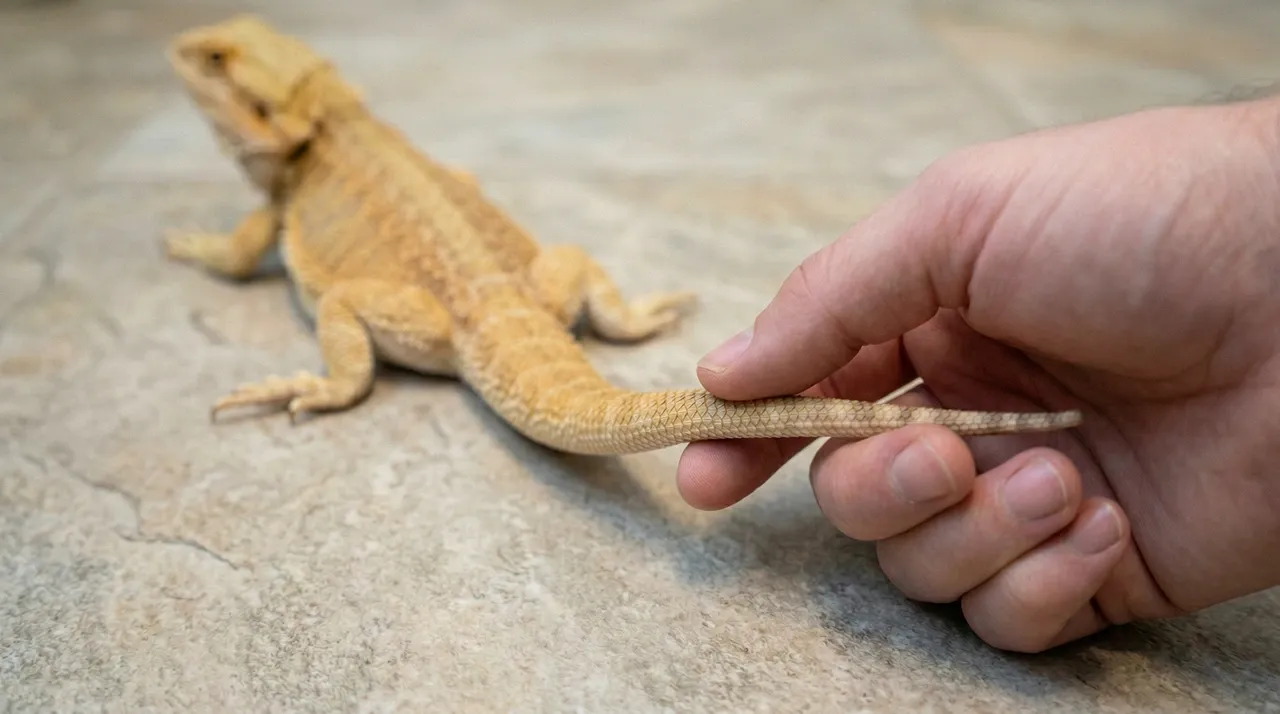
Review the enclosure for anything that could injure the tail: rough rock edges positioned at the wrong height, furniture the dragon can fall from, gaps where a tail can be trapped. The substrate choice matters too. Abrasive or heavily particulate flooring increases the minor tail trauma that compounds into vascular problems over time.
Make sure the calcium and D3 supplementation routine is consistently correct for the dragon’s age and life stage. A dragon with good tissue integrity and clean shed cycles heals minor scrapes before they escalate. If the D3 supplement schedule has been inconsistent or the UVB bulb has not been replaced on schedule, that is worth addressing as genuine tail rot prevention, not just general husbandry housekeeping.
Questions Keepers Ask Most Often About Tail Rot
Can Bearded Dragon Tail Rot Heal Without a Vet
No. Dead tissue does not regenerate, and the bacterial infection established within necrotic material does not clear on its own. Home care with Betadine soaks can slow bacterial load and support the tissue above the affected area, but it cannot reverse necrosis that has already set in. Any case where the tip is visibly rigid or the darkened area is advancing requires veterinary assessment, not a longer home treatment trial.
Do Bearded Dragons Feel Pain From Tail Rot
Yes. Reptiles have nociceptors and experience pain from tissue damage. A dragon with active bearded dragon tail rot is in real discomfort, which is why the behavioural signs — persistent dark beard throughout the day, reduced movement, food refusal, resistance to handling near the tail — carry genuine diagnostic weight alongside the physical examination findings.
Will the Tail Grow Back After Amputation
No. Unlike some other lizard species, bearded dragons cannot regenerate lost tail segments. The surgical site heals into a permanent blunt tip. This has minimal impact on quality of life, but it does mean every centimetre lost to rot or amputation is permanent. That is the practical argument for acting at the earliest recognisable stage of bearded dragon tail rot rather than monitoring through multiple shedding cycles hoping the problem resolves.
Could It Be Something Other Than Tail Rot
Yes. A localised impact bruise can cause temporary darkening that resolves over several days without progressing. More seriously, yellow fungus disease can present with tissue discolouration that superficially resembles early tail rot, though it typically has a different surface texture and often appears on multiple body sites simultaneously. Yellow fungus is significantly more aggressive, spreads rapidly into deep tissue, and carries a far worse prognosis. Any discolouration that spreads quickly or appears alongside lesions elsewhere on the body needs same-day exotic vet assessment.
Take Action Based on What You Are Seeing Right Now
If the picture changes at any of those three checkpoints, move immediately to the next level of response. Bearded dragon tail rot caught at the stuck-shed stage costs a warm soak. Caught at the necrosis stage, it costs surgery.
Do not wait to see whether a second soak fixes it. A constriction ring that has not released within 24 hours has likely already begun restricting circulation to the tissue below.
Register with an exotic vet who sees reptiles before you need one. Searching cold directories while holding a sick dragon at 10pm is not the situation you want to navigate for the first time.
Written by
Sarah ArdleySarah has kept bearded dragons for over ten years. She founded Beardie Husbandry after discovering that most mainstream care advice — including what she followed with her first dragon — was doing more harm than good. Every article on this site is grounded in veterinary research and real keeper experience.