Bearded Dragon Vivarium Decorations That Are Safe (And What to Avoid)
You add a nice flat rock under the basking lamp, stack a couple of slate pieces for a climb, push an artificial plant into the corner, and stand back. It looks like a proper desert setup now.
The problem is that half the decor sold for bearded dragons was never tested near a 40-watt basking bulb or under the claws of a dragon that digs.
Most bearded dragon vivarium decorations are safe enough on a shelf and risky in a hot enclosure. The danger is rarely the object itself. It is what heat, weight, and a digging dragon do to that object over weeks.
Get the safety logic right once and the shopping decisions get easy. You stop asking “does this look good” and start asking “what does this do at 40 degrees, and what happens if my dragon shoves it.”
Decor Is a Heat Problem First
The single most overlooked risk is heat behaviour. A decoration that sits directly under the basking bulb does not stay at room temperature, and what it does with that heat decides whether it is safe.
Dense rock and stone absorb heat and hold it. Placed right under the lamp, a thick rock becomes a second hot surface long after the dragon has moved off the basking spot, and a dragon resting on stored heat can develop belly burns it never reacts to in time.
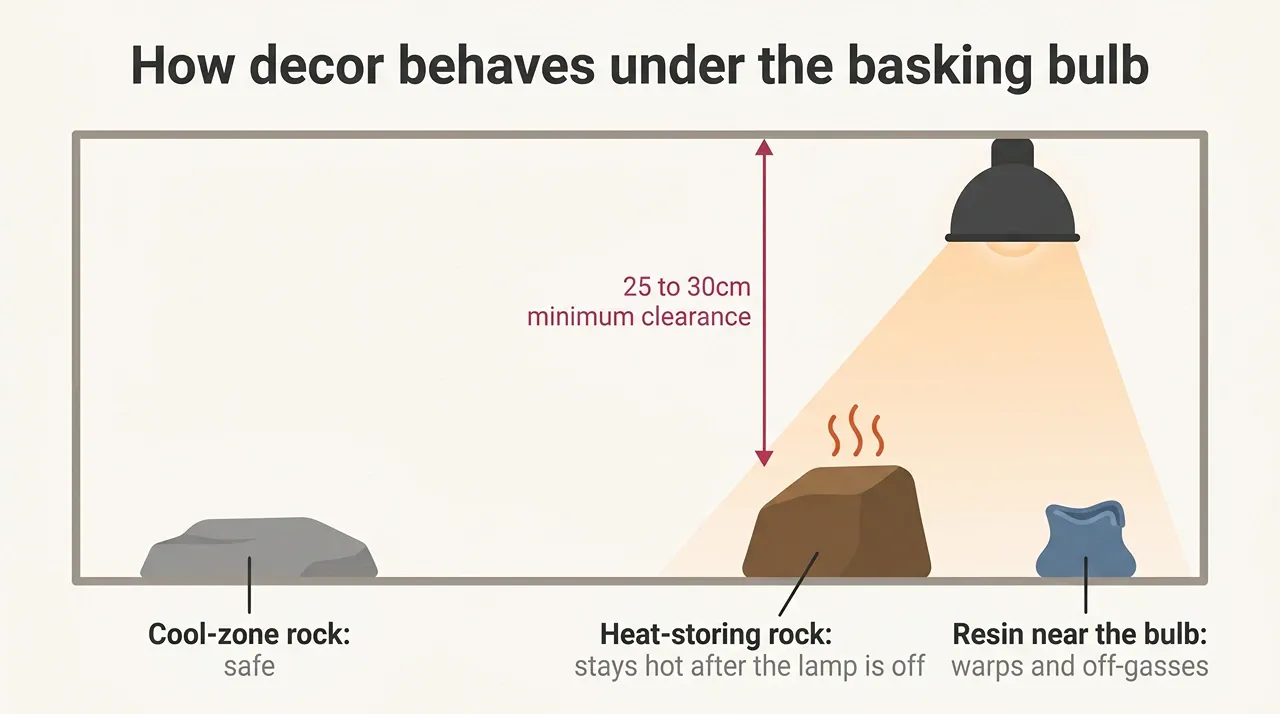
Resin and plastic do the opposite and worse. Cheap resin ornaments and plastic hides placed too close to the bulb can soften, warp, or release fumes as they age under constant heat.
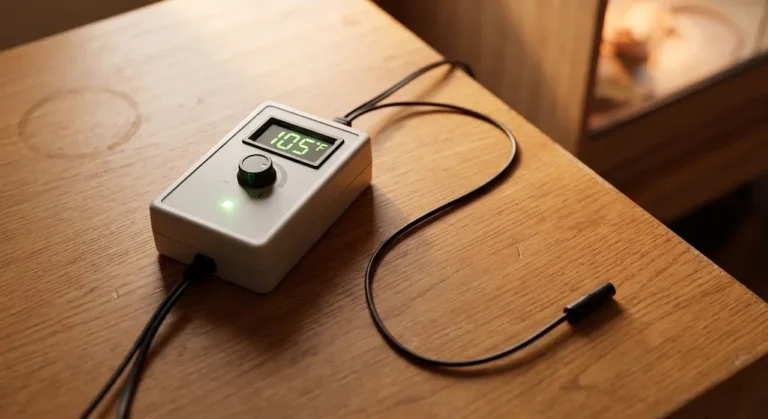
Watch for this: Any decoration within direct line of the basking bulb gets hot enough to matter. Check it with your hand after the lamp has been on two hours. If you cannot hold it comfortably, your dragon should not be lying on it.
Keep the Climb Clear of the Bulb
Climbing decor solves one problem and creates another. A tall rock or branch lets a dragon bask closer to the heat, which is good, until it lets them get close enough to touch the bulb and burn.
Welfare guidance puts the minimum at 25 to 30cm between the dragon’s back at full stretch and the bulb. A guarded bulb adds a second layer, stopping direct contact if a dragon climbs higher than you expected.
Burns from bulb contact are one of the most common decoration injuries, and the gap matters as much as the basking surface temperature you are aiming for.
Heavy Decor Above a Digging Dragon
Bearded dragons dig. Females dig more, especially when carrying eggs, and even males will excavate under a favourite hide. This is where stacked hardscape turns dangerous.
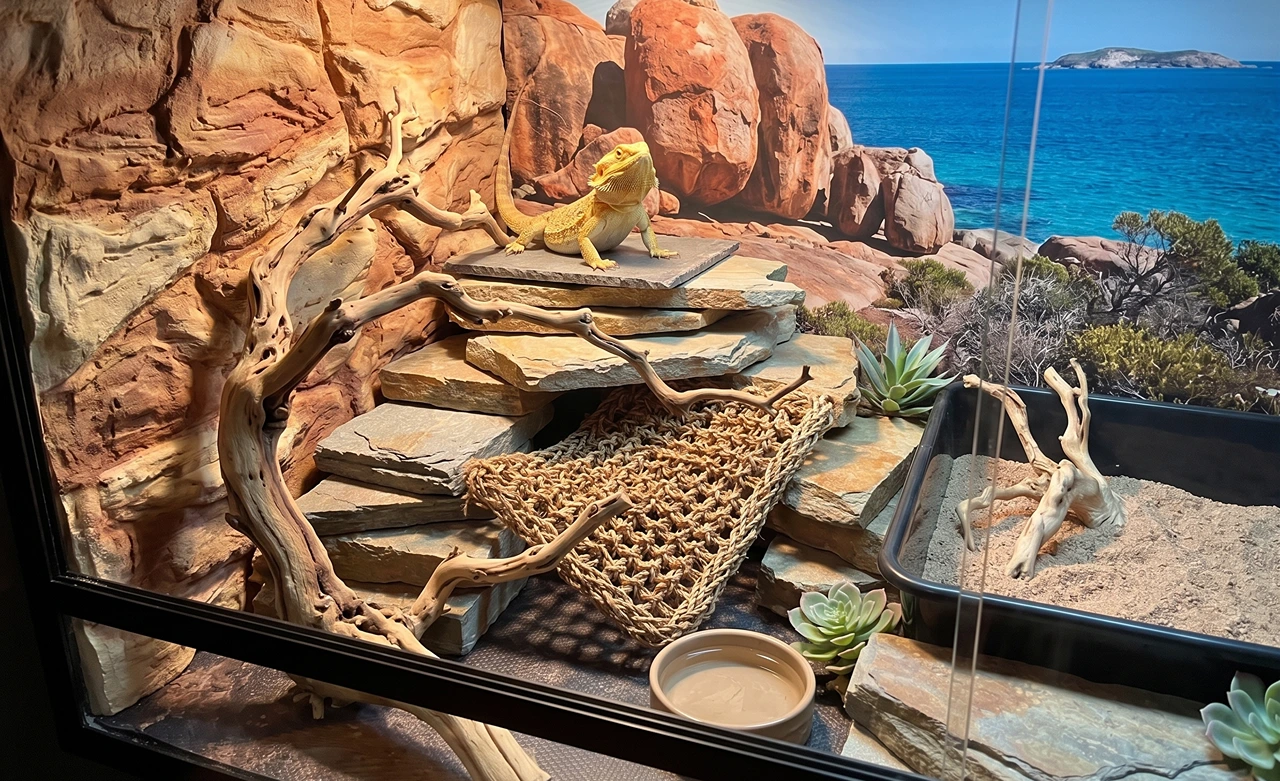
A heavy rock resting on loose substrate has nothing holding it in place. When a dragon tunnels underneath, the stack shifts, and a shifting rock can pin a limb or crush a dragon that dug itself into the wrong spot.
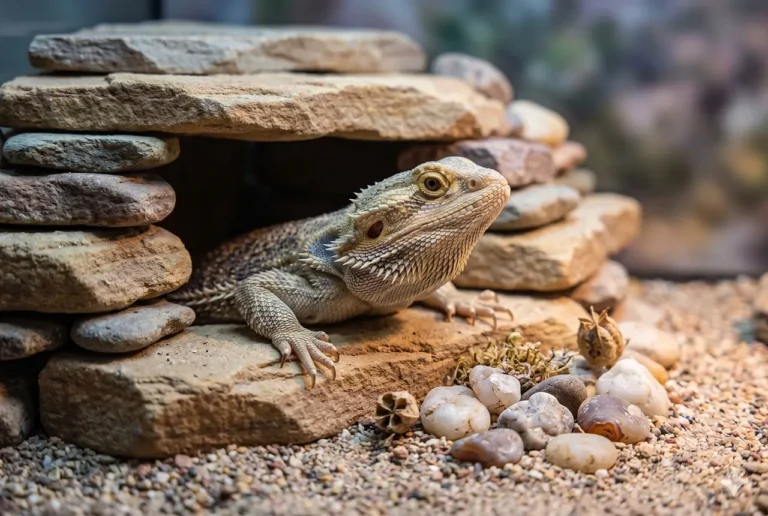
The fix is simple and non-negotiable. Anything heavy sits on the floor of the enclosure first, with substrate added around it, never balanced on top of the substrate.
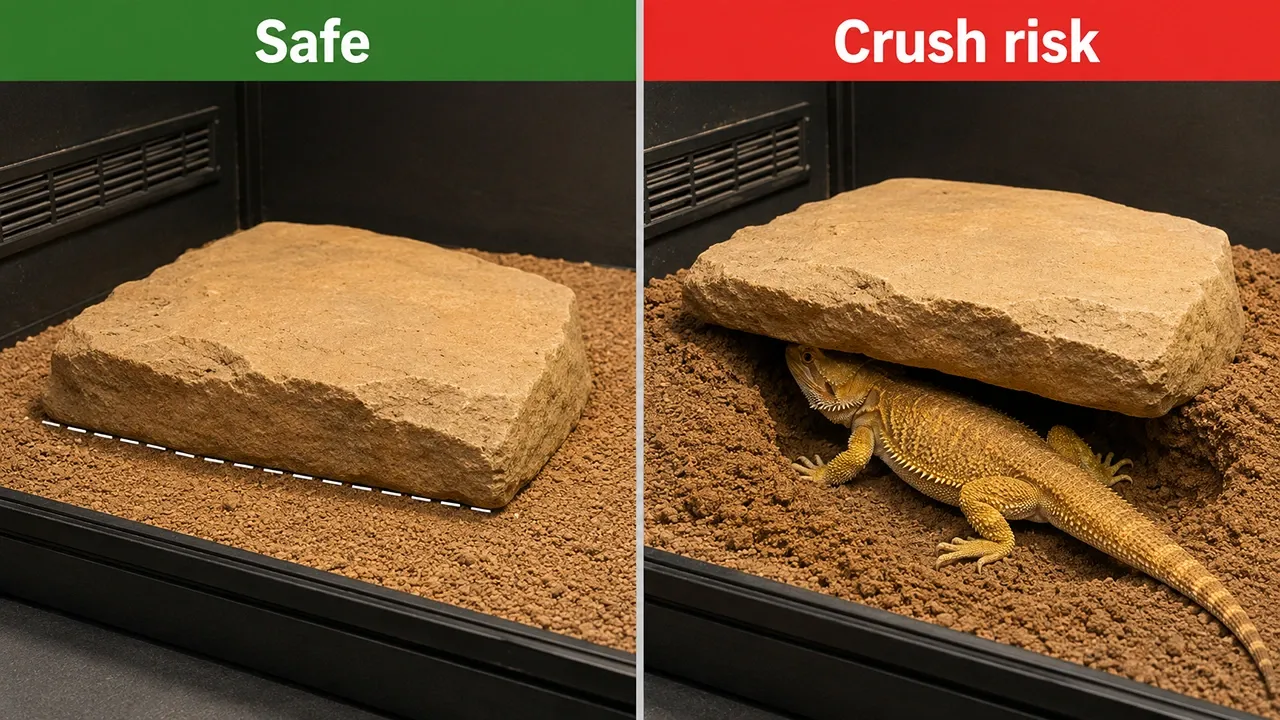
- Rest large rocks directly on the vivarium base, then fill substrate around them
- Use aquarium-safe silicone to bond stacked pieces into one stable unit
- Press-test every climb: push it firmly with one hand and watch for any rock
- Reserve loose stackable stone for low arrangements a dragon cannot undermine
The deeper material question, which rocks leach minerals and which wood holds damp and rots, belongs to choosing safe hardscape materials in the first place. Stability is about placement; safety starts with what you bought.
Hides Are Function Before Decoration
A hide is not optional decor. A dragon with nowhere to retreat stays mildly stressed, and stress shows up as colour darkening, glass surfing, and poor appetite long before anything obvious goes wrong.
The cool-end hide is the one that matters most. Bearded dragons thermoregulate by moving between temperatures, and a shaded retreat at the cool end lets them drop their body temperature and feel secure at the same time.
Size it so the dragon fits snugly with a little room to turn. Too large and it does not feel secure; too small and they stop using it.
A half log, a cork round, or a sturdy resin cave all work, as long as the entrance has no sharp cut edge at neck height.
Plants Are Where Cheap Decor Bites Back
Artificial plants are sold as the safe, no-maintenance choice, and the good ones are. The trap is the cheap ones. Fabric and soft plastic plants shed fibres, leaves, and small decorative parts, and a bearded dragon that mouths or swallows them is now carrying gut blockage risk.
Glitter, glued-on gems, and wired stems are the worst offenders. A dragon does not distinguish a plastic berry from a real one.
If you go artificial, choose moulded one-piece silk or plastic with no loose attachments, no glitter, and no thin wire that can poke through.
Live planting avoids the shedding problem entirely, but only with species that tolerate the heat and pose no toxicity risk. That is its own decision, covered in choosing live vivarium plants that survive a desert setup.
A fuller naturalistic route, with live plants and a cleanup crew, is what a bioactive enclosure is built around.
Pro tip: Pull-test every artificial plant before it goes in. Tug each leaf and any decorative piece. If anything comes away in your fingers, it will come away in your dragon’s mouth.
Backgrounds Carry a Risk Nobody Mentions
Stick-on backgrounds are usually fine, since they sit flat against the outside or inside of the glass. The risk lives with the thick 3D foam backgrounds that line the interior wall.
Those textured foam panels are clawable and chewable. A dragon working at a corner can peel off and swallow chunks of foam, and a panel that lifts at the edge creates a narrow gap behind it where a dragon can wedge and trap itself.
If you want a 3D background, seal every edge flush to the glass so nothing lifts, and check it monthly for claw damage. A printed flat background on the outside of the glass gives the same desert look with none of the ingestion risk.
Match the Decor to the Dragon’s Age
A baby’s enclosure should stay close to bare, and not only because crickets hide in clutter. A young dragon has a clumsy feeding response and snaps at anything that moves, which means loose substrate, small decor parts, and stray fibres get swallowed far more often than with an adult.
Impaction risk runs highest at this size. Keep a hatchling setup to the essentials: one secure low climb, one cool-end hide, a shallow water dish, and nothing small enough to fit in the mouth.
| Decoration | Main hazard to check | Safe rule |
|---|---|---|
| Rocks and stone slabs | Stored heat, toppling | Floor-mounted, hand-cool after 2 hours under the lamp |
| Branches and climbs | Bulb contact burns | Keep 25 to 30cm clearance below the bulb |
| Resin and plastic ornaments | Warping, fumes near heat | Keep out of direct basking line |
| Artificial plants | Shed fibres and parts | One-piece only, pull-test before use |
| 3D foam backgrounds | Chewing, entrapment behind | Seal all edges, check monthly |
As a dragon matures and its aim sharpens, you can add more without the same ingestion worry. The clumsy phase is the dangerous one.
Cleaning Found Rocks and Wood Safely
Collecting decor from outside saves money and looks more natural than anything in a shop. It also brings in mites, bacteria, and parasite eggs, so nothing goes in without cleaning first.
Skip the vague advice to “bake it low.” Some rocks hold pockets of moisture and can crack or shatter when heated, so the safer order is scrub first, then treat by the right method for the material.
- Scrub rocks and wood under hot water with a stiff brush, no soap or detergent
- For rock, soak in a 1 part bleach to 9 parts water solution for 30 minutes, then rinse thoroughly
- For wood, bake at 95C (200F) for two to three hours to kill anything living inside
- Let everything dry completely and air off any smell before it goes near the dragon
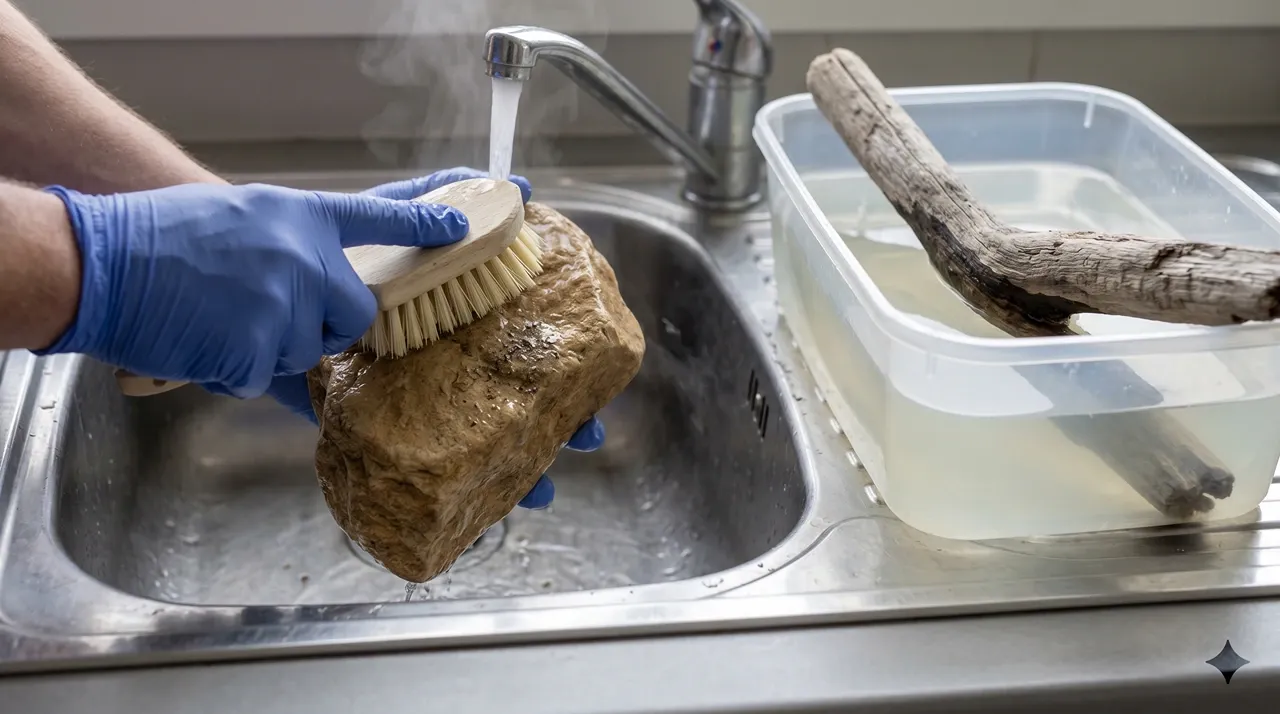
The full sourcing and disinfecting routine, including which finds to reject before you even carry them home, sits with the detail on sanitising found hardscape. Clean every piece the same way whether it came from a shop or a hillside.
Climbing Decor Doubles as Enrichment
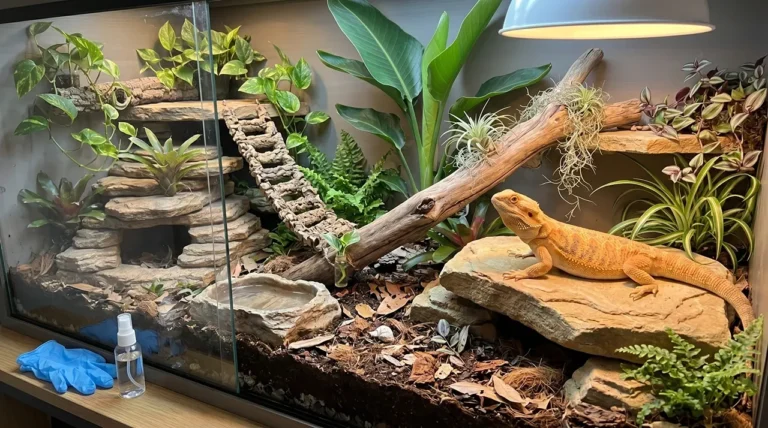
The best decoration earns its place twice: once for safety and once for stimulation. A dragon with branches to climb, a basking ledge to claim, and a hide to retreat to is a dragon doing natural behaviours instead of pacing the glass.
That overlap is why a sparse, technically safe enclosure can still be a poor one. In-tank climbs cover the basics, and structured out-of-tank enrichment covers the rest on the days you have time to supervise.
Set It Up Right the First Time
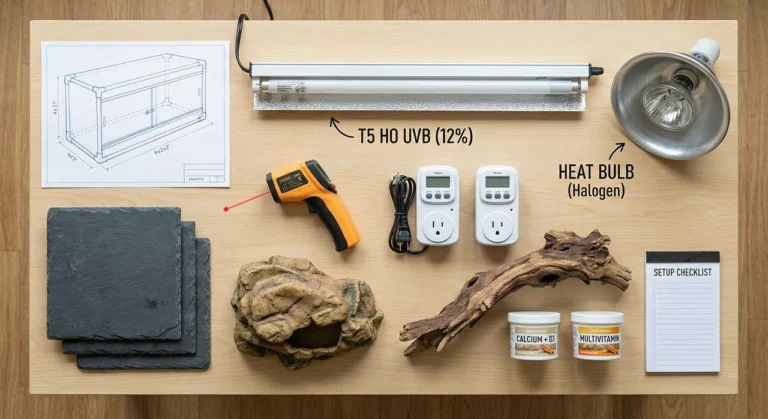
Work through this before the dragon goes back in. Each step takes seconds and prevents the decoration injuries that actually send dragons to the vet.
- Run the lamp two hours, then hand-check every decoration in the basking zone for heat
- Press-test every rock and climb for movement, and silicone anything that shifts
- Measure the gap between the highest climb and the bulb: 25 to 30cm minimum
- Pull-test every artificial plant and remove anything that sheds
- Seal the edges of any interior 3D background flush to the glass
- For a baby, strip the setup back to one low climb, one cool-end hide, and a water dish
- Clean every found rock or branch before it enters, never straight from outside
Bearded dragon vivarium decorations that pass all seven checks are decorations you can stop thinking about. Substrate is the one piece this list does not cover, because what goes under it all is its own decision worth getting right in the substrate choice before you build anything on top.
Common Questions About Vivarium Decorations
What decorations are safe for a bearded dragon vivarium?
Floor-mounted rocks, sturdy branches kept clear of the bulb, a cool-end hide, and one-piece artificial or heat-tolerant live plants are all safe choices. The safety comes from how each piece handles heat and how stable it is, not from the object itself.
Can I use rocks from outside in my bearded dragon tank?
Yes, as long as you clean them first. Scrub under hot water, soak in a 1 part bleach to 9 parts water solution for 30 minutes, rinse thoroughly, and let them dry completely before they go in. Avoid baking rocks, since some trap moisture and can crack.
How far should decorations be from the basking bulb?
Keep at least 25 to 30cm between the highest point a dragon can stand on and the bulb, measured to the dragon’s back at full stretch. A guarded bulb adds protection if a dragon climbs higher than expected.
Are artificial plants safe for bearded dragons?
Good one-piece silk or plastic plants are safe, but cheap ones are not. Fabric and soft plastic plants shed fibres and small parts that can cause a gut blockage if swallowed. Pull-test every plant first and reject anything with glitter, glued gems, or loose pieces.
What should I avoid putting in a baby bearded dragon’s enclosure?
Keep a baby setup close to bare. Avoid loose small decor parts, shedding plants, and anything small enough to fit in the mouth, since young dragons snap at anything that moves and face the highest impaction risk. One low climb, one hide, and a water dish is enough.
Written by
Sarah ArdleySarah has kept bearded dragons for over ten years. She founded Beardie Husbandry after discovering that most mainstream care advice — including what she followed with her first dragon — was doing more harm than good. Every article on this site is grounded in veterinary research and real keeper experience.