
How to Measure Bearded Dragon Temperature & Humidity (And Why Analog Gauges Fail)
In the reptile world, accurate temperature measurement is often the difference between a thriving dragon and a sick one. A difference of just 5°F can shut down their digestion, leading directly to a fatal impaction, or cause them to overheat.
The problem is that most new owners rely on the equipment that comes in standard pet store starter kits. If you are using a round, stick-on analog thermometer to measure your dragon’s heat, your readings are wrong, and your dragon is at risk.
Here is why those cheap dials fail, the only two digital tools you actually need to trust your data, and exactly where to place them inside your tank to ensure your dragon can properly thermoregulate.
• Measure the basking surface with an infrared temp gun (105–110°F).
• Measure air temps with digital probes on both the hot & cool sides.
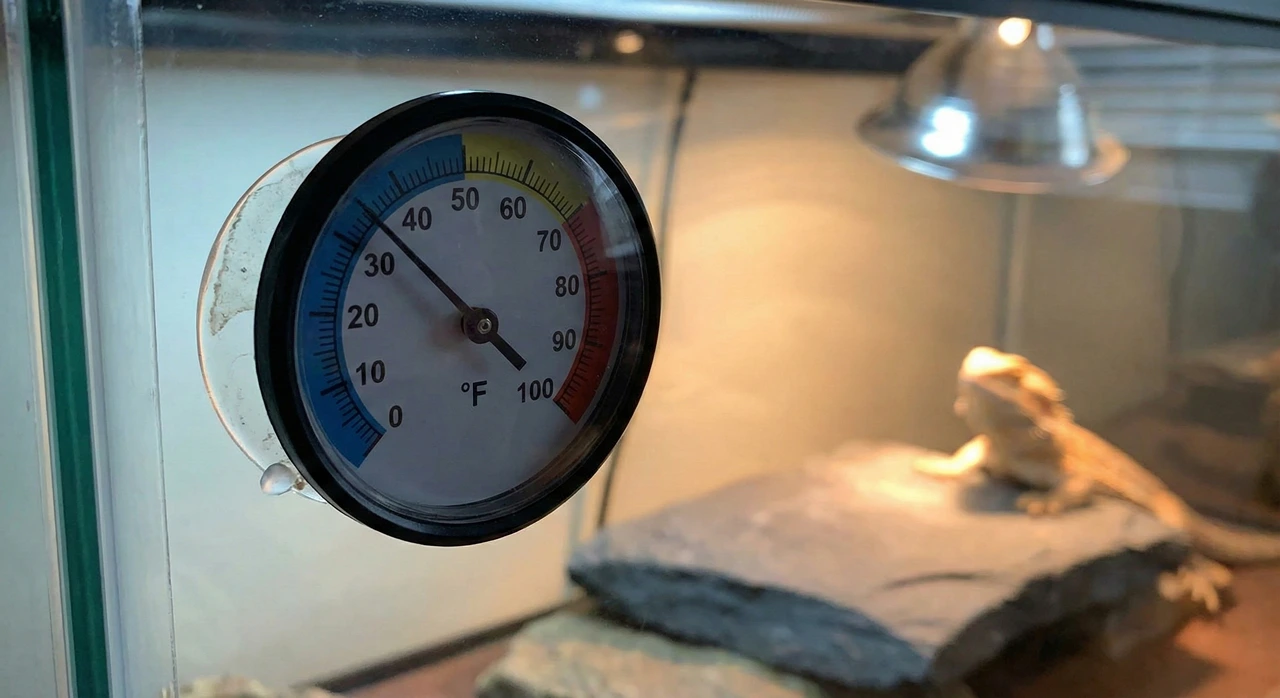
• Ignore stick-on gauges — they measure the glass, not the air.
The “Dangerometers”: Why Stick-On Gauges are Dangerous
Walk into any pet store, and you will see “Reptile Thermometers” that look like round speedometers. They usually cost $5. They are worthless.
Why they fail:
- Location: They stick to the glass wall. Glass is colder than the air inside the tank. You are measuring the temperature of your room, not the basking spot.
- Inaccuracy: These analog springs are notoriously cheap. Tests have shown they can be off by as much as 20°F.
- Adhesive Risk: The sticky pads often fail in high heat. If the gauge falls off and gets stuck to your dragon, it can tear their scales.
The Toolkit: What You Actually Need
Bearded dragons cannot internally regulate body temperature, so incorrect measurements directly disrupt digestion, immune response, and neurological function.
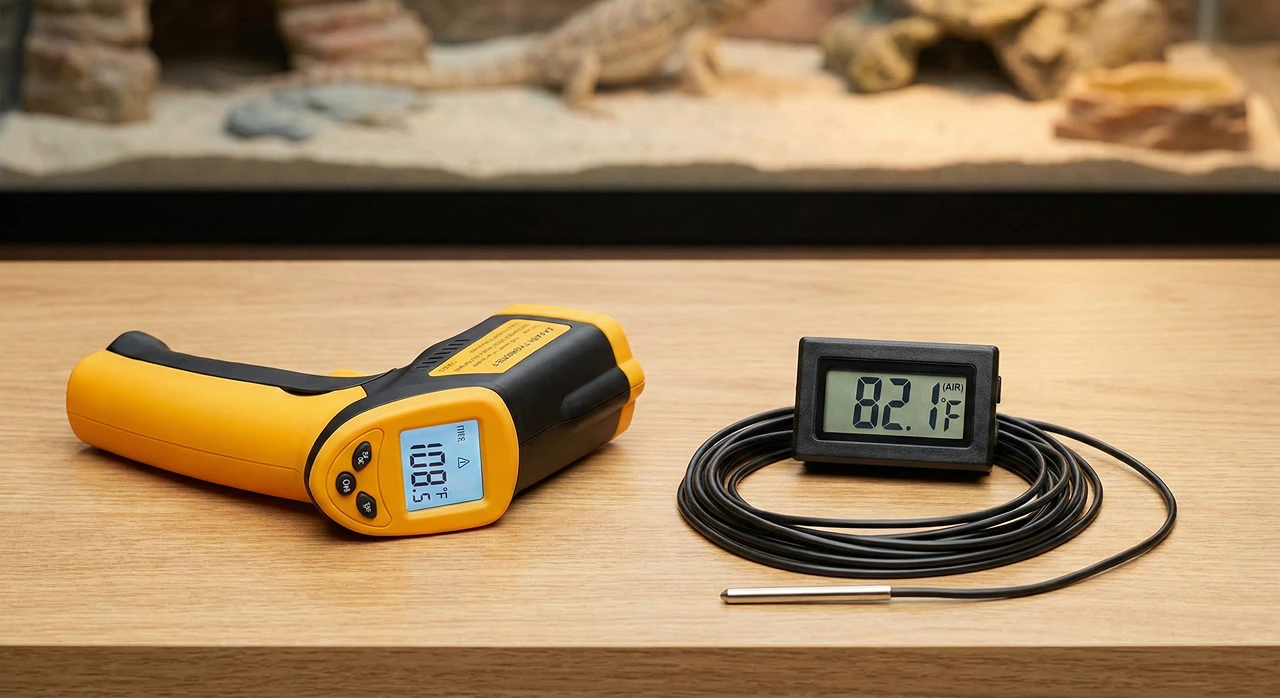
To measure your gradient correctly (as explained in my Basking Spot Guide), you need two specific tools. You cannot rely on just one.
1. The Infrared Temp Gun (For Surface Temp)
This looks like a small radar gun. You point it at a rock, pull the trigger, and a laser tells you the exact surface temperature.
Why you need it: Digestive enzymes activate based on belly heat, not air temperature, which is why surface readings matter more than wall gauges. You need to ensure the physical rock they lay on is between 105–110°F.
2. Digital Thermometers with Probes (For Air Temp)
These are small battery-operated boxes with a long wire (probe) attached. You place the box outside the tank and dangle the probe inside.
Why you need it: You need to know the ambient air temperature. Specifically, you must ensure the air on the far cool side isn’t getting too hot (above 85°F), which would prevent the dragon from cooling down.
How to Test Digital Thermometers
Even good digital tools can drift or arrive faulty. Do not put electronic reptile probes in water to test them! Instead, use this simple method:
- The Side-by-Side Test: Take your two new digital probes and place them right next to each other on your kitchen table, away from sunlight or drafts. Leave them alone for 30 minutes. When you check them, they should read the exact same room temperature. If one reads 72°F and the other reads 78°F, one is broken. Return it.
Quick Reference: Temperature & Humidity Chart
Use this chart to dial in your gradient instantly.
| Zone | Target Temp (Baby) | Target Temp (Adult) | Risk (If Incorrect) |
|---|---|---|---|
| Basking Surface | 108°F – 110°F | 105°F – 108°F | Impaction / Indigestion |
| Warm Side Air | 90°F – 95°F | 90°F – 95°F | Dehydration |
| Cool Side Air | 80°F – 85°F | 75°F – 80°F | Heat Stroke (No escape) |
| Nighttime | 65°F – 70°F | 60°F – 70°F | Restless Sleep |
| Humidity | 30% – 40% | 30% – 40% | Respiratory Infection |
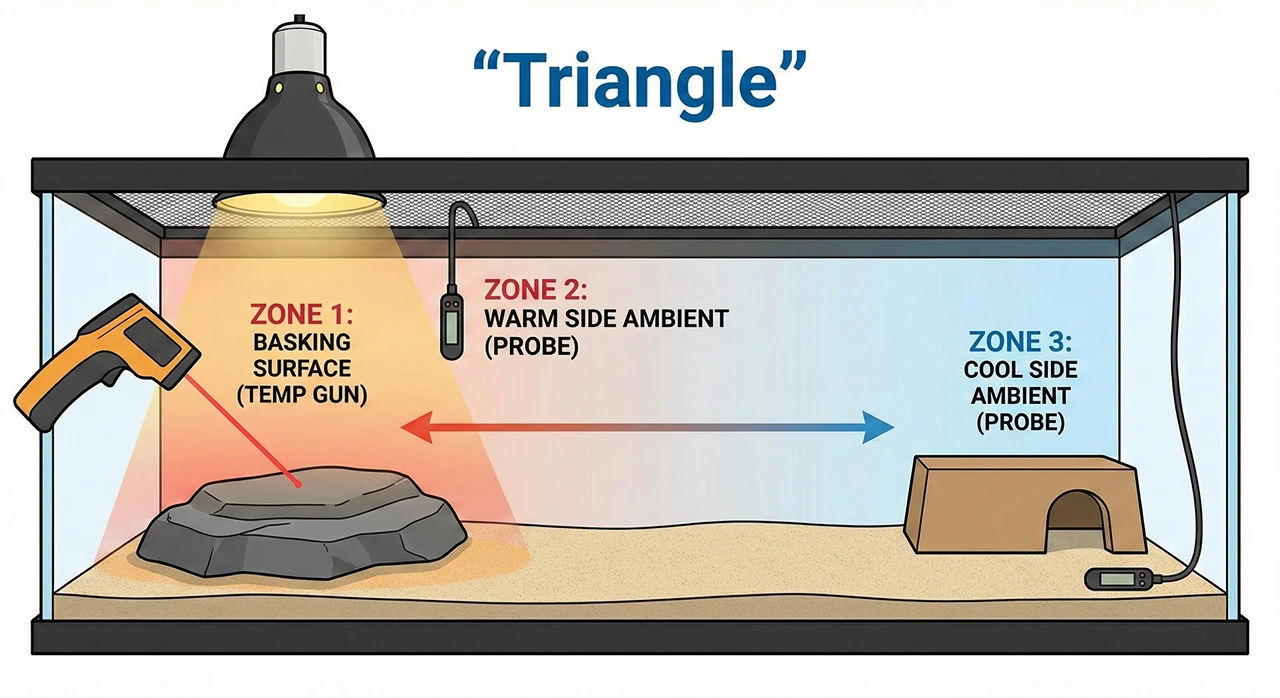
Where to Place the Probes (The “Triangle” Method)
You need to monitor three specific zones to ensure your Heat Gradient is perfect.
Zone 1: The Basking Surface
Tool: Temp Gun.
How to measure: Hold the gun 6–12 inches away from the basking rock. Aim the laser directly at the highest point of the rock where your dragon sits.
Zone 2: The Warm Side Ambient
Tool: Digital Probe.
Placement: Place the probe about 2–3 inches away from the basking light, but not directly under the beam. You want to know how hot the air is surrounding the dragon.
Zone 3: The Cool Side Ambient
Tool: Digital Probe.
Placement: Place the probe on the floor of the far opposite corner of the tank, near the hide.
Understanding Humidity (The Hygrometer)
Most digital thermometers come with a built-in Hygrometer (humidity checker). There is a lot of fear-mongering about humidity causing respiratory infections, but dragons are tougher than you think.
Safe Range: 30% – 40% is ideal.
Acceptable Range: 30% – 60% is fine, provided your tank has good ventilation.
Where to place the humidity probe:
Always measure humidity on the Cool Side, near the floor. Why? Hot air holds more moisture, and the heat lamp will dry out the air directly under it, giving you a falsely low reading. Measuring the cool side gives you the “real” ambient humidity of the tank.
Seasonal Temperature Changes (Winter vs Summer)
Your enclosure doesn’t exist in a vacuum. If your house is 65°F in winter and 80°F in summer, your tank temps will change.
- Winter: You may need to upgrade to a higher wattage bulb (e.g., from 75w to 100w) or insulate the tank to maintain that 105°F basking spot.
- Summer: Tanks often overheat. Monitor the cool side closely! Smaller enclosures heat up faster (another reason a proper 4x2x2 enclosure matters). If the cool side rises above 85°F, use a dimmer to lower the basking bulb’s power.
The Golden Rule: Always adjust your lighting based on measured temperatures, not just the wattage printed on the box.
Monitoring Routine Checklist
You don’t need to obsess over numbers every hour, but you do need a routine.
| Task | How Often? | Tool Used |
|---|---|---|
| Check Basking Surface | Daily (Morning) | Infrared Temp Gun |
| Check Cool Side Air | Weekly | Digital Probe |
| Check Humidity Trends | Weekly | Hygrometer |
| Check Nighttime Lows | Seasonally | Digital Probe |
Common Temperature Mistakes (That Hurt Dragons)
Even with the right tools, it is easy to make simple errors. Here are the most common ones I see:
- Measuring the glass, not the rock: Stick-on gauges read the tank wall temperature, which is often 10 degrees cooler than where your dragon actually sits.
- Placing probes directly under the beam: If light hits the plastic probe directly, it will heat up the plastic and give you a falsely high reading. Place probes in the shade or slightly off to the side.
- Using one thermometer for the whole tank: Bearded dragons need a gradient. Knowing the temperature in the “middle” of the tank is useless. You need to know the extremes (Hot vs. Cold).
- Chasing “perfect” humidity: Don’t panic if humidity spikes to 55% after a heavy rain. Chronic dampness (swampy conditions) is the danger, not temporary fluctuation.
Summary
Temperature doesn’t just affect comfort — it controls digestion, immunity, and lifespan. Measure it like your dragon’s life depends on it, because it does.
(Note: While these ranges are the industry standard for healthy dragons, always follow your exotic vet’s specific temperature advice for sick or recovering animals.)
- ❌ Trash: Stick-on analog gauges.
- ✅ Buy: 1 Infrared Temp Gun + 2 Digital Probes.
- ✅ Measure Surface: 105°F – 110°F (Basking Rock).
- ✅ Measure Cool Side: 75°F – 80°F (Floor).
- ✅ Check Daily: A quick laser scan takes 5 seconds and ensures safety.
Written by
Sarah ArdleySarah has kept bearded dragons for over ten years. She founded Beardie Husbandry after discovering that most mainstream care advice — including what she followed with her first dragon — was doing more harm than good. Every article on this site is grounded in veterinary research and real keeper experience.