Bearded Dragon Power Outage: How to Keep Them Warm
The first thing most owners do when the power goes out is panic. The second thing is put a hand warmer directly on their dragon and cause a burn. Neither response is useful, and one of them is actively harmful. A bearded dragon power outage is manageable in almost every scenario, but the decisions you make in the first thirty minutes determine whether it stays that way.
What the enclosure does after power loss depends entirely on two things: how warm the room is and how insulated the enclosure is.
How Fast Does the Enclosure Actually Cool Down
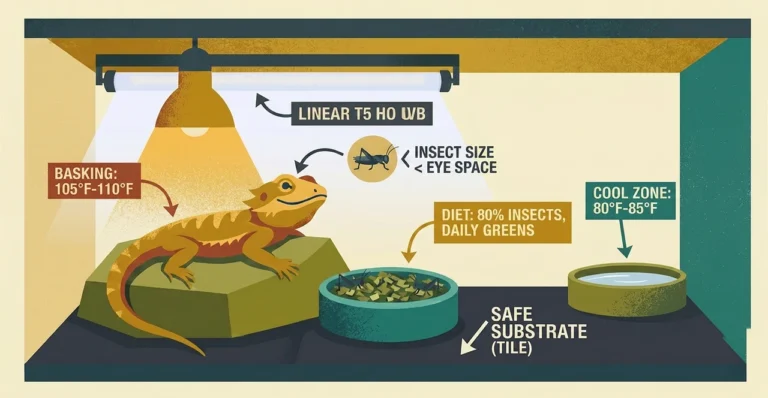
This is the question most articles skip, and it is the one that determines your timeline. A wooden vivarium at 100°F that loses power in a 70°F room will drop to around 80°F within 45 minutes to an hour. A glass tank loses heat faster, closer to 30 minutes to the same temperature. At 65°F ambient room temperature, both cross the danger threshold faster than most owners expect.
During a bearded dragon power outage that window is roughly 30 to 60 minutes before the enclosure temperature is no longer doing useful work for your dragon. That window is when to act, not when to start searching for solutions.
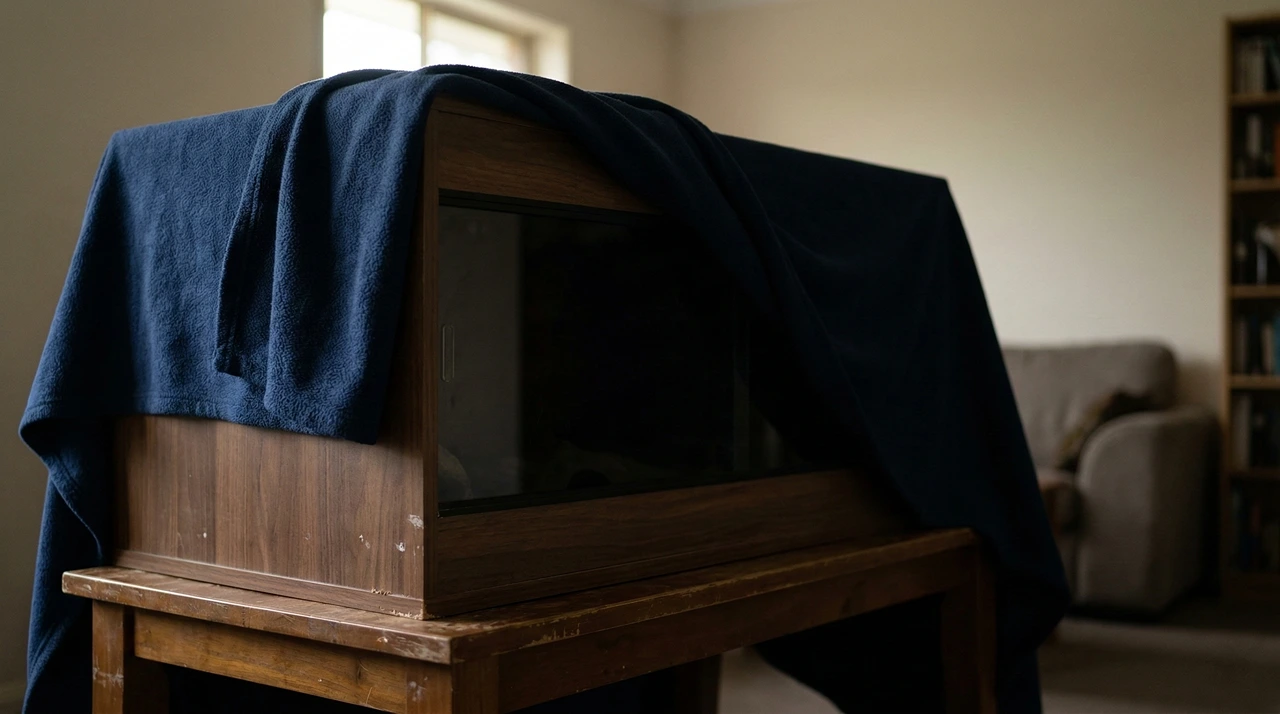
The moment power goes out, throw a thick blanket over the entire enclosure, not over the dragon. You are trapping residual heat inside the space it already occupies. This single step extends your useful window by 30 to 45 minutes and costs nothing. Every other decision happens inside that extended window.
What Temperature Is Too Cold During a Power Outage
Most advice says “keep your dragon warm” without telling you what warm means in numbers. Here are the thresholds a keeper needs to operate against during an outage.
If your ambient room temperature is above 75°F, your dragon is not in immediate danger. Short outages of a few hours are unlikely to cause harm. Keep the enclosure blanketed, do not feed, monitor behaviour, and wait. Dragons in this range may become less active but will not experience thermal stress within a normal outage window.
If your ambient room temperature is between 65°F and 75°F, you have two to four hours before thermal stress becomes a real concern for an adult dragon. Juveniles and seniors hit this threshold faster. Start warming measures immediately rather than waiting to see how long the outage lasts.
If your ambient room temperature is below 65°F, act now. A winter bearded dragon power outage at this temperature is the scenario where a dragon can come to harm within hours. Knowing how to read enclosure temperatures accurately means you have real numbers to work with immediately rather than guessing from how the room feels.
What Each Warming Method Actually Does
Body Heat
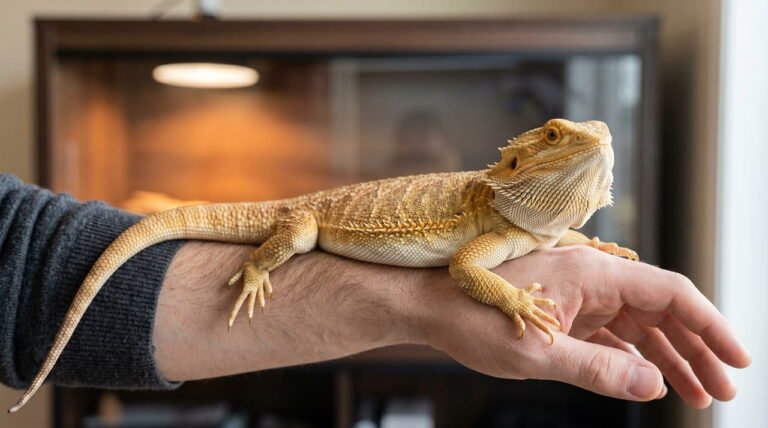
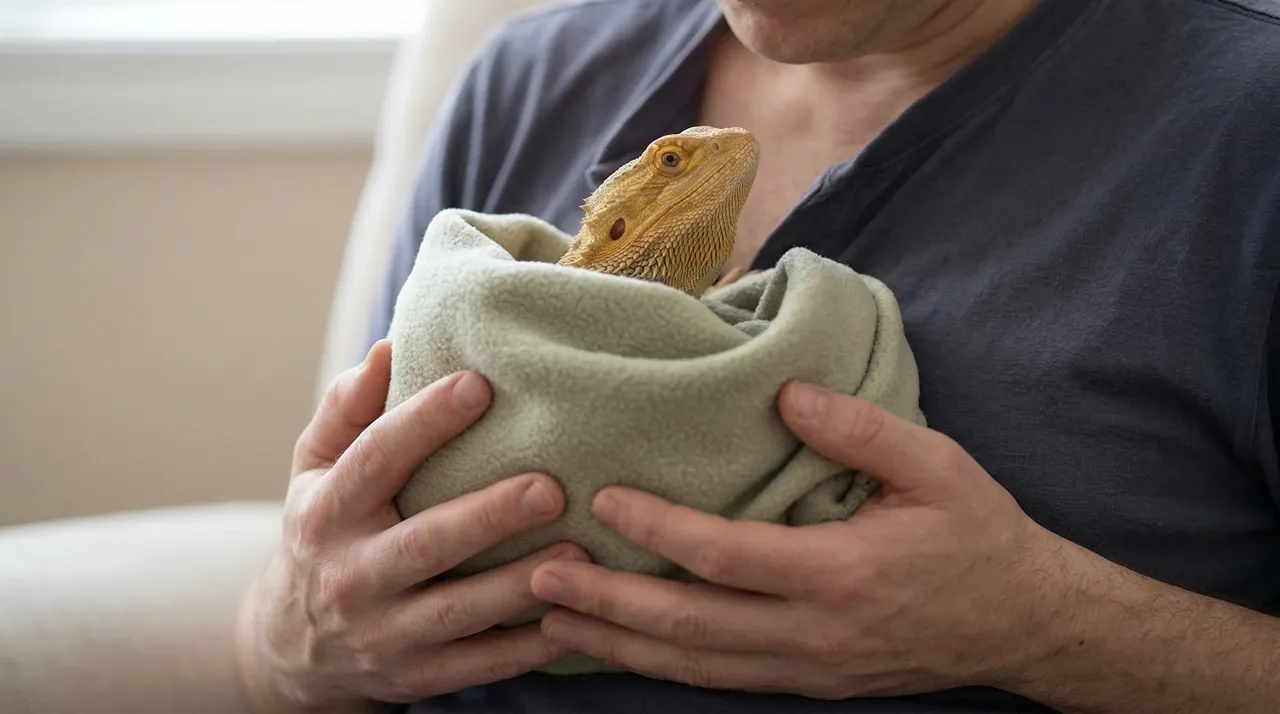
Holding your dragon against your chest, wrapped loosely in a fleece or cotton layer, is the safest and most reliable warming method available without any additional equipment. Your body maintains a consistent 98°F and the dragon absorbs that heat steadily.
Place the dragon inside a cotton pillowcase or wrap it in a single layer of fleece first. Direct skin contact is less effective because the dragon has nothing to press against. Tuck the bundle inside your shirt if the room is cold. Most dragons settle quickly in this position and remain calm for extended periods.
Body heat is slow, steady, and controllable. It will not burn your dragon, requires no equipment, and works for as long as you are willing to sit with it. For a two-to-four-hour outage in a cold room, it is the one approach that needs no equipment and cannot fail.
Hand Warmers
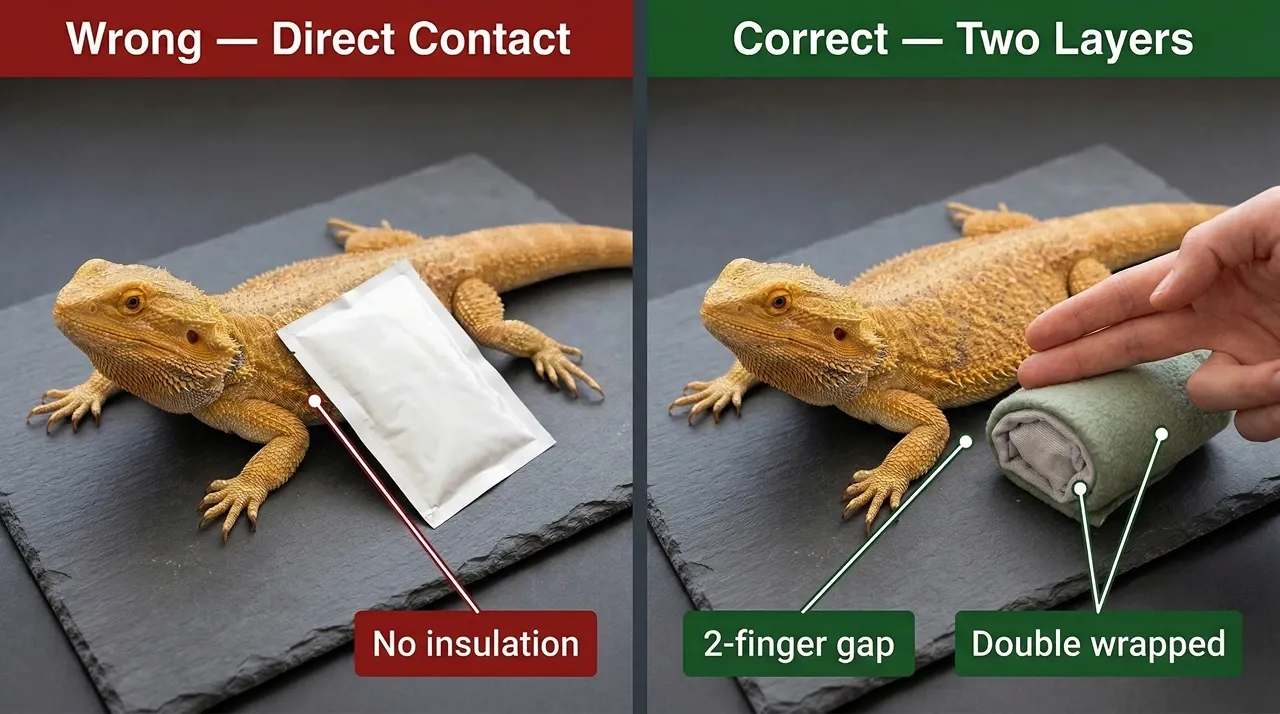
Air-activated hand warmers reach between 130°F and 160°F at their surface. That is hot enough to cause a thermal burn on reptile skin within minutes. Every competitor article says “place hand warmers near your dragon.” That instruction alone has caused more burns than it has prevented cold injuries. The correct method requires two layers of insulation between the warmer and the dragon at all times.
Wrap the activated warmer in a thin cloth, then wrap that in a second layer of fleece or towelling. Place the wrapped bundle beside the dragon, not under it or touching it directly. The ambient warmth radiating from the setup is useful. The direct heat from the warmer surface is dangerous.
If you cannot fit two fingers between the warmer bundle and the dragon’s body, move it further away. Check the bundle temperature every 20 minutes, as warmers hold maximum heat for roughly two hours before gradually cooling. Power outage burns present identically to basking lamp burns and need exactly the same response.
Hot Water Bottles
A hot water bottle filled to around 100 to 105°F and wrapped in a towel is a safer alternative to hand warmers because the surface temperature is controllable and lower. Place it in the enclosure beside the dragon, not under the substrate. A rubber bottle at this temperature wrapped in a single towel layer will sit at a safe surface temperature for contact.
Refill every two to three hours as it cools. If you have access to a gas hob or camping stove, this method is reproducible for as long as the outage lasts.
Using a Car Without Overheating Your Dragon
Getting your dragon into a car with the heat running is effective for short outages in winter, and almost every article recommends it. What they consistently omit is the overheating risk. A car interior on a mild day with the heater running can exceed 100°F within twenty minutes.
Place a thermometer in the car before putting your dragon in. Target 85°F to 90°F. Set the heater accordingly and check every fifteen minutes. Never leave the dragon unattended in a parked car with the engine running, and never place the dragon in direct airflow from a heating vent.
Generators and Battery UPS Systems
A small inverter generator capable of running 300 to 500 watts will power a standard basking lamp and UVB tube with capacity to spare. For owners in areas with frequent outages, whether hurricane zones, rural areas prone to storm damage, or wildfire regions, this is the preparation that means you never have to improvise.
A 2000-watt portable generator costs less than a year of emergency vet bills and runs a reptile setup for eight to twelve hours on a single tank of fuel.
A UPS battery backup, the type used for computers and home networks, is a quieter indoor alternative for shorter outages. A 600VA unit will run a 100-watt basking lamp for approximately 45 minutes, enough to cover a typical brief outage without any action on your part. Larger units extend that window proportionally. Size the UPS against your basking lamp wattage first, as that draws more power than any other enclosure component.
Do Not Feed During an Outage
Every article mentions this, and none of them explain the reason clearly enough for an owner to follow it when their dragon is obviously hungry. The reason matters: digestion in reptiles is a heat-dependent process. Food in a cold gut does not digest and simply sits there, beginning to ferment.
The resulting bacterial load can cause gut impaction, bloating, and in extended cases a systemic infection that develops days after the outage ends, when the owner has assumed the crisis is over.
Do not offer insects or salad. If the outage runs beyond eight hours, offer a few drops of water on the snout or a brief warm soak to maintain hydration, but nothing that requires digestion. Resume normal feeding only once basking temperatures are restored and the dragon has had at least two hours at correct temperature. A dragon that is slow to return to its basking spot after a cold event needs monitoring before the first meal.
Summer Outages Are a Different Problem Entirely
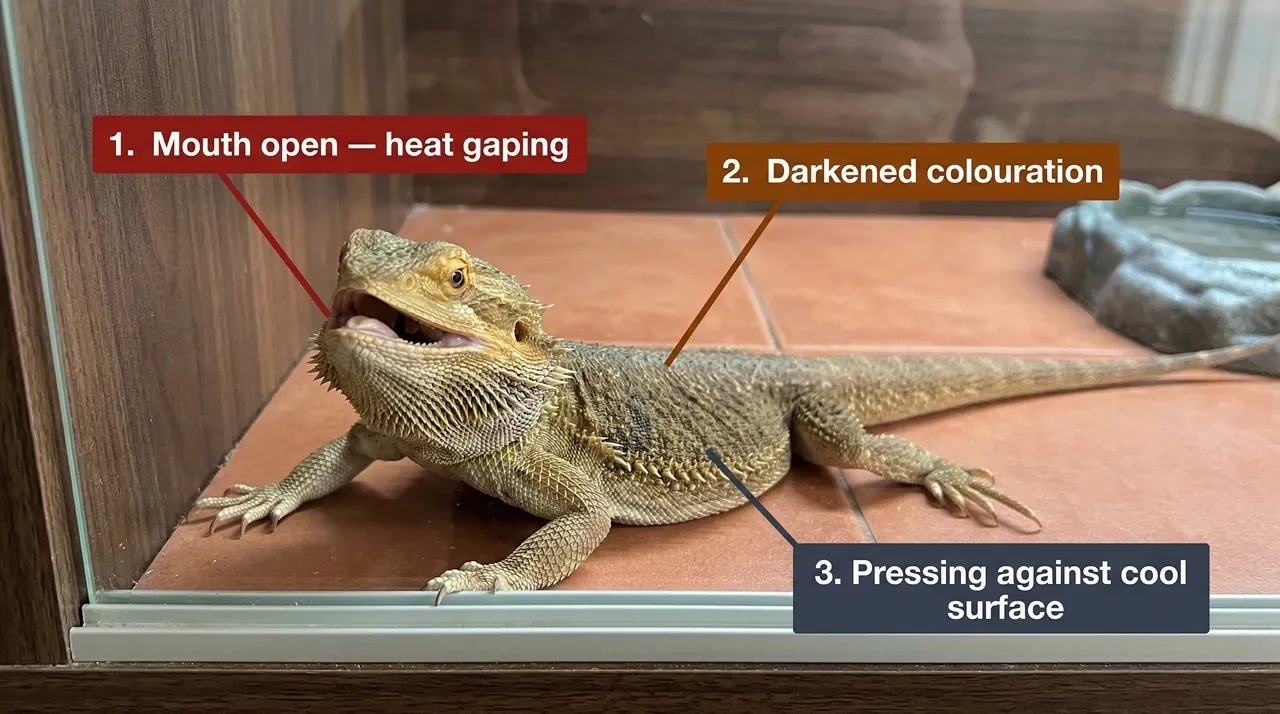
Every bearded dragon power outage article assumes the problem is cold. In summer, the opposite scenario is equally dangerous and almost completely absent from available resources. A bearded dragon enclosure in a room that reaches 90°F or above during a summer blackout can overheat a dragon within an hour. Heat stroke in reptiles is harder to reverse than hypothermia.
Signs of overheating: the dragon’s mouth is open, it is pressing against the coolest surface available, colouration has darkened on the belly, and it is unresponsive to handling. Remove the dragon from the enclosure immediately and move it to the coolest room in the building.
Place a damp cloth at room temperature across the body. Not cold water, not ice. Cool the dragon gradually over twenty minutes, then assess responsiveness. A dragon that remains unresponsive after twenty minutes of cooling needs emergency vet care.
In summer outages during the day, a window with direct sunlight provides UVB and a safe heat source simultaneously, provided the room temperature does not exceed 85°F. Place the dragon on a towel near the window for controlled natural basking. Move it away from the window before the room heats past that threshold.
What Happens If the Outage Lasts Days
A same-day outage restored within six hours is inconvenient. A multi-day outage in winter is a genuine welfare emergency requiring a different set of decisions.
If you have a confirmed extended outage and no generator, three options exist: a reptile-experienced contact who has power, a local reptile society willing to house the dragon, or a boarding service through an exotic vet. Write all three down before you need them.
Most exotic vet clinics that board reptiles will take an emergency case even without a prior relationship. Call them before the situation becomes critical rather than after. The ARAV vet directory lists qualified exotic specialists by location if you do not already have one.
Do not delay this decision waiting to see if power is restored. A dragon that has been cold for twelve hours in a 55°F room has a compromised immune response. Moving it at that point into a warm environment carries a recovery risk that moving it at hour two does not.
Extended outages that run into the night introduce overnight temperature drops that daytime management does not account for. Some are tolerable. Others are not.
Which Scenario Applies to You
| Room Temp | Outage Duration | Risk Level | Action |
|---|---|---|---|
| Above 75°F | Under 4 hours | Low | Blanket the enclosure. Monitor. No feeding. |
| Above 75°F | Over 4 hours | Moderate | Add body heat or wrapped hot water bottle. No feeding. |
| 65°F to 75°F | Under 2 hours | Moderate | Blanket enclosure, body heat or hand warmer. Monitor closely. |
| 65°F to 75°F | Over 2 hours | High | Body heat, car heat, or find alternative power source. |
| Below 65°F | Any duration | High | Act immediately. Body heat, generator, or relocate dragon. |
| Above 90°F (summer) | Any duration | High | Remove from enclosure. Move to coolest room. Cool gradually. |
| Any temp | Over 12 hours | Critical | Relocate to powered location. Do not wait further. |
The Prep Kit That Makes All of This Easier
Everything described above is easier if you already own three items before a bearded dragon power outage happens. A pack of air-activated hand warmers stored somewhere accessible, a hot water bottle, and a fleece blanket designated for the dragon’s enclosure area. These three things cost under twenty pounds or dollars combined and cover every short-to-medium outage scenario without requiring improvisation.
If you live somewhere with frequent or extended outages, add a UPS battery backup sized to your basking lamp wattage. Put a small generator on the list for when budget allows.
An enclosure with a correctly dialed baseline temperature setup is also easier to manage when the power goes out.
Frequently Asked Questions
How Long Can a Bearded Dragon Go Without Heat
An adult dragon can tolerate up to 12 hours without supplemental heat if the ambient room temperature stays above 65°F, though this is a ceiling rather than a target. Below 65°F ambient, the safe window shortens considerably. Juveniles under six months should not go more than a few hours below 70°F without intervention.
Can I Use a Heating Pad Under the Tank During a Power Outage
An electric heating pad requires power to function, so it is not useful during an outage. An air-activated hand warmer placed under the tank with two layers of insulation between the warmer and the enclosure floor can provide mild bottom warmth. The burn risk is lower from below than from direct contact, but the two-layer rule still applies.
Should I Take My Bearded Dragon Out of Its Enclosure During a Power Outage
If the room temperature is below 70°F and the outage is expected to last more than two hours, yes. Body heat is a more reliable and controllable warming source than a cooling enclosure. If the room is warm enough that the enclosure temperature remains above 75°F, leaving the dragon in a blanketed enclosure is the less disruptive option.
Can a Bearded Dragon Go Without UVB During a Power Outage
A single day without UVB will not cause lasting harm to a healthy adult dragon. UVB deprivation becomes a concern after 48 to 72 hours, at which point D3 synthesis is compromised and calcium metabolism is affected. Extended outages where natural sunlight access is possible, near an unfiltered window or brief outdoor time in warm weather, help bridge the gap without any specialist equipment.
What to Look for After a Cold Exposure
Once heat is restored, watch for normal basking behaviour within the first two hours. A dragon that warms up, moves to the basking spot, and resumes normal posture has tolerated the event well. One that remains lethargic, refuses to bask, or has soft or abnormal faeces in the 24 hours following the outage needs a vet assessment. Cold stress suppresses immune function and the effects are not always immediately visible.
What to Do Right Now
If you are in the middle of a bearded dragon power outage as you read this: blanket the enclosure first, then check the room temperature with a thermometer. Match that number to the table above and follow the action for your scenario. Skip feeding and work the problem in order.
If the power is currently on: take five minutes to build the prep kit. Hand warmers somewhere accessible, hot water bottle in the cupboard, fleece blanket near the enclosure. Check that you have a functioning thermometer in the room as well as inside the enclosure.
Write down the number of your nearest exotic vet and keep it somewhere other than your phone. If the power is out during a storm, your phone battery may not be reliable when you need it.
The owners who manage power outages well are not the ones with the most equipment. They are the ones who already knew what they would do before anything happened. A bearded dragon that runs cold for two hours with an owner who had a plan comes through it fine. One that runs cold for eight hours while its owner was still searching for answers is harder to recover from.
Dehydration compounds cold stress faster than most owners expect, so keep the dehydration signs in mind during and after any outage event.
Written by
Sarah ArdleySarah has kept bearded dragons for over ten years. She founded Beardie Husbandry after discovering that most mainstream care advice — including what she followed with her first dragon — was doing more harm than good. Every article on this site is grounded in veterinary research and real keeper experience.