Can My Bearded Dragon Go Outside?
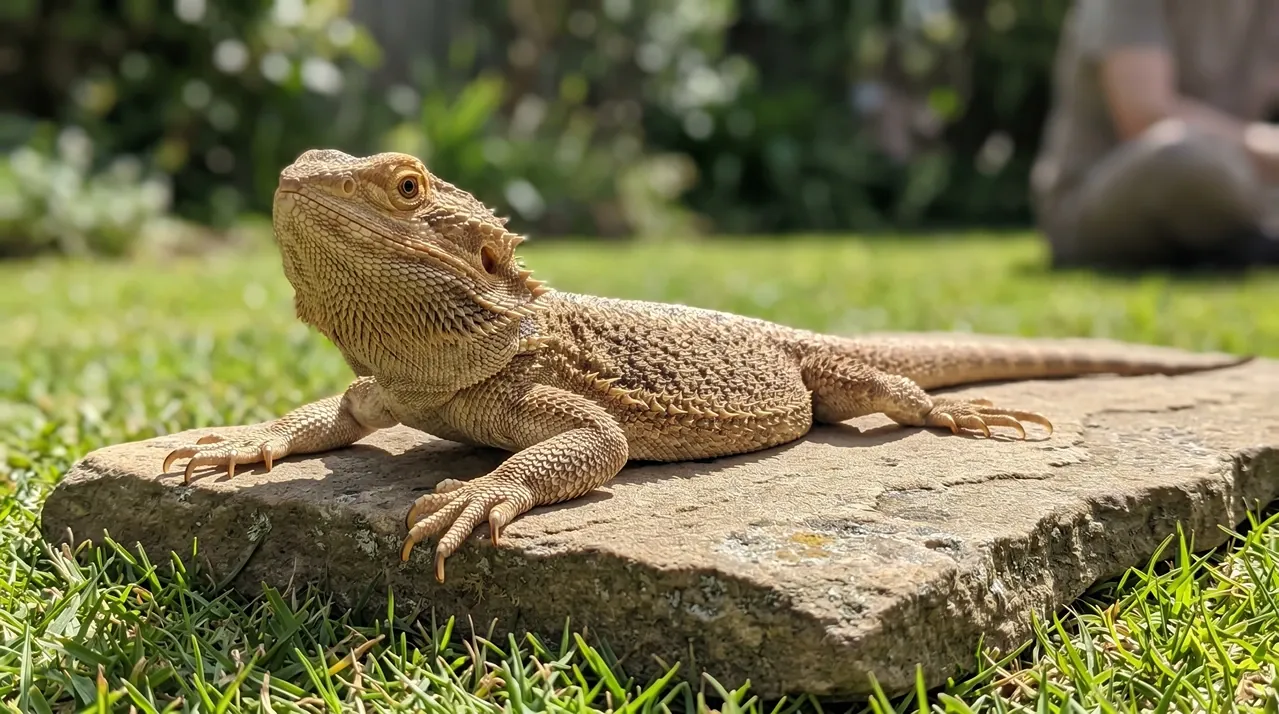
Spring comes around, the sun hits the garden, and the thought lands naturally. Your beardie has been staring at the window for weeks. Real sunlight, fresh air, a chance to actually move. The question is whether it’s safe, and the honest answer is yes, most of the time, if you handle a few specific things properly.
Outdoor time is genuinely good for a bearded dragon when conditions are right. It’s also the fastest way to lose one when conditions are wrong. This piece walks through both sides so you can make the call with confidence.
The Short Answer Before We Dig In
Yes, a bearded dragon can go outside, and most benefit from it. Keep air temperature between 75°F and 90°F, keep humidity under 65%, never leave them unsupervised even for ten seconds, and check the ground surface temperature before you put them down. Those four rules prevent roughly 90% of outdoor disasters.
Everything else here is the detail behind those rules, plus the risks most advice glosses over.
Why Natural Sunlight Actually Matters
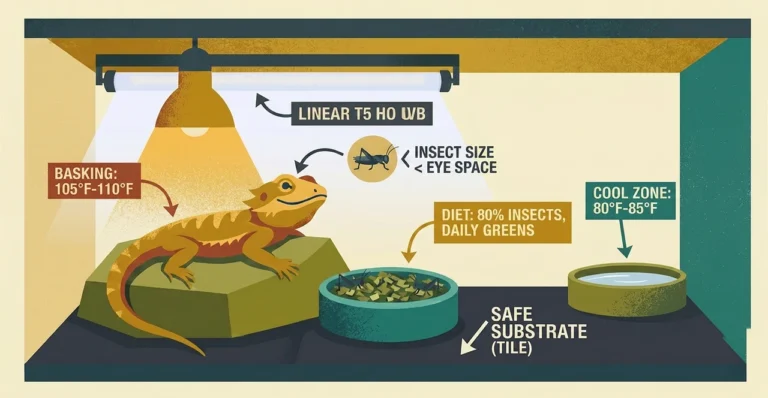
Even the best T5 HO UVB tube produces a fraction of what the sun delivers at midday. That’s not marketing language, it’s measurable on a Solarmeter. A quality bulb at basking distance gives a UVI of around 4 to 4.5, which is what bearded dragons need for healthy calcium metabolism and vitamin D3 synthesis. Unfiltered summer sun easily hits UVI 8 to 11.
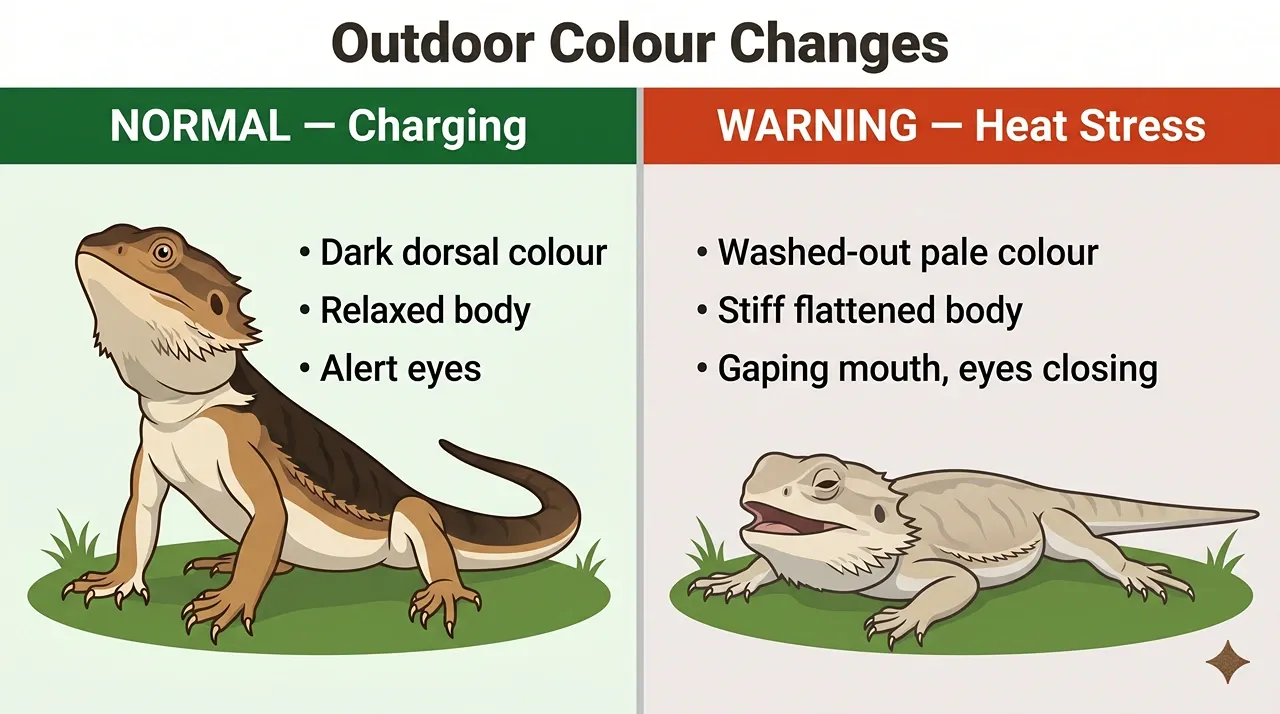
The practical effect is visible within minutes. Beardies outdoors go very dark first, absorbing UV energy, then brighten and become noticeably more active. Experienced keepers call it charging. It’s real, and it reflects genuine physiological changes happening under the skin.
Outdoor time also gives exercise, mental stimulation, and a break from the same four walls of a vivarium. None of that replaces a properly dialled-in indoor UVB setup, but it adds something no lamp can replicate.
When It’s Safe to Take Them Out
The right conditions narrow down faster than most owners realise. Air temperature matters, but so does surface temperature, wind, humidity, and what the sun is doing behind any clouds.
| Condition | Safe Range | Danger Zone |
|---|---|---|
| Air temperature | 75°F to 90°F | Below 70°F or above 95°F |
| Humidity | Below 65% | Above 70% |
| Surface temperature (grass, stone, decking) | Below 110°F | Above 120°F (burns within seconds) |
| Wind | Light breeze acceptable | Gusty or strong wind (stresses them) |
| Sky | Sunny or partly cloudy | Heavy overcast (minimal UVB benefit) |
| Ground condition | Dry | Damp from dew or recent rain |
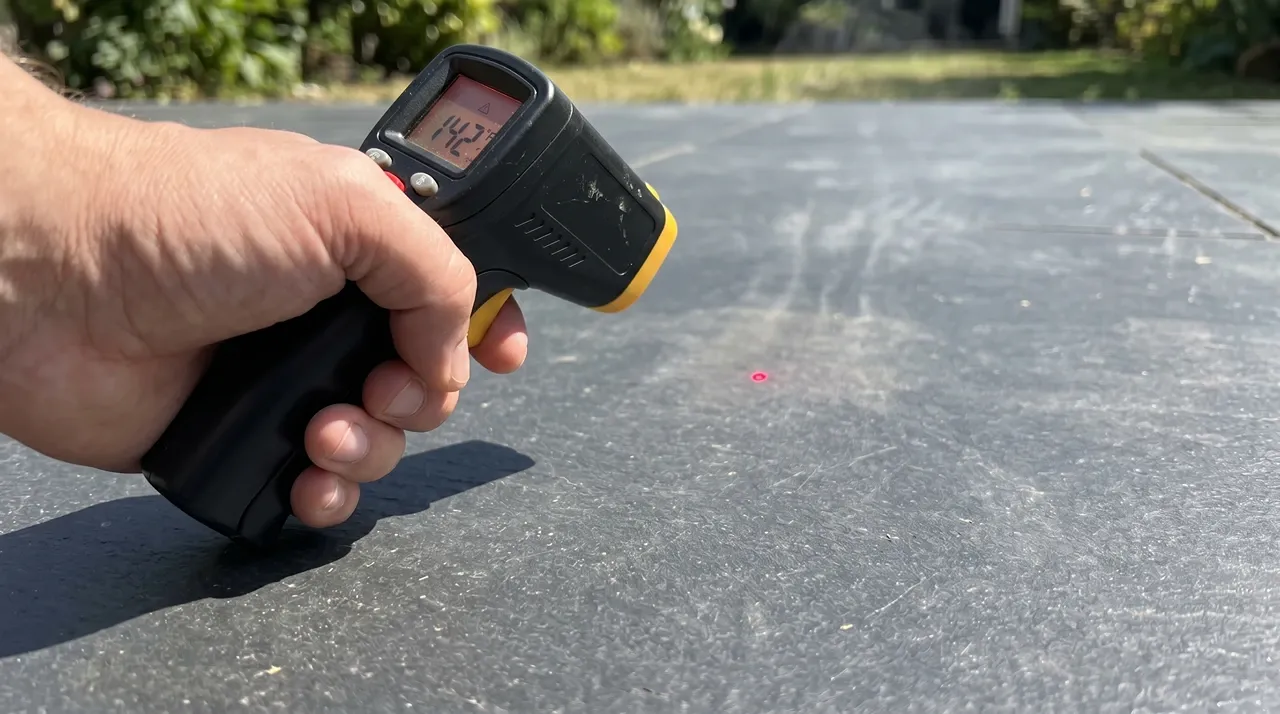
The surface-temperature rule catches most keepers off guard. On a day where the air reads 82°F, a dark paving slab in direct sun can hit 140°F. A concrete patio or dark decking is effectively a hot plate. Always check with an infrared thermometer before setting your dragon down.
Time of Day Matters
Late morning and late afternoon are the sweet spot in most climates. The sun is high enough to provide real UVB, but not so intense that surfaces become dangerous. Midday in summer is often too hot and too intense, especially in southern regions.
Early morning has low UV index and damp grass. That’s lower value for the risk involved, and the dew chill is not what your dragon needs.
The First Outdoor Trip Should Be Short
Ten to fifteen minutes for the first outing is plenty. You want to learn how your individual beardie reacts before you commit to longer sessions. Some are relaxed from minute one. Others freeze, run, or flatten themselves against the grass looking for cover.
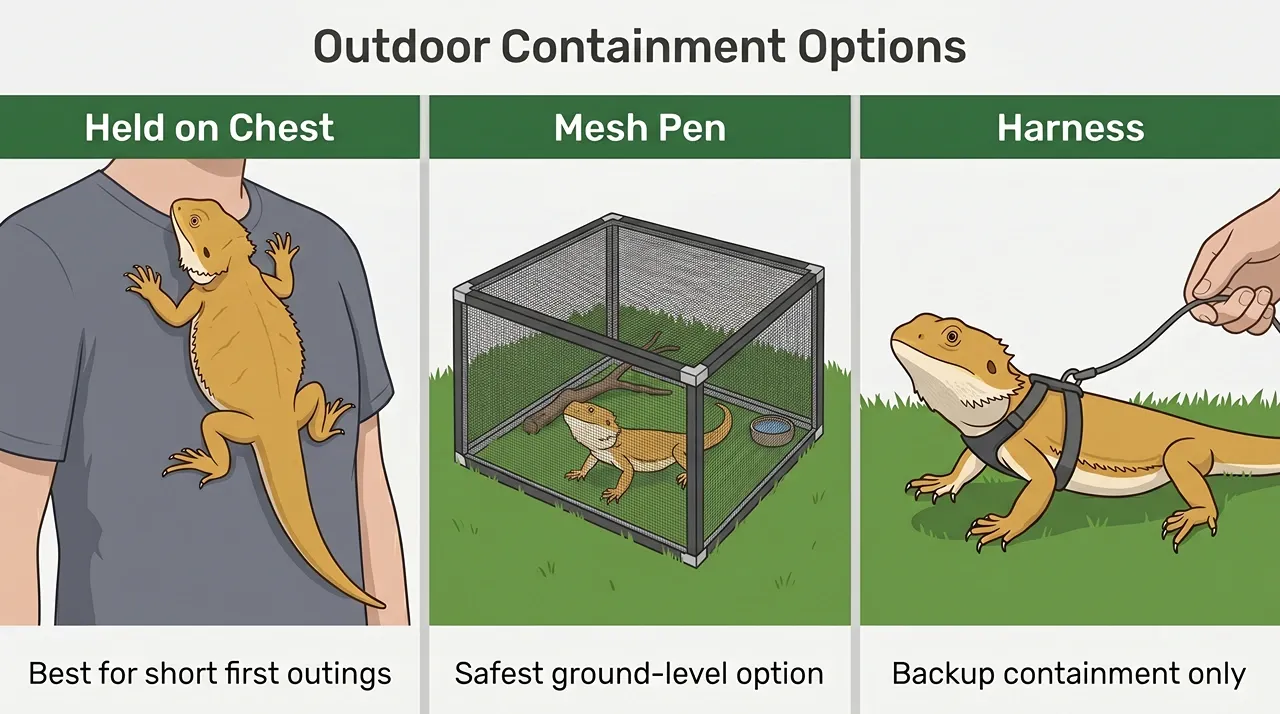
Hold them on your chest for the first two or three trips rather than putting them on the ground. It lets them look around from a safe position while getting used to the light, smells, and sounds. Putting a nervous beardie on open grass and standing over them reads as a predator attack.
After a few sessions, most dragons settle in enough to walk, dig, and explore. Build outdoor time up gradually over two or three weeks until you’re doing thirty to forty-five minute sessions comfortably.
Age and Size Rules
A baby under three months should stay inside. They’re too small to chase down if they bolt, too vulnerable to birds, and too sensitive to temperature swings. They also haven’t built up the immune tolerance that an older dragon has.
Juveniles from three to six months can go out for very short supervised sessions in a controlled pen, never on open grass. From six months onward, most healthy dragons handle outdoor time well.
Seniors do fine outside but need shorter sessions and more careful temperature monitoring, since thermoregulation in older bearded dragons is less efficient than in a prime-age animal.
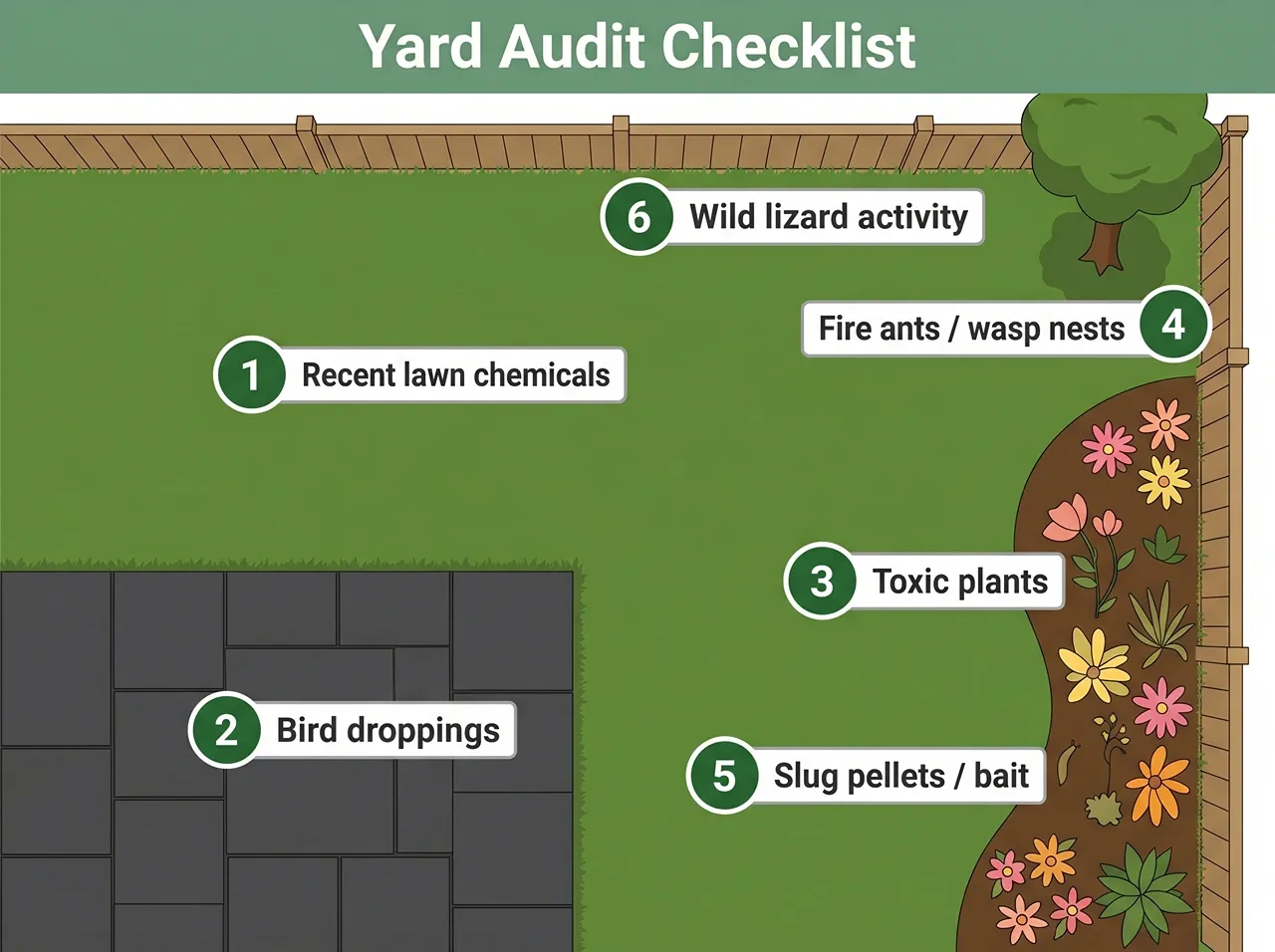
The Yard Audit Before You Let Them Out
Walk your yard or patio first. Look at it from two inches off the ground. You’re checking for things a dragon would encounter that you’d otherwise miss.
- Recent lawn treatment. Weed killer, fertiliser, or insecticide sprayed within the last 48 hours means no beardie on that grass. Some chemicals persist longer. If a neighbour sprays, drift is a real issue.
- Mosquito fogger residue. Trucks that spray for mosquitoes leave residue on grass and leaves. If your neighbourhood gets regular treatment, keep outings off treated surfaces entirely.
- Slug pellets and rodent bait. Highly toxic, and dragons will investigate them. Remove before any outdoor time.
- Fire ants (in applicable regions). A swarm can seriously injure or kill a beardie in minutes.
- Wasps and bee nests. Dragons will hunt wasps and get stung on the tongue or in the throat. A single sting in the mouth can cause fatal swelling.
- Toxic plants. Ivy, azalea, oleander, rhododendron, daffodil, lily of the valley, foxglove. If you don’t know what a plant is, don’t let your dragon near it.
- Wild lizard activity. Anoles, skinks, or geckos in your yard shed parasites that transfer to beardies through droppings or shared ground. This is a real vector for coccidia and pinworms.
Bird droppings are another silent carrier of reptile parasites and pathogens. A single dried dropping on a patio stone looks like nothing until you realise your dragon just walked through it and licked its foot.
Containment Options That Actually Work
Bearded dragons are faster outside than you think. The same lazy lizard who barely moves in the vivarium turns into a missile in the garden. You need real containment, not hope.
Open Supervision
Holding them on your chest or shoulder works for short sessions. It’s low risk as long as your attention stays on them. No phone, no conversation with a neighbour, no quick check of something in the house.
Mesh Outdoor Pens
A pop-up mesh reptile pen or a converted tortoise pen is the safest ground-level option. Look for mesh with a roof to block birds. Zoo Med makes tortoise pens that work well for adult beardies. Make sure the floor panel is secure if you’re on grass, because dragons will dig under any gap.
Harnesses
Harnesses work for some dragons and not others. They reduce the catastrophic escape risk but don’t eliminate it. A spooked beardie can slip a harness in seconds, and the pressure of a sudden bolt can tear scales. Treat a harness as a backup, not a primary containment system.
Predators You Actually Need to Worry About
Most keepers think of hawks first, and hawks are a real threat. They hunt by sight and a beardie-sized movement on open grass registers as prey. But hawks aren’t the only problem.
- Crows and magpies will attack small reptiles, especially babies.
- Cats, including neighbour’s cats, can clear a fence in seconds.
- Dogs, even gentle ones, can fatally injure a beardie with a single paw swipe.
- Raccoons, foxes, and opossums are a dusk and early-morning threat.
- Snakes in regions where they’re active.
Supervision means eyes on the dragon, not just presence in the same space. Thirty seconds of inattention is all a hawk needs.
Stress and Overheating Signs
Learning to read outdoor stress signals saves dragons. The problem is that some outdoor behaviour looks alarming but is completely normal, while other behaviour looks routine but signals a crisis.
| Behaviour | What It Means | Action |
|---|---|---|
| Going very dark all over | Normal, absorbing UV | None, this is good |
| Going pale or washed-out white | Heat stress, serious | Move to shade immediately |
| Mouth gaping with calm body | Cooling down, normal | Offer shade nearby |
| Gaping that stays open, plus tail stiffening | Overheating | Move indoors now |
| Flattening body against ground | Basking or feeling exposed | Watch for escape attempt |
| Frantic pacing along one edge | Stress, wanting out | End the session |
| Freezing completely still | Fear response | Cover gently, bring indoors |
Gaping is the one that confuses people most. A relaxed dragon with their mouth open and body normal is thermoregulating. A dragon with their mouth open, body stiff, eyes closing, and unable to move is in trouble. The rest of the animal’s body language signals will tell you which one you are looking at.
How Much Outdoor UVB Actually Counts
This is where a lot of advice goes wrong. Owners hear that the sun is better than any bulb, assume thirty minutes in the garden equals a week of indoor UVB, and start skipping lamp maintenance.
UVB only reaches the dragon when they’re in direct sun. In full shade, UVI drops to near zero, even on a bright day. A beardie sitting under a tree the entire session is getting air and exercise but very little UV benefit.
A useful rule of thumb is that twenty to thirty minutes of direct summer sun, once or twice a week, supplements good indoor UVB nicely. It doesn’t replace it. Keep your indoor bulb on its normal schedule, replace it on time, and treat outdoor time as a bonus.
If you’re trying to gauge indoor output, a Solarmeter 6.5 at the basking surface tells you more than any guess. Compare that number to what real sun delivers and you’ll understand why outdoor exposure feels so different to your dragon.
What to Bring With You
Set up before you bring the dragon out, not while holding them. A loose beardie plus you rummaging in a bag is how escapes happen.
- Infrared thermometer for surface and air checks
- Small water bowl or misting spray
- Shade option, such as an umbrella, canopy, or positioned under a tree
- A towel for covering if they panic
- A secure pen or carrier for transport back inside
A portable carrier makes the trip between house and yard much safer than an open hand walk, and for anything beyond the back garden you’ll want the same secure setup used for longer bearded dragon trips.
After They Come Inside
Post-outing care matters more than most advice admits. A dragon that’s been charging in the sun comes back thermally loaded, often slightly dehydrated, and sometimes carrying debris or insects in their scales.
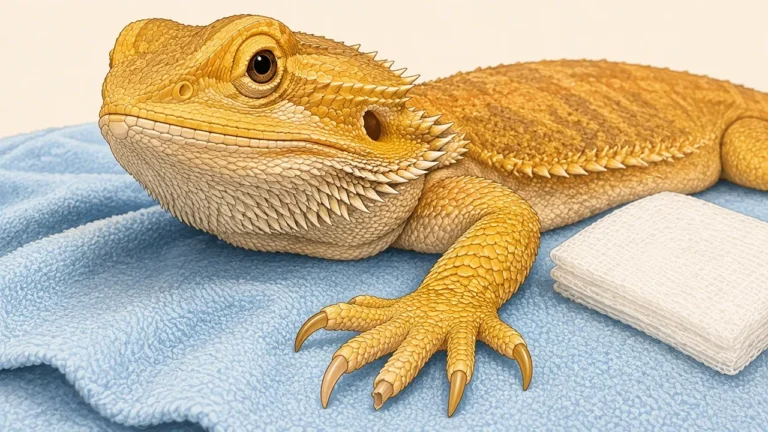
A gentle warm bath at roughly 90°F, belly-deep, for ten to fifteen minutes helps with hydration and rinses off anything they picked up, following the same basic safe bathing approach you’d use indoors. Offer water after the bath and watch for any sign of laboured breathing or stress over the following hour.
Check their feet, vent, and around the arms for any stuck grass, small insects, or seeds before putting them back in the enclosure.
When Outside Is a Bad Idea
Some situations mean you should skip the outing entirely, not compromise on it.
- Your dragon is recovering from illness or recent vet treatment
- They’re mid-shed and raw patches are exposed
- They’re entering or deep in brumation
- They’ve just eaten a large meal and need to digest first
- A baby under three months
- Any dragon showing signs of respiratory infection, mouth rot, or parasites
- Severely underweight or dehydrated dragons
Health issues get worse outdoors, not better. Fresh air doesn’t cure a respiratory infection. Sort the underlying issue first, then outdoor time becomes part of recovery once they’re cleared.
Outdoor Time by Season
Spring and autumn require more caution than owners think. Air temperatures look warm on a sunny spring day, but morning chill, evening cool-down, and strong wind can push conditions out of range fast.
Summer is prime season, but surface temperatures and midday UV become the problem. Stick to morning or late afternoon windows.
Winter is a no. Even on a rare mild winter day, the overall thermal environment is wrong. Keep indoor time indoors.
Final Rules Worth Memorising
Outdoor time works when you treat it like a planned activity rather than a spontaneous good idea. Check conditions, audit the space, set up containment, watch your dragon the entire time, and end the session before they get stressed rather than after.
Most beardies come back from their first real sunbath looking brighter, more alert, and noticeably happier. That response is why it’s worth doing. The rules above are what make sure you get to see it again next week.
Your Pre-Outing Checklist
Run through this every time before you take your dragon outside. Ten seconds of checking prevents most problems.
- Air temperature between 75°F and 90°F
- Humidity under 65%
- Surface temperature under 110°F where they’ll be placed
- Yard is free of recent chemical treatment
- No fire ants, wasp nests, or bird droppings in the area
- Shade and water available within arm’s reach
- Containment plan confirmed
- Phone in pocket on silent, eyes on the dragon
- Session planned for 15 to 30 minutes maximum
- Post-outing bath or water offering ready indoors
Get those ten right, and outdoor time becomes one of the best things you can give your dragon. Get them wrong, and it becomes one of the worst.
Written by
Sarah ArdleySarah has kept bearded dragons for over ten years. She founded Beardie Husbandry after discovering that most mainstream care advice — including what she followed with her first dragon — was doing more harm than good. Every article on this site is grounded in veterinary research and real keeper experience.