Keeping Crickets Alive Longer for Bearded Dragons
Three days after delivery, half the batch is dead and the bin already smells. The cause is almost always one of four things: ammonia from unremoved corpses, humidity too high, a bad water source, or house crickets from a pet shop already near the end of their natural lifespan.
Keeping crickets alive for two weeks or more is a realistic target once you know which of those four is actually killing yours. None of the fixes require specialist equipment.
Why Crickets Die in the First Day
If you ordered online and opened the box to find corpses, that is almost always transit stress rather than something you caused. Crickets packed into a shipping bag for 24–48 hours arrive dehydrated, oxygen-deprived, and already weakened. A portion of any online order will die within the first few hours regardless of how well you house them. Expect a 5–15% loss on arrival and do not change your setup over it.
The more dangerous situation is what happens after those first deaths. Dead crickets release ammonia as they decompose, and in a poorly ventilated bin that ammonia builds up fast. One dead cricket becomes five, five becomes twenty, and within a day the entire batch is stressed and dying from the ammonia rather than from any original cause.
This cascade is the single most common reason owners lose their full order in under a week, and removing corpses daily is the only thing that stops it.
The Cricket Bin Setup That Actually Works
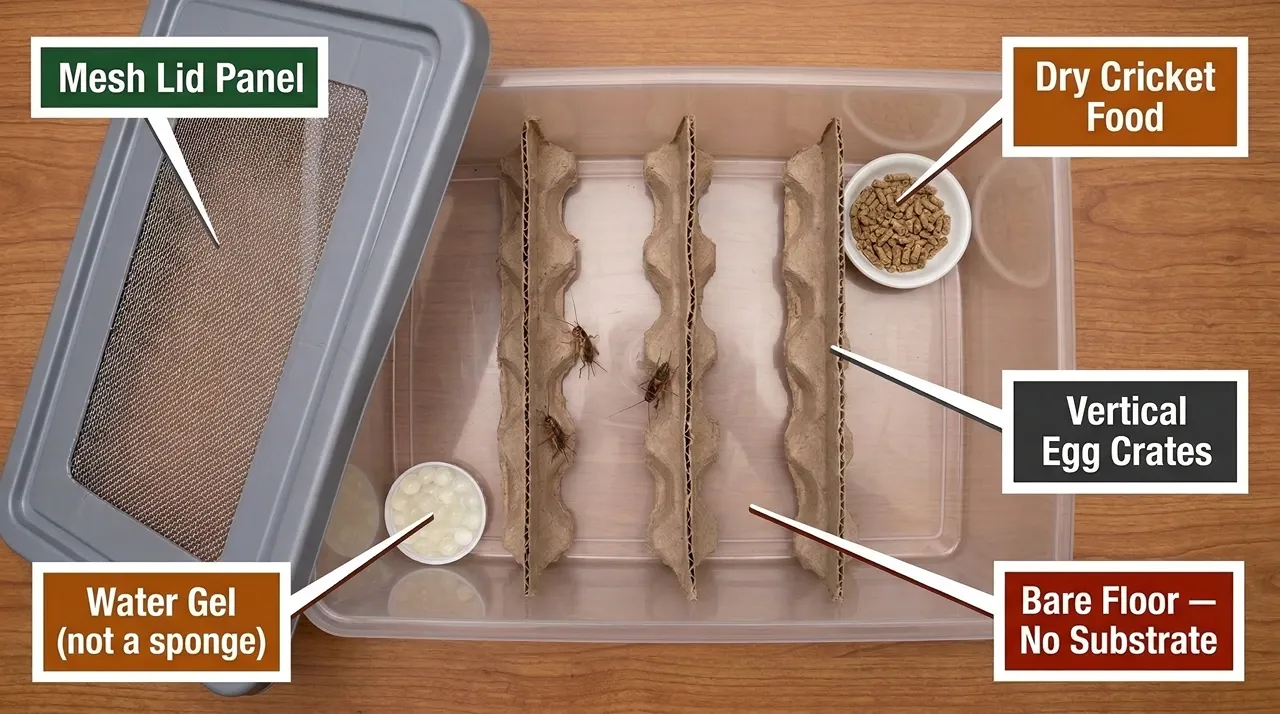
Most purpose-built cricket keepers from pet shops are undersized and underventilated. They work for 20–30 crickets. For a weekly supply of 80–100, you need a 15–20 litre plastic storage tub with a mesh lid. Smooth plastic sides prevent escape, but ventilation through the lid is non-negotiable.
Ventilation Is the First Thing to Fix
A solid plastic lid with a few air holes drilled into it is not enough. Crickets produce moisture through respiration, and in a poorly vented bin that moisture has nowhere to go.
The correct approach is to cut a large rectangle out of the lid and secure a piece of fine metal mesh or screen over the opening using aquarium-safe silicone or a strong adhesive. If you can do the same on one side of the tub, do it. Cross ventilation is better than top ventilation alone.
Humidity Kills Crickets Faster Than Anything Else
Crickets are a dry-environment insect. High humidity in the bin causes respiratory infections, promotes mould growth on food, and accelerates the ammonia problem from decomposing crickets. Keep the interior dry to the touch. If the egg crates inside feel soft or damp, your humidity is too high and your ventilation is inadequate. Replace damp egg crates immediately, because damp cardboard is a bacteria breeding ground.
Never Put Substrate in the Cricket Bin
A lot of older forum posts recommend adding a thin layer of substrate to the bottom of a cricket bin. Do not do this, because substrate holds moisture and raises humidity. It hides dead crickets, which means the ammonia is building silently while you cannot see the corpses. It also makes the bin harder to clean between orders.
A bare plastic bottom is correct. Any crickets that die are immediately visible, easy to remove, and not decomposing unseen under a layer of material. If you are currently running substrate, remove it, clean the bin, and start fresh before your next order arrives.
How Much Space Your Crickets Actually Need
Overcrowding is the second most common cause of mass die-off after poor ventilation. Crickets become territorial and cannibalistic when space is limited, which means you will lose crickets to each other rather than to environmental conditions.
A useful guide is one litre of bin space per 10 crickets. For 100 crickets, that is a 10-litre bin at minimum, and slightly larger is always better. Egg crates stacked vertically inside the bin increase usable surface area and give crickets somewhere to be that is not on top of each other.
What to Feed Them Between Sessions
Whatever you feed your crickets ends up in your dragon. That is the principle behind gut loading feeder insects, and it applies equally to the background diet you maintain between feeding sessions. A dry commercial cricket food or gut load formula should be the base. It does not spoil quickly, does not add moisture to the bin, and provides a consistent nutritional profile.
Fresh vegetables (collard greens, mustard greens, carrot, sweet potato) can be offered as a supplement two or three times a week. The important rule is 24 hours maximum in the bin. Soft produce that has been sitting for two days is fermenting and mouldy, and it will kill crickets.
Carrots are the most forgiving choice. They dry out rather than going slimy, which gives you a slightly longer window before disposal. A small amount removed before it spoils does more good than a large amount left to rot.
Stop Using a Sponge for Water
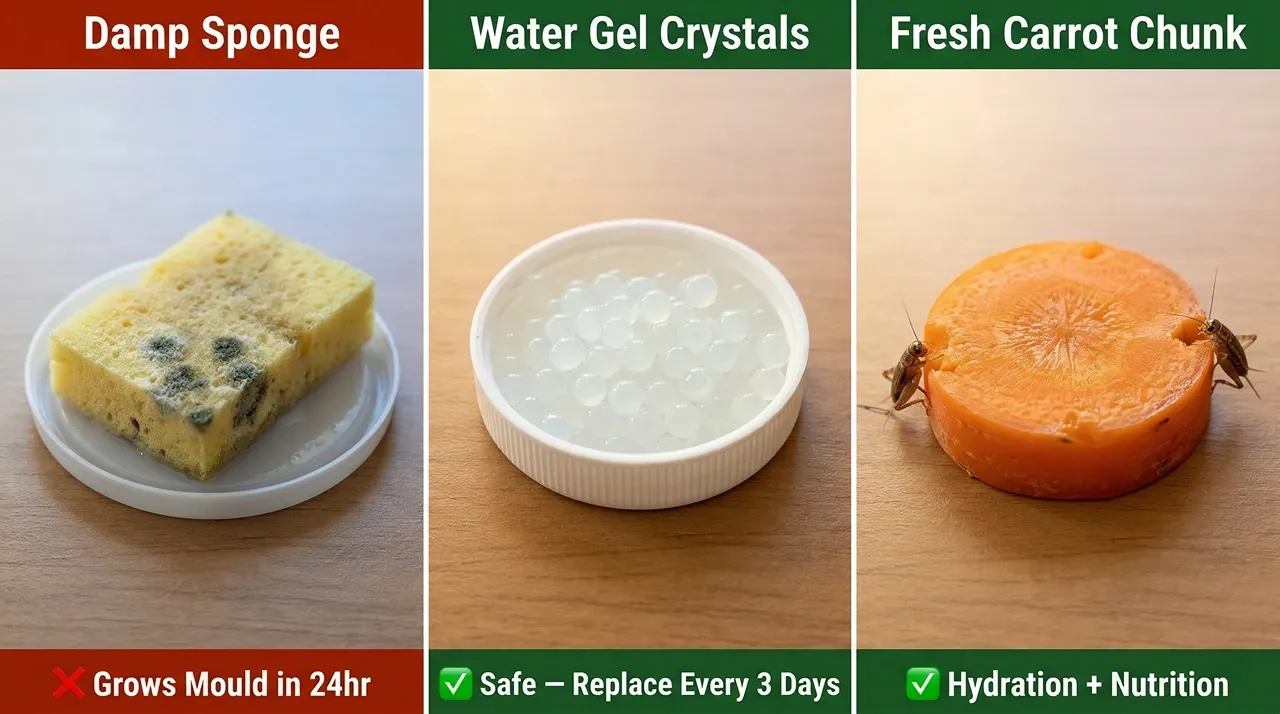
The damp sponge in a cricket bin is one of those pieces of advice that has been passed around reptile forums for years. It is wrong. A wet sponge in a warm, enclosed space grows bacteria and mould within 24–48 hours, and crickets drinking from it will ingest whatever is growing on it. It also adds exactly the moisture to the bin environment that you are trying to avoid.
Water gel crystals or a commercial cricket hydration gel are the correct option. A small bottle cap or shallow dish filled with gel provides hydration without creating a drowning risk or a mould problem. Replace it every 2–3 days.
If you want to skip products entirely, fresh vegetables with high water content (carrot, sweet potato) provide adequate hydration alongside nutrition and require no separate water source. What they do not provide is drowning risk, which makes them preferable to any water dish for keepers who are not monitoring the bin daily.
Temperature Affects How Long They Live
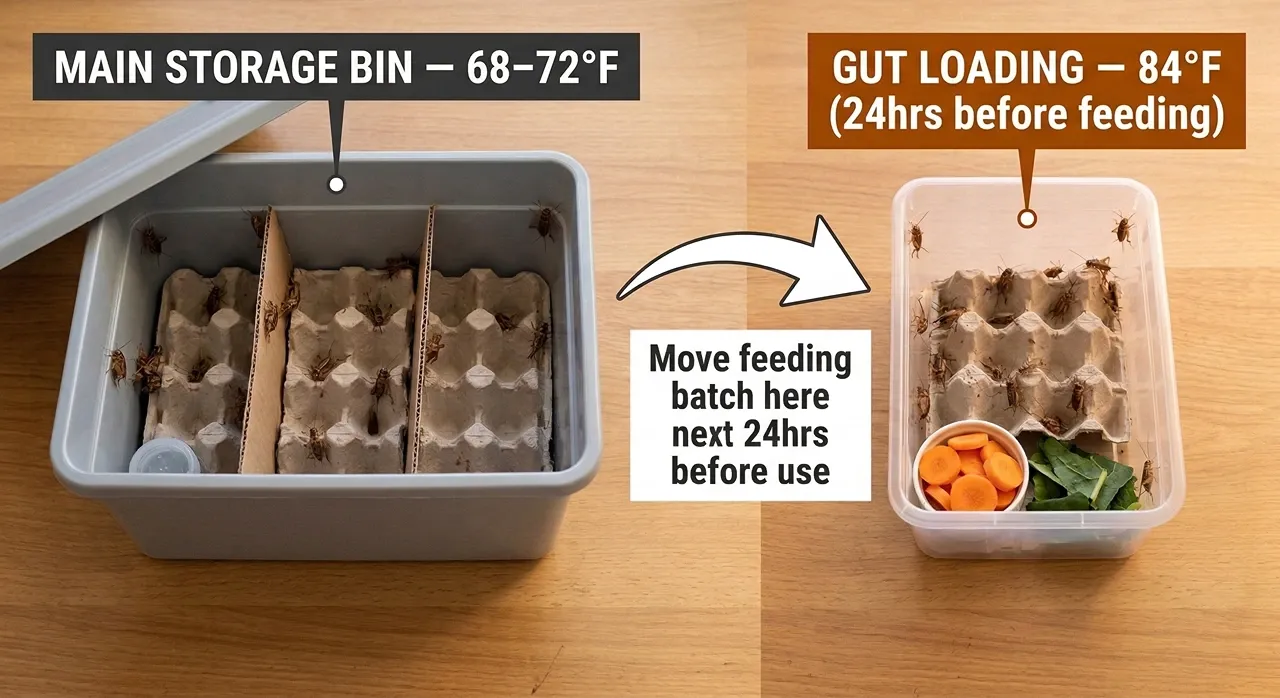
Warmer temperatures (80–90°F) make crickets more active and accelerate gut loading before feeding. The trade-off is that warmer crickets age and die faster, and most temperature advice gets these two facts backwards.
A cricket at 85°F will be fully gut loaded in 24 hours and dead from old age in a week. The same cricket kept at 68–72°F will live considerably longer but will gut load more slowly.
The practical approach is to keep the main storage bin at room temperature (68–75°F), which slows the ageing process and extends your supply. Move the crickets you plan to feed off in the next 24–48 hours to a warmer spot for gut loading before they go into the enclosure. You get the best nutritional value without racing against a short lifespan on the whole batch.
Pet Store Crickets Die Faster
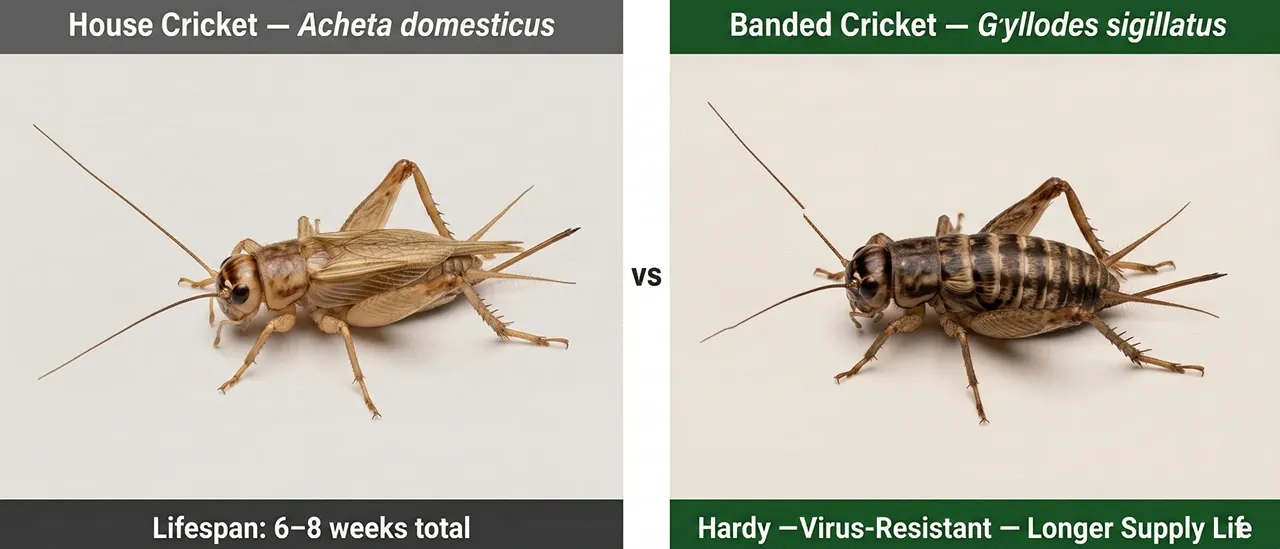
Pet store house crickets have a lifespan problem that rarely gets addressed at the point of sale. The house cricket (Acheta domesticus) sold at chain pet shops has a total lifespan of around six to eight weeks. By the time it reaches the shelf, it may have four to six weeks already behind it.
You are buying crickets that are already approaching the end of their natural life. You can do everything right with your setup and still lose a significant number to old age within a week.
There is also the cricket densovirus to consider. Acheta domesticus is highly susceptible to a viral disease that can sweep through a population rapidly, and outbreaks have wiped out commercial cricket farms entirely. The University of Florida’s entomology department documents Acheta domesticus husbandry challenges in detail, including the fragility that makes this species difficult to maintain at scale.
Banded crickets (Gryllodes sigillatus) are a different species. They are hardier, less susceptible to the densovirus, and have a longer usable lifespan from the point of purchase. Most online feeder suppliers stock them, and if you are buying 100+ crickets at a time and finding consistent high mortality regardless of setup, switching species will change your results within the first order.
Split Your Order Into Smaller Batches
When you receive 200 crickets, the instinct is to tip them all into one bin. Do not. Divide them into two or three smaller sub-bins of 60–80 each. If a disease or ammonia event kills one batch, the others are insulated from it. You lose 70 instead of 200.
This also makes bin maintenance easier. Cleaning and refreshing a smaller bin takes less time, which means you are more likely to do it on schedule. You can rotate which bin you draw from first, using the crickets that have been held longest before moving to the fresher batch. It sounds like more work upfront, but the reduction in total die-off makes it worth it within the first order.
Clean the Bin Before the Next Order Arrives
A reused bin that has not been cleaned carries the problems of the last batch straight into the new one. Residual ammonia absorbed into the plastic, mould spores in the crevices, dried droppings on the floor. The new crickets go in already stressed before you have done anything wrong.
Before a new order arrives, empty the bin completely, rinse with hot water, and wipe it down with a dilute white vinegar solution (one part vinegar to ten parts water). Rinse again and let it air dry for at least 24 hours before adding fresh egg crates and food.
Vinegar neutralises residual ammonia without leaving a toxic residue. A bin that smells completely neutral before the next order goes in gives the new batch a proper clean start.
Cricket Problem vs What to Do
| What You See | Most Likely Cause | Fix |
|---|---|---|
| Mass deaths within 24 hours of arrival | Transit stress (normal) | Remove corpses, give water gel. Expect 5–15% loss and do not change setup. |
| Cascading deaths over 2–3 days | Ammonia from unremoved corpses | Remove all dead immediately. Increase ventilation. Replace damp egg crates. |
| Bin smells strongly of ammonia | Dead crickets plus poor ventilation | Full clean. Enlarge mesh opening. Remove all corpses and replace egg crates. |
| Damp or soft egg crates inside bin | Humidity too high | Replace cardboard. Add more ventilation. Switch to dry gut load only. |
| Crickets eating each other | Overcrowding or underfed | Increase bin size or reduce cricket numbers. Keep dry food available at all times. |
| Consistent die-off despite good setup | Old pet store house crickets or cricket virus | Switch to banded crickets from an online supplier. |
| Crickets sluggish and not gut loading | Temperature too low | Move gut-loading batch to 80–85°F for 24 hours before feeding. |
| Mould on food or egg crates | Fresh produce left too long | Remove all fresh produce after 24 hours. Switch to dry gut load as the base. |
| New batch dying fast in a reused bin | Residual ammonia or mould spores from previous order | Empty bin fully, clean with dilute vinegar solution, air dry 24hrs before reuse. |
When Crickets Just Are Not Worth It
Some keepers get to a point where the time spent managing a cricket bin outweighs what they get from it. If you are losing 30–40% of each order before it is used, spending time on daily corpse removal, and still ending up with a smelly bin, switching to a less demanding feeder makes sense.
Dubia roaches offer comparable nutrition, are virtually odourless, and are far harder to kill. A well-maintained dubia roach colony produces feeders continuously with far less intervention than a cricket bin requires.
Crickets remain useful as a dietary variety option. The movement stimulates hunting behaviour and most dragons respond well to them. But if you are using them as a primary staple and finding the mortality rate unsustainable, switching your staple and using crickets as an occasional supplement is a practical decision, not a failure.
Frequently Asked Questions
How Long Should Crickets Live in a Bin
With correct setup, keeping crickets alive for 2–3 weeks from arrival is realistic with banded crickets kept at 68–75°F. House crickets from pet stores are often already near end of life and may only last 5–7 days regardless of setup. If you are consistently losing crickets in under a week despite correct ventilation and hydration, the species and source is the most likely explanation.
Should I Gut Load Crickets Before Every Feeding
Yes, and 24 hours of gut loading at 80–85°F is enough to meaningfully improve nutritional value before the crickets go into the enclosure. A cricket that has been sitting in a bin with dry gut load for several days is not the same as one that has actively eaten nutritious food in the last 24 hours. The dusting schedule covers the calcium and vitamin side. Gut loading covers the food quality side.
How Many Crickets Should I Buy at Once
Match your order to a 1–2 week supply based on your dragon’s current feeding schedule. Buying more than you can use in two weeks means you are racing the cricket’s natural lifespan regardless of how well you care for them. For most adult dragons eating 20–30 crickets a week, 50–60 per order is a practical amount to buy without excess mortality.
Can Crickets Make My Dragon Sick
Poorly maintained feeder crickets can carry internal parasites that transfer to your dragon, which is one of the strongest arguments for good gut load diet and clean bin conditions. A clean, well-fed cricket is a much lower risk than a stressed, underfed one kept in a dirty bin with other corpses.
What Size Cricket Should I Feed
The standard guide is no larger than the gap between your dragon’s eyes. Crickets that are too large cause impaction risk and can also bite and stress a dragon that cannot dispatch them quickly. When in doubt, go smaller rather than larger, particularly for juveniles.
Your Keeping Crickets Alive Checklist
- ✅ Remove dead crickets every day without exception. Ammonia from corpses is the leading cause of cascading die-off. It takes two minutes and it is the single most effective habit for keeping crickets alive through the week.
- ✅ Cut a large mesh panel into your bin lid. A few drilled holes are not enough. Cross ventilation (lid and one side wall) is the target.
- ✅ Keep the bin floor bare with no substrate. Substrate hides dead crickets, holds moisture, and makes the ammonia problem invisible until the damage is done.
- ✅ Replace damp egg crates immediately. Soft, damp cardboard signals your humidity is too high. New dry egg crates are cheap. Losing a batch of crickets to mould is not.
- ✅ Use water gel or hydrating vegetables instead of a sponge. Sponges grow bacteria within 48 hours and add humidity to the bin. A bottle cap of water gel or a fresh carrot chunk does the same job safely.
- ✅ Keep fresh produce in the bin for 24 hours maximum. Anything soft and wet going rotten is adding moisture and mould spores. Dry gut load as the base, fresh veg as a short-term supplement.
- ✅ Split larger orders into two or three sub-bins. One sick batch cannot take out the whole order if they are physically separated.
- ✅ Clean the bin with dilute vinegar before every new order. Residual ammonia and mould spores from the previous batch will stress your new crickets from day one if you skip this step.
- ✅ Consider switching to banded crickets if pet store crickets keep dying. House crickets from chain pet stores are frequently near end of life on arrival. Banded crickets from online suppliers are a different species and a notably hardier one.
- ✅ Gut load at 80–85°F for 24 hours before feeding, not the whole time. Warm crickets gut load fast but age fast. Keep your main bin at room temperature and warm the feeding batch separately.
Written by
Sarah ArdleySarah has kept bearded dragons for over ten years. She founded Beardie Husbandry after discovering that most mainstream care advice — including what she followed with her first dragon — was doing more harm than good. Every article on this site is grounded in veterinary research and real keeper experience.