How to Find a Reptile Vet Near You
Finding a reptile vet is harder than it sounds. Most owners discover this at the worst possible moment, when their beardie is already off food and they are calling every clinic in a panic.
Not every practice that advertises exotic animal care has a vet who knows what they are looking at when a bearded dragon is showing signs of lethargy that have been building for a week. Knowing how to find a reptile vet before you need one changes everything about how you respond to problems.
The good news is that with some targeted searching and a few pointed phone questions, you can identify a capable reptile veterinarian in most areas, and know which red flags to watch for when options are limited.
Why “We See Exotics” Doesn’t Tell You Much
When you call a general clinic and ask if they see reptiles, the answer is almost always yes. What that actually means varies enormously from one practice to the next.
Most veterinary schools give limited reptile training because dogs and cats dominate clinical hours. A vet can graduate fully licensed without ever having examined a bearded dragon.
Some go on to develop real expertise through continuing education and a growing exotic caseload. Others don’t, and there is no easy way to tell from a website.
There are effectively three tiers of reptile veterinarian you will encounter:
- General practitioners: Can stabilize an emergency but may not stock reptile-appropriate medications and typically send bloodwork to an external lab rather than running it in-house.
- Vets with some reptile experience: A step up, but knowledge varies depending on how many reptile patients they actually see each month.
- True herp vets and exotic animal specialists: See reptiles regularly, perform in-house fecal tests and radiographs, and can hospitalize your dragon with proper heat and monitoring if needed.
The distinction matters most when something is actively wrong. A dragon that starts clicking and wheezing needs the right medication from the start, and a vet who rarely sees lizards can cost you days you didn’t have.
Where to Actually Look First
Online Directories Worth Bookmarking
The Herp Vet Connection directory is one of the more reliable starting points because listings are built from recommendations by actual reptile keepers rather than self-submission alone. Search by state and city to find vets with genuine keeper endorsements behind them.
The ARAV vet finder lists members of the Association of Reptile and Amphibian Veterinarians by location. These are vets who have sought out peer review and continuing education specifically in reptile medicine, which is a meaningful credential that a standard exotic listing does not convey.
Veterinary teaching hospitals attached to universities are worth checking even if they seem far away. These institutions run exotic animal departments with high caseloads and access to advanced diagnostics. They are also a strong backup when a case gets complicated.
Community Sources That Usually Beat Directories
Breeders are often the fastest route to a reliable name. A breeder producing healthy animals year after year has almost certainly found a reptile vet near them worth using. Call two or three local breeders and ask who they use.
Facebook groups for your area are similarly useful. Search your city alongside “reptile keepers” or “bearded dragon.” Keeper recommendations carry real weight because the person giving them has already sat in that exam room.
Local reptile rescues are another underused source. Rescue coordinators move sick animals through vet care regularly and learn quickly which practices can actually help, and which ones are guessing.
Questions to Ask Before You Even Book
Calling ahead does more than confirm a slot. The answers to a few specific questions will tell you more about a clinic’s real competence than any listing or online review.
The Three Questions That Matter Most
First, ask how many bearded dragons or lizards the vet sees per month. A confident specific number tells you more than the label “exotic animal practice” ever will. Ten or more per month signals a genuine active caseload.
Second, ask whether fecal tests and radiographs are run in-house. A clinic that sends everything to an external lab is not equipped for reptile medicine the way a dedicated exotic practice is. Slower results matter when an animal is unwell.
Third, ask who will actually examine your dragon. Some clinics list reptiles as a service but have only one vet with genuine experience. Make sure you are booking with that person specifically.
Red Flags vs Green Flags When You Call
| What You Hear | What It Means |
|---|---|
| “We see all exotics” with no specifics offered | Borderline. Follow up with the monthly caseload question. |
| Hesitation when asked how many reptiles they see monthly | Red flag. Experience is likely limited or inconsistent. |
| A specific number given confidently (e.g., “roughly 20 per month”) | Green flag. Genuine active caseload. |
| In-house fecal tests and radiographs confirmed | Green flag. Properly equipped for reptile cases. |
| No ability to hospitalize reptiles with heat support | Red flag for any serious illness or post-surgical care. |
| Staff asks follow-up questions about your setup when you call | Strong green flag. Reptile awareness runs through the whole practice. |
Of those signals, the monthly caseload question cuts through the most. A vet who hesitates on that answer, or pivots to listing species rather than giving a number, has told you something important without meaning to.
On keeper medication advice: No matter how experienced a fellow keeper or rescue volunteer is, an old medication prescribed for a different animal on a different condition can delay the correct diagnosis and complicate treatment. Always get a proper exam and a fresh prescription from your own reptile vet.
What a Good First Appointment Looks Like
A competent reptile vet starts by asking about your setup before they ask about the symptom. Expect questions about:
- UVB bulb brand and how old it is
- Basking spot and cool-side temperatures
- Your calcium and vitamin supplement schedule
- What the dragon has been eating and how often
- Any recent changes in behavior, stool, or shed
Those details are the diagnostic foundation for almost every common bearded dragon health issue. A vet who skips this before picking up your dragon is already working blind.
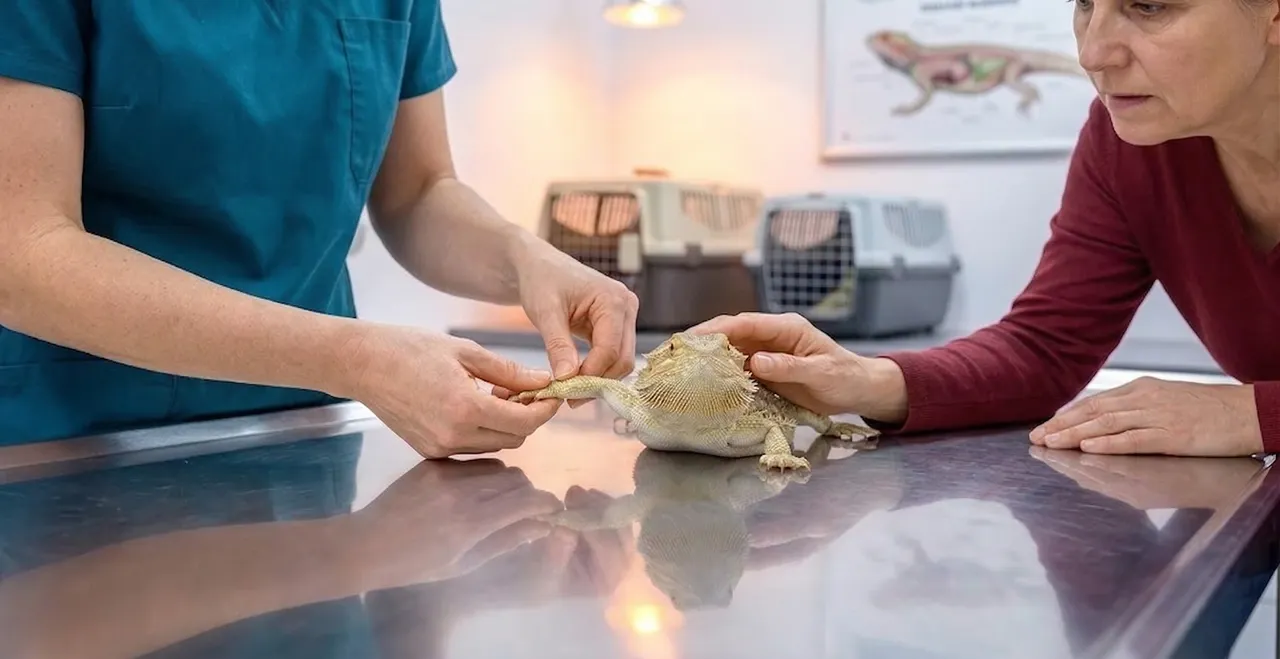
Watch how they handle the animal. Confidence with lizards is a learned skill and you will see it or not see it within about thirty seconds. Hesitation, visible discomfort, or rough restraint are all worth noting.
A good reptile vet also explains their reasoning. If they recommend a test or a medication, they should be able to tell you why in plain terms. Deflection around that question is a signal.
When No Reptile Vet Exists Nearby
Telehealth Is a Real Option Now
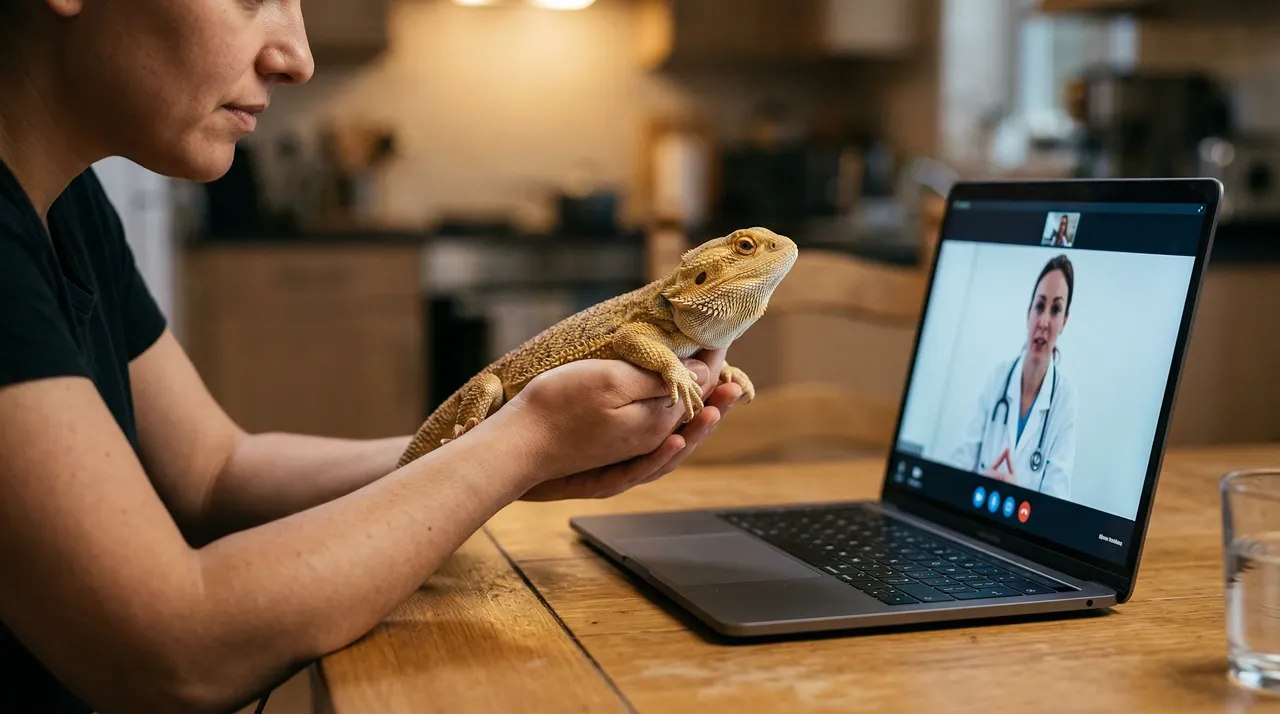
Several exotic animal vets offer remote consultations for owners who cannot access a local specialist. These are not a substitute for a hands-on exam, but they serve a real purpose for triage decisions, husbandry reviews, and making sense of test results from a general practice vet.
Telehealth works particularly well when you need to decide whether a symptom warrants a multi-hour drive to the nearest specialist. A fifteen-minute video call with an experienced reptile vet gives you a confident answer rather than a guess.
Pro tip: Search for telehealth consults through exotic animal practices in the nearest large city. Many offer remote appointments to clients outside their local area, and your nearby general practice vet can run fecal or bloodwork while you consult remotely on the results.
Consider the Drive Worth It
If the nearest genuine exotic vet is two hours away, that distance becomes far more manageable once you have established your beardie’s baseline health records there. You are not making that drive every month, just once or twice a year unless something goes wrong.
When a real health event happens, like a sudden impaction or unexplained weight loss, being a registered patient at a practice with genuine exotic expertise matters. You are a known case, not a cold call on a difficult afternoon.
How Often Your Beardie Needs a Vet
Many keepers only bring their dragon in when something looks obviously wrong. The problem is that bearded dragons mask illness effectively, and conditions like internal parasites can build quietly for months before any visible symptom appears.
A practical schedule by life stage:
- New arrivals: Within two weeks of coming home. Establishes a baseline fecal result and health record before any problem develops.
- Juveniles: Annually, or sooner if you notice appetite changes, unusual behavior, or weight loss.
- Adults: Annually for healthy dragons. Twice yearly for any dragon with a known health history.
- Senior dragons (7+ years): Twice yearly. Bloodwork becomes more informative at this age for catching slow-developing conditions early.
- Females: More frequently, especially around and after laying season, given the real risk of egg binding.
Routine visits also give your vet a baseline to compare against. A gradual weight decline or a change in muscle tone is far easier to catch when there is a previous record to reference.
Bring This to Every Vet Appointment
Good preparation shortens the visit and sharpens the quality of advice you get. Every appointment, bring:
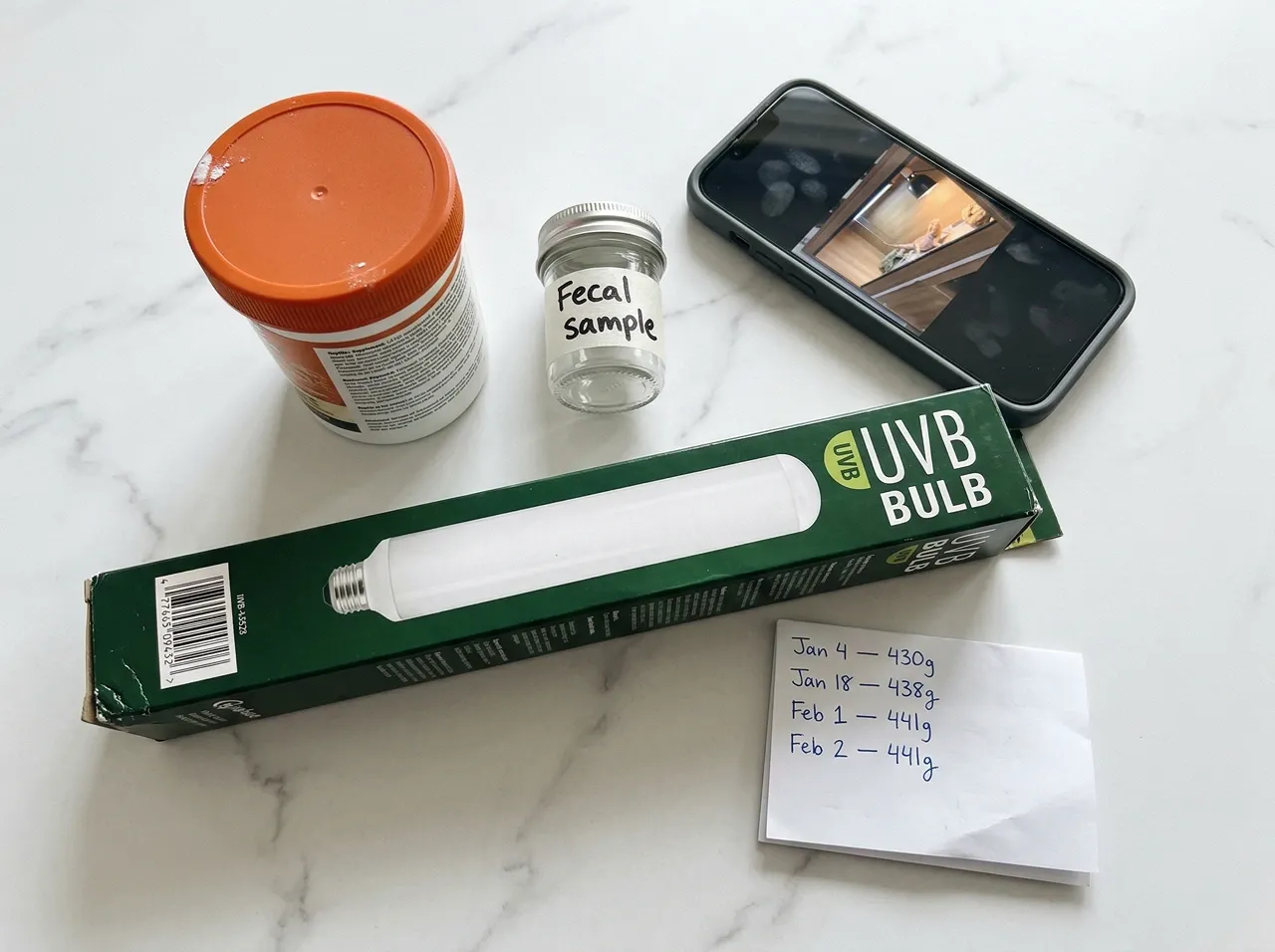
- A fresh fecal sample collected within the last 24 hours, sealed and kept in the fridge until you leave
- Your UVB bulb brand and the date you last replaced it
- Your supplement containers so the vet can check the formulation and dusting ratios
- Photos of the full enclosure, including the basking setup, thermometer placement, and substrate
- An approximate weight log if you track it at home
Reptile medicine depends heavily on husbandry context. A vet who can see your setup, even in photos, gives more targeted advice than one working entirely from a verbal description.
That preparation also limits the assumptions your vet has to make.
Frequently Asked Questions
Is a Regular Vet Okay for a Beardie
A general practice vet can provide emergency stabilization, but they are not a substitute for a reptile-experienced exotic vet for routine care or illness diagnosis. Regular vets often lack reptile-appropriate medications and may have to send diagnostics to an external lab, which slows treatment when timing matters.
No Reptile Vets In Your Area? Start Here
Begin with the Herp Vet Connection directory and ask local breeders or reptile rescues for direct recommendations. If no specialist is within practical distance, use telehealth consultations from an exotic vet in a larger city while your nearest general practice handles any required testing.
How Much Does a Reptile Vet Visit Cost
Exotic vet exam fees typically run higher than a standard dog or cat visit, often in the range of $60 to $150 for a basic exam, with additional costs for fecal tests, bloodwork, or radiographs. Costs vary significantly by region and clinic, so ask for an estimate when you call ahead.
What Happens at a Reptile Wellness Exam
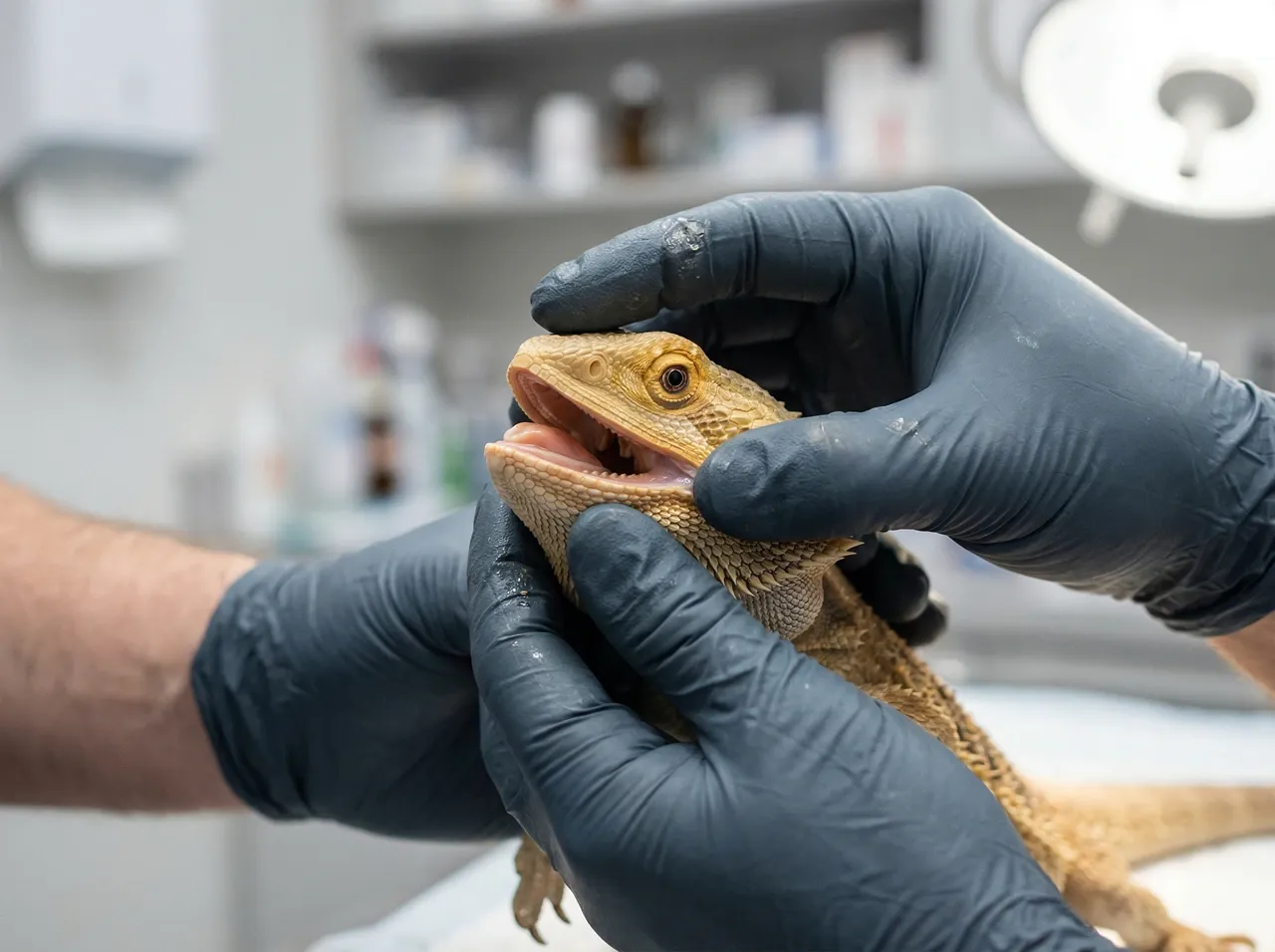
A thorough reptile wellness exam covers body weight, muscle condition, eye clarity, mouth and teeth, skin and shed quality, and abdominal palpation. It almost always includes a fecal test for parasites and a full review of your husbandry setup, including lighting, temperatures, and diet.
Do Healthy Beardies Really Need Annual Checkups
Annual wellness exams are the minimum for healthy adults. Parasites, early metabolic issues, and nutritional deficiencies often go undetected until they are advanced. A wellness exam catches these early and builds the health record your vet needs to make good decisions later.
Find Your Reptile Vet Before You Need One
Set aside twenty minutes today to run through the steps above. Search the Herp Vet Connection directory, check the ARAV vet finder, ask in a local reptile group, and call two or three clinics with the questions from this article.
Once you have a name you trust, book a new-patient wellness visit. Bring a fresh fecal sample, your supplement containers, and photos of the enclosure. That first appointment costs you an hour and builds a baseline health record that will inform every decision you make about your beardie for years.
A keeper who already has a reptile vet’s number in their phone responds to problems differently than one who is searching mid-crisis. That difference, more often than you’d expect, is the difference in outcome.
Written by
Sarah ArdleySarah has kept bearded dragons for over ten years. She founded Beardie Husbandry after discovering that most mainstream care advice — including what she followed with her first dragon — was doing more harm than good. Every article on this site is grounded in veterinary research and real keeper experience.