Bearded Dragon Colour Change – What It Means
A bearded dragon that changes colour in front of you is doing one of the most misunderstood things in reptile keeping. New owners see a dark belly or faded back and assume the worst. Seasoned keepers read the same colours as a running commentary on temperature, mood, shed cycle, and health. The skill is learning which version you are looking at.
This guide walks through every meaningful bearded dragon colour change, what body region it appears on, how long it should last, and when it actually warrants concern. The framework is built around one key finding from the Royal Society research on Pogona vitticeps: the back handles temperature, the beard and chest handle communication. Once you hold that distinction in your head, most panic moments become easy to read.
Why Bearded Dragons Change Colour at All
Colour shifts happen through chromatophore cells in the skin. Pigment granules spread out or pull inward in response to temperature, hormones, light, and mood. The change can take seconds for a hot flash of darkening, or weeks for a slow brumation fade.
Three forces drive almost every bearded dragon colour change you will see at home. Thermoregulation is the first. A cold dragon pulls pigment outward across the back to absorb more heat. Communication is the second, and it runs on the beard, chin, and chest. Biological cycles are the third, covering shed, brumation, mating season, and long-term growth.
Knowing which force is driving the change is more useful than memorising a list of causes. A dark back with a cream beard is a thermal problem. A black beard with a normal-coloured back is a mood problem. A whole-body fade over fourteen days is a cycle.
The Dorsal vs Ventral Rule Every Keeper Needs
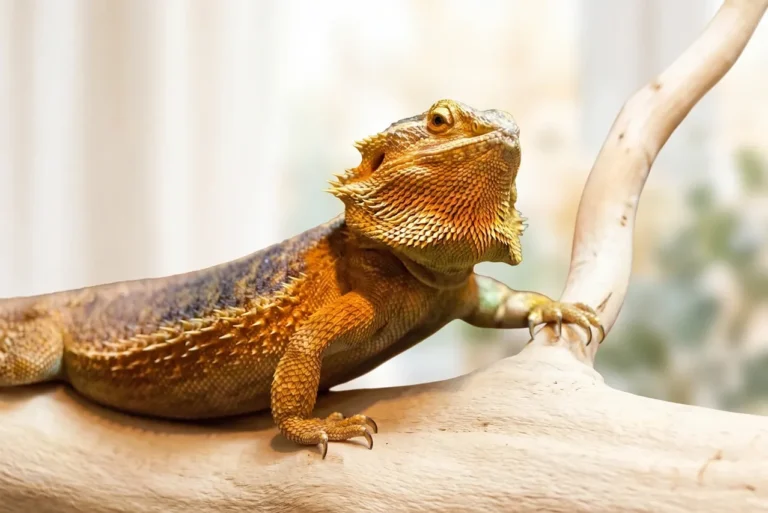
The back of a bearded dragon exists to face the sun. That is where thermal colour change happens. Dark in the morning when the dragon is cold, paler by midday once basking has done its work. This is completely normal and reverses within an hour or two of proper basking.
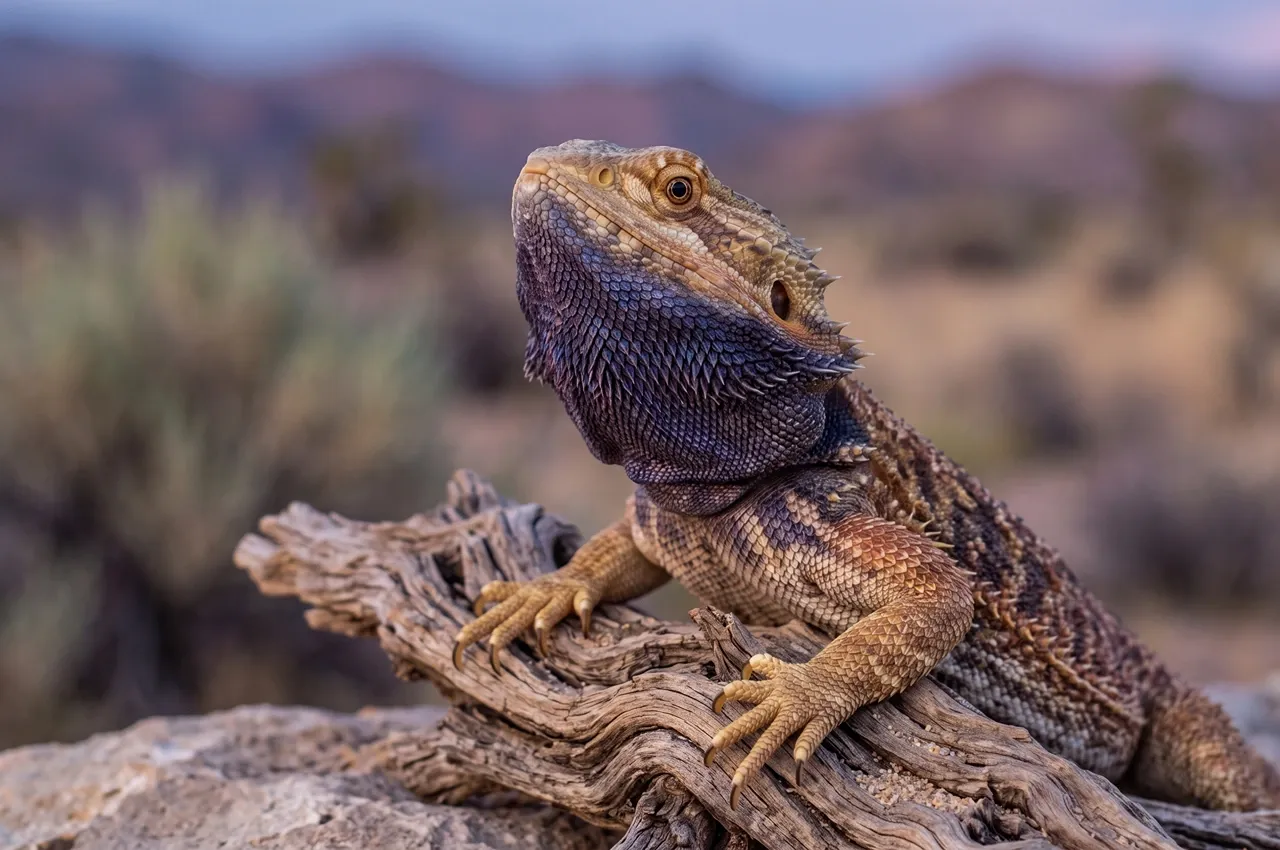
The beard, chin, throat, and upper chest do something different. These surfaces face other dragons during displays. Their colour is a social signal, not a temperature response. A black beard is the dragon telling you something, not cooling down or warming up.
When you spot a bearded dragon colour change, the first question should always be which region changed. A darkened back tells you to check temperatures. A darkened beard tells you to check the environment for a stressor, a threat, or a mating trigger. Treating both the same way is the mistake that sends keepers chasing the wrong cause.
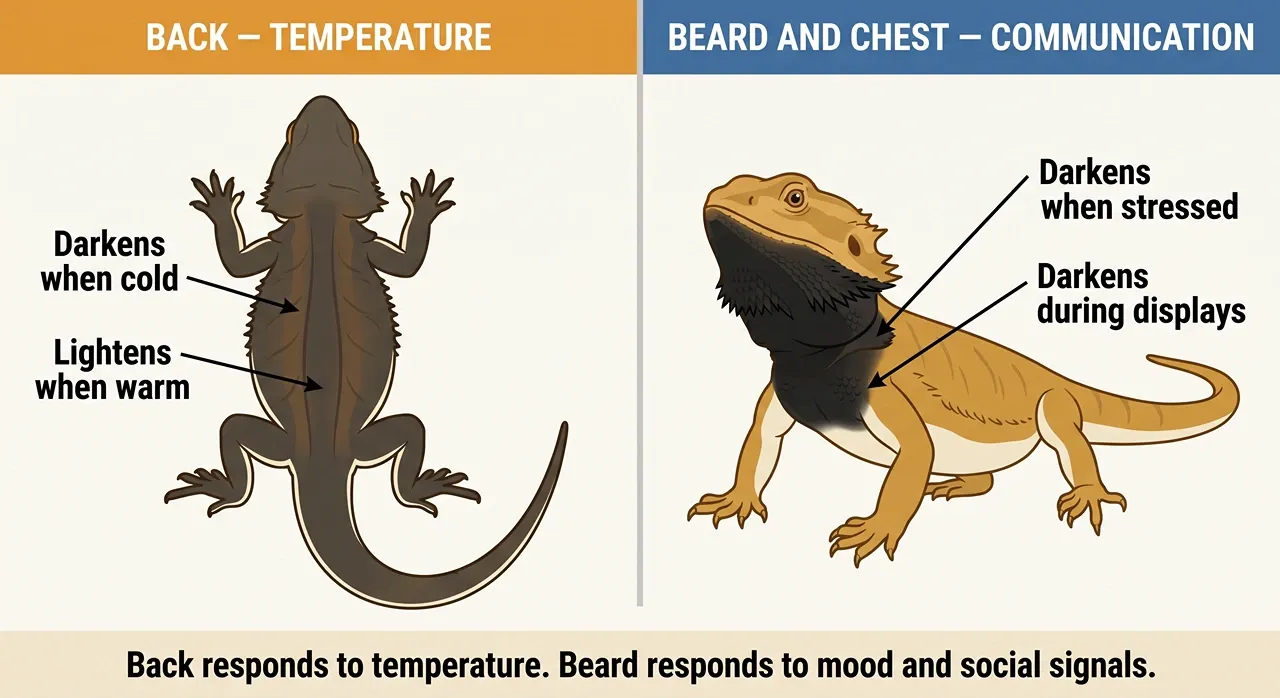
The practical value of the dorsal-ventral rule shows up the moment you try to triage a colour change in real time. Instead of panicking and running through a mental checklist of diseases, you look at the dragon and ask a single clean question about which region changed. That narrows the investigation before you have even touched the enclosure.
Normal Morning Darkening Most Owners Misread
First-time keepers often wake up, look in the tank, and see a dragon that looks almost black across the back and sides. Panic follows. In almost every case this is textbook thermoregulation. Overnight temperatures drop, the dragon wakes cold, and its dorsal surface darkens to pull more heat from the basking bulb.
You should see a clear reversal within thirty to ninety minutes of lights coming on, provided the basking spot sits in the correct range. Measuring that range accurately matters more than most keepers realise, and the temperature and humidity measurement methods that work in practice rely on a surface-reading infrared thermometer rather than the stick-on dial thermometers that ship with pet store kits.
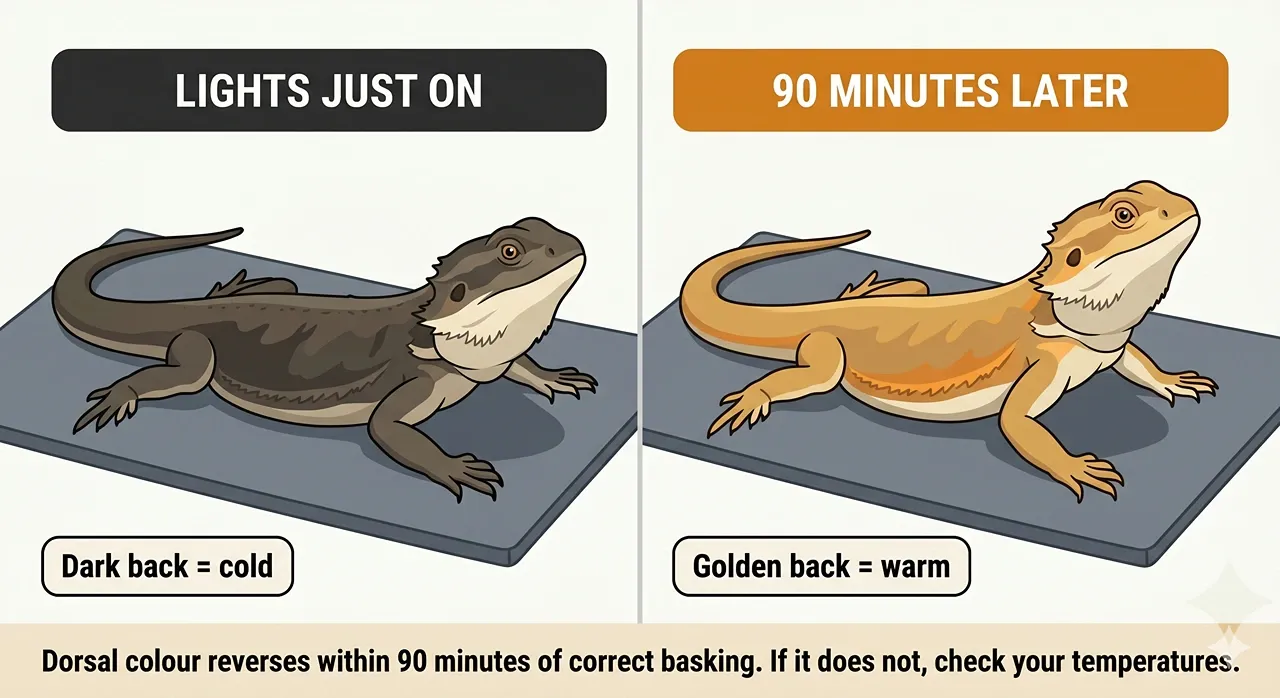
If the morning darkness does not fade after two hours of basking, your basking spot is too cool, the bulb has aged past its useful output, or the dragon cannot actually reach the heat for some reason. Start there before looking for disease.
When a Dark Body Means a Cold Tank
A bearded dragon that stays dark across the back all day is telling you the enclosure is not producing usable heat. The pattern is specific. Dark dorsum, flattened body posture, and a tendency to sit directly under the basking bulb without moving.
Common causes in order of frequency are an aged UVB or basking bulb, a basking surface sitting too far below the bulb, an enclosure placed in a cold room, and a thermostat probe malfunction that is cutting power to the heat source early. A functioning basking zone for an adult should hit 100 to 108°F on the basking surface, measured with an infrared point-and-shoot. Anything below ninety-five will leave the dragon stuck in dark mode.
Fix the heat, and the colour usually reverses within a day. If temperatures check out and the dark back persists through a full week of proper husbandry, schedule a vet visit. A persistently cold-looking dragon with correct temperatures is a red flag for systemic illness.
Black Beard Explained
A black beard is the single most talked-about bearded dragon colour change, and also the most overreacted to. The beard darkens as a communication signal. It can mean stress, threat response, territorial display, breeding behaviour, or simple morning mood. It almost never means disease on its own.
Short-duration black bearding lasting minutes to a couple of hours is normal. A dragon that black-beards when you approach the tank first thing in the morning, during a bath, after spotting a dog through a window, or during mating season is displaying, not suffering. The colour fades once the trigger passes.
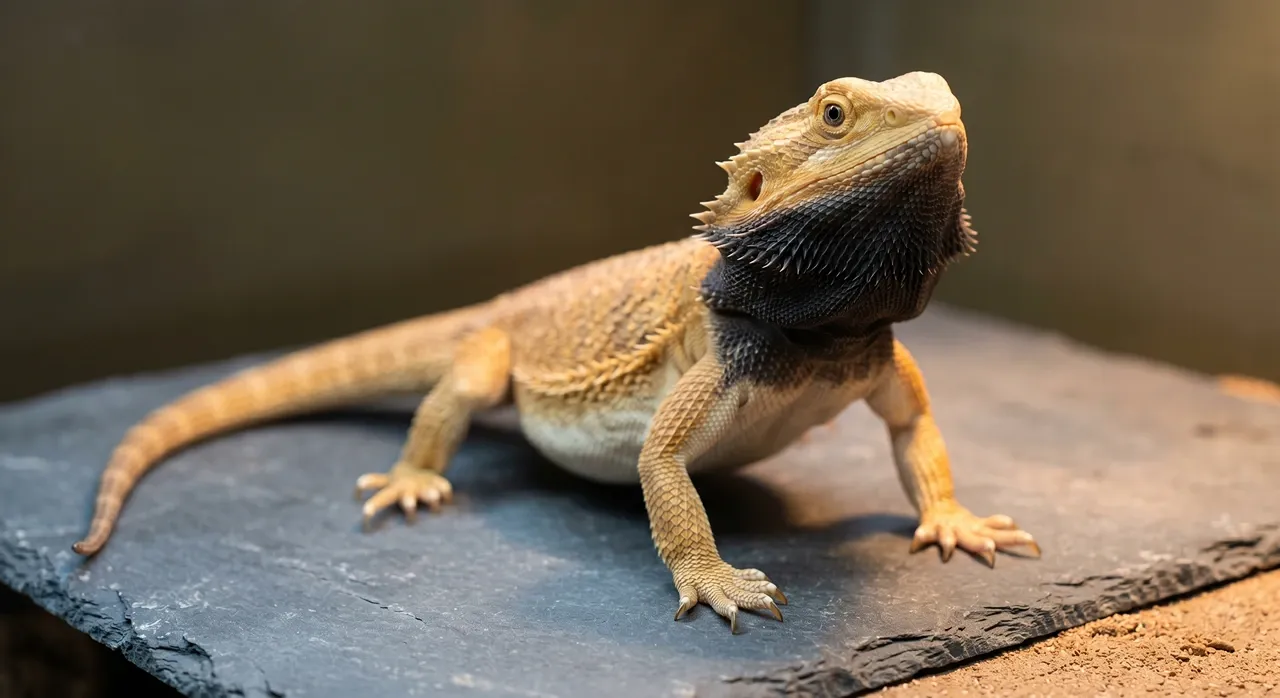
Persistent black bearding that stretches across multiple days or weeks is a different animal. That points to an unresolved husbandry problem, chronic environmental stress, or occasionally illness. The deep-dive on every cause behind a persistent black beard walks through each trigger and how to separate a harmless display from something that needs correcting.
Stress Marks on the Belly and Limbs
Stress marks appear as dark ovals, lines, or squiggles on the underside, usually across the belly and the inside of the legs. They are not the same as a dark back, and they carry different meaning. Stress marks are a sign that the dragon is processing arousal, fear, or discomfort.
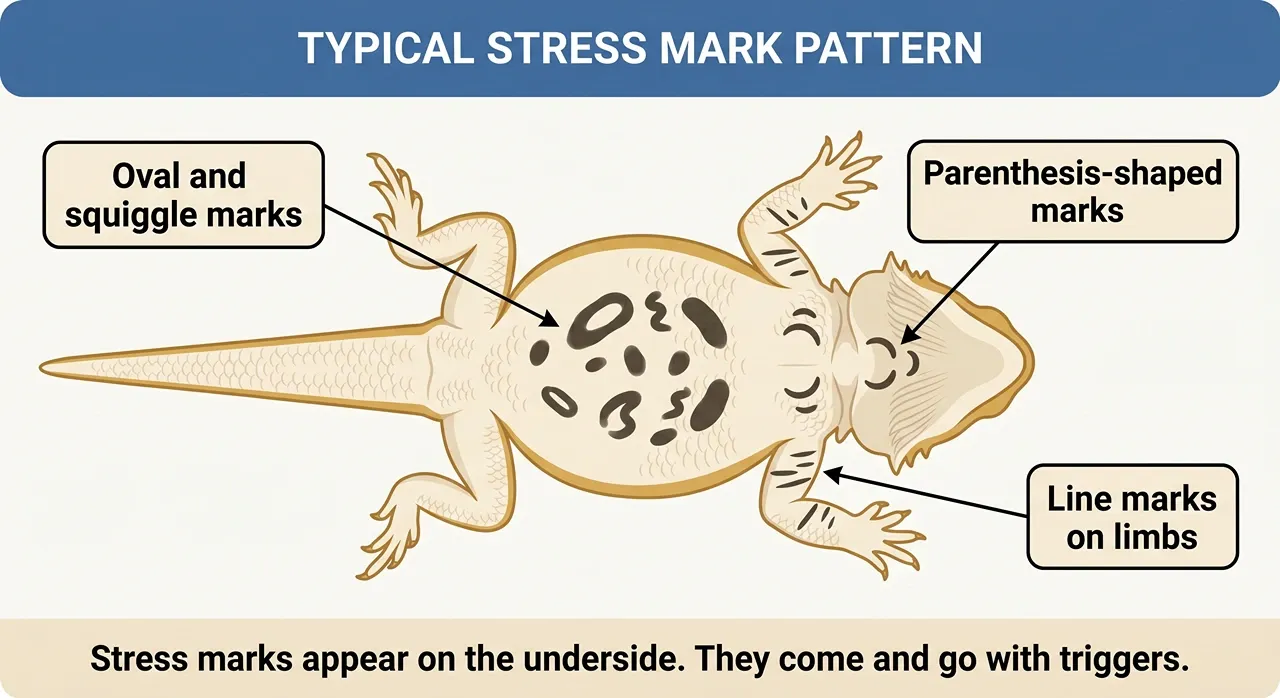
Young bearded dragons show stress marks more readily than adults because their colour control is still developing. A baby with faint stress marks during shedding, after a bath, or in the first two weeks in a new home is not in crisis. Most resolve within days.
Stress marks that stay for weeks, deepen, or appear alongside appetite loss, lethargy, or abnormal stools point to a real husbandry problem. Common culprits are incorrect temperatures, insufficient UVB output, undersized enclosures, visible stressors such as another pet or a mirror, and overhandling during an adjustment period. Fix the environment first, give the dragon two to three weeks of stability, then reassess.
Stress Marks vs Natural Belly Pattern
Some dragons have permanent darker patches on the belly that never fade. These are pigment, not stress. The distinguishing feature is consistency. True stress marks appear and disappear with triggers. Natural pattern stays the same year-round.
Pale or Washed-Out Colour
Paling gets less attention than darkening, which is a problem because chronic paleness is often a more serious warning. A bearded dragon that looks washed out, dull, or ghostly across the back and sides for more than a few days without an obvious shed underway should raise concern.
The harmless version of paling happens pre-shed. The skin goes dull and milky as the outer layer lifts away, and colour returns vibrant once the shed completes. This lifts within a week to ten days. A normal shed cycle runs on a predictable timeline and includes behavioural cues like reduced appetite and mild irritability.
Chronic paleness with no shed in progress suggests dehydration, prolonged inadequate UVB exposure, chronic low temperatures, or systemic illness. A dragon that has gone months under a weak coil bulb will fade and lose colour saturation across the entire body. That kind of fade reverses slowly once lighting is corrected, but it reverses.
Pre-Shed Colour Shifts
A bearded dragon approaching a shed will cycle through predictable colour phases. The first stage is a gradual dulling of the normal tones. Oranges and yellows look muddy, tans look grey, and the whole dragon looks like it needs a bath. Within a few days the skin takes on an ashy, milky appearance and the eyes may bulge periodically as the dragon loosens the skin around the head.
Once the shed begins in earnest, visible flakes lift from the tail, limbs, or back, and the skin underneath shows the new, brighter colour. Full sheds can take anywhere from a few days to two weeks depending on the age and size of the dragon. Babies shed constantly. Adults shed in patches every few months.
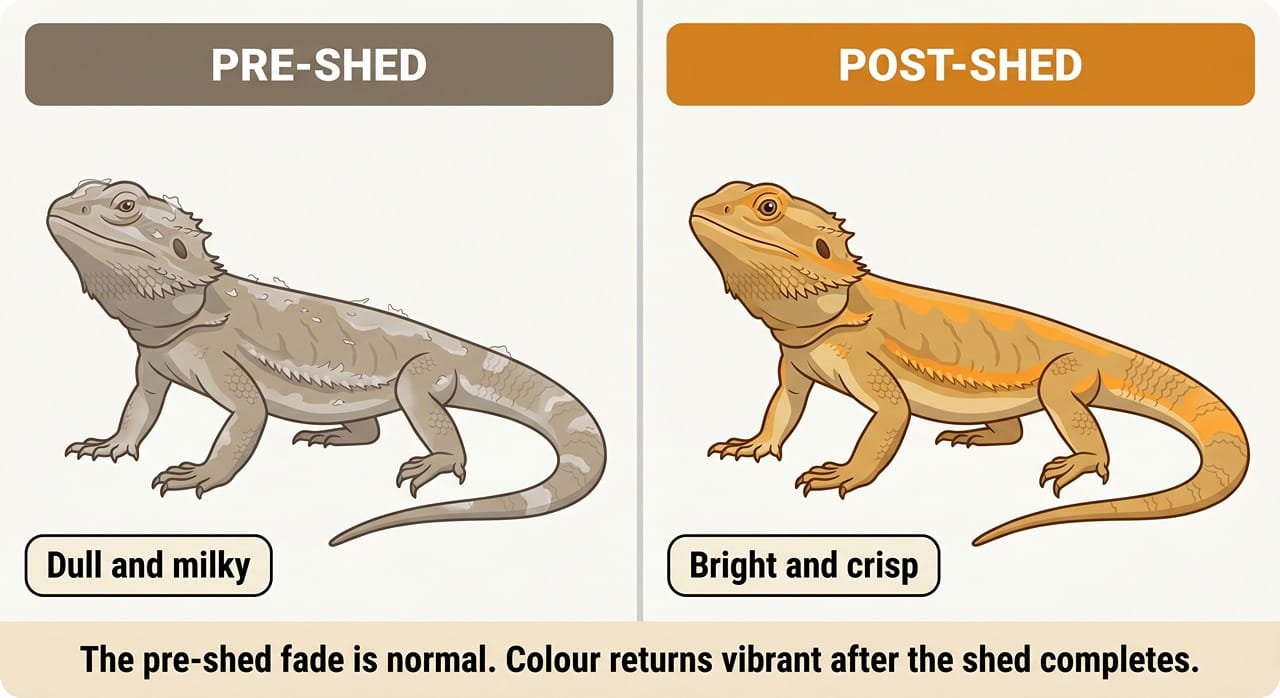
The mistake keepers make is treating pre-shed dullness as illness. If your dragon is dulling but still eating, basking, and pooping normally, wait for the shed to complete before investigating further.
Brumation Fade
Brumation produces a slow, gradual colour fade over two to four weeks. The dragon becomes less vibrant, the appetite drops, activity slows, and sleeping times stretch out. This is a seasonal biological process, not illness, although it can look alarming the first time you see it.
Not every captive dragon brumates, and the signals vary. A dragon entering full seasonal brumation will usually start hiding more, sleeping through basking hours, and showing reduced interest in food. The colour fade accompanies these behaviours rather than appearing in isolation.
The critical distinction is between brumation fade and illness fade. Brumating dragons lose weight slowly or hold steady. Sick dragons lose weight fast. Brumating dragons wake occasionally to drink or bask. Sick dragons stay limp and unresponsive. When in doubt, a fecal sample and a vet check rules out parasites and keeps a true brumation on track.
Mating Season Colour Changes
Sexually mature dragons, usually from around eighteen months onward, show dramatic colour shifts during breeding season. Males develop darker, more intense bearding and flush across the chin and chest. Females may show subtle warm tones across the flanks and a slightly darker belly.
These changes come with behaviour shifts too. Head-bobbing, glass surfing, arm waving, and appetite fluctuation are all part of the package. A full breakdown of what to expect during mating season covers the behavioural and physiological picture together.
Mating-season colour change is temporary and resolves once the hormonal cycle winds down, usually after six to eight weeks. If the intense bearding continues past that window with no other explanation, reassess for stress or husbandry issues.
Red, Orange, and Yellow Flushes
Warm-toned flushes of red, orange, or yellow show up on the flanks, tail base, or legs and are usually a sign of good health in a well-lit, well-fed dragon. Strong UVB output brings out pigment. Proper diet with varied greens and occasional beta-carotene-rich foods intensifies warm tones. Breeding season amplifies them further.
Staining is different. A dragon that has been eating beetroot, carrot-heavy salads, or berries can show transient red or orange patches around the mouth and chest. This wipes off with a warm damp cloth. Pigment stain on the lips after blueberries is harmless.
The flush that does warrant concern is a red hue that appears on a single spot, feels warm to the touch, or accompanies swelling. That points to infection or injury and needs veterinary assessment.
Yellow Patches and Yellow Fungus
A dragon with healthy yellow pigment shows smooth, even warm tones across the back and flanks. Yellow fungus is something else entirely. It appears as crusty, raised, discoloured patches that do not follow the scale pattern properly. The affected skin looks thickened, sometimes pitted, and often sits in one region rather than spreading evenly.
The early signs of yellow fungus in bearded dragons are easy to mistake for a rough patch of shed or a minor skin irritation. The difference is that fungus does not shed off cleanly and the affected area tends to worsen week on week. Any suspicious yellow crusting needs urgent veterinary evaluation with a skin scrape or biopsy.
Dark Tail Tip vs Tail Rot
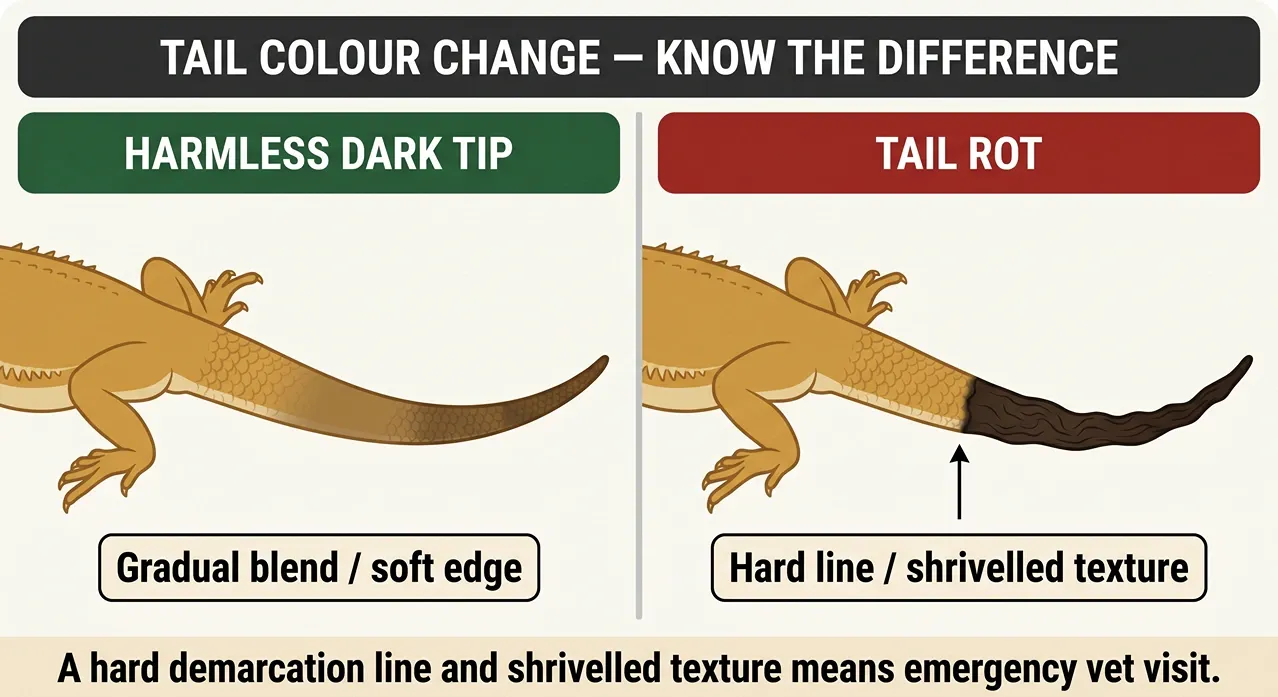
A darkening tail tip causes understandable panic, because tail rot is a genuine medical emergency. The difference between a harmless dark tail and the real thing comes down to texture, progression, and boundary.
A natural colour variation at the tail tip will be soft to the touch, warm like the rest of the dragon, and stable in size. Tail rot shows up as hardened, shrivelled, or blackened tissue with a clear demarcation line between healthy and dead skin. The affected section feels cool, dry, or leathery. A full walkthrough of tail rot versus dark tail covers the diagnostic signs and the steps to take if rot is confirmed.
Age-Related Colour Drift
A bearded dragon colour change that plays out over months or years rather than hours is usually just growing up. Babies often look drab or muddy. With each shed through the first twelve to eighteen months, the pattern clarifies and the warm tones intensify. The dragon you bought at six weeks will not look like the dragon you own at twelve months.
After sexual maturity the colour stabilises. Some dragons deepen slightly with age, some develop darker beards permanently, and some fade mildly in old age. A slow drift over years is normal. A sudden shift in colour in an otherwise stable adult dragon is worth investigating.
Colour Change Quick Reference Table
Use this table as a fast triage reference when a colour change first shows up. Match the pattern to the likely cause, then read the action column to know what to do next before digging into the full section above.
| Colour Change | Body Region | Likely Cause | Action |
|---|---|---|---|
| Dark back, normal beard | Dorsal only | Cold, morning warm-up | Wait 90 min post-basking. If persistent, check temps. |
| Black beard, normal body | Ventral only | Stress, threat, mating display | Remove trigger. Normal if under a few hours. |
| Dark ovals on belly | Ventral | Stress marks | Audit environment. Monitor for 1–2 weeks. |
| Dull, ashy whole-body | All over | Pre-shed | Wait for shed to complete. |
| Gradual fade over weeks | All over | Brumation or illness | Check appetite and weight. Vet if weight drops fast. |
| Pale and dehydrated-looking | All over | Dehydration or chronic low UVB | Rehydrate. Replace UVB if older than 6 months. |
| Crusty yellow patches | Localised | Yellow fungus | Urgent vet visit. |
| Black, hardened tail tip | Tail only | Tail rot | Emergency vet visit. |
| Red flush after meal | Mouth, chest | Food staining | Wipe gently. Harmless. |
When a Colour Change Needs a Vet
Most colour shifts resolve themselves once the trigger passes or the husbandry is corrected. A short list of scenarios genuinely warrants professional attention.
Persistent darkening across the back that survives two hours of correct basking plus a correct basking-zone temperature reading is one. A black beard that has not cleared after more than a week with no obvious trigger is another. Crusty, raised yellow patches, hardened dark tail tissue, or pale colour paired with dehydration signs all sit on the list too.
Finding a qualified reptile vet before you need one is the single most useful preparation step any keeper can take. The process of locating a reptile-experienced vet in your area is worth doing during the first month of ownership rather than during an emergency.
Reading Your Dragon Going Forward
Colour in a bearded dragon is a live readout of temperature, mood, and health. Once you can separate the back from the beard, the short flashes from the sustained shifts, and the biological cycles from the pathology, a bearded dragon colour change stops being frightening and starts being useful.
The single best habit you can build is taking a baseline photo of your dragon once a week under the same lighting conditions. Four weeks of photos gives you a reference library that makes any new bearded dragon colour change instantly easier to interpret. What looks dramatic in the moment often turns out to be a normal variant once you compare it against the last month.
Written by
Sarah ArdleySarah has kept bearded dragons for over ten years. She founded Beardie Husbandry after discovering that most mainstream care advice — including what she followed with her first dragon — was doing more harm than good. Every article on this site is grounded in veterinary research and real keeper experience.