Bearded Dragon Swollen Limb – Causes and Action
A bearded dragon swollen limb is one of those findings that sends most keepers straight into panic mode, and that reaction is usually correct. Limb swelling is almost never cosmetic. It means something inside the leg is wrong, whether bone, joint, soft tissue, or circulation, and the cause ranges from a slow-building calcium deficiency to a fracture that happened in the last hour. The good news is that most swollen limbs in captive beardies trace back to a handful of causes, and a careful look at which leg, how it feels, and how your dragon is moving will tell you most of what a vet needs to know.
First Check Whether It Is Actually Swollen
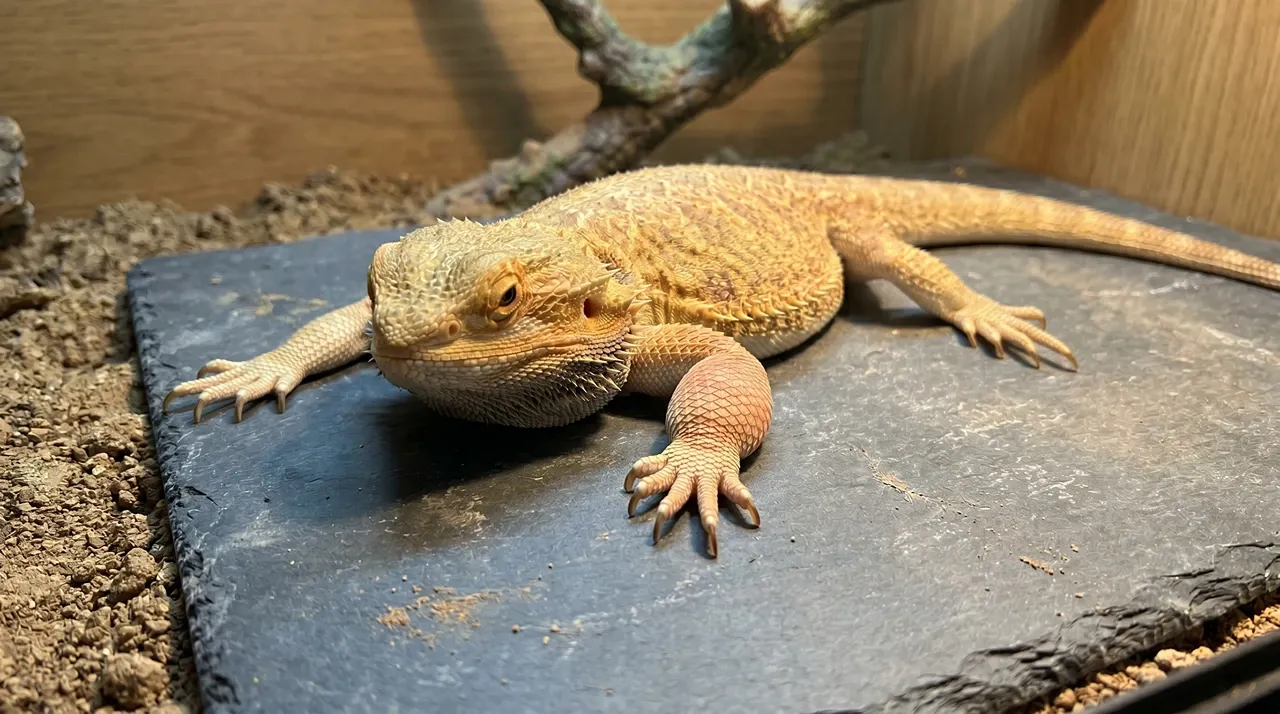
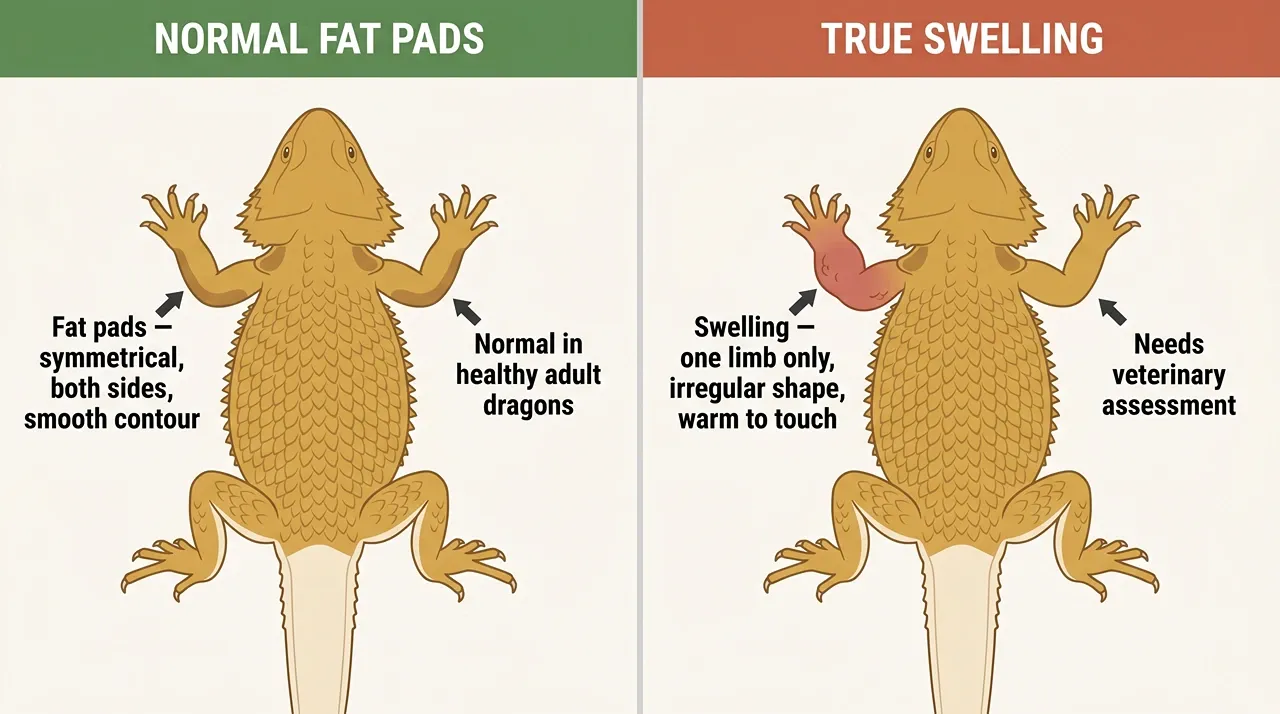
Before assuming the worst, rule out the two things that look like swelling but aren’t. Healthy adult beardies carry visible fat pads on the top of the forearms and along the base of the hind legs. In an overweight dragon these pads become pronounced and symmetrical on both sides, which is the giveaway. True pathological swelling is almost always asymmetric, firmer or softer than surrounding tissue, and often warm to the touch.
The second false alarm is a gravid female. Egg development can make the hind limbs look thicker as fat stores shift, and some keepers mistake this for swelling. If your female is in the run-up to laying, her whole back end will look fuller, not one specific joint.
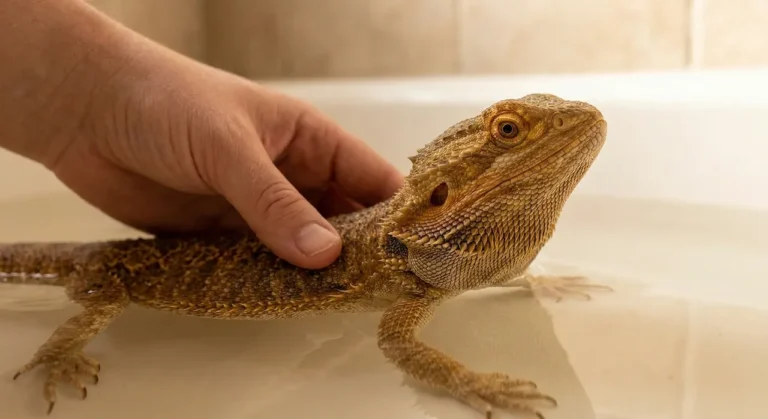
Gently press the swollen area with a clean finger. Note whether it feels firm like bone, spongy like soft tissue, or fluctuant like a fluid-filled balloon. That single observation narrows the cause list dramatically.
Bilateral vs Unilateral Is the Biggest Clue
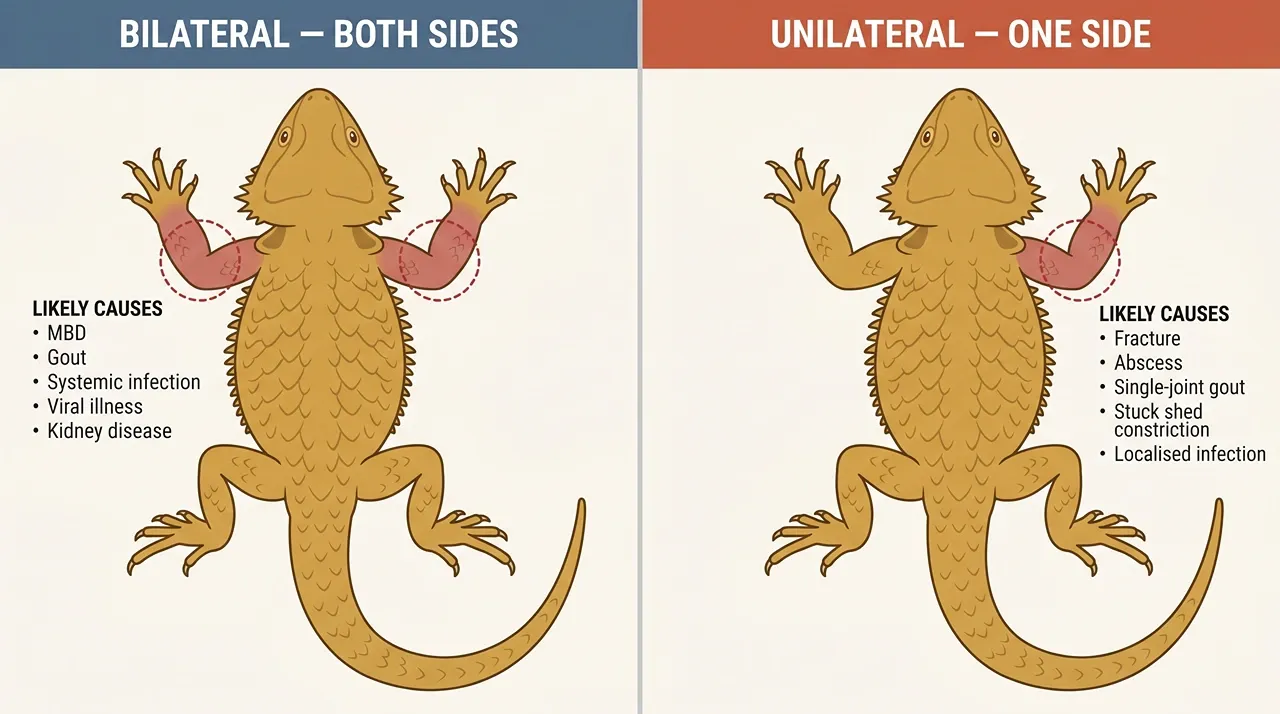
If both front legs or both back legs are swollen in roughly the same way, you are almost certainly looking at a systemic problem. Calcium metabolism, kidney function, or a viral illness affects the whole body, so the swelling shows up on both sides. Metabolic bone disease is the textbook example, with soft swollen forearms being one of the earliest visible signs before the jaw or spine get involved.
A unilateral bearded dragon swollen limb tells a different story. When only one leg is affected, the cause is local. Trauma, infection, a single-joint gout flare, or an abscess from a bite or injection site all present on one side only. This alone tells you whether to investigate husbandry first or injury first.
Metabolic Bone Disease and Soft Bone Swelling
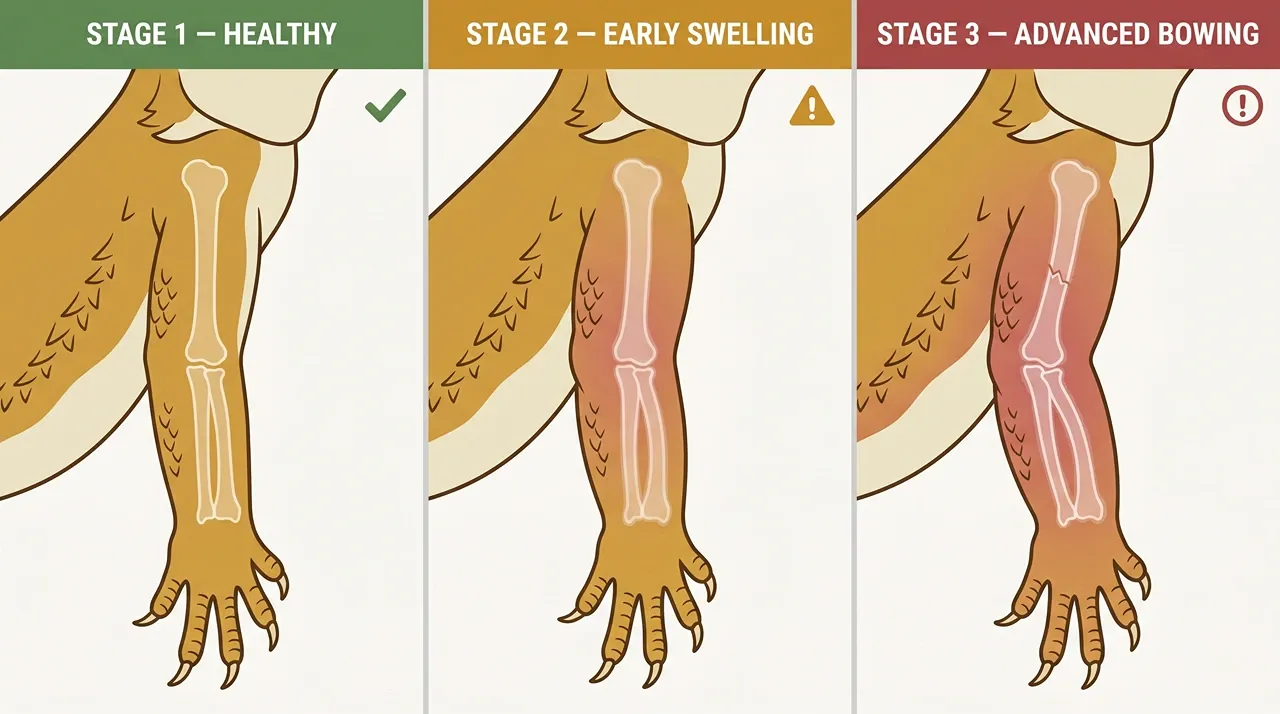
MBD is the number one cause of a bearded dragon swollen limb in pet beardies, and it rarely looks dramatic early on. The forearms or hind legs thicken slightly, the dragon becomes reluctant to climb, and the limbs may bow outward over weeks. The swelling here is not inflammation. It is the body laying down fibrous tissue in place of proper bone, and the legs feel rubbery rather than firm.
This happens when UVB, dietary calcium, or calcium absorption breaks down over months. A bulb that has aged past its UVB output, a supplement schedule that skips calcium dusting, or a basking temperature too low for proper digestion all lead there. Early-stage MBD with mild limb swelling can be turned around with corrected husbandry and vet-prescribed calcium, and the full reversal protocol for MBD in bearded dragons depends on catching it before the bones start fracturing. Advanced cases with fractures and deformity cannot be undone.
Suspect MBD if the swelling is bilateral, gradual in onset, and paired with tremors, weak grip, twitching toes, or a softening lower jaw.
Fractures After a Fall or Sudden Impact
Beardies are surprisingly fragile and falls from a shoulder, sofa, or enclosure door are the most common trauma cause. A fractured limb usually shows acute unilateral swelling within a few hours, refusal to bear weight on that leg, and in some cases an obvious angle change or a limb that drags.
The catch is that MBD makes fractures far more likely from impacts that would otherwise be harmless. A dragon with weakened bones can crack a limb jumping from a basking branch. If you see a swollen leg after what seemed like a minor fall, assume a fracture until a vet rules it out.
Do not attempt to splint or manipulate the leg at home. Keep the dragon in a small enclosure on paper towels with no climbing decor, and get to a reptile vet the same day.
Abscesses From Bites Injuries or Injections
Reptile abscesses look and behave differently from mammal abscesses. They are firm, caseous pockets of solidified pus rather than fluid-filled lumps, and they often form at the site of a previous bite, scratch, or injection. A single hard localised bearded dragon swollen limb with a visible wound nearby or a healing scar points to an abscess.
These almost always need surgical lancing by a vet because the pus is too solid to drain on its own. Trying to squeeze one at home rarely works and usually spreads the infection deeper into surrounding tissue.
Gout and Joint Swelling
Gout is under-discussed in beardie keeping and it is the cause that most home guides skip entirely. It happens when uric acid crystallises and deposits in joints, usually in the toes, ankles, or wrists. The affected joint becomes visibly swollen, warm, and painful enough that the dragon will often lift the foot off the ground.
Chronic dehydration, kidney disease, and diets heavy in animal protein relative to greens all drive gout. Adult beardies fed too many insects and not enough vegetables are the classic case. The link to hydration is direct, which is why persistent signs of dehydration should never be ignored in adults, especially those with any history of kidney concerns.
A vet will confirm gout through bloodwork and may prescribe allopurinol alongside husbandry corrections. Untreated gout leads to joint destruction and permanent lameness.
Burn-Related Swelling on the Limbs
Contact burns from unguarded heat sources or a basking bulb positioned too close can cause swelling on the back, tail, or upper limbs. These look different from other swellings because the skin is discoloured, often dark, blistered, or crusty, and the affected area is localised directly under where the heat source sat.
Mild burns can be managed with careful wound cleaning and husbandry adjustment, but anything deeper than surface reddening needs a vet. Silver sulfadiazine becomes appropriate for deeper wounds, and the full first-aid protocol for bearded dragon burns sets out exactly when to reach for it.
Infection Deeper Than an Abscess
Cellulitis and osteomyelitis (bone infection) present with diffuse swelling rather than the firm pocket of an abscess. The limb looks generally puffy, may be warmer than the rest of the body, and the dragon is usually lethargic and off food. These deeper infections often start from an unnoticed scratch, a stuck shed that cut off circulation to a toe, or a wound that looked minor.
A stuck shed around a toe or foot can strangle blood supply in 48 hours and cause the tissue above it to swell dramatically. Check every toe and the base of the tail whenever you see a bearded dragon swollen limb, especially after a recent shed. Soaking and gentle removal works if caught early, but necrotic tissue needs vet attention.
Decision Table for a Bearded Dragon Swollen Limb
| Presentation | Most Likely Cause | Urgency |
|---|---|---|
| Both forearms or both hind legs, gradual, rubbery | MBD | Vet within a week, correct husbandry now |
| One leg, sudden, refusing weight | Fracture | Same-day vet |
| One localised hard lump, wound nearby | Abscess | Vet within 48 hours |
| One swollen joint, warm, lifting the foot | Gout | Vet within a few days |
| Diffuse puffy limb, lethargy, off food | Cellulitis or osteomyelitis | Same-day vet |
| Toe or foot swollen, recent shed | Stuck shed constriction | Soak immediately, vet if not resolved in 24 hours |
| Discoloured crusty skin over swelling | Burn | Vet within 48 hours for anything beyond redness |
| Both forearm fat pads, symmetrical, dragon overweight | Normal fat pads | None, review diet |
What to Do Before the Vet Appointment
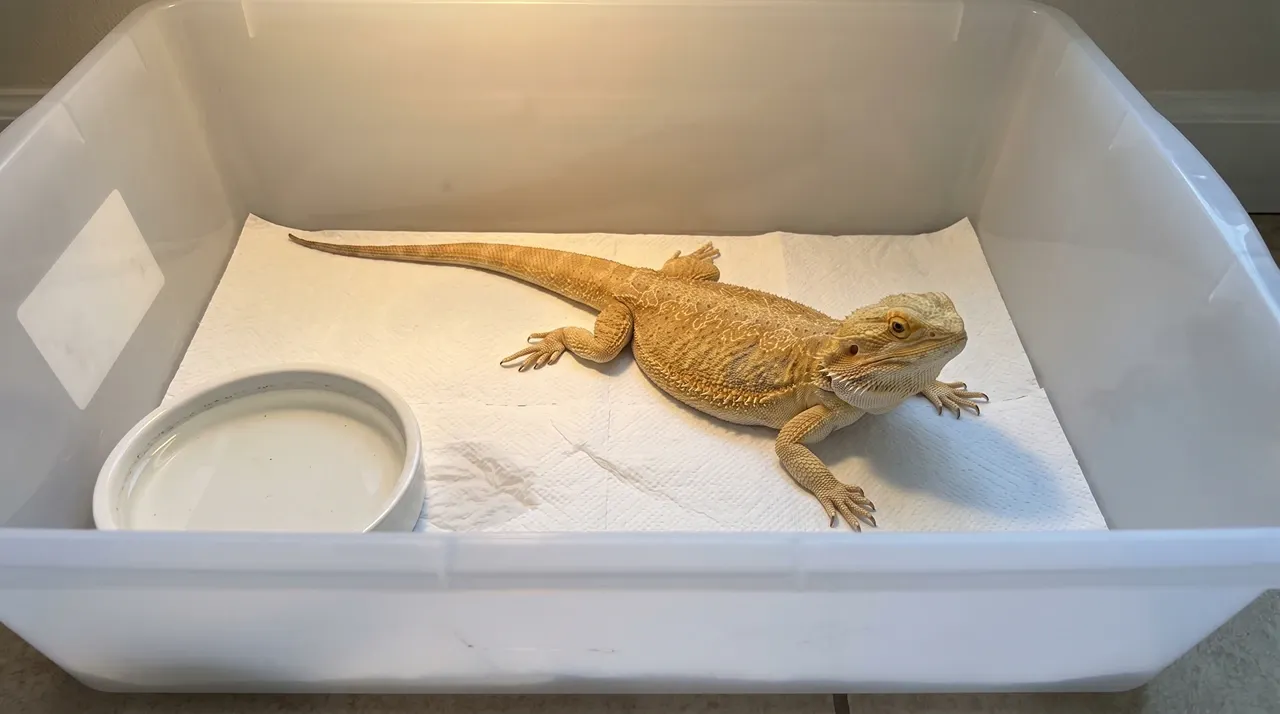
Move the dragon to a simple hospital setup. A plastic tub or small tank with paper towel substrate, a shallow water dish, and no climbing decor prevents further injury and makes monitoring easier. Keep basking temperatures normal because a cold dragon cannot mount any kind of immune response or healing process.
Photograph the swelling from multiple angles with a ruler or coin for scale. Note the time you first saw it, any recent falls or fights, the current supplement schedule, the age of your UVB bulb, and whether the dragon has eaten or pooped in the last 48 hours. A reptile vet will ask every one of these questions and having answers ready saves time that matters in a trauma case.
Do not offer painkillers from the medicine cabinet. Human NSAIDs are toxic to reptiles and mask symptoms that your vet needs to see.
Finding the Right Vet Fast
Not every exotic vet is a reptile vet, and a regular small-animal practice will often miss the subtleties of MBD or gout on X-ray. Any bearded dragon swollen limb case justifies a proper herp specialist, and locating one before you need one saves hours in an emergency. The process of finding a qualified reptile vet is worth doing the week you bring your dragon home, not the day you find a swollen leg.
Prevention Is Mostly Husbandry
Most cases of a bearded dragon swollen limb trace back to one of three husbandry failures. UVB that is too old, too weak, or blocked by mesh. A supplement schedule that misses calcium dusting or overuses D3. A diet that leans too heavy on insects with too little hydration.
Fix those three things and you eliminate the vast majority of MBD and gout cases before they ever start. Add a thorough enclosure check for sharp edges, unguarded heat sources, and gaps that a toe can catch in, and you drop the trauma risk too. Keepers who run tight husbandry almost never see swollen limbs, and when they do, it is usually a genuine accident rather than a slow-building failure.
When the Swelling Is an Emergency
Certain combinations mean you stop reading and call a vet now. A dragon that will not bear any weight on a limb. Swelling paired with tremors, seizures, or twitching. A visibly angled or dangling leg. A limb that is cold or pale compared to the body. Pus or discharge from the swelling. Rapid progression of the swelling over hours rather than days.
Any of these needs same-day attention. The window between manageable and permanent damage closes fast with fractures, deep infections, and advanced MBD.
Immediate Action Checklist
Work through these steps in order the moment you spot swelling, before you call the vet.
- Check whether the swelling is on one limb or both, because unilateral points to trauma or infection and bilateral points to systemic disease.
- Press gently and note whether it feels firm, soft, or fluid-filled.
- Move the dragon to a hospital setup with paper towel substrate and no climbing decor.
- Photograph the limb with a scale reference and log the timeline.
- Audit your UVB bulb age, supplement schedule, and basking temperature before the vet asks.
- Book a reptile vet appointment within the urgency window in the decision table above.
- Keep basking temperatures normal so your dragon can thermoregulate and heal.
Written by
Sarah ArdleySarah has kept bearded dragons for over ten years. She founded Beardie Husbandry after discovering that most mainstream care advice — including what she followed with her first dragon — was doing more harm than good. Every article on this site is grounded in veterinary research and real keeper experience.