Bearded Dragon Throwing Up: Causes and What to Do
Vomiting in a bearded dragon is one of those things that looks far worse than it sometimes is, and far less serious than it sometimes should be. A bearded dragon throwing up after a big meal or a warm bath is often nothing. The trouble is telling that apart from the kind that needs a vet.
Repeated episodes, or vomit streaked with blood or mucus, point to a real problem. That is the line this comes down to.
The trick is knowing which one you are looking at. Most of the panic online comes from owners treating a one-off the same as a pattern, and treating regurgitation the same as true vomiting when they are not the same event at all.
Vomiting and Regurgitation Are Not the Same
This distinction matters more than any single cause, because it changes what you do next. Reptile vets separate the two for exactly this reason.
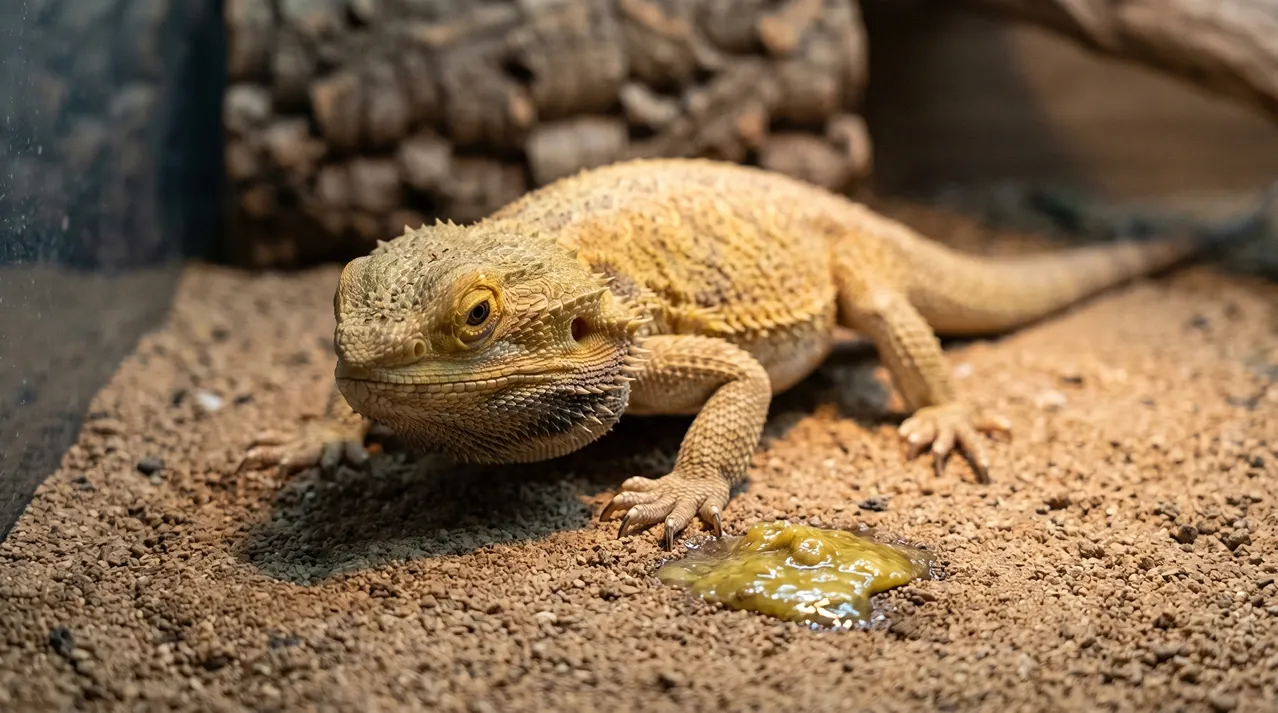
True vomiting is an active heave. The stomach contracts, you often see body arching or neck stretching first, and what comes up is partly digested. It may be stained yellow or green with bile and smell sour.
Regurgitation is passive. Food that was eaten recently comes back up barely changed, still recognisable, with little effort and no retching. It usually means the food never moved on from the upper gut.
Then there is dry heaving, where your dragon goes through the motions but nothing comes out. That one is easy to misread. An empty heave with open-mouth breathing is often a respiratory issue, not a digestive one, and it changes the urgency completely.
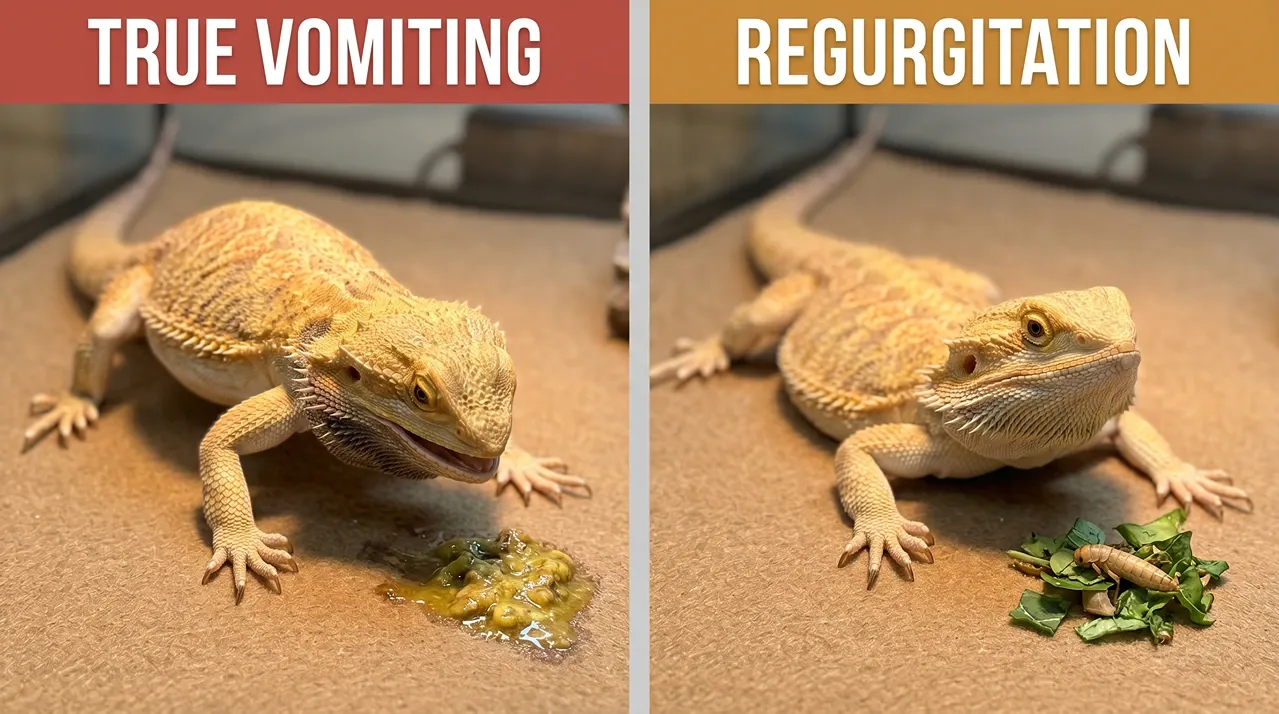
In the moment, the posture is easier to read than the contents. A dragon that arched and strained almost certainly vomited. One that brought food up while resting, with no heaving, was regurgitating. That single observation narrows the cause before you have even looked at what landed on the substrate.
Pro tip: Photograph or film the episode before you clean it up. The colour, the contents, and whether your dragon retched or simply brought food up tells a reptile vet more in ten seconds than a paragraph of description.
The Cold Gut Problem Most Owners Miss
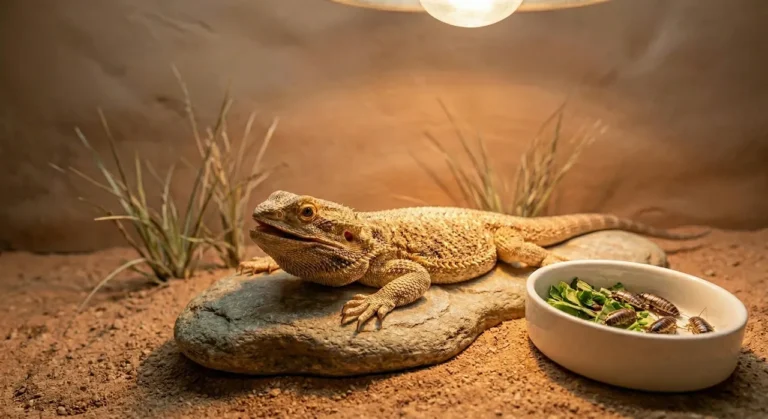
The most common preventable cause is temperature, and beginners overlook it because the dragon looks fine otherwise. Bearded dragons cannot digest without external heat, so getting the basking surface temperature right resolves a surprising share of cases.
A cold stomach cannot break food down. The meal ferments instead of digesting, and the body brings it back up.
Your basking surface needs to read 95–110°F for an adult and slightly hotter, around 100–110°F, for a baby. The cool end should sit near 75–85°F. If digestion stalls, the food has nowhere to go but back up.
Check the basking spot with a digital probe thermometer or an infrared temperature gun, measured at the surface where your dragon actually sits. Stick-on dial gauges read the glass, not the basking platform, and they are wrong often enough to cause this exact problem.
Night temperatures matter here too. A dragon fed late in the day, then dropped into a cold tank overnight, has a belly full of food and no heat to process it. Knowing whether overnight temperatures stay safe without a heat source is part of preventing this.
When the Food Comes Up Hours After Eating
Food rejected several hours after a meal points hard at temperature or a motility problem. The dragon ate, the gut never warmed enough to move things along, and the body gave up on it. Fix the basking temperature first and feed only once it is stable.
What the Vomit Tells You About the Cause
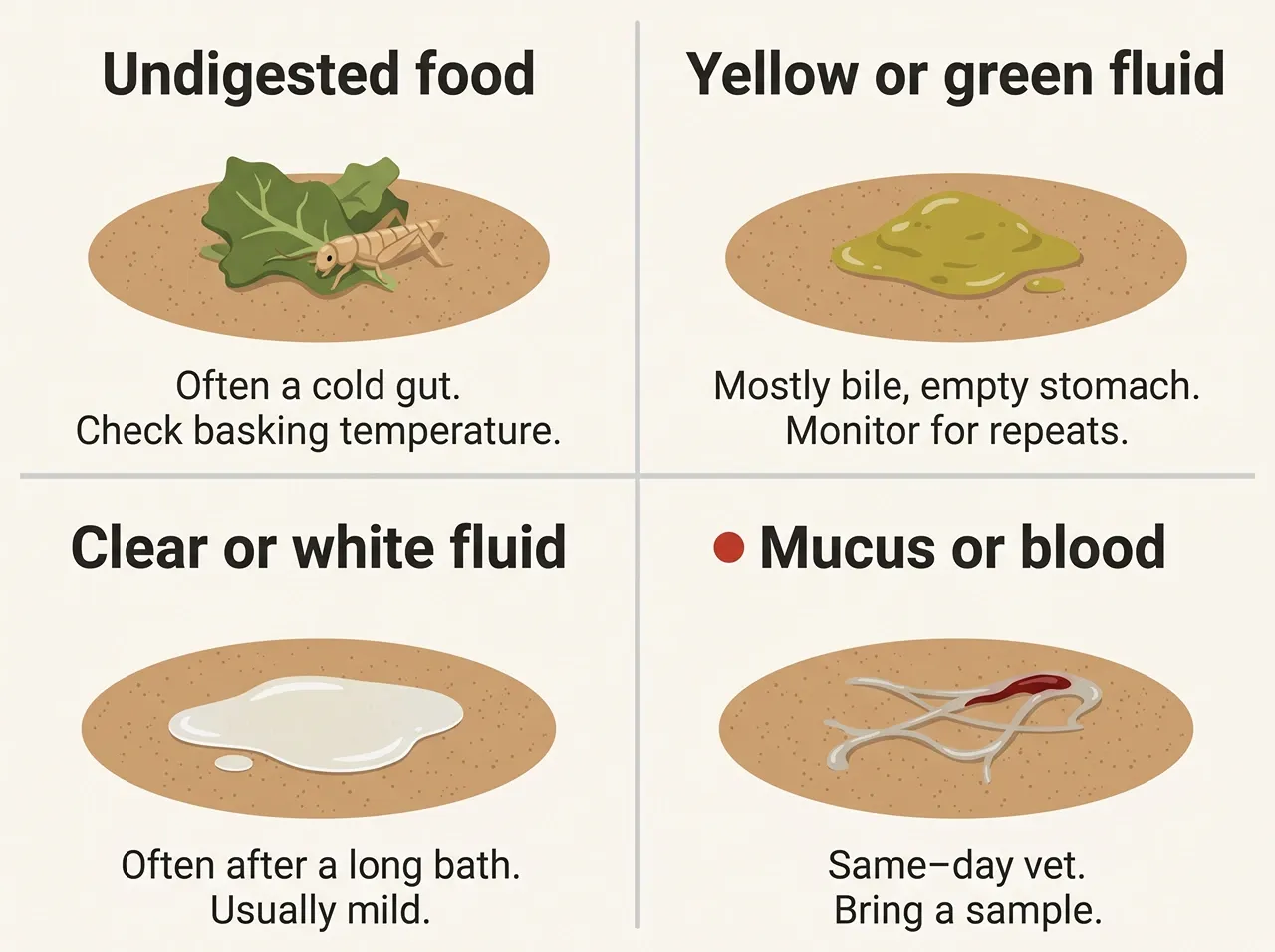
The contents are your best clue. Different appearances point to very different problems, and matching what you see to a likely cause helps you judge how fast to act.
| What you see | Likely meaning | What to do |
|---|---|---|
| Undigested food, recently eaten | Regurgitation: cold gut, handled too soon, overfed | Check temps, stop handling after meals, reduce portion |
| Partly digested food, sour smell | True vomiting: digestion stalled or upset | Review husbandry, fast briefly, monitor closely |
| Clear or white fluid only | Bile or excess water, often after a long bath | Usually mild, shorten baths, watch for repeats |
| Yellow or green tint | Bile, stomach largely empty | Monitor, vet if it repeats or appetite drops |
| Mucus or stringy slime | Possible infection or parasites | Vet visit, bring a sample |
| Blood, fresh red or dark brown | Serious: ulceration, organ disease, foreign body | Emergency vet, same day |
One caveat on blood. Dragon faeces can smear and look alarming, and owners sometimes mistake a normal dropping for bloody vomit. Watch which end it came from before you panic.
The Other Real Causes
Once temperature is ruled out, a handful of causes account for most episodes. Each has its own tell, and several link back to feeding habits that are easy to correct.
Overfeeding or Oversized Feeders
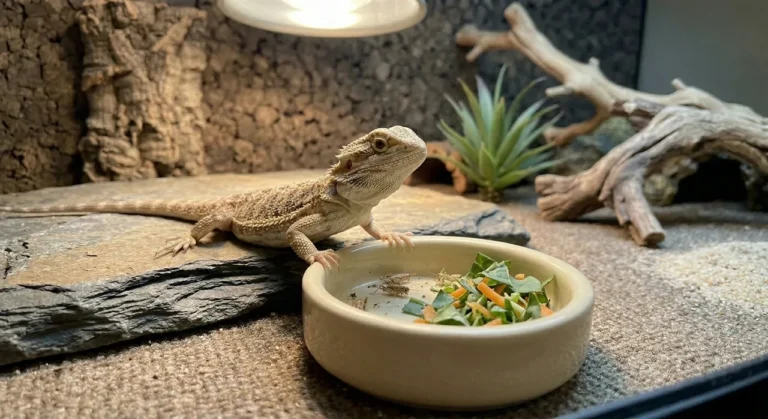
A dragon that eats until its belly bulges, then brings some back up, has simply taken on more than the gut can handle. Bulk feeders with hard shells make it worse because they sit heavy and slow.
The old rule still holds: no feeder wider than the space between your dragon’s eyes. Anything bigger strains digestion and raises the impaction risk. Sticking to a sensible portion size for their age prevents most overfeeding episodes outright.
Impaction
Impaction is a blockage in the gut, and a backed-up dragon may reject food because there is nowhere for it to go. Loose substrate swallowed with prey, oversized feeders, or chronic cold all feed into it.
The warning signs cluster: no droppings for days, a firm or swollen belly, weakness in the back legs, and refusal to eat. A vomiting dragon that also has not passed waste needs proper attention, and spotting the early signs of a blockage changes the outcome.
Parasites and Infection
A heavy parasite load, coccidia being the usual culprit, inflames the gut enough to trigger vomiting alongside runny stools, weight loss, and lethargy. Mucus in the vomit leans this way too.
This is not something you treat at home. A faecal test confirms it, and the right medication clears it. Guessing at over-the-counter wormers tends to stress the dragon further without fixing the cause.
Handled Too Soon After Eating
Handling a dragon right after it eats can bring the meal straight back up, the same way a jostled toddler loses lunch. Give a two to three hour gap between feeding and handling.
Long baths cause a milder version. A dragon that gulps water during a soak may bring up clear fluid afterwards. That is usually harmless, but it is a reason to keep baths short and the water shallow.
What to Do in the First 24 Hours
For a dragon that has thrown up just once while otherwise bright and alert, you are managing the situation, not racing to the vet. The goal is to let the gut settle and remove whatever triggered it.
- Do not offer food again straight away. Give the stomach 24–48 hours of rest. Feeding into an upset gut usually just produces a second episode.
- Check and correct your basking temperature. Measure at the surface with a probe or infrared gun. Get the basking spot into range before anything else.
- Offer water gently, do not force it. A few drops on the snout or a shallow lukewarm soak lets a dragon drink if it wants to. Never squirt water into the mouth, which risks aspiration.
- Keep handling to zero. Let the dragon rest in its enclosure where it can thermoregulate.
- Save a sample. Seal a little of the vomit in a clean container in the fridge in case a vet visit follows.
Do not force-feed or force-hydrate a dragon that has just vomited. Pushing fluid or food into the mouth of a heaving reptile can send it into the airway. Slow, offered hydration only, and let the dragon take it on its own terms.
When Throwing Up Means a Vet Visit
The line between watch-and-wait and book-the-vet comes down to frequency, contents, and the dragon’s overall state. A small dragon dehydrates fast, so the threshold drops for babies and juveniles.
Treat these as same-day reasons to call a reptile vet:
- Vomiting more than once in 24 hours, or any repeat over several days
- Blood or mucus in what comes up
- Dry heaving paired with open-mouth breathing or any clicking sound
- Refusing food for more than a couple of days alongside the vomiting
- Sunken eyes, skin that stays tented when pinched, or obvious weakness
- A baby or juvenile dragon vomiting at all beyond a single mild episode
Finding the right clinic matters as much as deciding to go. A general cat-and-dog practice often cannot help, so having a reptile-experienced vet identified before an emergency saves precious time.
Why Babies Cross the Line Sooner
A hatchling holds almost no water reserve. One bout of vomiting can tip a baby toward dangerous dehydration within hours, where an adult might coast through the same episode.
If your dragon is under about four months and brings up a meal, watch it closely and lower your threshold for calling the vet.
Stopping It From Happening Again
Most repeat episodes of a bearded dragon throwing up trace back to husbandry, which is good news because husbandry is fixable. Nail the basics and the problem usually disappears on its own.
Get the basking temperature dialled in with proper equipment and verify it weekly, since bulbs drift as they age. Right-size every feeder, keep portions sensible for age, and leave a clear gap between feeding and any handling.
If you run loose substrate, watch closely for swallowed grit during feeding, or move feeders to a dish. A dragon that keeps bringing food up despite good husbandry has something going on under the surface that a faecal test and an exam will catch.
Frequently Asked Questions
Is it normal for a bearded dragon to throw up once?
A single episode after a large meal, a long bath, or being handled too soon can be harmless. Watch for repeats, blood, or lethargy. If the dragon stays bright and eats normally the next day, it was likely a one-off.
Why did my bearded dragon throw up undigested food?
Undigested food usually means it never got warm enough to digest. Check that your basking surface reads 95–110°F. A cold gut cannot process a meal, so the body brings it back up.
Should I feed my bearded dragon after it vomits?
No. Rest the stomach for 24–48 hours before offering food again. Feeding into an upset gut tends to cause a second episode and delays recovery.
What does it mean if there is blood in the vomit?
Blood is a same-day emergency. It can signal ulceration, organ disease, or a foreign body. Contact a reptile vet immediately and bring a photo or sample.
How do I know if it is vomiting or regurgitation?
Vomiting is an active heave bringing up partly digested, often bile-stained contents. Regurgitation is passive, returning recently eaten food barely changed. The difference helps your vet narrow the cause.
Your Next Steps Today
- Film or photograph the episode and note the contents before cleaning up.
- Measure your basking surface temperature with a probe or infrared gun, and correct it if it reads under 95°F.
- Stop feeding for 24–48 hours and offer water only by gentle soak or drops.
- Check when your dragon last passed waste and feel gently for a firm belly.
- If there is blood, mucus, repeated throwing up, or a baby involved, call a reptile vet today rather than waiting.
Written by
Sarah ArdleySarah has kept bearded dragons for over ten years. She founded Beardie Husbandry after discovering that most mainstream care advice — including what she followed with her first dragon — was doing more harm than good. Every article on this site is grounded in veterinary research and real keeper experience.