How Long Can Bearded Dragons Go Without Eating
A bearded dragon that skips a meal or two is not a dragon in trouble. A healthy adult can go a week or two without food and stay perfectly fine. A baby that misses two days needs your attention. How long bearded dragons can go without eating depends almost entirely on age, body condition, season, and whether husbandry is right in the first place.
The honest answer is that most fasting is normal. The dangerous version looks identical to the normal version for the first few days, which is what makes this question so stressful. Watching weight, hydration, and behaviour matters far more than counting the days on a calendar.
The Quick Answer by Age
Fasting tolerance changes dramatically as a dragon grows. The same week without food that is meaningless for an adult could be a medical emergency for a baby. Use this as your first reference point.
| Age | Safe Fasting Window | When to Worry |
|---|---|---|
| Hatchling (0–3 months) | No more than 24 hours | Anything past 48 hours |
| Baby (3–6 months) | 2 days at the absolute maximum | 3 days without food |
| Juvenile (6–12 months) | 3 to 5 days | Over a week with weight loss |
| Sub-adult (12–18 months) | 1 to 2 weeks | Over 2 weeks or visible weight loss |
| Adult (18 months+) | 2 to 4 weeks normally | Past 1 month, or 10% weight drop |
| Adult in brumation | Up to 3 months | Past 4 months, or 10% weight drop |
These are not feeding recommendations. They are tolerance windows. A juvenile bearded dragon care routine targets daily insect feedings for a reason. Going a week without food is a sign that something has changed, even when the dragon physically tolerates it.
Why Babies Cannot Fast Like Adults
Hatchlings and babies are growing at speed. They have almost no fat reserves to draw on. Their metabolism runs hot to fuel rapid bone, muscle, and organ development.
An adult can metabolise stored fat from the tail base and abdomen for weeks. A four-month-old has none of that buffer. Two days of refusal is a flag. Three days is a call to a reptile vet.
The First Thing to Check Is Heat
A bearded dragon that cannot reach digestion temperature will not eat. They are not refusing because they dislike the food. Their body knows it cannot process it.
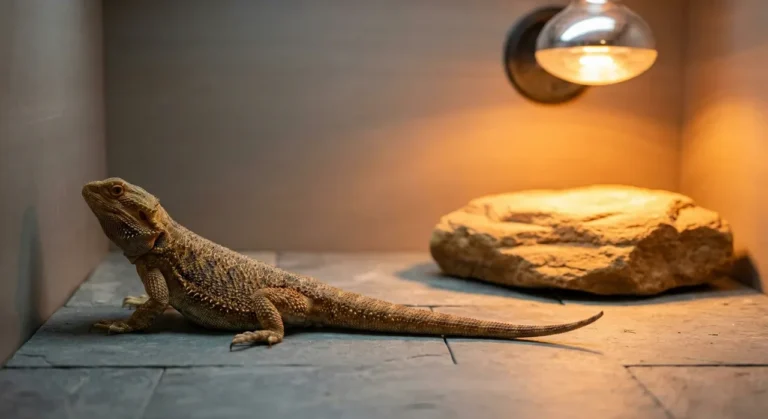
The basking surface should measure 100°F to 110°F for adults, 105°F to 115°F for juveniles. Measure with an infrared temperature gun on the surface where they actually sit. Air temperature readings tell you almost nothing useful.
An ageing UVB tube is the second most common silent cause. A T5 HO tube past 12 months puts out almost nothing the dragon can use, even though it still glows. Setting up bearded dragon lighting correctly is the single most undervalued fix in keeping. Replace tubes annually regardless of how they look.
How to Tell If It Is the Setup
Husbandry-related fasting follows a pattern. The dragon is alert but disinterested in food. Bowel movements have slowed or stopped. Basking time has dropped. They retreat to cooler areas more than usual.
Fix the heat or UVB and appetite usually returns within a week. If it does not, the cause is somewhere else.
What Brumation Actually Looks Like
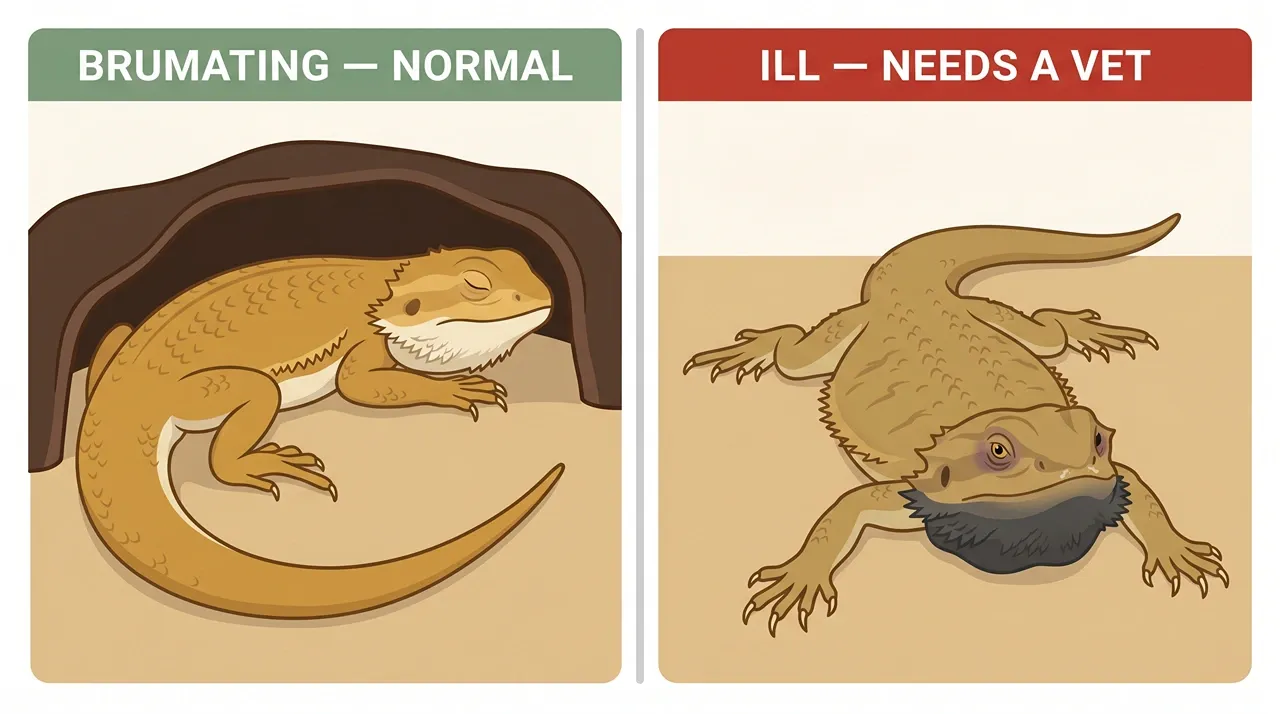
Brumation is the natural seasonal slowdown. Adult dragons in captivity often still enter it despite stable temperatures and lighting. It is the single most common reason a healthy adult stops eating for weeks at a time.
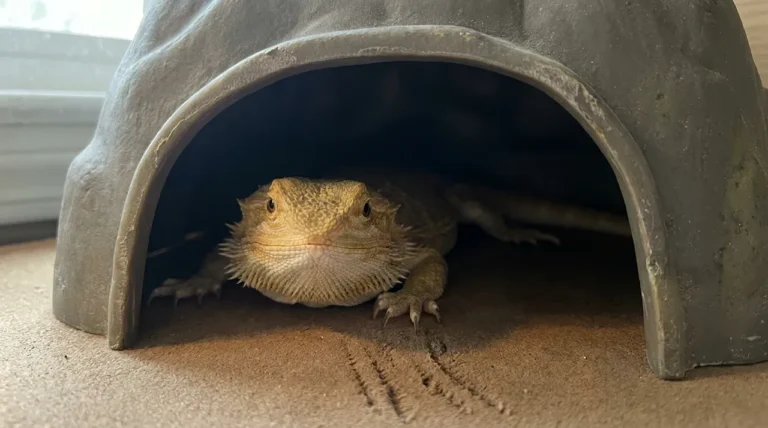
A brumating dragon sleeps more, hides more, and gradually stops eating over a few weeks. Bowel movements slow then stop. They will still rouse if you handle them. They still drink occasionally. Weight stays stable or drops only marginally.
True brumation can last anywhere from a few weeks to three months. The full bearded dragon brumation protocol covers lighting reduction, temperature drops, and how to handle pre-brumation feeding properly.
Brumation vs Illness in One Glance
| Sign | Brumation | Illness |
|---|---|---|
| Eyes | Clear, alert when roused | Sunken, crusted, or closed |
| Weight | Stable or very gradual loss | Visible drop in 1–2 weeks |
| Body condition | Tail base still has fat | Hip bones and ribs visible |
| Beard colour | Normal or paler | Persistently dark or black |
| Breathing | Slow, regular, silent | Wheezy, clicking, or open-mouth |
| Movement when handled | Sluggish but responsive | Limp, unresponsive, or weak |
| Stool before fasting | Normal, often the last one | Runny, smelly, undigested |
| Hydration | Still drinks if offered | Refuses water, skin tents |
If three or more illness column signs apply, this is not brumation. Book a reptile vet visit. Do not wait for the dragon to “wake up”.
The 10 Percent Weight Loss Rule
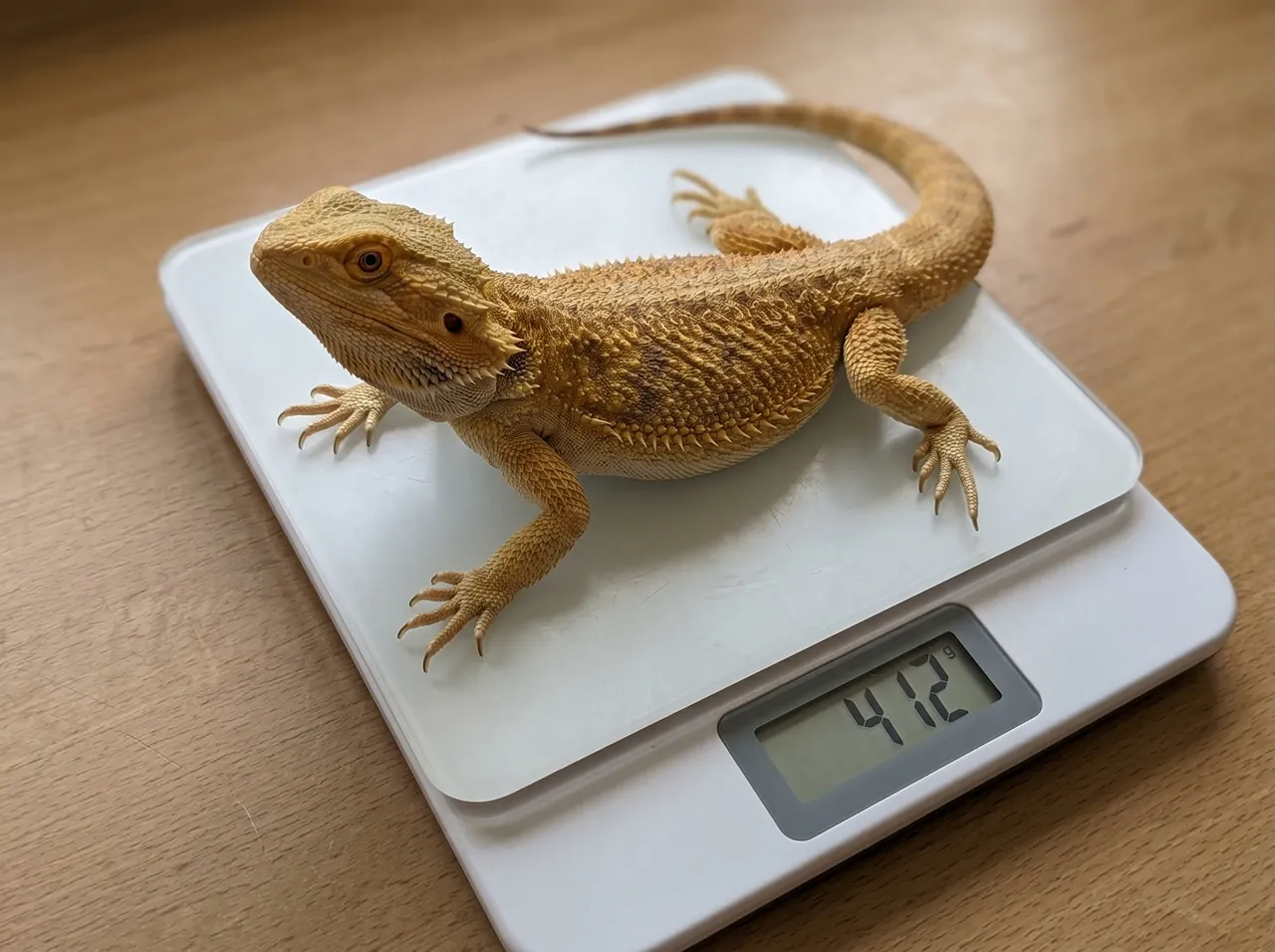
This is the most important number in any fasting situation and almost no one talks about it. Weigh the dragon at the start of the fast, then weekly. The scale tells you more than any other single tool.
A healthy dragon entering brumation might lose 5 to 8 percent of body weight across two or three months. That is acceptable. A loss of 10 percent at any point is the threshold for veterinary attention regardless of how peaceful the dragon looks.
Keep the same scale, the same time of day, and the same conditions every week. Consistency in how you measure is what makes the trend visible. A single weigh-in tells you almost nothing. Four weeks of weigh-ins tells you everything.
How to Read Body Condition
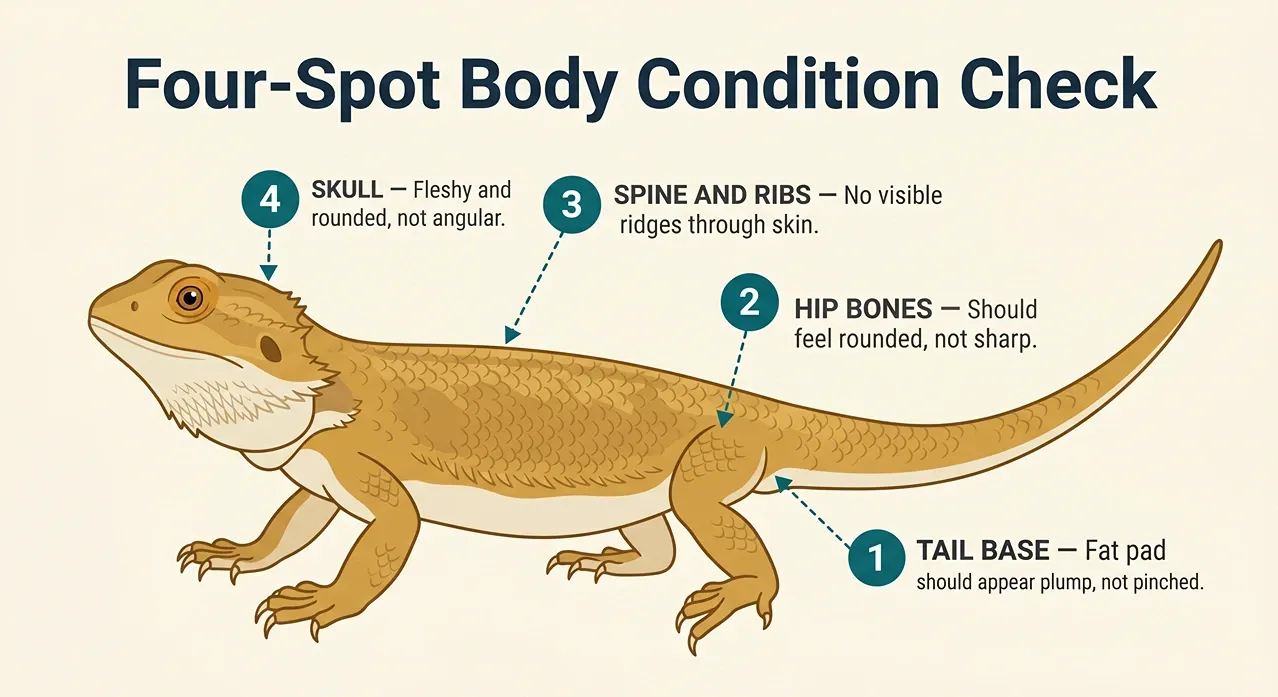
Weight is the early warning. Visible body condition tells you how serious the situation has become. A keeper checks four spots.
Tail base. A healthy adult has visible fat pads at the base of the tail, just past the cloaca. As fat reserves burn through, this area flattens. A tail that looks pinched at the base means reserves are running low.
Hip bones. Run a finger gently along the side of the body just before the back legs. Hips should feel rounded, not sharp. Sharp hip points mean the dragon has been fasting longer than is safe.
Spine and ribs. Visible spine ridges or rib outlines through the skin are advanced signs of weight loss. By this point, intervention should already be happening.
Back of the skull. Healthy dragons have flesh between the eyes and the back of the head. A bony, angular skull profile means significant muscle and fat loss.
Hydration Matters More Than Food
A bearded dragon will survive food refusal far longer than water refusal. This is the rule competitors mention in passing and then forget. Water is the priority during any fast.
A dragon that has not drunk in a week is in a different category of emergency than one that has not eaten in a week. The signs of dehydration in bearded dragons show up well before starvation symptoms, and they progress faster.
Signs Water Has Become the Real Problem
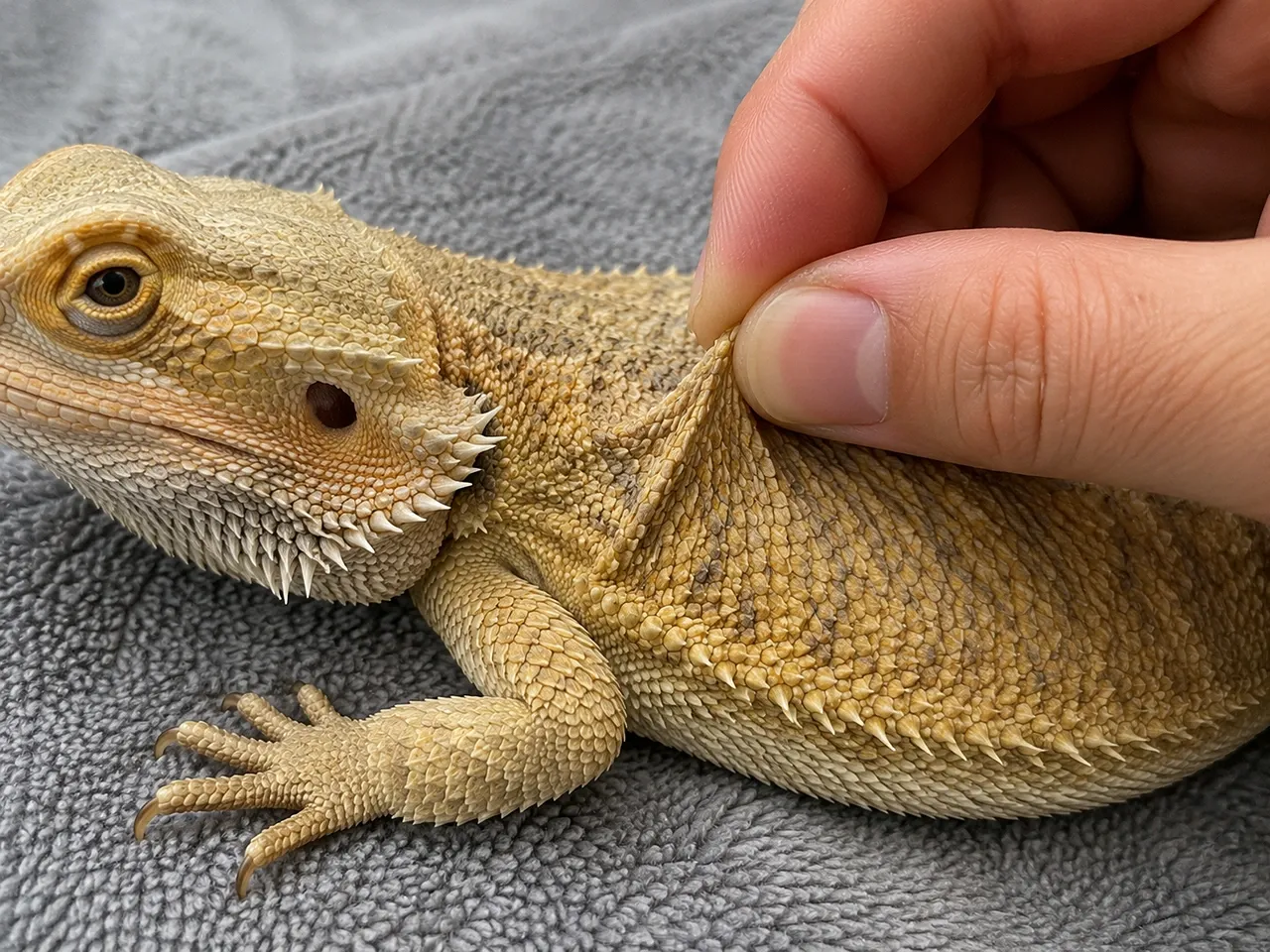
- Skin stays tented when gently pinched on the side of the body
- Eyes look sunken or smaller than normal
- Saliva becomes thick, stringy, or stretches between the jaws
- Wrinkled, papery skin that does not bounce back
- Refusing water from a syringe when offered to the mouth corner
Offer water by dripping it onto the snout with a syringe, where it triggers a licking reflex. Soaking in shallow lukewarm water for 15 to 20 minutes a few times a week helps fasting dragons stay hydrated even when they will not drink directly.
When Stress Is the Actual Cause
New environments shut down appetite faster than almost anything else. A dragon brought home from a breeder or store often refuses food for one to two weeks. This is normal. Forcing food in this window makes things worse.
A new arrival not eating gets a calm, dark, low-handling first fortnight. Temperatures correct, UVB correct, food offered daily but not pushed. Most settle within ten days. Detailed guidance on a new dragon refusing food walks through the full settling protocol.
Other stressors include tank moves, new substrate, loud rooms, a window the dragon can see predators through, or a household pet visible from the enclosure. Any of these can extend fasting by weeks.
When a Dragon Is Just Being Stubborn
This is a hard truth most blogs avoid. Bearded dragons learn behaviour from owners faster than owners realise. A dragon that has been fed crickets and butternut squash for months will hold out for crickets and butternut squash when you offer greens.
Healthy adults with full fat stores can refuse food for a month while staring you down. They are not sick. They are negotiating.
The fix is patience. Offer the same balanced salad daily. Remove uneaten food after thirty minutes. Stop offering favourites entirely. Most dragons cave within two to three weeks once they understand the menu has changed.
Illness Causes That Stop Appetite
If husbandry checks out, brumation is unlikely, and stress is ruled out, food refusal points to a health problem. Several conditions cause appetite loss as an early symptom.
- Impaction. Substrate, oversized prey, or low temperatures can block the gut. Refusal often comes with straining or no bowel movements at all. Read about impaction warning signs for the full picture
- Parasites. Internal parasites cause weight loss alongside reduced appetite. Stool may look loose, smelly, or undigested. Get a fecal test from a reptile vet
- Mouth rot. Painful infection of the mouth lining stops dragons from eating. Look for redness, swelling, or pus around the gum line
- Respiratory infection. Wheezing, mucus, or open-mouth breathing alongside appetite loss is a vet emergency
- Metabolic bone disease. Tremors, soft jaw, or twitching combined with food refusal points to metabolic bone disease from chronic calcium or UVB deficiency
- Atadenovirus. Chronic low appetite, poor growth in young dragons, and recurring infections suggest viral infection
What Force-Feeding Actually Does
Force-feeding sounds like the obvious answer. It is one of the most damaging things an inexperienced owner can do.
Bearded dragons cannot reliably move food past their glottis when they are weak or stressed. Liquid or paste forced into the mouth can be aspirated into the lungs, causing pneumonia that often kills faster than the original fast would have. The risk is highest in the dragons that look like they need it most.
Assist-feeding is different. A vet may prescribe a recovery diet syringed slowly into the side of the mouth. This is done by someone trained, with the dragon in a vertical position, and with extreme care. It is not the same as cramming food down a dragon at home in panic.
How to Start Refeeding After a Long Fast
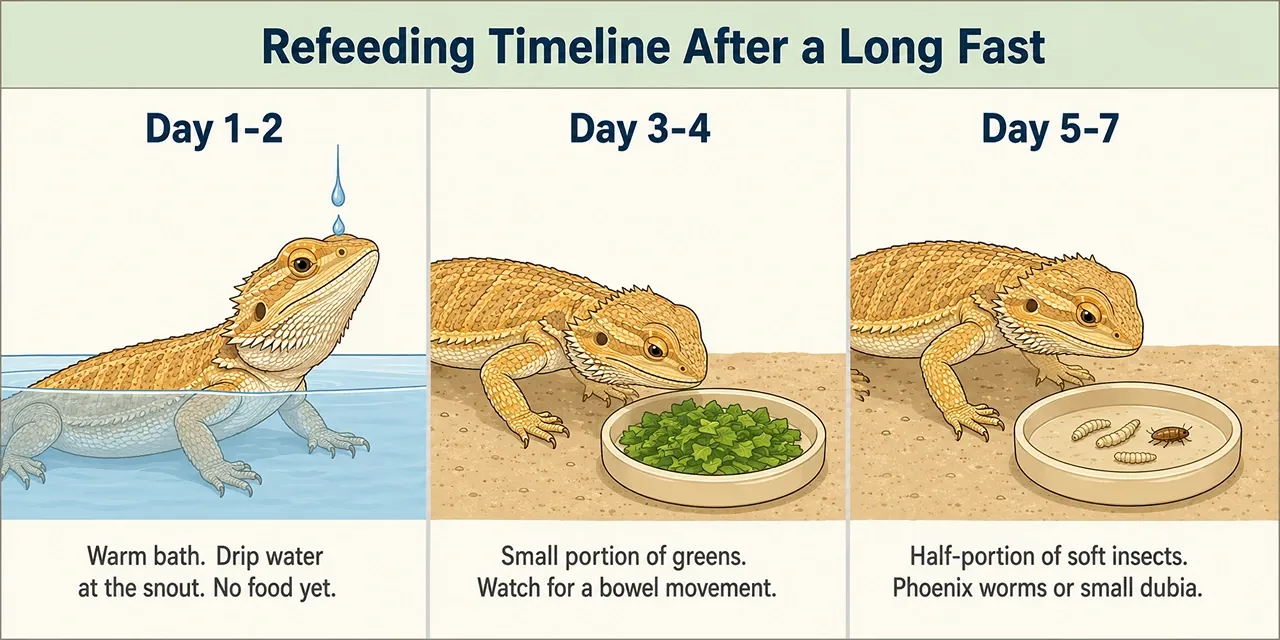
Bringing a dragon back onto food after weeks of fasting is its own skill. Heavy protein on day one will cause gastrointestinal upset and refusal all over again.
Start with hydration. Offer warm baths and water from a dripper for two days before any food is even on the table. The gut needs to be working before it can process anything solid.
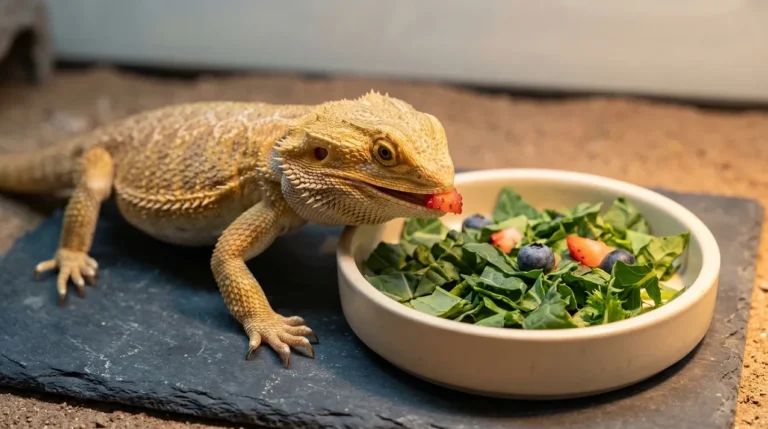
Day three, offer a small portion of leafy greens. Collard, dandelion, or rocket. No insects yet. Watch for a bowel movement before progressing.
Day five, introduce a few small soft-bodied insects. Phoenix worms or small dubia roaches work better than crickets at this stage. Keep portions to half what they would normally eat.
By day seven to ten, normal feeding can resume if bowel movements have returned and the dragon is alert. The standard feeding schedule takes over from here.
When to Call the Vet
Most fasting does not need veterinary attention. Some absolutely does. These are the lines that mean today, not tomorrow.
- Any dragon under six months that has refused food for more than 48 hours
- A juvenile under one year refusing food for more than four days
- Any dragon at any age that has lost 10 percent of body weight
- Sunken eyes, persistent skin tenting, or stringy saliva
- Visible weight loss combined with lethargy or weakness
- Any swelling, discharge, wheezing, or change in beard colour alongside refusal
- Failure to drink water for more than five days at any age
- A previously brumating dragon now over four months with no waking signs
- Liquid, bloody, or undigested stool when bowel movements eventually resume
A reptile-experienced vet is not the same as a standard small animal vet. The VCA Animal Hospitals directory helps locate exotics-experienced clinics when your usual vet does not handle reptiles confidently.
Frequently Asked Questions
Can a bearded dragon really go three months without food?
A healthy adult in brumation can. A healthy adult outside of brumation should not. Three months of fasting in a non-brumating dragon almost always points to chronic illness, severe husbandry failure, or both.
Should I be worried if my adult skips one or two meals?
No. Adult bearded dragons regularly skip individual feedings without any underlying problem. Worry kicks in when refusal extends past a week, when weight drops, or when other symptoms appear alongside the appetite change.
How long can a baby bearded dragon go without eating?
Twenty-four to forty-eight hours at the absolute maximum before veterinary advice is needed. Babies have no fat reserves and cannot afford to fast. Any baby refusing food past two days needs a husbandry review and a vet call.
Will a hunger strike force my dragon to eat better food?
Only with healthy adults that have visible fat reserves. The strategy works for picky eaters refusing greens, but never use it on juveniles, recovering dragons, or any dragon already losing weight. The fast assumes the dragon can afford to wait.
How do I know if my fasting dragon is dehydrated?
Check for skin that stays tented when gently pinched, sunken eyes, stringy saliva, or wrinkled papery skin. Dehydration shows up faster than starvation and causes more damage. Soak the dragon in shallow lukewarm water and offer drips from a syringe at the mouth corner.
What to Do Today
The next steps below apply to every owner asking how long bearded dragons can go without eating. Work through them in order before making any decision about a vet visit.
- Weigh the dragon in grams first thing tomorrow morning. Write the number down. This is your baseline.
- Check basking surface temperature with an infrared gun. Adults need 100°F to 110°F, juveniles 105°F to 115°F.
- Check the date your UVB tube was installed. If it is over 12 months old, replace it this week.
- Offer fresh water by dripper at the snout and soak the dragon in lukewarm shallow water for 15 minutes.
- Check the four body condition spots: tail base, hips, spine, skull. Take a side-on photo for reference next week.
- Note the date food refusal started. Set a calendar reminder to weigh again in seven days.
- If the dragon is under six months and has not eaten in 48 hours, or any age has lost 10 percent of body weight, call a reptile vet today.
Written by
Sarah ArdleySarah has kept bearded dragons for over ten years. She founded Beardie Husbandry after discovering that most mainstream care advice — including what she followed with her first dragon — was doing more harm than good. Every article on this site is grounded in veterinary research and real keeper experience.