How Long Can You Leave a Bearded Dragon Alone
A healthy adult bearded dragon can sit in its enclosure for a day or two with nobody home, and most handle it without a fuss. The real question is not whether your dragon can cope with the quiet.
It is whether the heat lamp, the UVB, and the thermostat will still be running when you walk back through the door. That is what decides how long you can safely leave a bearded dragon alone, far more than the dragon itself.
Adults are solitary by nature and do not get lonely the way a dog left alone would. A short absence is a husbandry problem, not an emotional one. Get the setup right and a weekend away is rarely an issue.
How Long You Can Leave Each Age Alone
Age is the single biggest factor in how long you can leave a bearded dragon alone. A baby burns through energy fast and has almost no fat reserve. An adult carries fat in its tail and can ride out a quiet weekend with no real harm.
| Age | Max time alone | Why |
|---|---|---|
| Baby (0–4 months) | Daytime hours only | Needs feeding 2–3 times daily, no fat reserve |
| Juvenile (4–18 months) | 1 day | Daily food, still growing fast |
| Healthy adult (18+ months) | 2 days, 3 at a push | Eats every other day, stable fat stores |
| Senior or unwell | Same day only | Less resilient, needs close monitoring |
Babies and Juveniles Need Daily Care
A baby bearded dragon eats two or three times a day and cannot skip meals the way an adult can. Leaving one overnight without food can set back its growth within days.
Juveniles are hardier but still need feeding daily. One full day alone is the sensible ceiling. For anything longer, get someone in to feed them.
Adults Are Fine for Two Days
A healthy adult over 18 months is the easy case. It can comfortably go two days alone, and three at a stretch, as long as the enclosure holds temperature and the dragon went in well fed.
Adults can go without food far longer than most owners expect, so a skipped meal or two over a weekend does nothing. Hydration and heat are what matter.
Seniors, Sick, or Gravid Dragons
An older dragon, one recovering from illness, or a female carrying eggs is a different story. These dragons have less in reserve and can decline fast.
If your dragon is unwell, or you have spotted any worrying symptom, do not leave it unattended. Sort the health issue first, then travel.
The Real Risk Is Equipment, Not Loneliness
Here is what almost every guide skips. When you leave a bearded dragon alone, the thing most likely to harm it is not boredom or a missed meal. It is a piece of kit failing with nobody there to catch it.
A bulb blows. A thermostat sticks on and cooks the basking spot, or the mains trips and leaves the enclosure cold. Any one of these can turn a routine weekend into an emergency.
Put Your Lamps on a Timer
Every heat and UVB lamp should run on a timer so the day and night cycle continues whether you are home or not. Set it for a 12-hour photoperiod and keep the UVB off overnight.
Timers are cheap and they remove the most common failure point, which is a forgotten light. This protects the dragon far more reliably than any amount of extra food.
A Thermostat Is Your Failsafe
A timer controls when the heat comes on. A thermostat controls how hot it gets. Running your basking bulb through a reliable thermostat means a stuck-on lamp cannot roast the enclosure while you are out.
A smart plug with temperature alerts goes one step further. It pings your phone if the warm side drifts out of range, so you can call a neighbour before the heat goes out for good.
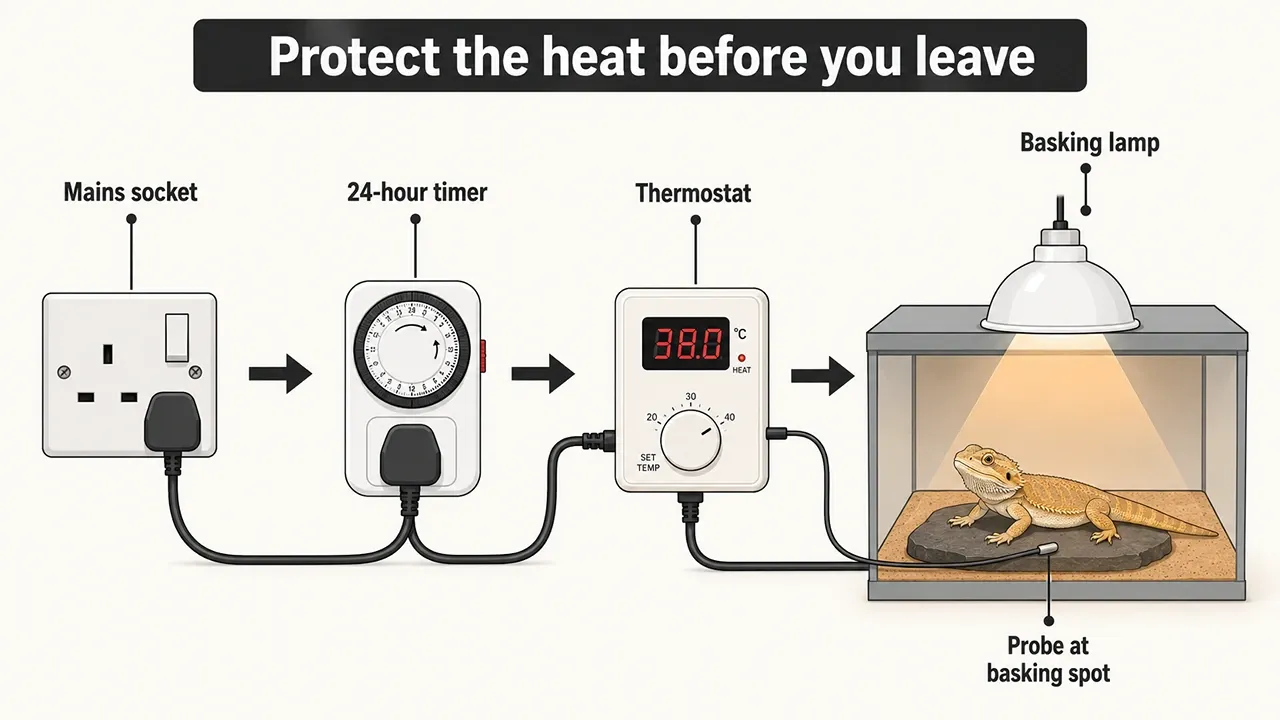
Set the gradient properly before you go. The basking surface should read 95–105°F (35–40°C) for an adult, with the cool end sitting around 75–85°F so the dragon can move off the heat when it needs to.
Never Leave Loose Insects in the Tank
Plenty of advice tells you to tip extra crickets or worms into the enclosure before a trip. Skip that. Loose feeders do not sit politely waiting to be eaten.
Crickets and locusts will bite a sleeping or basking dragon, usually at the toes and eyelids. Mealworms and superworms burrow into substrate or chew at soft skin. A stationary dragon is an easy target.
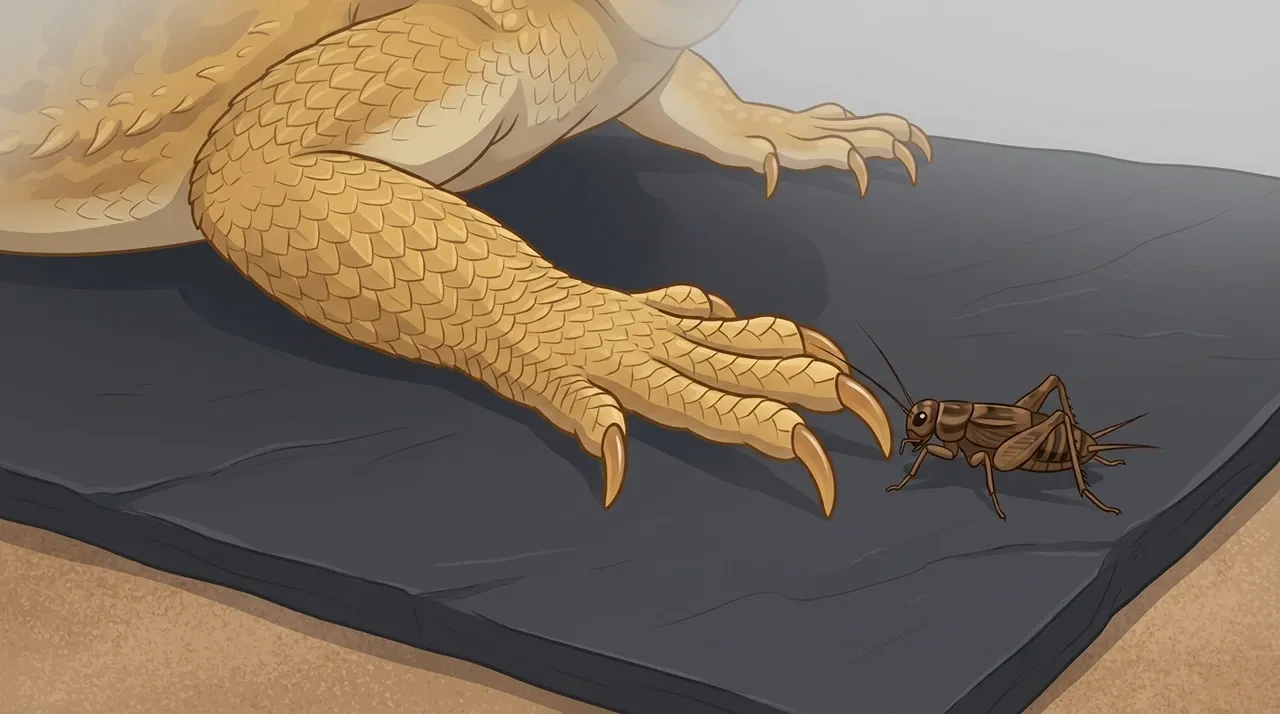
Uneaten salad is no better. Greens wilt and rot within hours under basking heat, fouling the enclosure and breeding bacteria. Feed a good meal the morning you leave, then take the bowls out.
Automatic feeders that dispense live insects are unreliable and not worth trusting with a living animal. There is no safe way to free-feed a beardie for days. If it needs feeding, a person needs to do it.
A Water Bowl Will Not Hydrate Them
Most bearded dragons ignore standing water. They come from arid country and take in moisture from food, not from a dish. A full bowl is reassurance for you, not hydration for them.
The better move is to hydrate the dragon before you go. A long soak the night before lets it drink and take up water through the vent, topping up its reserves for the days ahead.
Give your dragon a proper soak in shallow warm water for 15–20 minutes, then a watery meal of greens. Learn the early signs of dehydration so you can spot trouble the moment you get back.
When Not to Leave Your Dragon Alone
Some situations mean you should not leave a bearded dragon alone at all. If any of these apply, delay the trip or arrange daily care, no matter how short the absence.
- The dragon shows any symptom of illness, from runny stool to laboured breathing
- It is mid-shed and struggling, or has stuck shed on the toes or tail tip
- A female is gravid and may need to lay while you are gone
- The dragon is a baby, or recently rehomed and not yet settled in
- It is showing early signs of brumation and you cannot watch the slow drop in activity
Brumation is the tricky one. A truly brumating adult needs very little, but a dragon that is actually sick can look identical. Do not gamble on that call from a hotel room.
Trips Longer Than Three Days
Past three days, leaving a bearded dragon alone stops being a setup question and becomes a staffing one. Someone has to physically check the enclosure, feed, and confirm the kit is still running.
You have three options, in rough order of preference for most dragons.
- A reptile-savvy sitter who comes to your home, so the dragon stays in its own enclosure with no travel stress.
- A trusted friend or neighbour you have walked through the routine in person, ideally with written instructions left out.
- A specialist reptile boarding facility, useful for very long trips but more stressful, with a small infection risk from other animals.
Why a Sitter Beats Boarding
A dragon left in its own enclosure keeps its temperatures, its hides, and its routine. Move it to a strange facility and it loses all three at once, often going off food from the stress.
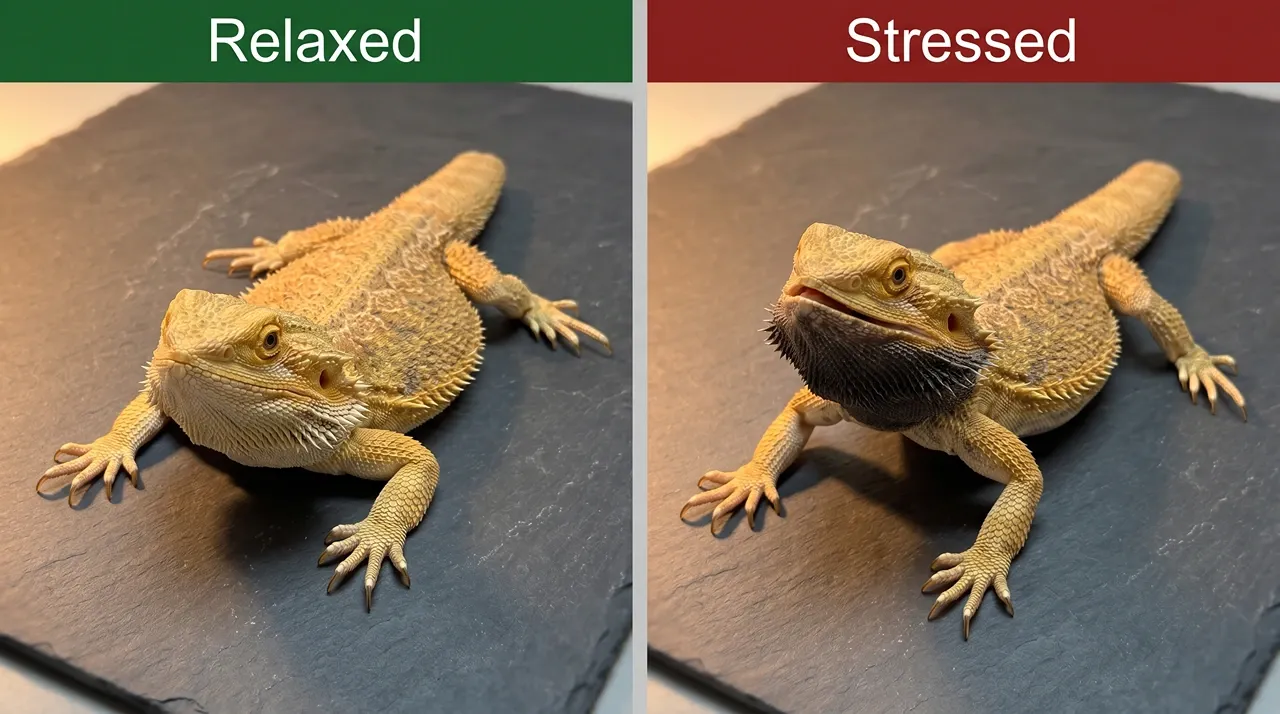
For trips of a week or more, the calmest option is sometimes taking them with you, provided you can recreate heat and UVB at the other end. It is not always practical, but for some keepers it beats any sitter.
Frequently Asked Questions
Can I leave a bearded dragon alone for a week?
Not without someone checking in. A full week with no human care risks dehydration, equipment failure, and a stressed, hungry dragon. Arrange a sitter to visit every day or two.
Is it safe to leave a bearded dragon alone overnight?
For a healthy adult, yes. One night with timed lighting and stable heat is no problem at all. Babies and juveniles should not be left overnight without feeding.
Do bearded dragons get lonely when left alone?
No. They are solitary animals and do not crave company. A quiet enclosure does not distress them the way isolation affects a social pet like a dog.
Should I leave the lights on while I am away?
Keep them on a timer, never on constantly. A 12-hour day and night cycle protects sleep and stops the basking spot running hot around the clock.
What if the power goes out while I am gone?
A smart plug with temperature alerts warns you early. Keep a neighbour briefed and have a backup heat plan, because a cold enclosure for days is dangerous.
What to Do Before You Leave
Run through this list the day you head out. It covers the failure points that actually cause problems when you leave a bearded dragon alone.
- Feed a full, age-appropriate meal, then remove all bowls and loose insects
- Give a 15–20 minute soak the night before to top up hydration
- Confirm every lamp is on a working timer set to a 12-hour cycle
- Check basking and cool-end temperatures with a probe, not a stick-on dial
- Run the heat source through a thermostat and test that it cycles off
- Brief a neighbour and leave your number plus a reptile vet contact
- Do a quick health check and cancel the trip if anything looks off
Written by
Sarah ArdleySarah has kept bearded dragons for over ten years. She founded Beardie Husbandry after discovering that most mainstream care advice — including what she followed with her first dragon — was doing more harm than good. Every article on this site is grounded in veterinary research and real keeper experience.