Can Bearded Dragons Eat Pinky Mice? What Owners Need to Know
A pinky looks like the ultimate treat: soft, protein-packed, and most dragons hit it the second it twitches on the tongs. The instinct to offer one is reasonable. The execution is where keepers go wrong.
So can bearded dragons eat pinky mice? Yes, an adult dragon can eat one safely, but only as a rare treat and only under specific conditions. Fed wrong, or fed to the wrong dragon, a pinky causes more harm than any insect ever will.
The risk is not the mouse itself. It is the fat load, the inverted calcium ratio, and the impaction danger that come with feeding whole prey to an animal built mostly for insects and greens.
This matters because a single bad habit here compounds quietly. The damage from regular pinky feeding often shows up years later as obesity, gout, or kidney strain, long after the keeper has forgotten the pattern that caused it.
Can Bearded Dragons Eat Pinky Mice Safely?
An adult bearded dragon over 18 months can eat one pinky roughly once a month with no harm. That is the honest ceiling. Anything more frequent shifts a treat into a health liability.
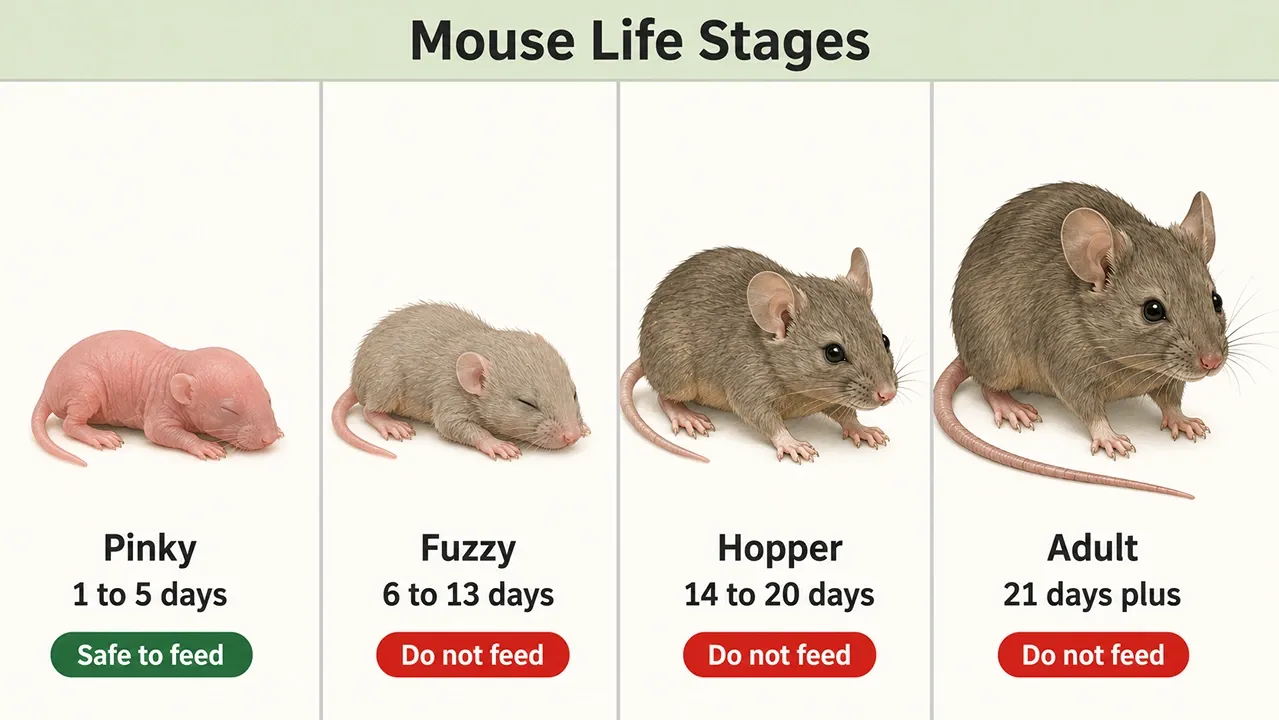
Pinkies are newborn mice, one to five days old, hairless, with soft uncalcified bones. That softness is the entire reason they are the only mouse stage a dragon should ever eat.
The appeal is real for a few specific situations. A pinky delivers concentrated fat and protein, which suits a female recovering after laying eggs or a dragon that has dropped weight through illness.
For a healthy adult on a balanced diet, though, a pinky adds almost nothing that a well gut-loaded feeder insect does not already provide more safely. The treat is optional, not nutritional.
Pro tip: Cut back on insects for two or three days around a pinky feeding. One mouse carries enough fat to throw off a week of careful portioning if you do not account for it.
Pinky, Fuzzy, Hopper: What the Difference Means
Mouse feeders are sold by age, and the age decides whether the mouse is safe or dangerous. Getting this wrong is the impaction risk in a nutshell.
| Stage | Age | Description | Safe to feed? |
|---|---|---|---|
| Pinky | 1 to 5 days | Hairless, pink, soft bones | Yes, occasionally |
| Fuzzy | 6 to 13 days | Light fur, hardening bones | No |
| Hopper | 14 to 20 days | Full fur, mobile | No |
| Adult | 21 days plus | Fur, claws, dense skeleton | Never |
The moment fur appears, the mouse is off the menu. Fur and hardened bone are the two things a dragon’s gut struggles to pass, and a fuzzy has both starting to form.
If you buy frozen and the mouse shows any fuzz at all, set it aside. A mouse that is even slightly furred belongs in a different feeding routine, not your dragon’s.
Why Pinkies Are a Poor Calcium Source
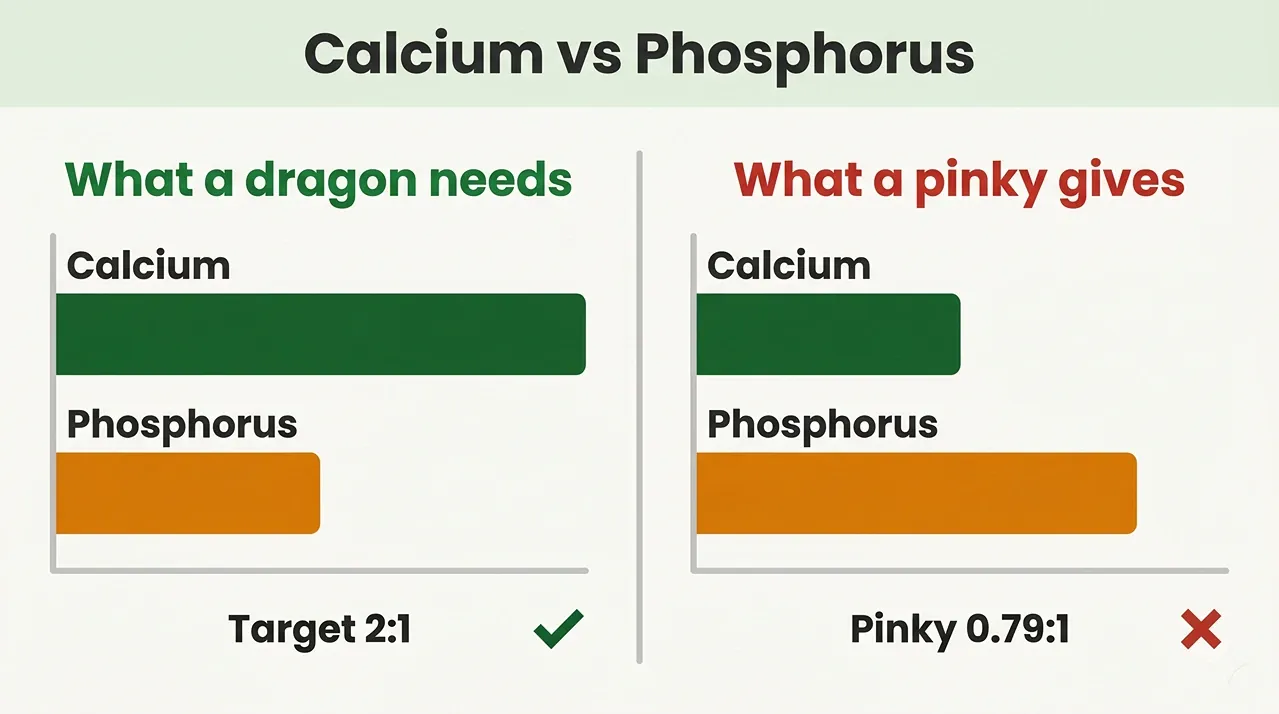
Here is the fact most owners never hear: a pinky has an inverted calcium to phosphorus ratio. It actively works against the balance a dragon needs.
A dragon’s diet should run at roughly 2:1 calcium to phosphorus. According to veterinary nutrition data published through dvm360 veterinary proceedings, frozen pinkies sit near 0.79:1, meaning more phosphorus than calcium.
Phosphorus binds calcium and blocks its absorption. A food heavier in phosphorus than calcium does not just lack calcium; it pulls against the calcium already in the system.
For a dragon already walking the line on calcium, this is how trouble starts. Repeated phosphorus-heavy meals are one of the quiet drivers behind metabolic bone disease, the deformity-causing condition every keeper fears.
The uncalcified skeleton is exactly why a pinky is soft enough to feed in the first place. The same trait that makes it safe to swallow makes it nearly useless for bone health.
What This Means for a Healthy Dragon
A monthly pinky will not cause MBD on its own. The danger is pattern, not single meals. A dragon getting proper UVB, dusted insects, and varied greens absorbs one phosphorus-heavy treat without issue.
The problem is the keeper who feeds pinkies weekly because the dragon loves them. That frequency tilts the long-term mineral balance in the wrong direction with no visible warning until damage is done.
The Real Risks of Feeding Pinky Mice
Three risks matter here, and all three are manageable once you know them. None should stop an informed keeper from offering the occasional pinky to a suitable dragon.
Impaction From Bone and Fur
Impaction is the headline danger, though a true pinky carries low risk because its bones have not calcified. The risk climbs sharply the moment you stray into fuzzy territory.
A dragon that is slightly dehydrated or kept too cool digests prey slowly, and slow digestion is where blockages form. Warmth and hydration do most of the work in preventing a problem here.
Warning: A dragon that has eaten a pinky and then stops passing stool for several days, strains without result, or goes limp and unresponsive needs a reptile vet, not a wait-and-see approach. Straining with no output is the red flag.
Obesity and Gout From Too Much
Pinkies are fat-dense, far more than any staple insect. A dragon fed them regularly puts on fat it cannot easily shift, and reptile obesity is hard to reverse once established.
The protein load brings a second issue. Excess protein over time raises uric acid, which can crystallise into gout, a painful joint condition that is effectively irreversible in reptiles.
Zoonotic Disease and Your Own Safety
This risk is to you, not your dragon. Frozen feeder rodents have been linked to Salmonella outbreaks in people who handle them, and the bacteria transfers through contact, not just consumption.
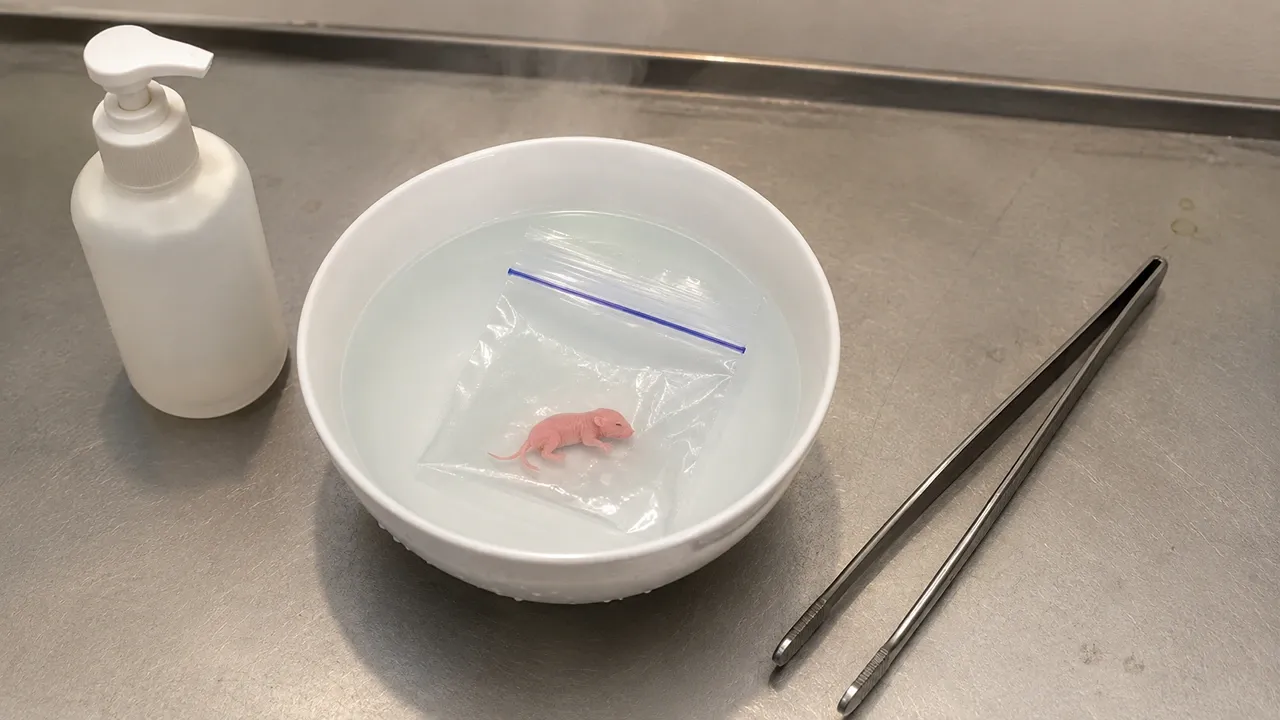
Handle frozen mice as raw meat. Thaw them in a sealed bag, never in food prep areas, and wash your hands and any tongs thoroughly afterwards. Keep the whole process away from kitchen surfaces.
Which Dragons Should Never Eat Pinkies
Some dragons should be kept away from pinkies entirely, no exceptions for treats or variety. The rule here is firmer than the general once-a-month guidance.
- Juveniles and babies: A growing dragon needs a tight calcium balance for bone development, and a phosphorus-heavy pinky undermines exactly that. Stick to dusted insects.
- Already overweight dragons: Adding the fattiest food available to a dragon that already needs to slim down makes a hard problem harder.
- Dragons with any history of MBD: A skeleton already compromised cannot afford a food that blocks calcium absorption.
- Dragons recovering from impaction: Whole prey is the last thing a recently blocked gut should be processing.
For everyone in that list, the answer is not “smaller pinky” or “less often.” It is no pinkies. The downside outweighs any treat value by a wide margin.
How to Feed a Pinky Mouse the Right Way
If your dragon qualifies, the method matters as much as the timing. Done properly, a pinky is a low-stress treat that takes five minutes.
- Buy frozen, never live. A live pinky offers no benefit and carries needless cruelty and bite risk. Frozen feeders from a reptile supplier are humane and parasite-controlled.
- Thaw fully in warm water. Seal the pinky in a bag, submerge in warm water for ten to fifteen minutes, and confirm it is warm all the way through. A cold centre slows digestion.
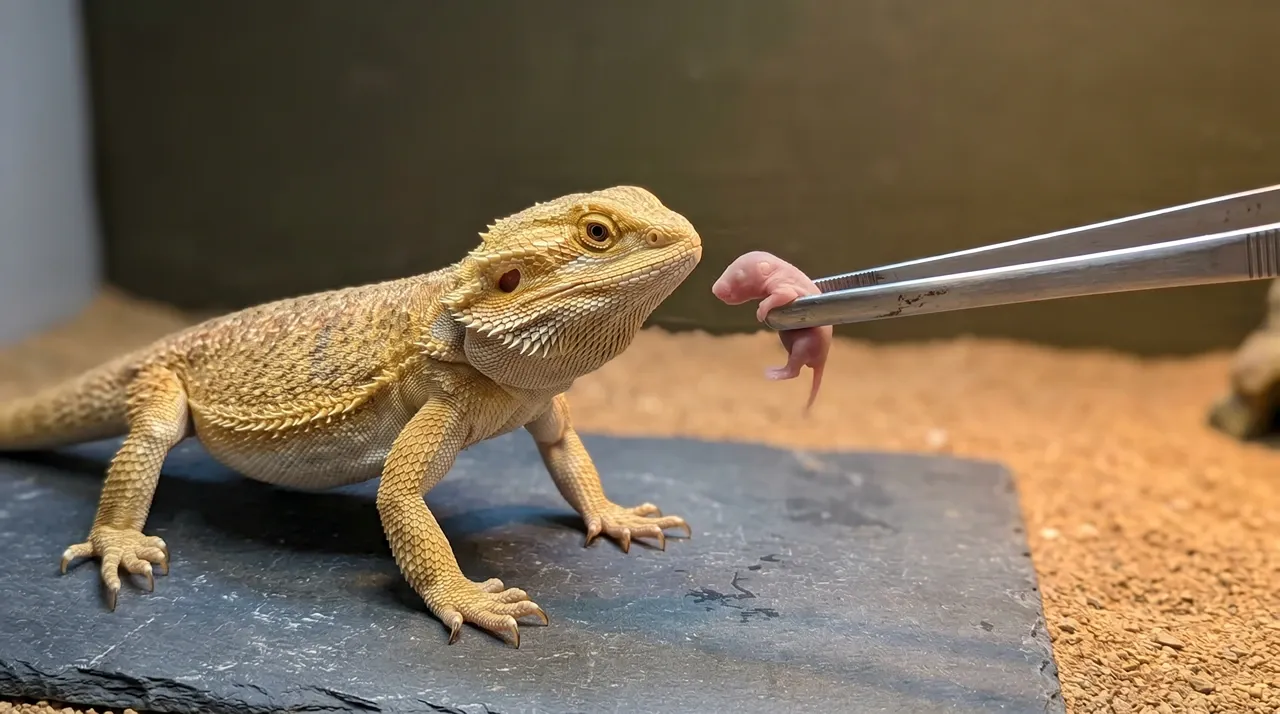
- Offer on tongs, never by hand. Wiggle it gently to trigger the feeding response. Hand-feeding risks an accidental bite and teaches your dragon to associate fingers with food.
- Feed whole, do not cut. A pinky is small enough to swallow whole, and that is how a dragon would take prey naturally. Cutting it adds mess without benefit.
- Watch digestion for two days. Normal stool within 48 hours means all is well. Adjust nothing else in the diet until you have seen it pass.
Live feeding deserves a firm no. A live mouse, even a pinky, can bite, and a cornered rodent will defend itself against a reptile that has lost its wild hunting instincts in captivity.
Frozen Versus Fresh-Killed
Frozen is the practical choice for almost every keeper. It stores easily, comes pre-killed humanely, and reduces parasite risk compared with fresh prey of unknown origin.
Whichever you use, never refreeze a thawed pinky. Thaw only what you intend to feed, and discard anything your dragon refuses rather than returning it to the freezer.
Better Alternatives to Pinky Mice
If the goal is variety or a protein boost, several options beat a pinky on safety while still giving your dragon something different. Most keepers reach for pinkies out of habit, not necessity.
Dubia roaches and black soldier fly larvae deliver high protein with a far better calcium profile, especially when properly prepared. Setting up a self-sustaining roach colony also removes the recurring cost of buying feeders.
For a recovering or underweight dragon, a vet-guided plan usually beats reaching for mice. The underlying cause of the weight loss matters more than the calories, and the fat boost a pinky provides can be matched more safely through insects alone.
Common Questions About Feeding Pinkies
Can baby bearded dragons eat pinky mice?
No. Baby and juvenile dragons are building bone at their fastest rate and need a tightly controlled calcium to phosphorus ratio. A pinky’s inverted ratio actively undermines that, and the fat load is completely unsuitable for a small growing animal. Dusted insects are the right call until 18 months.
How often can a bearded dragon eat a pinky mouse?
Once a month is the maximum for a healthy adult. More frequent than that and the fat accumulation and phosphorus load start working against the dragon’s long-term health. Some keepers go longer between feedings with no issue at all.
Can bearded dragons eat fuzzy mice instead of pinkies?
No. A fuzzy already has fur forming and hardening bone, both of which a dragon’s gut cannot process safely. The impaction risk is real from the fuzzy stage onward. Only the hairless pinky stage is appropriate, and only for adults.
Do pinkies give bearded dragons calcium?
Very little, and what calcium they contain is offset by higher phosphorus. A pinky sits near a 0.79:1 calcium to phosphorus ratio, which is inverted compared to what a dragon needs. They are not a calcium source and should not be used as one.
What if my dragon won’t eat a thawed pinky?
Discard it. Never refreeze a thawed feeder or leave it in the enclosure hoping the dragon comes back to it. Wiggling the pinky on tongs usually triggers a feeding response, but if the dragon shows no interest, that feeding is over.
Things to Do Today
- Confirm your dragon is over 18 months, a healthy weight, and free of any MBD history before offering a single pinky.
- Check your frozen feeders for any trace of fur. If you see fuzz, it is a fuzzy, not a pinky, and it goes back in the freezer for something else.
- Set a limit of one pinky per month maximum, and write it down so a treat does not quietly become a habit.
- Reduce insects for two to three days around any pinky feeding to keep the weekly fat load in check.
- Thaw in a sealed bag away from food prep surfaces, and wash hands and tongs as you would after handling raw meat.
- Watch for normal stool within 48 hours, and call a reptile vet if your dragon strains without passing anything.
Written by
Sarah ArdleySarah has kept bearded dragons for over ten years. She founded Beardie Husbandry after discovering that most mainstream care advice — including what she followed with her first dragon — was doing more harm than good. Every article on this site is grounded in veterinary research and real keeper experience.