Why Is My Bearded Dragon Rubbing Its Nose on the Glass
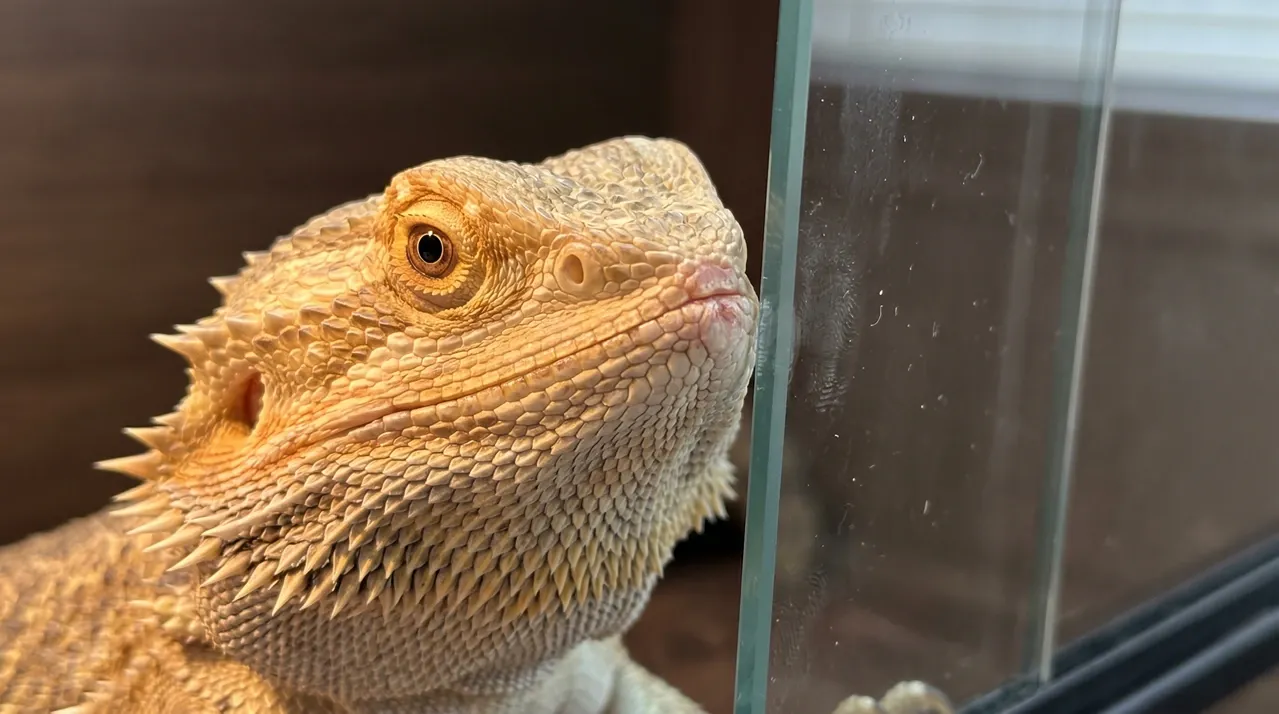
A bearded dragon rubbing its nose on the glass is one of those behaviours that starts innocuously and turns into a real injury faster than most owners expect. The snout scales are thin, the glass is unforgiving, and a dragon that does this persistently can have a raw, bleeding rostrum within a day or two. It is not always a crisis, but it is never something to watch and wait on indefinitely.
The behaviour has a handful of distinct causes, and the fix depends almost entirely on which one is driving it. Getting that wrong means the rubbing continues regardless of what you change, and the nose gets worse while you cycle through adjustments that are not addressing the actual problem.
Why Bearded Dragons Rub Their Noses on Glass
Glass is invisible to a bearded dragon. They process the world through movement, scent, and heat; a transparent barrier simply does not register the way a solid wall would. When a dragon walks toward the glass and bumps into nothing they can make sense of, the instinct is to push harder, explore the boundary, and keep going. That is the mechanical foundation of almost every case of nose rubbing.
What varies is the motivation behind it. The surface is just where the behaviour shows up. The trigger is what you need to identify.
The Dragon Is Seeing Its Own Reflection
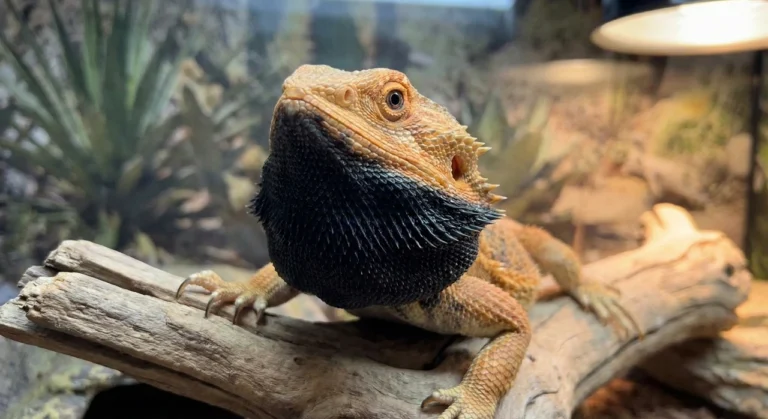
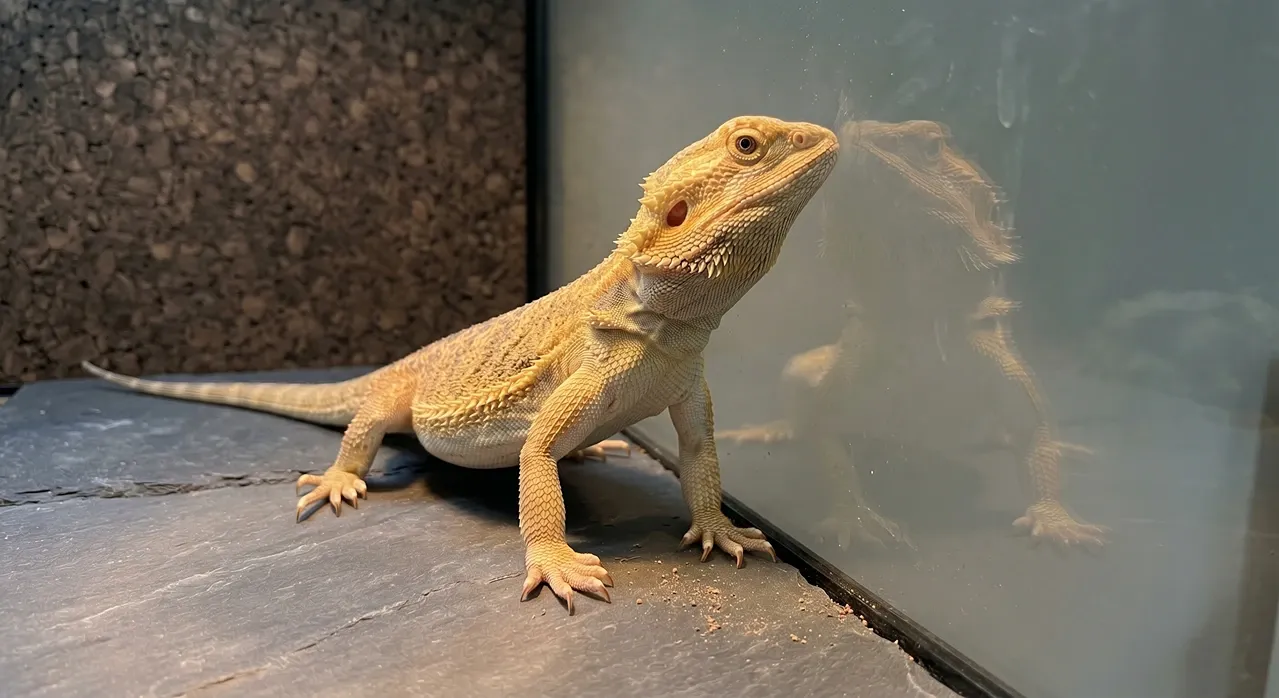
This is the most underdiagnosed trigger in keeper communities. A dragon that sees movement in the glass, its own reflection shifting as it moves, can read that as a rival male or an intruder. The response is to approach, display, and attempt to drive the perceived threat away. Nose rubbing during this is almost incidental; the dragon is focused on the reflection, not the glass itself.
It tends to be worse in rooms with a single strong light source behind the keeper, in the evening when ambient room light drops and enclosure lighting makes the glass more reflective, and in dragons kept near mirrors or other reflective surfaces. Covering the lower third of the glass on three sides with black card or backing film often stops this trigger immediately.
Enclosure Stress and the Wrong Setup
A dragon that is too hot, too cold, running on inadequate UVB, or living in an enclosure that is too small will glass-surf and nose-rub as a frustration response. The glass surfing behaviour and nose rubbing often appear together in these cases; the dragon is not targeting the glass specifically, it is trying to escape an environment that is making it uncomfortable.
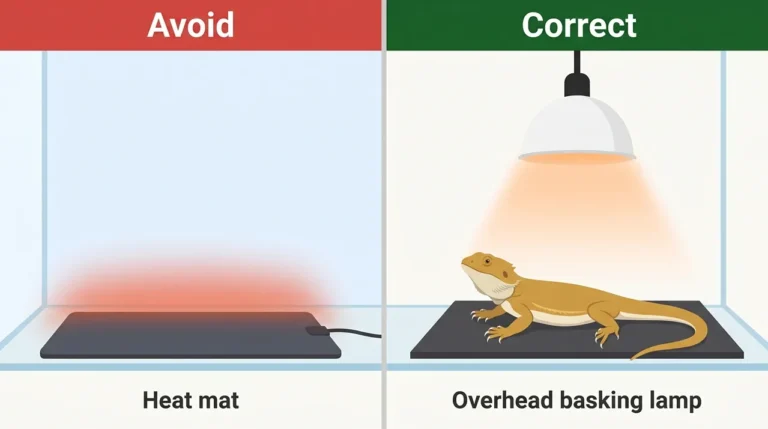
Check the basking spot first. A surface temperature of 100–110°F at the hottest point, a cool side sitting around 80–85°F, and a UVB tube covering at least two-thirds of the enclosure length covers the most common environmental triggers. A 40-gallon tank housing an adult beardie is too small; enclosure size requirements are frequently underestimated, and a cramped dragon is a restless dragon.
The Dragon Wants Out
A beardie that has had regular out-of-enclosure time knows exactly where the exit is. Once they associate the front of the glass with freedom, nose rubbing becomes a request, sometimes a fairly determined one. This is particularly common in animals that have been handled from a young age and are comfortable with room time.
It is worth distinguishing this from stress-driven rubbing: a dragon that wants out will typically calm down immediately once removed from the enclosure, bask normally once returned, and show no other signs of discomfort. A stressed or unwell dragon will not settle that easily.
New Enclosure Disorientation
Dragons moved into a new setup, whether a new tank or a familiar tank rearranged, often nose-rub in the first few days as they map the boundaries. They are not stressed in the clinical sense; they genuinely do not yet understand the geometry of the space. New environment adjustment typically takes three to seven days, and the rubbing usually stops on its own once the dragon has explored every surface and learned where the glass is.
If the rubbing is still happening after a week in the new setup, environmental triggers are the more likely explanation and warrant a systematic check.
Pre-Shed Itching
A dragon in early shed will sometimes rub its face on any available surface: glass, branches, décor. The tightening skin on the snout and around the eyes creates irritation that drives this. This kind of rubbing is usually brief, scattered across multiple surfaces rather than focused on the glass alone, and resolves once the shed progresses. The shedding process around the face is one of the more uncomfortable stages, and a 20-minute warm bath can take the edge off the irritation significantly.
Female Egg-Laying Drive
A sexually mature female carrying unfertilised eggs will often become restless, dig at every surface, and nose-rub persistently as the egg-laying urge intensifies. This is one of the most commonly missed triggers. The owner adjusts temperatures and lighting, the rubbing continues, and nobody thinks to check whether the dragon is gravid.
If your female is over 18 months old and the restlessness is paired with digging, a rounder belly, or reduced appetite, she may need a lay box. Egg-laying in females without a male is entirely normal and happens regularly. Providing a deep box of moist topsoil or play sand usually resolves the behaviour within days once she has laid.
Something in the Room Is Triggering a Response
Cats, dogs, rabbits, and other pets moving in the keeper’s line of sight, visible to the dragon through the glass, can provoke repeated attempts to respond or escape. Other stimuli include televisions positioned in the dragon’s eyeline, reflective objects near the tank, and even the keeper’s own movements in certain lighting conditions. A dragon that rubs only when specific things happen in the room is telling you something specific about its environment.
How to Tell Which Trigger Is Driving It
| Observation | Most Likely Trigger | First Action |
|---|---|---|
| Rubbing on one side of glass, puffs beard at reflection | Reflection/rival response | Cover sides of glass with black backing |
| Full glass-surfing with nose contact, restless all day | Enclosure stress or wrong temps | Audit basking temp, UVB coverage, enclosure size |
| Calms immediately when removed, no other symptoms | Wants out | Increase out-of-enclosure time, add enrichment |
| Rubbing on glass AND branches AND décor | Pre-shed irritation | Warm bath 20 min, monitor shed progress |
| Female, digging, rounder belly, reduced appetite | Egg-laying drive | Provide lay box immediately |
| Started within days of new setup | Disorientation | Monitor; usually self-resolves within a week |
| Triggered by pet or TV movement in the room | External stimulus | Reposition tank or block sightline |
What Happens to the Nose If Rubbing Continues
The snout scales on a bearded dragon are not designed for repeated friction against a hard surface. Persistent rubbing causes progressive damage that follows a predictable pattern: the scales go dull first, then the tips of the rostral scales start to look worn or flattened, then the skin beneath breaks down and raw tissue is exposed. At that point, secondary infection becomes a real risk.
Chronic rubbers, dragons that do this across weeks or months without the cause being addressed, can develop permanent scar tissue at the tip of the snout. This does not always cause functional problems, but the cosmetic change is irreversible. There are documented cases of repeated trauma to the rostral area causing bone involvement, though this represents the severe end of an untreated problem rather than the typical outcome.
The Merck Veterinary Manual notes that traumatic reptile wounds frequently progress to abscess if not cleaned promptly, with untreated soft-tissue injuries developing fibrous capsules that require surgical intervention. For a nose wound, catching it early is a practical priority, not a scare point.
How to Treat a Nose Wound
If the snout is already red, raw, or broken, the cause needs addressing first or the wound will not heal. Treating the surface while the dragon continues rubbing is a losing battle.
Cleaning the Wound
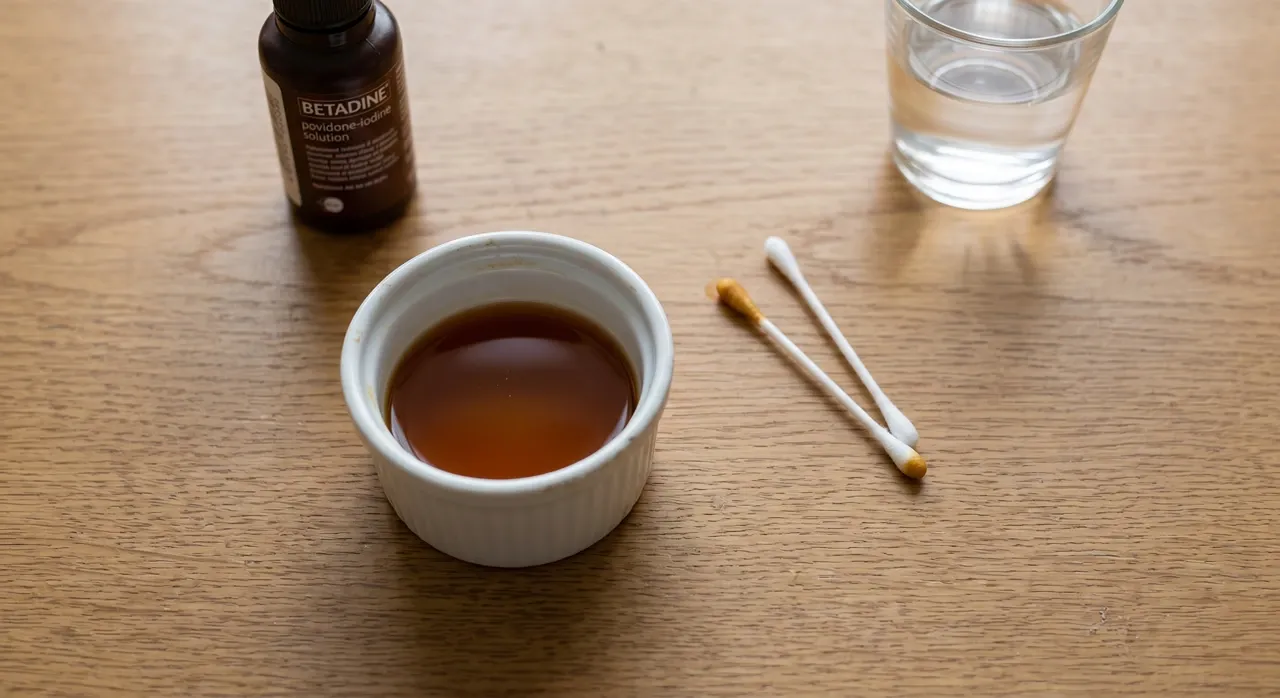
Diluted povidone-iodine (betadine) at a ratio of 1:10 with water is a safe and effective cleanser for snout abrasions; the solution should look like weak tea. Apply gently with a cotton bud, remove any debris, and allow it to dry before the dragon returns to the enclosure. Do this once or twice daily while the wound is open.
Applying Antibiotic Ointment
A thin layer of plain antibiotic ointment (such as Neosporin or Polysporin) helps prevent bacterial colonisation in an open wound. Use the plain formulation only; versions containing a pain-relief ingredient include compounds that can be toxic to reptiles.
When to See a Vet
Home treatment covers minor abrasions. A wound that has not improved within five to seven days of consistent treatment and cause removal, a wound showing swelling or discharge, or any sign of the dragon becoming lethargic or losing appetite warrants a vet visit. The reptile vet search process is worth doing before you need one urgently; general practice vets may not have reptile-specific experience.
Stopping the Behaviour at the Source
Cover the Lower Glass Panels
Black vinyl backing film or plain black card taped to the outside of the lower third of the glass on three sides removes most reflection triggers, reduces the dragon’s visual awareness of the room, and creates a more enclosed, secure feeling inside the enclosure. It costs almost nothing and solves a significant portion of bearded dragon nose rubbing cases without any other change.
Audit the Enclosure Environment
Use a digital thermometer with a probe to verify the basking surface temperature, not the ambient air temperature, which reads lower and gives a false sense of security. A proper temperature measurement means pointing a temperature gun directly at the basking slate or branch surface where the dragon actually rests. UVB tubes degrade before they stop glowing; if the tube is over 12 months old, replace it regardless of whether it looks functional.
Add Structure and Visual Depth
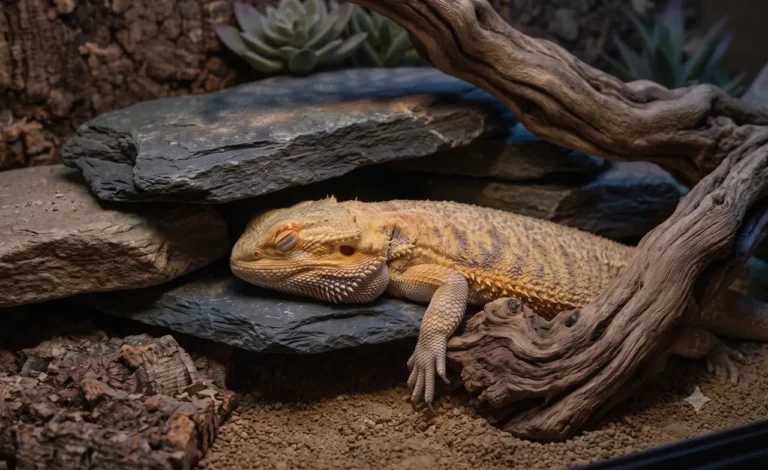
An enclosure that looks the same from every angle gives a dragon nowhere to settle mentally. Background décor on the rear and side panels, hides at both the warm and cool ends, and branches or platforms at different heights all reduce the blank-canvas effect that contributes to glass-surfing behaviour. Décor placement in safe vivarium decoration matters more than the specific items chosen.
Increase Out-of-Enclosure Time
A beardie that gets 30–60 minutes of supervised room time daily is far less likely to nose-rub from boredom or frustration. This is not just enrichment for the dragon’s sake; it directly reduces the motivation to push against enclosure boundaries. Out-of-tank enrichment also gives the dragon novel sensory input that the enclosure alone cannot provide.
Nose Rubbing in Baby and Juvenile Dragons
Younger dragons are more prone to glass contact simply because they move faster and have less spatial awareness of their enclosure boundaries. Baby beardies in a 40-gallon setup can cover the entire enclosure floor in seconds and hit the glass repeatedly without any of the behavioural drivers that apply to adults. Most juvenile nose rubbing resolves as the dragon slows down slightly and learns the enclosure geometry.
The exception is a baby in a setup that is too small for its energy levels. A 40-gallon tank is manageable for hatchlings under 10cm but becomes inadequate quickly. Baby beardie husbandry through the first six months requires close attention to enclosure space because this is the stage where rubbing habits, if left unaddressed, can become deeply ingrained patterns that persist into adulthood.
Common Questions About Bearded Dragon Nose Rubbing
Is nose rubbing always a sign of stress?
Not always. A dragon exploring a new enclosure, working through a pre-shed facial itch, or responding to a reflection is not necessarily stressed. Stress-driven rubbing tends to be persistent, paired with other signs like dark colouring, flattened posture, or reduced appetite. Occasional or brief contact with the glass in an otherwise settled dragon is not a cause for concern.
Can the snout heal on its own?
Minor abrasions with no broken skin will resolve without intervention once the cause is removed. Once the skin is broken, the wound needs cleaning and monitoring. Reptile wounds heal more slowly than mammalian wounds; a minor snout abrasion can take two to four weeks to fully close, and the dragon needs to stop rubbing during that entire period or the wound reopens repeatedly.
Will covering the glass sides make the enclosure too dark?
Only if you cover the front panel as well. Covering the back and two sides with black backing film has no practical effect on lighting inside the enclosure; UVB and basking lighting runs along the top, not through the sides. The backing actually makes the enclosure feel more secure for the dragon, which is the point.
My dragon only rubs at night. What does that mean?
Evening and nighttime rubbing is almost always a reflection trigger. As ambient room light drops and enclosure lighting remains on, the glass becomes more mirror-like from the dragon’s perspective. Covering the sides and back, or switching all enclosure lights off at night, removes the reflective effect entirely.
What to do right now:
- Check the snout for any broken or raw skin — treat immediately if present
- Cover the lower third of three glass panels with black backing or card
- Verify basking surface temperature with a temperature gun — target 100–110°F
- Check UVB tube age — replace if over 12 months regardless of visible output
- If female, check for egg-laying signs and provide a lay box if indicated
- Monitor for 48 hours — if the nose rubbing stops after covering the glass, the reflection was the cause; if it continues, run a full enclosure audit
Written by
Sarah ArdleySarah has kept bearded dragons for over ten years. She founded Beardie Husbandry after discovering that most mainstream care advice — including what she followed with her first dragon — was doing more harm than good. Every article on this site is grounded in veterinary research and real keeper experience.