Are Superworms Safe for Bearded Dragons
A bearded dragon will throw itself at a superworm with more enthusiasm than almost any other feeder. That eagerness is exactly why keepers second-guess them.
Superworms for bearded dragons sit in an awkward spot. They are safe enough that most adults eat them happily, yet fatty enough to cause real problems when they become a habit rather than a treat.
The short answer is yes, healthy adults can eat them. The longer answer involves fat content, the dragon’s age, and one persistent myth about worms biting their way out from the inside.
None of it is complicated once you know where the actual risks sit. Most of the fear online is aimed at the wrong thing.
Are Superworms Safe for Bearded Dragons or Not
Superworms (Zophobas morio) are the larvae of the darkling beetle, and they are perfectly safe for a healthy adult bearded dragon as an occasional feeder. The problems start when keepers treat them as a staple instead of a treat.
They run about 20% protein and anywhere from 14% to 18% fat. That fat figure is the real issue. It makes them rich, satisfying, and very easy to overfeed.
The other concern is the calcium-to-phosphorus ratio, which sits around 1:7. A dragon needs the opposite balance, with more calcium than phosphorus. Feed supers unbalanced over time and you tilt the body toward the conditions that drive poor calcium absorption and weak bones.
Pro tip: If your dragon is already overweight or has been eating mostly insects, hold off on superworms entirely until the diet is rebalanced. They are the wrong feeder for a dragon that needs to slim down.
Why the Fat Content Is the Real Problem
Most dragons in captivity are too fat, not too thin. Superworms make that worse faster than almost any other common feeder because of how rich they are.
A dragon does not burn energy the way a wild one would. There is no hunting across open ground and no seasonal scarcity. Calories that go in mostly stay in.
Two or three supers twice a week sit comfortably inside that budget. A daily handful does not. The weight creeps on slowly enough that many keepers miss it until the fat pads behind the eyes start to bulge and the tail base goes thick.
What Overfeeding Actually Looks Like
Slow fat gain and an acute blockage are two different problems, and keepers often confuse them. One builds over weeks. The other is an emergency.
Gradual overfeeding shows up as a rounder belly, fat bulging behind the eyes, and a dragon that gets choosy about greens because it is holding out for the rich stuff. Catching this early means simply cutting the supers and waiting.
An acute problem moves faster. A dragon that ate a large meal then goes still, strains without producing waste, or refuses everything for days may be dealing with a digestive blockage that needs a vet rather than patience.
Warning: A dragon that has not passed waste in several days after a large feeder meal, combined with lethargy or straining, is a same-day vet call. Do not wait it out.
Can a Superworm Bite Through the Gut
This is the fear that keeps people off superworms entirely, and it is mostly wrong. The story goes that a swallowed superworm survives long enough to chew through the gut wall from the inside. It does not happen.
Stomach acid kills the worm within seconds. A healthy adult crushes it with its jaws on the way down, and even an intact worm cannot survive the acidity of the digestive tract long enough to do anything.
The real bite risk is to the dragon’s mouth before swallowing, or to your fingers during feeding. Superworms have small but functional mandibles and they will nip.
How to Stop the Bite Risk
If the bite worries you, there are two simple fixes that work. Neither takes more than a moment.
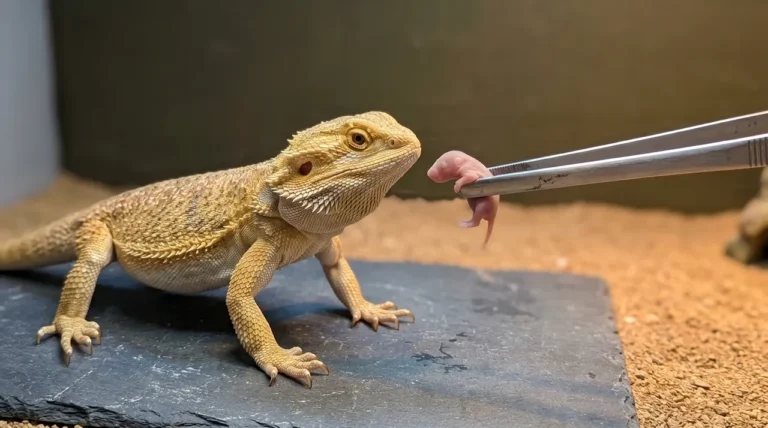
- Crush the head: a quick pinch behind the head with tweezers kills the worm instantly and removes any chance of a nip.
- Chill them briefly: ten minutes in the fridge slows the worm right down without killing it, making it sluggish and harmless to handle.
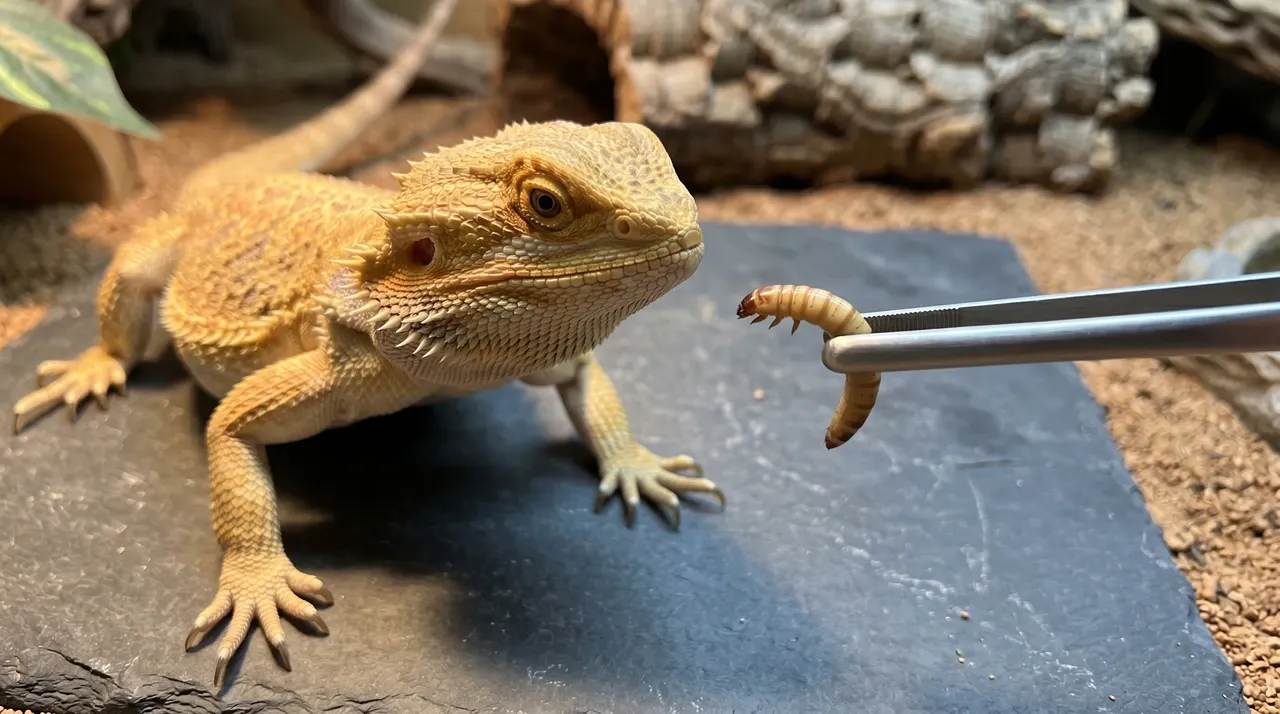
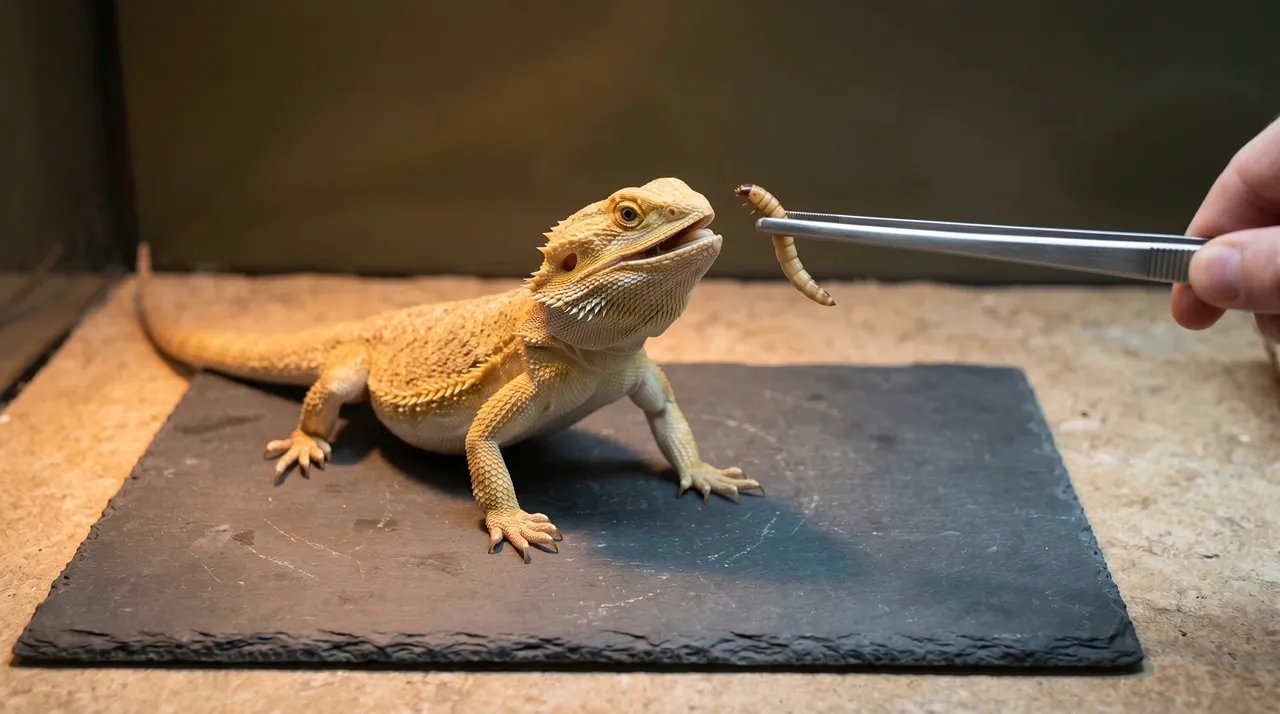
Tong feeding helps too. It keeps your fingers clear and lets you control exactly how many your dragon takes in a sitting.
Why Babies and Juveniles Should Wait
Adults handle superworms fine. Babies are a different story, and the answer there is a flat no.
A superworm runs close to two inches long. The feeding rule that matters is simple: nothing wider than the space between your dragon’s eyes. A baby’s gape and gut cannot deal with a feeder that size, and the thick exoskeleton raises the blockage risk sharply in a small digestive system.
There is also the chitin problem. Young dragons digest the tough outer shell poorly, and a baby’s appetite for protein means they will gorge on rich feeders if you let them. Stick to appropriately sized feeders like small crickets and dubia until the dragon is past twelve months and properly grown.
| Dragon age | Superworms safe? | Amount and frequency |
|---|---|---|
| 0 to 12 months | No | None. Too large and too fatty for growing dragons |
| 12 to 18 months | With caution | 2 to 3 worms, once a week, monitor closely |
| 18 months and older | Yes | 2 to 4 worms, once or twice a week as a treat |
| Overweight adult | No | Avoid until weight is back in range |
When Your Dragon Will Eat Nothing Else
This is the problem competitors skip, and it catches keepers off guard. A dragon that discovers superworms can go on what amounts to a hunger strike, turning its nose up at greens and other feeders while it holds out for the good stuff.
It happens because supers are rich and exciting in a way collard greens never will be. Your dragon is not being difficult. It has simply learned that if it waits, something better usually shows up.
The fix is to stop the something-better arriving. Cut superworms completely for two to three weeks and offer only greens and staple feeders. A healthy dragon will not starve itself, and the standoff usually breaks within a few days.
Going forward, keep supers unpredictable rather than a fixture. A dragon that never knows when the rich feeder is coming does not learn to hold out for it. If the refusal stretches well beyond a fortnight or comes with weight loss, that shifts from a behaviour issue to a reason to check for an underlying cause behind the appetite drop.
How to Make Superworms Worth Feeding
A superworm fed straight from the tub is a poor meal. Two steps turn it into something useful: gut loading and dusting.
Gut Load Them First
Gut loading means feeding the worms well before they reach your dragon, so their gut is full of nutrition that passes on. Give them carrot, squash, leafy greens, or a commercial gut-load for at least 24 hours before feeding.
The veterinary literature is blunt about why this matters. Most feeder insects carry far more phosphorus than calcium, and the Merck Veterinary Manual notes the inverse ratio must be corrected first, with a calcium-rich gut-load given for several days beforehand. Done properly, a richer feeder gut turns a marginal insect into a far better one.
Dust With Calcium
Dusting adds a light coat of calcium powder to the worm just before feeding. With supers this matters more than with most feeders because of that terrible calcium-to-phosphorus ratio.
Drop a few worms into a bag or cup with a pinch of calcium powder and shake gently until lightly coated. How often you dust depends on your dragon’s age and lighting, which is worth matching to a proper dusting routine rather than guessing.
Storing Superworms the Right Way
Superworms are easy to keep, but one common mistake kills a whole tub fast. Never refrigerate them.
Unlike mealworms, superworms die in the cold. Keep them at room temperature, somewhere around 70°F to 80°F, in a tub with a little bran or oats and a slice of carrot or potato for moisture.
They will not pupate into beetles as long as they stay housed together in a group, so a single tub keeps them in larval form for weeks. Pull out any that turn dark, curl up, or stop moving, since a dead worm fouls the substrate quickly.
Superworms Versus Other Feeders
Supers are not your only option, and they are rarely the best everyday choice. Where they win is as a treat and a way to tempt a fussy eater.
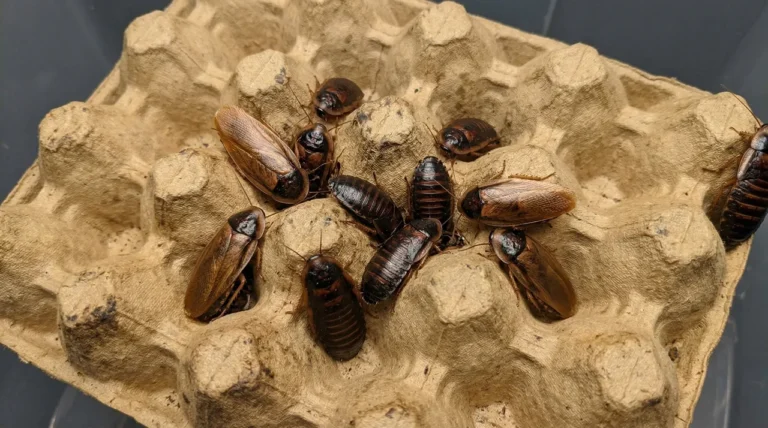
Against mealworms, supers are larger and generally easier for an adult to digest. Both share the same too-fatty-for-daily problem covered in more detail on the mealworm feeding breakdown. Against dubia roaches or crickets, supers lose on nutrition and win only on enthusiasm.
For a staple protein source you want dubia or crickets doing the heavy lifting, with supers appearing now and then. The hierarchy of what belongs in the bowl and how often sits within a balanced feeding plan that treats insects, greens, and the occasional rich feeder as separate jobs.
Common Questions About Superworms
Can superworms bite my bearded dragon
A superworm cannot survive stomach acid long enough to bite anything internally, so the gut-rupture story is a myth. The only real bite risk is to your dragon’s mouth before swallowing or to your fingers during feeding. Crushing the head or briefly chilling the worms removes it entirely.
How many superworms can a bearded dragon eat
A healthy adult can have two to four superworms once or twice a week as a treat. Babies and juveniles under twelve months should not have them at all. Overweight adults should avoid them until back in a healthy weight range.
Are superworms or dubia roaches better
Dubia roaches are the better staple because they carry more protein and far less fat than superworms. Supers win only on enthusiasm, which makes them useful for tempting a fussy eater. Keep dubia as the everyday feeder and supers as an occasional treat.
Why won’t my bearded dragon eat anything but superworms
Superworms are rich and exciting, so a dragon learns to hold out for them and refuse greens. Cutting supers completely for two to three weeks usually breaks the standoff. A healthy dragon will not starve itself waiting.
Can you refrigerate superworms
No, superworms die in the cold, unlike mealworms. Keep them at room temperature between 70°F and 80°F in a tub with bran and a slice of carrot for moisture.
Feeding Superworms Without the Risk
- Confirm your dragon is over 18 months and a healthy weight before offering supers at all.
- Gut-load the worms for at least 24 hours with carrot, squash, or commercial gut-load.
- Dust with calcium powder right before feeding to offset the poor calcium ratio.
- Crush the head or chill the worms briefly if the bite worries you.
- Tong-feed 2 to 4 worms, no more than once or twice a week.
- Watch for fat pads behind the eyes and a thickening tail base as early overfeeding signs.
- Keep supers unpredictable so your dragon never learns to refuse other food waiting for them.
Written by
Sarah ArdleySarah has kept bearded dragons for over ten years. She founded Beardie Husbandry after discovering that most mainstream care advice — including what she followed with her first dragon — was doing more harm than good. Every article on this site is grounded in veterinary research and real keeper experience.