Bearded Dragon Scale Rot Signs and Treatment
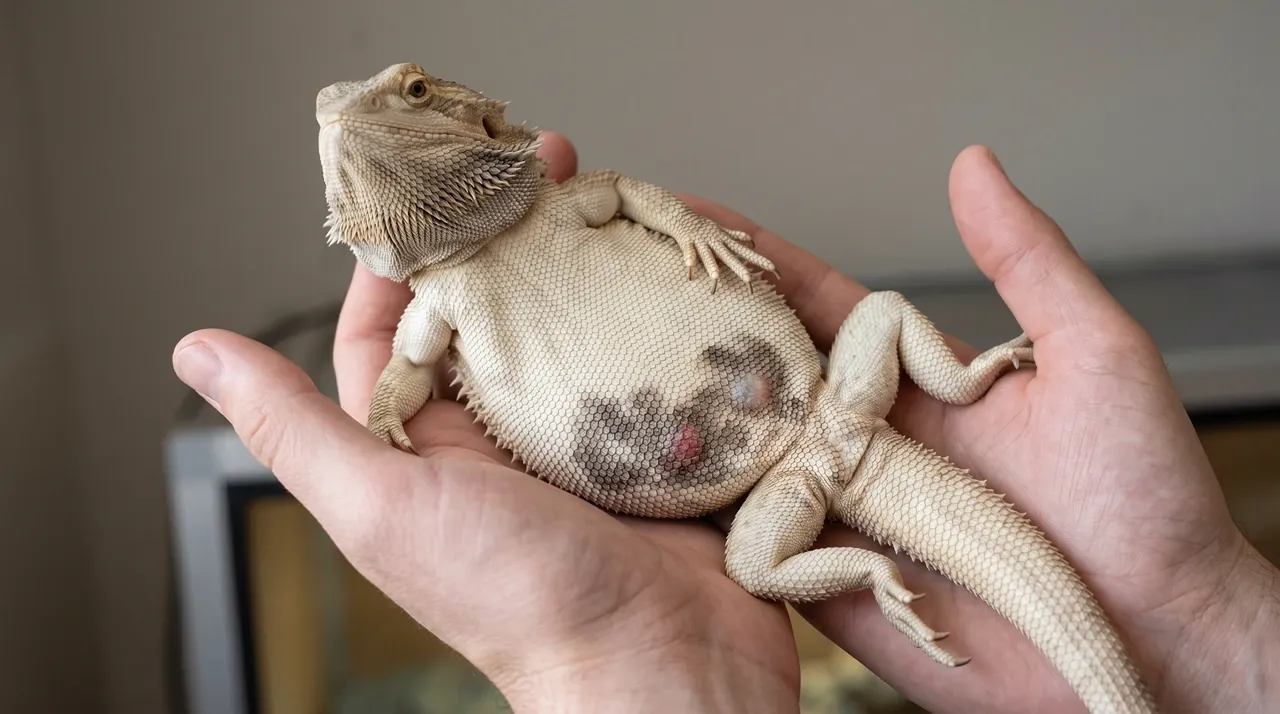
A few dark, puffy scales on your dragon’s belly are easy to overlook until the skin underneath starts to look wet or raw. Bearded dragon scale rot is a bacterial skin infection that sets in when scales sit against damp, dirty, or cold surfaces for too long.
Caught in the first few days it usually clears at home within a couple of weeks. Left alone it can sink into deeper tissue and become a true emergency.
Early scale rot is one of the more fixable problems a beardie owner runs into. The trick is acting on it instead of waiting another week to see what happens.
What Scale Rot Actually Is
Vets call it ulcerative dermatitis, and it sits in the same family as other bacterial skin infections vets describe under bacterial diseases of reptiles. The bacteria behind it thrive on moisture and feed on skin that stays damp.
The belly, the underside of the tail, and the feet take the worst of it. Those are the surfaces pressed against the floor of the enclosure all day.
Pattern matters more than any single scale. The infection starts where your dragon makes contact with wet or soiled flooring, especially when the humidity in the enclosure climbs and the substrate never fully dries. From there it creeps outward across the underside.
What Bearded Dragon Scale Rot Looks Like
Scale rot changes its appearance as it progresses, which is exactly why owners miss the start of it. The early stage looks like a cosmetic blemish. The late stage looks like an open wound.
The First Signs Most Owners Miss
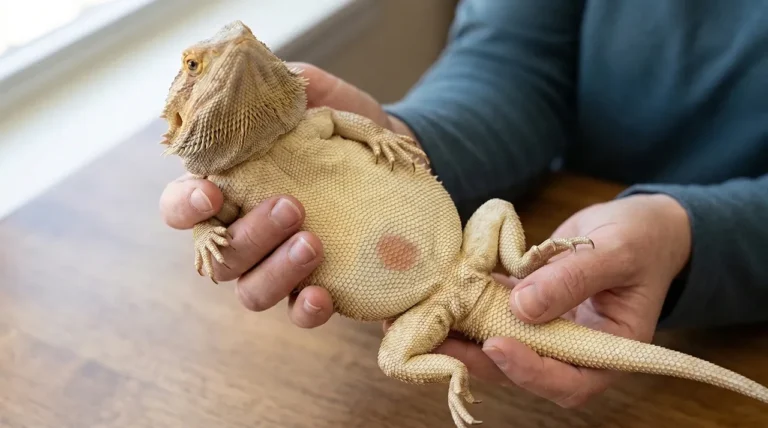
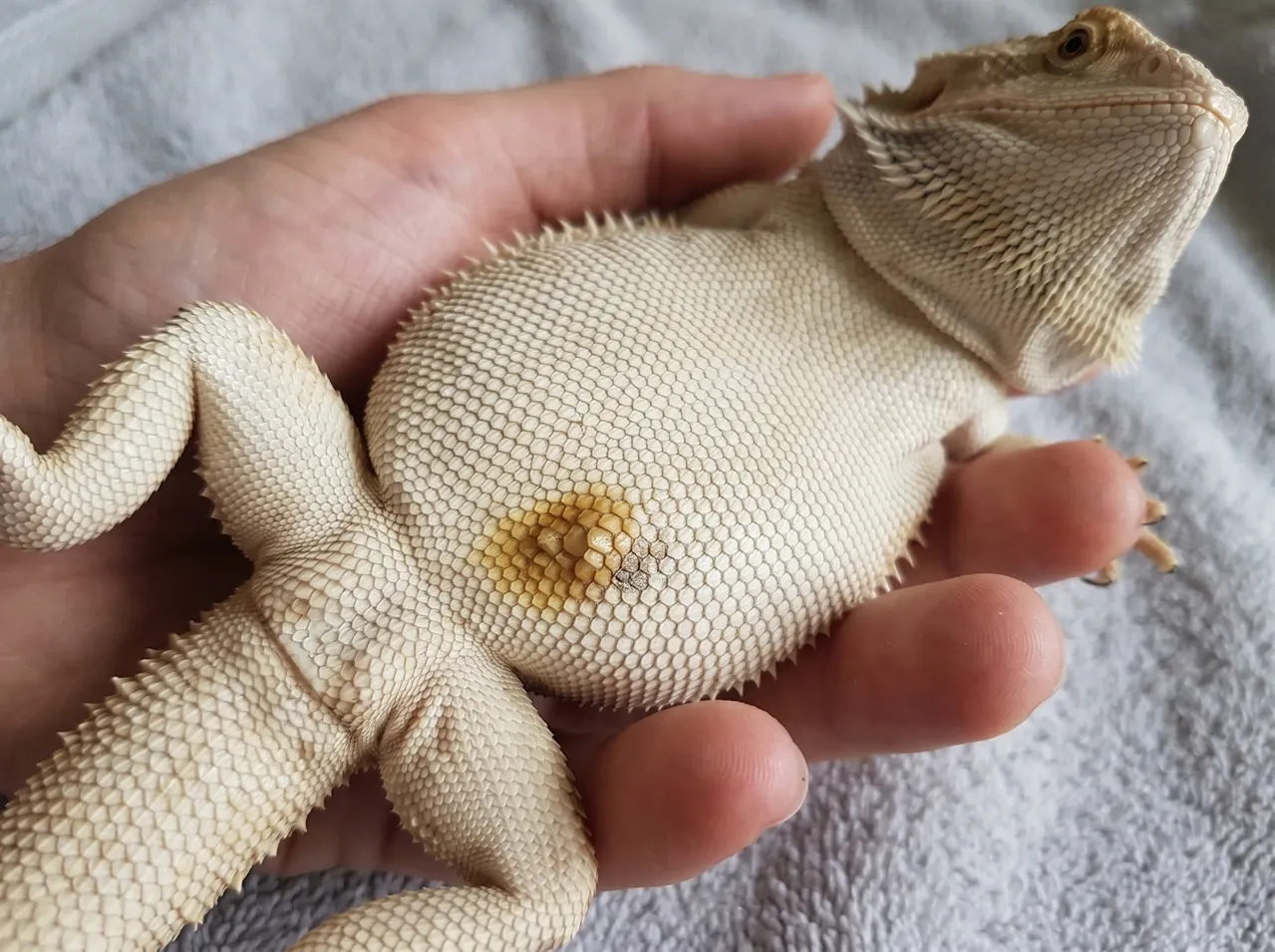
The earliest signs are quiet. You will usually spot a yellow or brownish tint creeping into the belly scales, often on just one or two at first.
Run a finger lightly over the area. Affected scales often feel slightly raised or puffy compared to the smooth ones around them. Dry, flaky patches that stick around after a full shed are another early flag.
When It Turns Serious
Once bacteria reach the tissue under the scale, the picture changes fast. Small blisters filled with clear or yellowish fluid appear, the scales darken to grey or black, and the skin around them reddens or swells.
Match what you are seeing against the right row below before you decide how fast to move.
| Stage | What you see | What to do |
|---|---|---|
| Early | Yellow or brown tint on belly scales, slightly raised scales, dry flaky patches that outlast a shed | Fix the husbandry and start daily antiseptic soaks at home |
| Moderate | Scales turning grey or black, small fluid-filled blisters, redness at the edges | Begin home treatment and book a reptile vet within a few days |
| Severe | Open weeping ulcers, dead black scales, swelling, foul smell, no appetite | Emergency vet visit, expect antibiotics and possible debridement |
How to Tell It Apart From Shedding
Plenty of healthy beardies have dark bellies, and a dragon mid-shed can look alarming when it is doing something completely normal. Knowing the difference saves you a panicked vet call over nothing.
Shedding skin lifts away in dull, papery flakes that peel cleanly, and once the cycle finishes the scale underneath looks healthy. If you are unsure whether a patch is just stuck shed lingering, give it a warm soak and watch whether it sloughs off. Scale rot does not peel away. It stays fixed, discoloured, and often feels raised.
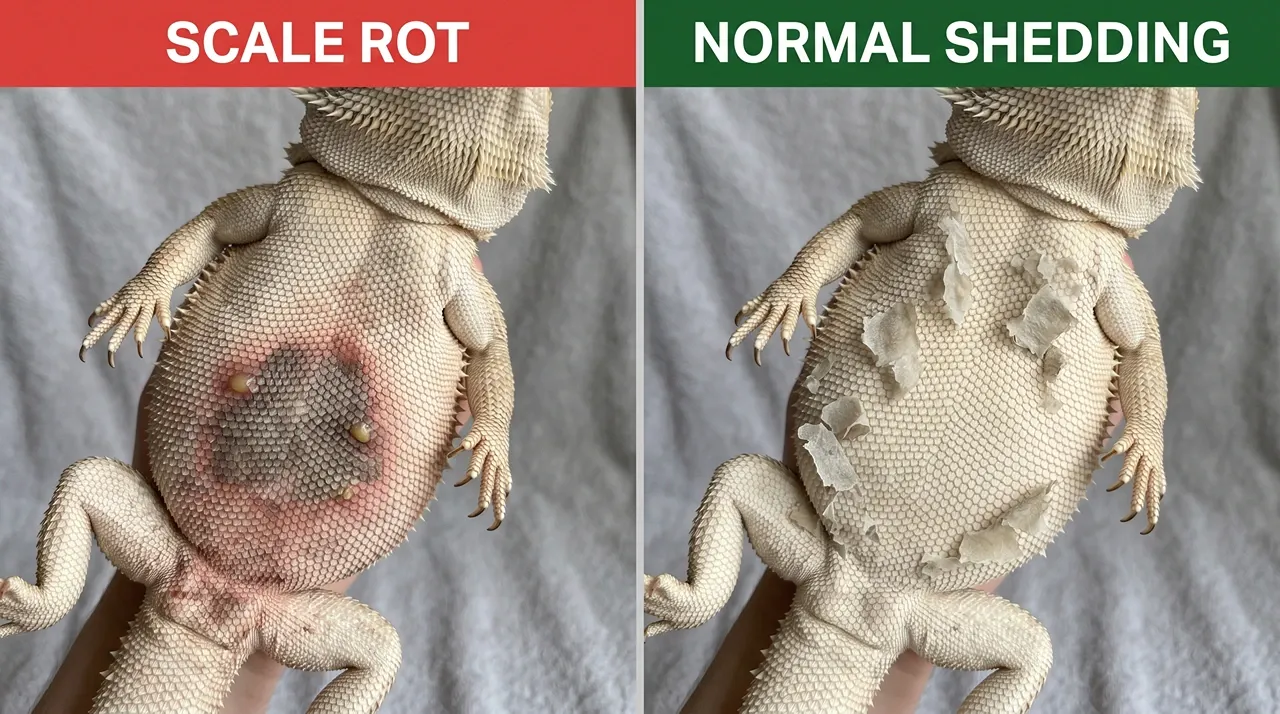
A fresh, well-defined dark mark on the belly can also be a thermal burn from contact with a hot surface rather than an infection. Burns tend to appear suddenly after a known cause. Scale rot builds gradually over days in a damp tank.
Darkening that starts at the very tip of the tail and works inward is a different problem again, closer to tail tip necrosis than to the belly-based infection covered here.
What Causes Scale Rot in the First Place
Almost every case traces back to the enclosure rather than the dragon. Fix the environment and you fix the root cause, not just the symptom.
The usual culprits are:
- Damp substrate. Loose, water-holding bedding that never dries out keeps bacteria in constant contact with the belly. Switching to a dry, easy-clean substrate removes that reservoir.
- Humidity that runs too high. Beardies do best at 30–40%. Sustained levels above that keep the skin damp enough for infection to take hold.
- Cool temperatures. A dragon that cannot reach a proper basking temperature heals slowly and shrugs off bacteria poorly.
- A dirty enclosure. Feces and old food left sitting turn the floor into a bacterial soup.
- Skin injuries. Scrapes from rough decor or sharp substrate give bacteria an easy way in.
How to Treat Scale Rot at Home
Mild, early bearded dragon scale rot responds well to home care, as long as you commit to it daily. The whole approach rests on one principle: kill the bacteria and keep the skin bone dry while it heals.
Set Up a Dry Hospital Tank
Move your dragon to a clean, simple enclosure lined with plain paper towel. No loose substrate, minimal decor, easy to wipe down each day.
Keep the basking spot at 95–105°F and hold humidity below 40%. Warmth and dryness do half the work of healing on their own.
Clean the Scales Every Day
Give the affected area a daily antiseptic soak in dilute povidone-iodine (Betadine), thinned with warm water until it looks like weak tea. A short 10–15 minute soak is enough, using the same care as any shallow warm soak.
Pat the area completely dry afterward. Then apply a thin layer of a reptile-safe antiseptic such as silver sulfadiazine cream or a chlorhexidine-based spray, and return your dragon to the dry tank.
A couple of common cabinet products do more harm than good, and they are easy to grab in a hurry.
When Your Beardie Needs a Vet
Home care has limits, and pushing past them costs dragons their lives. Some cases need prescription medicine from day one.
Call a reptile-experienced vet if you see blisters, open ulcers, black necrotic scales, swelling, or a foul smell. The same applies if your dragon stops eating or shows no improvement after five to seven days of consistent home treatment.
A vet can culture the wound to identify the bacteria, prescribe systemic antibiotics, and surgically remove dead tissue when the rot has gone deep. None of that can be replicated at home, and delaying it is how moderate cases become fatal ones.
How to Stop Scale Rot Coming Back
Recurrence of bearded dragon scale rot is common when the husbandry problem that caused it never gets fixed. A dragon returned to the same damp tank often rots again within weeks.
Keep a reliable hygrometer in the enclosure and hold humidity in the 30–40% band. Spot-clean waste the moment you see it, and do a full substrate change on a regular schedule rather than topping up old bedding.
Check the belly and underside of the tail every week or two during handling. Scale rot caught at the yellow-tint stage is a minor inconvenience. The same infection caught three weeks later is a vet bill and a frightened dragon.
Questions Owners Ask Most About Scale Rot
Can scale rot heal on its own?
No. Without drier conditions and antiseptic treatment the bacteria keep spreading. Early cases can resolve with home care, but the infection will not clear while the cause remains.
Is scale rot contagious to other dragons?
The bacteria can spread between reptiles sharing an enclosure or equipment. House an affected dragon separately and disinfect anything it has touched.
How long does scale rot take to heal?
Mild cases often improve within one to two weeks of daily treatment, though the scales may take a few sheds to look normal again. Severe cases on antibiotics can take much longer.
Can I use Neosporin on scale rot?
Plain Neosporin without a pain reliever can be used short-term on minor wounds. Avoid any version containing pramoxine or lidocaine, which are toxic to reptiles.
Does scale rot hurt my bearded dragon?
Yes, especially once blisters and open sores form. Pain is part of why affected dragons go quiet and stop eating, and it is a reason not to delay treatment.
Steps to Take Starting Today
- Inspect the belly, feet, and underside of the tail in good light right now.
- Test the enclosure humidity and bring it down into the 30–40% range if it is high.
- Strip out any damp substrate and switch to paper towel until the skin heals.
- Start daily dilute povidone-iodine soaks if you see early discolouration or raised scales.
- Book a reptile vet today if there are blisters, black scales, swelling, smell, or appetite loss.
- Recheck the area daily and escalate to a vet if the scale rot has not improved within a week.
Written by
Sarah ArdleySarah has kept bearded dragons for over ten years. She founded Beardie Husbandry after discovering that most mainstream care advice — including what she followed with her first dragon — was doing more harm than good. Every article on this site is grounded in veterinary research and real keeper experience.