Bearded Dragon Impaction: How to Spot It and What to Do
Most owners who worry about impaction have either never seen a truly blocked dragon, or they have and understand completely why they were scared. Bearded dragon impaction is a real and serious condition. It is also one of the most over-diagnosed problems in the hobby.
A dragon who skipped a poop for four days during a cool stretch is not the same animal as one dragging a hind leg across the enclosure floor.
What Bearded Dragon Impaction Actually Is
Impaction means a physical blockage inside the digestive tract. Indigestible or semi-digestible material forms a mass that nothing can move around or past. It is not the same as constipation, which is sluggish gut transit without a physical block.
Constipation often clears with warmth, hydration, and time. A true bearded dragon impaction involves a mass the gut physically cannot shift on its own. That distinction matters because the two problems have different solutions.
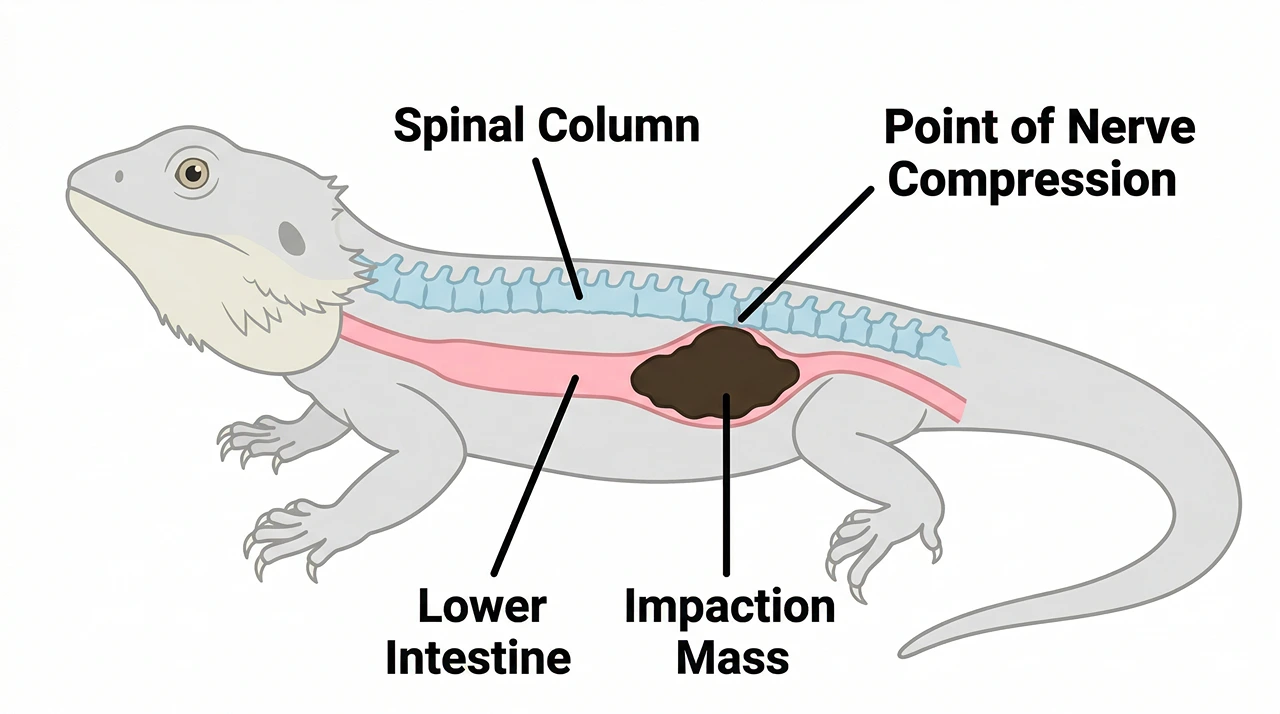
The blockage typically sits in the lower intestine, which runs directly alongside the spine. Bearded dragons have no intervertebral discs to buffer pressure from surrounding tissue.
A moderate blockage can press directly onto the vertebral column. This is why hind leg weakness is often the sign that reveals an impaction has been building for longer than the owner noticed.
What Causes Impaction in Bearded Dragons
Loose Substrate Is the Biggest Risk
Sand, calci-sand, walnut shell, bark chips, and fine gravel are all well-documented causes. The problem is rarely a single large mouthful. It is small amounts ingested repeatedly as the dragon licks the enclosure floor while hunting live feeders.
Juveniles under four months face a higher risk because their intestines are narrower at that age. Solid substrate options for dragons like ceramic tile, slate, rubber shelf liner, or newspaper carry no ingestible particles and eliminate this risk entirely.
The marketing claim that calci-sand dissolves safely in stomach acid has been disputed repeatedly by reptile vets. Disregard it.
Food That Sits and Hardens
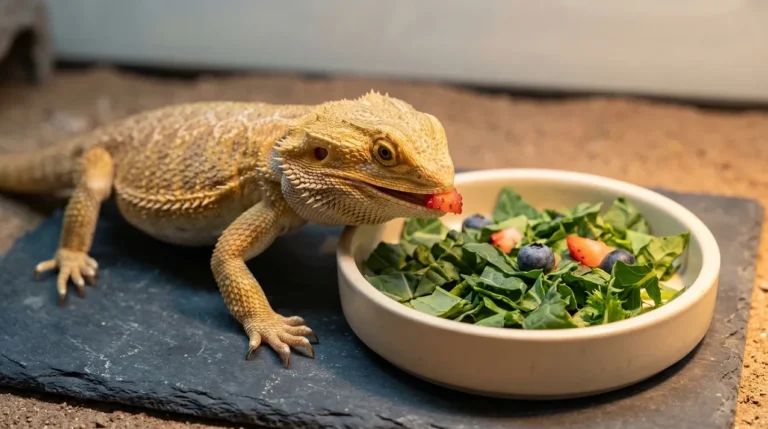
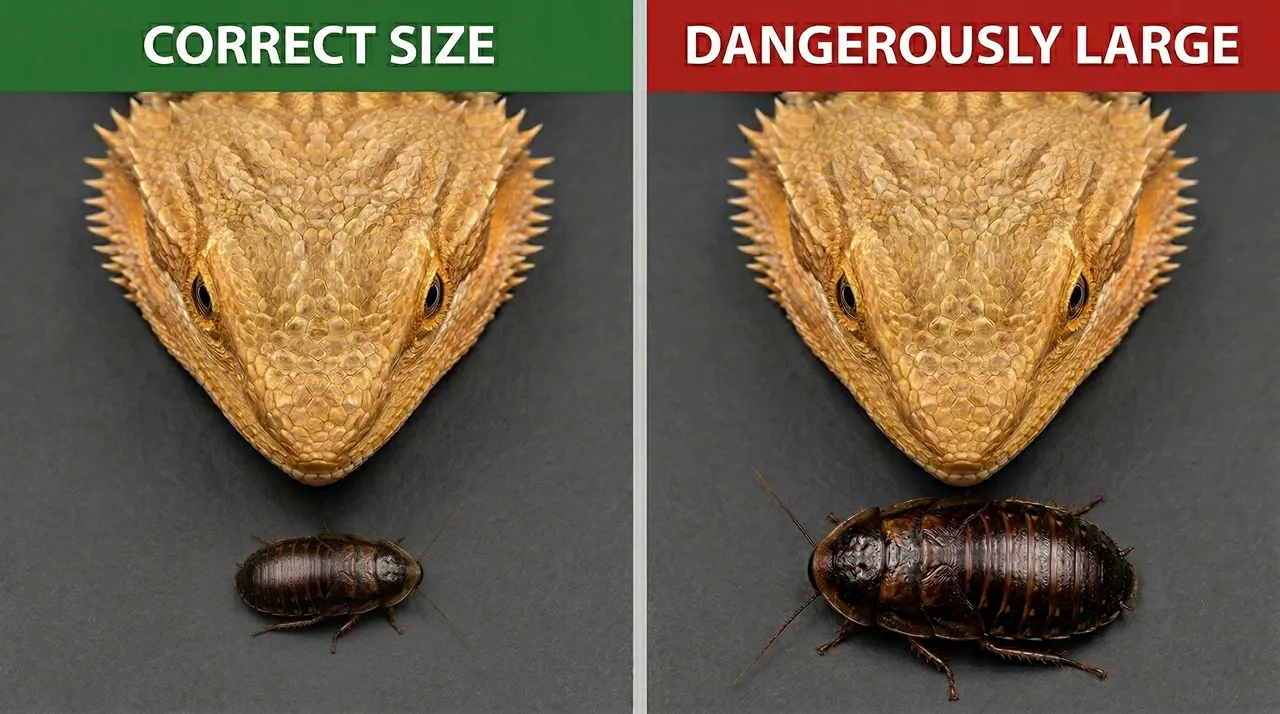
Any feeder wider than the gap between the dragon’s eyes can physically block the gut. That rule exists because the eye gap approximates the narrowest diameter of the digestive tract. Get the size right and this particular risk drops considerably.
Exoskeleton hardness matters just as much as feeder size. Superworms, large crickets, and adult mealworms have shells that juvenile digestive systems cannot reliably break down.
The risks around feeding mealworms go beyond fat content. The chitin-heavy shell is the specific problem for dragons under twelve months. Dubia roaches and black soldier fly larvae are considerably easier for young animals to process and a much lower impaction risk overall.
Temperatures Too Low to Digest Properly
A dragon basking on a surface below 95 °F cannot fully activate the digestive enzymes needed to break down a meal. Food stays in the gut longer than it should, dries out, and begins to compact.
This is a slower cause than substrate ingestion but just as common in setups where temperatures have not been properly verified.
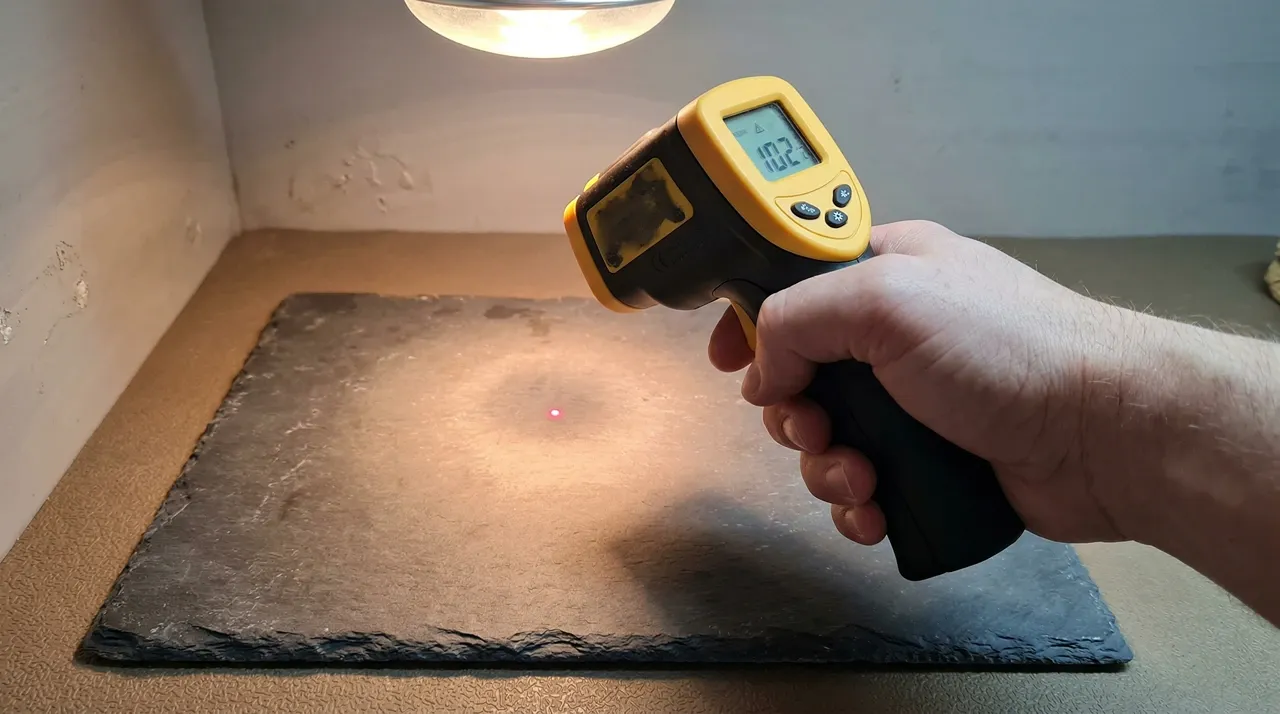
Most owners measure ambient air temperature rather than the surface the dragon actually sits on. Air temperature and basking surface temperature are rarely the same number.
An accurate surface temperature reading, taken with a temperature gun pointed directly at the rock or tile, is often 15 to 20 °F higher than the air reading beside it. That gap changes the entire picture of whether digestion is happening properly.
Dehydration Makes Everything Worse
Dry gut contents are harder gut contents. A dragon with consistently low hydration produces stools with less water in them, which compact more readily and are harder to pass.
This is one reason why bearded dragon impaction risk climbs during hot months when enclosure humidity drops and water intake is not compensated for by extra soaking.
Dragons already showing early dehydration signs, including tacky mucous membranes, slightly sunken eyes, and skin that tents when gently pinched along the side, are in an elevated impaction risk window at the same time.
What Gets Swallowed During Free Roam
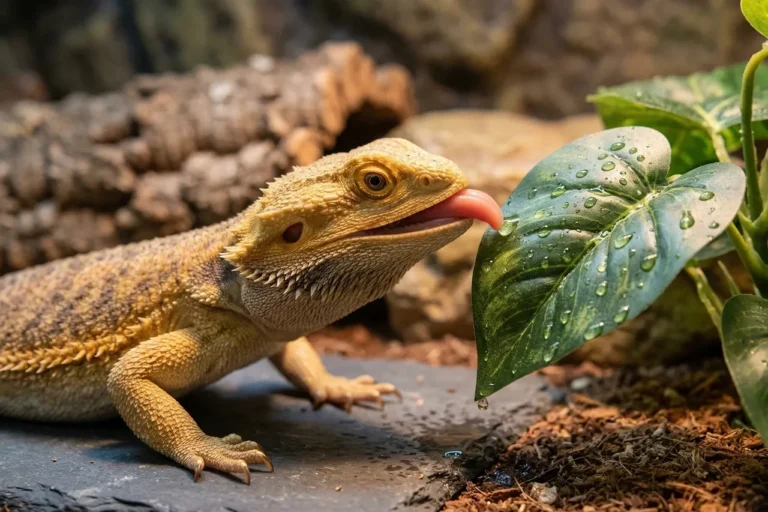
This cause gets under-reported. Dragons allowed to roam on carpet, near plant pots, on outdoor grass, or in rooms with small objects present will investigate everything with their tongue.
Fine gravel, rubber fragments, carpet fibres, potting soil, and chipped plastic decor are all documented sources of bearded dragon impaction in free-roaming animals. Direct supervision during all out-of-enclosure time is the only protection.
A beardie can swallow something it finds interesting in under five seconds.
Signs of Impaction You Should Not Miss
Early Warning Signs Many Owners Miss
An absent poop alone is not enough to flag a problem. Healthy adult dragons can go five to seven days without a bowel movement, particularly during cooler periods or when food intake has been lower than normal.
The absence becomes meaningful when it arrives alongside behavioural change. Early signs worth tracking:
- No bowel movement for five or more days alongside visible lethargy
- Reduced appetite or complete refusal to eat in a dragon that was eating normally
- More time spent in the cool end of the enclosure than usual
- Repeated straining near the vent without producing anything
- A firmer or rounder lower abdomen than normal when viewed from the side
None of these signs individually confirms an impaction. Together, and sustained over more than 24 hours, they indicate something needs attention.
When You Need the Vet
Leg involvement changes the urgency completely. A hind leg dragging, hanging at an odd angle, or trembling during movement means the blockage is pressing on the spinal column. Home treatment is not appropriate at this stage.
Front leg involvement means the blockage is higher in the gut and has probably been building for days longer than you realised.
The symptoms that matter most are not the absence of poop alone. They are the combination of signals your dragon is sending across behaviour, movement, and physical condition all at once.
| What You Are Seeing | Urgency | What to Do |
|---|---|---|
| No poop for 3–4 days, eating and moving normally | Low | Check basking surface temp, offer a warm soak, increase hydration |
| No poop for 5+ days, noticeably lethargic, appetite dropping | Moderate | Daily warm soak and gentle belly massage; call vet if no change in 48 hours |
| No poop, visible abdominal swelling or firm belly mass | High | Vet appointment today |
| Hind leg dragging, weakness, or trembling | Urgent | Vet today. Do not attempt home treatment |
| Both front and back legs affected, dragon barely mobile | Emergency | Emergency exotic vet immediately |
The Belly Check Most Owners Skip
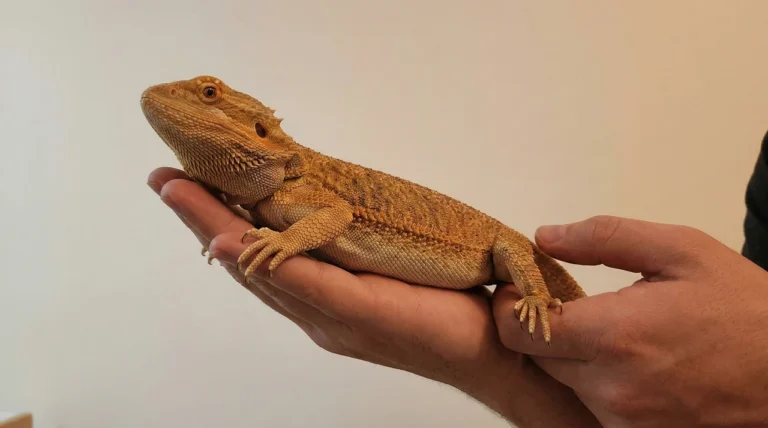
With your dragon resting calmly on a flat surface, look along the dorsal line from above. A healthy spine shows evenly spaced vertebrae with no raised sections between them. A visible bulge between two vertebrae points to intestinal swelling pressing outward on the column.
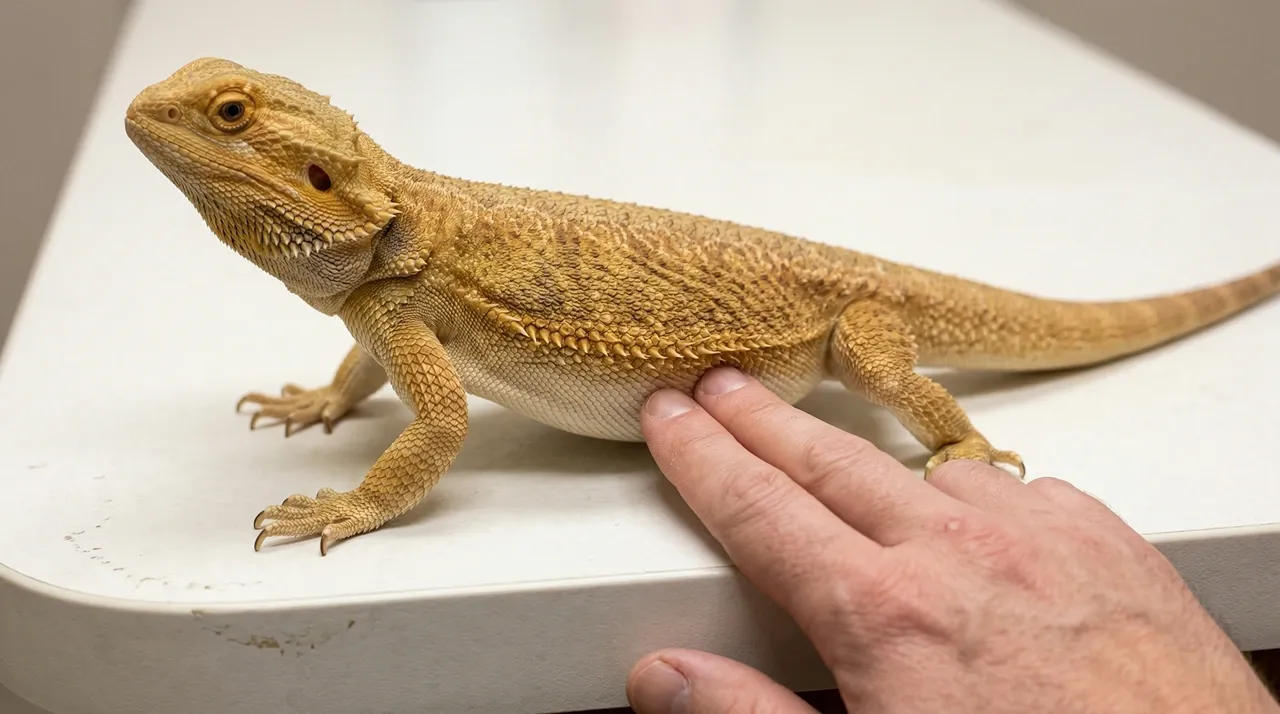
On the belly, run two fingers lightly from just below the ribcage toward the vent. The pressure should be minimal. Use barely more than the natural weight of the fingers resting on the skin.
A healthy gut feels uniformly soft throughout. A firm, rounded mass that does not shift under the gentlest pressure and sits in the mid-to-lower abdomen warrants a vet call. Do not press hard trying to feel deeper.
What to Do at Home First
Home intervention is only appropriate when all three of these apply:
- The dragon is still alert and moving normally
- It is still eating some food
- There is no leg involvement of any kind
If any of those conditions are not met, call a reptile vet directly.
How to Do the Warm Bath Correctly
Fill a shallow container with water at 90–95 °F. The water level should reach the dragon’s shoulder height only. Anything deeper creates a drowning risk for a lethargic animal and turns a therapeutic soak into a stress event. Monitor the water temperature throughout with a thermometer probe.
After five minutes of soaking, apply two-finger circular pressure on the lower abdomen, moving slowly from the ribcage toward the vent. The touch should be light enough to feel the skin without compressing the tissue underneath.
The full soak technique covers water depth, temperature, and handling a stressed dragon. It has more impact on whether the bath actually helps than how long the soak lasts. Repeat daily and set a firm 48–72 hour review window.
If there is no result within that window and the dragon’s condition has not worsened, a vet call is the right next step. If any symptoms worsen at any point, stop and contact a vet the same day.
When to Stop Home Treatment Immediately
If hind leg weakness appears or worsens during the home treatment period, stop the warm soaks. Heating a dragon with developing spinal pressure increases circulation to the affected area and can intensify nerve compression. That is beyond what a bath can address.
What the Vet Will Actually Do
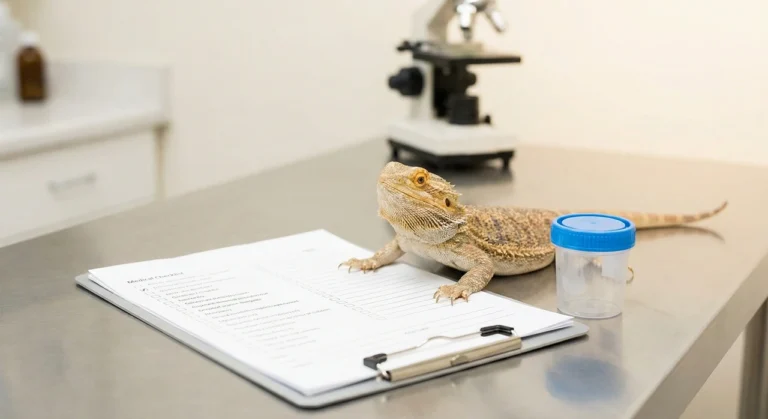
A reptile vet will typically start with an X-ray before touching the animal. Seeing the blockage on film reveals its location, size, density, and probable composition, which determines the treatment approach entirely.
A food-matter blockage and a compacted substrate impaction are not treated the same way. Food-based impactions generally respond to prescription laxatives and fluid therapy. Substrate blockages more often require enemas under sedation. A foreign object that is too large or too mineralised to pass medically will need surgical removal.
Surgery for bearded dragon impaction costs roughly $400–$1,200 in the US and £350–£900 in the UK depending on complexity. Most exotic vets will discuss staged payment options if asked at the initial appointment.
When booking, mention leg involvement if it is present. That phrase tends to move the appointment to the same day rather than a future opening. The ARAV member directory is the most reliable way to locate a vet with documented reptile experience in your area.
How to Prevent Bearded Dragon Impaction
The majority of cases come down to three things: what the dragon sits on, what it eats, and whether it is warm enough to digest. Fix all three and the risk drops to close to zero for most setups.
- Switch to a solid substrate. Ceramic tile, slate, rubber shelf liner, or textured vinyl. Nothing loose, nothing particulate, nothing marketed as edible or digestible.
- Size feeders correctly. Nothing wider than the eye gap. For dragons under four months old, no mealworms, superworms, or large crickets regardless of the insect’s reported size.
- Measure surface temperature, not air temperature. A temperature gun aimed at the basking surface is the only reading that reflects what the dragon’s gut is actually experiencing. Dial thermometers on enclosure walls measure air.
- Hydrate on a schedule. Two 15–20 minute soaks per week for adults. Three per week for juveniles and for adults in dry setups or warmer months.
- Supervise every free-roam session directly. No exceptions on outdoor grass, near plant pots, or in any floor space with small objects present.
One risk window that consistently goes unmentioned is the ten to fourteen days immediately after a dragon finishes coming out of brumation. The gut is still waking up slowly at that point, but appetite returns to normal much faster than digestion does.
Dragons that resume full feeding volume before gut temperature and hydration are properly restored have elevated bearded dragon impaction risk during that window specifically. Feed conservatively and offer extra soaks through the first two weeks post-brumation.
Frequently Asked Questions
Can a Dragon Clear It Alone?
Mild food-based impactions sometimes pass with warmth and hydration, particularly in younger dragons whose gut is still active and motile. Hard substrate impactions very rarely resolve without intervention.
If the dragon is also showing lethargy or appetite loss alongside the constipation, do not rely on time alone.
Is Bearded Dragon Impaction Ever Fatal?
A partial blockage in an otherwise healthy adult may not become fatal for several weeks. The spinal pressure it creates can cause permanent nerve damage well before that point.
Early intervention consistently produces better outcomes than delayed treatment. The nerve damage from prolonged spinal pressure is not always reversible, even after the blockage has been cleared.
Is Sand Actually That Dangerous for Dragons?
The issue is not deliberate eating. A dragon hunting live feeders on a sand floor licks the substrate dozens of times per session, ingesting small amounts with every contact.
Most cases of bearded dragon impaction on sand substrates involve animals that were never observed intentionally eating the substrate. The ingestion happens incidentally and accumulates over time.
Can Impaction Cause a Swollen Belly?
Yes. A visibly rounded or firm lower abdomen alongside absent stools and lethargy is a recognised presentation of gut impaction, particularly once the blockage is large enough to cause gas and fluid accumulation around it.
A swollen belly combined with any symptoms in the urgent or emergency rows of the table above warrants same-day veterinary contact, not a home soak first.
Big Poop Just Happened. Was That Impaction?
Probably a severe constipation episode rather than a true impaction. If the stool contained visible grit or had an unusually dark, dense texture, look at what is in the enclosure and what you have been feeding.
Reviewing what normal dragon poop looks like will help you track whether the next few stools return to baseline or continue looking abnormal.
What to Check If You Are Worried
- Note when your dragon last produced a normal stool and whether it looked typical.
- Check the basking surface temperature with a temperature gun aimed directly at the surface, not the air reading beside it.
- Walk your dragon on a flat surface and watch whether both hind legs push evenly. Any dragging or asymmetry is significant.
- Perform the gentle belly check described above. A firm, immovable mass in the lower abdomen is a vet call.
- If your dragon is alert, mobile, and eating, start the warm soak protocol today and set a strict 48-hour review point.
- If anything in the urgent or emergency column applies, including leg weakness, visible abdominal swelling, or complete appetite loss, make the call now rather than waiting to see if it resolves.
Most bearded dragon impaction cases caught at the moderate stage resolve without permanent damage. The ones that go badly are almost always cases where the owner noticed something was wrong and kept watching for too long before acting.
Written by
Sarah ArdleySarah has kept bearded dragons for over ten years. She founded Beardie Husbandry after discovering that most mainstream care advice — including what she followed with her first dragon — was doing more harm than good. Every article on this site is grounded in veterinary research and real keeper experience.