How to Set Up a Dubia Roach Colony: Step-by-Step Guide
Running to the pet store every few days gets old fast, especially when a juvenile dragon is going through 50 insects a week. A properly built dubia roach colony setup fixes that permanently, without the noise, the die-offs, or the smell that makes keeping crickets alive such a constant chore. Getting it right from day one takes a couple of hours and about $30 in hardware. Getting it wrong means a warm bin full of roaches that never breed.
Dubias reproduce slowly compared to crickets, but far more reliably. A colony that is dark, warm, well-fed, and mostly left alone will supply most of a dragon’s feeder needs within three to four months of starting.
Before You Start a Colony
Dubia roaches are illegal to own or breed in Florida, California, Louisiana, and Hawaii. Check your state’s department of agriculture website before ordering stock from any supplier.
Allergy risk is real and underreported in keeper circles. Constant exposure, including handling roaches daily, cleaning the bin weekly, and breathing the frass dust, can trigger sensitisation in people who had no prior insect allergy.
Cockroach allergy is a well-documented occupational hazard in pest control and food production, and long-term colony keepers share the same exposure pattern. Symptoms typically begin with itchy skin and eyes, then progress to congestion and respiratory reactions.
Working in a ventilated area and washing your hands immediately after contact reduces the risk considerably, though it does not eliminate it.
If neither issue applies to you, proceed.
Everything You’ll Need to Buy
Keep the shopping list short. Overcomplicating this stage is the first mistake most new colony keepers make.
- One opaque plastic storage tub (40 qt minimum, 66 qt if the colony needs to sustain a full dragon)
- Soldering iron or sharp box cutter to cut a ventilation hole in the lid
- Aluminium window screen or fine mesh to cover the cutout
- Hot glue gun or silicone sealant to fix the mesh in place
- Heat mat, under-tank or seedling style
- Thermostat, either plug-in dimmer or digital. Not optional.
- Probe thermometer
- Egg flats, the flat cardboard sheets used to ship commercial eggs, enough to fill the bin in stacked layers
- Two shallow dishes, one for dry gut load and one for water crystals
- Polymer water crystals
- Your starter roach stock
Skip substrate entirely. It traps frass, promotes mould, and makes clean-outs harder with no real benefit to the roaches.
How to Build the Bin
Opaque tubs matter more than most guides acknowledge. Dubia roaches are strongly photophobic, meaning they actively avoid light, and a colony kept in a clear tub in a lit room will produce noticeably fewer nymphs than an identical setup in a dark one.
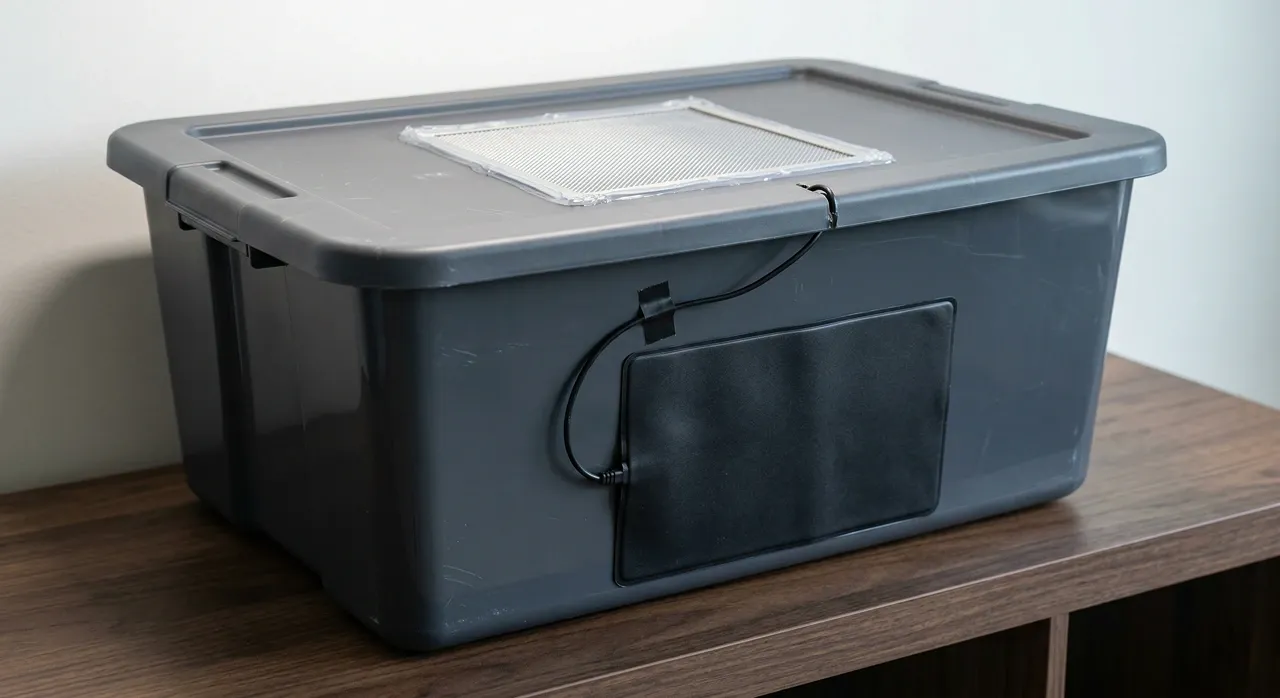
Cut a 6×6 inch ventilation hole in the lid. Glue the mesh over it on the inside face of the lid so the roaches cannot push it free from underneath. Run a bead of hot glue around the entire perimeter and press the mesh flat until it sets.
If you would rather not cut the lid, drill rows of quarter-inch holes along the upper sides of the tub body instead. Both approaches provide adequate airflow. Either way, the lid must seat fully with no gaps around the rim.
Temperature Is the Make or Break
This is where most failed dubia colonies went wrong. Roaches will survive at room temperature. They will not breed reliably at room temperature unless your home consistently holds 78°F or above, around the clock.
For active breeding, the bin needs to hold 85–92°F at egg flat height. Most keepers who run consistently productive colonies target 88°F at that level. Below 80°F, reproduction slows sharply. Below 72°F, it stops.
Mount the heat mat on the exterior side wall of the tub rather than underneath it. Roaches spend most of their time on the egg flats in the upper half of the bin, not on the floor. A side-mounted mat warms the air where the roaches actually live.
Connect the mat to a thermostat, position the probe at egg flat height, and set your target at 88°F.
Humidity should sit between 40–60%. Higher than that and mould becomes persistent. Lower and nymphs can struggle to complete their moults. A well-ventilated tub at the correct temperature generally manages itself within this range without any active adjustment.
The Egg Flat Setup
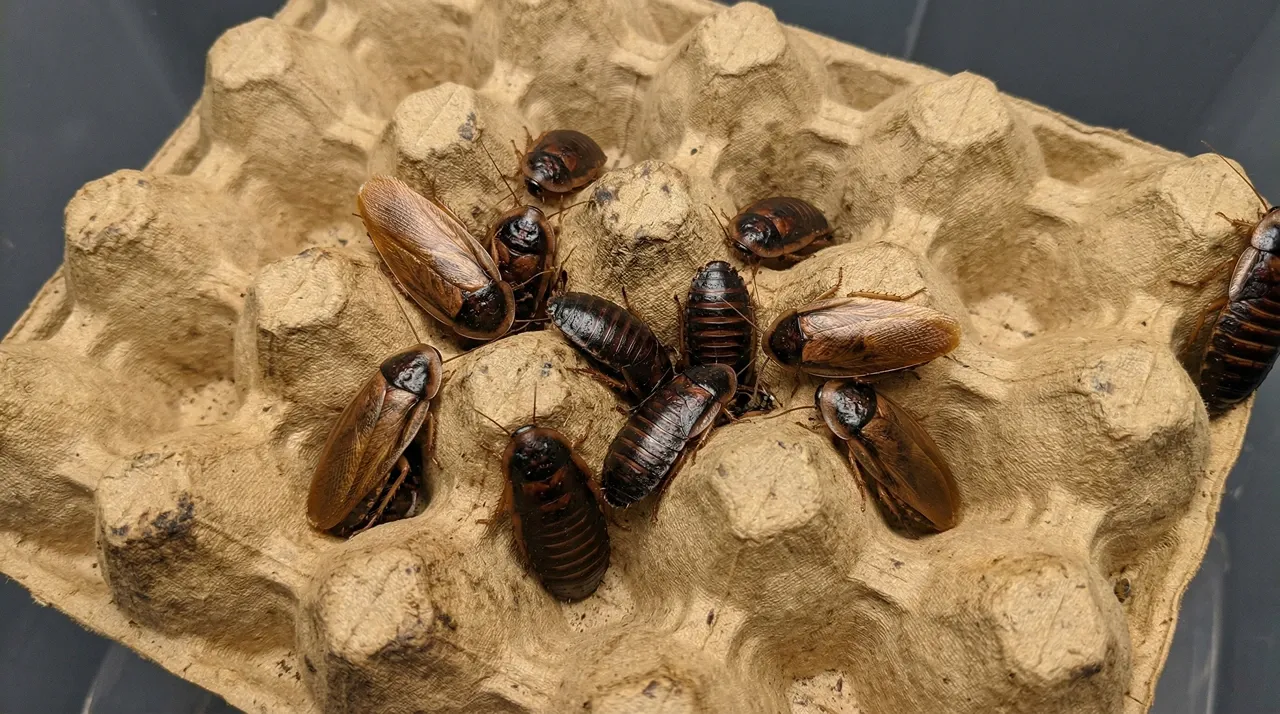
Egg flats, the cardboard sheets used to pack eggs in large quantities, are the single most important structural element of a dubia colony. Roaches cluster in tight, dark spaces, and egg flats give them the surface area, ventilation, and shelter that keep them calm enough to breed consistently.
Stack the flats vertically inside the bin rather than laying them flat. Think of them as a standing bookshelf of individual sheets, each one offset 90 degrees from the one before it. This creates a dense maze of dark channels that roaches pack into from top to bottom.
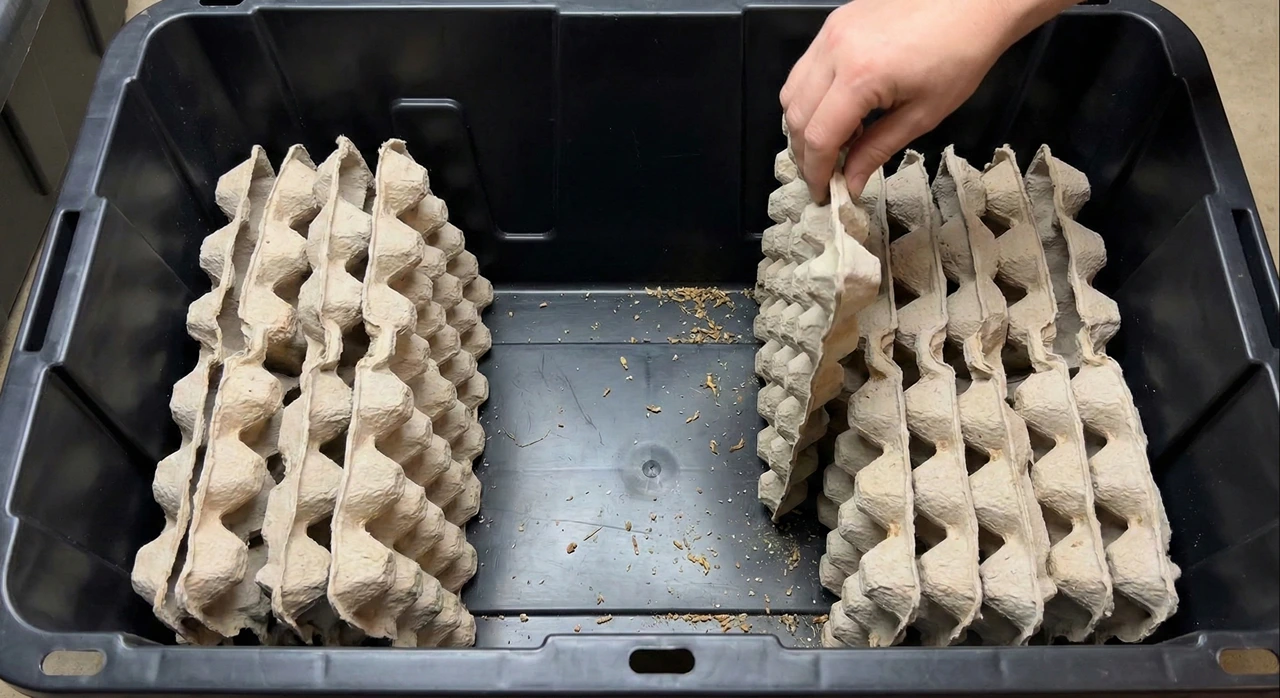
Laid flat, you waste most of the surface area.
Leave at least two inches of clearance between the top of the stack and the lid. Dubias cannot climb smooth plastic, but small nymphs are capable of working through gaps at the rim if the lid sits unevenly or has any rough edges around the cutout.
What to Feed a Breeding Colony
Dubias are generalist feeders and will eat almost anything plant-based. What the colony eats directly affects the nutritional content of every roach you pull out and offer your dragon, so the same standards that apply to gut loading your feeders apply to the colony’s everyday diet.
The staple diet for an active breeding colony should include:
- A dry roach chow or commercial insect gut load as the base feed, available at all times
- Fresh produce two to three times per week: carrots, butternut squash, collard greens, sweet potato, and apple are all solid choices
- Any uneaten fresh produce removed within 24 hours to prevent mould
Never feed meat-based protein to dubias intended as feeders. Avoid avocado, onion, and anything heavily processed or salted. Water goes in a shallow dish filled with polymer water crystals. A standard water bowl is a drowning hazard even for adult roaches.
Refresh the crystals every few days and rinse the dish weekly. A dry dish is one of the fastest ways to stress a colony.
How Many Roaches You Actually Need
Work backward from your dragon’s feeding demand. An adult dragon eats roughly 5–15 adult dubias every other day. A juvenile eats far more, relative to body size, and your feeding schedule by age can easily outpace a small colony before it establishes.
The minimum viable starting colony for a single adult dragon is 100–150 adult roaches at a 3:1 female-to-male ratio. That breaks down to roughly 75–110 females and 25–40 males. Starting smaller than this stretches the self-sufficiency timeline considerably.
For a juvenile dragon with high daily feeder demands, start with at least 200 adults at the same ratio.
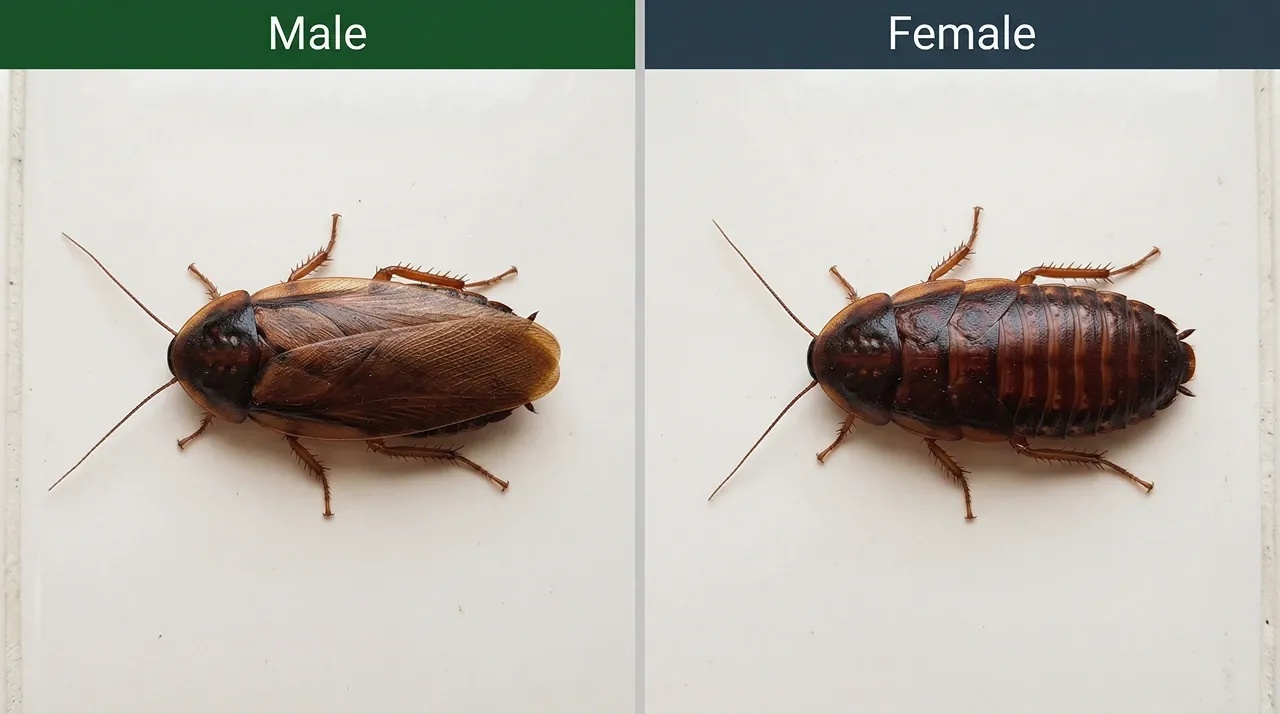
Males are easy to identify by their full wings, which cover most of the abdomen. Females have short wing stubs that leave the abdomen largely exposed.
Confirm the ratio when you buy your starter stock. Supplier batches labelled “mixed adults” sometimes run heavily male, which stalls breeding from the start.
What the Timeline Looks Like
Female dubias gestate for roughly 60–70 days and give birth to 20–35 live nymphs per litter. After delivery, females spend about a week recovering before becoming receptive again. Nymphs take four to five months to reach adult size through seven moult stages.
A colony started with healthy adults at the correct temperature and ratio will produce its first harvestable nymphs within three to four months. A colony started with poor temperatures, a bad sex ratio, or repeated disturbance can take six months or more to produce anything meaningful.
Leave the bin alone as much as possible during the first four to six weeks. Newly introduced roaches need time to settle into the environment before females begin producing, and repeated disturbance delays that process noticeably.
Week-to-Week Colony Care
Day-to-Day Colony Maintenance
Feed every two to three days and remove any fresh produce within 24 hours. Frass accumulates on the bin floor and needs clearing every four to six weeks for a mid-sized colony.
At clean-out time, transfer the egg flats to a spare tub, dump and bag the frass, and wipe the bin down with a damp cloth. Dry it fully before reassembling.
Hot water and a rough cloth are enough. Residue from strong chemical cleaners can harm nymphs that contact the surfaces after cleaning.
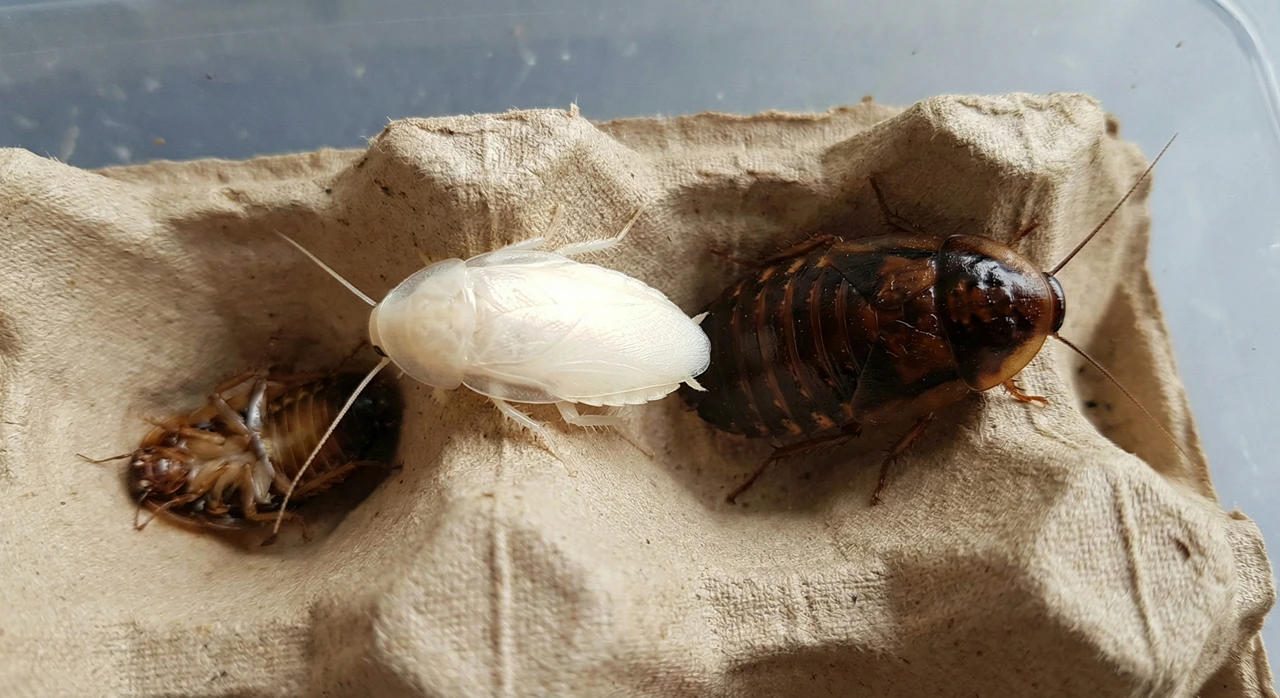
If you find a white roach during a clean-out, leave it where it is. A freshly moulted dubia is soft-bodied and vulnerable for a few hours until the new exoskeleton hardens and darkens back to normal.
The Male-to-Female Ratio
As the colony matures, males tend to accumulate faster because they develop slightly quicker than females. Too many males leads to breeding competition, stress, and nymph cannibalism. Feed off excess males to your dragon first. They are nutritionally identical to females and reducing them keeps the colony balanced.
Target 3:1 to 5:1 females to males at all times. A colony running 1:1 will underperform within a single generation.
How to Harvest Without Collapsing Output
Remove one or two egg flats at feeding time, shake them gently over a spare tub or feeding dish, and return the flats within a few minutes. The roaches that dislodge are your feeders for the day.
Avoid full colony disturbance for routine harvests. The less you disrupt the bin, the more consistently it produces.
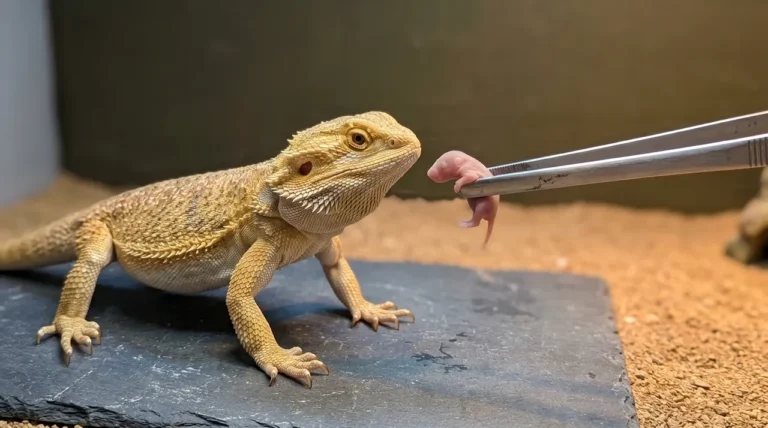
Size-match your harvest to your dragon’s age. The right feeder sizes for baby dragons are far smaller than what an adult can safely take. Nymphs under half an inch work for hatchlings and young juveniles. Adult dubias suit dragons over 14 inches.
Nothing wider than the space between your dragon’s eyes.
Why Your Colony Stopped Breeding
| Problem | Likely Cause | Fix |
|---|---|---|
| No nymphs after 10+ weeks | Temperature too low or poor sex ratio | Verify temp at egg flat height; recount and correct the ratio |
| Adults dying faster than nymphs appear | Starvation, overheating, or dehydration | Check water crystal dish daily; reduce heat if bin exceeds 95°F |
| Mould on food or egg flats | High humidity or produce left too long | Remove fresh food within 24 hours; improve lid ventilation |
| White moving specks on surfaces | Grain mites or predatory mites | Deep clean the bin; freeze egg flats for 48 hours; replace dry feed |
| Colony size stagnating despite activity | Harvesting too aggressively | Stop harvesting temporarily and let the colony build a nymph reserve |
| Ammonia or sour smell from the bin | Frass buildup, dead roaches, or rotting food | Deep clean immediately. A healthy colony should be nearly odour-free. |
How Dubias Fit Your Dragon’s Diet
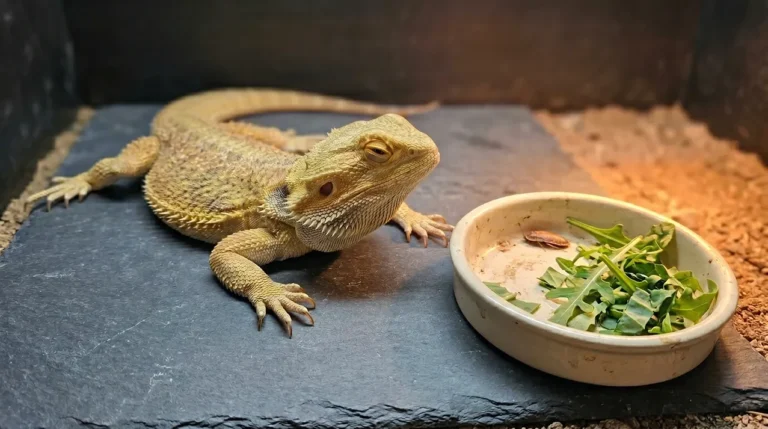
Dubias have a stronger protein-to-fat ratio than most commonly available feeder insects, and their moisture content is higher than crickets, which helps dragons that are reluctant to drink from a bowl on their own.
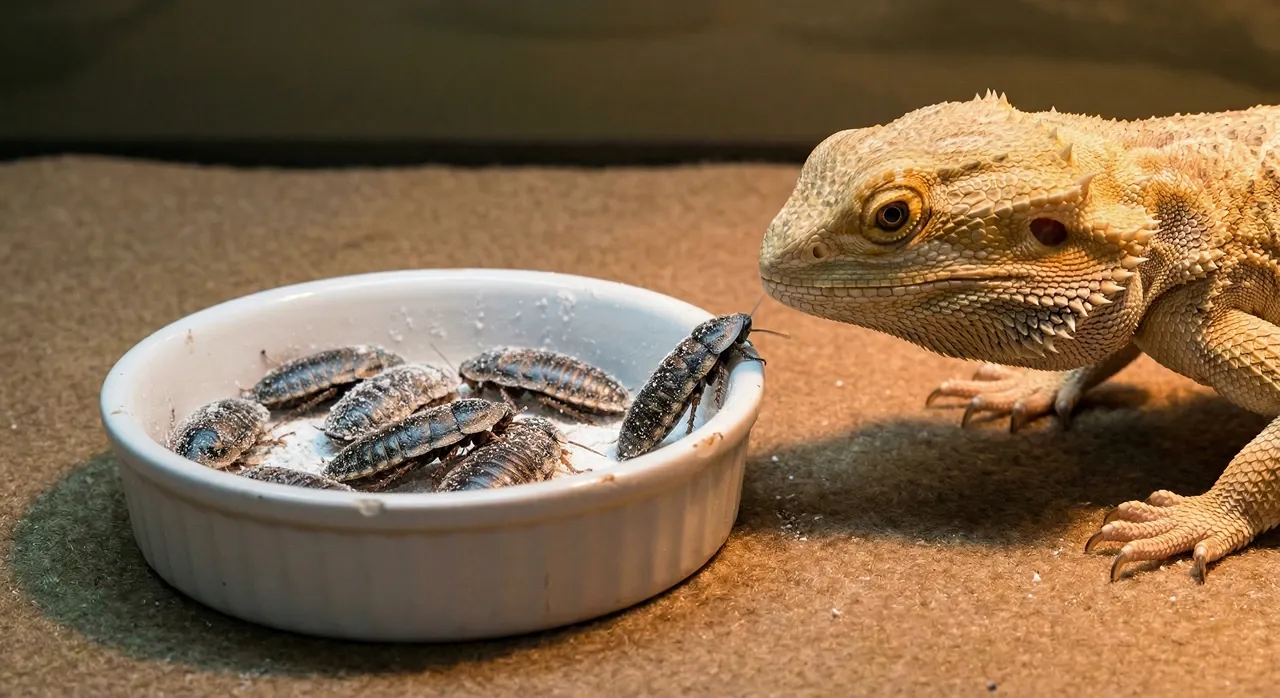
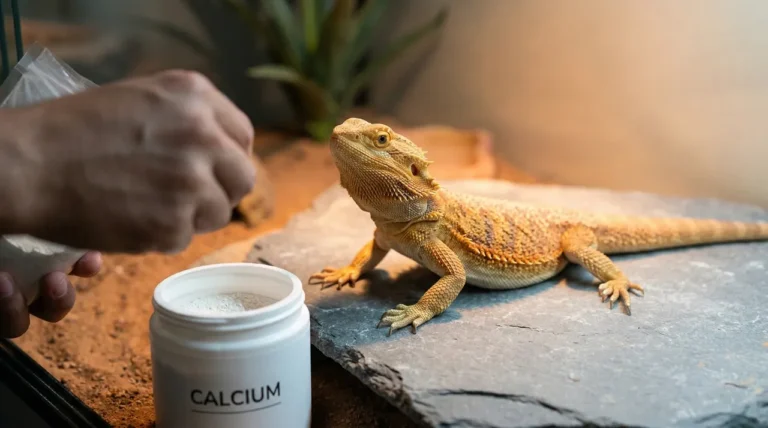
Even colony-raised dubias need to be dusted before every feed. The insect’s own calcium-to-phosphorus balance does not meet a bearded dragon’s requirements without supplementation. Follow your calcium dusting schedule exactly as you would with any other feeder.
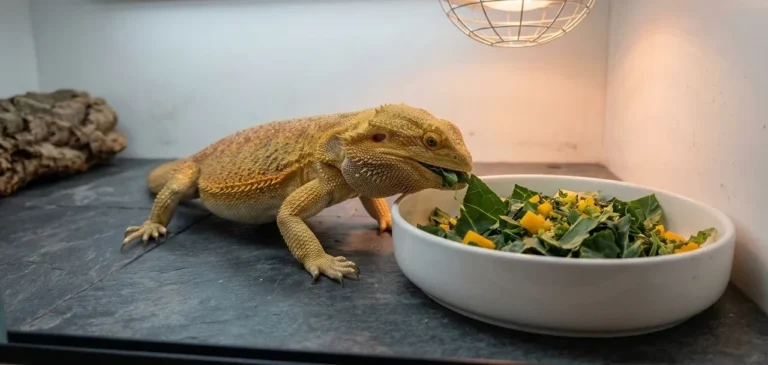
Gut loading matters even more when pulling insects directly from the bin, because the gap between harvest and feeding is much shorter than with store-bought stock that may have been shipped unfed. Keep the colony’s food dish stocked and varied.
Within the broader bearded dragon diet, dubias work best as the primary insect staple once the colony becomes self-sustaining. Rotating in other feeders still matters for nutritional variety.
Colony-raised dubias are not a nutritionally complete diet on their own, and bringing in mealworms as occasional treats or other insects keeps the diet diverse.
What a Self-Sustaining Colony Looks Like
A colony becomes self-sustaining when the number of nymphs reaching adulthood each month consistently exceeds the number you harvest. For one adult dragon, that typically requires 200 or more productive adult females. Getting there from a 100-roach starter colony takes four to six months under good conditions.
The most reliable visual confirmation is egg flats covered in roaches at every size stage simultaneously: small nymphs, mid-size nymphs, and adults all visible at once. Frass accumulating steadily between clean-outs, combined with a near absence of smell, tells you the population is healthy and actively producing.
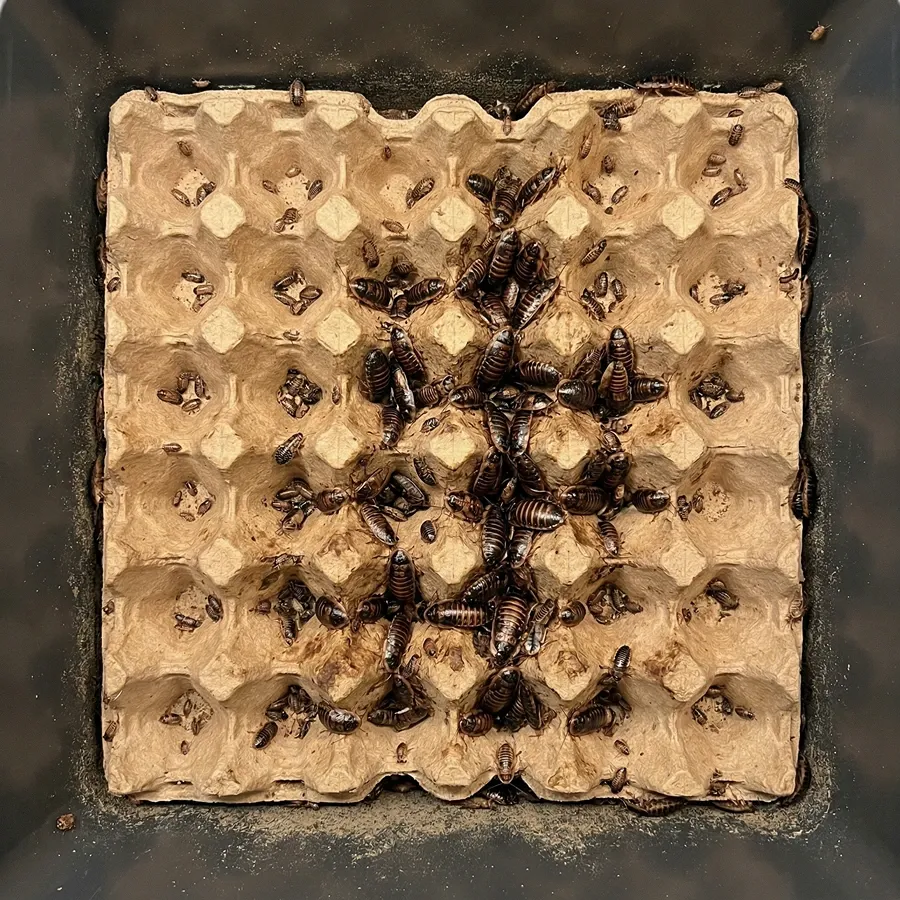
That is the milestone. Once you see it, the feeding demands of a growing juvenile become far easier to meet without a single trip to the pet store.
Frequently Asked Questions
How many dubias does a bearded dragon eat per day
A juvenile eats 20–50 small-to-medium nymphs per day across two or three feedings. An adult eats roughly 5–15 adult dubias every other day. Exact amounts vary by the dragon’s age and current body weight.
Do dubia roaches smell
A properly maintained colony produces very little odour. The frass is dry and nearly odourless. Smell is caused by rotting food, dead roaches left in the bin, or mould from excess moisture. All of these are preventable with regular maintenance.
Can dubia roaches escape and infest my home
Dubias cannot climb smooth plastic or glass and cannot survive long-term in cooler climates without supplemental heat. Escapees are an inconvenience, not an infestation risk in most homes. This is the primary reason they are restricted in warmer southern and island states.
What size roaches should I buy to start the colony
Buy adults or large sub-adults. Nymphs take too long to reach breeding age and push your timeline back by months. A starter batch of 100–150 adults, adjusted to your target sex ratio before introduction, is the most efficient starting point.
Can I feed harvested dubias to my dragon straight away
Yes, if the colony has been eating well. If the food dish was recently empty, gut load for at least 12–24 hours first. Roaches pulled from a well-fed colony can be dusted and fed immediately.
Do I need a lid if dubias cannot climb
Yes. Small nymphs can exploit gaps at the rim, other household pests can enter an open bin, and a vented lid keeps the humidity and temperature stable inside. A lid is non-negotiable regardless of the roaches’ climbing limitations.
Dubia Colony Setup Checklist
Work through this list before adding your starter roaches. A complete dubia colony setup done right on day one avoids weeks of troubleshooting later.
- Opaque tub with mesh ventilation cutout glued securely on the interior face of the lid
- Heat mat mounted on the exterior side wall, connected to a thermostat
- System run for 24–48 hours and temperature confirmed at 88°F at egg flat height
- Egg flats stacked vertically with at least two inches of clearance between the top of the stack and the lid
- Food dish filled with dry roach chow or commercial gut load
- Water crystal dish positioned away from the heat mat side of the bin
- Sex ratio confirmed at 3:1 to 5:1 females to males before any roaches go in
- Bin placed in a dark, low-traffic location, not on carpet
- Spare tub on hand for clean-out days
Written by
Sarah ArdleySarah has kept bearded dragons for over ten years. She founded Beardie Husbandry after discovering that most mainstream care advice — including what she followed with her first dragon — was doing more harm than good. Every article on this site is grounded in veterinary research and real keeper experience.