Do Bearded Dragons Need Heat at Night? (Night Temp Guide)
Whether bearded dragons need heat at night is one of the most commonly overthought questions in basic husbandry. The answer isn’t always or never. It depends entirely on one number: the actual ambient temperature inside the enclosure after the lights go off.
Most homes stay warm enough overnight that no supplemental heat is needed at all. But in colder climates, during winter, or in drafty rooms, letting that temperature drop unchecked is where real problems start.
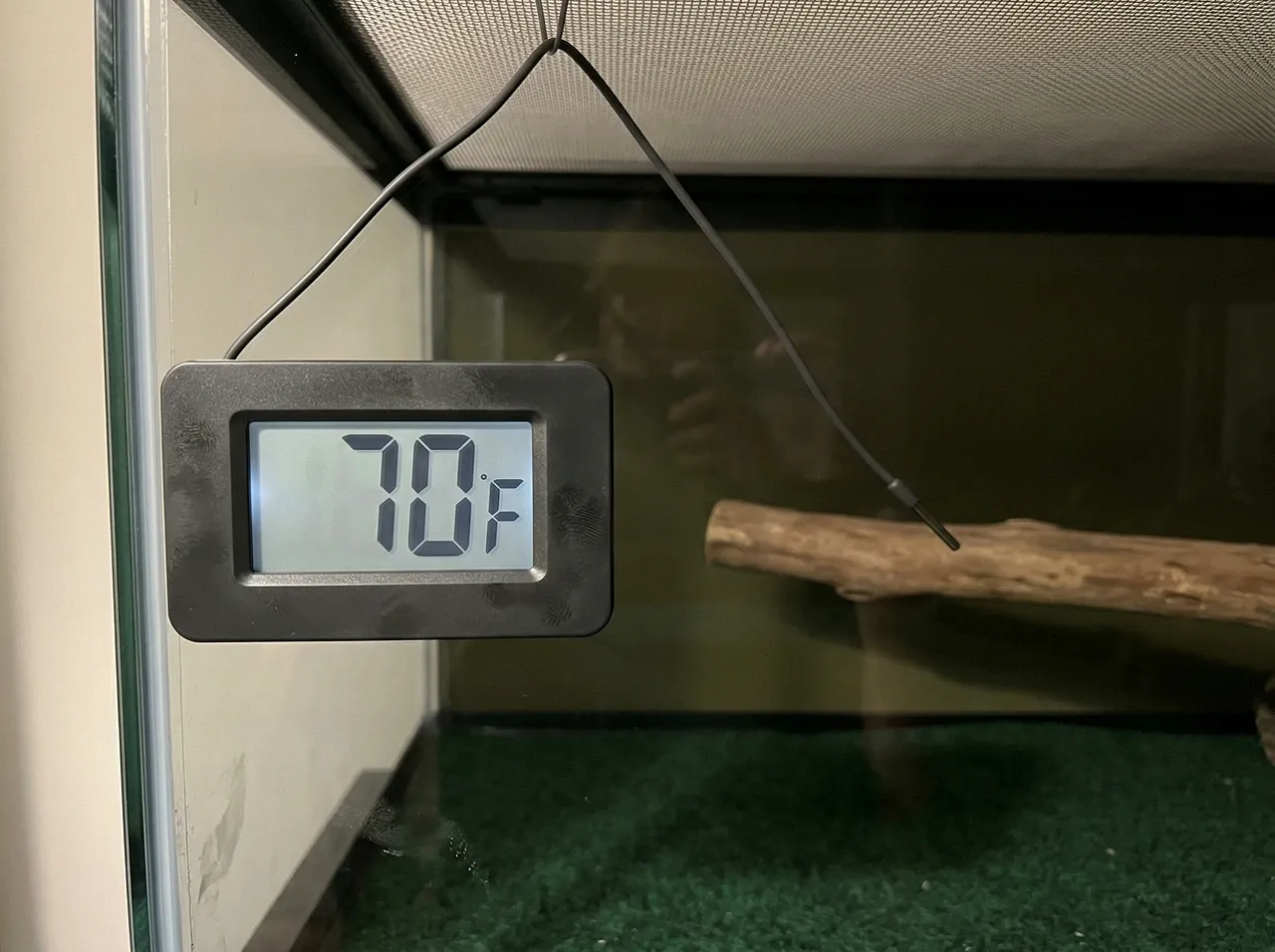
The most reliable way to know where your setup falls: leave a digital probe thermometer in the enclosure overnight and check the minimum reading in the morning. That single measurement tells you more than any general guideline.
What Temperature Is Actually Safe Overnight
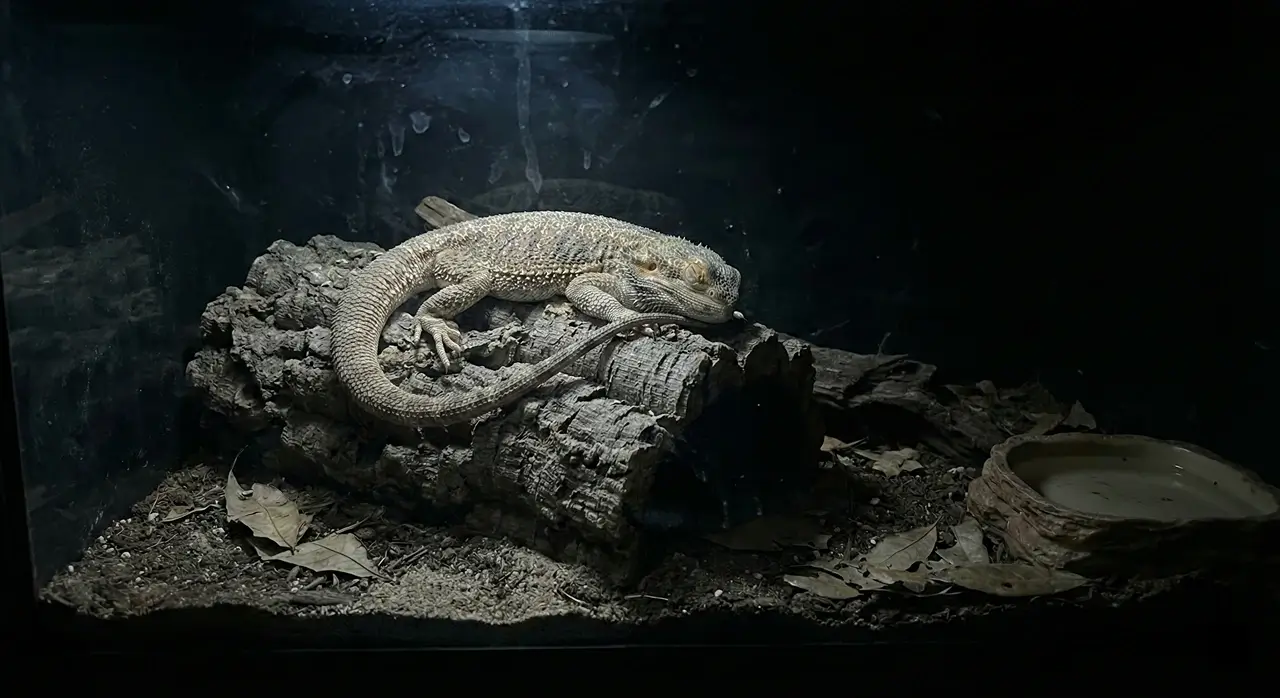
Bearded dragons come from the arid interior of Australia, where overnight temperatures can drop sharply after a hot day. They are physiologically adapted to cooler nights, and that drop serves a real purpose for their metabolism, immune function, and sleep cycle.
The problem only begins when the enclosure falls below what they can comfortably sustain for eight or more hours. The practical management threshold most experienced keepers use is 65°F (18°C). Above this, a healthy adult beardie with correct daytime heating will sleep without issue. Below it, intervention is needed.
The 65°F Rule vs. the 50°F Tolerance Figure
Some sources cite 50°F (10°C) as the low-end overnight tolerance for bearded dragons. That figure comes from field research on wild Central Australian agamids, and short-term exposure at that temperature is survivable.
A captive dragon sitting in those conditions for eight consecutive hours every night is a different situation entirely. The 65°F figure is the management threshold, the point at which a keeper should act. The 50°F figure is a tolerance ceiling for brief or occasional exposure, not a target for captive overnight temperatures.
Using 50°F as your guideline leaves no margin for error and assumes flawless daytime heating. There are very few setups where that assumption holds.
There is also a dependency most sources gloss over: cool nights are only safe when daytime temperatures are correct. A dragon that has basked properly all day and fully thermoregulated handles the overnight drop well. One kept too cool during the day does not. Nighttime temperature thresholds cannot be assessed in isolation from the daytime basking setup.
Baby Bearded Dragons Need a Tighter Range
Juveniles and hatchlings are more vulnerable to cold than adults. Their immune systems are less developed, their fat reserves are smaller, and their metabolisms respond more sharply to temperature swings. For babies under six months, aim to keep overnight temperatures above 72°F (22°C).
If your enclosure drops to 65°F overnight, an adult will be fine. A baby in that same enclosure is already too cold. The heating requirements for baby bearded dragons are stricter than for adults, and that applies overnight as much as during the day.
How to Check Whether Your Setup Actually Needs Night Heat
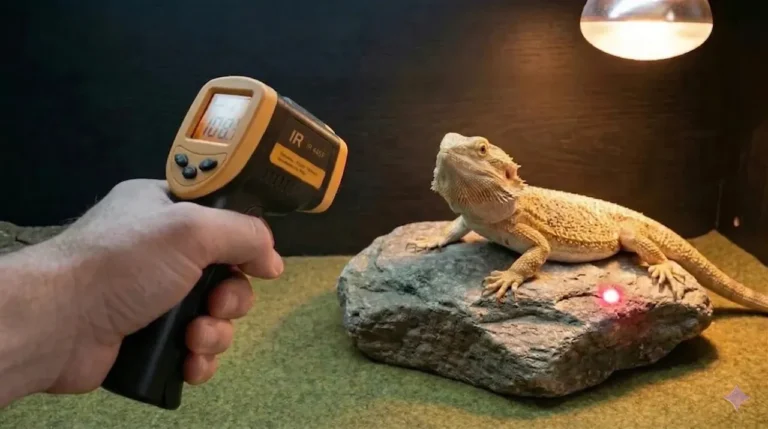
Before purchasing any equipment, spend two or three nights monitoring your enclosure temperature. Place a digital probe thermometer with a min/max memory function inside the enclosure, all lights and heat sources off, and check the reading in the morning. That overnight minimum tells you whether you have a problem.
Most keepers who run this test find their enclosure holds well above 65°F, especially in insulated glass or wooden vivariums. The table below covers the common scenarios and appropriate responses.
| Overnight Low (in enclosure) | Adult Dragon | Baby or Juvenile | Action Required |
|---|---|---|---|
| Above 72°F (22°C) | Fine | Fine | None. No supplemental heat needed |
| 65–72°F (18–22°C) | Fine | Borderline | Adults: none. Babies: add CHE on thermostat |
| 55–65°F (13–18°C) | Marginal | Too cold | Both: ceramic heat emitter required |
| Below 55°F (13°C) | Too cold | Too cold | Immediate: CHE plus address room temperature |
These figures assume correct daytime setup. A dragon that has not properly thermoregulated during the day is more vulnerable to the same overnight low than one that has.
The Only Heat Source Worth Using at Night
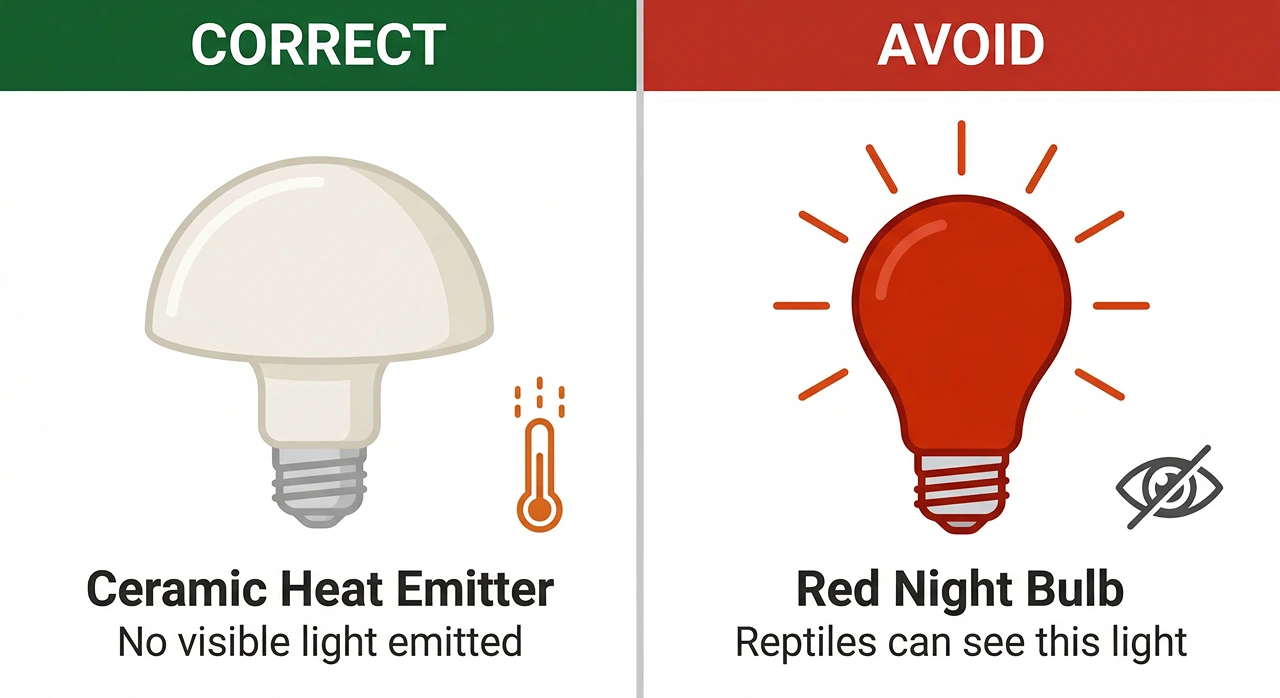
If your overnight readings show you need supplemental heat, the answer is a ceramic heat emitter (CHE) on a thermostat. It produces heat without any visible light, so it does not disrupt your dragon’s sleep cycle or circadian rhythm.
It mounts in any standard lamp dome and can run from the same fixture as your daytime basking lamp if you use a dual-dome setup. The CHE handles both requirements at once: it adds warmth without adding light. No other widely available heat source does both.
Why Colored Night Bulbs Are the Wrong Answer
Red, blue, and “moonlight” bulbs are still sold in most reptile shops and marketed specifically for nighttime reptile use. They are not appropriate for bearded dragons, and the reason matters: reptiles can see red light. It is not invisible to them the way it is to mammals.
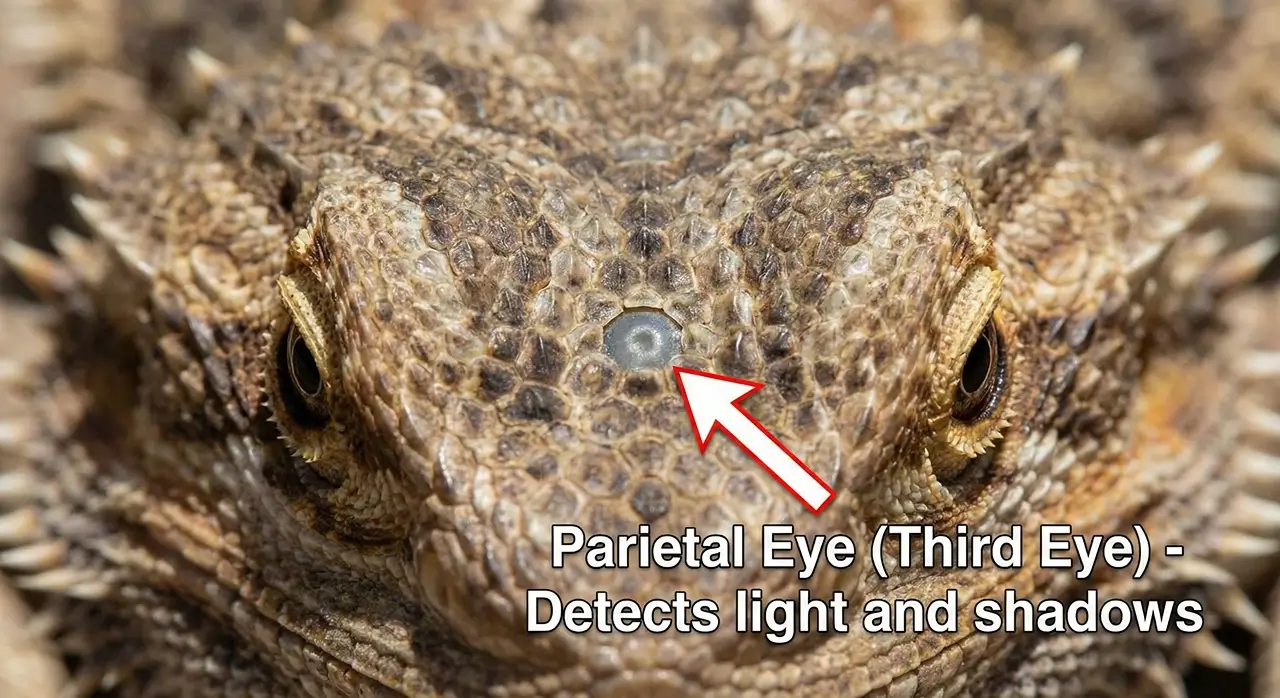
A red or blue glow inside the enclosure overnight disrupts the sleep cycle and interferes with circadian rhythm. No colored night bulb belongs in a bearded dragon setup, regardless of how it is packaged or what the label claims.
Heat Mats and Why They Fall Short
Under-tank heat mats raise substrate temperature, not ambient air temperature. Bearded dragons regulate their body temperature by moving through the thermal gradient of their enclosure. That movement happens through the air column and basking positions overhead, not underfoot.
Heat mats placed under or inside substrate also carry a burn risk if a dragon burrows directly onto one, and they are difficult to regulate with precision. They are not the right tool for overnight ambient heating in a bearded dragon enclosure.
How to Set Up a CHE for Overnight Use
A dual-dome fixture with a CHE in one socket and your daytime basking halogen in the other is the cleanest approach. The basking lamp handles daytime heat, the CHE holds the overnight floor temperature, and each runs on its own thermostat setting.
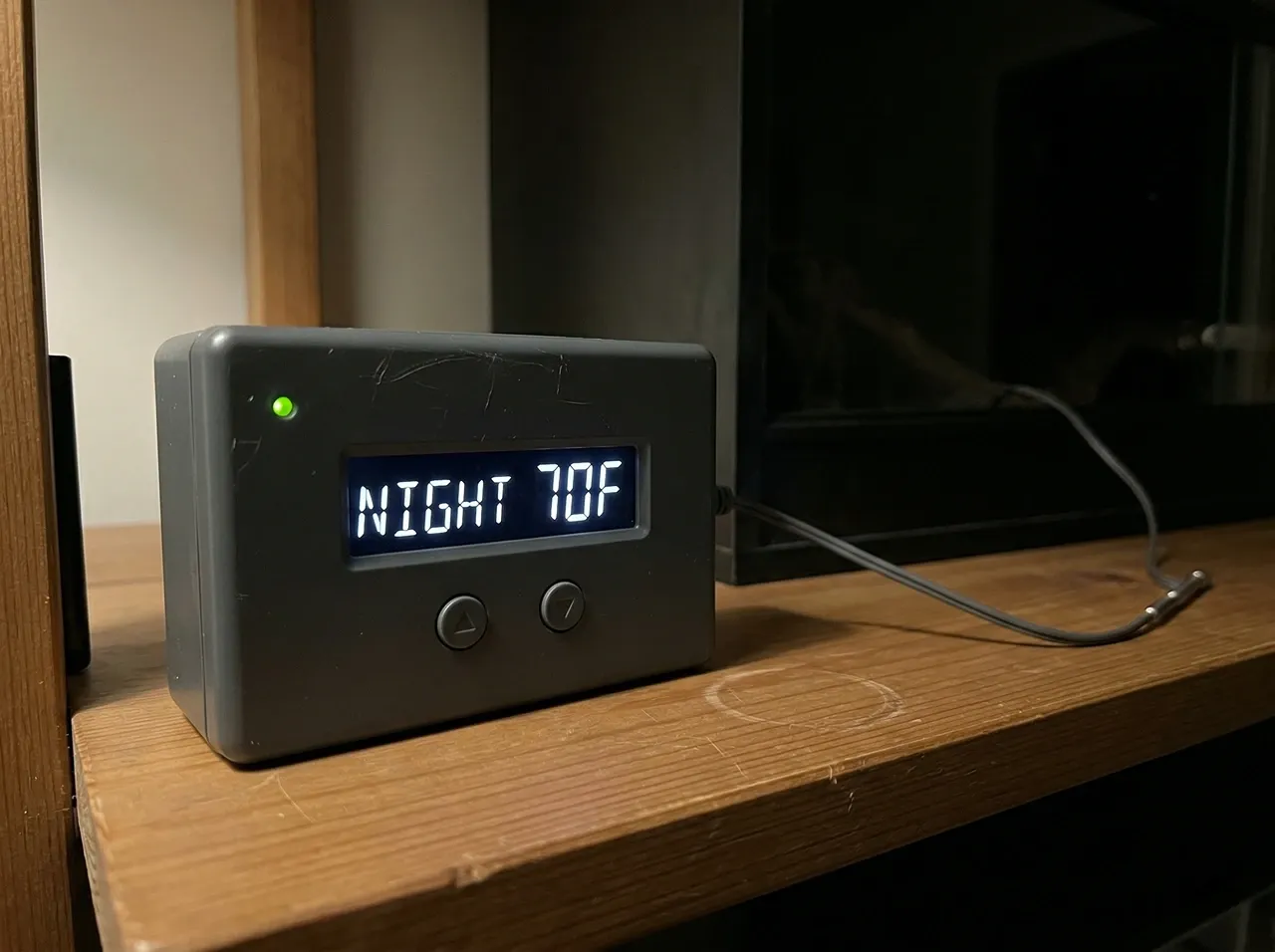
Some pulse thermostats allow separate day and night temperature setpoints, so the enclosure switches between the two automatically at lights-out without any manual adjustment. A dual-setpoint thermostat handles both targets from a single controller and removes the guesswork from the transition entirely.
What Temperature to Set the CHE To
Set the CHE thermostat to hold the enclosure at around 68–72°F (20–22°C) overnight. You are not trying to maintain daytime temperatures through the night. The temperature drop is deliberate and beneficial. The CHE should activate only when the ambient drops below your set point, not run continuously.
Place the thermostat probe at mid-enclosure height on the cool side, not directly under the CHE. A probe positioned under the heat source will read higher than the ambient temperature your resting dragon is actually experiencing, and accurate temperature measurement depends on getting that placement right.
What Consistently Cold Nights Actually Do
A single cold night in an otherwise well-managed setup causes very little harm, but a dragon regularly spending eight hours below 55°F is a different situation. Consistently cold overnight temperatures slow digestion, suppress immune function, and progressively push the dragon toward brumation even when daytime conditions are correct.
If your dragon is becoming increasingly lethargic, eating less, and spending more time inactive during daylight hours despite proper basking, overnight temperature is one of the first variables to check.
Cold nights combined with a shortening photoperiod are a common trigger for unseasonal or prolonged brumation in dragons that are neither old enough nor conditioned for it.
Sustained overnight cold also sets up the conditions in which respiratory infections develop. A dragon running below immune capacity from repeated cold nights is far more susceptible to pathogens already present in the enclosure, and an RI in winter is frequently traced to the thermal environment rather than a single pathogen exposure.
Why Night Temperature Should Change With the Season
Bearded dragons in the wild experience genuine seasonal variation: longer, hotter summer days and shorter, cooler winter days and nights. Replicating that variation in captivity supports healthy hormonal cycling, normal brumation behaviour in older adults, and reproductive health across the year.
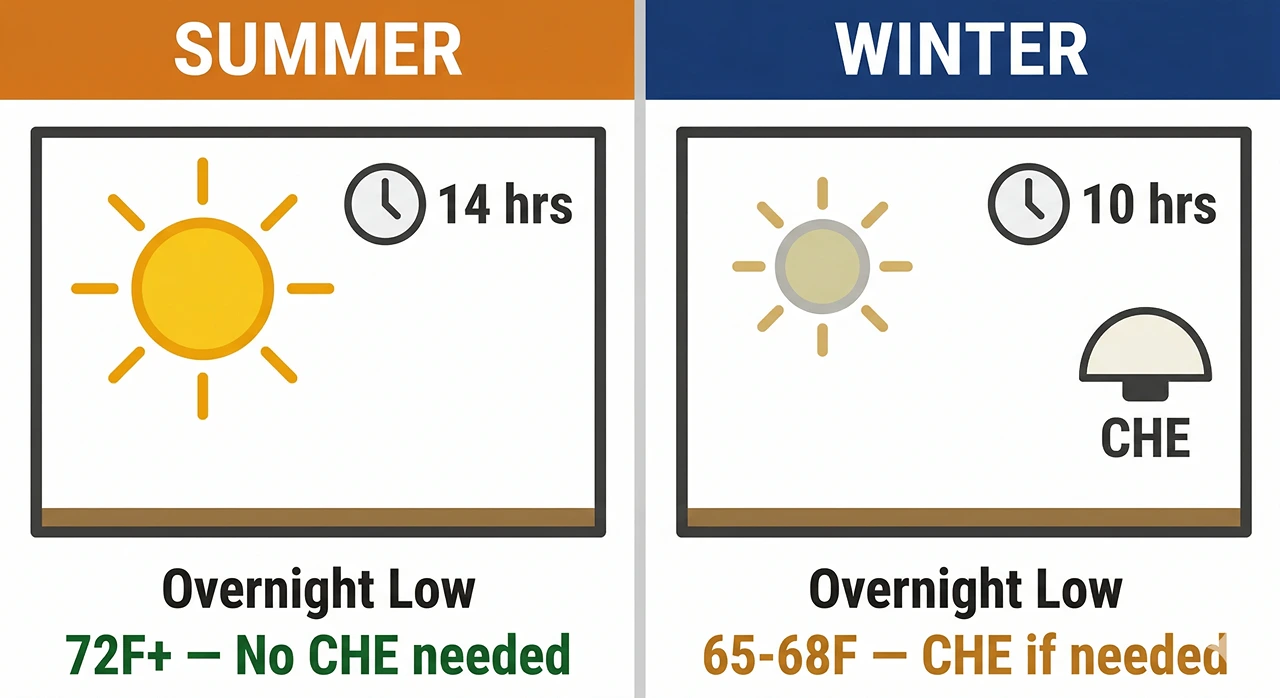
During winter months, allow overnight temperatures to sit at the lower end of the acceptable range, 65–68°F (18–20°C), if your setup permits it naturally. In summer they may sit higher without any intervention at all.
This variation is biologically meaningful. Artificially holding the same temperature year-round removes a seasonal cue the dragon’s body actually uses.
The practical implication: in summer, if your room temperature keeps the enclosure above 72°F overnight without a CHE, that is ideal. In winter, if it drops to 65–68°F and you have a well-managed adult, that is acceptable, and arguably more appropriate than holding summer temperatures year-round.
Frequently Asked Questions
What temperature is too cold for a bearded dragon at night?
Below 65°F (18°C) is where problems begin for adult dragons. For babies and juveniles, below 72°F (22°C) is too cold for sustained overnight exposure. These are management thresholds, not tolerance limits. Your enclosure should hold above them reliably every night, not just on average.
Can I use a red or blue bulb at night instead of a CHE?
No. Bearded dragons can see red and blue light. These wavelengths are not invisible to reptiles the way they are to humans. Any visible light overnight disrupts the sleep cycle and circadian rhythm. A ceramic heat emitter produces heat with no light output and is the only appropriate choice for nighttime supplemental heating.
Does my bearded dragon need heat at night in summer?
In most heated homes during summer, no supplemental heat is needed at night. The enclosure retains enough warmth from the daytime photoperiod that overnight lows stay well above 65°F. Check with a thermometer rather than assuming, but summer nights are rarely the problem.
Will a cold night trigger brumation?
A single cold night will not trigger brumation. Repeatedly cold nights alongside a shortening photoperiod in autumn and winter can push even younger dragons toward brumation ahead of time. If cold nights are a recurring issue heading into winter, adding a CHE is simpler than managing unexpected brumation.
Is a heat mat a safe alternative for overnight use?
Heat mats are not well-suited to nighttime ambient heating in a bearded dragon enclosure. They warm substrate rather than air, carry a burn risk if the dragon contacts the mat directly, and do not regulate to the precision a thermostat requires. A ceramic heat emitter is the more reliable and appropriate choice.
The One Check to Run Before the Next Cold Snap
If you have never tested what your enclosure actually reaches overnight, do it before a problem appears rather than after. Place a digital probe thermometer at mid-enclosure height on the cool side, leave it overnight with all lights and heat sources switched off, and check the minimum reading in the morning. That reading tells you whether your bearded dragon needs heat at night.
Above 72°F and you need nothing. Between 65°F and 72°F, adults are fine but babies need a CHE on thermostat. Below 65°F, add a ceramic heat emitter regardless of age, and check whether the enclosure is sitting near a cold wall or draught that could be driving the drop further than it needs to go.
One overnight test. One morning reading. That is the entire diagnostic. Run it before spending money on equipment you may not need.
Written by
Sarah ArdleySarah has kept bearded dragons for over ten years. She founded Beardie Husbandry after discovering that most mainstream care advice — including what she followed with her first dragon — was doing more harm than good. Every article on this site is grounded in veterinary research and real keeper experience.