Bearded Dragon Yellow Fungus – Does Your Dragon Have It
Finding a rough, discoloured patch on your dragon’s scales sends most owners straight to the worst forum thread on the internet. Half of them will tell you it is definitely yellow fungus. The other half will tell you it is probably nothing.
Bearded dragon yellow fungus is real, serious, and consistently underdiagnosed in its early stages. It is also the most commonly misidentified condition in the hobby. Thermal burns, stuck shed, and normal pigment variation all get mistaken for it every week.
The outcome of this disease is shaped almost entirely by timing. An owner who acts on the first textural change has a different prognosis than one who waits two weeks hoping it resolves on its own.
This guide explains what you are actually looking at, how vets confirm it, what current treatment realistically involves, and when the patch you are worried about is almost certainly something else entirely.
What Yellow Fungus Disease Actually Is
Yellow fungus disease is a progressive fungal infection caused by Nannizziopsis guarroi, the organism now confirmed as the primary cause in captive bearded dragons. It attacks skin first, then deeper tissue, and in advanced cases reaches bone and internal organs.
You will see two names in older forum threads. YFD and CANV refer to the same clinical picture. CANV stands for Chrysosporium anamorph of Nannizziopsis vriesii, the classification before molecular testing identified N. guarroi as the bearded-dragon-specific pathogen. Your vet may use either term.
This is not a surface yeast infection. It is a primary pathogen that invades healthy tissue rather than waiting for a compromised host. A well-kept dragon with perfect husbandry can still contract it. Stress, cohabitation, injury, and poor conditions raise the risk substantially.
What Early Yellow Fungus Looks Like
Most articles describe yellow fungus as “yellow crusty patches on the skin.” That description is accurate for mid-stage infection. It is almost useless for catching the disease early, which is when catching it matters most.
The Texture Comes Before the Colour
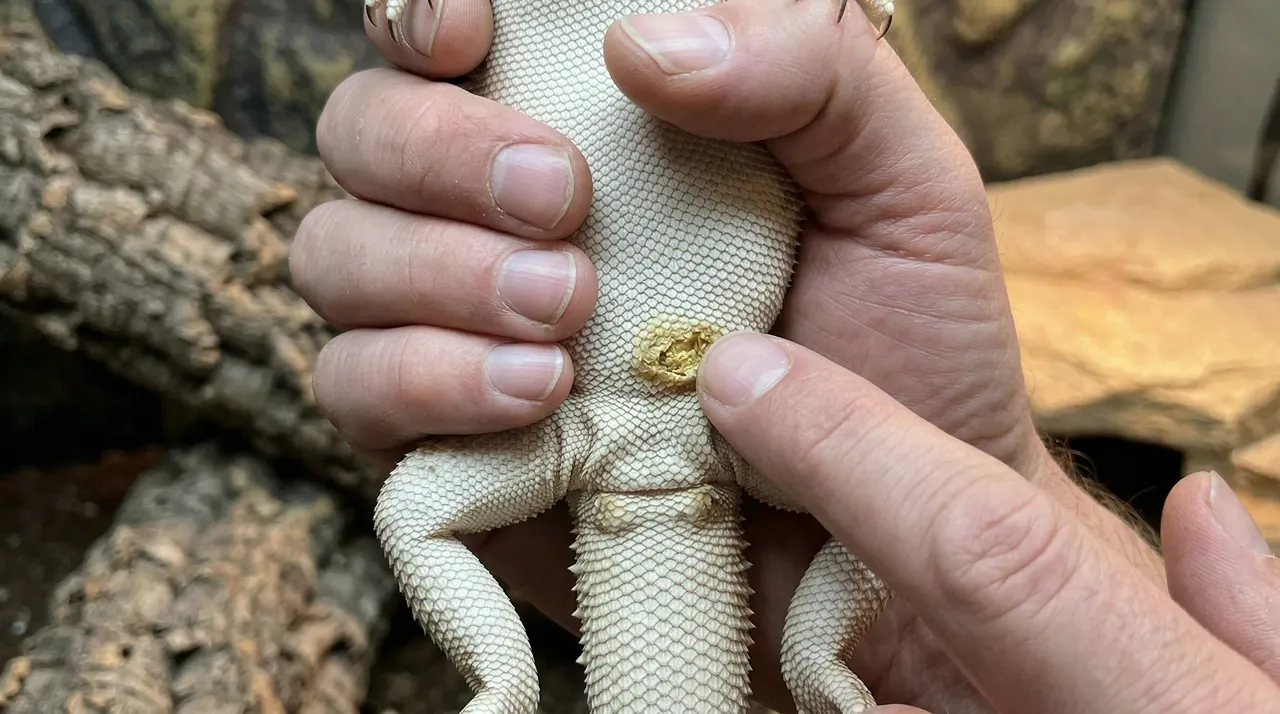
Early lesions are often not vividly yellow. They can be amber, matte beige, pale golden, or even darkly pigmented. Published case work from the University of Illinois has documented dragons with dark crusty lesions rather than classic yellow ones. Colour alone is an unreliable first filter.
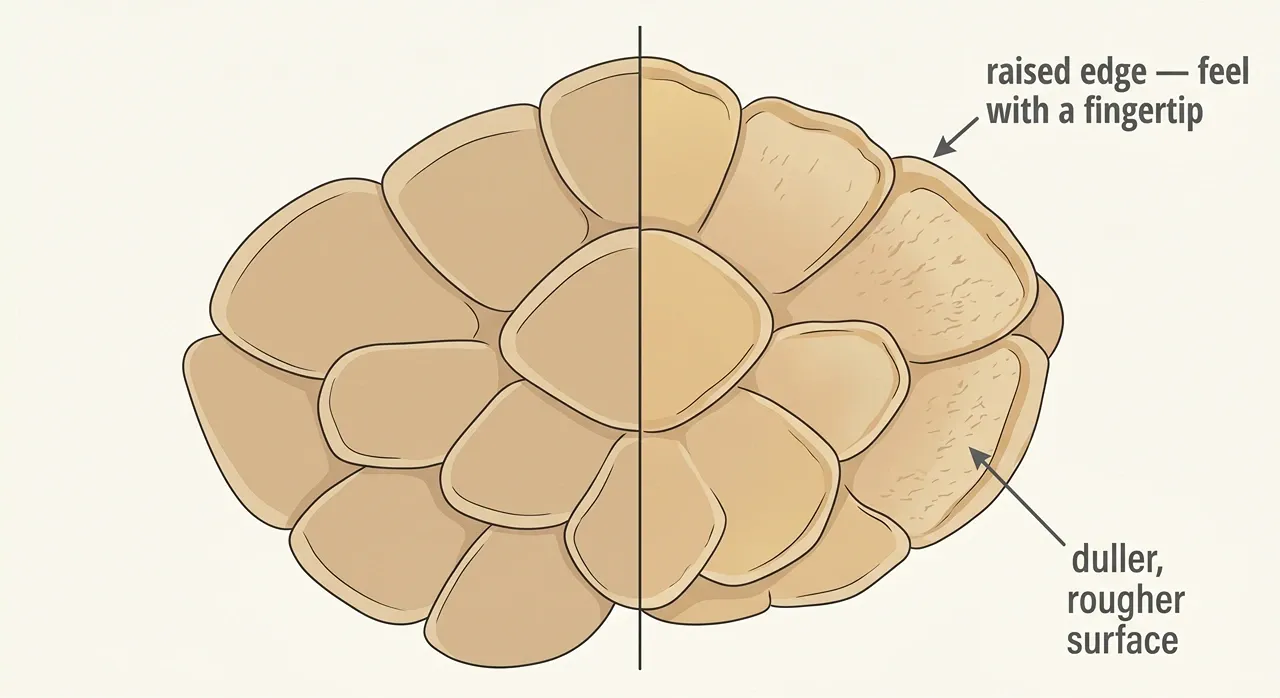
Run a fingertip gently across any suspicious patch. Early yellow fungus feels slightly raised at the edges. The scales look duller and rougher than the skin surrounding them. The texture change is what you are looking for.
Shedding That Never Finishes Cleanly
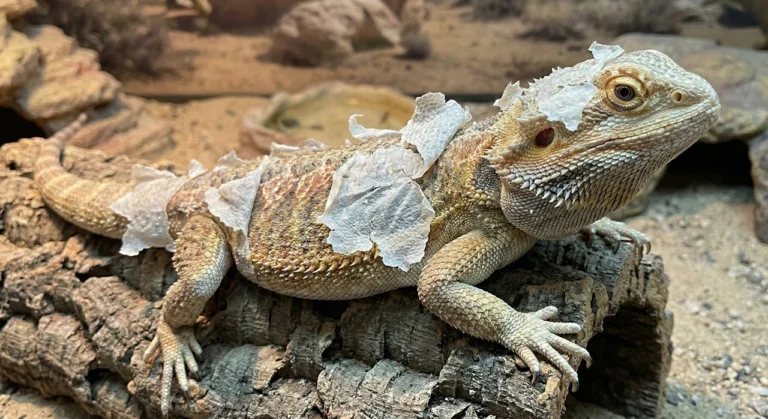
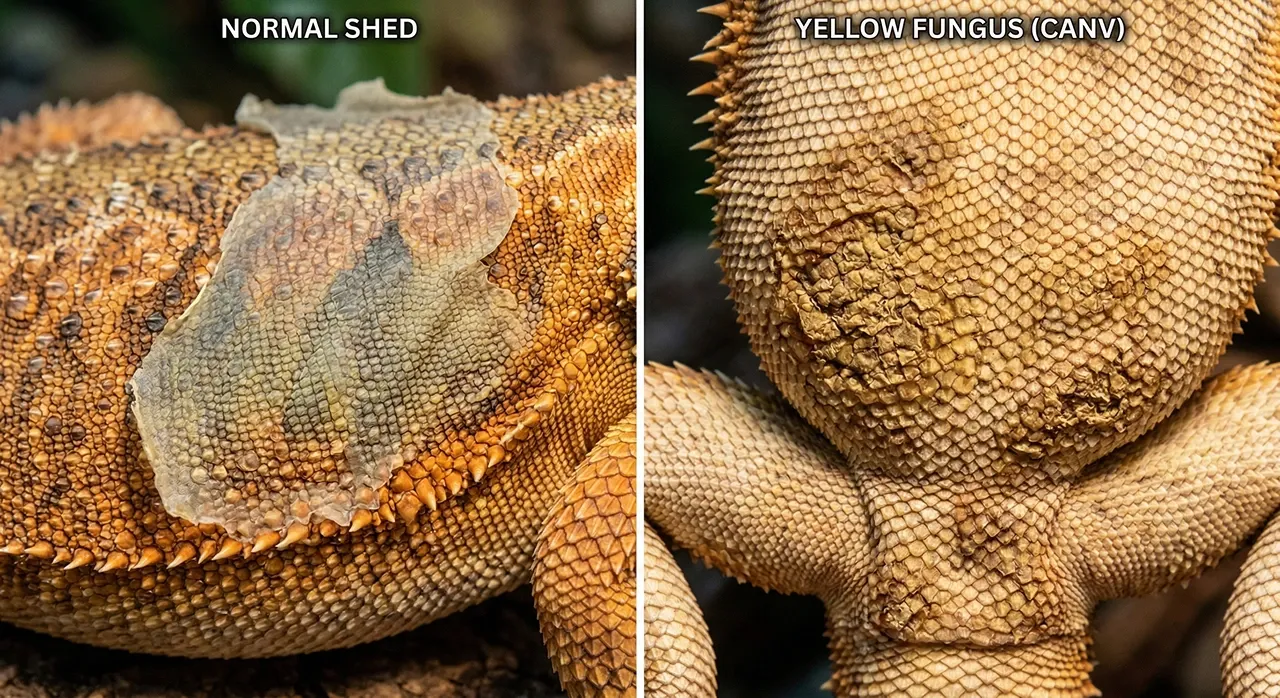
A patch showing roughened, discoloured scales after what looked like a complete shed is a warning sign most owners miss. Healthy shed reveals fresh, correct-coloured scales underneath. An early fungal lesion leaves a textured surface that persists through every shed cycle.
A related early sign is abnormally frequent shedding. Dragons with early cutaneous infection sometimes cycle through sheds faster than usual, turning opaque again almost immediately after finishing one. A shedding storm with no other explanation, combined with any roughened patch, belongs in a vet call rather than a watch-and-wait post.
This is distinct from the normal variation in healthy shed frequency, which tapers predictably as a dragon ages. A juvenile shedding monthly is normal. An adult suddenly shedding every three weeks is not.
What It Gets Mistaken For
Before assuming the worst, work through the three conditions that consistently get confused with yellow fungus. Getting this right at home saves a week of wrong assumptions and sometimes a round of unnecessary medication.
Thermal Burns
Burns produce yellow, orange, and brown discolouration with damaged scale texture. That is almost identical to early fungal lesions at a glance. The difference is location and recent history.
Burns appear on the body surfaces directly beneath the heat source. The top of the head, the dorsal surface of the back, the neck. Yellow fungus appears randomly and commonly starts on limbs, flanks, or tail.
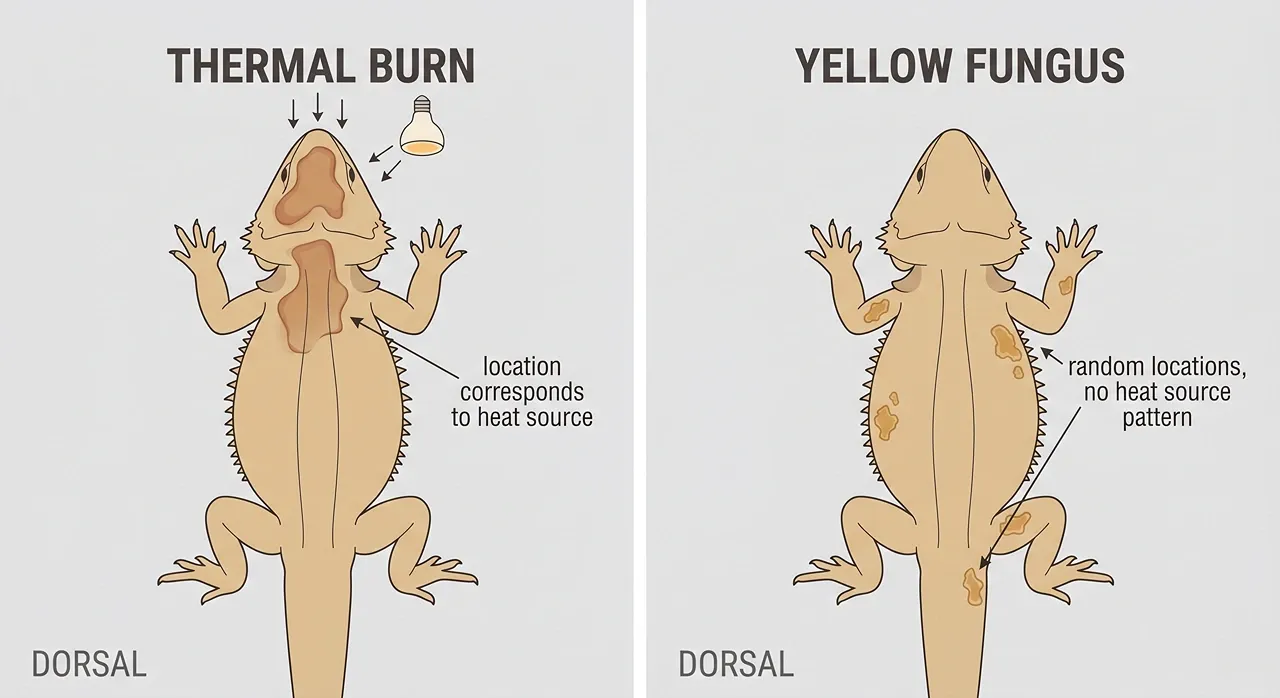
A recent thermostat failure, a new bulb placed too close, or contact with an unguarded ceramic emitter points toward a burn. Understanding what a real thermal burn looks like in its early stage makes this differentiation much easier to do at home.
Stuck Shed Across Multiple Cycles
Retained shed can thicken into discoloured patches that read as yellow or tan. The clean test is a 15-minute warm soak followed by gentle shed assistance. If healthy scales emerge underneath, you were looking at stuck shed. If the patch remains unchanged or the tissue underneath looks compromised, the situation shifts.
Retained shed that refuses to lift after a proper assisted soak is not a shed problem anymore.
Normal Pigment Variation
Yellow-morph and citrus dragons often have naturally variable skin tones that new owners misread. A patch completely static for months, same size, same texture, same colour, appearing on a dragon with normal appetite and activity, is almost never yellow fungus.
The disease does not stay the same. Anything growing, spreading, or changing texture over a two-week window needs a professional look regardless of what else it might be. The same stability-versus-change rule applies when assessing dark tail changes, where stability over time is the key data point separating benign from urgent.
When to Call the Vet
Every article says “see a vet immediately” without explaining what immediately actually means in practice. Here is a calibration that helps.
Same-day call: book an appointment today if any of the following apply.
- The patch is visibly larger than it was three or four days ago
- Multiple separate patches have appeared on different parts of the body
- The tissue under the discolouration looks sunken, soft, or is weeping any fluid
- Appetite has dropped alongside the skin change
- The patch remains or worsens after a full assisted shed
Within the week: a single static patch on a dragon that is eating and behaving normally still needs professional assessment, but booking inside the week is acceptable if none of the escalation signs above apply.
If you do not already have an exotic specialist, the fastest route is through a local reptile keeper community or a board-certified directory search. Our guide to finding a qualified reptile vet walks through what to ask on the phone before committing to an appointment.
How Vets Actually Confirm It
Confirmed diagnosis requires tissue sampling. Expect your vet to briefly sedate the dragon, take a small skin biopsy from the lesion margin, and submit samples for three separate tests. Histopathology examines the sample under a microscope to identify fungal structures within the tissue. Fungal culture attempts to grow the organism. PCR testing provides a DNA-level identification confirming N. guarroi specifically.
Bloodwork runs alongside the biopsy to assess liver and kidney function, which matters both for the diagnosis and for the treatment that follows. Radiographs may be recommended if deeper tissue or bone involvement is suspected.
A presumptive diagnosis based on strong clinical suspicion is sometimes used where budget or lab access is limited. This is a compromise, not an equivalent. Treatment started on presumption can waste months if the actual cause is bacterial or burn-related.
What Current Treatment Actually Looks Like
Voriconazole at 10 mg/kg daily was the gold standard for CANV treatment for years. Recent research has shifted the picture. A 2022 University of Illinois case report demonstrated successful treatment of N. guarroi in a bearded dragon using terbinafine after voriconazole caused unacceptable toxicity and failed to clear the infection.
Your vet will choose between voriconazole, terbinafine, or combination protocols based on the dragon’s condition and current published data. Both are systemic antifungals. Both require long treatment courses.
How Long Treatment Actually Takes
Treatment is not a two-week course. Published voriconazole protocols averaged 47 days to achieve fungal elimination in bearded dragons. Real-world cases routinely run two to six months, with monthly rechecks and repeat bloodwork to monitor liver function.
Terbinafine pharmacokinetic research supports oral dosing at 20 mg/kg every 24 to 48 hours for N. guarroi susceptibility. Voriconazole at 10 mg/kg daily remains a documented alternative. Both are prescription-only and require veterinary calculation against the specific dragon’s weight and condition.
Topical povidone iodine or chlorhexidine applied directly to the lesion once or twice daily runs alongside oral medication, not as a replacement for it. Topical treatment alone cannot clear an infection that has already moved below the skin surface.
Debridement and Why It Matters
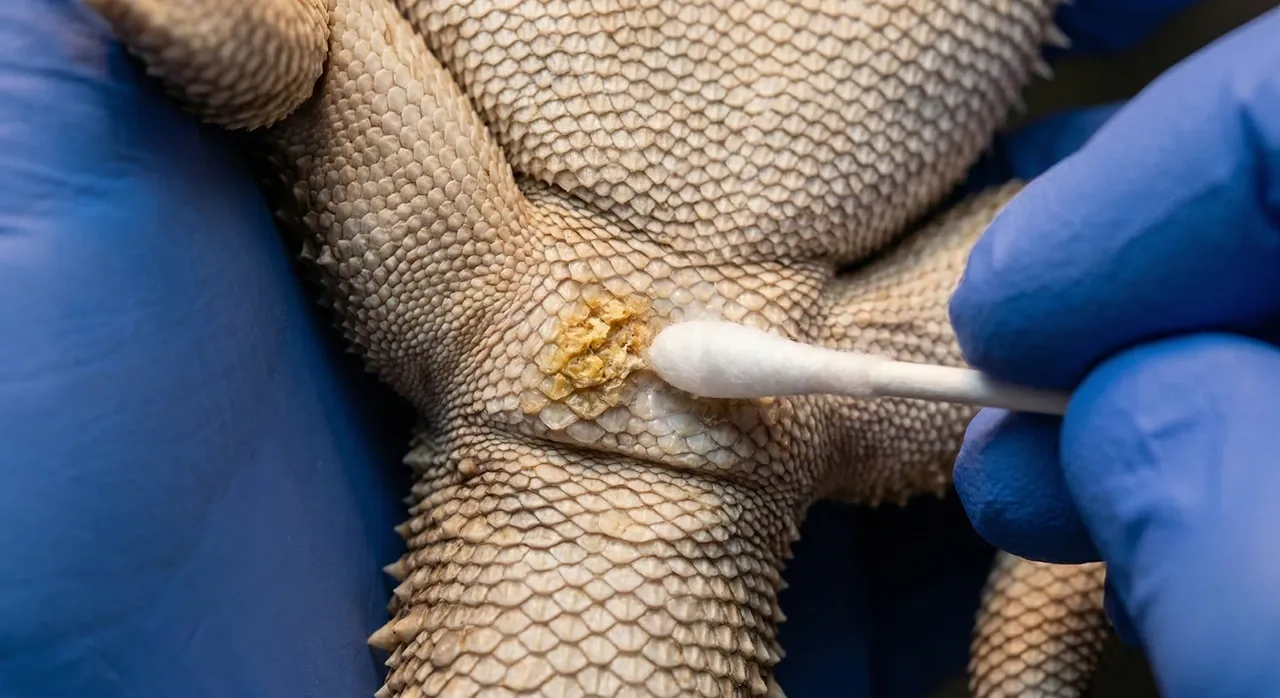
Where dead tissue is present, the vet may recommend debridement. This is the physical removal of necrotic tissue, which the fungus feeds on and which systemic drugs cannot reach because the dead tissue has lost its blood supply.
Some debridement happens at the clinic under sedation. Some may be assigned to the owner at home if the lesion is small and accessible. Do not attempt home debridement without specific veterinary instruction on exactly where to cut, what tools to use, and how to disinfect before and after.
The Honest Prognosis
Two myths run the internet on this. The first is that bearded dragon yellow fungus is always fatal. The second is that early treatment almost always works. Neither is accurate.
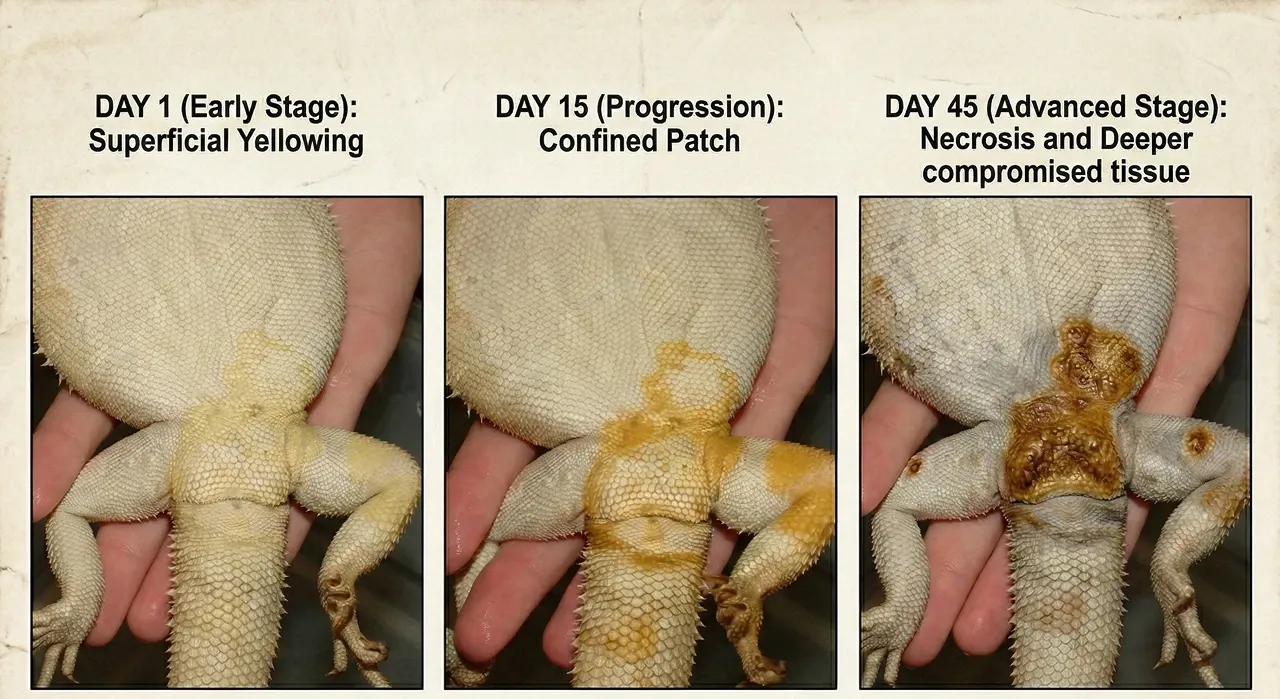
A single superficial lesion caught early, no internal involvement, dragon still eating and active, treated consistently with current antifungals: this scenario has produced documented cases of full cultural clearance confirmed by negative follow-up culture and PCR. The disease can be beaten. It is not automatic.
Internal involvement, multiple spreading lesions, significant tissue necrosis, or systemic symptoms such as weight loss and anorexia carry a substantially worse outlook. Documented outcomes in advanced cases frequently end in euthanasia within six to twelve months of diagnosis.
The difference between those two outcomes is mostly determined by how early the first textural change was noticed and acted on. There is no middle prognosis. There is early action, or there is everything that follows from delay.
Remission Is Not the Same as Clearance
Remission means the lesion has stopped progressing and the dragon is stable. Clearance means repeated culture and PCR have confirmed the fungus is absent.
Ask your vet which one they are describing when they use words like “better” or “improving.” The two terms carry very different long-term implications for monitoring and possible recurrence.
Decontaminate the Enclosure Immediately
Treat the enclosure as contaminated from the moment yellow fungus is suspected. N. guarroi spreads through direct contact and through the air. Substrate, hides, decor, and the enclosure walls all carry infectious load.
Move the dragon to a hospital setup: paper towel substrate, a single hide, a water dish, and nothing else that cannot be wiped down daily. Disinfect every surface the dragon touches with a 1:10 bleach solution rinsed thoroughly and dried completely, or with F10SC at the manufacturer-recommended dilution. Published case management used weekly sodium hypochlorite decontamination until cultures went negative.
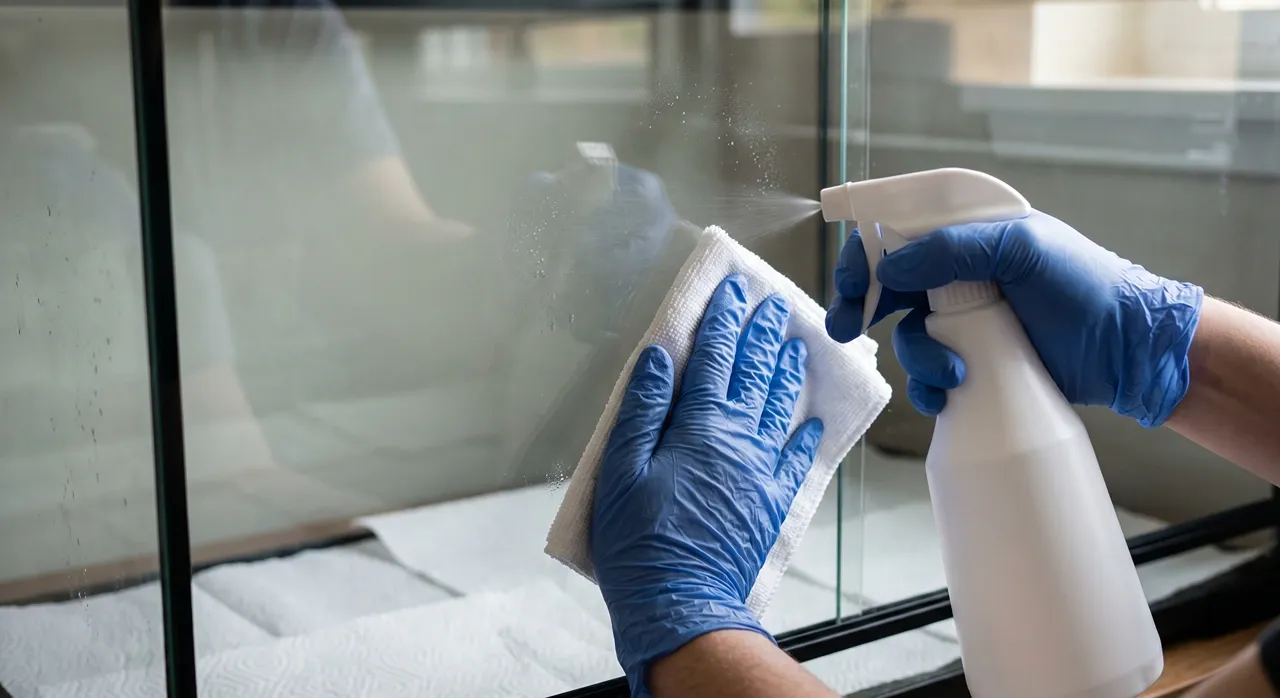
Porous items are disposed of, not cleaned. Wooden hides, cork bark, fabric hammocks, loose substrate, and live plants cannot be reliably disinfected. Hard surfaces can be scrubbed, rinsed, and fully dried before reuse.
Symptoms, Causes, and Actions
| What You See | Dragon’s Behaviour | Most Likely Cause | Action |
|---|---|---|---|
| Yellow or tan patch, unchanged for months | Eating, active | Pigment variation or old burn scar | Monitor. Vet check if uncertain. |
| Rough dull scales after a shed | Eating | Stuck shed or early YFD | Warm soak, assist shed. Vet if patch remains. |
| Patch under basking area, heat event history | Any | Thermal burn | Vet assessment. Do not assume YFD. |
| Growing patch, raised texture, random location | Any | Probable YFD | Same-day vet call. |
| Multiple patches, different body areas | Reduced appetite | Probable YFD with spread | Same-day appointment. |
| Sunken, soft, or weeping tissue | Lethargic, not eating | Advanced YFD or bacterial | Emergency vet visit. |
| Abnormally frequent sheds plus any skin change | Any | Possible early YFD immune response | Vet call. Do not wait for visible lesion. |
Prevention Starts With Husbandry
Yellow fungus is not a husbandry-only disease. A well-kept dragon can still contract it. But every preventable risk factor is a husbandry factor, and none of them are exotic.
Solo housing is the single most protective choice. Cohabitation drives stress, bite wounds, and direct transmission. Skin injuries from scuffles give the fungus a point of entry.
A correct basking gradient supports the behavioural thermoregulation that reptiles rely on for immune function. Chronic undertemping is one of the quiet predisposing factors behind fungal disease in reptiles. Proper basking temperatures are not optional comfort settings.
Correct supplementation maintains the immune baseline that resists a primary pathogen. A dragon on an inadequate calcium and vitamin routine has compromised immune function before anything else goes wrong.
Quarantine any new dragon for a minimum of 90 days in a completely separate enclosure with separate tools and separate handwashing. This is where yellow fungus most commonly enters established collections. The Merck Veterinary Manual’s overview of reptile fungal diseases reinforces that quarantine and environmental hygiene are the foundational interventions before any antifungal protocol.
Frequently Asked Questions
Is bearded dragon yellow fungus contagious to humans?
N. guarroi is not recognised as a zoonotic disease. Healthy humans are not at meaningful risk from handling an infected dragon. Rare cases in severely immunocompromised people have been documented, but these are not a realistic concern for healthy owners. Gloves during treatment remain good hygiene because you are handling an open lesion.
Can yellow fungus go away on its own?
No. The infection is a progressive primary pathogen that does not resolve without antifungal treatment. Without intervention, the fungus moves inward from the skin into deeper tissue and eventually affects internal organs. Early-stage clearance is achievable with treatment. Spontaneous resolution is not.
How fast does yellow fungus spread?
There is no reliable average. In a healthy, well-nourished dragon, a surface lesion may hold stable for a few weeks. In a stressed or immunocompromised animal, the same lesion can visibly expand within days. Assuming you have time because the patch looks small is the most common mistake owners make.
Can I treat yellow fungus at home?
Topical chlorhexidine or povidone iodine is a holding measure while you wait for a vet appointment, not a treatment. Systemic antifungals are prescription-only and require bloodwork monitoring. Treating the visible surface of an infection that has already moved into deeper tissue produces no lasting result.
What does a yellow fungus lesion smell like?
Early lesions typically have no detectable odour. Advanced lesions with significant necrosis can produce a faint but distinctly unpleasant smell from the dying tissue. Any unusual odour near a discoloured patch is a same-day vet prompt, not a wait-and-see observation.
What to Do Right Now
- Examine the patch in natural light and run a fingertip across it. Raised or rough edges, not colour alone, are the diagnostic texture to note.
- Photograph the patch today and again in three days from the same angle and distance. Growth or textural change across that window is the strongest signal you can give a vet.
- Rule out the obvious alternatives. Has there been a heat event, a thermostat failure, or a recent incomplete shed? These point toward causes other than yellow fungus.
- If the patch is growing, if multiple patches are present, or if appetite has changed, book a same-day vet appointment. Do not wait for the weekend.
- Move the dragon to a hospital setup on paper towel if bearded dragon yellow fungus is suspected. Strip and disinfect the main enclosure with a 1:10 bleach solution before returning any equipment.
- If you keep other reptiles, physically separate them immediately. Use separate tools and wash hands thoroughly between animals.
Medical Disclaimer: This article is written for informational purposes by an experienced keeper, not a licensed veterinarian. Yellow fungus disease requires professional diagnosis and prescription treatment. Nothing here replaces an in-person examination and biopsy by a qualified reptile vet. Contact a veterinary professional promptly for any suspected case.
Written by
Sarah ArdleySarah has kept bearded dragons for over ten years. She founded Beardie Husbandry after discovering that most mainstream care advice — including what she followed with her first dragon — was doing more harm than good. Every article on this site is grounded in veterinary research and real keeper experience.