Bearded Dragon Burns – What to Do Right Now
The first thing most owners notice is that the dragon seems completely fine. Eating normally, moving around, basking in its usual spot. Bearded dragons do not pull away from heat the way mammals do, and a dragon will sit on a surface burning through its belly for hours without showing any sign of distress.
Bearded dragon burns are consistently more serious than they appear at discovery. Do not use how the dragon is behaving as a measure of how serious the burn is. It tells you almost nothing.
Why Bearded Dragons Sit on Hot Surfaces
I have seen this scenario more times than I can count, and it always comes with the same question: why didn’t it move? Reptile thermal pain receptors appear to function differently from mammalian ones. The automatic withdrawal reflex that makes you snatch your hand from a hot pan does not work the same way in a bearded dragon.
Heat mat burns tend to be worse than lamp burns for exactly this reason. A lamp burn involves brief contact or close proximity. The dragon typically approaches the bulb and moves away. A heat mat burn happens during hours of continuous resting contact while the dragon is asleep. The longer the contact, the deeper the damage goes.
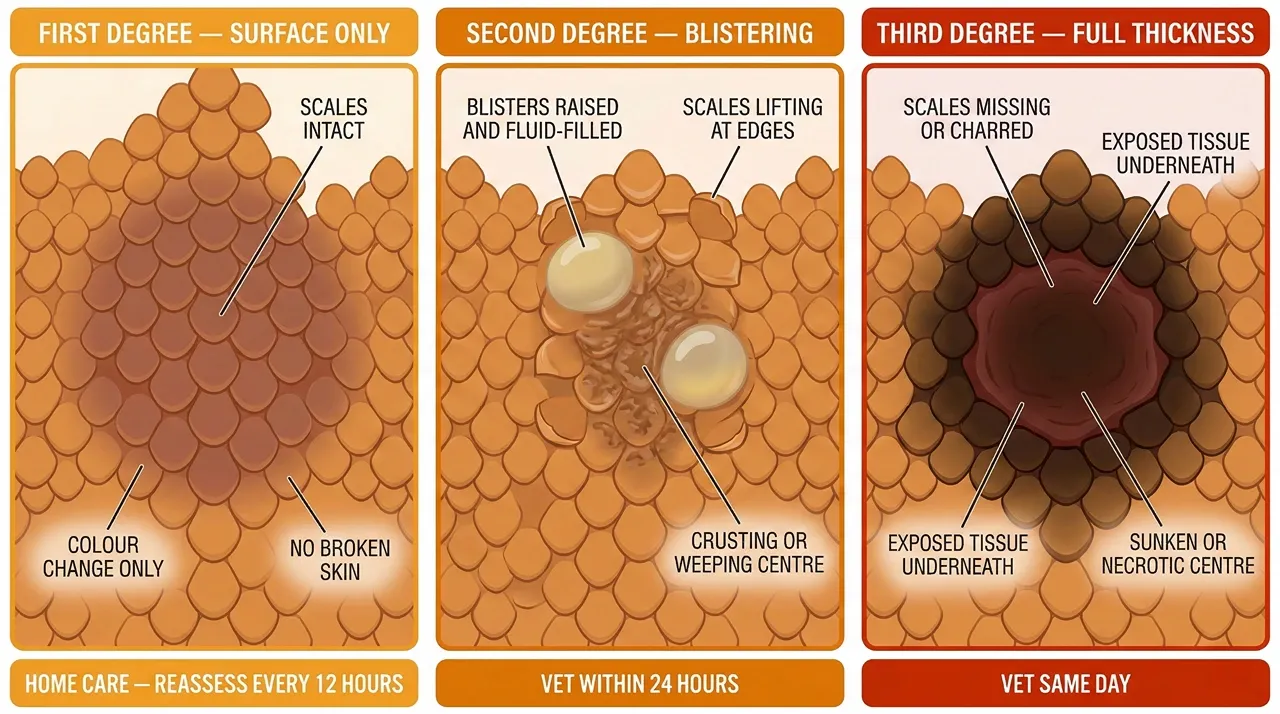
How to Assess Bearded Dragon Burns
| What You See | Severity | Action and Timing |
|---|---|---|
| Discoloured or reddened scales, no broken skin, no blisters | Surface only | Home care. Reassess every 12 hours for two days. Vet if it worsens. |
| Blisters, broken or peeling skin, crusting forming | Partial thickness | Vet within 24 hours. |
| Deep open wound, blackened or necrotic tissue, scales missing | Full thickness | Vet same day. |
| Any burn with lethargy, not eating, or declining condition | Any level with systemic signs | Vet same day regardless of burn appearance. |
Burns in reptiles do not show their full extent at the time of discovery. What looks like surface reddening now may present as blistering by tomorrow morning. Reassess every 12 hours for the first two days before concluding the situation is stable.
Where Burns Happen and What Caused Each One
Burn location almost always identifies the responsible equipment. The same setup that caused the burn tonight will cause another one if nothing changes before the dragon goes back in.
Chin and Top of Head Burns
These come from direct contact with or too-close proximity to an exposed basking bulb. The chin and skull top face upward during normal basking posture, which is why they are the contact points rather than the sides or back.
Most common when a bulb sits inside the enclosure without a guard, or when mounting distance is too short for the wattage being used. Correct bulb mounting distance based on actual surface temperature readings prevents this entirely.
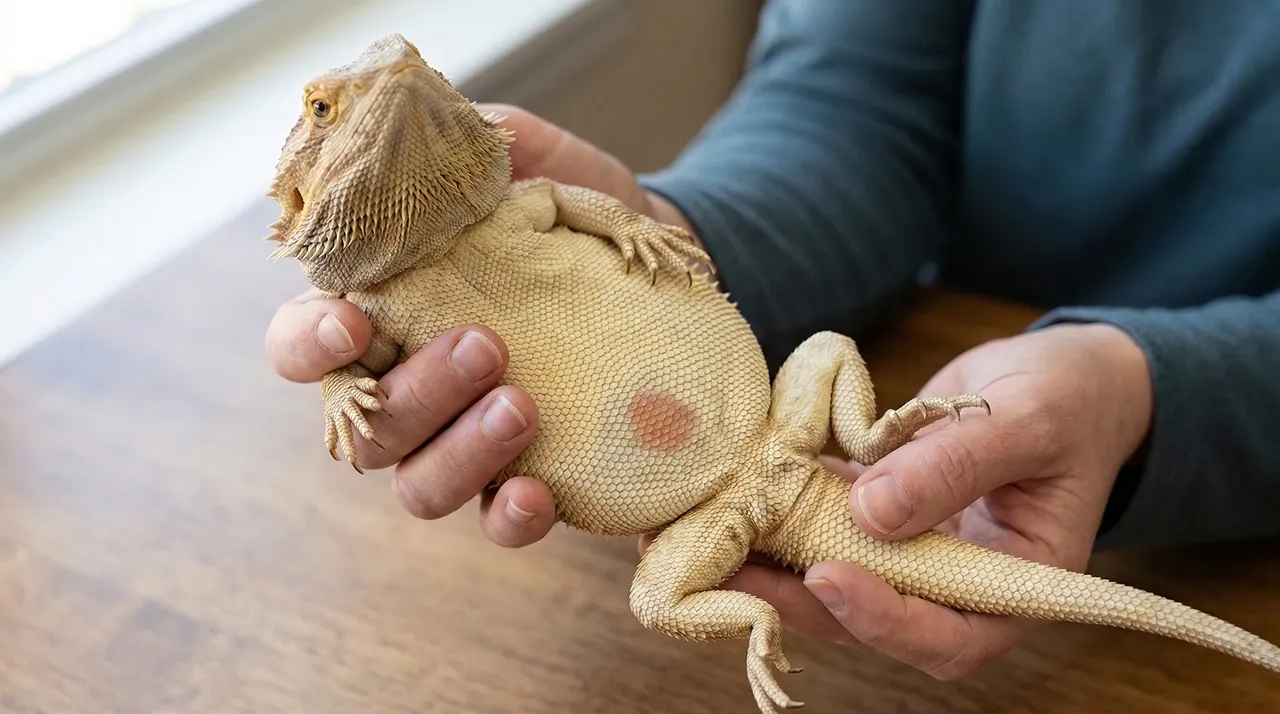
Belly Burns From Heat Mats and Hot Rocks
Hot rocks should be removed from any bearded dragon enclosure permanently. They heat unevenly, cannot be reliably thermostat-controlled, and reach temperatures that burn through tissue with prolonged contact. In my experience, hot rock burns are rarely minor by the time they are discovered. The dragon has typically been on the surface for the entire night before the wound is noticed.
Heat mats are manageable when used correctly: on a reliable thermostat, with adequate substrate depth between the mat and the dragon, and never as the primary heat source for a resting animal. A heat mat without a thermostat is not a managed heat source.
Back and Limb Burns From Ceramic Heat Emitters
A ceramic heat emitter inside the enclosure without a guard is a contact burn risk for any dragon large enough to climb near it. CHE burns appear on the back or tops of the limbs, whichever surface faced the element. Unlike localised lamp contact burns, CHE radiant exposure can affect a larger surface area over time. The correct position is outside the enclosure aimed inward, or inside with a wire guard preventing direct contact.
What to Do in the First Hour
Move the dragon away from the heat source immediately if it is still in contact. Fix or remove the equipment before the dragon goes back in the enclosure.
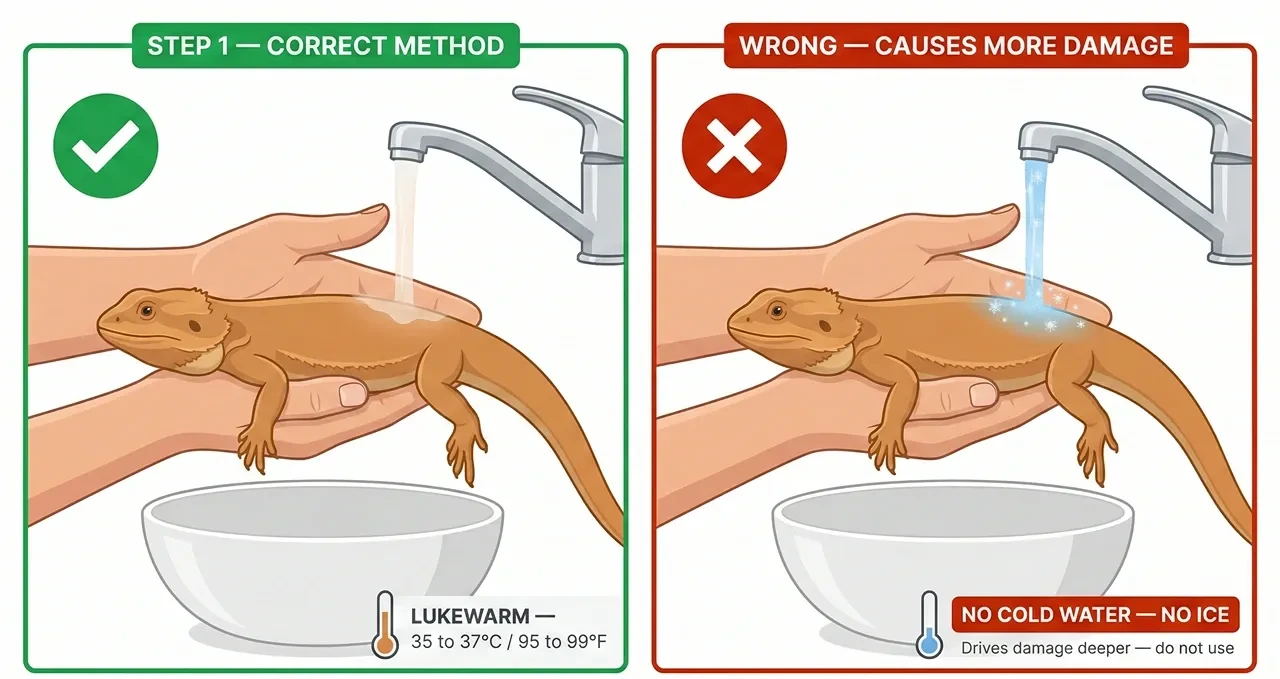
Cool the burned area with lukewarm water for 10–15 minutes. Not cold water, not ice. Cold causes vasoconstriction and drives thermal damage deeper into tissue rather than dissipating it.
For a minor surface burn with intact skin, clean gently with diluted betadine: one part betadine to ten parts water. Plain triple antibiotic ointment is acceptable as a temporary barrier while you monitor the wound or arrange a vet visit.
If there is any blistering, broken skin, or deeper tissue involvement, skip topical treatment entirely and go to a vet. Home care is for surface burns only.
Why Owners Wait Too Long to Act
These are the ones I hear most often after a burn has been left too long. If any sound familiar, reassess the wound before acting on the assumption.
- “It is eating fine so it cannot be that bad.” Normal appetite does not reflect burn severity in a bearded dragon.
- “It only looks like a small patch.” Small at noon does not mean small by morning. Reptile burns do not show their full extent immediately.
- “It looked better yesterday.” A burn that darkens at day two or three is following normal healing progression, not becoming infected. Know the difference before stopping monitoring.
- “I will see how it looks tomorrow.” For anything beyond surface discolouration, tomorrow is too long to wait.
What Not to Do
Owners instinctively reach for human burn care products. Most cause more damage than the burn itself in a reptile.
- Do not break blisters. An intact blister is the body’s natural infection barrier at the wound site. Breaking it introduces bacteria to open tissue before any antibiotic cover is in place.
- Do not apply petroleum jelly. It seals the wound surface, traps bacteria, and interferes with normal tissue repair.
- Do not use tea tree oil. Toxic to reptiles applied to broken skin in any concentration.
- Do not use human burn creams. Formulated for mammalian skin. Most contain ingredients that are harmful or untested in reptiles.
Is It a Burn or Yellow Fungus
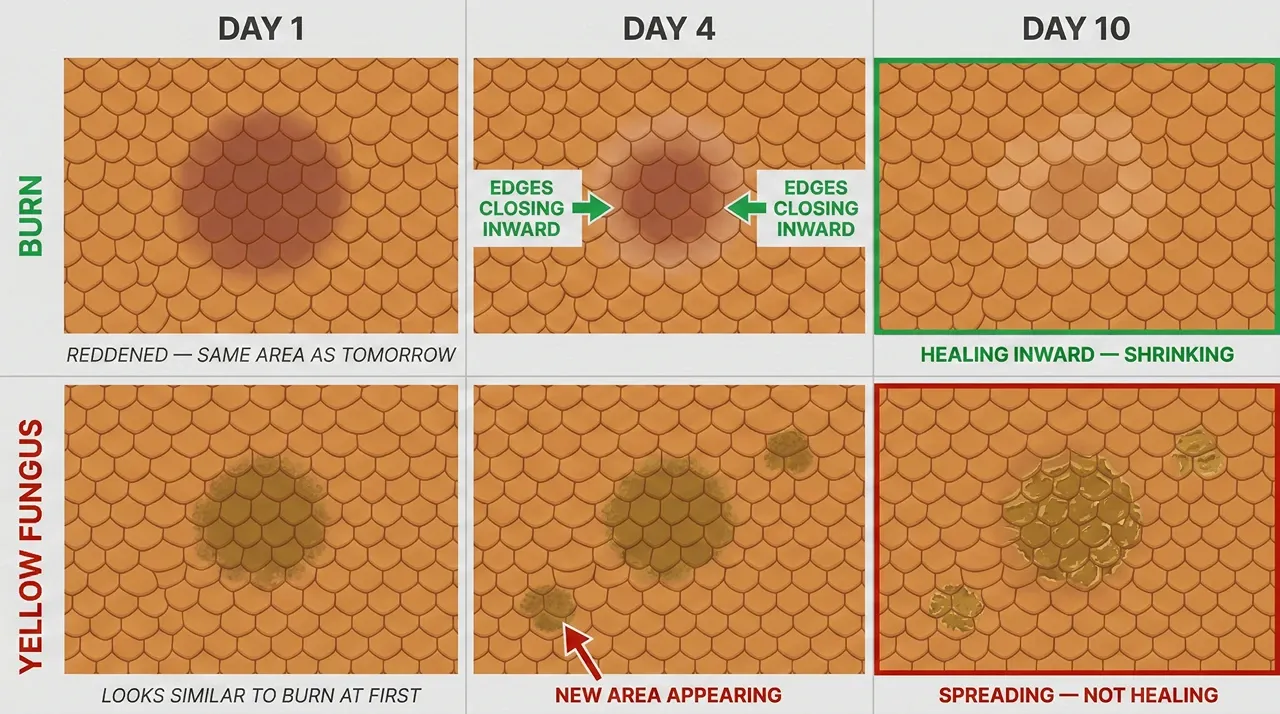
This is one of the more common misidentifications, and getting it wrong matters because the two conditions require completely different responses. A burn and early yellow fungus disease can look almost identical. Both produce discoloured, abnormal-looking areas of skin that stand out against surrounding healthy scales.
The distinguishing feature is what happens over time. A burn stays in the original location and closes from the edges inward once the heat source is removed. Yellow fungus spreads. New affected areas develop over days and weeks regardless of enclosure conditions. If the heat source has been corrected and the lesion is still growing several days later, get a vet involved before continuing to treat it as a burn.
Enclosure Changes Before the Dragon Goes Back In
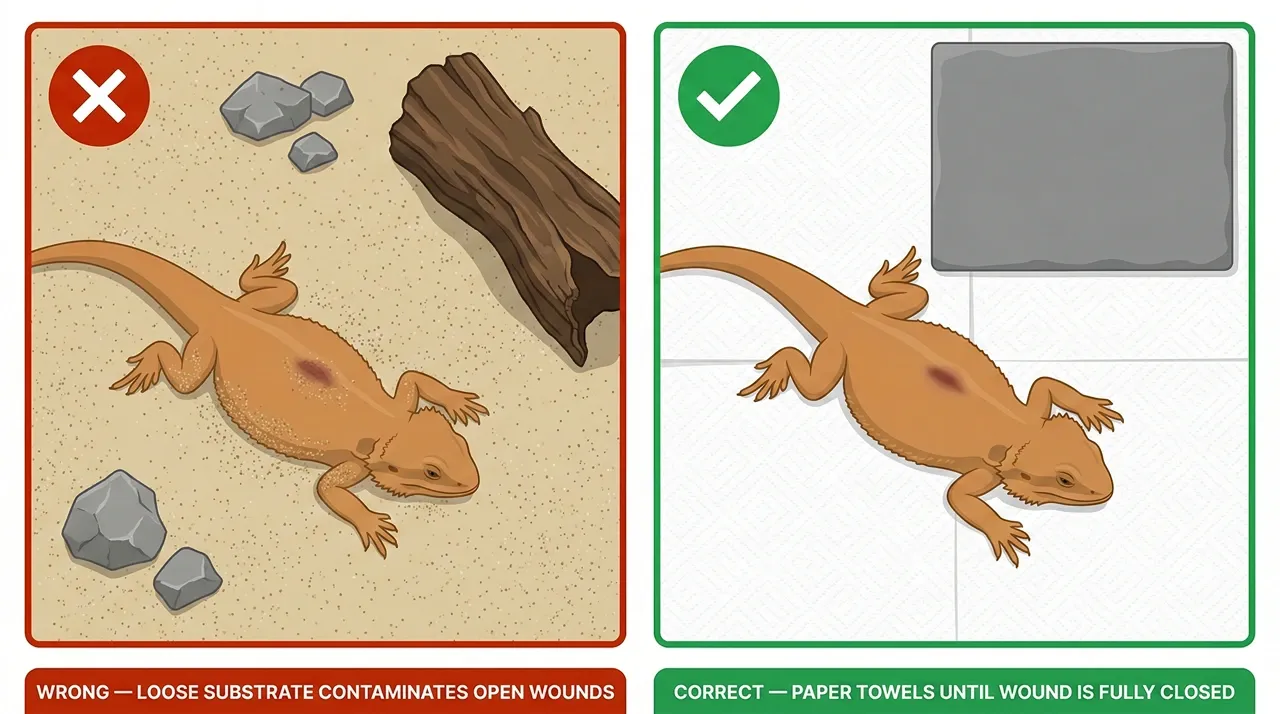
Switch the substrate to paper towels or newspaper for the entire recovery period. Loose substrates stick to open wounds and blisters, introducing contamination and causing mechanical damage as the dragon moves. Safe long-term substrate options are worth switching to permanently if the burn came from a heat mat under a loose particle floor.
Remove rough or abrasive decor temporarily. Sharp-edged rocks, rough wood, and textured surfaces catch on damaged skin and drag across healing tissue. Replace basking surfaces with smooth flat alternatives until the wound has closed.
Review the full enclosure setup before the dragon goes back in. Bearded dragon burns happen in setups that have been running without incident for months. A thermostat fails, a bulb gets swapped for a higher wattage, a dragon grows large enough to reach something it previously could not. The burn is the point at which something demands attention.
What to Expect During Recovery
Reptile wound healing is slow. Surface burns take two to four weeks. Partial thickness burns with blistering typically take six to ten weeks. Full thickness burns can require several months of ongoing wound care under veterinary supervision.
Normal healing progression: wound edges begin closing inward within the first week, new scale growth appears at the margins. The wound may look darker at the two to three week mark before it visibly improves. Owners who expect steady linear improvement are often alarmed at week two when the wound temporarily appears worse. That is normal, not evidence that home care has failed.
Scarring is common in anything beyond a minor surface burn. Surface burns usually regrow normal scales across subsequent shed cycles. Deeper burns often produce permanent altered scale pattern or colour in that area.
Signs the Wound Is Becoming Infected
Burns are infection-prone and the transition from healing to infected wound can happen quietly. The reptile wound infections is higher than in mammals, partly because wound pathogens in reptiles include organisms that do not respond to standard topical treatment. Watch for these during recovery:
- Wound edges becoming increasingly red or swollen rather than closing inward
- Discharge that is yellow, green, or foul-smelling rather than clear or slightly cloudy
- The wound growing larger at the margins rather than smaller
- New dark or blackened tissue appearing at wound edges after the first week
- Dragon becoming lethargic or stopping eating during the recovery period
Any of those signs warrants a vet contact rather than continued home monitoring.
Soaking and Hydration During Recovery
Daily warm soaks at 85–90°F for 10–15 minutes help with hydration and gentle wound cleaning during the first two weeks. Burns cause fluid loss from damaged tissue, and dehydration compounds the healing difficulty. After the first two weeks, drop to every other day unless the wound is still open. The full soak technique matters more than usual when the dragon has open skin.
Watch urate colour at every defecation throughout recovery. Orange urates in a burn patient mean the hydration routine needs to increase regardless of what stage the wound is at.
A recovering dragon may spend less time at the basking end of the enclosure or avoid it entirely. This is a normal pain response, not a setup problem. Basking avoidance after a burn typically resolves as the wound heals. If it persists past two weeks, a vet check is appropriate.
If the dragon is on a prescribed antibiotic course, monitor stool quality throughout. Antibiotics disrupt gut bacteria and can produce loose or unusual stools in some dragons. Tracking stool changes against the medication schedule helps distinguish a normal antibiotic side effect from a secondary problem developing independently.
Frequently Asked Questions
Do Bearded Dragons Feel Burns
They sustain tissue damage but do not show the behavioural pain response mammals do. The withdrawal reflex that causes humans to pull away from heat does not function the same way in a bearded dragon. Visual assessment of the wound is what matters, not how active or alert the dragon appears.
Are Heat Mats Safe for Bearded Dragons
They are among the most common causes of serious burns in captive bearded dragons. A correctly thermostat-controlled heat mat used as a supplemental source is manageable. An uncontrolled heat mat left under a resting animal overnight is not. The dragon will not move away from it regardless of temperature.
How Serious Is a Small Burn
More serious than it looks at discovery. Burns in reptiles do not show their full extent immediately. A burn that looks like minor discolouration at noon should be reassessed every 12 hours for two days. Any blistering that develops during that window moves it into partial thickness territory and warrants a vet visit.
Will Scales Grow Back After a Burn
Surface burns that did not penetrate below the scale layer usually regrow normal scales through subsequent shed cycles. Deeper burns that damaged the dermis often produce permanent scarring with altered scale pattern or colour. The depth of the original burn determines the outcome.
Are Belly Burns Worse Than Back Burns
Belly burns from heat mats or hot rocks tend to be more severe. The mechanism is prolonged conductive contact during rest, often hours through the night. Back burns from lamps or CHEs typically involve shorter radiant exposure. A dragon resting on a faulty heat mat overnight usually presents with a belly burn that is worse than its initial appearance suggests.
What to Check Before This Happens Again
- ✅ Remove any hot rock from the enclosure permanently. There is no safe version of a hot rock in a bearded dragon setup.
- ✅ Put any heat mat on a thermostat if it is not already. An uncontrolled heat mat left on all night is a burn risk regardless of how long it has been in use without incident.
- ✅ Check basking bulb mounting distance with an infrared gun. The surface below the bulb should read 100–110°F. Higher than that means the bulb is too close or too high a wattage for that distance.
- ✅ Add a wire guard to any CHE mounted inside the enclosure. A dragon that can climb can reach it.
- ✅ Switch to paper towels during recovery. Loose substrate sticks to open wounds. Keep paper towels down until the burn has fully closed.
- ✅ Watch for infection signs throughout recovery. Spreading redness, foul discharge, or a wound growing rather than closing warrants a vet contact before continuing home treatment.
Disclaimer: This article is for general husbandry guidance only and does not constitute veterinary advice. Any burn involving blistering, broken or necrotic tissue, or a dragon showing lethargy or appetite loss warrants same-day contact with a qualified reptile veterinarian. Burns in reptiles are consistently more serious than they initially appear.
Written by
Sarah ArdleySarah has kept bearded dragons for over ten years. She founded Beardie Husbandry after discovering that most mainstream care advice — including what she followed with her first dragon — was doing more harm than good. Every article on this site is grounded in veterinary research and real keeper experience.