Bearded Dragon Dehydration Signs Every Owner Should Know
Caught early, bearded dragon dehydration resolves at home in most cases without a vet visit. Most owners who miss it do so not because the signs are subtle, but because they do not know which specific things to check or what normal actually looks like by comparison.
Bearded dragons are adapted to survive on very little water, which means they do not show obvious thirst behaviour the way a dog or cat would. A mildly dehydrated dragon rarely acts dramatically different from a healthy one, at least not at first.
What changes are small, physical, and entirely readable once you know what you are looking at: urate colour, skin elasticity, eye appearance, and saliva consistency. These four checks give a clear picture of hydration status without needing any equipment beyond your own eyes.
Why Captive Dragons Dehydrate
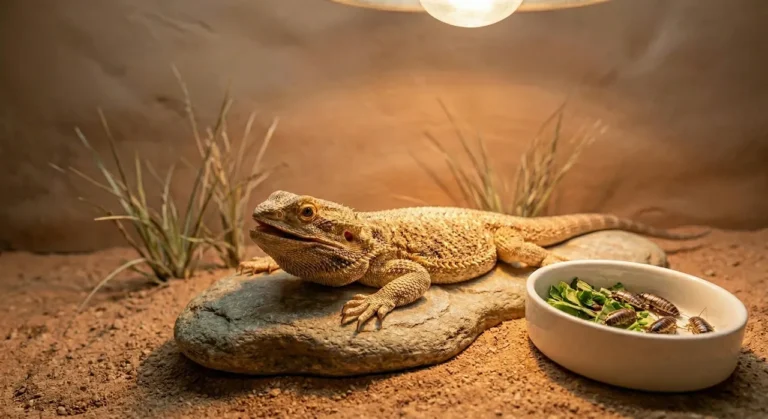
In the wild, bearded dragons extract moisture from food, lick dew from rocks and vegetation, and occasionally drink from puddles after rain. In captivity, most of those sources disappear and are replaced by a water bowl that many dragons will never voluntarily drink from.
Still, standing water simply does not register as drinkable to a lot of dragons. Their instinct is to drink moving or surface moisture, not to locate a dish and lap from it. This is one of the most common things owners miss until they know what to look for. A full water bowl does not mean a hydrated dragon.
Add a diet heavy in dry feeders with limited greens, a basking spot running too hot, or a period of brumation to any of the above, and dehydration becomes predictable. Small deficits stack over days or weeks, and there is rarely one dramatic cause behind it.
The Signs Worth Checking First
Urate Colour
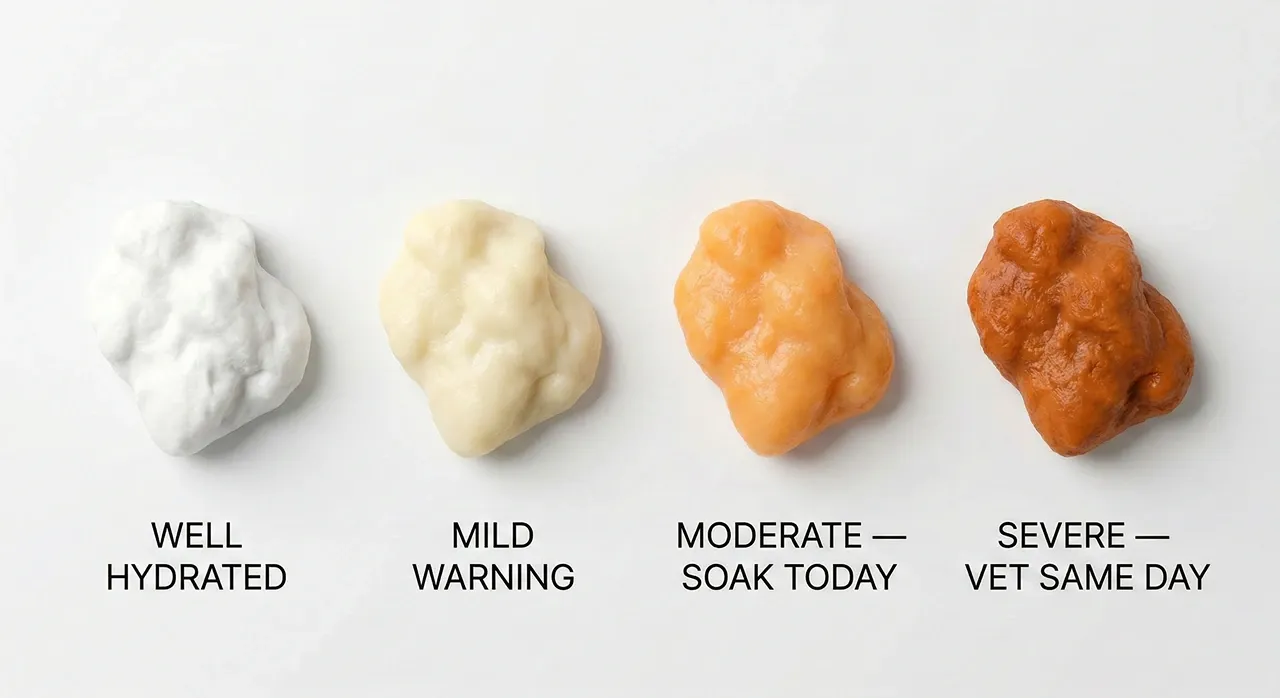
The white portion of a bearded dragon dropping is the urate, a semi-solid form of uric acid that the body produces instead of liquid urine. In a well-hydrated dragon it comes out soft, chalky white, and passes easily alongside the brown portion of the stool.
Colour is the single most reliable early indicator of hydration status. It is more reliable than eye appearance, more reliable than skin testing, and available to check every time the dragon defecates without any handling required.
Pale yellow urates are a mild warning worth acting on. Orange urates mean the dragon needs water the same day and soaking should start immediately. Dark orange or rust-coloured urates indicate serious dehydration and warrant a vet call if they do not improve within 24 hours of rehydration attempts.
Skin Tent Test
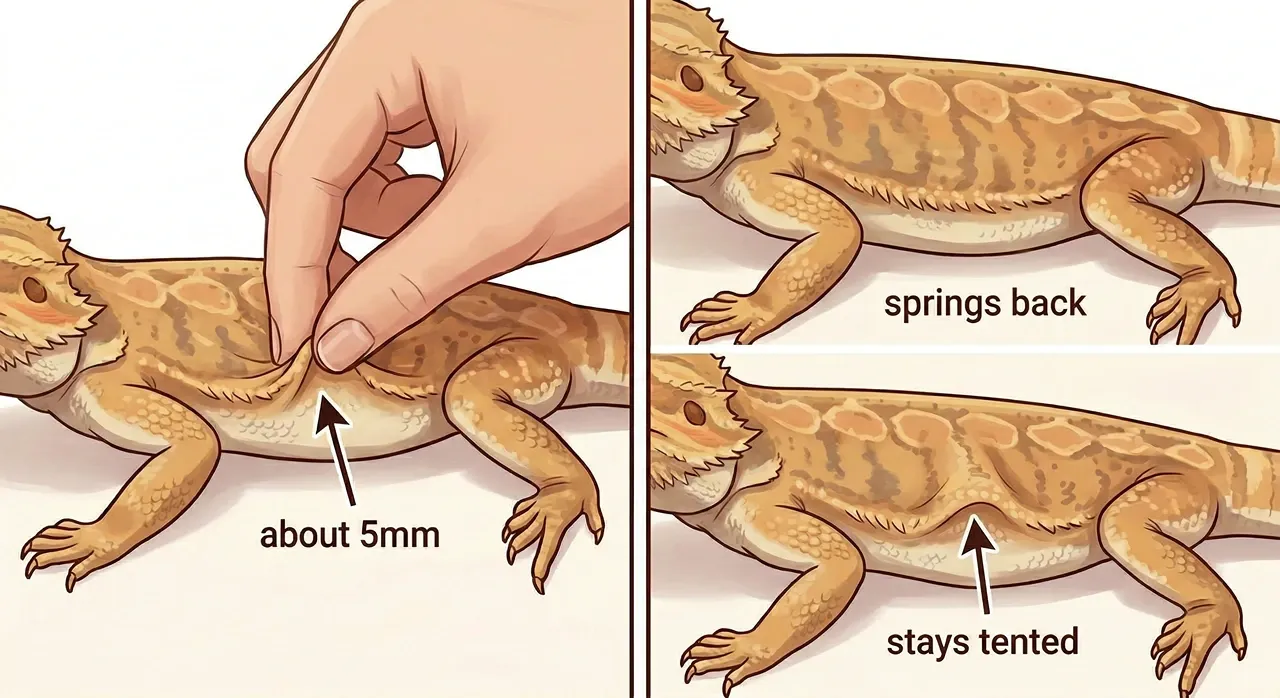
Gently pinch a small fold of skin on the side of the body, midway between the front and back leg. This specific location gives a more reliable reading than the back, which can produce misleading results on overweight or recently fed dragons where fat deposits affect skin elasticity independently of hydration.
Release the skin and watch what happens. In a hydrated dragon it springs back flat immediately, with no hesitation. In a dehydrated dragon it returns slowly, stays slightly raised for a moment, or holds a soft tent shape for a second or two before settling.
Do not use this test in isolation. A very thin or elderly dragon may tent easily regardless of hydration status, and a well-padded dragon may show no tenting even with moderate dehydration. Use it alongside urate colour and the other signs.
Sunken or Dull Eyes
A hydrated dragon has bright, clear eyes that sit flush and forward in the socket. When dehydration reduces the volume of fluid behind the eye, it pulls slightly inward and the socket area around it begins to look slightly loose or creased. The eye itself appears duller than normal, less reflective, and in more pronounced cases visibly recessed. This sign takes longer to develop than urate changes and indicates more prolonged fluid loss when present.
Where dehydration gets misread as something else: sunken eyes alongside normal urate colour and a normal skin tent test may point to illness rather than dehydration. Check all three together before drawing a conclusion or starting treatment.
Wrinkled or Loose Skin
Healthy bearded dragon skin sits reasonably taut over the body. As dehydration progresses, the skin along the flanks and sides develops a loose, slightly accordion-like texture that becomes visible when the dragon moves and eventually at rest. On lean dragons this appears relatively early. On heavier dragons with significant fat reserves, the wrinkling may not become visible until dehydration is fairly advanced, making the other checks more important for early detection.
Sticky or Double-Strand Saliva
A well-hydrated dragon produces thin, clear saliva. A dehydrated dragon produces thicker, stickier saliva that forms visible double strands stretching between the upper and lower jaw when the mouth opens.
You can observe this during a normal handling session by watching when the mouth opens naturally, or by gently opening it slightly. If the saliva pulls into strings rather than appearing thin and clear, dehydration is likely. This sign is specific enough to be diagnostically useful and worth knowing how to check.
Lethargy and Reduced Appetite
Dehydration suppresses both appetite and energy, and the symptoms overlap with brumation, illness, and poor basking conditions. Always check urates and do the skin tent test before investigating other causes when a dragon becomes suddenly slower or less interested in food.
How to Confirm It Is Dehydration
When orange urates, a positive skin tent test, and dull sunken eyes all appear together, dehydration is a near certainty. Two of the three make it the most likely explanation. One sign alone is worth a soak and monitoring rather than immediate concern.
Dehydration responds to soaking within 24–48 hours. A dragon that shows no improvement after two days of correct rehydration attempts needs a vet regardless of what the initial signs suggested, because ongoing fluid loss despite treatment usually means something else is driving it.
A brumating dragon sleeps more and eats less without necessarily being dehydrated, but one that enters dormancy already dehydrated is at genuine risk of compounding that deficit over weeks of minimal drinking.
What Usually Causes It
Not Enough Water From Food
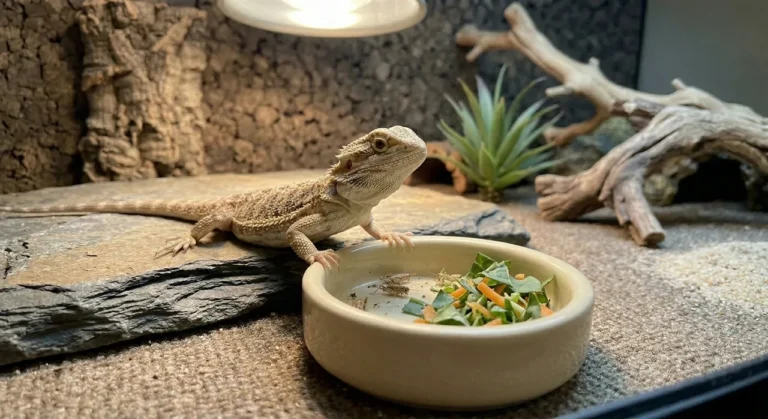
Most dragons get the majority of their water from food, particularly leafy greens. A diet running heavy on dry feeders with limited greens will slowly dehydrate a dragon over weeks, often without any single meal looking obviously wrong. Wetting the salad before offering it makes a real difference over the course of the day.
Temperatures Running Too Hot
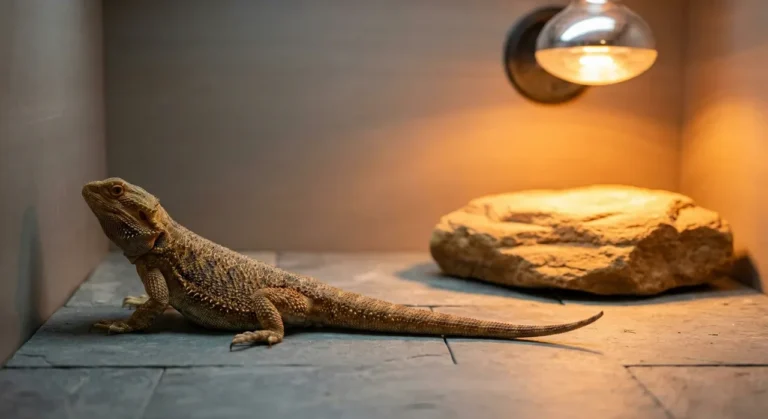
A basking spot above 115°F forces the dragon to gape repeatedly as it tries to regulate its temperature, losing moisture with each breath. A cool side running above 88°F compounds this because there is nowhere to escape the heat. Check both ends of the enclosure with an infrared gun if dehydration signs appear in an otherwise well-managed setup.
Illness and Parasites
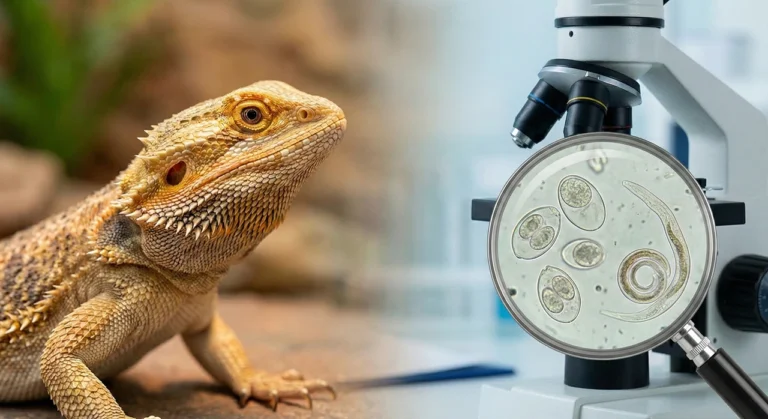
A dragon dealing with a significant parasite load or active infection loses fluids faster than normal and absorbs water less efficiently than a healthy animal. Dehydration appearing in a well-managed setup with correct temperatures and a good diet often points toward an underlying health issue rather than a husbandry failure. If rehydration corrects the signs but they return within a few days, a faecal float test and vet visit are the appropriate next step.
Brumation
Dragons can enter brumation without adequate fluid reserves, and several weeks of reduced activity and minimal food intake compounds any existing deficit. A dragon coming out of brumation and remaining lethargic beyond the first few days needs a soak before food is reintroduced.
How to Rehydrate at Home
Warm Soaks
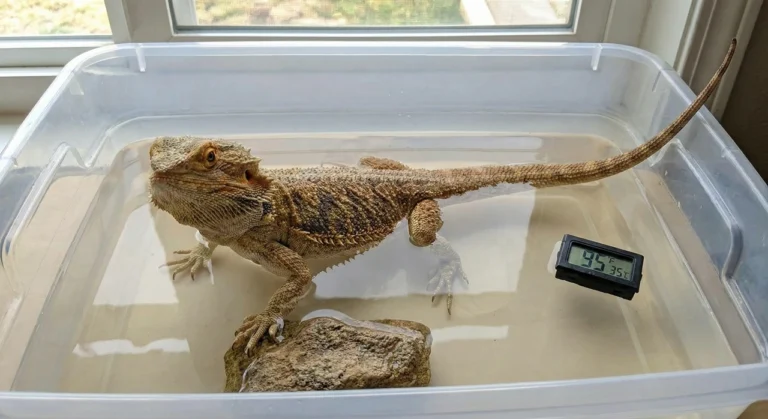
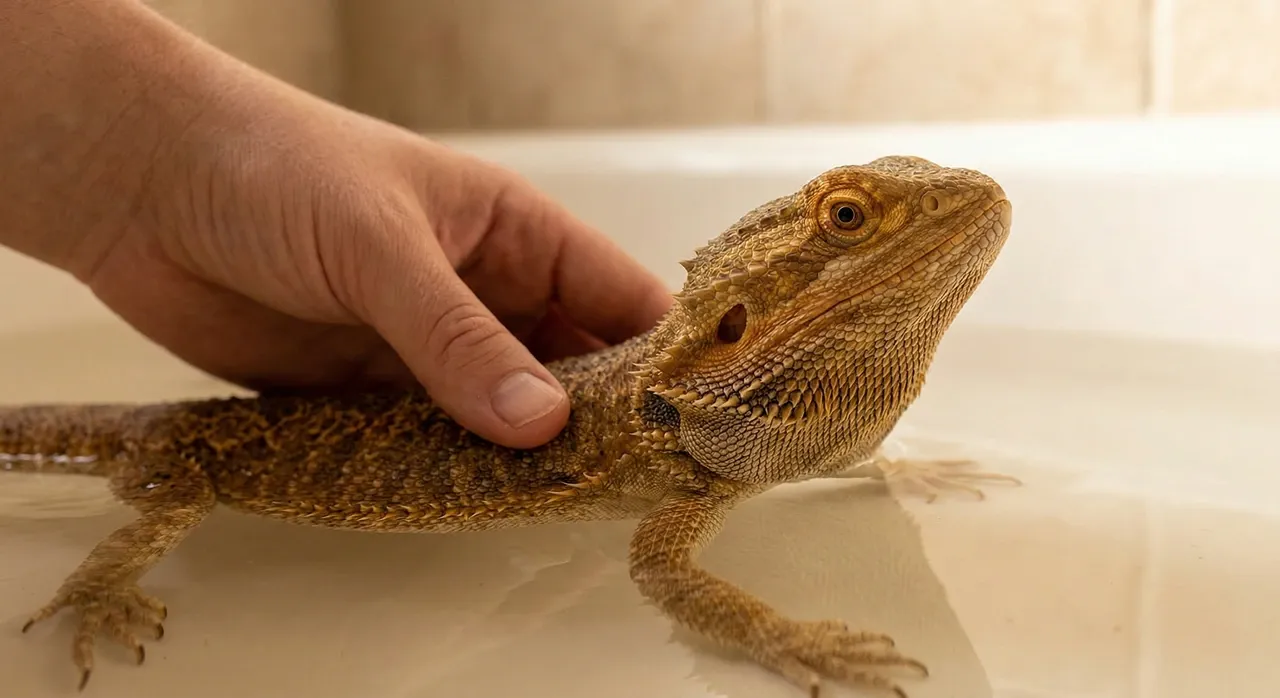
A 15–20 minute soak in shallow warm water at 85–90°F is the most effective home treatment for mild to moderate dehydration. Dragons absorb water through the cloaca as well as by drinking, which means soaking works even when the dragon shows no interest in drinking from the water.
Keep the water at shoulder depth with the head above the surface throughout, and repeat daily until urates return to soft white and the skin tent normalises. Some dragons drink actively during the soak. Dripping a few drops of water onto the nose often triggers licking behaviour.
High Moisture Feeders
Hornworms and silkworms contain 80–90% water by weight, making them the most effective dietary hydration tool available for a dragon in recovery. Offering three to five hornworms during a dehydration period provides a fluid boost that complements the soaking routine. Dubia roaches and crickets run at 60–77% moisture and add a real hydration contribution as regular staple feeders.
Wet Greens and What to Avoid
Do not dry the salad after rinsing it. Offering greens still wet from washing adds surface moisture over the course of the day, particularly during recovery. Fruit is sometimes used as a hydration source but the sugar content tends to cause loose stools, which accelerates fluid loss rather than replacing it, making it counterproductive as a primary hydration strategy.
Water on the Nose
A clean dropper or wet finger on the nose prompts licking in most bowl-shy dragons. Offer a few drops at a time slowly. Do not try to open the mouth and deposit water directly. If the dragon inhales rather than swallows, aspiration is a real risk.
When Home Treatment Is Not Enough
Mild dehydration with pale yellow urates resolves with 2–3 days of consistent soaking and wet feeding. Moderate dehydration with orange urates should show clear improvement within 24 hours of starting daily soaks. No improvement after 48 hours means a vet visit, not more soaking.
Severe dehydration requires veterinary care. Dark orange or rust-coloured urates, deeply sunken eyes, and skin that stays visibly tented for several seconds are all signs that home treatment is not adequate. A dragon too weak to support its own head during a soak needs emergency care the same day.
A vet can administer subcutaneous fluids directly under the skin, which rehydrates much faster than soaking at this stage.
Babies Need Faster Action Than Adults
A baby dragon under 3 months has very little fluid reserve compared to an adult, and what takes an adult several days to develop into noticeable dehydration can become serious within 24–48 hours. Orange urates in a baby dragon warrant a vet call the same day rather than a wait-and-see approach.
Bearded Dragon Dehydration Signs Quick Reference
| What You Are Seeing | Severity | What to Do |
|---|---|---|
| Pale yellow urates, skin tent slightly slow | Mild | Daily soaks. Wet greens. High moisture feeders. |
| Orange urates, visible skin wrinkling | Moderate | Soak same day. Daily soaks until urates return to white. Vet if no improvement in 24 hours. |
| Dark orange urates, deeply sunken eyes, skin stays tented | Severe | Exotic vet same day. Subcutaneous fluids likely needed. |
| Double-strand sticky saliva when mouth opens | Moderate indicator | Check urates and skin tent. Begin soaking if either is positive. |
| Lethargy, reduced appetite, no other obvious signs | Possible mild | Check urates and skin tent first. Soak if either is positive. |
| Stuck shed on toes, shed not completing cleanly | Hydration contributing | Increase soak frequency during shed cycles. |
| Coming out of brumation, lethargic beyond first few days | Post-brumation risk | Soak immediately on waking. Wet greens before reintroducing insects. |
| Baby dragon with orange urates | Urgent | Vet call same day. |
Frequently Asked Questions
How Often Should I Soak My Bearded Dragon
Twice a week is a reasonable baseline for a healthy adult on a varied diet. During a bearded dragon shed cycle, daily soaks until the shed completes. During and after brumation, soak before the dragon goes dormant and again when it wakes.
My Dragon Never Drinks From Its Water Bowl. Is That Normal
For many dragons, yes. Still water does not trigger drinking behaviour the way moisture from food or a dripping nose does. A dragon getting adequate hydration from wet greens and high-moisture feeders alongside regular soaks can be perfectly hydrated without ever touching a bowl. Check urate colour rather than watching for drinking behaviour.
Can Long-Term Dehydration Cause Permanent Damage
Yes. Chronic mild dehydration is one of the leading causes of gout in bearded dragons, where uric acid crystallises in the joints because the kidneys cannot flush it without sufficient fluid. By the time gout is diagnosed it is usually advanced. Consistent urate monitoring prevents it from developing.
Orange Urates but the Dragon Is Acting Normally. Do I Need to Worry
Yes, enough to act today. Bearded dragons mask discomfort well and normal behaviour does not mean the dehydration is not serious. Start soaking the same day. If urates return to white within 48 hours of daily soaks, you caught it in time. If they stay orange after two days, see a vet.
Can a Hot Enclosure Cause Dehydration
Yes. A basking spot above 115°F forces repeated gaping to regulate temperature, losing moisture through respiration much faster than normal. A dragon that stops using its basking spot in an overheated enclosure is showing you the thermal problem before the dehydration becomes visible. Check both ends of the enclosure with an infrared gun if dehydration signs appear alongside an otherwise well-managed diet and soak routine.
If Nothing Has Improved After 48 Hours
Work through this before booking a vet appointment.
- ✅ Check urate colour. Pale yellow is mild. Orange is moderate. Dark orange means a vet call today.
- ✅ Do the skin tent test on the side of the body. Not the back. Slow return confirms dehydration.
- ✅ Start daily soaks at 85–90°F, 15–20 minutes, shoulder depth. Repeat until urates return to white.
- ✅ Switch to wet greens. Do not dry the salad after washing it.
- ✅ Offer hornworms or silkworms. 80–90% water content. Most effective dietary hydration tool available.
- ✅ Check enclosure temperatures with an infrared gun. Basking above 115°F causes fluid loss through gaping. Cool side above 88°F leaves nowhere to escape the heat.
- ✅ If no improvement after 48 hours of daily soaks, see a vet. Subcutaneous fluids work faster than anything you can do at home for severe dehydration.
Disclaimer: This article is for general husbandry guidance only and does not constitute veterinary advice. If your bearded dragon has dark orange urates, deeply sunken eyes, or is unresponsive alongside dehydration signs, contact a qualified reptile veterinarian promptly.
Written by
Sarah ArdleySarah has kept bearded dragons for over ten years. She founded Beardie Husbandry after discovering that most mainstream care advice — including what she followed with her first dragon — was doing more harm than good. Every article on this site is grounded in veterinary research and real keeper experience.