Bearded Dragon Food List: 50+ Safe, Unsafe & Toxic Foods
The bearded dragon food list question sounds simple until you stand in a grocery store squinting at a bag of spring mix. You try to remember whether spinach blocks calcium or works fine in rotation. The obvious calls are easy enough: avocado never, crickets always. The grey zone is where real mistakes happen.
Spinach ends up in salads because it looks healthy. Mealworms get sold as a primary feeder at every pet shop. Getting those calls right matters far more than avoiding the clearly toxic items most keepers never encounter, and grey-zone foods tend to be fed repeatedly over weeks and months before any damage shows up.
Babies need around 80% of their diet from protein while adults flip that ratio, eating primarily greens with insects as a supplement. Getting that balance right matters more than any individual food choice, which is why the full diet structure is covered separately. What you’ll find here is the food-by-food reference: safe, risky, toxic, and why.
How to read the ratings:
✅ Staple. Feed daily or near-daily. Strong calcium ratios, low risk.
🟡 Occasional. Feed 2–3 times per week. Nutritious but needs balancing with staples.
🟠 Treat. Once a week maximum. High sugar, high fat, or borderline ratios.
⚠️ Caution. Safe in small amounts but commonly overfed or misused.
❌ Never. Toxic, dangerous, or nutritionally pointless.
Best Greens to Feed Every Day
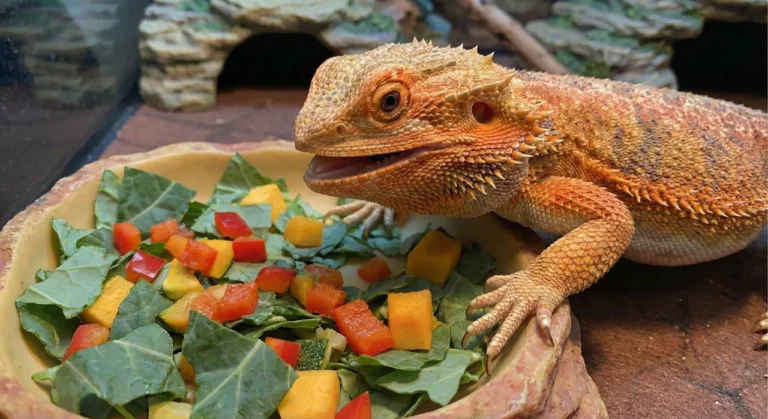
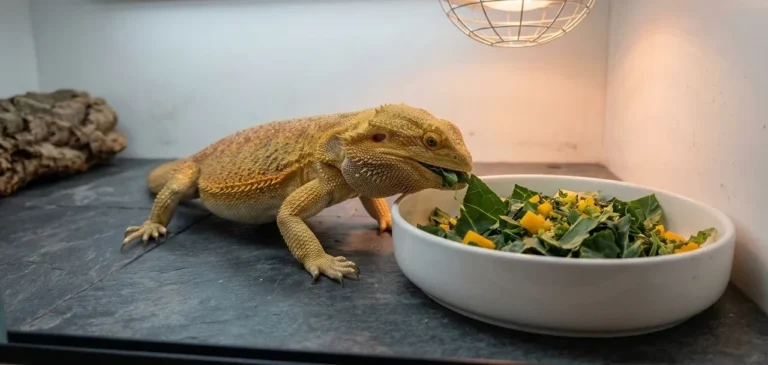
These leafy greens form the foundation of a healthy adult beardie’s diet, with strong calcium-to-phosphorus ratios, low oxalates, and nutritional profiles broad enough that daily feeding never creates the diminishing returns you get from repeating one single green in every bowl. Rotate two or three of these together and you’ve already built a better salad than most captive beardies get.
If your dragon flat-out refuses everything offered, there are practical approaches worth working through before writing off stubborn greens refusal as a permanent quirk.
| Food | Rating | Notes |
|---|---|---|
| Collard greens | ✅ Staple | One of the best all-round leafy greens available. Strong calcium content and low oxalates. If you stock only one green, make it this one. |
| Mustard greens | ✅ Staple | Slightly peppery flavour that many dragons prefer. Near-identical nutritional profile to collard greens and mixes well with them. |
| Dandelion greens | ✅ Staple | Excellent calcium content and completely safe. Use pesticide-free sources only. Dandelions from a treated lawn are not safe. |
| Turnip greens | ✅ Staple | Strong calcium levels and a texture most dragons accept readily when chopped. Consistently available year-round. |
| Endive | ✅ Staple | Slightly bitter but nutritionally solid. Works well mixed into a salad blend without compromising the overall calcium ratio. |
| Escarole | ✅ Staple | Very similar to endive in taste and nutritional value. Worth rotating in when available. |
| Arugula (rocket) | ✅ Staple | Peppery flavour and a different texture from usual leafy greens. Some dragons take to it immediately while others ignore it completely. |
| Watercress | ✅ Staple | High calcium. Better used as one green in a rotation than as the daily solo offering. |
| Cactus pad (Opuntia) | ✅ Staple | High calcium and moisture. This is what wild bearded dragons forage on in Australia. Remove all spines carefully before serving. |
| Radicchio | ✅ Staple | Slightly bitter with a good calcium profile. Most dragons eat it without fuss. Adds colour and variety to the bowl. |
| Alfalfa (fresh) | ✅ Staple | High protein and calcium. A useful supplement to standard greens for juveniles and dragons recovering from illness. |
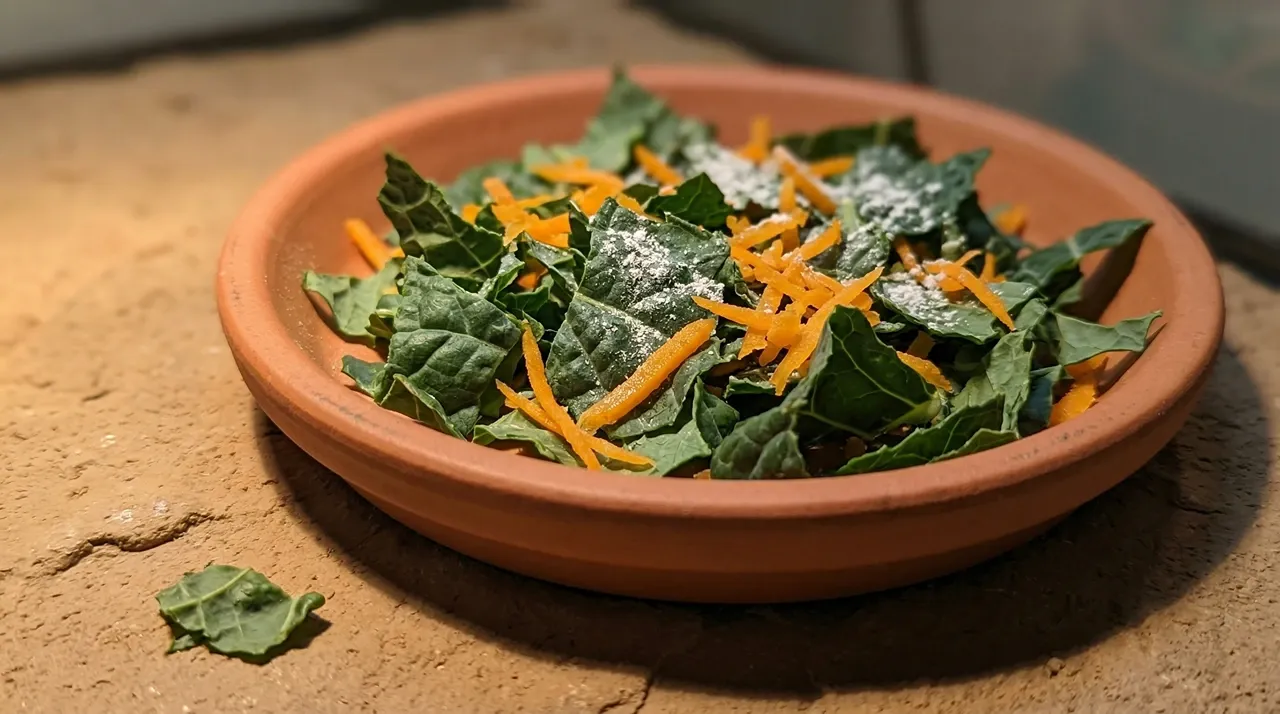
Preparation matters as much as food choice. Chop everything into pieces no wider than the gap between your dragon’s eyes, particularly for younger animals. A common mistake is shaking so much calcium powder over the bowl that it builds up as a film on the greens. A light, even dusting across individual pieces gives far more consistent coverage than coating the whole salad at once.
Vegetables That Work Fine a Few Times a Week
These work well as salad additions two or three times per week. Most have reasonable nutritional profiles but bring less overall density than the staple greens above, so they’re best understood as supporting variety rather than the bulk of what fills the bowl.
| Food | Rating | Notes |
|---|---|---|
| Bell peppers | 🟡 Occasional | High in vitamin C and palatable. A reliable appetite trigger for animals going off greens. Chop into small pieces. |
| Butternut squash | 🟡 Occasional | Good source of beta-carotene and soft texture when raw. Shred or chop finely and add to the bowl twice a week. |
| Acorn squash | 🟡 Occasional | Similar nutritional value to butternut. Less moisture-heavy than cucumber. |
| Pumpkin | 🟡 Occasional | Feed raw and chopped for general use. Higher natural sugar keeps it out of the daily rotation. |
| Green beans | 🟡 Occasional | Feed raw and chopped. Higher phosphorus than ideal for daily use, but fine a couple of times per week. |
| Carrots (grated) | 🟡 Occasional | High in beta-carotene and natural sugars. Grate finely and mix into the salad rather than offering chunks. |
| Sweet potato | 🟡 Occasional | Nutritionally dense and higher in sugar. Feed raw and grated. Twice weekly at most in small portions. |
| Asparagus | 🟡 Occasional | Fine in small amounts. Chop into short pieces to reduce choking risks with smaller dragons. |
| Courgette / zucchini | 🟡 Occasional | Very low oxalates and decent hydration content. Adds useful variety and bulk without downsides. |
| Cucumber | 🟡 Occasional | Mostly water with minimal nutritional value. A reasonable way to add moisture to a salad on warm days. |
| Snow peas | 🟡 Occasional | Slightly higher phosphorus than ideal for daily feeding. Fine a couple of times per week in small amounts. |
| Pak choy / bok choy | 🟡 Occasional | Low oxalates and decent calcium. Rotation rather than daily feeding keeps it in the safe zone. |
Vegetables Worth Watching More Closely
These are not dangerous in occasional use. They cause slow, cumulative problems when keepers treat them as daily staples, which is exactly how they tend to end up in the rotation without anyone noticing. The reason behind each one is worth understanding.
| Food | Rating | Why It Needs Care |
|---|---|---|
| Kale | 🟡 Occasional | Nutritionally excellent but mildly goitrogenic when fed as the sole green daily for months. Completely fine 2–3 times per week in rotation. |
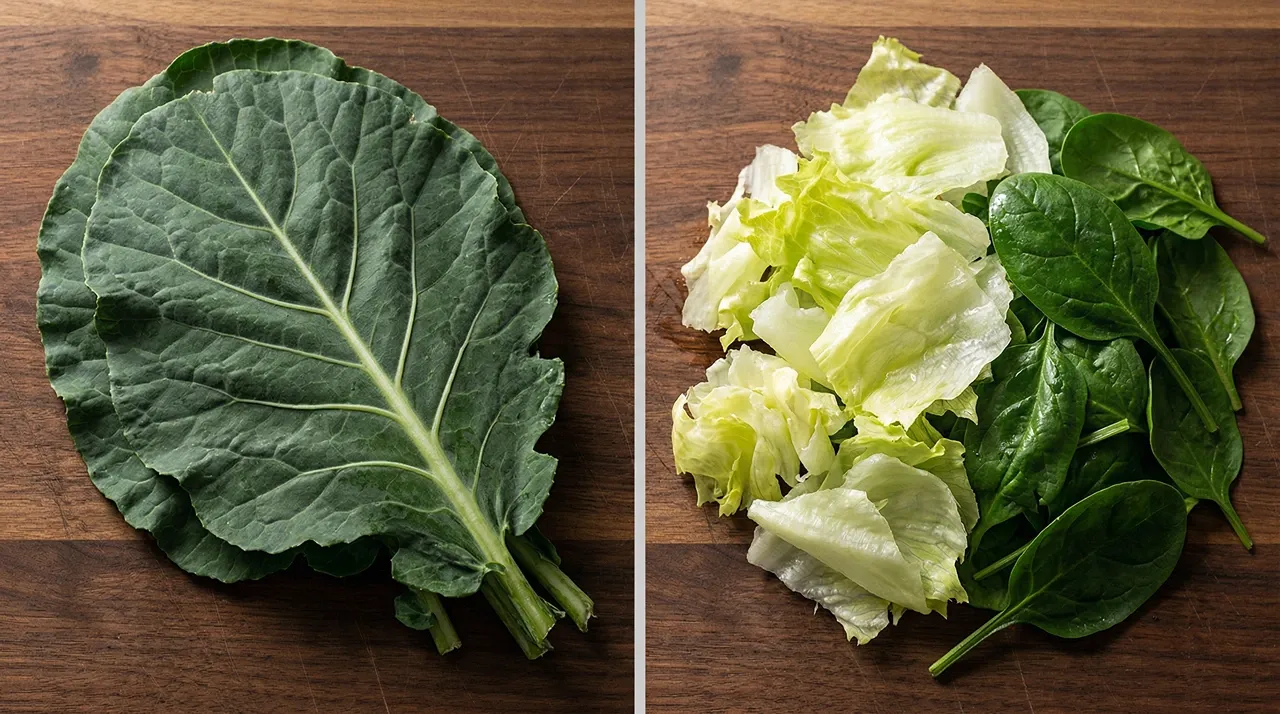
| Spinach | ⚠️ Caution | High oxalic acid content binds to calcium and carries it out of the body before absorption. Occasional use is fine. Daily use contributes to metabolic bone disease. |
| Beet greens | ⚠️ Caution | Very high oxalic acid. Check any pre-washed salad mix for beet greens before using it as a staple. |
| Broccoli | ⚠️ Caution | Contains goitrogenic compounds that can affect thyroid function in large amounts. A small floret once every two weeks is harmless. |
| Cabbage | ⚠️ Caution | Same family as broccoli. Harmless in small amounts once every few weeks as part of a varied salad. |
| Romaine lettuce | 🟡 Occasional | Safe but nutritionally empty. Fine as a texture mixer occasionally. |
| Iceberg lettuce | ❌ Avoid | Zero nutritional value. Enough water content to cause loose stools in any meaningful quantity. Better alternatives are always accessible. |
| Tomatoes | 🟠 Treat | Fine in a very small amount as an occasional treat. The acidity and moderate oxalic acid content make them unsuitable for regular feeding. |
The spinach problem catches people because the mechanism is counterintuitive. Spinach does not just fail to contribute calcium. It actively binds to calcium already present in the gut during digestion and carries it out before the body can absorb it. A dragon eating spinach daily can develop deficiency even when supplementation is correct.
A useful check when you encounter an unfamiliar leafy green: stiffer, more heavily veined leaves tend to have lower water content and better mineral density. The greens worth building a rotation around look tougher. Spinach and iceberg look fresh and appealing, and that is roughly where their usefulness ends.
Why Fruit Is Only a Treat
Bearded dragons encounter very little fruit in the wild, and their natural habitat does not offer the sugar-laden produce available in captivity. Regular overfeeding of fruit is one of the more common dietary routes to excess weight gain in captive animals. Keep portions small, frequency low, and always remove seeds and rinds before anything goes in the bowl.
| Fruit | Rating | Notes |
|---|---|---|
| Blueberries | 🟠 Treat | One of the better fruit options due to antioxidant content and small size. Feed 2–3 at a time. |
| Strawberries | 🟠 Treat | High in vitamin C and readily accepted. Cut into small pieces and offer once a week at most. |
| Raspberries | 🟠 Treat | Seeds are fine in small amounts. Offer 2–3 pieces at a time rather than a full berry. |
| Watermelon | 🟠 Treat | Very high water content can cause loose stools when fed in large amounts. A small seedless cube once a week is fine. |
| Mango | 🟠 Treat | Higher in natural sugar but contains useful vitamins. Remove the skin and keep pieces small. |
| Papaya | 🟠 Treat | One of the better occasional fruit choices. Contains digestive enzymes and is soft enough for all age groups. |
| Peaches | 🟠 Treat | Remove the stone completely before offering. Flesh only in small pieces once a week. |
| Pears | 🟠 Treat | Decent nutrition and lower sugar than many other fruits. Peel and remove all seeds before serving. |
| Apples | 🟠 Treat | Always peel and remove every seed. Apple seeds contain trace cyanogenic compounds that accumulate with repeated exposure. |
| Figs (fresh) | 🟠 Treat | Good calcium content relative to other fruits. Worth rotating in when fresh figs are available. |
| Grapes (seedless) | 🟠 Treat | High in sugar. Quarter them to reduce choking risk. Once a week at most for an adult dragon. |
The Feeder Insects Worth Building a Diet Around
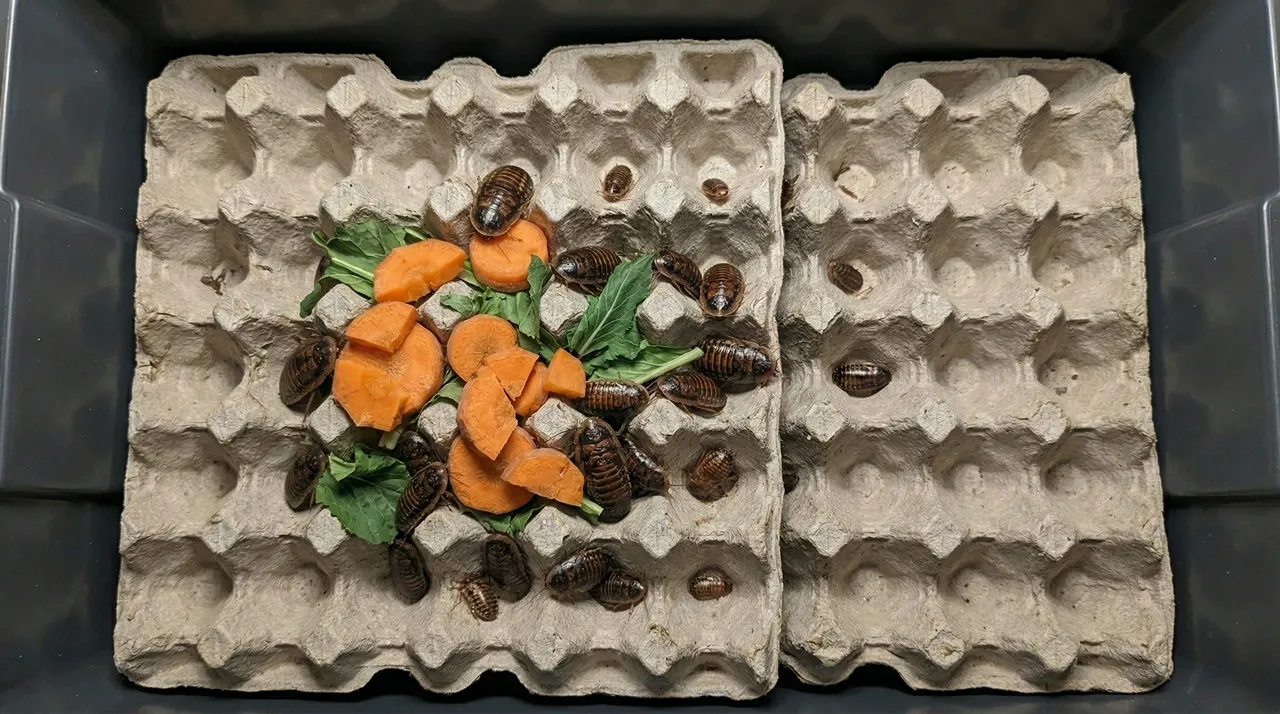
The insects sold most prominently at pet shops are not always the best nutritional choices. A dragon fed mealworms as a primary protein source for six months shows the damage gradually, and by the time it becomes visible the correction takes months. What goes into the insect before the insect goes into the bowl matters just as much as which species you choose. An insect kept on cardboard for three days before being fed out is nutritionally hollow, and every feeder should go through proper gut loading for at least 24 hours first.
| Insect | Rating | Notes |
|---|---|---|
| Dubia roaches | ✅ Staple | Excellent protein-to-fat ratio and higher calcium than most feeders. Soft exoskeleton for easy digestion. Setting up a small colony pays for itself within a few months. |
| BSFL (NutriGrubs) | ✅ Staple | Extraordinary calcium content. An excellent daily complement to dubias or crickets and particularly useful during shedding periods. |
| Crickets | ✅ Staple | The classic feeder insect. Their movement stimulates natural hunting behaviour, which has real value for mental enrichment. |
| Discoid roaches | ✅ Staple | Nutritionally near-identical to dubias. Legal to keep in Florida where dubias are banned as an invasive species concern. |
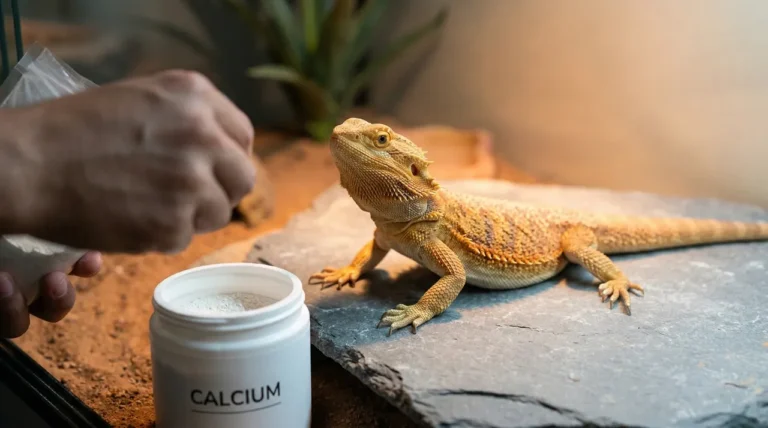
Calcium powder should go on every feed for babies and juveniles without exception. Frequency backs off as the dragon matures and UVB exposure improves, but exactly how far it backs off depends on the specific bulb in use, the animal’s age, and how much calcium the greens are already contributing. Adult dragons on a solid T5 UVB setup with a calcium-heavy staple green rotation typically need dusting every two or three feeds rather than every single one, though the right interval for your animal depends on your specific bulb and supplement pairing.
The Worm Feeder Problem
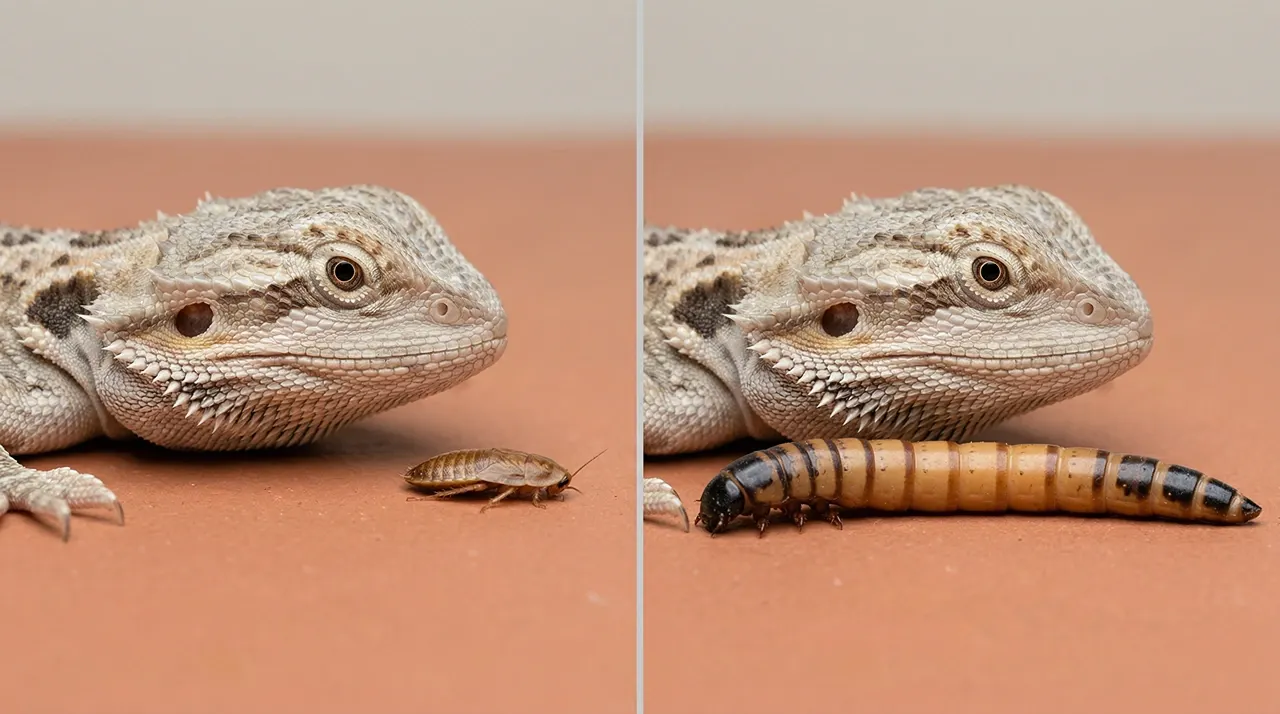
Waxworms, superworms, and mealworms are sold at almost every reptile supplier. None of them are appropriate staple foods. Each has a specific use case and is routinely misused in ways that cause real problems over time.
| Insect | Rating | Notes |
|---|---|---|
| Waxworms | 🟠 Treat | Around 22–25% fat. Dragons love them intensely, which leads to them refusing other feeders. Reserve for underweight animals or recovery. Once a week maximum. |
| Superworms | 🟠 Treat | Lower fat than waxworms but higher than dubias. Do not feed to dragons under 15 inches. Their mandibles can bite from inside the digestive tract if not stunned first. |
| Mealworms | ⚠️ Caution | High phosphorus ratio and hard chitin that young dragons cannot break down. The mealworm risks for juveniles are more serious than most pet shops explain. Adults can tolerate small amounts. |
| Hornworms | 🟡 Occasional | Lower in protein but very high in moisture. Useful during shedding or when a dragon shows early signs of dehydration. |
| Silkworms | 🟡 Occasional | Soft-bodied and reasonably high in protein. Well-tolerated across all age groups and one of the better occasional feeders for digestibility. |
The superworm mandible risk is one that pet shop descriptions consistently underplay. Their jaws are strong enough to bite from inside the digestive tract if the insect is not stunned before the dragon swallows it. The fifteen-inch guideline is not vague advice. Anything smaller than that is at genuine mechanical risk from a full-grown superworm, and even for adult animals it is worth stunning the insect immediately before offering it.
Source matters as much as species. Any insect collected from the garden carries unknown pesticide exposure and parasite loads that captive-bred feeders don’t. The convenience logic seems reasonable until you factor in that you cannot know what the surrounding area was treated with in the last month, or what load a wild insect picked up from bird droppings the same afternoon.
Foods That Are Outright Toxic
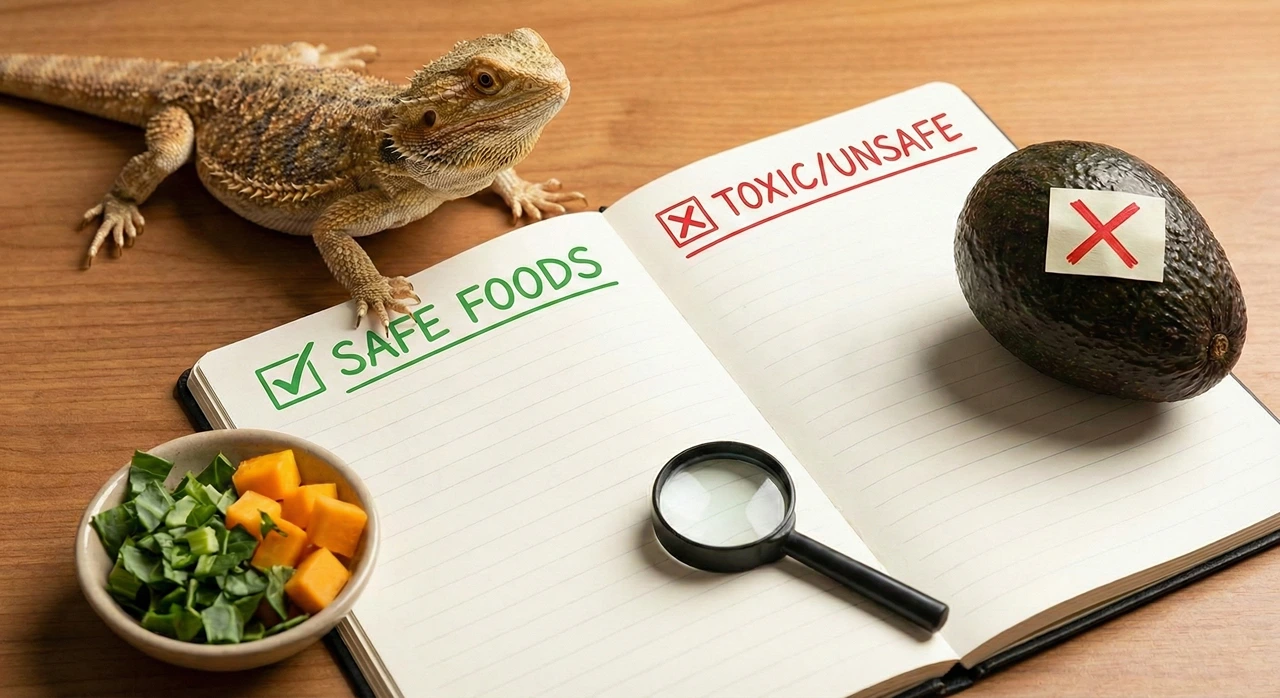
These cause direct physiological harm: organ damage, red blood cell disruption, acute poisoning. Understanding what actually happens is more useful than a bare avoid label, because it explains why there is no safe threshold for any of them.
| Food | Why It Is Dangerous |
|---|---|
| Avocado ❌ | Contains persin, a fungicidal toxin harmful to many animals. Severe toxicity is documented in veterinary medicine. No safe threshold exists. |
| Rhubarb ❌ | Contains extreme concentrations of oxalic acid. Even a small amount can cause acute kidney damage. Not a grey-zone food with nuance. It is outright dangerous. |
| Fireflies ❌ | Bioluminescence comes from lucibufagins, a compound severely toxic to lizards. A single firefly can kill an adult dragon. All glowing insects carry the same risk. |
| Onions and garlic ❌ | Contain thiosulfate compounds that disrupt red blood cell function. Leeks and chives carry the same risk. |
| Mushrooms ❌ | Difficult to digest and potentially hepatotoxic. Toxicity varies by species, making the risk completely unpredictable. |
| Citrus fruits ❌ | Oranges, lemons, limes, and grapefruit are too acidic. They disrupt gut bacteria balance and calcium absorption. Some lists describe citrus as a rare treat. That assessment is wrong. |
| Dairy ❌ | Reptiles are lactose intolerant. Cheese, milk, and yoghurt cause severe gastrointestinal distress. |
| Raw kidney beans ❌ | Contain lectins that are acutely toxic before cooking. |
| Processed food ❌ | The digestive system of a bearded dragon evolved for raw insects and fresh plant matter. Cooked carbohydrates, seasoned food, and anything from a packet are simply not something it can process. |
The Complete Bearded Dragon Food List
This bearded dragon food list covers over 60 foods across every category. Bookmark it and open it before you shop or before you try a new food from the fridge.
| Food | Category | Rating |
|---|---|---|
| Collard greens | Greens | ✅ Staple |
| Mustard greens | Greens | ✅ Staple |
| Dandelion greens | Greens | ✅ Staple |
| Turnip greens | Greens | ✅ Staple |
| Endive | Greens | ✅ Staple |
| Escarole | Greens | ✅ Staple |
| Arugula | Greens | ✅ Staple |
| Watercress | Greens | ✅ Staple |
| Cactus pad | Greens | ✅ Staple |
| Radicchio | Greens | ✅ Staple |
| Alfalfa | Greens | ✅ Staple |
| Kale | Greens | 🟡 Occasional |
| Spinach | Greens | ⚠️ Caution |
| Beet greens | Greens | ⚠️ Caution |
| Romaine lettuce | Greens | 🟡 Occasional |
| Iceberg lettuce | Greens | ❌ Avoid |
| Bell peppers | Vegetable | 🟡 Occasional |
| Butternut squash | Vegetable | 🟡 Occasional |
| Acorn squash | Vegetable | 🟡 Occasional |
| Yellow squash | Vegetable | 🟡 Occasional |
| Pumpkin | Vegetable | 🟡 Occasional |
| Green beans | Vegetable | 🟡 Occasional |
| Carrots | Vegetable | 🟡 Occasional |
| Sweet potato | Vegetable | 🟡 Occasional |
| Asparagus | Vegetable | 🟡 Occasional |
| Courgette | Vegetable | 🟡 Occasional |
| Cucumber | Vegetable | 🟡 Occasional |
| Snow peas | Vegetable | 🟡 Occasional |
| Pak choy | Vegetable | 🟡 Occasional |
| Broccoli | Vegetable | ⚠️ Caution |
| Cabbage | Vegetable | ⚠️ Caution |
| Tomatoes | Vegetable | 🟠 Treat |
| Blueberries | Fruit | 🟠 Treat |
| Strawberries | Fruit | 🟠 Treat |
| Raspberries | Fruit | 🟠 Treat |
| Watermelon | Fruit | 🟠 Treat |
| Mango | Fruit | 🟠 Treat |
| Papaya | Fruit | 🟠 Treat |
| Peaches | Fruit | 🟠 Treat |
| Pears | Fruit | 🟠 Treat |
| Apples | Fruit | 🟠 Treat |
| Figs (fresh) | Fruit | 🟠 Treat |
| Grapes | Fruit | 🟠 Treat |
| Dubia roaches | Insect | ✅ Staple |
| BSFL | Insect | ✅ Staple |
| Crickets | Insect | ✅ Staple |
| Discoid roaches | Insect | ✅ Staple |
| Hornworms | Insect | 🟡 Occasional |
| Silkworms | Insect | 🟡 Occasional |
| Superworms | Insect | 🟠 Treat |
| Mealworms | Insect | ⚠️ Caution |
| Waxworms | Insect | 🟠 Treat |
| Wild insects | Insect | ❌ Never |
| Fireflies | Insect | ❌ Never |
| Avocado | Toxic | ❌ Never |
| Rhubarb | Toxic | ❌ Never |
| Onions / garlic | Toxic | ❌ Never |
| Mushrooms | Toxic | ❌ Never |
| Citrus fruits | Toxic | ❌ Never |
| Dairy | Toxic | ❌ Never |
| Kidney beans | Toxic | ❌ Never |
| Processed food | Other | ❌ Never |
What to Do After a Toxic Bite
For low-concern foods like a bite of iceberg lettuce or a small amount of spinach, watch for loose stools over the next 24 hours. One accidental exposure to a poor food is not a medical event.
For confirmed toxic ingestions like avocado, rhubarb, or fireflies, call a reptile vet immediately. Toxin absorption is rapid, and acting quickly gives the vet options that waiting does not.
Quick triage guide:
- Ate spinach, tomato, or iceberg lettuce? Monitor stools. Correct the diet going forward.
- Ate citrus, beet greens, or broccoli in bulk? Monitor for 24–48 hours. Offer fresh water.
- Ate avocado, rhubarb, onion, or garlic? Contact a reptile vet the same day. Do not wait for symptoms.
- Ate a firefly or any glowing insect? This is a veterinary emergency. Call immediately.
Frequently Asked Questions
Can Bearded Dragons Eat Spinach
No practical reason to include it. The oxalates block calcium absorption, and collard or mustard greens give you better nutrition without the interference.
Can Bearded Dragons Eat Kale Every Day
Kale is perfectly safe when used in a rotation. The risk of thyroid issues only arises when a dragon eats nothing but kale for months on end. Rotate it alongside collard and mustard greens without worry.
Do Babies Eat the Same as Adults
The food categories are the same, but the ratios change completely. Babies need around 80% protein and 20% plants to support healthy growth. Adults invert that entirely and eat primarily greens.
Do Fruits Need to Be Peeled
Yes, always peel commercially bought fruit. Produce is routinely coated in wax and treated with pesticides that concentrate in the skin. Any fruit with a pit must have the stone removed completely before serving.
Three Things to Fix Before the Next Feed
- Audit your greens now: Check your fridge and swap out any spinach or iceberg for collard or mustard greens.
- Gut-load tonight’s feeders: Put fresh vegetables into your cricket or roach enclosure 24 hours before the next feed.
- Check your feeder sizes: No insect or chopped vegetable should be wider than the gap between your dragon’s eyes.
Medical Disclaimer: This article is written for educational purposes and is not a substitute for veterinary advice. If your bearded dragon has ingested a toxic food or is showing concerning symptoms, contact a reptile-experienced vet immediately.

Written by
Sarah ArdleySarah has kept bearded dragons for over ten years. She founded Beardie Husbandry after discovering that most mainstream care advice — including what she followed with her first dragon — was doing more harm than good. Every article on this site is grounded in veterinary research and real keeper experience.