Bearded Dragon Parasites: Signs, Treatment & The Cleaning Protocol
Getting a call from your vet confirming that your bearded dragon has Coccidia or Pinworms is stressful. It’s easy to assume you did something wrong or that their enclosure wasn’t clean enough.
The truth is, low-level parasite loads are extremely common. Many dragons carry them with no symptoms at all. When stress hits—relocation, improper temperatures, dietary changes—the immune system dips, and those parasites explode into a serious infection.
Giving the medication your vet prescribes is usually the easiest part. Preventing reinfection is where most treatments fail. This guide explains how to break that cycle, the difference between the most common parasites, and the daily cleaning protocols required to actually get rid of them.
• The Culprits: Pinworms (common) and Coccidia (hard to kill).
• The Signs: Horrific smell, diarrhea, weight loss, or lethargy.
• The Fix: Complete the full medication course + DAILY sterilization.
• Crucial Step: Bleach does NOT kill Coccidia. You need Heat (Steam) or Ammonia.
The Big Two: Pinworms vs. Coccidia
While there are many parasites, 90% of captive cases involve these two. Knowing the difference is critical because standard cleaners kill one, but not the other.
1. Pinworms (The “Easy” One)
- What they are: Microscopic worms that live in the intestines.
- Severity: Low to Moderate.
- Treatment: Usually Panacur (Fenbendazole).
- Cleaning: Regular disinfectants and bleach can kill pinworm eggs effectively.
- Note: Low pinworm counts are sometimes monitored rather than treated, depending on symptoms and age. Trust your vet’s judgment on this.
2. Coccidia (The Hard One)
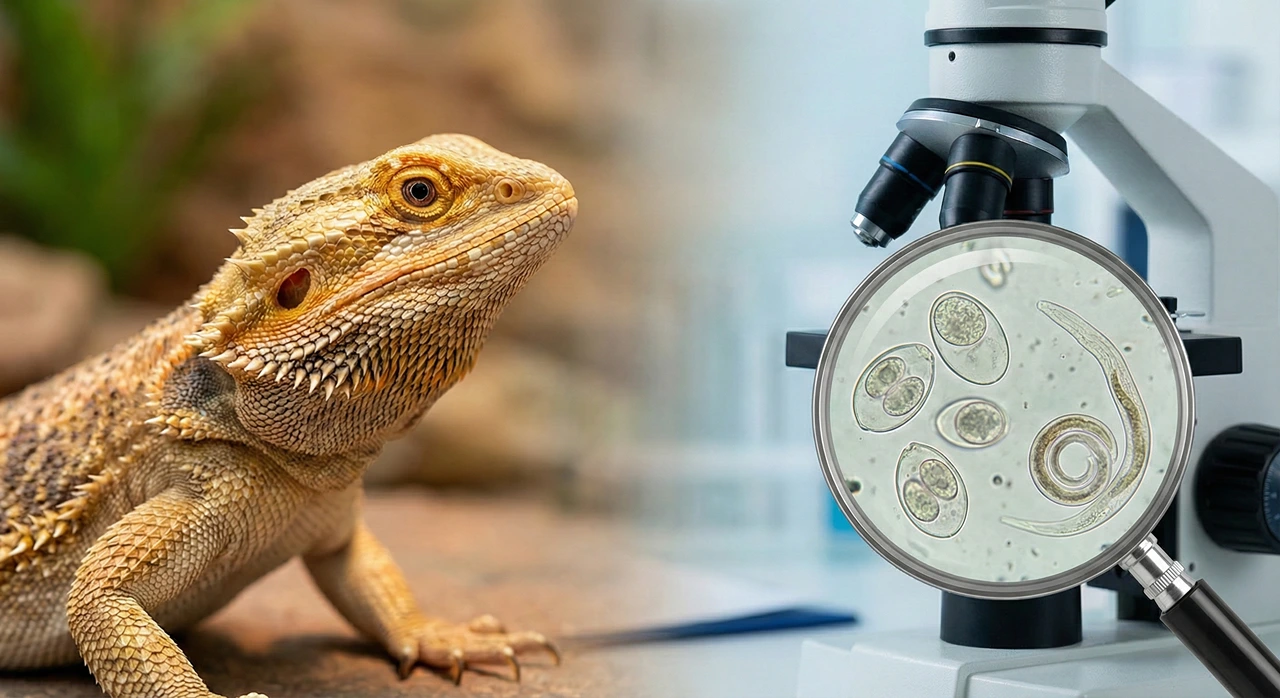
- What they are: Single-celled protozoa that destroy the intestinal lining.
- Severity: High. Severe infections cause dehydration, stunted growth, and can be fatal in babies.
- Treatment: Albon (Sulfadimethoxine) or Ponazuril.
- Cleaning: Bleach DOES NOT kill Coccidia. The eggs have a hard shell that resists almost all chemical cleaners. You need heat or ammonia to destroy them.
Symptoms: How Do I Know?
Parasites are invisible to the naked eye. You cannot see “worms” in their poop unless the infection is massive. Instead, look for these signs:
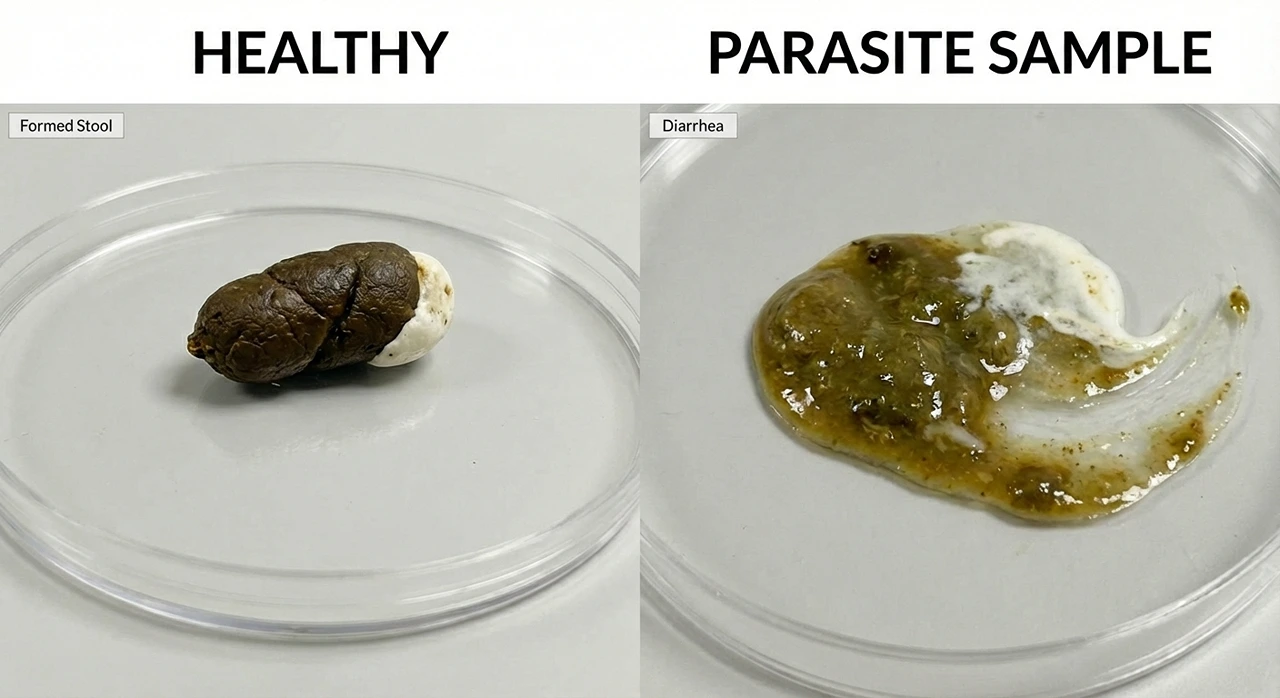
- The Smell: Parasitic poop smells uniquely horrific—far worse than normal waste. It can clear a room.
- The Texture: Diarrhea or “slushy” poop that doesn’t hold its shape. (Compare it to our Healthy Poop Guide).
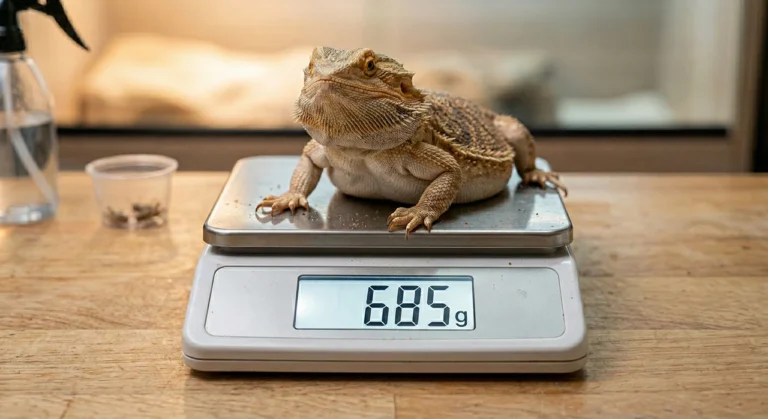
- Weight Loss: The dragon eats plenty of bugs but keeps getting skinnier (the parasites are stealing the nutrients).
- Lethargy: They sleep all day and refuse to bask. Note: This looks exactly like Brumation, which is why a fecal test is mandatory before letting them sleep.
Before You Treat: Confirm With a Fecal Test
Do not guess. You cannot diagnose parasites by looking at poop alone.
Bad diet, too much fruit, or stress can all cause runny poop that looks like parasites but isn’t. If you treat a healthy dragon with harsh antiparasitic drugs, you will destroy their gut bacteria for no reason.
The Protocol:
Take a fresh poop sample to an exotic vet. Ideally, the sample should be less than 2 hours old (or refrigerated and less than 24 hours old). They will perform a “Fecal Float” to count the eggs under a microscope. This is the only way to know exactly which drug you need.
The Treatment Protocol
If your vet confirms parasites, you will likely be sent home with liquid syringes. Here is how to manage the treatment phase successfully.
1. Give the Meds (Don’t Miss a Dose)
Most meds are given daily. You must complete the entire course, even if the dragon looks better after a few days.
2. Hydration is Key
Medications like Albon are harsh on the kidneys and can cause severe dehydration.
- Bath Time: Give your dragon a warm bath every other day during treatment to encourage drinking.
- Oral Water: Syringe-feed a few drops of water daily to help flush their system.
3. The Probiotic Reset
Antiparasitic medications kill the target parasites, but they nuke the “good” gut bacteria too. This frequently causes appetite loss.
The Fix: Buy a reptile probiotic (like Bene-Bac). Many exotic vets prefer reptile-specific probiotics, but plain, unsweetened Non-Dairy Soy Yogurt is a commonly used stopgap when commercial options aren’t available. Offer a tiny lick daily, 2 hours after the medication, to restock their gut bacteria. This is supportive care, not a replacement for medication.
Why Parasites Come Back (The Reinfection Cycle)
This is where the treatment process usually breaks down.
If your dragon poops out parasite eggs, walks through them, and then licks his foot, he just reinfected himself. The medication kills the parasites inside the intestinal tract, but it does nothing for the microscopic eggs sitting on his basking rock.
Many owners treat their dragons for weeks, only to have the parasites return a month later because they skipped the deep cleaning. To stop this cycle, you must treat the enclosure just as aggressively as you treat the dragon.
The “Hospital Tank”: Stopping Reinfection
You must set up a temporary “Hospital Tank” environment. Maintain this hospital setup for the full treatment period and at least 7–10 days after the final dose.
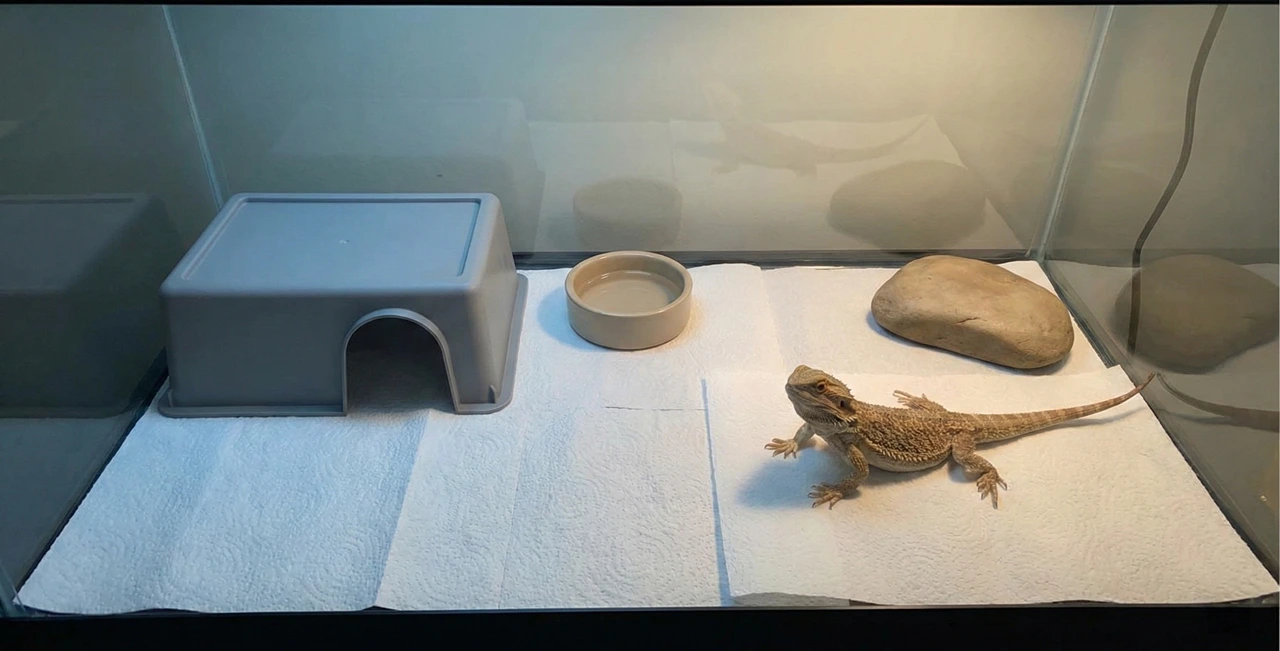
- Remove Loose Substrate: Throw away all sand, soil, or wood chips immediately. They harbor eggs.
- Use Paper Towels: Line the entire tank floor with paper towels. When he poops, throw the paper away instantly.
- Remove Porous Decor: Wood branches and foam backgrounds are parasite sponges. If you can’t boil them, remove them. Use plastic or smooth rock hides that can be sanitized easily.
How to Kill Coccidia (The Cleaning Protocol)
If you are dealing with Coccidia, wiping the tank with bleach is useless. You are just spreading the eggs around. You need one of two things: Ammonia or Extreme Heat.
Option A: The Steam Cleaner (Highly Recommended)
Heat kills everything. Steam cleaners shoot pressurized water vapor at 200°F+, which instantly ruptures the hard shells of Coccidia eggs.
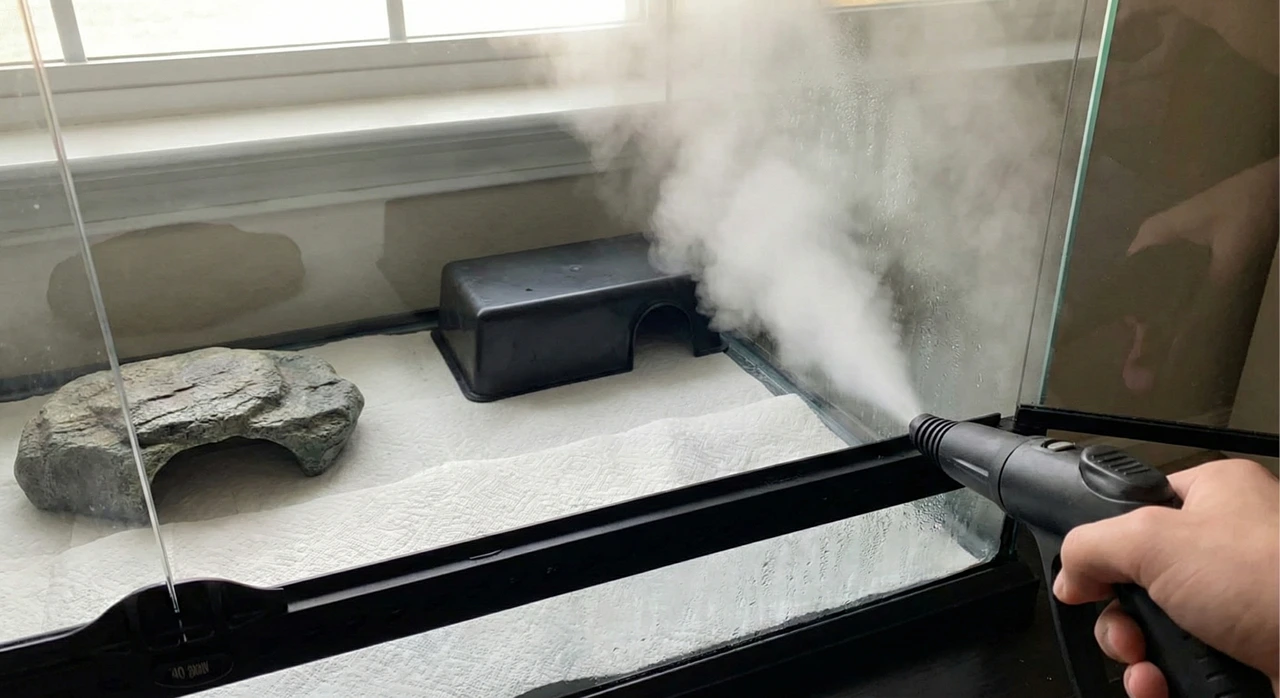
- Why it’s best: No chemical residue, entirely safe for the dragon, and penetrates deep into the silicone cracks in your tank.
- The Tool: A handheld steam cleaner (like a Bissell or PurSteam) is one of the best investments for a reptile owner. Steam the glass, the floor, and the basking rock daily after cleaning up feces.
Option B: Ammonia (The Chemical Way)
- The Recipe: A diluted ammonia solution (approximately 10% strength).
- The Critical Rule: Ammonia needs Contact Time. You cannot just spray and wipe. The solution must sit wet on the surface for at least 20–30 minutes to penetrate the Coccidia shell.
- The Warning: Ammonia fumes are highly toxic to reptiles (and humans). You must take the dragon OUT of the room, ventilate heavily, and let the tank air out for 2–3 hours before putting them back. I prefer steam because it is significantly safer and faster.
Which Dragons Are Most at Risk?
While any dragon can get parasites, these groups are the most vulnerable:
- Babies and Juveniles: Their immune systems are not fully developed.
- Newly Acquired Dragons: Stress from moving or pet store conditions often triggers a bloom. Pro Tip: Always quarantine a new dragon in a separate tank for 3 months before introducing them to the same room as others.
- Rescue Animals: Often come from poor husbandry situations where parasites run rampant.
- Dragons Under Stress: Improper temperatures or cohabitation weakens the immune system, allowing parasites to take over.
Common Mistakes That Make Parasites Worse
If you are treating parasites but not seeing results, check if you are making one of these errors:
- ❌ Using Bleach for Coccidia: It doesn’t work. Use heat or ammonia.
- ❌ Dirty Feeder Bins: Crickets from dirty pet stores often carry pinworms. Clean your own cricket keeper weekly, or switch to a cleaner source (like Dubia Roaches) if reinfection continues.
- ❌ Stopping Meds Early: “Looking better” doesn’t mean the eggs are gone. Finish the bottle.
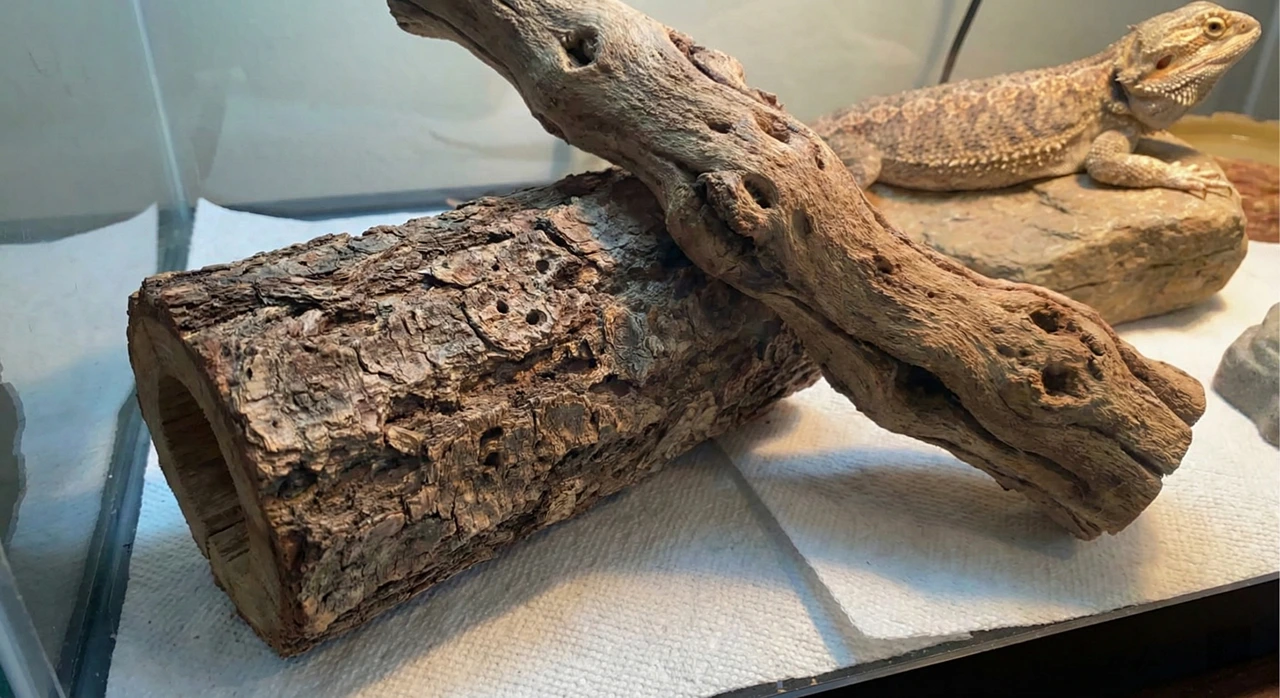
- ❌ Leaving Wood in the Tank: Wood is porous. You cannot scrub the inside of a branch. If it can’t be baked or boiled, it must be tossed.
- ❌ Lowering Temps: Sick dragons need more heat to boost their immune system and metabolize the medication, not less. Keep the basking spot at 100°F+.
Frequently Asked Questions
1. Can humans catch parasites from dragons?
Pinworms: No. Reptile pinworms are species-specific. They cannot infect humans.
Salmonella: Yes. Note: Salmonella is a bacteria, not a parasite. It rarely hurts the dragon, but it can make humans very sick. Always wash your hands immediately after handling your dragon or cleaning their poop.
2. My dragon isn’t eating during treatment. Is that normal?
Yes. Antiparasitic meds cause nausea and kill appetite. This is why using Probiotics and keeping their basking temperatures high (100°F+) are so critical. The heat helps process the medicine faster.
3. Do I really need to throw away my wood branches?
If you have Coccidia, yes. Wood is porous; eggs hide deep inside the grain where surface sprays can’t reach. You can try baking the wood in the oven at 250°F for 2 hours, but if the infection keeps coming back, the wood is the likely culprit. Trash it.
Summary Checklist: The Road to Recovery
Fighting parasites is a war of attrition. You have to be more stubborn than the bugs.
- ✅ Meds: Complete the full course of antiparasitics exactly as prescribed.
- ✅ Hydrate: Provide warm baths every other day.
- ✅ Probiotics: Replenish good bacteria to encourage eating.
- ✅ Steam: Sanitize the hospital tank daily to kill eggs.
- ✅ Retest: Get another fecal test 2 weeks after meds end to confirm you won. Do not skip this step.
This guide is written from the perspective of an experienced long-term keeper synthesizing common exotic veterinary protocols. It does not replace professional medical advice. Always consult with a qualified reptile veterinarian.
Written by
Sarah ArdleySarah has kept bearded dragons for over ten years. She founded Beardie Husbandry after discovering that most mainstream care advice — including what she followed with her first dragon — was doing more harm than good. Every article on this site is grounded in veterinary research and real keeper experience.