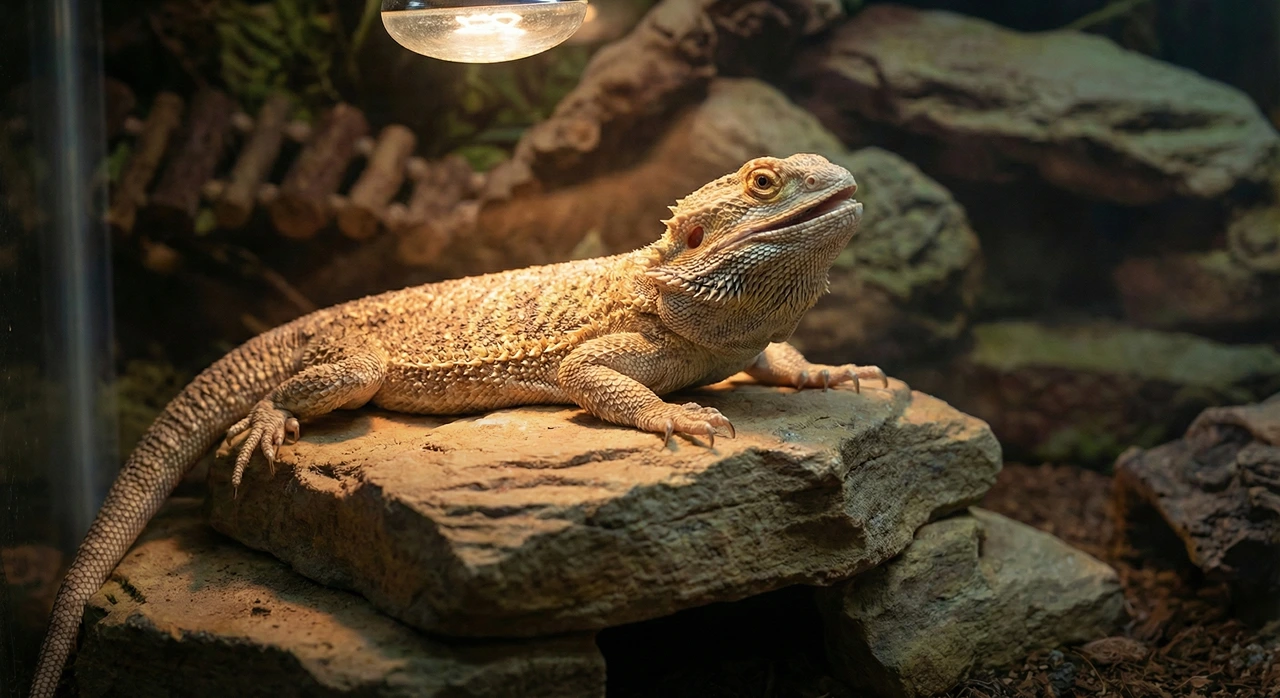
Bearded Dragon Respiratory Infection: Clicking, Mucus & RI
If you are hearing a faint, rhythmic clicking or popping sound coming from your bearded dragon’s tank, you are right to be concerned. Most owners assume it’s a cricket chirping or a timer ticking, but then they realize the sound is matching their dragon’s breathing. Every time they exhale—click.
This is the hallmark sound of a Respiratory Infection (RI), and it requires immediate attention.
Unlike a broken toe or a minor scrape, you cannot “wait and see” with an RI. A bearded dragon’s lungs are spongy and inefficient at clearing fluid, and they lack a diaphragm to generate a strong cough. Once fluid builds up, they can suffocate very quickly.
The good news is that if you catch that “click” early, it is highly treatable. Let’s look at the other major warning signs to confirm what you are hearing, and the immediate steps you must take to stabilize your dragon.
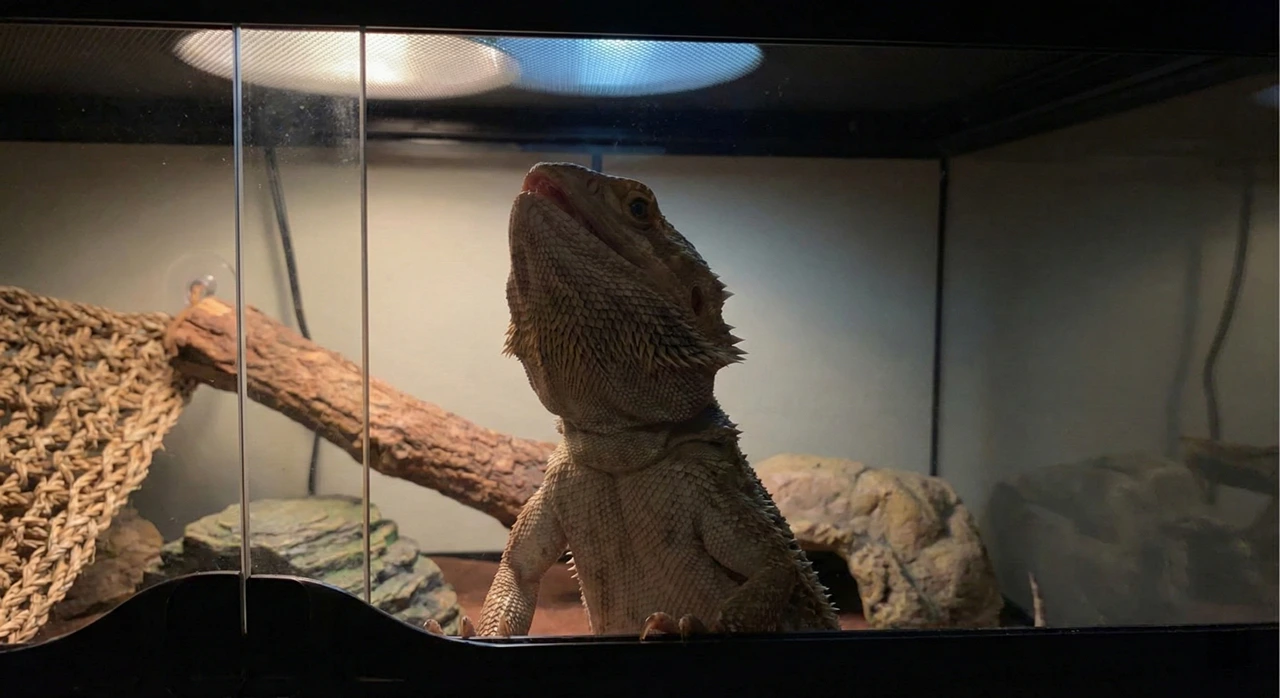
🚨 Is this an emergency?
YES — Go to an exotic vet urgently if you notice ANY of the following:
- Clicking or popping sounds while breathing.
- Visible mucus or bubbles coming from the nose or mouth.
- Gaping mouth while on the cool side of the tank or at night.
- Heavy rib movement (heaving) with each breath.
What is a Respiratory Infection (RI)?
An RI is a bacterial (or sometimes fungal) infection of the lungs. It causes the lungs to fill with excess mucus, making it difficult for the dragon to breathe. Think of it like severe pneumonia in humans. Because dragons cannot cough effectively, the fluid gets trapped, leading to sepsis if untreated.
The 4 Major Symptoms
How do you know if it’s an RI or just a weird noise? Look for this combination of signs.
1. The “Clicking” or “Popping” Sound
This is the hallmark symptom. Every time your dragon exhales, you hear a faint click.
- What it is: This is the sound of air forcing its way through mucus-filled airways.
- When you hear it: Usually when they are breathing heavily or after handling.
2. Excess Mucus (Bubbles)
You might see strings of saliva or thick, ropy mucus around the corners of their mouth.
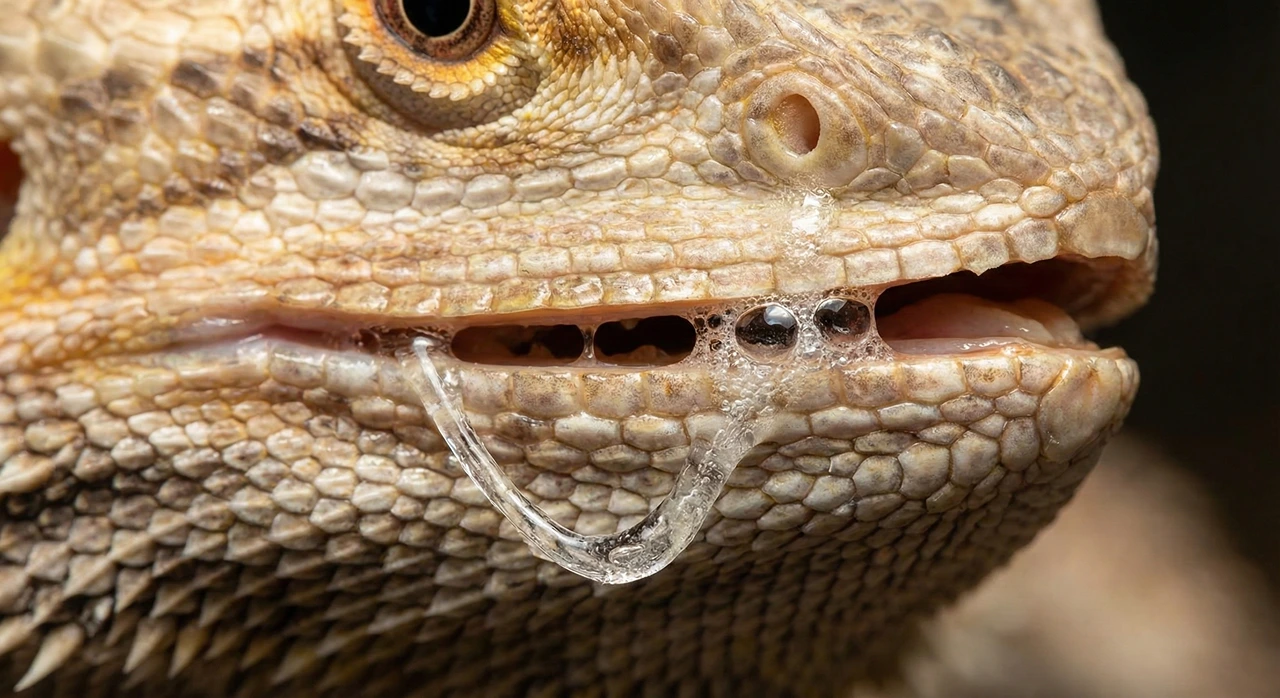
- The visual: In severe cases, they will blow literal bubbles out of their nose or mouth.
- Normal vs. Sick: A healthy dragon’s mouth is dry. Any visible liquid is a red flag. If you are looking closely at their lips and notice a crusty yellow buildup instead of wet mucus, they may be dealing with a secondary bacterial infection like mouth rot (stomatitis).
3. Labored Breathing (Puffing)
Watch their ribs. A healthy dragon breathes almost imperceptibly. A sick dragon will heave.
- The sign: The beard puffs out, and the ribs expand dramatically with every breath. They are fighting for oxygen.
4. “Gaping” at the Wrong Time
New owners often confuse healthy temperature regulation with sickness. Use this visual guide to tell the difference:
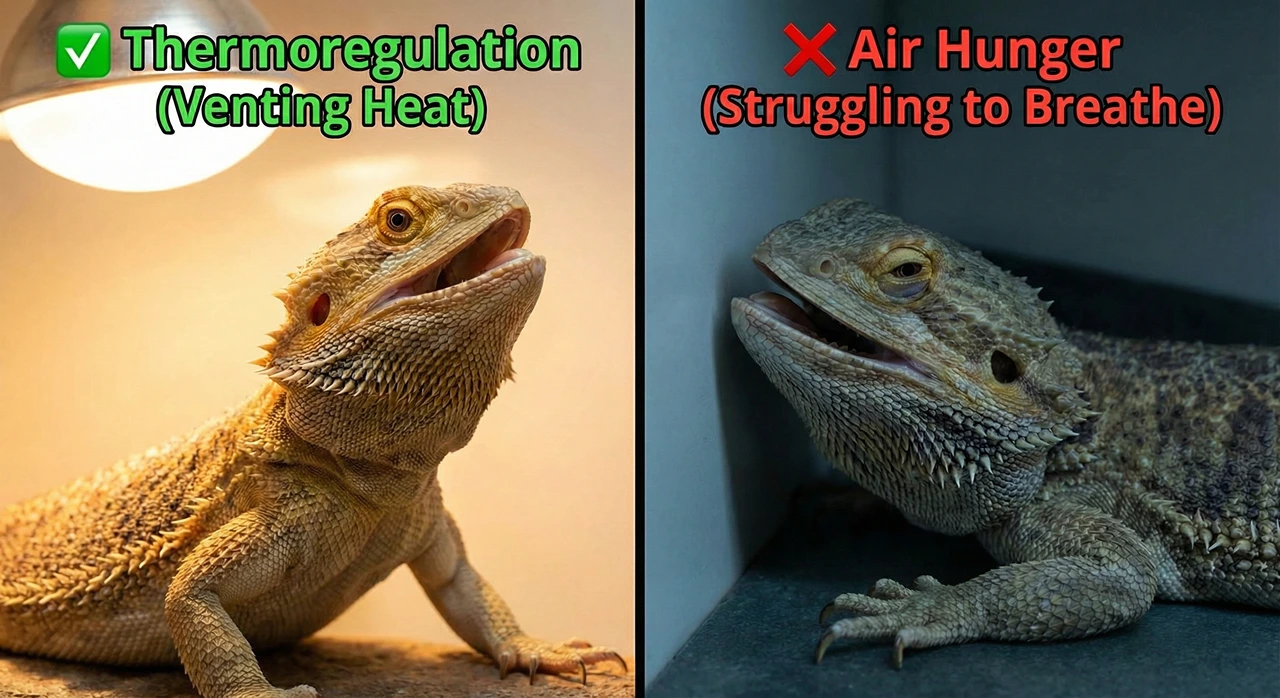
| Feature | ✅ Healthy Gaping | ❌ “Air Hunger” (RI) |
|---|---|---|
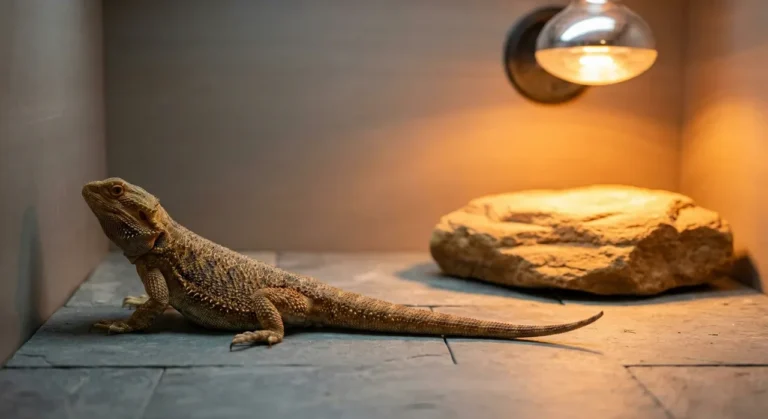
| Location | Under the heat lamp (Basking Spot). | Cool side, floor, or sleeping. |
| Posture | Head up, chest lifted, alert. | Head flat, neck stretched up/straight. |
| Reason | Venting excess heat (Thermoregulation). | Trying to straighten the airway to breathe. |
Wait: What This Is NOT (False Alarms)
Before you panic, make sure it isn’t one of these normal behaviors:
- The “Morning Huff”: Dragons often puff their beards out in the morning to stretch (like a yawn). If they do it once and stop, it’s normal.
- Hissing: If you startle them and hear a sharp exhale, that is a defensive hiss, not a click.
- Nose Whistle (Shedding): Sometimes a piece of stuck shed inside the nostril can make a whistling sound. Check their nose for dry skin.
The Primary Cause (and the Most Preventable)
Bearded dragons are desert animals. Their lungs are designed for dry, arid air. The most common cause of RI is high humidity paired with low temperatures.
- The Danger Zone: Humidity over 60% with temperatures under 75°F (24°C).
- The Culprit: Misters and Foggers. Never put a humidifier or fogger in a bearded dragon tank. These turn a dragon’s tank into a bacterial breeding ground.
Immediate Home Care (The “Ambulance” Phase)
You have called the vet, but your appointment is in 2 days. What do you do now? You need to boost their immune system artificially using heat.
1. Raise the Temperature
- Daytime: Keep the Basking Spot at a strict 105°F–108°F (40°C–42°C). Double-check this with a temperature gun.
- Nighttime: Normally, a healthy dragon can handle a room down to 65°F. However, for a sick dragon, this is too cold. Use a Ceramic Heat Emitter (CHE) to keep the tank at 80°F (27°C) overnight. This prevents their immune system from powering down while they sleep. (Read more on nighttime heating for sick dragons).
2. Lower the Humidity
- Target: Get humidity down to 30%–40%.
- How: Remove the water bowl completely for 24 hours. Increase ventilation.
The Vet Protocol: What to Expect
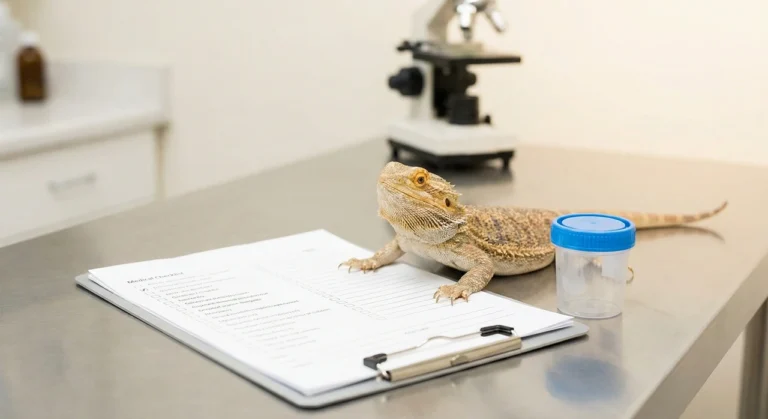
Always see an exotics-experienced veterinarian. General dog-and-cat vets often lack specific reptile respiratory protocols.
Common Treatments
- Injectable Antibiotics (Fortaz): Often given every 72 hours for severe cases.
- Oral Antibiotics (Baytril): A strong antibiotic usually given daily.
- Nebulization: The “Gold Standard.” Breathing treatments using a nebulizer deliver medication directly to the lungs.
Why Your Vet Might Suggest a “Culture Test”
If the first round of antibiotics doesn’t work, your vet may perform a Culture & Sensitivity Test. This involves swabbing the throat to identify the exact bacteria causing the infection to ensure you aren’t using the wrong medication.
Giving the Medicine: A Stress-Free Approach
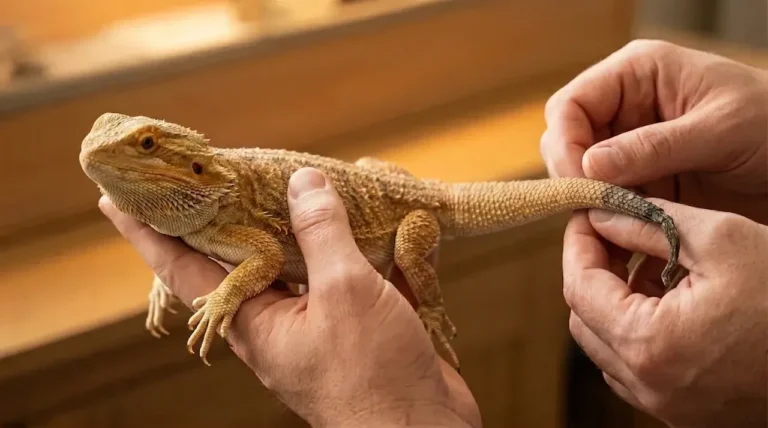
Administering treatment at home can feel a bit daunting at first, but with the right technique, it becomes a simple part of your daily routine. The goal is to make the process as calm as possible for both you and your dragon.
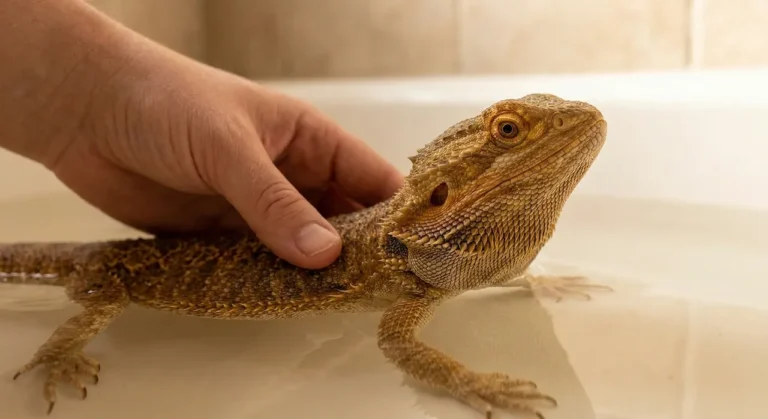
💡 Pro Tip: The Gentle “Jowl-Drip” Method
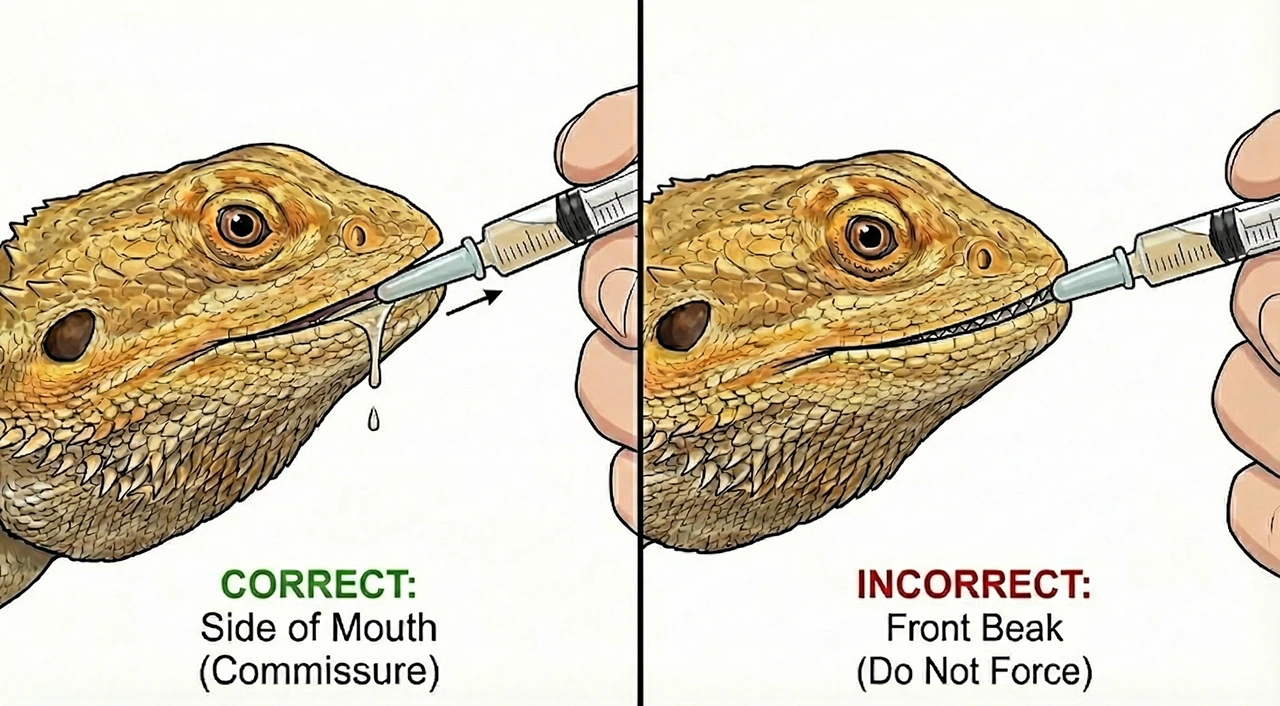
If your dragon is feeling stubborn and won’t open up, don’t worry—you don’t need to force it. Forcing a syringe into the front of the beak can stress them out and potentially damage their delicate teeth.
Instead, use the gentle method shown above. By dripping the medicine into the side “pocket” of the lip, you work with their natural instincts. They will feel the liquid and lick it up on their own, making the experience much more relaxed for everyone involved.
Prevention & Recovery: Stopping the Relapse
Once your dragon recovers, you must fix the husbandry error that caused the infection, or it will return.
- ✅ Dry Out the Air: Use a digital hygrometer. If your house is humid, use a dehumidifier in the room to keep the tank between 30-40%. (See our Lighting & Temp Guide).
- ✅ Maintain Night Heat: If your house drops below 65°F at night, your dragon’s immune system crashes. During recovery and for two weeks after meds end, keep the tank at a steady 80°F (27°C) overnight using a Ceramic Heat Emitter. For help setting this up, see our guide on how to safely add nighttime heat.
- ✅ Sanitize Everything: Bacteria thrive in dirty environments. Deep clean your enclosure and sanitize all wood and rocks. (See our Sanitization Guide).
Warning: Dragons often look 100% better after just 5 days of antibiotics, but bacteria can hide deep in the lung tissue. Never stop medication early just because the clicking has stopped. Finish the full course prescribed by your vet.
Frequently Asked Questions
1. Is a respiratory infection contagious to other dragons?
Yes. If you have multiple dragons, isolate the sick one immediately and wash your hands thoroughly between handling them.
2. Can I use Vicks VapoRub or essential oils?
Absolutely not. Essential oils are toxic to reptiles and can burn their delicate lung tissue. Do not use humidifiers with oils in the same room.
3. How long does it take to cure an RI?
Improvement is seen in 3–5 days, but a full cure usually takes a 2–4 week course of medication.
4. Can loose substrate cause an RI?
Indirectly, yes. While sand itself doesn’t cause the infection, dirty substrate that traps moisture and bacteria will. Dusty substrates (like calcium sand or crushed walnut) can also irritate the lungs. See our Substrate Guide for safer, dust-free options.
Final Word: You’ve Got This
Hearing that first “click” is scary for any owner, but remember: Respiratory infections are highly treatable when caught early. By staying observant and acting quickly, you are giving your dragon the very best chance at a full, healthy recovery.
Your 4-Step Action Plan:
- ✅ Listen: If you hear clicking, stay calm and move to Step 2.
- ✅ Boost Heat: Immediately raise temps (105°F day / 80°F night) to support their immune system.
- ✅ Dry Out: Remove foggers and lower humidity to 30-40%.
- ✅ Call the Vet: Book an appointment with an exotics specialist for antibiotics.
Written by
Sarah ArdleySarah has kept bearded dragons for over ten years. She founded Beardie Husbandry after discovering that most mainstream care advice — including what she followed with her first dragon — was doing more harm than good. Every article on this site is grounded in veterinary research and real keeper experience.