Can Bearded Dragons Eat Bananas? Safety & Serving Size
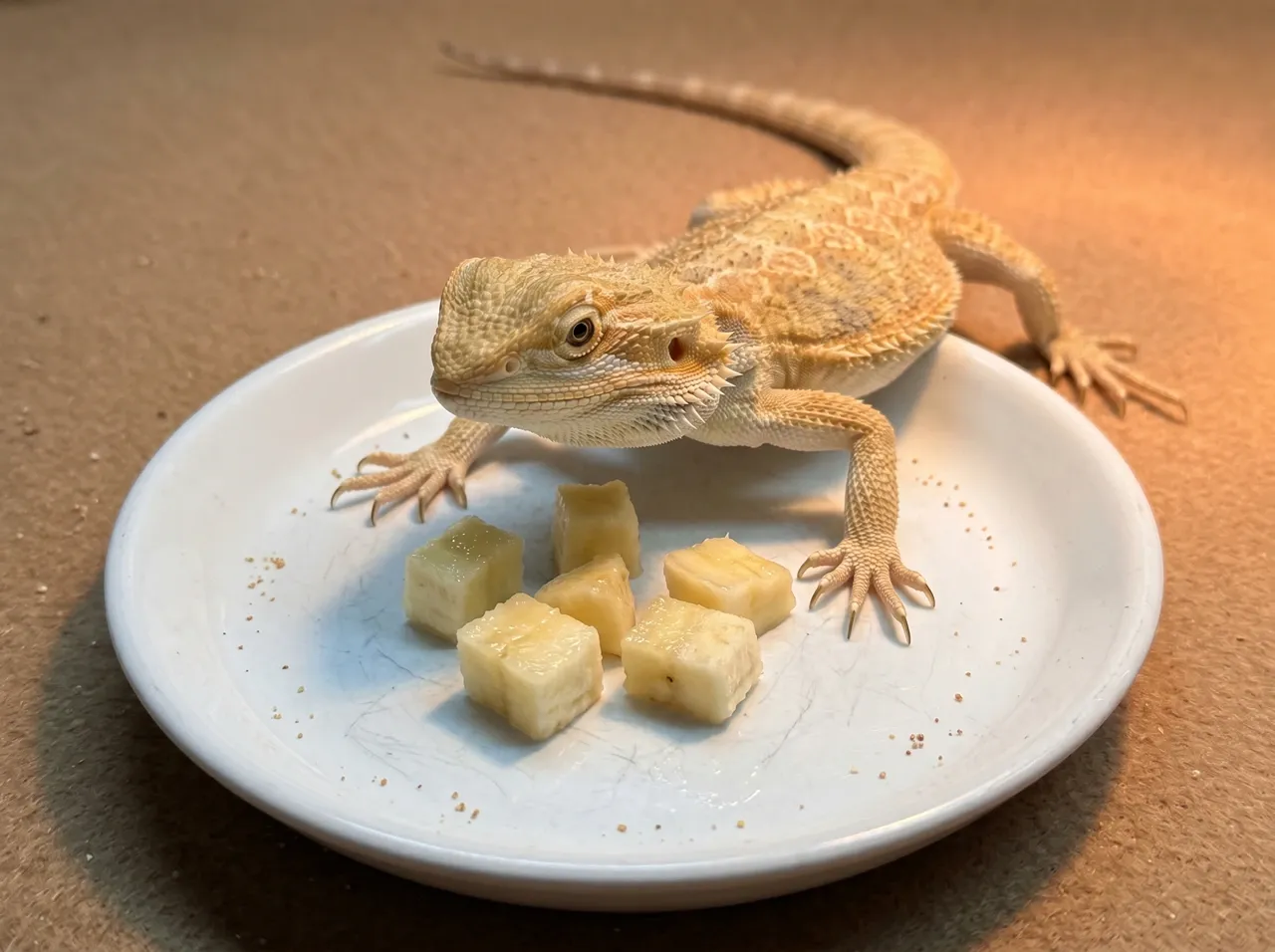
Yes, bearded dragons can eat bananas, and most will absolutely demolish one given the chance. The honest answer is that banana sits firmly in the occasional treat category, not the everyday food bowl. A slice once every week or two causes no harm at all. The issue only shows up when banana becomes a regular habit instead of a rare extra.
If your dragon just helped itself to a chunk of banana off the counter, take a breath. One slice will not cause metabolic bone disease or send it to the vet. The risk is cumulative, not immediate, which is exactly why so many keepers get caught out months later.
Why the Calcium to Phosphorus Ratio Matters
Bearded dragons need a diet where calcium outweighs phosphorus, ideally close to a 2:1 ratio. Banana flips that completely. A 100 gram serving carries roughly 5 mg of calcium against 22 mg of phosphorus, which puts the ratio closer to 1:4 in the wrong direction.
Phosphorus binds to calcium in the gut and blocks it from being absorbed. Feed enough high-phosphorus food over weeks and months, and you end up draining calcium reserves even if the diet looks varied on paper. That slow drain is how metabolic bone disease in bearded dragons gets started, often without anyone noticing until limbs start to look soft or wobbly.
How Much Sugar Is Actually in a Banana
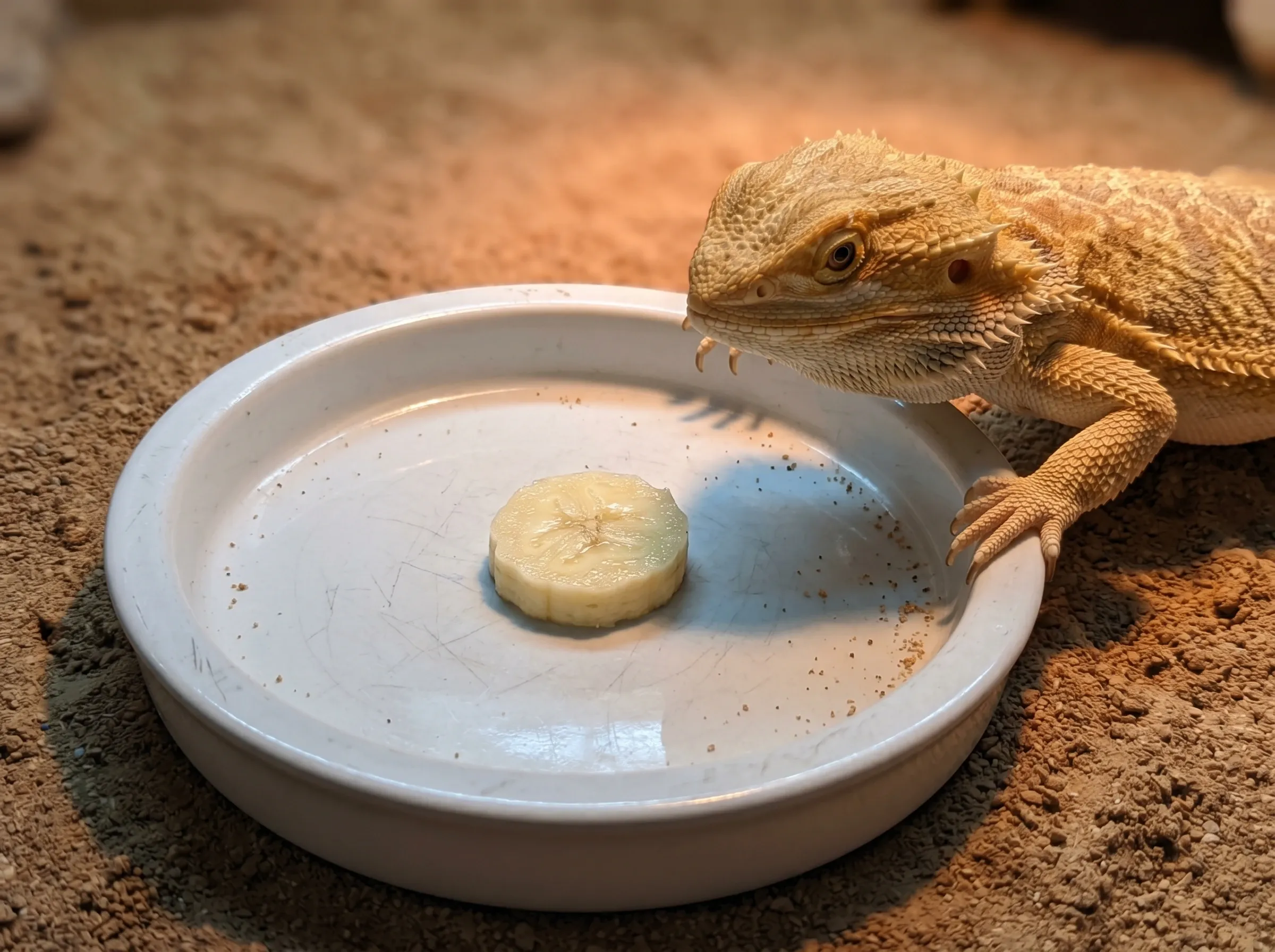
Banana is one of the sweeter fruits you can offer, with around 12 to 14 grams of sugar per 100 grams. For a desert lizard whose gut evolved on tough greens and the occasional bug, that’s a lot of fast sugar in one sitting.
How Often Can Bearded Dragons Eat Bananas
For a healthy adult, one or two small slices every 10 to 14 days is a sensible ceiling. That’s enough for your dragon to enjoy the flavor and pick up the vitamin C and potassium without the sugar and phosphorus load building into a habit.
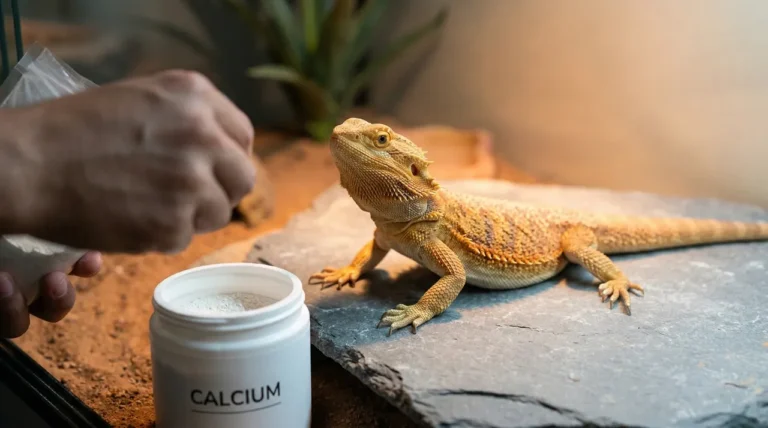
Juveniles and gravid females need tighter limits, since their calcium demands are already higher than an adult’s. Dusting feeder insects with calcium powder on the days banana is served helps offset the phosphorus hit, and it’s a habit worth building regardless of what fruit is on the menu that week.
| Dragon’s Age or Condition | Banana Frequency | Serving Size |
|---|---|---|
| Adult (18+ months) | Every 10 to 14 days | 1 to 2 thin slices, about the size of a fingernail |
| Juvenile (3 to 18 months) | Once every 3 to 4 weeks | 1 small slice, mashed or finely diced |
| Hatchling or baby (under 3 months) | Skip entirely | Focus on insects and finely chopped greens instead |
| Gravid or egg-laying female | Once a month at most | 1 small slice, alongside extra calcium dusting |
| Dragon recovering from MBD | Avoid until cleared by a vet | None until calcium levels recover |
What Happens If Your Dragon Eats Too Much Banana
The two main risks are weight gain and calcium drain, and they tend to show up on very different timelines. Sugar-driven weight gain becomes visible within weeks. Look for a noticeably rounder belly, fat pads forming above the back legs, or a dragon that suddenly seems less interested in moving around the enclosure.
Calcium drain is slower and sneakier. An overweight dragon can still develop MBD underneath the extra padding, because the two problems come from different mechanisms even though banana contributes to both.
Can Bearded Dragons Eat Banana Peel
Technically yes, the peel itself isn’t toxic, and it carries fiber along with small amounts of B vitamins. In practice, most dragons either ignore it completely or struggle to chew through the tougher fibers, which raises a choking risk that isn’t worth taking for a part of the fruit with minimal nutritional payoff.
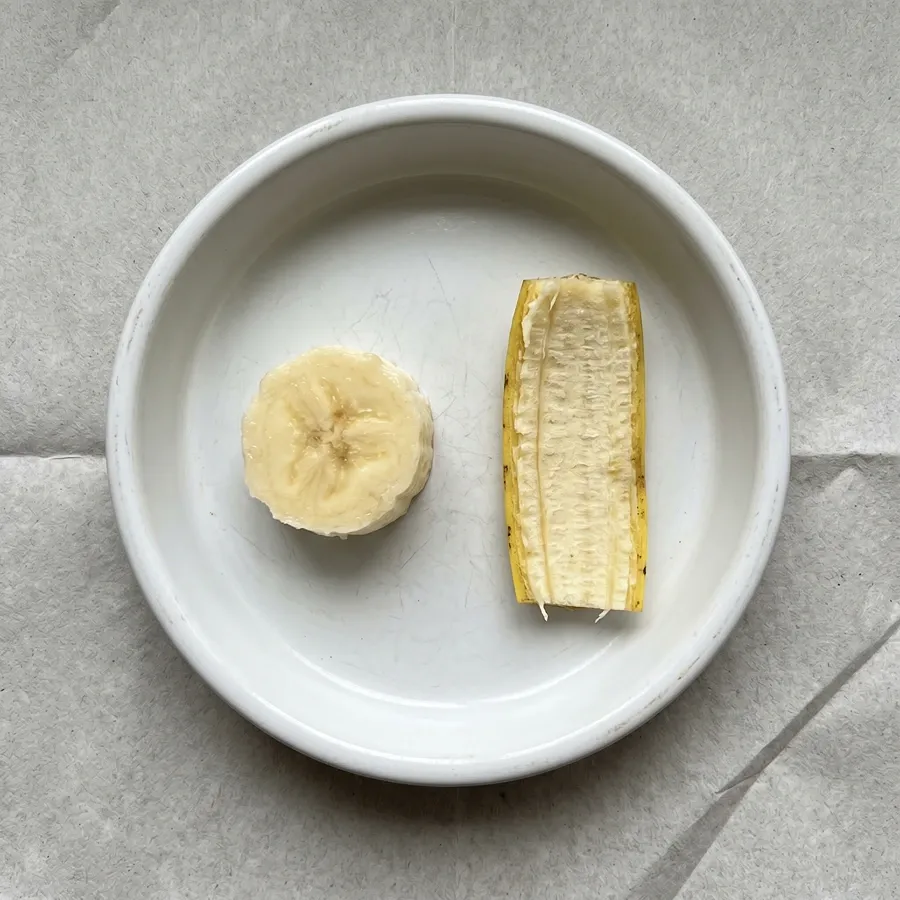
If you want to offer peel, wash it thoroughly to strip any pesticide residue, then chop it into pieces small enough that your dragon can’t swallow a strip whole. Most keepers find it’s simpler to skip the peel and stick to the flesh.
What About Banana Leaves
Banana leaves are a different story and show up more often in bioactive setups where the live plant is already growing. The leaves are tougher than the fruit, so cut any offered piece down to roughly the width of your dragon’s head before it goes in the enclosure.
How to Prepare Banana So Your Dragon Doesn’t Choke
Choking on banana is rare but it does happen, usually because a piece was left too large or too slippery. A few habits prevent almost every case:
- Slice banana into pieces no wider than the gap between your dragon’s eyes
- Mash or finely dice pieces for juveniles and hatchlings rather than offering slices
- Always serve fresh, ripe banana and remove any browned or mushy sections first
- Skip dried banana chips entirely, since the sugar concentrates as the fruit dehydrates and the texture turns into something closer to candy
- Pull any uneaten banana out of the enclosure within a few hours so it doesn’t attract mites or mold
Frozen banana that’s been thawed is fine in a pinch, though the texture turns mushy and some of the nutritional value drops compared to fresh fruit. It’s not a substitute for fresh produce as a regular habit, just an acceptable backup if that’s what’s in the kitchen.
Should Baby Bearded Dragons Eat Banana at All
Hatchlings and dragons under three months are still building bone density at a rapid pace, and their diet should be almost entirely insects with some finely chopped greens worked in. Baby bearded dragon care during this stage leaves very little room for sugary fruit, and banana specifically offers no benefit that outweighs the phosphorus load at this age.
Once your dragon reaches juvenile age and its diet naturally shifts toward more plant matter, a small piece of banana every few weeks becomes reasonable. Before that point, the safest answer is simply to wait.
Frequently Asked Questions
Is banana toxic to bearded dragons?
No, banana is not toxic. The concerns are about frequency and quantity, not safety in a single serving. An occasional small slice is fine for most healthy adult dragons.
Can bearded dragons eat banana every day?
No. Daily banana pushes sugar and phosphorus intake well past what a dragon’s diet can balance out, increasing the risk of obesity and calcium deficiency over time.
Should I peel a banana before feeding it?
Peeling is the simplest option and avoids any choking risk from the tougher peel fibers. If you do offer peel, wash it well and chop it small.
Can bearded dragons eat plantains instead of bananas?
Plantains have a similar nutritional profile to bananas and carry the same calcium to phosphorus concerns, so the same occasional serving guidelines apply.
What fruits are better choices than banana?
Fruits with a better calcium to phosphorus balance, such as strawberries in moderation, make a gentler addition to a varied diet.
What to Do Next
Now that you know bearded dragons can eat bananas safely in small amounts, here’s how to put that into practice today:
- Check when your dragon last had banana or another high-phosphorus fruit, and space the next serving at least 10 to 14 days out for adults
- Slice any banana piece down to fingernail-sized portions before it goes in the enclosure
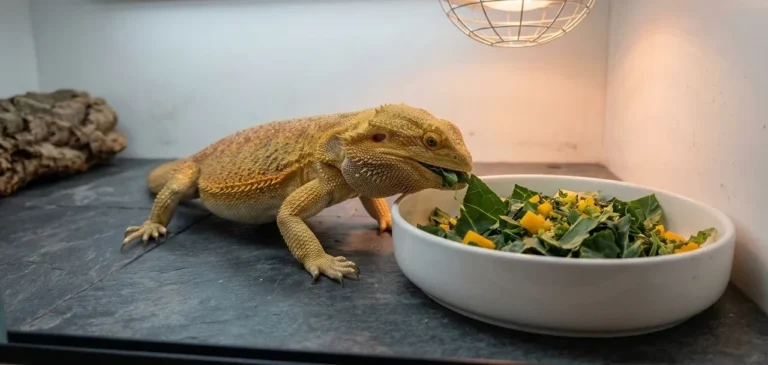
- Confirm your feeding schedule already leans on calcium-rich greens like collard or mustard greens as the daily plant staple
- Dust feeder insects with calcium powder on banana days to help offset the phosphorus
- Watch for soft jaw bones, limb tremors, or swelling over the next few weeks if banana has been a frequent treat, and book a vet check if anything looks off
Written by
Sarah ArdleySarah has kept bearded dragons for over ten years. She founded Beardie Husbandry after discovering that most mainstream care advice — including what she followed with her first dragon — was doing more harm than good. Every article on this site is grounded in veterinary research and real keeper experience.